Kosciuszko
FAQ
Australia
7,310 feet 2229 meters
Australia
7,310 feet 2229 meters
|
|
Kosciuszko
FAQ Australia 7,310 feet 2229 meters |
|||||||||
|
||||||||||
|
Here are some common questions
about climbing Kosciuszko. I am focusing on the Thredbo side because I climbed (hiked)
it and it is the most common route. This was one of my Memories
are Everything®expeditions. Since I am
not a guide nor a professional climber, this information is based on my experience
and are my opinions so always consult with a professional before making any serious
climbing decisions!
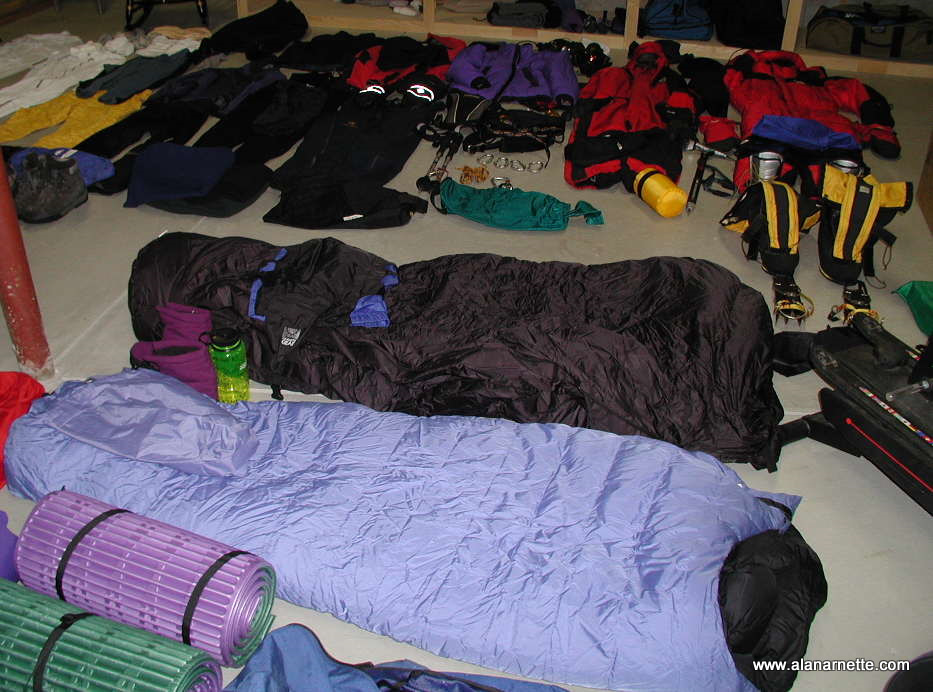
About KosciuszkoQ: Where is itA: Known by the Aboriginal's as Tan Gan Gil, "Kozzy" is located in Australia in New South Wales and is also a local ski area in the Kosciuszko National Park. The nearest largest city is Cannabera and is equidistant between Sydney and Melbourne (6-8 hour drive). Mount Kosciuszko is part of the Snowy Mountains in the Great Dividing Range. The first recorded ascent was in 1840 by Polish explorer Paul Strzelecki but was most likely climbed (hiked) for centuries by the local Aboriginal people of the Monaro, according to local information. It is sometimes consider the highest in Oceania but Carstensz Pyramid holds that honor. View Kosciuszko on a larger map. Q: When is it usually climbed (hiked)? A: The normal climbing season is Australia's summer ( November to May) due to lack of snow; but can be climbed (hiked) year-round with proper equipment. From June through October plan on dealing with snow. The summit was snow covered for my hike in Mid October. Q: I understand that Kosciuszko's is just a simple walk-up. How hard is it? A: It is not a climb per se, but really a simple walk or hike. All you need are good shoes and a jacket in the summer adding snow gear for winter travel when snow covered. But there is a little known more difficult route - The Hannels Spur Track. Q: How does Kosciuszko compare with the other 7 Summits? A: It is the easiest of them all and very enjoyable. The Kosciuszko National Park is a beautiful environment and you have all the comforts of a world class ski resort if desired. Q: Is a Kosciuszko climb dangerous? A: Can be if the weather turns on you. I have heard many stories from other 7 Summit climbers about being lost or struggling with high winds, deep snow or drifts. So monitoring the weather is important, just like for any outdoor activity. Q: How many people had summited and how many people had died trying? A: It is estimated that over 100,000 people hike Kosciuszko each year. There has been the rare death in the area, mostly in the winter. Training, Gear & Communication:Q: How did you train for this climb? The lower oxygen stimulates chemoreceptors that initiate an increase in breathing, resulting in a lowering of the partial pressure of CO2 and hence more alkaline blood pH. The kidneys begin to unload bicarbonate to compensate. Though this adaptation can take many days, up to 80% occurs just in the first 48 to 72 hours. There are many other physiologic changes going on, among them the stimulus of low oxygen to release the hormone, erythropoietin to stimulate more red blood cell production, a physiological and still acceptable form of blood doping that enhances endurance performance at low altitudes. Adaptive changes are not always good for one’s health. Some South American high altitude residents can have what’s called chronic mountain sickness, resulting from too many red blood cells; their blood can be up to 84-85% red blood cells. The increased blood viscosity and sometimes associated pulmonary hypertension can result in right heart failure. You cannot do much to acclimatize while at a low altitude but there are companies that claim to help the acclimatization process through specially designed tents that simulate the reduced oxygen levels at higher elevations. I have no personal experience with these systems but you can find more details at the Hypoxico website. They cost about $7,000 or can be rented for about $170 a week. Outside Magazine posted an article in 2013 questioning their effectiveness. Q: What kind of equipment did you use? Expedition BasicsQ: Which route is most popular? Thanks to reader Stewart Aickin for updating me on this route. He adds that the Hannels Spur Track was the same route that explorer Sir Paul Strzelecki climbed and ‘discovered’ Mt. Kosciusko in 1840. It is also the same route that the cattlemen once used to annually muster the cattle up from the Murray valley to
high country (around Kosi.) to graze throughout the summer. The many aboriginals tribes from the Murray valley also used this same route annually for 1000s of years to climb Kosciuszko to feast over the summer months on the ‘delicacies'
of Bogong moths. It approaches Mt. Kosciuszko from the NW - with the trailhead near Geehi. (Geehi is a simple camping area on the Alpine Way road). My 2011 Experience
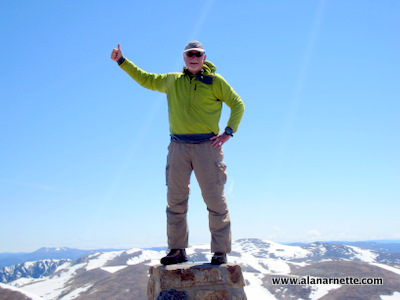
Bottom LineKosciuszko is located in a beautiful area. The rolling hills and mountains plus the high alpine environment is very serene and peaceful - even with the crowds! It was fun to see so many people reach the summit and celebrate their success. This was my last climb for the 7 Summits Climb for Alzheimer's: Memories are Everything®. Sometimes, a mountain does not have to be high to be fun. |
|
 Q: Did
you summit?
Q: Did
you summit?