Podcast Series: 7 Summits Eposide 3–Mont Blanc
Mont Blanc

Welcome to my new limited series on climbing the Seven Summits. For the next eight weeks, I’ll drop a new episode discussing one of the 7 Summits in detail. Today is eposide 3 Mt. Blanc.

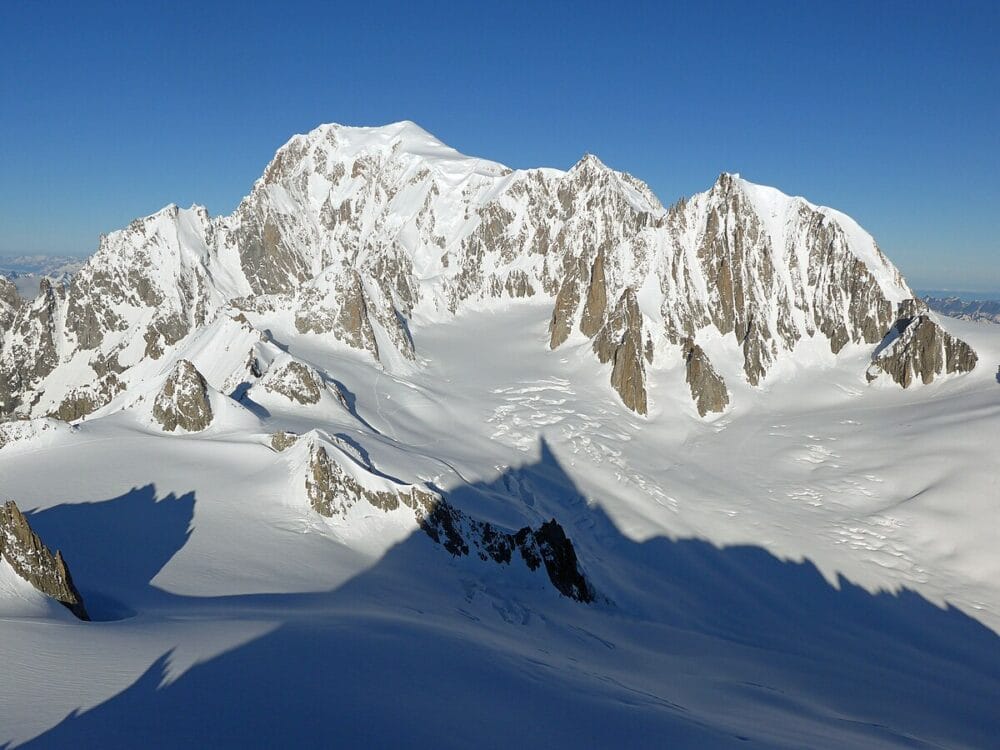
OK, I know what you are thinking, “Alan, Mont Blanc is not one of the Seven Summits!” Yeah, I know, but hear me out. On the border between France and Italy, Mt. Blanc stands at 15,771 feet or 4807 meters high, putting it between Kościuszko and Carstensz Pyramid on the “list(s).”

Month Blanc is a vast massif with three primary subpeaks: Mont Maudit, Mont Blanc du Tacul, and Aiguille du Midi.  Most people find Mont Blanc a serious climb given the objective dangers, such as crevasses, rockfall and avalanches, but it is also a cold and windy peak. While it is usually climbed in one day, it’s a long day of ten to fifteen hours, gaining up to 5,413 feet or 1,650 meters on most routes. Summer is the most popular time to climb, but as in 2022, it can be brutally hot. If you climb in winter, you must be a highly experienced mountaineer.

The 7 Summits idea was hatched and first accomplished by American Dick Bass. He started with six summits in 1983: Aconcagua, Kilimanjaro, Elbrus, Denali, Vinson and Kosciuszko. Then, with guide David Breashears, he became the oldest person, 55 at the time, to summit Everest in 1985. Canadian Patrick Morrow became the first to summit all seven with Carstensz in addition to Kosciuszko in 1986. Italy mountaineering legend Reinhold Messner summited all the peaks without supplemental oxygen, a first, and completed the task in 1986. #7summits

Episodes will drop each week:

September 15: Introduction
September 22: Mt. Kosciuszko, Australia – 7,310/2228m
September 29: Mt. Blanc, France/Italy – 15,771’/4807m
October 6: Vinson, Antarctica – 16,067/4897m
October 13: Carstensz Pyramid (Puncak Jaya), New Guinea – 16,023/4884m
October 20: Elbrus, Russia – 18,513/5642m
October 27: Kilimanjaro, Africa – 19,340/5896m
November 3: Denali, Alaska – 20,320/6194m
November 10: Aconcagua, Argentina – 22,902/6960m
November 17: Everest, Nepal/Tibet – 29,035/8850m
Podcast Series: 7 Summits Eposide 2–Kościuszko

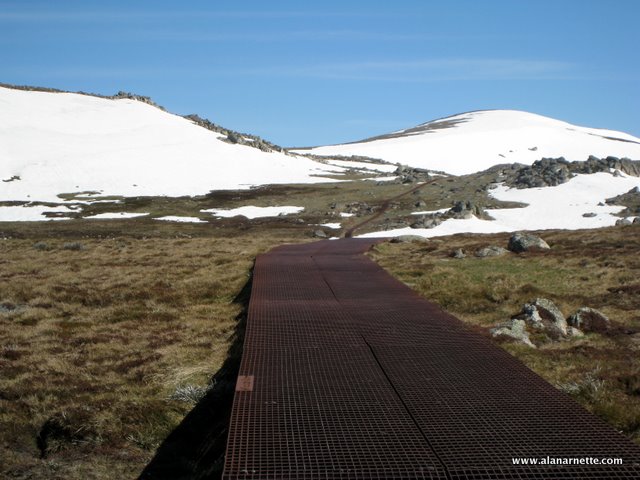
Metal Boardwalk to Kosciuszko

Welcome to my new limited series on climbing the Seven Summits. Episode 1 is an introduction plus a brief update on the Autumn climbing activity in Nepal and Tibet. For the next eight weeks, I’ll drop a new episode discussing one of the 7 Summits in detail. Today is eposide 2 Mt. Kościuszko.

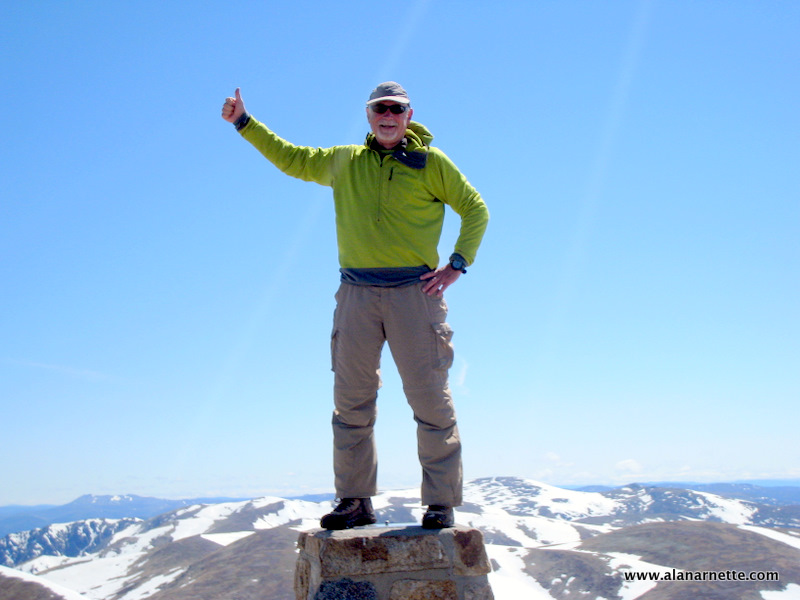
Australia’s Kościuszko (7,310’/2228m), located in the Snowy Mountains, is the lowest of the 7 Summits but is perhaps the most controversial. First, there is the pronunciation, then there is the debate about how it compares to other high peaks in Oceania (is New Zealand continent?) ), and last is the relative ease of this “hill” located next to a ski resort. In any event, today, it’s considered one of the seven on the Bass list, so most people seeking the 7 Summits will tick the box. The first summit was in 1840 by the Polish explorer Paul Strzelecki. I assume the Aborigines or the Morano had a crack centuries earlier, but I could be wrong, as many Indigenous people treat mountains as sacred and not to be climbed.

The Seven Summits, aka 7S, represent the highest point on each of the seven continents. However, as with most things in mountaineering, there is controversy. From a geological viewpoint, there are only six continents on Earth: Africa, Antarctica, Australia, Eurasia, South America, and North America. Europe is considered a peninsula of the Eurasia continental platform and is not an actual physical continent. However, from a political perspective, Europe is regarded as a continent; thus, Elbrus (18,513’/5642m), located on the border with Asia in southern Russia, represents Europe and not Mont Blanc (15,771’/4807m), which lies in the Alps on the border of France and Italy.

The 7 Summits idea was hatched and first accomplished by American Dick Bass. He started with six summits in 1983: Aconcagua, Kilimanjaro, Elbrus, Denali, Vinson and Kosciuszko. Then, with guide David Breashears, he became the oldest person, 55 at the time, to summit Everest in 1985. Canadian Patrick Morrow became the first to summit all seven with Carstensz in addition to Kosciuszko in 1986. Italy mountaineering legend Reinhold Messner summited all the peaks without supplemental oxygen, a first, and completed the task in 1986. #7summits

Episodes will drop each week:

September 15: Introduction
September 22: Mt. Kosciuszko, Australia – 7,310/2228m
September 29: Mt. Blanc, France/Italy – 15,771’/4807m
October 6: Vinson, Antarctica – 16,067/4897m
October 13: Carstensz Pyramid (Puncak Jaya), New Guinea – 16,023/4884m
October 20: Elbrus, Russia – 18,513/5642m
October 27: Kilimanjaro, Africa – 19,340/5896m
November 3: Denali, Alaska – 20,320/6194m
November 10: Aconcagua, Argentina – 22,902/6960m
November 17: Everest, Nepal/Tibet – 29,035/8850m

Podcast Series: Introducing The 7 Summits

Welcome to my new limited series on climbing the Seven Summits. Episode 1 is an introduction plus a brief update on the Autumn climbing activity in Nepal and Tibet. For the next eight weeks, I’ll drop a new episode discussing one of the 7 Summits in detail.

The Seven Summits, aka 7S, represent the highest point on each of the seven continents. However, as with most things in mountaineering, there is controversy. From a geological viewpoint, there are only six continents on Earth: Africa, Antarctica, Australia, Eurasia, South America, and North America. Europe is considered a peninsula of the Eurasia continental platform and is not an actual physical continent. However, from a political perspective, Europe is regarded as a continent; thus, Elbrus (18,513’/5642m), located on the border with Asia in southern Russia, represents Europe and not Mont Blanc (15,771’/4807m), which lies in the Alps on the border of France and Italy.

The 7 Summits idea was hatched and first accomplished by American Dick Bass. He started with six summits in 1983: Aconcagua, Kilimanjaro, Elbrus, Denali, Vinson and Kosciuszko. Then, with guide David Breashears, he became the oldest person, 55 at the time, to summit Everest in 1985. Canadian Patrick Morrow became the first to summit all seven with Carstensz in addition to Kosciuszko in 1986. Italy mountaineering legend Reinhold Messner summited all the peaks without supplemental oxygen, a first, and completed the task in 1986. #7summits

Episodes will drop each week:

September 15: Introduction
September 22: Mt. Kosciuszko, Australia – 7,310/2228m
September 29: Mt. Blanc, France/Italy – 15,771’/4807m
October 6: Vinson, Antarctica – 16,067/4897m
October 13: Carstensz Pyramid (Puncak Jaya), New Guinea – 16,023/4884m
October 20: Elbrus, Russia – 18,513/5642m
October 27: Kilimanjaro, Africa – 19,340/5896m
November 3: Denali, Alaska – 20,320/6194m
November 10: Aconcagua, Argentina – 22,902/6960m
November 17: Everest, Nepal/Tibet – 29,035/8850m
Opinion: An Open Letter to Mountaineering Policy Decision Makers

An open letter to Mountaineering Policy Decision Makers,

After each season, pictures emerge showing trash left by climbers and long queues of climbers seeking their time on the summit. The public demands changes to protect the mountains. The operators announce clean-up campaigns and ask for donations. Countries respond with new rules. However, history shows these new rules are ghosts and are often ignored. There is time before the 2023 season to make significant changes. Please use this time to save your mountains and the tourism industry.

Everest 2021: Video Interview with Dave Roskelley – The Volcanic Seven Summits and the High Point on the Moon in a Tesla

Talking about the Volcanic Seven Summits and the High Point on the Moon in a Tesla with Dave Roskelley is the only American to have climbed the Seven Summits (Messner list) AND the Volcanic Seven Summits. We talk about the why, when, where, and how plus his next big project – to take a Tesla to the high point on the Moon!!!