4 Ways to Help Nepal
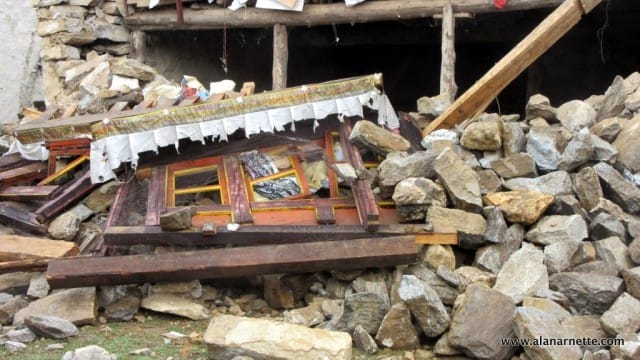
The Nepali people are working hard to rebuild their homes and their spirit is strong. The world community has been generous thus far but there is so much more to be done. In this post I will give an overview of the current status, per my understanding, and make firm recommendations on how you can help. Also, I want to promote help for the village of Pangboche where Lama Geshi and Kami Sherpa lives. This small village is slightly off the main trail from Namche to Everest Base Camp but frequently visited by climbers to receive a blessing from the Lama. Many of their homes were destroyed after second earthquake on May 12, 2015. There are four ways to help: Donate to large relief organizations Donate to long term, smaller organizations located directly in Nepal Donate to small direct efforts lead by individuals Travel to Nepal to support the tourism industry A Huge Problem with Individual Faces My personal fear is that all the negative publicity of a corrupt Nepal government that refuses help for outside its borders (source) or skims money for personal gain will discourage people from giving. Or the magnitude of the problem will deter donations. Or stories of ineffective aid in Haiti will spill over to discourage help for Nepal. (source) While there is substance to these stories, they are not reasons to freeze into inaction; and thankfully few have. The Nepal government has provided some degree of help. International relief agencies have delivered tons of tarps, food and water to remote villages. Smaller organizations continue with their focus in their traditional areas. Individuals with direct contacts and relationships are also making a difference. The annual monsoon rains have begun. There are mixed reports on the ever-present threat of more landslides. But it is clear that the earthquakes have disrupted the ability of villages to grow their own food. Some people are now living in structures formally used to store wheat, rice, potatoes and in some cases their animals – for these villages, their entire way of life has been dramatically impacted. Adding to the misery is a shortage of skilled masons and craftsmen to rebuild homes. Finally, with the desperate need for money, many young men are leaving Nepal, as many as 1500 per day, for work in countries like Qatar thus taking away the ability to rebuild homes in their local villages. (source) This catch 22 situation is made worse when their labor is underpaid, or countries refuse to let them return home to help. This map shows the location and severity of the destruction: If you are uncertain about making a donation to a large organization, look up their rating on this site, CharityNavigator.org for a score on their overall use of money. Another good test is whether you can obtain a receipt for your donation. Of course indviudals working directly with contacts in Nepal most likely will not offer these reassurances. Donate to large relief organizations The United Nations is doing great work in Nepal coordinating efforts and gathering funding from member countries. Also other countries are making significant contributions, for example the USAID. These are funded through tax dollars but sometimes have short term objectives and some are not a long term presence in the impacted country. Often the UN will partner with large relief organizations like the World Food Program, Red Cross, UNICEF, Save the Children, Mercy Corps who are funded through donations from companies and individuals alike. The International Medical Corps is working to relieve the suffering of those impacted by war, natural disaster and disease by delivering vital health care services that focus on training, helping devastated populations return to self-reliance. Our team doctor who was killed at Everest Base Camp, Marisa Eve Girawong, was part of this organization. Most of the major world powers have been and continue to send money, but even this is problematic with the UN recently saying only 22% of the promised funds have been delivered. (source) Donate to long term smaller organizations located directly in Nepal Non-governmental organizations aka NGO are making a huge difference. Nepal has more than 5,643 NGOs (source) so selecting one that matches your personal goals can be difficult. These are my suggestions based on personal experience and relationships DZi Foundation: In Nepal since 1998. Today they have a full-time staff of almost 20 Nepali nationals working between the headquarters in Kathmandu and the remote communities where their projects take place. dZi currently serves almost 30,000 people in an expanding network of remote villages, focusing primarily on basic infrastructure like school buildings, toilets, drinking water systems and bridges as well as agriculture initiatives. For the earthquake they will work on the reconstruction of at least 20 damaged schools, impacting 4,200 children. Himalayan Stove Project: We donate and distribute, free, clean-burning, fuel-efficient Envirofit cook stoves, transforming the lives of individuals and families who now cook with traditional, rudimentary stoves or over open fire pits inside their homes, consuming excessive amounts of precious fuel and polluting the indoor air to dangerously levels. For the earthquake, their overarching goal is to provide as much emergency aid and redevelopment help as we can, with the support of our partners on the ground, and our donors and supporters. Juniper Fund: They provide funds to affected families to cover cost of living expenses for years after the loss of a worker. For the earthquake they will work with the 10 Nepali families who lost their primary wage earner at Everest Base Camp. Donate to small direct efforts lead by individuals The climbing community has rallied to support one of the premier climbing destinations on the the planet. Almost all major guide services have a donation program in place where they will help their Sherpa and climbing staff in Nepal to rebuild their homes. Visit your favorite guides website to see their program and make a donation. But by far the largest of the small scale efforts is by individuals through crowd funding websites. I’m told
Update on Latest Nepal Earthquakes
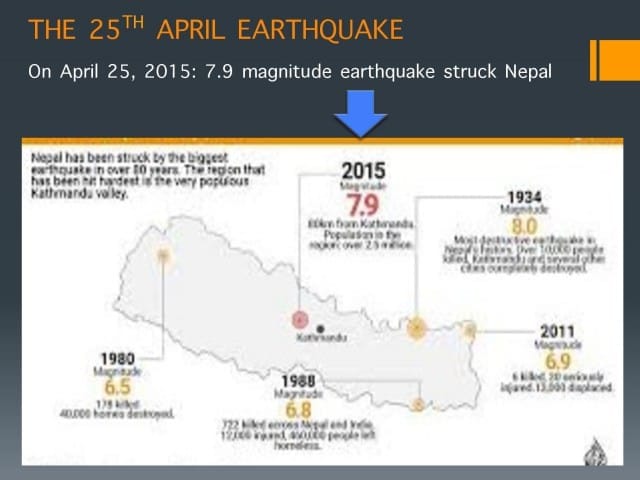
Sadly another major earthquake, 7.2, hit Nepal on Tuesday, May 12, 2015. The epicenter was near Namche Bazaar and the damage is said to be extensive in the Solo Khumbu per Ang Tshering, Charmin of the Climate Alliance of Himalayan Communities. They report the following: Contact was made within 5 minutes of earthquake through satellite phone with people in Khumbu: Damages to property has been vast in the Solukhumbu region Too early to report on human and livestock casualties Efforts to contact others in Khumbu have failed due to difficulties in communication lines Reports are streaming in of the effects in other parts on Nepal Damages and human casualties in Kathmandu are being reported Emergency cabinet meeting is being held in Singha Durbar, Kathmandu Prime Minister has addressed the nation now (Tuesday) The following portfolio describes this and the previous damage very well.
Everest 2015: Season Summary – Summits Don’t Matter
Over 9, 000 people died in April 2015 from a 7.8 magnitude earthquake near Kathmandu. And no one summited Everest – from either side, from any camp. Summits don’t matter. As has been my custom since 2002, I will summarize the season but this time from my first hand experience as I was climbing Lhotse which shares 80% of the route with Everest. I was between Camps 1 and 2 when the 7.8 magnitude earthquake reached the Western Cwm. This summary, while about the Everest season, is also about a human tragedy where thousands lost their lives, multiples of that are now homeless and many no longer have a way to make a living. Earthquakes are mean beasts, natural disasters, that strike with no warning, destroy at random. I spent one evening this week speaking with helicopter pilots and people who have just returned from the earthquake epicenter regions. They say there are villages flattened, with landslides and down trees seemingly erasing entire villages off the trail systems – these are areas trekkers seldom touch, nor apparently relief agencies at the moment. There are many, many small, individual efforts to reach these villages in addition to the large scale multi national efforts – the progress is not for lack of trying but it all seems to be moving too slowly. The largest organizations with resources to hire helicopters, deliver food and medicine are making a real difference. If you want to make a donation where your money makes an immediate difference in Nepal, these are a few suggestions International Medical Corps Juniper Fund Himalayan Stove Project Cholera is a growing concern with dead animals, and humans not being cremated or buried. Once this takes hold, the fear is the death toll will sky rocket. For an excellent overview of impact on Nepal as of 3 May 2015, please see this article on the Economist. High/Low Expectations The Everest 2015 season began with much trepidation, and attention. The number of permits issued surprised even the most jaded Everest observer: 358 individuals for Everest 114 for Lhotse and 56 for Nuptse – these were record numbers. With 16 mountain workers killed after an ice serac fell onto the Khumbu Icefall and over 40 trekkers killed in a snowstorm in the Annapurna region last autumn, many in Nepal feared the industry would take a hit with lower numbers. Some thought Everest climbers would prefer to climb from Tibet or trek in Bhutan. However, history shows us once again that it is a fine predictor of the future. After record deaths in 1996, 2006 and 2012, the following year delivered record climbers on Everest; 2015 was no different. Even on Everest from Tibet for 2015, records permits were issued, over 200 foreigners . The Everest Machine continued to be strong. Including the foreign permits, local Sherpa, Tibetans, cooks, cook boys, porters, over 1200 people were gathered on both sides of the world’s tallest peak, awaiting their turn for the summit. The human psyche is an interesting phenomenon. Migrating towards EBC Thus in early April people streamed into Kathmandu, flying to Lukla or driving to Chinese Base Camp on the north. The weather was, interesting. A few weeks earlier, Sherpas from the largest teams had already visited Everest Base Camp (EBC) at the foot of the Khumbu Icefall to mark spots for their teams and reported deep, wet snow everywhere – 3 feet of the white stuff. The trails were filled, as were the teahouses; trekkers and climbers alike jammed into the stone and wooden structures, staff short tempered trying to meet the need. The promise of Wifi, fell short with schemes and technical problems thwarting the promise of Facebook selfies or emails back home. Yes, a first world problem in a third world country. Capturing the Moment Video cameras were as common as Dzos and yaks. It was reported that eight major film crews were on the south side this year, all waiting for some kind of Everest disaster so they could capture the human drama, package for television and make a name for themselves, until the next reality show. The only question was, if they could be at the right place at the right time. Writers and reporters from newspapers to magazines to websites, called contacts to get their background stories pre-written as early as February. Many published a soon to be annual article on April 18, the anniversary of the Sherpa deaths in the Icefall. A week later it would be worse. Arriving at EBC, it was stark, rolling glacial hills covered in white powder, and it was cold, extremely cold. Mid April is supposed to be somewhat warm. The traditional weather patterns for the past decade: clear, cool mornings changing to afternoon light snow showers changing to crisp clear nights – 2015 was full of harsh cold and heavy snow. The “New” Everest Route The team of specialized Sherpas, aka the Icefall Doctors, had arrived in mid March, aerial photographs in hand with expert consulting from some of the Everest climbers around, their remit was to find a “new, safe route” through the Khumbu Icefall. Last year’s route hugged the West Shoulder of Everest, putting each person in the direct fall line of the hanging serac. The consequences were deadly when it released. For 2015, they wanted to return it more towards the center, or near Nuptse, climber’s right, to reduce this exposure. As teams got settled at EBC, everyone wanted to know about the route. Where was it, was it safer, how many ladders? The early reports said shorter and safer. But when the first westerners entered the Icefall, there was a huge surprise. The lower section was in fact almost direct, no ladders until half way, or higher; it was fast. But the top section had an obstacle, some call it an aid, that would stop both foreigners and Sherpas alike: two vertical snow walls near the top had ladders, six to be exact, lashed together with nylon
Everest 2015: Team Locations
Welcome to Alan Arnette’s Everest 2015 coverage My coverage is based on my own summit and climb experiences, research, sources, and public information. I try to provide insight and interpretation of the activities ranging from routes to weather to the challenge of climbing Everest. I will be climbing Lhotse thus will be reporting from Everest Base Camp this year with all the regular features plus videos and interviews directly from the mountain as it happens. Latest Everest News – Sunday, May 3, 2015 – Nepal time EVEREST CLOSED FROM BOTH NORTH AND NO ONE CLIMBING FROM THE SOUTH Everest has been closed by the Chinese and practically so on the Nepal side after a 7.8 magnitude earthquake hit Nepal at 11:56 AM on Saturday April 25. The epicenter of the quake was Lamjung, which is 48 kilometers NW of Kathmandu and approximately 100 kilometers west of Everest Base Camp. These are the latest headlines. Scroll down for the latest blog post. Alan Arnette (me) was between Camp 1 and 2 in the Western Cwm when it hit. The Nepal Government finally admitted on 3 May 2015 what everyone knew- Everest is closed from from South side. The Icefall Doctors have given up, no strong, large teams remain at EBC to fix the route a vi C2. Finally the season on both sides is officially over. This will be the first time since 1974 that there will BE NO summit on Everest. In further embarrassment, Nepal’s tourism department said on 4 May, 2105 that Everest open, and it is up to anyone with a permit to climb. personally, I hope no one tries. Almost no one is at EBC but there are always individuals with their own agenda. Prior Headlines The Indian Army remains at EBC to assist in clean up. To my knowledge, there will be no further attempts from Nepal for 2015. Only a few large teams still trekking down the Khumbu Many climbers have already or are scheduled to leave Kathmandu by commercial flights Kathmandu airport has been closed to heavy military, relief airplanes due to runway wear/tear considerations, still open to smaller aircraft, including most commercial flights. HIMEX has declared they will not attempt any Himalayan Peak. I think this is the last major team to have kept their decision open thus making it 99% that no one will attempt Everest from Nepal … but there are always individuals like last year that could try. Nick Ciensk (Founder and CEO and Under Armour Senior Director of Innovation), climbing with Himex trying to climb Everest, Lhotse, Makalu and 3 other 8000m peaks in 6 months has canceled his efforts May 1, 2105 – this may be the last holdout for Everest 2015 from Nepal Nepal Government says Icefall Doctors will return to fix Khumbu Icefall route “within a week” The Chinese (CTMA) have officially announced that ALL mountains in Tibet are closed to climbing – unclear if that extends to the autumn season. CTMA close Everest North for fear of aftershocks Nepal side teams are streaming out by helicopter or by foot through the Khumbu Himex adopting a wait and see approach after getting approval to fly loads (not people) into Cwm At least 19 dead at EBC, over 120 injured 170 climbers evacuated out of Western Cwm Ice serac releases off Pumori caused by 7.9 earthquake near Kathmandu on Saturday, April 25 The casualty count at EBC is 19+, many, many injuries ~ 120_ as of this post – 7PM April 27 Most of the injuries and casualty were from wind blast off Pumori and associated impact with rocks EverestER and Doctors with others teams doing amazing work Alan was between C1 and C2 when earthquake hit causing major avalanches off Nuptse and Everest W Shoulder Alan now at Gorak Shep starting long journey to return home, comms spotty at Multiple aftershocks created uncertainty a about Khumbu Icefall causing evac from Cwm and cancellation of many team’s expeditions. Over 150 helicoptered from C1 in Western Cwm today, April 27 No one ever in real danger at C1 and C2, plenty of food and supplies 4 minute turn around time to EBC with 2 per helicopter Outstanding cooperation with some exceptions Many have found personal items in flattened tents Many teams have left EBC and are in teahouse in Khumbu Some are back in Kathmandu via helicopter Almost all teams are preparing to leave EBC and stop south side attempts Indian Army team of 35 to remain at EBC to assist with humanitarian efforts Some small teams will stay and make a decision in a few days Icefall Doctors have stopped maintaining the route due to safety, aftershock concerns – they may return – unkown A sincere and deep thank you to everyone who joins the Registry or makes a donation to one of the Alzheimer’s non-profits. Manage email notifications of new posts using the form in the lower right corner of this page South Col Route (map) Nepal CLOSES Everest as Icefall Doctors says route unrepairable Everest only TEAMS (members/western guides) 359 Climbers/350 Sherpas EBC C1 C2 C3 C4 S.Col Summits Adventure Consultants (9/2) e Adventures Global (4/1) e Alpine Ascents Int. (6/2) e H Arnold Coster Expeditions (10/1) e Asian Trekking Eco Teams e H Altitude Junkies e Benegas Brothers (2/1) e Gurkhas (15) e Himex e IMG Classic (19/0) e H IMG Hybrid (10?/4?) e H Jagged Globe (9/2) e RMI (6/2) e H Madison Mountaineering (12/4) e H Mountain Gurus (2/1) e Mountain Trip (1/1) e Sean Wisedale (4/1) e Summit Climb (8/1) e Tim Mosedale e Trek 8848 e 360 Expeditions (1/1) e others e SOUTH TOTAL (est) Northeast Ridge Route (map) Everest from Tibet CLOSED by CTMA fearing aftershocks TEAMS (members/western guides) 150 Climbers/175 Sherpas CBC ABC C1 N.Col C2 C3 Summit Asian Trekking e Alpenglow (6/2) e Adventure Peaks (8/1) e British Army e Kari Kobler e Summit Climb (11/1) e 7 Summits Club e others e NORTH TOTAL (est) L=Lobuche,e=climb
Everest 2015: Earthquake Devastation Spreading
I spent this evening speaking with helicopter pilots and people who have just returned from the earthquake epicenter regions. They say there are villages flattened, order with landslides and down trees seemingly obligating entire villages off the trail systems – these are areas trekkers never touch, nor apparently relief agencies at the moment. Many of my readers think of Nepal as the Khumbu and the trek to Everest Base Camp or the Annapurna Circuit, but these areas did not take the brunt of the earthquake. There are many many small, individual efforts to reach these villages in addition to the large scale multi national efforts – the progress is not for lack of trying but it all seems to be moving too slowly. I believe the government of Nepal is finally internalizing the scope of this destruction, but is struggling on how to effectively receive aid. For example, they have insisted on inspecting each relief load that arrive in the country, slowing down the help to their people. Also, the infrastructure is breaking underneath the aid, causing officials to close the only airport in Nepal capable of receiving large airplanes and the heavy military aircraft that are bringing in tons of desperately needed provisions. To be clear, it is still open to most commercial aircraft and I am hearing late night flights daily with commercial passengers. There have been hundreds of aftershocks, each one sending people scrambling outdoors for fear of their home collapsing. Keep in mind that Kathmandu, with exceptions, is not the problem, the remote villages where homes are built with stone and mud are the ones collapsing and the people are in need of medical help. This scale of destruction requires a massive scale of help. Individuals and small efforts help but they are a finger in the dike – a helpful one but much more is needed. The attached story from the Himalayan Stove Project is one of the I have seen that gives a clear overview of the areas impacted the most and what you can do to help https://www.linkedin.com/pulse/help-urgently-needed-support-our-humanitarian-nepal-basch Follows is a cut and past but please go to the link for pictures and more details: Help is urgently needed to support our humanitarian in Nepal Vivid images of the devastation caused by the massive April 25th earthquake in Nepal continue to emerge as rescue efforts slowly reach more isolated and severely affected parts of the country. #TheHimalayanStoveProject, in cooperation with Rotary International Clubs and individual Rotarians and a generous global donor community is making a difference in helping to ease the suffering and help people begin the process of normalizing their lives.Your donations will help us provide immediate earthquake relief. Please give generously – every dollar makes a difference. Your donations will provide immediate earthquake relief. Please give generously – Every dollar makes a difference. To donate click here: http://himalayanstoveproject.causevox.com/ The death toll has now exceeded 7,000 and is expected to rise still higher, and the destruction of homes (and their stored food stocks) approaches 80% in some of the hardest hit regions. The dangers of the current situation have been clearly articulated by UNICEF – “Hospitals are overflowing, water is scarce, bodies are still buried under the rubble and people are still sleeping in the open … this is the perfect breeding ground for disease.” We, through our partners, are addressing: Providing shelter – many homes have been obliterated, and the monsoon rains will arrive by the end of May (unless they come early, which many fear) – shelter is crucial – tents and tarpaulins at a minimum, and more substantial shelters wherever possible. Water, food and sanitation – some of this will be provided directly, but our principal impact will be through logistical support. Our relief efforts are tightly focused (and remain flexible as new information becomes available). The key elements are: #1 – Providing immediate relief and reconstruction help in areas where our Himalayan Partners are active, and “know the territory”. Specifically: Gumpa Village in the Sindapulchowk District, Megre Village in the Ramachamp District, The Gorkha District Upper Mustang Some of the near-in areas in the Kathmandu Valley Off the Wall Trekking (Ian and Sarita Wall) is one of our key (and early) Himalayan Partners and have close ties to Gumpa and Megere villages. Sarita grew up in Megere, and it is still home to her extended family. In 2012 and again in 2013 we delivered stoves to these communities, so they are part of our “family” as well. Sindapulchowk District (where Gumpa is located) has been particularly hard hit – there were more deaths recorded than anywhere else in Nepal — 2,560 (so far), compared to 1,622 in Kathmandu and up to 90 per cent of the homes have been destroyed. Gorkha District – The Gorkha Foundation is one of our early and active partners. The district has sustained extensive damage as well. They are establishing a logistics office in Gorkha Bazar, and we will be helping them with shelter and other needs. Upper Mustang – A hauntingly beautiful region of Nepal, once an independent kingdom, it became part of Nepal 100’s of years ago. The Himalayan Stove Project was born in the stark and beautiful landscape of Upper Mustang, and more than 900 stoves have been delivered and are changing lives there. Our partner in this region which is on the Tibetan border is the former Royal Family of Mustang; the Bista family, and our principal contact is Jigme Bista; the “crown prince” who is the “custodian” of Mustang and it’s people. The full extent of earthquake damage in Mustang is not yet known because communication is fragmentary. It is remote and high and at the of times communication can be challenging. However, we do know Jigme is hard at work to identify current conditions and what work, and help, is needed. Because of our close connections with the Bista family and numerous visits to Mustang we are in a unique position to help provide whatever assistance
Everest 2015: Kathmandu and Everest, a Small Part of Nepal
My flight from Lukla to Kathmandu was uneventful, in fact more on time than many of my last trips. My gratitude of being met by US Special Forces and a dedicated team from Global Rescue services has quelled any concerns of personal impact. I know someone in the United States is looking after her citizens. All I can think about is the carnage at Everest Base Camp, the loss of Eve and the impact on the almost 8000 throughout Nepal, the unseen damage and the fact that the world’s attention and media will soon turn to the latest “man bites dog” story bothers me. As I leave the land where a down jacket, gloves and skull cap is required, I enter the intermediate season between harsh winter and steady monsoon rains. I do think about Everest. Reports of climbers being stranded are supplied to feed egos, the basis in reality is tenuous at . Reports of the horrors at base camp are real. Rocks flew into humans at supersonic speeds, they never had a chance. Doctors there to climb or serve were pressed into duty out of service or deep commitment. Everyone there was impacted from carrying corpses, picking up body parts, communicating with loved ones back home, greeting helicopters with climbers rescued from the Western Cwm – yes, it was horrific and not be be glorified, capitalized or minimized – it was a war zone and most there rose to the challenge and will be changed forever. I flew out of Luka basically on time this morning and arrived at the Kathmandu domestic airport with no issues, in spite of the horror stories told a few days earlier. I don’t doubt them, only acknowledge that things are getting back to normal. I am fortunate and know it. I walked the streets of the capital this Saturday morning and afternoon, it is subdued – due to the earthquake or because it is Saturday – I don’t know. Huge helicopter flew overhead. Parked at the airport, they represented neighboring countries, generously giving aid. I go into a coffee shop, it is crowded. Ladies looking at men, they look back with the awkwardness they do when in pursuit. The manager welcomes me with a big smile, offers a menu with grace. I order a danish and coffee even though I am not hungry. Power line poles are down, walls lay strewn, police and military collect stray bricks off fallen walls to give the impression that all is well – it is not. Remote villages are destroyed, yet to be reached, the citizens sending urgent appeals for medical assistance, food – help. As always in these crisis – sunami, earthquakes, fire – the remote places suffer the most. The world news media covers the large headlines well, the small personal stores that are buried deep, as the Himalayan hillsides are left out. This is what Nepal really entails – a tiny village of 20 family members, perhaps a monastery, a male who leads the clan, making a living off a cow, potatoes, daily prayer. This is Nepal. I don’t blame the media, it is hard. The public’s attention short – attracted to the next story. Just like in Haiti, a firestorm in Arizona, a landslide in France. We are served what we request. What will be the future of Nepal? The media has done a nice job of quantifying the problem: 6,700 dead, countless homeless, billions to repair the country … overall about the cost of an aircraft carrier, or “defense” systems by the world super powers to bring this country, and others like it, to a point of stability, or even the ability of mothers to give birth to a healthy child. I was in Nepal to climb mountains – a sport, a country and a people I love – deeply. Today, I feel lost. Can I help? Of course, I can move stones, carry water or help dig dirt. Is that enough? Of course not. Those who are doing this, help others but also, do it for themselves – thank you. But much more needs to be done for a sustainable solution. The government of Nepal must transform to put it’s citizens first, and gain – personal or political – far down the list. Hardly a new request for any leadership – United States, United Kingdom or Zambia. The Maoist uprising got what it wanted, reminding us of the adage of be careful what you wish for. They influence the country and it’s people are dying. Nepal is often romanticized as the land of peace and tranquility. The hard reality is that Nepal consist of many ethnicities. Nepal is known to Westerners as the Sherpa people yet they are a fraction of the population and enjoy a disproportionate income and lifestyle compared to the nearby India or Pakistan. That said, it does not reduce the need to help, to improve; once again it is up to their government to lead. But the need for foreign help. is urgently need – money, not clothes or perishable food. If you know of a reliable destination for you charitable donation, please give it – just do your homework. Doctors without Boarders, the Juniper Fund – they are solid. As I walk the streets of the capital, it is not representative just like Paris, London or New York for their countries. Kathmandu is not a Bob Seiger song. Yes they are citizens of that country but there is so much more. Our planet is not selective, it shifts and moves as needed. Tectonic plate movement is an everyday part of the adjustment. Sometimes, we get in the way. I hurt for all the people of Nepal. The lowlands, highlands, city and abroad. Memories Are Everything Alan
Everest 2015: Icefall Doctors and Helicopter Rescues – Justified or a Crutch?
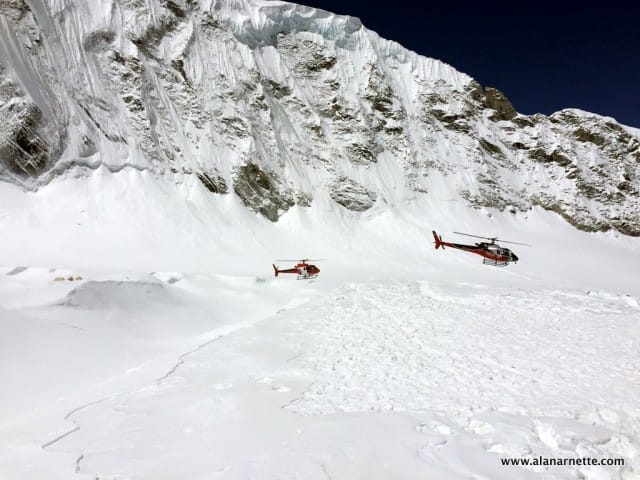
The scope of the Nepal earthquake tragedy is a huge human disaster yet the climbing community is consumed with Icefall Doctors and helicopter rescues on Everest. I believe it is good to question and understand major life events yet I am sometimes dismayed how the climbing industry seems to literally consume itself with criticism that lacks information, prescription indictments without evidence and a vision that is sometimes based on past achievements that, while admirable, is exclusive and unwelcoming to the next generation. All this seems to be occasionally fueled by organizations, media and personalities that make a living off the sport itself. I guess I fueled it for my readers with my one recap comment (see full post) about the Icefall Doctors so let me try to give my perspective as someone who was there, involved and rescued. Obviously, I have no corner on the truth, only on what I saw with my own eyes and felt in my heart thus I submit this for your consideration and information only. Icefall Doctors When the earthquake and associated aftershocks occurred, I know our team understood it would take days, if not longer to repair the route in he Khumbu Icefall in order for us to down climb to EBC – there was little thought of helicopter rescue at the onset. World class professional mountain guides including Damien Benegas, Jeff Justman and Justin Merle spent the day after the initial quake searching for a new route down, starting from Camp 1. Others, sorry don’t know their names, did the same climbing up from EBC. They worked up to the point when the third aftershock and the warming of the day made the Icefall more unstable thus putting their lives at risk and they failed to find a suitable new route. I personally listened to the radio conversations. The Icefall Docs who knew the route because they had studied photographs and spent the previous five weeks putting it in and maintaining it were not part of this initial team. They had reed to Gorak Shep as their camp had been destroyed by the blast. To my knowledge they didn’t ask other camps to host them similar to what other teams did in order to stay and support their climbers still on the mountain. This was similar to 2014 when violence at EBC sent the Docs to Gorak Shep thus effectively closing the Icefall for the season. The Icefall Doctors are funded through part of the $11,000 climber permit fees with $600+ going to the Sagamartha Pollution Control Committee (SPCC). This totaled $215,000 for 2015 with 358 climbers. It is estimated the eight (8) Icefall Doctors are paid about $2,500 each for the season with the rest of the fees ($195,000) staying in Kathmandu. All Everest/Lhotse/Nuptse expeditions are required to allow the icefall route to be installed and maintained by the SPCC and have little to no choice as to where, when and how the route is maintained. To be clear, I and I assume most everyone, fully understood their top priority was the safety of their families. I personally gave my sat phone to Sherpas for them to call home but the cell service through this part of Nepal was down for days thus families were unreachable. It was a two to five day walk for them to get to their villages and some left EBC immediately with the full support of team members and expedition leaders. The “disappointment” with the Docs comes from the simple fact that they had the knowledge, skills and access to evaluate the route for repair, and sustainability after the quake, yet they left. If you are still reading this, here is the analogy. You want to build a home with a sprinkler system to protect it from fire yet the city tells you don’t do it because there is a fire station next door, and you pay for it with your taxes – you don’t have a choice. One day, your home is on fire you call for help and are told they won’t come because the weather is bad. You had a contract, counted on it with people who agreed to it and when you needed it the most, it wasn’t available. I appreciate what the Docs do for climbers, their job is hard, physical and dangerous. And it is not always easy. Helicopters The other area of controversy is why were helicopters used to rescue climbers in the Western Cwm and not used to rescue Nepalis in the impacted parts of Nepal. Fair question. Again, I was there and these are my observations. Like it or not, choppers have become part of the climbing fabric, especially on Everest. They are routinely used to carry people to base camps, resupply expeditions and perform medical rescues. This is not up for debate as it is the reality and will probably never change. On the day before the quake multiple choppers were working Everest plus taking ill trekkers out from Gorak Shep and below. The day of the quake the weather had closed in and visibility, at least in the Western Cwm was virtually zero. Some of the choppers had been grounded in Lukla, normal so they can quickly access the upper Khumbu. Let me pause to say the obvious, the helicopter services run a business and a lot of it is funded by insurance paid for by the climbers and trekkers. It should be no surprise they go where the money is … Ten years ago, helicopter rescues were run by the Nepal Military, similar to Pakistan today. It was cumbersome, slow to respond and ineffective at times. Also the financial investment to high altitude helicopters like the modern Aérospatiale B3 helicopter at ~ US 3 million each is a far reach for a poor country like Nepal. The private services have saved many lives since taking it over. Think back to the amazing 1996 rescue performed by Nepal pilot and army captain, KC Madan with
Everest 2015: North Closed, South Res – a full recap
First, I want to say that this earthquake is a Nepal tragedy, not a mountaineering event. My deep, deep condolences to all of Nepal, victims, injured and homeless. No country deserves this, much less the gentle people of Nepal. I am now at the Panorama Lodge in Namche Bazaar, safe, with most of the Madison Mountaineering team. In recap, a 7.8 magnitude earthquake hit Nepal at 11:56 AM on Saturday April 25. The epicenter of the quake was at Lamjung, which is 30 miles northwest of Kathmandu and approximately 62 miles west of Everest Base Camp. To keep this in perspective, this is the largest event in almost a century according to the USGS: The April 25, 2015 M 7.8 Nepal earthquake occurred as the result of thrust faulting on or near the main frontal thrust between the subducting India plate and the overriding Eurasia plate to the north. At the location of this earthquake, approximately 80 km to the northwest of the Nepalese capital of Kathmandu, the India plate is converging with Eurasia at a rate of 45 mm/yr towards the north-northeast, driving the uplift of the Himalayan mountain range. The preliminary location, size and focal mechanism of the April 25 earthquake are consistent with its occurrence on the main subduction thrust interface between the India and Eurasia plates. Although a major plate boundary with a history of large-to-great sized earthquakes, large earthquakes on the Himalayan thrust are rare in the documented historical era. Just four events of M6 or larger have occurred within 250 km of the April 25, 2015 earthquake over the past century. One, a M 6.9 earthquake in August 1988, 240 km to the southeast of the April 25 event, caused close to 1500 fatalities. The largest, an M 8.0 event known as the 1934 Nepal-Bihar earthquake, occurred in a similar location to the 1988 event. It severely damaged Kathmandu, and is thought to have caused around 10,600 fatalities. This post has video and pictures from the Western Cwm, Everest Base Camp Nepal (EBC) and the trek out. As always I will simply tell you what I experienced and witnessed with no agenda. A few points in the post: – The Chinese Tibetan Mountaineering Association (CTMA) closed Everest North April 29 for fear of after shocks. – Another avalanche off Everest West Shoulder onto the Khumbu Icefall occurred this afternoon (April 29), further encouraging teams to leave Everest South – The scope of death and destruction at EBC was a cross between an F5 tornado and a war zone. – The event was unprecedented for Everest Base Camp. Teams have camped in this area for decades. The ice serac that released was triggered by the earthquake. It between Pumori and Lintgren on a saddle at 20,177 feet; EBC is 17,500 feet and also presumably off Pumori proper. As tons of ice flew down the mountain towards EBC, it gained speed and was compressed as it hit the morane that normally protects EBC. This serac and others similar have released before including a small one I witnessed and videoed last week off Pumori and a large one in 2003 that sprayed me at EBC with a air blast but no damage. Individuals at EBC first reported hearing and seeing an avalanche off the Lho La Pass, but then heard a larger noise to their left. They saw a rush of white snow spray, rocks and debris flying towards them. Our base camp team was in the direct line, some ran for shelter behind the puja rock alter, others hit the ground and tragically, our team Doctor and Base Camp Manager, Marisa Eve Girawong was killed. She was a gentle, kind loving spirit. To say we are devastated by her and the loss of so many, is an understatement. Camps above and below our general area, mid EBC, were almost complete spared. Other team’s camps that were hit hardest included the Norwegians just beside us, Indian, just below us. Adventure Consultants, SummitClimb, Jagged Globe, Henry Todd, EverestER and SPCC were also destroyed. Personal sleeping tents were flattened, large dining and cooking tents were sent tumbling. Gear was found a quarter mile away from the camps. – The stories of “climbers stranded” in the Western Cwm are simply untrue or a matter of exaggeration. We were the highest team on Everest at Camp 2. Others were below us at Camp 1. All had sufficient food, fuel, water and shelter to survive for several days. A few individuals and one team choose to stay in the Cwm hoping the Icefall would be fixed. I cannot say what their motivation was other than the helicopter flight was expensive if you didn’t have rescue insurance. We also hoped the Icefall would be fixed, but after the 3rd major aftershock in 24 hours it became clear the entire area was unstable and the safest decision was to get out as quickly and safely as possible thus Garrett Madison made the decision to take advantage of the weather to helicopter down to EBC as did other major commercial teams. He guaranteed the flight without waiting for rescue insurance to kick in. I have Global Rescue through the American Alpine Club and I am 99.9% sure they will cover the 2 minute flight. We hiked back down to Camp 1 where 170 climbers and Sherpas from multiple teams gather around two makeshift landing pads in the snow. The pilots did an amazing job of touching down for 30 seconds while two people jumped on board with their climbing pack. We flew a direct line over the Khumbu Icefall to a landing pad on the rock where they again touched down for 30 seconds or less while the passengers jumped off. The pilot flew back to the Cwm. This round trip took five minutes or less. I took the video of leaving the Cwm and flying to EBC. Note the huge crevasses near the top of the Cwm, This was the problem in climbing
Alan Arnette: Audio Dispatch from Lhotse for Alzheimer’s
This is the latest audio update from Alan Arnette climbing Lhotse for Alzheimer's. Please sign up for the Alzheimer's Prevention Registry.
Everest 2015: EBC Death Update
A very terse update due to intermittent Internet. Everyone is very tired, mentally spent. Sincere and deep condolences to everyone in Nepal impacted by this tragedy. Ice serac releases off Pumori caused by 7.9 earthquake near Kathmandu on Saturday The casualty count at EBC is 22+, s site many, many injuries ~ 40+++ as of this post – 7PM April 27 Most of the injuries and casualty were from wind blast off Pumori and associated impact with rocks EverestER and Doctors with others teams doing amazing work Alan was between C1 and C2 when earthquake hit causing major avalanches off Nuptse and Everest W Shoulder Alan now at Gorak Shep starting long journey to return home, comms spotty at Multiple aftershocks created uncertainty a about Khumbu Icefall causing evac from Cwm and cancellation of many team’s expeditions. Over 150 helicoptered from C1 in Western Cwm today, April 27 No one ever in real danger at C1 and C2, plenty of food and supplies A few more teams being evac Tuesday, April 28 including Summit Climb and Italian team according to Sherpas 4 minute turn around time to EBC with 2 per helicopter Outstanding cooperation with some exceptions Many have found personal items in flattened tents Many teams have left EBC and are in teahouse in Khumbu Some are back in Kathmandu via helicopter Almost all teams are preparing to leave EBC and stop south side attempts Indian Army team of 35 to remain at EBC to assist with humanitarian efforts Some small teams will stay and make a decision in a few days Icefall Doctors have stopped maintaining the route due to safety, aftershock concerns – they may return – unkown