Climbing the World to End Alzheimer's
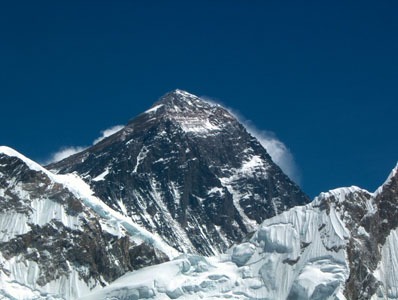
Mount Everest from Kala Patar

Climbing Mount Everest: A Story for KiDs

Stories for children of all ages, especially kids under ten. Read them together and explore the mountains, the people of Nepal and what it takes to climb the highest mountain on Earth.

Mount Everest

Mount Everest, the tallest mountain on Earth.

Mt. Everest is the highest mountain on Earth. It is as high as airplanes fly – 29,035 feet – higher than birds fly. It is in Asia between Nepal and China. Every year hundreds of men and women try to climb it wanting stand on the top. I tried to climb it in 2002 and almost made it but got sick and turned around near the top. I did my best. This story is about my trip.

Page 1 of 37

Khumbu Kids

Sherpa children playing in the Khumbu Valley near Mount Everest.

It took a week to walk to Mount Everest from an airport in Lukla, Nepal. On the way I saw many kids like you. These three were playing in their front yard as I walked by. They didn’t have any toys but were very happy. We laughed together even though I came from the other side of the world! The kids in Nepal are just like other kids around the world. They play together, go to school and dream about what they want to be when they grow up.

Page 2 of 37

Yaks on a trail

A Yak carrying his lunch. See the big bell around his neck?

I needed to carry a lot of clothes and gear to climb Mount Everest. It was impossible to carry all of this by myself so I got help from the local Sherpa people and animals called Yaks. Yaks are big furry animals that are very strong and are able to keep their feet on narrow paths. Their keepers are very careful not to put too much on the yaks’ backs. They make sure they have lots of food and water every day. I like the yaks because they are big and furry.

Page 3 of 37

Male Porter on a Swinging Bridge

A man carrying supplies to villages and climbers.

Men also carry heavy packs on their backs. They bring food and supplies to the villages and to people climbing the mountains. They wear running shoes or sometimes go without shoes at all. They do this hard work to earn money for their families. There are no streets or cars on the way to Everest, only dirt trails! The dirt trails become very muddy when it rains.

Page 4 of 37

Woman Porter

A Sherpa woman resting with a heavy basket of food.

Sometimes women also carry heavy packs, just like the men. Women and men work equally hard in Nepal. The women also take care of the children so they work very hard. The women smile and laugh while they work. They wear dresses that are full of color.

Page 5 of 37

Street in Lukla Nepal

A muddy street in Lukla, Nepal.

There are many villages on the way to Everest. Very few have telephones or electricity. There is no TV. Houses are made of stone and wood. The stone for the walls are cut from bigger rocks and carried for miles to the village. The roofs are made of tin. It is very noisy when it rains. The villages are always busy with people and yaks.

Page 6 of 37

Sherpa Woman in Namchie

A Sherpa woman in Namche Village, Nepal.

The people who live near Mt. Everest are Sherpa people. They came over the mountains many years ago from Tibet and now live in Nepal, the home of Mt. Everest. This Sherpa woman made her own colorful dress. A prayer is cut into the rock behind her. Many of the Sherpa people have a religion called Buddhism.

Page 7 of 37

Everest base Camp

Everest basecamp, altitude 17,500 feet.

Climbers often get togther in teams to climb Everest. All the teams stay in a place called basecamp. Each team has many tents. My tent was orange. It was very bright inside when the sun shined. The tent became my home while climbing Everest. I slept on the ground in my sleeping bag. Even with snow on the ground, I was very warm because my bag was filled with goose feathers.

Page 8 of 37

Alan's tent at Everest base Camp

Alan's tent at Everest basecamp, altitude 17,500 feet.

Here I am standing by my orange tent at Base Camp. With the bright sun and white snow on the ground, I always wore my sunglasses and warm coat filled with goose feathers. The ground is very rocky at Base Camp because the ice moves the rocks down the hill. The big yellow tent up the hill was where we ate all our meals.

Page 9 of 37

Chhombga cooking our dinner

Chhombga cooking our breakfast. Can you find the eggs?

Our cook was a Sherpa man named Chhombga. You say it like Chong Ba. He smiled all the time and took good care of us. He made cakes, rice and eggs. And sometimes he even made pizza! He woke up very early every morning to make sure we had a hot breakfast before we climbed the mountain. He worked very hard and I thanked him everyday.

Page 10 of 37

Yak at Base Camp

A resting yak at Everest basecamp

Yaks carry food and tents to basecamp. They rest when they get there because it is a long way and their loads are very heavy. The yaks have thick fur that keeps them warm in the wind and cold, especially when it snows. Their keepers put blankets on their backs to protect them from the heavy loads. It snows a lot on Everest. Sometimes it can snow as tall as you are in one day!

Page 11 of 37

Puja at Base Camp

The puja at basecamp with the climbers watching.

A holy man, called a Lama, came to our basecamp to pray for our safety during our climb. It was during a ceremony called a puja. This is a very special time during the climb. The Lama lives in a monastery or church. He helps people and tries to live a very good life. Lamas are nice people who care about the safety of the climbers.

Page 12 of 37

Rasing prayer flags after the puja

Sherpas raising prayer flags at basecamp.

At the end of the puja ceremony, a tall wooden stick was put up on top of a rock alter. Then prayer flags were tied to the stick and pulled across the camp like a clothesline. My camp had seven strings of flags with one right over my tent. They were very pretty and reminded me of the prayers the Lama said for my safety.

Page 13 of 37

Prayer flags over base camp

Prayer flags waving in the wind at Everest basecamp. How many colors can you see?

The prayer flags are always red, green, yellow, blue and white. The flags stand for the earth, water, fire, cloud, and sky. Every morning, I would listen to the wind moving the flags. They made a very peaceful and soft sound. It made me feel good about the day.

Page 14 of 37

Alan ready to start climbing the icefall

Alan ready to climb the Icefall.

Here I am ready to start climbing up the mountain. I wore warm clothes and sunglasses. My yellow boots came up to my knees to keep the snow from getting inside my shoes and making my toes cold. There were sharp metal spikes on the bottom of my boots called crampons that helped me go up icy hills. My hiking pole helped me going up and down steep hill.

Page 15 of 37

Khumbu Ice Fall

The Khumbu Icefall from basecamp. Can you find the climbers on the lower left side?

The first big part of climbing Mount Everest is to go up a glacier called the Khumbu Icefall. A glacier is snow and ice that is slowly moving down a steep hill. It is being pulled by the Earth’s gravity, the same thing that keeps us from floating off the ground. This glacier can move about 1 foot a day. It is as high as a 200-story building.

Page 16 of 37

crossing a crevasse on a ladder

Crossing a deep crevasse on three ladders tied together

The snow sometimes freezes into ice and breaks apart like a very large crack in the street. When this happens you have to use a ladder to go across the crack. One of these cracks is called crevasse. If the crevasse is too wide to step across, then two or three ladders are tied together to make it long enough to safely cross.

Page 17 of 37

Alan's foot on the ladder

Careful footwork on a ladder over a crevasse. See the spikes on the front of the boots?

You have to be very careful when stepping across a crevasse on a ladder. You do not want to fall. Sometimes a crevasse can be as deep as a tall building. Sometimes you cannot even see the bottom because it is so deep. My first time to cross on a ladder was a little scary but I felt OK after a few more times. I was happy that I had practiced at home on my family ladder.

Page 18 of 37

Ice arch in the Khumbu Icefall

Walking through the icefall. How many climbers can you see?

Climbing through the ice fall can be very dangerous. The ice moves about 3 feet every day and sometimes falls on top of another piece. I walked through holes in the ice that looked like doors in a house. The ice does not melt in the bright sunlight because it is so cold – even in the middle of the day.

Page 19 of 37

climbing in the Khumbu Icefall

Rob climbing in the icefall. See his poles in his pack?

This is a picture of my teammate Rob. He is climbing the icefall. You can see that he is holding onto a rope. The ropes are tied to ice screws that go deep into the ice. If you fall, the rope will keep you from falling too far down the icefall.

Page 20 of 37

Serac in the Khumbu Icefall

A big piece of ice called a serac. Can you see the rope?

Because the ice is falling downhill, it sometimes sticks straight up in the air when it hits another piece of ice. The ice is very big, sometimes as big as a house. I had to walk very fast when I passed by one of these big ice blocks because they can fall over at anytime and badly hurt me.

Page 21 of 37

Camp 1 above the icefall

Camp 1 above the Khumbu Icefall. How many yellow tents can you see?

We stopped at a camp at the top of the icefall. The strong Sherpas carried the tents up the icefall and set them up for us. Rob and I stayed in the same tent. Many teams put their tents at the same spot so we could look after each other plus it was a very flat and safe place. We put thick mats under our sleeping bags to keep us from getting too cold.

Page 22 of 37

tom and haraldur in their tent

Tom and Haraldur in their tent at Camp 1. See their big boots?

This a picture of two of my other teammates, Tom and Haraldur. Sometimes it can be very hot – even in the snow! This is because the sun is very bright and hot this high up in the mountains. Also, all the white ice and snow reflects the sunshine like a big mirror on a wall. This makes the sun feel even hotter. Haraldur is from Iceland and said it was too hot to wear a shirt!

Page 23 of 37

Alan resting in his tent

Alan resting in his tent. My pillow was my sleeping bag. Can you see it?

Here I am resting in my tent. With the sun so bright, I wore my sunglasses even inside the tent. It was also hot inside my tent. It was like being inside a car with the windows rolled up during the middle of the summer. But when the clouds covered the sun it became cold then at night it became very, very cold. I was glad to have my big sleeping bag to keep me warm.

Page 24 of 37

walking in the western cwm

My team getting ready to step across a crevasse.

We started walking from our camp across the frozen snow and ice. There were big cracks in the ice that we had to step across. The cracks are made when the ice moves. The cracks are called crevasses. They can be be very deep. Sometimes you cannot see the bottom. I was very careful not to fall into a crevasse. We always tied a rope to each other so if we fell into a crevasse one of our teammates could pull us out.

Page 25 of 37

snowbrige over a crevasse

The thin layer of snow covering the crevasse that Alan fell into.

One day it was snowing very hard and I could not see very well. I took a step onto a thin layer of snow and fell into a crevasse. This is a picture of the hole I fell through. It looks small but it became bigger when I stepped onto it. When it snows, a thin layer of snow covers the deep crack. It scared me but my teammates helped me out and I was OK. I thought about going home but wanted to do my best and not stop because I got scared.

Page 26 of 37

The Lhotse face from the Western Cwm

The Lhotse Face is the steepest part of the climb.

The next big part of trying to stand on the top of the world’s highest mountain is to climb up a very, very steep ice wall called the Lhotse Face. It is covered in thick ice and snow. It never melts, even in the bright sunshine because it soooo coooold!!

Page 27 of 37

Climbing the Lhotse face

The Lhotse Face is the steepest part of the climb. See the pink rope?

It is very steep on the Lhotse Face. Sherpas climb up the mountain and put ropes onto the mountain before we climbed it. I wore a special belt called a harness that I connected to the ropes. This way if I slipped I would not fall too far. We would stop often and rest since it is very high and the climbing makes you breathe hard. It is like running real hard for a long time.

Page 28 of 37

Camp 3 at sunrise on the Lhotse Face

Camp 3 on the Lhotse Face. Can you see the climbers leaving the camp?

There is a camp on the steep Lhotse face where we spent the night. Because our bodies have to get used to working high up on the mountain, we cannot just climb from the bottom to the top in one trip. So after spending the night at Camp 3, we went back to basecamp and spent a week resting before going back up the mountain.

Page 29 of 37

Top of the Geneva Spur with Camp 3 in the background

Climbing the top of the Yellow Band. Can you see the yellow tents down the hill?

When we retuned to Camp 3, we spent another night and then left for the last camp before we tried for the summit. We carried our sleeping bags and warm clothes in backpacks. You can see Camp 3 in the picture and climbers coming over the top of some rocks. Climbing over rocks this high up is very hard. There is less oxygen in the air so you have to breathe harder. It is like climbing steep stairs while holding your breathe. Try it one day! I started to feel sick about this time.

Page 30 of 37

South Col at sunset

Camp 4 on the South Col at sunset.

We finally got to the highest camp. It is 3,000 feet below the top of Mt. Everest. It was very nice at sunset but also very cold. I looked down on the top of the clouds! I felt like I was looking out an airplane window but still standing on the ground. Because we were so high up on the mountain, we only spent 7 or 8 hours to rest and eat before leaving for the summit.

Page 31 of 37

Clouds over Everest

Clouds over Mt. Everest.

One of the problems in climbing Everest is bad weather. Strong winds and deep snow can make it too dangerous to try for the top. So every team waits until the weather forecast says it will be calm with no snow. This only happens two weeks every year when big storms in India push the strong winds on Everest away. During these two weeks all the climbers try to reach the top.

Page 32 of 37

Alan in down suit with oxygen

Alan in his down suit with oxygen. Can you see the tube running down his front?

We used extra oxygen to climb Everest. The oxygen was in big metal bottles I carried in my backpack. I looked like a spaceman with the mask on my face. Since it was very cold and windy, I wore a puffy suit that was filled with goose feathers just like in my sleeping bag. I also had a hood that protected my head and I had gloves for my hands. I wore goggles to protect my eyes.

Page 33 of 37

Leaving Camp 4 at night

My teammates getting ready to leave for the summit.

We left our warm tents in the middle of the night because it is easier to climb at night when the snow is hard and frozen. It takes over 18 hours to reach the top of Everest and come back to camp. We use flashlights that we wear on our heads to see where to go. It was very quiet and nice. I saw many stars that night.

Page 34 of 37

Everest as seen from the South Col

Everest as seen from Camp 4. I turned around near the red dot. Can you find it?

I climbed higher and higher that night. After 3 hours I felt very sick. My stomach hurt and it was hard to breathe. I thought about why I was climbing Everest and my family. I really wanted to stand on the top. I knew I had done my best and if I went higher then I would be in trouble and might even put my teammates in danger if they had to help me. So I turned around and went back to the Camp. It was the right thing to do.

Page 35 of 37

Alan in the Medical tent at Base Camp

Alan in the medical tent.

It took me 2 days to go back to basecamp. I was very sick. The Doctor helped me by giving me medicine. It was good to sleep. I was very hungry and thirsty. Remember Chhombga, our cook? He made me a special meal that tasted good. I soon left Nepal to go home. I was very happy to see my family again and to know that even though I did not stand on the top of the tallest mountain on Earth, I did do my best.
Page 36 of 37

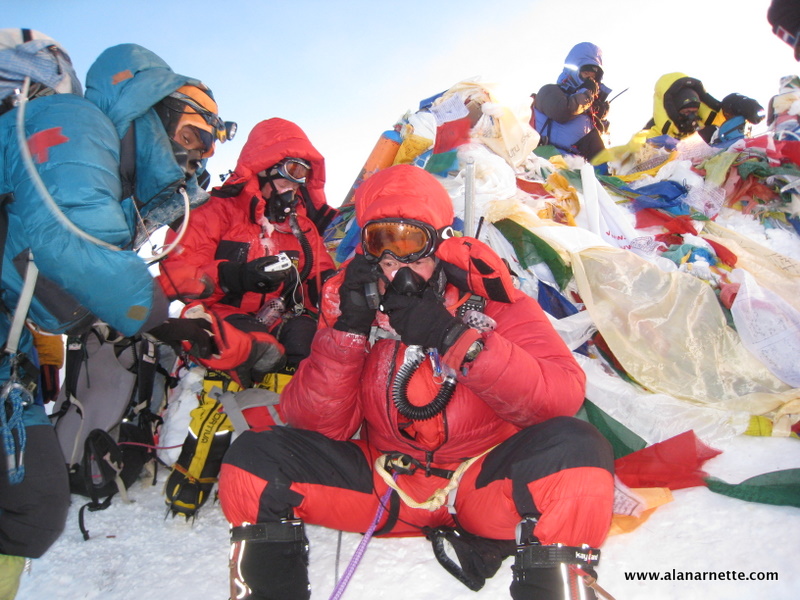
Alan on the summit of the highest mountain in the world, Mt. Everest

Alan on the summit of the highest mountain in the world, Mt. Everest

I returned to climb Mt. Everest and stood on the summit on May 21, 2011. You can read about my climbs on my website. This was to raise awareness and research funds for Alzheimer’s Disease and 100% of all donations go to Alzheimer’s. This was part of climbing the 7 Summits, the highest mountain on each continent.

The End

Special thanks to Jeff, Heidi, Rob, Renee and Susan

Page 37 of 37

Preparing for a Climb is More Than Training

Summit Coach

From Your First Summit to Everest. One Coach, the Whole Way.


Planning your next big climb? Work one-on-one with Alan Arnette, Everest and K2 summiteer, for personalized training plans, independent guide-service advice, gear recommendations, and experienced support from preparation through expedition.

No commissions. No conflicts. Just advice focused on your success.

Explore Summit Coach & Book a Free 30-Minute Call

www.alanarnette.com is provided for informational purposes only and not for advice except through Summit Coach services.
Please see the complete disclaimer.