A Personal Letter to Everest 2016, and 2017, Summiteers

“I want to climb Everest, but there is so much negative press about it. I don’t want to add to the problems.”, she added with genuine concern as I was having coffee this week with two 20 something aspiring climbers. Her statement got my attention. On one hand, I admired her ethics, on the other, damn it, she shouldn’t let anyone stop her dreams. With the 2016 season now over and people making plans for 2017 and beyond, I want to, in private 🙂 , have a few words with those of you who summited this year and make a few suggestions for those thinking about 2017. Haters can skip this post. A Rare Club There at 7.4 Billion people on earth. About 7,600 have stood on the summit of Everest. That is 0.000001% of the current world population. A rare club if you ask me. For 2016 from the Nepal side only, the Nepal Ministry of Tourism reports a total of 456 summits – 57% were Sherpas and of the 287 permits issued to foreigners, 199 or 69% summited. We will have to wait maybe 6 months for Himalayan Database to compile stats from Tibet and Nepal but I’m expecting about 600 total 2016 summits. Get Off My Lawn! It is easy to let the haters, including many in positions of responsibility in the adventure community, weigh on your accomplishment. I’m always surprised when leaders in climbing clubs, outdoor magazines and even some well known Everest guides feed the press with negative stories of why Everest is no longer a challenge; that only the rich and inexperienced are there and that “anyone can walk the “yellow brick road” to the summit. But my favorite is the ‘climber’ who summited any year prior to yours and proudly states “Well, Everest is not like it was when I did it. MY summit was earned, unlike those people this year.” Kind of reminds me of Clint Eastwood in Gran Torino. Amazing that those who share in an rare accomplishment are so fragile that they cannot give a simple word of congratulations. Now; I accept, and make myself, many of the arguments and criticism around Everest including the ones about inexperience – members, Sherpas and guides – but to generalize is lazy and a negligent mistake – especially for anyone who is writing an article that may appear in well known publications. Most Everest Climbers Deserve Respect So, where is all this headed? Yet another Everest Deserves Respect article as I have been know to do from time to time? Nah, just a few words to my fellow summiteers and those aspiring to next year. Now that you are back home from Nepal or Tibet and going thru all the emotions that comes from summiting Everest that I went thru a few days ago in my Climber’s Depression blog post, I simply want to say CONGRATULATIONS! It was a good year on Everest by almost any standard as I summed up in the 2016 season summary. Looking at the historical stats on the Himalayan Database, from 2000 to 2016, the summit rate was 56% for members so this year at 69% was well above average! Way to go! Many of the long time commercial operators had greater than 80% success rates. In fact, all but one team had at least one person (member or Sherpa) on the summit. A longer than usual series of acceptable weather days made it possible. But of course, five people lost their lives, so as always it is a muted celebration. And there is real trouble brewing on Everest with way too many inexperienced climbers, and guides. But let’s stay focused on you. Hey, you set an ambitious goal, trained hard, climbed smart to the summit and returned home. You earned that summit and have every right to be proud of it – full stop. Ignore the haters, stop reading the outdoor magazines and websites for a few months. You know what you did, and you know better than someone who has never been out of their zip code what Everest demands of people. Most Everest Climbers Deserve Respect????? So what is with the “most” in these headlines? Well, the tragic truth is that many, if not all of the deaths this year might have been avoided as I covered in Why People Die on Everest. And some of the summits were near misses with only the unselfish decisions by teammates, guides or Sherpas that prevented more deaths. I was there this year, attempting Lhotse and saw a similar pattern I saw in 2015 when I was also there attempting Lhotse. Way too many ‘climbers’ that had zero business being there. They failed to understand the basics of climbing, much less mountaineering, and they depended on guides and some Sherpas who were just as inexperienced. They thought they knew enough. Arrogance kills. 2017 Awaits So with this backhanded complimentary article thus far, what about next year’s aspiring climbers? First, it is going to be crowded. Nepal extended the 2014 and 2015 Everest permits and some come due next year. And don’t think going to the North is the solution, the line is forming on that side already. After this year’s roaring success, the guides are selling Everest 2017 as “Everest is Back in Business, Everyone is Welcome”. Or are they? I think not and want to discourage the majority of people reading this article not to climb Everest in 2017 – you are not ready. Ready for Everest? Take this simple test: Q: What is the highest altitude you have ever reached? Q: When do you use a tent parachute stake on Everest? (trick question!) Q: What do you use to replace a lost jumar at the Balcony? Q: How long will a 4 liter cylinder of oxygen last running at 2 liters per minute or 4lpm? Q Is it ever acceptable to turn your oxygen down or even off while climbing Everest, especially near the summit? Q: How long do you wait after a large snowstorm to begin climbing again? Q: Will eating the same food as Sherpas increase your chances of summiting? Q: How do you keep your hands warm if you loose a glove at 7500 meters? Q: How much
Everest 2016: Season Summary – A Normal Season

Everest 2016 was a success by many measures. Climbers achieved life long dreams and a country got a break. It was a ‘normal’ season with around 600 summits but sadly there were five deaths plus one on Lhotse. However in stark contrast to the previous four years on Everest, 2016 lacked large scale tragedy or extreme drama. If ever a poor country needed a break, it was Nepal in early 2016. The ‘business’ of Mount Everest means more than foreigners trying to summit the world’s highest mountain. It means pride, jobs, a future for the next generation and obviously, money. This is my annual season summary that includes my own reporting while I was attempting Lhotse this year, excerpts from climber’s and guide’s blogs, my own interviews at base camp and after their climbs. Plus I add my own personal opinions on some topics. Visit this page to see the results of all the team I could track. This is a long post, so get your favorite beverage and let it all sink in. Tough Few Years By now the last two years of Everest, and Nepal, is well known. In 2014 an ice serac released off the West Shoulder of Everest killing 16 Sherpas in the Khumbu Icefall, 19 in total that year. The season ended immediately with no legitimate summits on the South side. In 2015 a huge earthquake struck near Kathmandu and killed 9,000 Nepalis, mostly in the poorest rural areas. 19 lives were lost after the earthquake triggered an avalanche onto Everest Base Camp. The season ended immediately on both sides with zero summits – not that it mattered in the grand scheme. While the world was eager to help Nepal rebuild, an inept government was trying to establish a constitution and failed to give aid those citizens who needed it the most. But those in the Solo Khumbu area of Nepal, mostly ethnic Sherpas, rebuilt their teahouses and homes and called for the world to return. Trekkers Stay Away, Climbers Take the Deal As the Everest climbing season approached, early reports showed that permit numbers were down, and down a lot. At the last minute Nepal’s Ministry of Tourism approved an extension of the climbing permits ($11,000 for Everest) that were issued in 2015. They would be good for 2016 and 2017. This was a late attempt to keep the business of Everest alive. They made a similar decision for the 2014 permits, also at the last minute in 2015 but extended those for five years, thru 2019, similar to what China had already approved for both years. 265 Everest climbers just from 2015 on the Nepal side now had their permits extended. I’m not sure these measures mattered as Everest seems to attract more climbers after a tragic year. The years following the largest death tolls to date in 1996, 2006 and 2014/15 were followed by a record number of climbers. The more Everest takes lives, the more people come. But in any event, Climbers reacted quickly in 2016. By early April there were 34 teams at Everest Base Camp with 289 Everest permits issued, compared to 319 in 2015 or down about 10%. Even with the last minute approval, 69 climbers were reported to have used their previous permits. 500 High Altitude Workers were shown on permits to support the foreign climbers or almost 1.7 for each member. 78 permits were issued for Lhotse and 44 for Nuptse permits. The non-Everest permits are a bit misleading as anyone who wants to enter the Icefall or just go to Camp 2 needs a permit for that maximum altitude but may have no intention of trying to climb that mountain. The Everest business is estimated to generate about $15 million for the Nepal economy and in 2015 with the permit extensions royalties were reduced to $1.6m. In 2014, tourism accounted for 8.9 percent of Nepal’s GDP and 7.5 percent of its total employment. But trekkers stayed away, there were 40% less trekkers than in the previous year hurting hotels, restaurants, and taxis in Kathmandu. The teahouses, guides and porters throughout the trekking areas of Nepal also saw a dramatic decline in business. Trekking brings more money to Nepal than climbing, so the backlash from bad publicity around the earthquake and embargo was hurting. Unusually Warm The climbing season began with a mixture of optimism and apprehension. The impact of the earthquake was an unknown on the upper part of Everest. Only one climber attempted it in the autumn of 2015 and climbed a bit above Camp 3 on the Lhotse Face. He said the route was the same as in previous years. As climbers trekked to the Nepal Everest Base Camp (EBC), they noticed the teahouses were almost empty, the temperatures were warm. I was there. I was part of the migration to EBC aiming to summit Lhotse, thwarted by the earthquake last year. Those focusing on climbing from the Tibet side were met with the usual unexplained delays by the Chinese government, knowing they would eventually get to enter but just not sure when they would arrive at the Chinese Base Camp (CBC). On the South, EBC spread out for over a mile at the foot of the Khumbu Icefall, some camps were in the exact same position as the ones destroyed by the avalanche only 12 months earlier. Climbers spoke in hushed voices about the warm temperatures and the risk of another avalanche. Guides assured their members that everything was fine. By the time Everest Base Camp began to fill up, it was obvious that something was quite different, at least at this altitude. In early April, EBC is usually frozen solid, but in 2016 it was already melting like it was late May or even early June. A river of running water flowed freely thru base camp. The only ones who benefited were the water crews. The big question was the condition of the upper mountain – Lhotse Face, Triangular Face and the route from the South Summit to the summit itself – all speculation until
Everest 2016: Team Locations and Headlines
Welcome to Alan Arnette’s Everest 2016 coverage My annual coverage is based on my own summit and climb experiences, research, sources, and public information. I try to provide insight and interpretation of the activities ranging from routes to weather to the challenge of climbing Everest. I attempted Lhotse this spring but ended it early due to an upper respiratory infection. A sincere and deep thank you to everyone who joins the Alzheimer’s Prevention Registry or makes a donation to one of the Alzheimer’s non-profits. Manage email notifications of new posts using the form in the lower right corner of this page. Final Everest 2016 News Please see the Everest 2016 Season summary Please consider a donation to one of the Alzheimer’s non-profits if you value this coverage Climbing has ended from both sides Since 2000, there have been 82 deaths with an average (and median) of a total of seven deaths each season combined on both sides. Using the arbitrary measure of summits to deaths, from 2000 to 2013 the ratio is 1.85%, for 2016 it dropped to 0.8%. In the 1990’s the median ratio was 5.6%. From the early 1920 to today it is about 4%. In 2016, 20 attempts with no Os from both sides, 5 succeeded Please consider a donation to one of the Alzheimer’s non-profits if you value this coverage … read all the Everest 2016 posts. Previous Major Headlines No Lhotse summits this year Please consider a donation to one of the Alzheimer’s non-profits if you value this coverage Excellent, candid report by David Hamilton, Jagged Globe, on their tough summit Sherpas with 10-15 summits of Everest note that the Hillary Step has much more snow than in previous years and appears more like a snow ramp than a rock climb but the rocks are unmoved by the 2015 earthquake. Slovakia climbers rescued off Southwest Face (not normal route) source 289 Everest permits have been issued to 32 different teams Trekkers are down 40% this spring Please consider a donation to one of the Alzheimer’s non-profits if you value this coverage In 2015, the Ministry of Tourism reported 319 individuals with Everest permits and 96 for Lhotse. 109 climbers from 2014 used their permits in 2015. NCELL phone is spotty for voice, little 3G at EBC, EverestLink is working well ropes for the summit safety line were helicoptered into the Camp 1 on May 24. Icefall route has only 7 ladders, usually has 20. Weather continues to be quite warm, more like late May than mid April 2016 Everest Deaths: 5 Paresh Chandra Nath with Trekking Camp Nepal found on Balcony. source Goutam Ghosh with Trekking Camp Nepal found on Balcony. source Subash Pal with Trekking Camp Nepal died on Nepal side source Dr Marisa (Maria) Elizabeth Strydom with Seven Summits Treks dies at South Col. source Eric Arnold with Seven Summits Treks (Arnold Costner) dies at South Col. source 2016 Lhotse Death: 1 Ang Furba Sherpa, fixing ropes for Lhotse. Worked for Arun 2016 Everest North Col Only Death: 1 Charles MacAdams died at Chinese Base Camp after reaching his goal of the North Col source … read all the Everest 2016 posts. South Col Route (map) (Note: If an operator does not provide timely updates, they are not listed) Everest only TEAMS (members/western guides) EBC C1 C2 C3 C4 S.Col Summits (foreigners/Sherpas) Adventure Consultants (9/2) e 8/13 Adventures Global (2/1) e 3/3 Alpine Ascents Int. (2/2) e 3/3 Arnold Coster Expeditions (7) e ? Ascent Himalayas e 4/6 Asian Trekking Eco Teams (14+) e 11/10 Altitude Junkies (7) e 5/11 Dreamers Destination e 3/3 Furtenbach Adventures (6/2) e 5/6? High Adventure Expeditions e 0/1 Himex (5/1) e 6/6 IMG Classic (30?) e 7/11 IMG Hybrid (10/4) e 13/15 Jagged Globe (5/1) e 4/5 Madison Mountaineering (9/3) e 12/15 Mountain Trip e 3/3 Satori Adventures e 7/10 Summit Climb (8/1) e 4/? Seven Summits Treks (45+) e 25/24++ Tim Mosedale (2/1) e 2/2 360 Expeditions (1/1) e 2/2 others 57/100 SOUTH TOTAL (est) 433++ Northeast Ridge Route (map) (Note: If an operator does not provide timely updates, they are not listed) TEAMS (members/western guides) CBC ABC C1 N.Col C2 C3 Summits (foreigners/Sherpas) Asian Trekking ? Alpenglow (2/1) e 4/3 Adventure Peaks e 4/2 Kobler & Partner e 5/? Summit Climb (11/1) e 10/8+ Satori Adventures e 6/6 Heroes Project e 4/4 7 Summits Club (22/4) e 15/12 others 55 NORTH TOTAL (est) 130++ L=Lobuche,e=climb ended, x=last reported location, x+ =on summit bid, -x =descending h=high sleep point, t=touched not slept. Summit number=member/Sherpa. Locations estimated from public website. Please refer to each expedition’s site for current information. Contact me to add/remove your team from my coverage. ca I did similar coverage for the 2004, 2005, 2006, 2007, 2009, 2010, 2012, 2013, 2014 and 2015 seasons. I summited Everest on May 21, 2011 and have attempted Everest three other times – 2002, 2003, 2008 and Lhotse in 2015. If you will forgive the self promotion, Outside Magazine posted an extensive interview with me where I talk about my childhood, mountains, Everest and of course Alzheimer’s. I appreciate their interest and help. They even said I was “one of the world’s most respected chronicler of Everest” If you receive value from my annual Everest coverage, please consider a donation to one of these Alzheimer’s nonprofits, 100% for Alzheimer’s, none for me. thank you. Click this link to understand my personal journey with this disease [poll id=”-2″]
Everest/Lhotse 2016: Season Ends with Strong North Summits
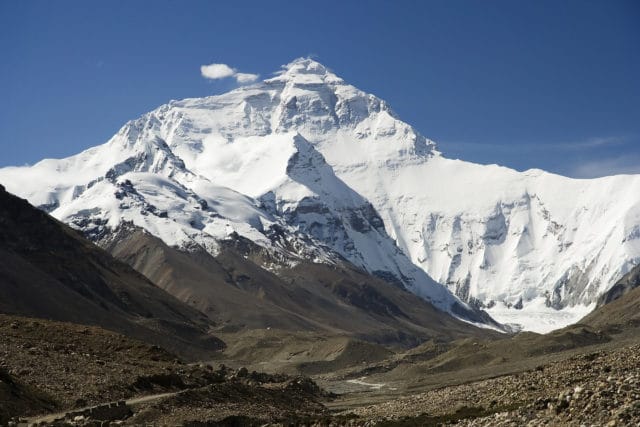
It appears the Everest 2016 season is over with the base camps on the Nepal and Tibet side becoming ghost towns. I will post a full summary of the entire 2016 season along with my thoughts on the season next week, but wanted to make sure I included a brief coverage of the summits from the north as the south usually gets all the attention. I estimate (and its a wild guess) that about 135 people summited from Tibet this year, compared to over 400 from Nepal. Getting accurate numbers and stories from that side of the mountain is difficult, thus the limited coverage. And some people shun all publicity while others make it a media event. Tibetan Benefits Climbing from the Tibet side has always been less popular than from Nepal. Thru last year, the Nepal side had 4,421 summits compared to 2,580 summits from the Tibet side. And looking at deaths historically, the Nepalese side has seen 176 deaths through August 2015 or 3.98% while the Tibet side has 106 deaths through August 2015. or 4.1%. The North side seems to usually attract more attempts not using supplemental oxygen. But this year there were 20, almost evenly split between the two. Part of the North attraction to the no Os crew is that there are less crowds on the north and being delayed could mean frostbite or death. There are many reasons for fewer climbers on the North but it is primarily driven by more commercial expeditions climbing from Nepal because the government is more predictable, and the Sherpas are closer to their home villages and prefer to climb in their country. But the North side has so much history – Mallory & Irvine in 1924 and if they summited or not? Many consider it be more of a challenge and primitive, raw and rough … thus requiring more skills as you climb with crampons on steep rock. And then there is the weather – cold and windy and windy and windy. Many who do not summit point to the weather as the main reason. And we saw it this year as well. Frustrated Climbers There were a handful of commercial expeditions in Tibet this season – many of the regulars each season: Adventure Peaks, Alpenglow, Asian Trekking, 7 Summits Club, Kobler & Partner, Satori Expeditions, SummitClimb and many smaller independent teams with logistics support from Nepal and Chinese companies. The ropes are fixed not by commercial expeditions but by the Chinese Tibet Mountaineering Association (CTMA). Prior to 2008, they were set by Himalayan Experience, but that year, frustrated by difficulties in dealing with the Chinese government, Russell Brice switched his operations to the Nepal side. This year was quite normal for the past eight years with delays in getting the ropes to the summit. Weather was blamed, remember cold and windy. Some teams voiced their concerns publicly especially after multiple summits from Nepal increased the pressure to get on with it. Dutch climber Peter Boogaard noted on his blog: The skies are bright, no clouds, no wind but…. no fixed ropes beyond 8300 m. For whatever obscure reasons the CMA (Chinese Mountaineering Association), which is responsible for fixing the ropes doesn’t proceed. On the Nepalese side everything is ready and the first summit attempts are underway. There are all kind of rumours why the Chinese delay but basically nobody knows. But long time north side operator, and leader of 7 Summits Club, Alexander Abramov posted a few days later that everything was right on schedule: usually we climbed Everest from 20 to 25 May … There is nothing strange happens – it happens every year. Chinese (Tibetan) climbers are going to go to complete the processing of the route, the expedition is expected in full combat readiness Acclimatization The acclimatization schedule on the North seems shorter than on the South, and many would say safer by avoiding the Khumbu Icefall. While the base camps are about the same altitude ~17,000 feet, the higher camps, are well, higher. By spending time at the higher camps, fewer rotations are generally required. This table shows the camps but the numbering system makes it confusing and have changed over the decades, so focus on the altitudes and not the numbering system. Also, the exact elevation of the camps vary. CAMP SOUTH NORTH Base Camp 17,500’/5334m 17,000’/5182m Interim Camp (only on North 1st rotation) N/A 20,300′ – 6187m Camp 1 19,500’/5943m 21,300’/6492m (Advanced Base Camp) Camp 2 21,000’/6400m (Advanced Base Camp) 24,750’/7000m (North Col) Camp 3 23,500’/7162m 24,750’/7500m Camp 4 26,230’/7995m (South Col) 27,230’/8300m The season progressed normally, similar to the south with climbers making the sorte’ to the North Col and some climbing higher to tag Camp 3 at 7500 meters. Those climbing without supplemental oxygen pressed higher and stayed longer to give themselves the and safest chance. Leaving from the high camp on the Tibet side at 8300 meters va 7995m at the South Col, the summit night is shorter than on the Nepal side, a huge benefit given the usual colder and windier conditions. Summits! Finally, the weather window appeared, albeit not the , and teams began to position themselves for their summit pushes. But some were impatient … In spite of the line not being fixed to the summit, a small team from 7 Summits Club tried and turned back on May 11, the same day the ropes were fixed to the summit on the Nepal side. Our impulse to move sharply upward was stopped by snow and the lack of a fixed ropes. But this, in some sense, the audit showed the willingness of absolutely all the participants for the assault at any moment. Information from the Chinese changed about when they will finish fixing ropes to the summit. So there are many reasons to be fidgety. We are encouraged by the fact that no one in our team use it. Everyone understands that patience– it is a part of successful expedition. Pushing the acceptable weather conditions, the first summit occurred on the morning of 19 May, when USMC Ssgt. Charlie Linville become the first combat wounded veteran to summit Mount Everest along with Tim Medvetz of the Heroes Project. They were supported by Climbalaya Treks and Expeditions. Another veteran, Chad Jukes also summited as part of the USX effort and
Everest/Lhotse 2016: Why People Die on Everest

Why do people die on Mount Everest? That is the question many people are asking this Monday after three deaths were reported over the weekend, five thus far for the season with tragically more to be reported. Sadly, many of the press articles, and pundits, are looking for a villain, someone or some organization to blame. Much of this is a good intentioned effort to save future lives but some are self-serving efforts to demonize climbers, guides and climbing itself. So with the caveat that I also have an agenda, lets look at why people die on Everest without going too deeply into this weekend fresh deaths. There are multiple storylines around these deaths:: Did the two deaths with one guide company imply the guide was derelict? Is there a connection with climbing with a low cost guide and risk? What was the cause of death and could it have been prevented? Why isn’t something done about the deaths on Everest each year to make it safer? Why are so many inexperienced people on the mountain? Do crowds add to the risk and what can be done? I might add that Everest deaths makes news every year with the same questions revealed. My Experience I’ve been on 37 major climbs since starting at age 38 including 11 climbs of 8000m peaks with 3 summits (Everest, K2 and Manaslu). I’ve climbed with guides, unguided, gotten altitude sickness, turned myself back from the summit, helped bury teammates and feel like I have seen it all. A lot of the focus in the press is on the new generation of low cost guides for Everest. I’ve written on my blog about this for a few years predicting that the mix of Western/Nepali guides would shift from 80/20 to 20/80 over years. It is about 60/40 now. See my recent series on Everest: Changing Mountain for my views on what is changing with guiding on Everest. Perspective Before we get into this, it’s important to maintain a sense of perspective about deaths on Everest. To be clear, I am in no way trying to minimize the loss of life and tragedy for their families. Since 2000 to 2015, what I consider ‘modern times’, there have been 93 deaths on both sides (Tibet and Nepal) with 5,758 summits according to the Himalayan Database. The deaths each season have ranged from 1 to 22 with a median of 7. Of the 14 mountains over 8000 meters (26,300 feet) Everest is one for the safest at #11 on the list of 14. About 1 in 30 who summit die in the attempt, that is compared to Annapurna, another 8000 meter mountain where 1 in 4 die trying to summit. Other mountains see significantly more deaths for example across the Mont Blanc Range in France and Italy with 100 deaths each year. I will use the Himalayan Database’s terms of ‘member’ for anyone who pays a guide to climb and ‘hired’ for anyone paid to support a member – that would include guides, and Sherpas who are also sometimes referred to as High Altitude Workers. Who Climbs Everest? The demographic is rapidly changing primarily driven by lower cost options, interest in climbing and a perception that Everest is an “easy walkup” that “everyone has done”. A bit of history first. 50 years ago, Nepal authorized only one expedition per season (spring and autumn). It was usually a national team, Swiss, British, Americans, etc. Sherpas were heavily involved starting in the 1920’s with Mallory and Irvine, as was the use of bottled oxygen. These teams trained almost exclusively for a year or more – as a team – and if one person summited, the expedition was declared a success. They were young, bold, proud and confident. Today is very different. Nepal, capitalizing on the increasing interest in mountaineering, began charging $10,000 for an Everest climbing permit in the early 1990s and opened the mountain to anyone who wanted to climb with no requirements for climbers or guides or the number of permits issued. They bring in millions each season and double that in business created for hotels, restaurants, guides, porters and other support activities. Today the typical expedition member’s age ranges from 13 to 80 but mostly consist of 94% men in their late 30’s to mid 40’s. Almost all Everest members have full time jobs that fund the $30K to $65K it takes to join a commercial team. The team they join is made up of like minded people but they are usually climbing for their own summit, not as a team. Most sponsored, professional climbers shy away from Everest but still climb occasionally to stay in the public’s spotlight. With the availability of lower cost operators, ever younger members, who have not generated a lot of wealth, are now attempting Everest. It is quite common to see a team of people in their early 20s on a low cost team. Many of these members are from India and China. By the way Chinese nationals must have summited an 8000 meter mountain before being accepted on an Everest climb from China, and the cost is $60,000. Thus many Chinese are climbing from Nepal where there are no requirements and the cost is less than half for them. Who Guides on Everest? There are no rules of who can call themselves a guide in Nepal. The Department of Tourism renamed Sherpas to Sherpa Guides giving the impression that all Sherpa are trained and qualified guide. The older Sherpas learned thru experience and the younger ones might have been exposed to some training as sponsored by their employer. There is an effort to train High Altitude Workers thru the Khumbu Climbing Center, but only a handful of Sherpas have true internationally recognized guide credentials. The ones who have the KCC training truly understand climbing, safety and have had a basic exposure to mountain medicine as I outlined in this post. Western Guides About 10 companies based in the US, Europe, Australia and New Zealand have been guiding
Everest/Lhotse 2016: Arnold Coster Statement on Climber’s Deaths

I am passing this along from Arnold Coster, owner of Arnold Coster Expeditions. This past weekend two climbers on his team died while on their summit climbs of Everest. In Arnold’s view there has been a lot of misinformation published so he wanted to set the record straight as he was there and heavily involved. I also understand that Dr. Marisa Strydom family learned of her death thru the Internet. Apparently as the rescue efforts were underway, communications over publically available radio channels were monitored and then reported to the press who published the story before authorities were able to contact the family. In addition her name has been reported as Maria but she also went by Marisa according to friends. Tragedy struck our team This is an official statement from the expedition leader Arnold Coster about the events that happened between 19 and 22 May. While we were still rescuing our team members Rob down other people unfortunately already posted news about these events before we had a chance to descend down to Camp 2 safely and inform family members ourselves. Rob got evacuated from Base Camp on 22 May. This is a brief description of what happened. On 20 May our apparently perfect looking summit push turned into disaster. On 19 May the whole team left the South Col and everybody summited the next day, except Marisa who decided to turn around just above the the South Summit at 8am in the morning, due to fatigue. All went according to plan, but on the descent two of our members got sick, which resulted in the loss in two off our friends Eric & Marisa. Our team members & staff are totally beaten by our rescue attempts, but arrived back in Base Camp at 23 May. Eric summited Mount Everest on 20 May 8am and fulfilled his childhood dream. During the ascent he was doing well, but after the South Summit he was struggling a bit. Descending from the summit he became slower and slower and it became clear that something was wrong. His Sherpa who was climbing with him from the beginning requested to send an additional Sherpa up with more supplementary Oxygen to help him down. After this we managed to bring him down to the South Col in a reasonable time; he looked beaten, but mentally fine. We brought him to his tent, gave him more Oxygen, lots off drinks and food and it looked like he was recovering. Unexpectedly Eric passed away that evening in his tent accompanied by a Member and Sherpa in his tent. Marisa was doing well until the “Balcony”, but became very slow after this and decided to turn around on the South Summit at 8am in the morning. Normally this would give her enough time to descent safely, but her condition deteriorated rapidly. Halfway between the South Summit and Balcony she was hardly able to move and became very confused. Her Husband and several Sherpa’s struggled all night to bring her down and miraculously she made it back to the South Col 2am that night, after spending 31 hours above the camp. We managed to stabilize her that night with Medicine & Oxygen and Marisa was able to walk out off the tent herself the next morning. Helicopter rescue is only possible from Camp 3, so we continued our descent the next morning. Marisa was able to walk herself, but 2 hours out off camp she collapsed on the “Geneva Spur”. Her Husband tried to retrieve her, but this was not possible anymore. Rob was evacuated by helicopter from Camp 2 the next day and is in Kathmandu now. At the moment we are assembling a rescue team to try to retrieve the bodies. These tragic events numbed the whole team and our thoughts are with their family and friends. May they rest in peace. Arnold Coster, expedition leader In addition another climber lost his life after suffering altitude related illness according to the Himalayan. This is the 5th death thus far in 2016. Reports are coming in about 11:00 am on Monday May 23 of a urgent rescue underway at Camp 3 using a helicopter. This is near the operating ceiling of 23,000 feet. International Mountain Guides said they put 7 members and 11 Sherpas on the sumt from Nepal this morning in good weather condition. Again, my condolences to all the families, friends and teammates of the d. Climb On! Alan Memories are Everything
Everest/Lhotse 2016: May 21 – Summits, Frostbite and Deaths

The summits continued on Saturday morning, 21 May 2016 on both sides of Everest. However, there were two deaths on the Nepal side and reports of frostbite and multiple helicopter evacuations from Everest Base Camp and Camps 1 and 2 in the Western Cwm. The climbing conditions were reported as good with calm winds and normal temperatures for the summit. Summits On the Nepal side IMG put 28 climbers on the summit from their Hybrid team. They had four western guides, nine members and 15 Sherpas. Seven Summits Treks guided 5 female members from the Indian NCC Girls Expedition plus another four Indian members. Sri Lanka celebrated one of their own, Jayanthi Kuru-Uthumpaala, summiting with IMG, the first for this country. 19 year old Australian Alyssa Azar is reported to have summited with Asian Trekking. On the Tibet side, 7 Summits Club continued their success after having 9 summits yesterday, another 7 today including the married couple of Noel and Lynn Hannah. It is believed that they are the first married couple to summit from both sides together. Frostbite Many reports are coming in of climbers with frostbite that required ment at EverestER and in some cases helicopter evacuation. There are reports of 20 evacuations just from last night including as high as Camp 2. Contrary to press reports, there were no “long line” rescues. This is where the hangs from a long rope attached to the helicopter. Also there were rescues of climbers, some on the Lhotse Face as told to me by Jeff Evans of Everest Air, a rescue operation on the Nepal side. Jeff said they had six rescues themselves with six cases of frostbite, one ruptured Achilles tendon and a case of profound diarrhea. He noted that many of the frostbite cases appeared to be with inexperienced climbers. There have been many illnesses and evacuations this season off Everest. While I don’t have the numbers, it feels like more than in previous “normal” seasons. Deaths As has sadly happened too often, climbers died on their summit bids. Both were on the Nepal side last night and this morning. The Himalayan reported the details as communicated from expedition leaders and liaison officers. 4th Death: Dr Maria Elizabeth Strydom was reported suffering from snow blindness as she was on her summit bid. She was assisted to the South Col where, again this is what was reported, she died from a stroke. Note, there are differing reports that she had summited and was retuning to the Col when she developed difficulties. She was climbing with Seven Summits Treks and was 36 years old and from Australia. source 3rd Death: Eric Arnold is reported to have died from altitude related problems, also at the South Col but after summiting. The 36 year old Dutch climber had attempted Everest four previous times and also had frostbite and problems with his eyes on his summit push. He with a sub team of Seven Summits Treks, guided by Arnold Costner. source There have now been four deaths on Everest this season. My condolences to all the families, friends and teammates. More Summits to Come Summit pushes will continue this weekend on the Nepal side with two more large teams from IMG, their Classic team lead only by Sherpa Guides. There are still a few smaller teams left to summit as well. On the Tibet side look for perhaps as many as 100 summits over the next few days. Safe climbing to all. Climb On! Alan Memories are Everything
Everest/Lhotse 2016: Slow Climbers put Others at Risk
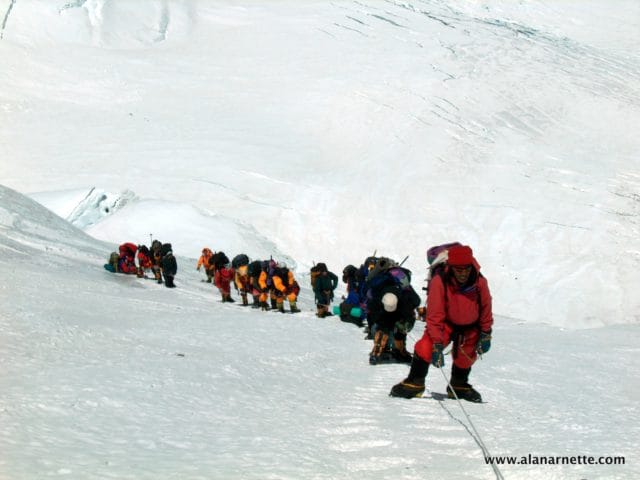
The final summit pushes continue on the Nepal side while it feels like everyone on the Tibet side is going for the summit on the same couple of days! As crazy as this seems, it is business as usual on the world’s highest peak. The huge teams from International Mountain Guides and 7 Summits Club represent the bulk of the climbers tonight and tomorrow while many other smaller teams are drafting off their lead. These and others have split into multiple teams to reduce the crowds. There should be about 100 to 150 summits from Nepal tonight and tomorrow and about the same from Tibet. Similar to many other climbers, you can follow IMG member Paul Pottinger on his Delorme InReach that is tracking his summit climb right now. He is on the Southeast Ridge between the Balcony and The South Summit. You can see many of the teams results and plans at this link. In another development, some climbers who just summited Everest and wanted to add Lhotse to their list cancelled their climb after the fixed ropes to the summit were not finished when Arun Sherpa Ang Furba Sherpa fell to his death while fixing the route. It is unclear if there will be no Lhotse summits this season. Again, my sincere condolences to Ang Furba’s family. Group Work It may seem odd that 200 plus people would go for the summit on the same day, or even poor planning. However once you understand the flow, it all makes a weird kind of sense. Back 50 years ago, Nepal only allowed one team per season to attempt Everest so the concept of crowds on Everest, or any 8000 meter mountain, was simply unthinkable. That changed in the 1990s as Nepal began to understand the huge amount of money selling Everest permit would bring to the poor country. The “normal” Everest schedule is to arrive in Nepal, or Tibet about six weeks before the estimated summit day. In Nepal, it takes about 10 days to trek on a safe schedule that allows time for the body to adjust to the ever decreasing oxygen density in the atmosphere. From Tibet, people drive to Chinese Base Camp but most climbers still take a few days to adjust along the way. On both sides, once at base camp, teams then take another few days, or even up to a week to adjust to the base camp altitude and conditions. From there, they will spend time at ever increasing altitudes whether on Everest or on other nearby mountains like Lobuche to further force their bodies to adjust to the altitude. This can take anywhere from two to four weeks depending on philosophy, experience and conditions. Some people use altitude tents at home before leaving for Everest. Some will sleep each night for as long as six months at a simulated barometric pressure of 16,000 feet. The theory is that the body is “acclimatized” to that altitude thus the expedition time can be reduced by a couple of weeks. In any event, during the on-mountain acclimatization time, schedules are also driven by how quickly the ropes get “fixed”. Today almost every team depends on other people to set the route to the summit by establishing a fixed rope. On the North, it is done by the Chinese run CTMA (China Tibet Mountaineering Association) and on the Nepal side by the Nepal run SPCC (Sagarmatha Pollution Control Committee) aka the Icefall Doctors; but they only work to Camp 2 and at that point a loose collation of commercial guide companies pay their Sherpas to continue to set the line to the summit. Setting these lines is dangerous (as evidence this year on Lhotse), difficult and physical work. While some call for multiple ropes, often it is a momental effort just to get one in-place. That said, frustrating delays can occur on both sides due to weather, politics or conditions. So, for a month before summit day, climbers are going up and down the mountain in a beehive of activity. Once they feel their bodies are adjusted as well as they can be, the attention turns to the weather forecast. It usually takes about four to seven days to summit Everest from the base camp on either side – that is for a round trip. Some fast climbers can shave a day or two off that schedule. Group Think Why does everyone seem to select the same summit day? That is the question. The leading commercial guides and Sherpa Sidars try to work together to spread the climbers out in order to reduce the potential crowds. But, as strange as it seems, people mislead others about their plans, post incorrect schedules on purpose so people like me don’t tell the world 🙂 , and in some cases outright lie. The thought is that perhaps they can get everyone else to go one one day and they will go on another. Thankfully this kind of gamesmanship is on the decline these days. The leading commercial guides and some individuals, will professional weather forecasts that will give insight into the wind and snow at the key altitudes, including the summit. Again, some try to keep this secret as they paid for it and other teams did not, but the information is widely shared in practice. The scenario emerges that 300 foreigners and 400 Sherpas aka High Altitude Workers, are ready to climb and all see the same weather forecast. Suddenly a handful of “summit days” are identified and plans are put in place. Historically there are 8 to 12 suitable summit days where the winds are under 30mph/48kph and the precipitation is light. However, some years, all this falls apart like in 2012 when there were less than 5 summit days and hundreds of climbers crowded onto the mountain from the Nepal side creating massive traffic jams. It is looking like there will be around 12 summit days in 2016 from Nepal. Aside from years like 2012, today some leaders will see this group think of focusing on one specific day and choose earlier or later days trying to avoid the crowds. But like this year on 17 May,
Everest/Lhotse 2016: More Everest Summits to Come, 300 Thus far – Update

After 202 climbers summited the morning on 19 May, another couple of hundred will continue tonight looking at 20 May for their time on top of the world. Sadly, there was one death but it was not associated with the summit push. Some teams reported lines but that appears to have been not widespread judging by the team and individual reports. There have been 300 summits just from Nepal thus far, and only a few from Tibet as of today. Big Picture The 2016 season continues to go about as good as an Everest season goes – decent weather, manageable summit pushes, few surprises but sadly there have been deaths. After six straight days of summits from Nepal, the winds stopped the spree on the 17. The conditions had been marginally acceptable and there were a few case of frostbite due to the high winds experienced on those summit pushes. Most teams choose to wait for the more traditional summit windows starting around 18 May. Over on the North side, the Chinese climbers responsible for fixing the lines to the summit were also stalled by the high winds but have said they will get the lines in so almost all the teams have left Chinese Base Camp for their summit pushes. But it appears there were summits on 19 May. 19 May Summits This morning summiteers mostly spent the night of 18 May at the South Col after high winds stopped all attempts to summit that night. In speaking with some of the professional weather forecasters, they said 50 mph winds were in the forecast. It appears that teams continued to the summit in spite of the high winds to get ahead of the 400 some-odd climbers predicted to attempt the summit from the Nepal side from 18 thru the 21 of May. Their wait was rewarded with good conditions for Everest – no precipitation and winds that were considered reasonable. Most of the commercial climbers use 4 liters per minute of supplemental oxygen and had a personal Sherpa, or two, by their side. This has become standard for almost the past 5 to 7 years. Those who didn’t summit, mostly reported altitude related illnesses, not conditions. There are many climbers who became first for their country or cause – too many to note here – but feel free to add them in the comments section. Department of Tourism official Gyanendra Shrestha is based at Everest Base Camp and collects the daily statistics. 20 May Summit Push The summits will continue tonight and tomorrow and perhaps into late May if the weather holds as there are a few large teams still climbing to the South Col. Lhotse Death The Indian Army wanted to summit Lhotse prior to Everest and took responsibility to fix the ropes. They were supported by Arun Treks. According to the Himalayan, sadly, while seven of the Army climbers were following on Lhotse, Ang Furba Sherpa, part of a seven person rope fixing team ahead fixing the ropes, fell to his death down the Lhotse Face. His fall was witnessed by climbers at Camp 3 and on the Face. My deep condolences to his family, teammates and friends on this tragic loss. This was the second death of the 2016 season. The first was reported a few days ago on the North side from abenteuer-outdoor Tibet One the Tibet side, teams are now positioned at the North Col, and higher at Camps 2 and 3 looking at summits starting as soon as 21May. update: On the morning of 19 May, the home team reports that USMC Ssgt. Charlie Linville has just become the first combat wounded veteran to summit Mount Everest along with Tim Medvetz of the Heroes Project. With them were an unspecified team of Sherpas, and videographer Kazuya Hiraide, TV producer Ed Wardle. Weather Still on many team’s mind is the cyclone off the Indian coast. Michael Fagin of www.everestweather.com sent me this image. But according to accuweather it may not be a factor for the Himalaya but some bands may bring moisture and winds so continuing to monitor daily forecasts is a good idea. Tropical Cyclone Roanu is forecast to move northeastward, paralleling the east coast of India over the next few days with some additional strengthening due to strong outflow and warm sea surface temperatures. Some weakening is then likely before an expected landfall in southeastern Bangladesh later Saturday or Sunday. Congratulations to all those who summited and achieved their dreams. Best of luck to those up next. Climb On! Alan Memories are Everything
Everest/Lhotse 2016: Summit Wave Underway – Update 2

A constant stream of Everest aspirants are steadily making their way from the South Col to the South Summit, over the Hillary Step and to the summit as I write this around 3:00 am Nepal time Thursday 19 May 2016. It is estimated that about 200 people evenly split between foreigners and Sherpas left the South Col between 7:00 pm and midnight in calm winds and clear skies after enduring a windy night at the Col. PARTIAL Summit Updates 202 summits – 120 Sherpa/82 foreigner on 19 May reported in good but a bit windy conditions See location table for latest Died from fall: Ang Furba Sherpa, fixing ropes for Lhotse. Worked for Arun Adventure Consultants: reports all of their team 5 team members, 3 guides and 13 Sherpa including Colin O’Brady Madison Mountaineering: 12 foreigners/15 Sherpas Chinese with Seven Summtis Treks: 7 foreigners/ 3 or more Sherpas Ascent Himalaya: 1 foreigner/2 Sherpas – they reported standing in lines Altitude Junkies: at least 3 foreigners/6 Sherpas High Adventure Expeditions: 1 Sherpa More updates as available IMG moving to South Col in stages. No clear word on Indian Army. UAE Army summited, no word on how many. Teams from Tibet side moving higher but no summits. I’m not sure how to number this wave as we have had six nights of summits so I think I’ll drop the system. A few progress reports are coming in. The teams left the South Col on 18 May and are expected to summit the morning of 19 May: Adventure Consultants left at 22:12 and at at the Balcony around 02:00 Alpine Ascents International left at 21:30 Robert Kay, Laura Meadly Darlington with Altitude Junkies left at 20:00 now past the Balcony at 02:15 Madison Mountaineering left the Col in 2 team 19:00 and 21:00 High Adventure Expeditions left Col around 19:00 Colin O’Brady with Adventure Consultants left the Col at 23:00 and is on the SE Ridge near 28,000′ 360 Expeditions & Tim Mosedale are reportedly climbing together and have left the Col IMG and others are moving up from Camp 2 to get in position for summit pushes. On the North: Alex Abramov, 7 Summits Club: “We pertly went to the camp at an altitude of 7700 meters” Mountain Experience is at C2, 7700M More updates as the teams summit. Climb On! Alan Memories are Everything