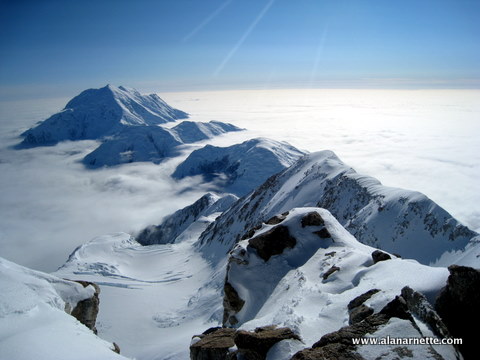
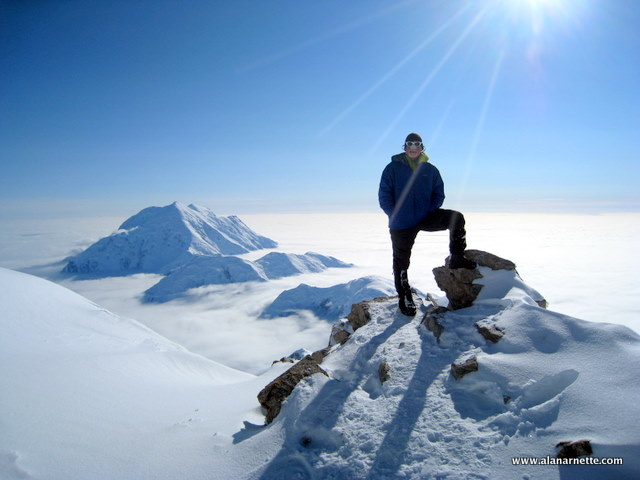
Denali 2026 Coverage: Podcast with Summiteer – John Bartolic

The Denali 2026 season is well underway, with a dated climber report as of June 1, 2026, of 513 climbers, mainly on the West Buttress route. 97 climbers have completed their trips, and 381 are left to check in and begin their climbs. One team that did summit was one from American Alpine Institute and Summit Coach client, John Bartlic
John, a Southwest Airlines pilot living in Dallas, Texas, is relatively new to mountaineering, with a Rainier summit last year and a Pico de Orizaba summit a few months ago. His next includes Kilimanjaro and Everest. We discussed everything from motivation, training, gear, clothing and weather to logistics and had a special remembrance of Mayor Stubbs of Talkeetna, Alaska, who died in 2017. I met Stubbs in 2007 on a climb. #Denali2026
If you would like to be notified when my memoir, “Hard or Impossible? Summiting K2 for Ida is available – I’m still looking for an agent. Complete the form at the bottom of this introduction page: https://www.alanarnette.com/memoir
Live from Denali Summit with Garrett Madison
Live from Denali Summit with Garrett Madison in a season of the lowest summit numbers in history from the summit of Denali on June 14, 2025. It’s been a very cold year, as documented by the Rangers: # Denali 2025
Rainier 2015: Summit and Fun
This trip report is for my climb of Mt. Rainier in Washington State, Washington. At 14,409 feet, it is the highest volcano in the lower 48 states of the US and the most popular way of training for higher Himalayan peaks. I summited with friends on July 8, 2015. I rolled over in my sleeping bag at 10:30 pm on July 7, 2015, hearing voices over the wind flapping the tent against me. It was time to climb Mt. Rainier. My close friend Barry Johnson had set this objective a year ago and trained diligently to get prepared. Fresh off my tragic experience attempting Lhotse in Nepal only two months earlier, I had committed to climbing with my friend but now had serious second thoughts about getting back onto the snow slopes. I hedged my decision for weeks. Barry waited for me to decide but had already assembled a solid team. As the aftermath of the deadly earthquake that took almost 9,000 lives in Nepal and our team doctor at Everest Base Camp quieted, I finally made the decision I needed to climb again, not only for Barry but for myself. This would be my third climb of Rainier, with summits in 2004 and 2012, so I knew to sit on the left side of the airplane as we flew from Denver to Seattle. About 30 minutes before landing, the huge volcano appeared on schedule. I’m always amazed at the sight of Mt. Rainier from the air—it is large, foreboding, snow-covered, and well, it demands respect that seems to be waning for all mountains across the planet. While Barry got our rental car, I retrieved our two duffel bags. We had compared gear lists for weeks with those of our teammates. We were determined to keep the weight down as we knew it was a short trip but a long summit day in potentially difficult snow conditions. One of Barry’s pilot friends, Terry and his partner, Lisa, met us at a tiny motel in Enumclaw that night. We had a fun dinner in town and, the following day drove to the ranger station at the White River entrance. There, we met up with our fifth member, Sarah, an impressive 26-year-old just starting her career as a guide for RMI on Rainier. This was not a guided climb but a group of friends with a common goal. Hiking In We confirmed our permit and listened carefully as the Ranger spoke of open crevasses, climbers punching through snow bridges and soft snow conditions. Oh, and bears and foxes. We left prepared but thoughtful of what was to come. Barry was typical, blasting out Rush songs with no warning whatsoever. At the parking lot for the Glacier Basin trail, we spread our gear out to look for duplication but also to make sure we had the essentials: wands, rope, harness, pickets, screws – everything needed to attempt this 14,409’ hill of snow safely. We packed up and headed up the trail. I’m always impressed with the enormous vertical trees surrounding Rainier. Each one has a story to tell, their trunks strong and seemingly impervious to the winds. The small streams cross the trail with the single-minded objective of joining up with a larger flow down below. But as we made the first of several switchbacks, we were greeted with a prize: Rainier, with all her glory, emerged from behind the forest. The Emmons Glacier stood out, as did the Winthrop, Liberty Cap and the summit. The crevasses were visible from here, looking like a heap of jumbled ice cubes, cracks and lines that dared the brain to make sense of them, but more to the point, dared the climber to test them. We arrived at Glacier Basin camp in a couple of hours. We had purposely set a relaxed schedule, spreading the entire climb from start to finish over four days. We were not out to prove anything with speed, times or bragging rights. Our team objective was to summit, but our objectives varied greatly. Lisa wanted to get to Camp Schurman to relax and reflect, but not to summit. Terry, like Barry, wanted to make his first summit of Rainier to test themselves for perhaps bigger climbs one day. Sarah wanted to climb with friends, not as a junior guide under the ever-present eye of members and senior guides. I wanted to reconnect with the sport I love, my passion. I wanted to hear my crampons crunch in the snow, watch the sunrise, and feel the cold wind against my cheeks. I wanted to climb. And I wanted to see my friend summit and then return home to tell his family of his experience with the wide eyes of a child who had just done something special. To Camp Schurman After an uneventful night at Glacier Basin, we packed up and made our way to the base of the Inter Glacier—the gateway for this route. Only about 25% of all climbing on Rainier is done by the Winthrop-Emmons route, but it accounts for half of the deaths due to the dangerous crevasses. With this in mind, we began our climb with an eye to the crevices. The ranger had told us there was one large open crevasse about halfway up. Making decent time ascending the glacier, we soon crested the Inter near Camp Curtis. We took time for a long break and a huge lunch—we were in absolutely no hurry and enjoyed the views and the company. Lisa was generous with her gouda cheese, naan bread and salami. We took full advantage of her generosity! Soon, we moved on and slipped a short distance down the scree-filled dirt hillside to the Emmons Glacier. Terry flaked out the climbing rope, and soon, we were roped up as a five-person team. Barry took the lead. I clipped in behind my friend, Sarah, who took the back. We came to our first snow bridge, Barry’s and Lisa’s first ever. With care and smiles, we
Rainier Summit Trip Report 2012

My July 2012 climb of Mt. Rainier was unique and complex, representing the best human spirit and a mountaineer’s courage. I know—that is quite the setup. Rainier, located in Washington State just outside Seattle, is a jewel for US mountaineering. It has more glaciers, around 26 than any other US peak and one of the most significant vertical gains on earth, rising from near sea to 14,411 feet. Over 10,000 people attempt the volcano yearly, about half reaching the summit. Poor weather is usually the reason for stopping a climb. From my experience, many US guides started their careers on Rainier, and some continue well after moving up to the big Himalayan peaks. A History with Rainier I had climbed Rainier in 2004 via the Disappointment Cleaver route with eight friends. We all reached the summit, a milestone in my climbing progression that I always look back on for inspiration and motivation. So when my climbing buddy, Jim Davidson, asked if I was interested in returning to attempt the other side of the mountain, the Emmons-Winthrop route, I was in – but not for pure climbing reasons. Jim had climbed the very difficult Liberty Ridge route in 1992 with his close partner, Mike Price. As told in his book, The Ledge, Jim came home, but Mike did not. They both fell into a crevasse on the Emmons Glacier. Now, 20 years later, Jim wanted to return to the route with a group of close friends. Glaciers and Crevasses Glaciers and crevasses are not part of most people’s daily conversation. But if you climb high alpine climbs, they become part of your life. Glaciers eat climbers, they lie in wait disguised under fresh, soft snow waiting for that innocent step. Without warning, the deadly snow bridge collapses, and the climber falls. My first encounter with a crevasse was in 2002 in the Western Cwm on Everest. I fell into a deep crevasse outside Camp 1 when a snow bridge collapsed under my feet. I was roped up between two teammates, and I would not have survived without that safety line. When I got out, I sat on my pack and heaved with tears, fear and emotion. It was all I could do to continue my climb after coming so close to death. Each year, climbers fall into or are swept into these deep gaps in the moving ice – some survive, and many do not. Earlier this year, in 2012, four Japanese climbers on Mt. McKinley died after an avalanche swept them into a crevasse. Earlier in 2012, a friend of mine climbing the same route we planned on Rainier, the Emmons Glacier, suffered serious injuries when they fell into a crevasse. A Park Ranger, Nick Hall, was killed by a fall during the rescue effort. Mike and Jim were doing everything right, but on an unseasonably warm late June day in 1992, Jim slipped in, and then Mike. They didn’t do anything wrong; it just happened. Once you fall in, hopefully, your teammates can pull you out; that is why you carry a rope, slings, pulleys and other devices to aid in extraction. With Mike and Jim, Mike died, leaving Jim alone 80 feet deep with only a few climbing tools. His solo climb out with minimal gear was termed impossible by almost every expert then and would be now. The Team Rodney Ley and Jim had climbed together for years, leading international expeditions to Alaska, Nepal and South America for Colorado State University students. Jim had also summited Cho Oyu, 26,907 feet, a few years ago. Rodney, like Jim, was an accomplished alpinist, rock and ice climber. Rodney also knew Mike well. Stan Hoffman and Scott Yetman lived in the Seattle area and regularly climbed in the Cascades, going for week-long outings annually for over a decade. They had climbed Rainier over five times between them. Even with all my experience of over 30 serious climbs, including Everest and the 7 Summits, deep down, I felt nervous climbing with this team as they epitomized skill and wisdom and had a long history of climbing together. Also, I had just turned 56 a few days earlier, and the thought of carrying a 60-pound pack up 10,000 feet was daunting. The Plan I was honored to fly out of Denver with Jim and Rodney. In Seattle, we met up with Scott and Stan. We planned to drive to the White River Ranger Station, hike to the InterGlacier, and then go to Camp Schurman. From there, we would climb the Emmons Glacier, pass where Jim and Mike fell into a hidden crevasse, and continue to the summit. We were in no hurry and had an extra weather day built into a four-day schedule. This was designed to be an experience, not a race. We wanted to move safely and purposefully, with no need or desire to brag about times or records. Going in, I knew this would be the climb of a lifetime with such experienced teammates and a meaningful purpose. The Lower Mountain On July 29, we checked in at the Ranger Station at 4,300’ and secured an intermediate camp site at the lower Glacier Basin Campground at 6,300 feet. This allowed us to hike only about 3.5 miles before camping for the night—a welcome break given our heavy packs. The trail was magnificent, winding through the dense Pacific Northwest pine forest. The weather had turned clear after several weeks of rain, snow and high winds. Seattle had been experiencing one of its coldest summers. We found an open campsite and set up two tents, cooked dinner, swatted hundreds of pesky mosquitoes and went to bed. The following morning, we packed up and continued to the terminal of the InterGlacier, the first of three glaciers we expected to cross. The route started with a low to moderate angle (15-30 degrees) snow climb from 7,000’ to the top at 9,400’. We did not rope up during this section. At this point,
Rainier Summit Trip Report 2004

After two “non-summit” years on Everest, I was down and wanted a summit. I contacted new and old friends about a Rainier climb, and the Rainier 9 was born. We trained together and virtually for a year to prepare; for many of the team, this would be their first true snow climb. Since we signed up with RMI, we booked our non-climbing nights at Whittaker’s Bunkhouse in the small town of Ashford, Washington. A mix-up in the reservation made months earlier made for a poor start with RMI, as they said they could only accommodate five of our nine for our stay. Even a talk with Lou Whittaker himself couldn’t change anything, so we were evicted and relocated to the Gateway Inn outside the park boundary. Sarah Whittaker, daughter-in-law – married to Win, sought us out later to make amends. She restored our faith in the customer orientation of RMI with her personal touch. Our team arrived on Friday night, July 10, 2004, and rendezvoused at the Gateway Inn. We had a nice dinner at the Copper Creek restaurant, complete with blackberry dressing, blackberry sauce and blackberry pie for dessert. The next day was climbing school, and then we had an early evening for the two-day climb ahead. We returned to RMI Sunday to meet our guides: Jeff Justman (JJ), David Conlan, and Corey Raivio. This was JJ’s 96th summit, while Dave and Corey were first-year guides with less than seven summits under their belts. They were polite, professional, and humorous as they walked us through the routine. We loaded into a small bus with all our gear for the forty-minute ride to where the climb starts near the National Park Service lodge at Paradise, Washington, within the Mt. Rainier National Park boundaries. There are four legs to climb Rainier: Paradise to Camp Muir, Camp Muir to the summit, and back to Muir and Paradise. The first leg started by following an asphalt trail that helps non-climbers get a little closer to nice views Rainier (on a clear day!). We carefully got in a single file line to avoid overrunning the tourists. It had been rainy for the two previous days, and none of our team had seen the mountain, so when the clouds broke from the summit, we paused to take some pictures along with the Grand Ma’s and kids on the trail. After passing Pebble Creek at 7,200′, we stepped onto the Muir Snowfield. This large snow slope leads to Camp Muir at 10,040’—some relatively steep sections along the way and a few small (15′) walls. Everyone did fine as we enjoyed the views. Rainier became huge before us as the clouds cleared, and the sun shone bright and hot. We were dressed in light clothes, but shorts and T-shirts would have been more appropriate. I thought of carrying my double plastic boots in my pack, but it was too much, so I plodded along in my Koflach’s without crampons. Our packs were loaded with food for the next 24 hours, snacks, and water. We all had a full-down jacket for the rest stops on the high mountain, plus the requisite Gortex shells and pants. Three layers of gloves, crampons, an ice axe and a sleeping bag rounded out the load, which totaled about 40 lbs. After 4250′ and 5 hours 20 minutes later, including a couple of breaks, we arrived at Camp Muir. I must say that I was pretty surprised at just how primitive the sleeping hut was. This was rustic beyond imagination after spending time in New Zealand and Colorado Huts. I didn’t expect luxury, but the box was nothing more than a box. It had wooden shelves on both end walls on three levels, accommodating 35 people sleeping side by side. JJ gave us a clue to grab “one of the better spaces” quickly as the next RMI team approached the camp. We put our packs on a rock ledge above the Box and took our sleeping bags inside. RMI does provide sleeping pads, but they are old and thin. Their full-time “cook” brought down hot water and provided plenty of cold water to rehydrate. JJ informed everyone at a briefing inside the stinky box that all three RMI teams would leave for the summit climb as soon after the wake-up call as possible. And that “lights out” was at 6:00 PM, only three hours from now. We checked our gear and ensured we had our climbing clothes inside the Box as we drank plenty of water and made dinners. I was glad to have chosen a simple freeze-dried meal that involved eating directly from the bag – easy to make, easy to eat, easy to clean up! I crawled into my bag about six and put my MP3 earbuds in. This was my key to getting any sleep with 30 people moving around, talking, farting, snoring, groaning, laughing, well you get the idea. But still, midnight came none too soon! Once JJ announced it was time to “Rock and Roll,” everyone dressed quickly, including putting on the avalanche beacons required by RMI insurance. Helmets and harnesses were also provided at the hut. The Rainier 9 was to be the first up the mountain, so we gathered outside the box to attach our crampons and rope up. The sky was perfectly clear, with little wind and a temperature around freezing. I anchored the lead rope with JJ in front and two teammates in between. We started steadily at 1:20 AM, utilizing pressure breathing and the rest step. This was to be routine for the next nine hours. The route started as an easy traverse across the Cowlitz glacier from Camp Muir with little altitude gain. Once we hit the Cathedral Rocks, we left snow and hit a mix of dirt, rock and boulders, aka scree. This was the first hint of things to come. The trail was well-worn through the Cathedral Gap as we made our way up about 300′ to the Ingraham
Rainier Home

Summited July 10, 2004, July 31, 2012 and July 8, 2015. Washington State, US: Mt. Rainier (14,411’/4392) I have summited Rainier three times, in 2004, 2012, and 2015, summiting through different routes. Overview The National Park Service (NPS) has stopped publishing detailed statistics for Rainer, so this is the latest available. Mount Rainier National Park was established in 1899 and has around 1.8 million visitors yearly, including about 10,000 climbers. Rainier is the tallest US volcano, last erupted between 1820 and 1894. The summit crater is over 1,000 feet wide, and there are three summits, the highest being Columbia Crest, at 14,411 feet. It has over 35 square miles of snow and ice, including 26 major glaciers. The Emmons Glacier is the largest at 4.3 square miles, and the Carbon Glacier is the longest at 5.7 miles and thickest at 700 feet, reaching as low as 3,500 feet. However, with climate change, the glaciers are thinning. Like most mountains near oceans, Rainier’s most significant issue is the weather. The primary park town of Paradise receives 126 inches of rain annually. It claims to be the snowiest place on earth where snowfall is measured regularly, receiving 93 feet of snow in the winter of 1971/72. Climbers regularly get stormed out by Pacific fronts that dump rain and snow year-round, making a summit of Rainier special any time of the year. I think a Mt. Rainier climb is one of the best investments for anyone aspiring to climb higher and more difficult mountains. With easy access, ample guide services, climbing and classes, or going with qualified friends, it can be both a learning and a climbing experience of a lifetime. Climbing A detailed look at the statistics provided by the NPS reveals some interesting insights. Over the past 10 years, roughly 10,000 to 11,000 climbers attempted the summit annually, about half reaching it. In 2017, 5,477 out of 11,444 summited Rainier by all routes, or 48%. Sadly, several deaths occur each year. As you would expect, the prime climbing time is the summer, especially around early June, with 300 to 500 climbers per week, peaking at the end of July with 800 climbers on the mountain each week and dropping off dramatically by late September back to several hundred. While Rainier is climbing year-round, you could be alone from November to May – not a good idea! Routes Mount Rainier offers over 60 climbing routes ranging from moderate to world-class. All require proper training, skills and gear. Of all the routes, four dominate the mountain by a huge margin: Rainier 2011 – 2019 Route Stats sources: The National Park Service stopped collecting summit stats in 2019 sources: National Park Service, www.stephabegg.com ROUTE Total Summits since 2011-2016 % of Traffic Range of Summit Success Disappointment Cleaver 45,925 72% 48% – 59% Emmons‐Winthrop 9,506 15% 51% – 59% Kautz Glacier 2,752 4% 44% – 62% Ingraham Direct 1,154 2% 7% – 26% others 5,544 7% TOTAL 63,881 100% 48% Guides In 2016, the three guide companies took 5,110 climbers – 1,841 guides and 3,269 clients. In the same year, there were 10,975 climbers; thus, 7,706 were independent or 70%. Three companies are authorized to guide on the volcano: Alpine Ascents (AAI), International Mountain Guides (IMG) and Rainier Mountaineering (RMI). RMI has a legacy since 1969 and guided over 2,877 people in 2016, comprised of 770 guides and 2,107 clients. Also, for 2016, the other two guide companies were AAI: 382 guides, 744 clients and IMG: 389 guides, 718 clients. As for summit rates, The NPS did not publish separate stats for guided vs independent other than the generic 46% number for total climbers last published was for 2010 with 4,920 out of 10,643 summiting. The three companies do not make their rates readily available on their websites, which is somewhat strange. Rangers Somewhat unique worldwide is the presence of Park Climbing Rangers in the US National Parks. These individuals are there to protect the environment while supporting climbers through education, information and rescues. On Rainier, two permanently staff Ranger Huts are at the high camps of Muir and Schurman. The Rangers do regular patrols each year to reach the summit nearly 200 times. Rainier maintains an excellent website for current information. A full trip report and updates from during the climb are available on my blog. My goals are to raise awareness and research funds for Alzheimer’s disease. Please learn more at this link. Climb On! Alan Memories are Everything Rainier Resources Rainier Home Rainier Summit Climb 2015 Report Rainier Summit Climb 2012 Report Rainier Summit Climb 2004 Report Rainier FAQ
Rainier FAQ

About Mt. Rainier The National Park Service (NPS) has stopped publishing detailed statistics for Rainer, so this is the latest available. Q: Where is Mt. Rainier? A: Rainier National Park in Washington State, US. It is a popular North American climb, with 10,000 attempts each year. The nearest major city is Seattle, and the major airport is Seattle-Tacoma International. The closest town is Ashford, and the Park HQ is in Paradise, Washington. Q: When is Rainier usually climbed? A: The prime climbing time is from late May to mid-September. The most popular route, Disappointment Cleaver, maxes out around the end of July each year, with over 600 people on it. Some experts climb Rainier year round, but these climbers have tons of experience. Weather can always be an issue. Even in mid-summer, it can snow, rain or hail at any time. Q: How does Rainier compare with a Colorado/California 14er or Denali? A: Snow! Rainier is snow-covered year-round on the upper part of all routes. Also, it has significant and deadly glaciers. A good friend lost his climbing partner in one of these crevasse. There is a real threat of avalanches on all routes. While the altitude may be similar to other 14ers, the weather and terrain put Rainier in a different class. Denali’s standard route is 6,000′ longer than most 14ers due to starting around 5,000′ and has even more brutal weather. However, the long snow slopes of the West Buttress route are similar, so Rainier is a good training climb for Denali or the Himalayas. Q: How hard is Rainier? A: Depends on the route. There are over 60 named routes on Mt. Rainier. The Disappointment Cleaver or Emmons Glacier routes are the most popular and straightforward. Another standard route is the Gibraltar Ledges. You gain almost 9,000′ from the trailhead at Paradise inside the Park to the summit and cover 18 miles round-trip. Liberty Ridge is well-known for its challenging and rewarding route. Every route to the summit requires a helmet, crampons and an ice axe (the base definition of “technical”), plus traveling roped up due to crevasse danger—very few climb solo. You must be in top physical condition with an excellent attitude to stand on the top. Also, having some essential experience with lower mountains and snow climbs is suitable for making your experience more enjoyable. Q: Is climbing Rainier dangerous? A: Statistically, it is similar to many large and popular mountains, with 1 to 3 people dying each year. Most deaths are attributed to weather and might have been avoided by turning around earlier. Most routes have hidden crevasses, falling rock, steep slopes and extreme exposure. The Ingraham Glacier and Liberty Ridge routes have seen the most deaths. Q: How many people had summited, and how many people had died trying? A: It is estimated that over 500,000 people have attempted Mt. Rainier, with about 200,000 summiting, and around 110 have died since 1887, mostly from falls or avalanches. The National Park Service states that about 10,000 attempt the summit summit each year and 50% succeed. 2014 saw a tragic incident with 6 climbers killed by some type of avalanche related incident on the Liberty Ridge route. An ice avalanche on Ingraham Glacier killed 11 of a 29-member climbing party in 1981. This was deadliest U.S. climbing incident ever. Several people die each year on the various routes. Training, Gear & Communication: Q: How should I train for Rainier? A: Focus on aerobic capacity, muscular strength and attitude. Even though it is only 14,411′, the elevation will stress the lung capacity needed to provide oxygen to your muscles. Also, you will carry 15 to 40 pounds throughout the climb. Your legs will hurt on the climb and your knees on the way down. You may have some pains in your back, depending on your overall condition. So, get in shape before climbing this hill! I run, lift weights, stretch and use visualization techniques to address these areas. Q: Is altitude a problem on Rainier since it is only 14,411? A: Altitude can be a problem anytime above 8,000 feet. Expect problems if you live at low elevations and come to Washington and jump on a trail without spending a few days letting your body adjust. The trailhead is 5,000′, so you need some time to acclimate. The best you can do is drink as much water as you can on the climb, protect yourself from the sun and wind, and if you feel light-headed or nauseated, take a break and have some water and food. Use your best judgment if you should go on, and never climb alone. The only cure for altitude sickness is to go lower as fast as possible. You need to descend 1,000′ to start feeling better. Q: Some guides require a climbing school. Is it necessary? A: As always, it depends on your experience. Back in 2004, I found the RMI school fun and educational. You can never minimize the importance of good technique in the mountains. Also, by doing it with your team, you create bonds which are invaluable in the mountains Q: What kind of gear do I need? A: This is a technical climb with the risk of extreme weather, so you need layers: wicking, warmth and wind/snow protection. Then you need your personal technical gear: harness, rope, pickets, slings, carabineers, ice axe, crampons, helmet, and finally, food and water. Also, if you are not on an organized guided trip, you must have provisions for an emergency: stove, tent, sleeping bag, extra food and water, first aid, etc. Q: Anything special about gear for Rainier? A: Rainier is a cold and windy mountain year-round. Layer your clothing and be prepared for rain, sun and wind. Never wear blue jeans or cotton clothing since they will not dry quickly enough when wet, thus increasing your chances of hypothermia if you get wet. A hat and sunglasses with sunscreen are a must. You will need boots that
Denali FAQ

These are FAQ from my three Denali climbs
Denali Home
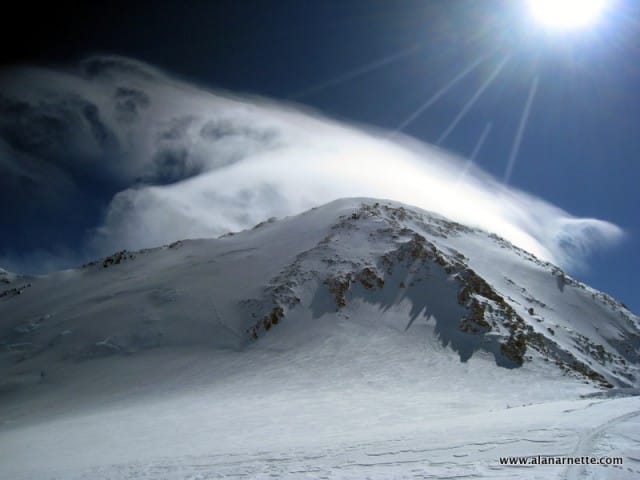
North America: Denali (20,320’/6194m) Denali is the native American name for the mountain. In 1980, in honor of President McKinley, the National Park Service named the surrounding park Denali National Park. In 2015, the mountain’s name was officially changed to Denali. It is in central Alaska – 300 miles South of the Arctic Circle and 200 miles East of the Bearing Sea. Denali offers some of the largest vertical gain of any mountain on Earth. With base camp at 7,200′ and the summit at 20,310′, this 13,110′ gain over twelve miles is larger than Cho Oyu (8,407) or even Everest (10,535). The biggest threat to Denali is the weather. It is well known for socking you in for days with high winds and snow. 45,411 climbers have attempted Denali, with 23,426 summiting, a 52% success rate. Almost 125 have died, including 11 in 1992. The second highest mountain in North America is Mt. Logan in Canada’s Yukon, at 19,551’/5959m, 385 miles southeast of Denali. Similar to Denali, Logan is a vast massif with eleven peaks. Logan is believed to have the largest base circumference of any mountain. The normal route is straightforward, but the weather is a significant problem for Logan, as it is for Denali, in addition to being so remote. Here’s a look at the summit stats for the popular West Buttress route from 2000 to 2024, along with the most popular summit day: Denali West Buttress Route source: National Park Service Year Total Summits % Top Summit Date # 2024 523 50 2023 308 30 2022 745 70 2021 490 52 2020 CLOSED FOR COVID 2019 793 65 2018 463 44 June 8 67 2017 461 41 May 31 54 2016 647 60 June 16 83 2015 589 57 June 15 87 2014 404 35 June 4 99 2013 729 68 May 27 56 2012 460 40 May 27 56 2011 623 55 May 27 & 30 45 2010 630 56 June 21 54 2009 649 60 June 7 77 2008 652 58 May 30 91 2007 513 47 June 12 77 2006 545 52 May 29 50 2005 716 59 June 15 101 2004 628 54 June 4 71 2003 556 58 June 12 115 2002 575 53 June 13 56 2001 670 60 June 4 69 2000 556 53 June 3 71 These are some quick facts from the NPS for 2024: Climbers from the USA: 639 (64% of the total of both Denali and Foraker registrants) US climbers came from all over, with representation from 46 of the 50 states, plus the District of Columbia. Consistent with past years, most US climbers came from the following four states: Washington State (95), Alaska (81), Colorado (79) and California (36). International climbers: 362 (36% of total) Denali National Park welcomed international climbers from 51 countries this year. Once again, the top was Canada (40), followed by the United Kingdom (38), Poland (20), and China, India, and Japan, each with 17. Average trip length: The average trip length (regardless of outcome) for non-guided groups was 14 days, with guided Denali climbs averaging 17 days. Isolating just the climbers who reached the summit increased the statistic to 20 days. Average age Submission of a climber’s age is now optional when applying for a Denali permit. Based on the individuals who did disclose their age this season, the average age for male climbers was 39, while women averaged 36 years old. The youngest climber was 15, and the oldest was 75. Women climbers Women comprised 16% of climbers on Denali and Foraker, or 161 individuals—down from 2023 when 197 women (19% of the total) attempted Denali and Foraker. Denali Resources I have climbed on Denali three times. You can read about my climbs through these links: Denali Home Denali FAQ Denali 2011 Denali 2007 Denali 2001
Denali 2011 Trip Report

My third attempt on Denali, the highest in North America as part of my 7 Summmits for Alzheimer’s campaign in 2011.