Opinion: The Changing World of Climbing News

Does anyone care that Jane and John Smithe became the first couple from rural Northland to summit Mount Impossible?
The comments posted on my blog show a declining interest in today’s climbing world and the highest level of disdain I’ve seen in covering the climbing world since 1999. And it appears that even the general media world is adjusting. Long-time climbing publications have sold to the lowest bidder. As a result, they are transitioning from print to online publications that feature captivating stories like “The Best Biodegradable Bag for your Poop” or the “Top 10 Ways to Wear Socks.”
Climbing forums have plenty of pithy comments citing fast food restaurants on the summits, paved trails, and men (and women) in kilts (and stilts) doing the ordinary. And, of course, a fan favorite, “Getting to the top is optional, getting down is mandatory,” where the author thinks they invented the saying (apologies to Mr. Viesturs.) Everyone is a comedian, it appears, even me.
This summer, a reporter researching an Everest story asked me to “explain the difficulty and significance of Barney being number 646th American to summit Everest.” I politely explained that even the magazines sold at a grocery store checkout lane wouldn’t cover it.
So what’s going on?
Doing Hard Things
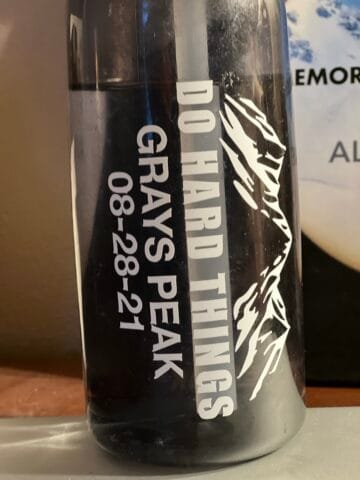
As we enter 2022, I believe most of us have great hopes for a better year, a safer one. Perhaps one with less divisiveness across tightly entrenched groups. But, to accomplish a safe and more inclusive environment, it will take all of us to do hard things, large and small.
Climbing As You Grow Older
I recently turned 65. Yeah, I know! But before you stop reading, this is a tale for the young and, well, the not-so-young. The question is, “When do you stop climbing?”
Does age even matter in climbing? Yuichiro Miura and Tamae Watanabe hold the Everest age records at 80 and 78 for males and females, respectively. Bill Burke began his quest of the Seven Summits at age 60 and got his second summit of Everest at age 72. And Art Muri recently made Everest at 75. Then there are the 13-year-old Everest summiteers Jordan Romero and Malavath Poorna. And let’s not leave out eight-year-old Roxy Getter on Kilimanjaro, not that I think that’s a great idea. By the way, the sweet spot to summit Everest, and most 8000ers, is age 35.
I started climbing at age 38, kind of a late bloomer in the climbing world. I never lived out of my car, was never in the “dirt-bagger,” club or did anything other than work. But then I discovered climbing. Mont Blanc was my first respectable climb. Much to the disgust of my French guide, I didn’t even know how to attach the strap-on Camp crampons that I had just bought in Chamonix. He scoffed, sighed, said something I didn’t understand in French that I’m pretty sure wasn’t a compliment as he strapped them onto my new climbing boots. So yea, I was a novice who didn’t know what I didn’t know and didn’t even know what to ask. But I loved the day, fell in love with climbing, and got my first of several summits on this historic Hill.
The Next Everest by Jim Davidson: A Book Review
The regular readers of my blog and social media don’t need an introduction to Jim Davidson. We met in 2001 and have been great friends and climbing partners almost ever since. I consider him a mentor who has taught me a lot about ice and rock climbing, general mountaineering, and life. Recently I had the opportunity to review his new book, “The Next Everest.” Oh my, what a read.
Opinion: A New Day in America
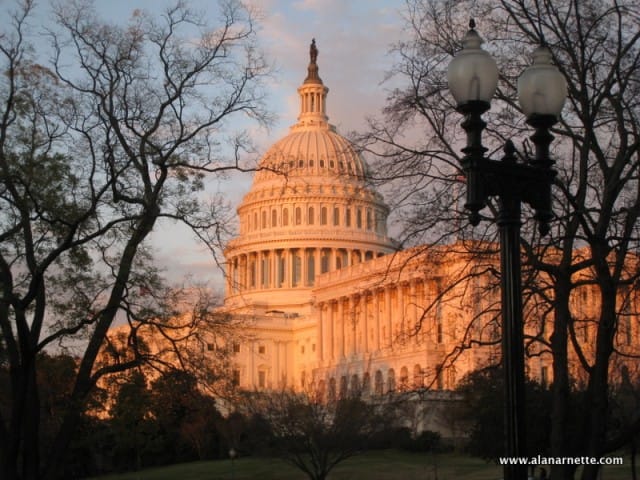
My Opinion: A few do not represent America; it’s a country of many. Today, a few performed an attack on the institutions of the American government. They failed. Driven by the demented suggestions of the current President, they justified their actions in the name of democracy yet lacked the aptitude to understand the very definition of how democracy works. Yes, I know the frustration; I don’t understand violence. When I lived in Europe, The Netherlands, and Switzerland for five years in the latter half of the 1990s, I came to appreciate different government systems and the US system’s strengths and weaknesses. We are not perfect, far from it, but it’s not all bad, until. The last four years have demonstrated how a system can be highjacked, overtaken by singular objectives, or personality. Appealing to those who yearn to go back 70 years, to return to days when women can’t vote, blacks used separate restrooms, police had an absolute rule, and white men dominated. Well, that was yesterday, not today … and we will never go back. Yes, the stock market is at an all-time high (benefiting a tiny percentage of the public), yes unemployment was at an all-time low (before the pandemic consisting of people working multiple jobs below livable wages), and yes, the polarization widened between those advocating support for fellow humans and support for business. As always, the answer is in the middle. It’s an “and” not an “or.” So today, January 6, 2021, a tiny group of sadly misguided “Americans” tried to take over the Capitol. The President told them at a rally an hour earlier to: “We have come to demand that Congress do the right thing and only count the electors who have been lawfully slated, lawfully slated. I know that everyone here will soon be marching over to the Capitol building to peacefully and patriotically make your voices heard. All of us here today do not want to see our election victory stolen by emboldened radical Left Democrats— which is what they’re doing— and stolen by the fake news media,” Trump said. “We will never give up. We will never concede.” A woman was killed, police had broken bones. Mr. President, you own that. Later he tweeted, “These are the things and events that happen when a sacred landslide election victory is so unceremoniously & viciously stripped away from great patriots who have been badly & unfairly treated for so long; go home with love & in peace. Remember this day forever!” It was later removed, and his account was frozen, but it can’t be forgotten. Yes, Mr. President, this day will be remembered for a long time, as will your role. In 2016, when the current President was elected, I had my concerns but was willing to give him a chance; I wrote in a blog, “I am an American. Congratulations, Mr. Trump. You got what you wanted. Being President is not a reality show. I trust you that once you fully understand the seriousness as the President of the United States of America, that will you will mature to the role.” I was wrong, horribly wrong. Now, The US moves into a new era, President Joe Biden and Vice President Kamala Harris. The damage done to the country is extensive. It’s severely divided. I’m not sure it can be repaired soon. My optimism in 2016 is less in 2021. I have my doubts that either side can speak civilly to the other. Will we learn? After Iran Contra, Swiftboatt, Watergate, 911, Columbine, Sandy Hook, Las Vegas, Parkland, I’m not sure. I believe in the American model and others around the world. I don’t believe the minority of opinions and those views define the majority. I believe hard work, education, and commitment leads to success. Finally, I usually only post on climbing and Alzheimer’s but occasionally, as in once every four years, on the US’s leadership. Thanks for listening. Alan
Thank You & Welcome to 2020!

Happy New Decade to all. Thank you so much for your loyalty and support not only in 2019, but since I started my website back in 1999. I also want to sincerely thank everyone who has supported my Alzheimer’s Advocacy in any way over the last decade. My heartfelt gratitude. We have shared a lot over the years, from my climbs on Everest, and K2 to Ecuador and Bolivia this year. Also during my annual reporting on the Everest climbing season, and now most of the other 8000ers year-round. I appreciate your ongoing thoughtful comments and questions, as well as the occasional disagreements we have. Keep it up! The traffic continues to explode. In 2019 there were over 6 million page views by over 2 million visitors for both my website, alanarnette.com, and blog, alanarnette.com/blog/ I was honored to be ranked as the fifth-best climbing blog by The Adventure Junkies site. 2019 In Review 85% of readers are between 25 and 65 years old, with the largest group between 25 and 34. And 67% are female. Readers are from all over the world with the US, UK, Canada, Australia, India, and Germany taking the top spots. Palu and Nauru have the honor of one visit each!! For those into more stats, the majority, 80%, of you used either the Chrome or Safari browsers. And 57% of the traffic came from mobile devices, 35% on desktops, and 8% on tablets. For 2019, these were my most-read stories: How Much Does it Cost to Climb Mount Everest? – 2020 Edition Everest Facts for KiDs Comparing the Routes of Everest – 2019 edition Everest: 2019 Coverage Everest by the Numbers – 2019 Edition Everest 2019: 3 New Deaths, Now 9 on Everest, 19 Overall Everest 2019: Near Death on Annapurna. What Happened? Description of Everest South Col route Everest 2019: Too Many Deaths – Opinion Why K2 Will Never Become Everest Everest 2019: Season Summary The Year Everest Broke The Next Decade Looking ahead over the next ten years, I believe we will see these trends. Climate change will be a real game-changer in the next decades. Reports are pouring in that glaciers are melting at alarming rates, and in some cases cutting off traditional routes. I see this as an opportunity for the next generation of climbers to discover new routes on new faces transforming the spirit of adventure from the ‘formula’ climbs to one of pure exploration. Record Summits and Deaths will continue. Everest saw a record number of summits in 2019 at 836, as did Denali with 793. I believe that mountains are for everyone with the caveat that each person should climb, being self-sufficient, and with the proper experience. The recent deaths on Everest demonstrate how people can be seduced by slick websites and low prices that sell the myth that anyone can climb anything from Everest to K2 to skiing across Antarctica. The truth is that adventure tourism has taken a turn to the naive. Follow your dream, but also do your homework. We will also see more new rules. China enacted a wide range of new rules for its 8000 meter peaks, including Everest. Nepal continues to talk but has taken no meaningful action concerning new rules. Canada imposed new regulations on Mt. Logan due to what they considered as too many rescues. And the Village of Chamonix has floated new rules for Mont Blanc all year after another summer of rescues and deaths. I hope these rules will leave room for a true adventure. Even though I think the absolute number of deaths will increase, the death rate will go down. With the advances in climbing technology from clothing, boots, communications, weather forecasting, plus a dramatic increase in the use of supplemental oxygen, the death rates on the world’s highest peaks have gone down. Everest is one of the lowest. With a new generation coming of age, I think they will pioneer new routes on familiar peaks and get a lot of first summits on previously unclimbed ones. And K2 will be summited in winter. My Plans and Hopes I started climbing at age 38 and went on to summit Everest at age 54 and K2 at 58, the oldest American. Climbing has been a vehicle for my learning and growth. I returned home after each climb an improved model of myself, more so when I didn’t accomplish my objective, but with great learnings after a difficult summit. As my reporting, writing, speaking, and Summit Coach consulting work accelerates, my climbing on the world’s biggest peaks is on the decline. I’ll always climb here in Colorado and explore a 20,000er here or there, but I think the days of “one more 8000er” are over. My hope, no, my challenge, during the next decade is for those hearing the draw of the mountains, follow it, embrace it. There is no failure; there are only lessons that will contribute to all aspects of life. Climb On! Alan Memories are Everything P.S. With all my heart, I hope for a cure for Alzheimer’s Disease in this next decade. I believe.
10 Years after Ida’s Death

Ten years ago on August 16, 2009, Ida Arnette died from Alzheimer’s disease. Hard to believe it was a decade ago. As I try to do each year on this anniversary, I climb Mt. Ida at 12889′ in Colorado’s Rocky Mountain National Park, a perfect peak to honor Ida. The Long Goodbye With an average life expectancy after diagnosis of eight to 10 years, Alzheimer’s disease has been called “the long goodbye.” Unlike other terminal diseases, when a person with Alzheimer’s dies all of their personalities traits, tendencies and abilities have disappeared. It was in 2003 when Ida began to show the earliest signs that something was wrong. It was December when as a family, we went to the Peabody Hotel in Memphis, where my parents lived and I was raised, for their famous holiday brunch. As usual, we all got up to visit the buffet and indulge until we could no more. I noticed Ida walking around aimlessly. She was lost, not knowing where she was or who we were. As I went over to her, she seemed startled at my approach. “What do you want to eat?” I asked her gently. “Oh, you know, the usual.” was her noncommittal answer. Over the next three years, she became more confused, more lost and less independent. It was in 2006 that our worse fears came true. As we sat in Jim’s, my Dad, hospital room, Ida didn’t recognize her husband of 58 years. She had no idea that he was dying. They had been a powerful team raising my brother, Ken, and I. In their sunset years, they had cared for each other and Jim had hidden many of his wife’s symptoms. By 2009, her disease had progressed to the final stage where her basic daily functions were no longer under her control. She needed assistance with all aspects of life. She went on a hospice service to make her final time as comfortable as possible and to go on her own time. She died on August 16, 2009. I said hello to her on July 27, 1956, and goodbye on … well, I guess I still haven’t. Disturbing Facts Over 5.8 million have AD just in the US alone, and an estimated 44 million worldwide. It is the sixth leading cause of all deaths in the United States, and the fifth leading cause of death in Americans aged 65 and older. Whereas other major causes of death have been on the decrease, deaths attributable to AD have been rising dramatically. Between 2000 and 2017, the number of deaths from Alzheimer’s disease as recorded on death certificates has more than doubled, increasing 145 percent, while the number of deaths from the number one cause of death (heart disease) decreased 9 percent. Every 65 seconds, someone in America develops AD1 Climbing the World to End Alzheimer’s As I went through the journey with Ida, I made a vow that Ida Arnette would not become another number on an invisible list of people who had been killed by Alzheimer’s disease. I vowed to use whatever voice I could muster through my website, speaking and climbing to help educate the world on what this disease does to individuals, their families, and their caregivers. That Alzheimer’s disease is the only disease in the top 10 causes of death in the US that cannot be prevented, slowed, or cured. That money was needed to fund scientific research. To be clear, while climbing is my passion, doing my part to find a cure is now my life’s purpose. Climbing for Research Since Ida’s death, researchers have learned a lot about AD. For example, the hallmark beta-amyloid plaques begin to form years, if not decades, before someone begins to shows signs of extreme forgetfulness. They have excluded many of the myths about the causes of AD, for example, that Alzheimer’s is caused by aluminum, flu shots, silver fillings, or aspartame.2 And that coconut oil is not a cure.10 Climbing for Education However even with all this information out there, nearly 60 percent of people worldwide incorrectly believe that Alzheimer’s Disease is a typical part of aging4 – it’s not – it is a disease just like Cancer or Heart Disease. In that same study, 40% believed AD was not fatal. So when I talk about education and awareness, these are the scary figures that push me up a mountain. What can be done to prevent getting Alzheimer’s? They have found a link between a possible role of lifestyle factors. For example, a healthy diet, especially the Mediterranean Diet and the so-called MIND diet can reduce the risks.8 Also exercise, being social, and doing things that challenge your mind might lower your risk.3 Again, at now age 63, I’m trying to model the very lifestyle I advocate. Research Funding For all the bad news, there is a lot of good news around funding. In 2009, funding for Alzheimer’s research thru the National Institutes of Health in the US, was about $500M annually, for 2019 it is close to $2 Billion5. Most experts believe this is the level it will take to make significant progress. Organizations like the Alzheimer’s Association and UsAgainstAlzheimer’s have done yeoman’s work to lobby Congress. Individuals have made countless phone calls, personal visits and even walks in Washington to shine a light on this epidemic. A slew of not-for-profit organizations has made amazing progress in understanding the root causes of Alzheimer’s. The Cure Alzheimer’s Fund was able to create “Alzheimer’s in a Dish” so that researchers could cut years off the trial and error research approach by testing drugs in the lab and not on humans. The CAF is privately funded and one I highly support thru my efforts. Yet for this progress, the lack of human volunteers throttles the pace of progress. It is estimated that 80% of all all trials fail due to lack of enrollees. The Banner Alzheimer’s Institute has a simple and effective program for anyone who wants support enroll in a study – many are simple non-invasive mind tests not involving drugs. And there are many creative approaches to raising awareness
Gifts for the 2018 Climber in your Life

Looking for that perfect gift for your climber (or yourself) ? Hopefully this update for Holiday 2018 season’s annual post will give you some ideas based on my own personal experience. You don’t have to spend a lot to make your climber happy! I always try to buy local to keep the sales tax in my city and support my local retails but there are good deals online at: Sierra Trading Post – lowest prices on first, seconds and closeouts Steep and Cheap – Incredible deals that last only a few minutes REI Outlet – deals on already great prices Backcountry – full line on-line retailer with good review feature Moosejaw – full line on-line retailer with an attitude Campmor – full line on-line retailer for discounted new gear OMC Gear – full line on-line retailer with good phone service TravelCountry – end of season deals If you are looking to research gear, I suggest using these sites: Outdoor GearLab Gear Junkie Gear Institute note: I do not receive any compensation from any of these sites Books for Inspiration The Ledge: A story of resilience and courage by my friend Jim Davidson. Trapped on Rainier in a crevasse, his partner dying … the story reveals what humans can do. Doofus Dad Does Everest Base Camp: A quick easy read about a Tennessean who makes the trek to EBC for the first time. I was honored to have written the forward. Training for the New Alpinism is a repeat from last year but still in my view, THE must read for anyone wanting to up their game – literally and figuratively. Written by Steve House, world-class climber and Patagonia ambassador, and Scott Johnston, coach of U.S. National Champions and World Cup Nordic Skiers. Everest: The West Ridge. The amazing story of Tom Hornbein and Willi Unsold’s 1963 ascent to the top of Everest using the never climbed West Ridge Route. Even today, 2018, the West Ridge is rarely climbed. Climbing Movies for that cold winter night Free Solo: Arguably the greatest rock climbing performance of all times. Alex Honnold completes the first free solo climb of famed El Capitan’s 3,000-foot vertical rock face at Yosemite National Park. Even though we know he safely completes the climb, it’s still a nail biter. Dawn Wall: More than story of amazing rock climbing. Tommy Caldwell and Kevin Jorgeson climb of the 3,000′ rock face in Yosemite is a tale of friendship, loyalty and commitment. Like Free Solo, we know how it ends AND this film still has you gripping the chair with white knuckles. Meru: Even though its been out for a while, if you haven’t seen this flick, get on it now! Conrad Anker, Jimmy Chin and Renan Ozturk take on the Shark’s Fin on Mount Meru, the most technically complicated and dangerous peak in the Himalayas, and one that has never been scaled to completion. Organizations worthy of membership or donation American Alpine Club: The premier US climbing organization where your membership also provides evacuation coverage, gear discounts while supporting the climber community. Nature Conservancy: Protecting ecologically important lands and waters for nature and people. Himalayan Stove Project: Thru donating clean-cook stoves to rural homes thoughtout Nepal, the HSP changes lives by removing the toxic smoke from wood cooing fries inside homes. They have already made positive changes for over 40,000 people. $150 will buy a stove but any amount is appreciated. Dzi Foundation: The dZi Foundation works in partnership with remote communities in Nepal to create lasting improvements in their quality of life through implementing community-driven programs that improve public facilities, public health, income levels and educational opportunities while preserving community unity, the natural environment, and indigenous culture. Safety for your loved one BCA’s Tracker2 Avalanche Transceiver: BCA makes a full line of backcountry safety equipment from shovels and probes to airbag float packs. If you are skiing in the back country, out of bounds or in avi terrain, this is a must have piece plus a shovel and probe. The Tracker 2 is well-known for its ease of use and uncomplicated interface. $206 Personal Locator Beacon: If you are worried about your hiker/climber/hunter/boater/adventurer then this baby will give you peace of mind. Turn it on, push one button and rescue services will be contacted with the precise location of the device – anywhere on the planet! NO subscription required $290 Garmin inReach Mini 2: Fits in your palm, this tiny, lightweight device can not only alert Search and Rescue of an emergency but also send and receive text messages – all using satellites, not cell phone service. A subscription is required so more expensive than a PLB. $350 Stocking Suffers are Everyone’s Favorite! Darn Tough Sock: Hands down the best sock I’ve ever used. Kept me cozy from Everest to K2 to Colorado 14ers. $24 Anker Power Core 5000. A little bundle of energy that will charge your phone, camera or anything that recharges using a USB port. Always with me on any trip. $20 Snow Peak Titanium Spork: Who needs a titanium fork? Everybody!!! Especially if it’s in your pack. This little guy guy does it all – spoon and fork! $10 Inexpensive Gear at a low price and great quality Honey Stinger Fruit Smoothie Chew: A natural way to keep your energy going during a long day. Made with organic honey and tapioca syrup. I only use Honey Stinger products on my outings as I find they give a long lasting boost and taste great. $29 for box of 12 Grigri: While more expensive than traditional belay devices, the Petzel Grigri takes almost all the thinking out of belaying a partner high on a rock wall. $99 Action Wipes: Not sure a run of the mill wet wipe but a thoughtful way to stay clean and refreshed after a long run, hike or day in the Hills where a shower is not close by. A bit pricy but worth it for a clean-up that leaves you fresh. $39 Going
Back to Nepal for Alzheimer’s

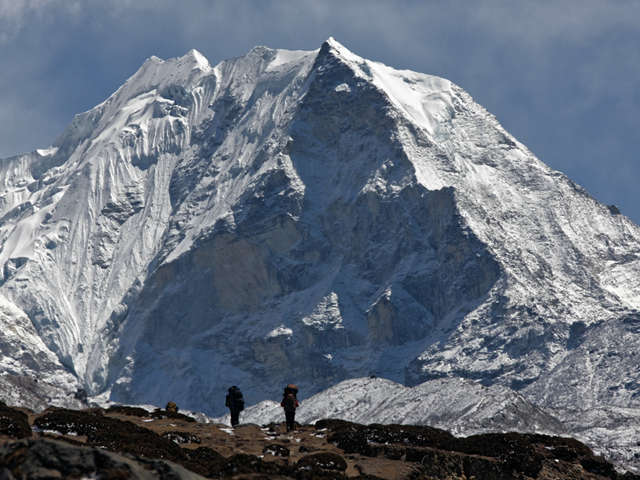
My passion is climbing and my life’s purpose is as an Alzheimer’s Advocate. In that spirit, I’m excited to share this announcement with my friends, supporters, and followers that I’m returning to Nepal in October 2018 for the 12th time. I will be climbing again and raising money for the Cure Alzheimer’s Fund, a non-profit organization dedicated to funding research with the highest probability of preventing, slowing or reversing Alzheimer’s disease through venture-based philanthropy. I’ve worked with them since 2008. This will be a personal milestone for me as well. On February 10, 2017, while training for the 8000-meter peak Dhaulagiri, I was on a simple 11,000-foot peak here in Colorado when a wind gust cartwheeled me into a scree field breaking my right tibia and fibula in three places. A full year went by before I started to feel like myself. However, I was nowhere near where I was or where I wanted to be. Over the past 18 months, I have had some serious questions to answer about my physical future and it required digging deep into who I thought I was. The October 2018 Climb Plan I will join with Kami Sherpa to climb the relatively simple peak Island Peak aka Imja Tse at 20,305-feet/6,189-meters. It is located just over the ridge from Everest and Lhotse and you reach it by trekking through the Khumbu. As you may remember Kami and I have summited Everest (2011) and K2 (2014) and had two attempts on Lhotse (2015/2016) that were stopped by the earthquake and me getting sick. As usual, I will be live blogging throughout the trek and climb. Cure Alzheimer’s Fund – 100% for Research and $ for$ Donation Match!!! Also, I’m very excited to announce that through the Cure Alzheimer’s Fund Jim and Carol Beers will match every donation from my followers during this expedition up to $10,000, and perhaps even more. I’ve worked with the CAF since 2008 finding their research model both effective and efficient. All of their overhead is underwritten by their founders so that 100% of all donations go directly to fund research projects. Since it’s founding, the CAF has funded more than $74,000,000 to 337 research project. Their funded initiatives have been responsible for several key breakthroughs—including a potential treatment selected by the National Institutes of Health (NIH) for its elite “Blueprint” drug discovery program, and the ground-breaking “Alzheimer’s in a Dish” study, which promises to greatly accelerate drug testing and was reported by the New York Times as a “giant step forward”. Charity Navigator scored the CAF with 100 percent regarding its overall financial health. Form or Join a Team! You can make a donation at our Crowd Rise fundraising site and also form a team to see who can help us reach the goal of $20,000 (I would love to see $25k!) A Long Journey Anytime there is a major trauma in your life, including watching a loved one go through a horrible disease, it requires time and support to cope and recover but most importantly it requires maintaining a positive attitude. For me, with my injury, this meant being patient, open and vulnerable. I surrounded myself with positive people from whom I could learn, depend upon for support and open myself up with admissions of my fears. I found professionals that could help me with the physical recovery. In addition to my orthopedic Doc, Riley Hale, who put my leg back together, my physical therapist, Nina Patterson took theory into reality with a deep understanding of sports injuries and how the body responds. Simply put, I wouldn’t even be thinking about climbing again without these two professionals. It also required that I be honest with myself. This is very complex. While I have framed my incident as something that happened and I could choose how I responded, I was also honest that it was not something in my “plan.” I strove to not position myself as a victim or a martyr AND at times I simply gave into the feelings of despair. I gave myself permission to go into that pity party, let my emotions flow freely AND to pull out after I had had enough. For my 62nd birthday, I was planning a climb of Longs Peak, my favorite Colorado 14,000-foot peak. As I was falling asleep a few nights before the climb, I suddenly woke up saying out loud “I don’t want to be in the rocks. I don’t want to be in the rocks.” Diane, my wife lying by my side, gently talked me through the experience and soon I fell asleep in her loving arms. The 2018 climb on Longs was another step in progress. Surrounded by dear friends, we were stopped by rain and snow – in late July. But it was a “non-summit” and not a failure as we all learned and grew through the experience. Not to give up, I summited Longs today 18 September 2018 for the 43rd time. The summer of 2018, I have been focused on regaining my fitness through losing the weight I gained through almost a year of inactivity and doing active triggering of the deep memories in my essence of the sport I love. I set a goal of climbing back to back 14ers in July – something I have wanted to do for years. Over a five day period, I summited 4 of 5 14ers coving over 50 miles and 21,000 feet in vertical gain. It felt good. In August, on the 9th anniversary of the death of Ida Arnette from Alzheimer’s Disease I hiked to the summit of Mt. Ida in Rocky Mountain National Park. The 12,840-foot peak was not difficult but a year earlier it took me 10 hours. This year I cut that time in half. Yes, I felt the progress and now could measure it. However, the real victory was connecting with my mom, Ida, who died in 2009 from Alzheimer’s Disease. As I said, in 2017 her memory pulled me to the summit of Mt. Ida as
Broken Leg Update: Ready to Jump (again)
Nina Patterson my physical therapist, has been a crucial part of my “progress” plan for many months. Usually, I limped into her office with a short list of areas with too much “feedback.” Sometimes, she simply said “Alan, your injury is severe and you need to be patient.” And others “You need to push to make progress.” But she always worked on realigning muscles, ligaments and other adjustments that solved the issue, proof being the areas became silent and remain that way today. This week, I walked in and said “Nina, I got nothing.” She smiled knowing that in the past 10 days I had hiked in deep snow to 13,000 feet and ice climbed only the day before. “Well, we will find something!” And we both laughed. As I have said often, my team of doctors, PT expert, family and friends have been the key to moving forward. Today, Diane , said “Hey, you are not limping.” There were three phases to this incident: injury healing, fitness recovery and mental recovery. I finally feel that my injury has healed. I no longer have the constant low-level reminder that something is not right down there. I walk “feedback” free and Capitan Rod has assumed his life-long duty with dignity and grace. Now I will focus on the remaining areas. During my downtime, I gained a bit of weight, OK a bit too much. So its time to focus on diet and exercise. This has never been a problem with climbing or hiking a couple of times a week so I’m looking forward to getting back into that groove. The mental side may take more work. A couple of weeks ago, I was on top of the small local rock, Horsetooth, with Moe Kowbell. The wind picked up to 20 mph with an occasional gust. I crouched down like a rabbit hiding from birds of prey. While high up on a frozen waterfall this week, my mind drifted to falling – something I never had an issue with. I retreated, realizing I had work to do. I once had a fear of heights, so I addressed it head-on in 1995 by bungy jumping off the Kawarau Gorge Suspension Bridge at AJ Hacket’s pioneering location. I was in New Zealand “tramping” around and visited the bridge. I watched people jump all afternoon wondering if I had the courage to do it. I left for a couple of weeks of backpacking on the Greenstone and Caples Tracks, visualizing me waddling to the end of the plank, ankles wrapped in a towel with a huge rubber band binding me to the bridge. My heart raced, and palms becoming drenched with sweat. I visualized this over and over until my physical response came under control. When the time came I heard “OK, Alan. Ready? 3,2,1 ….” and I jumped. It’s time to jump again. Climb On! Alan Memories are Everything Background On February 10, 2017 while training for the 8000 meter peak, Dhaulagiri, a sudden wind gust estimated near 100 mph swept me off my feet and into a talus field on a simple walk up mountain of Twin Sisters Peak, 11,4327′, in Rocky Mountain National Park near Estes Park, Colorado. I described the entire incident in my post Broken Leg: I don’t want to be in the Rocks. When I was slammed into the rocks near 11,000 feet that Friday afternoon, my lower right leg was broken in multiple places. The tiba had an angular fracture and the fibula was also broken. My left leg had a puncture wound. My nasal cavity was broken as well. The injuries required two operations under full anesthesia and a five day stay in the hospital. Jim Davidson was with me that day and called 911 who in turn set a rescue in motion with Rangers from Rocky Mountain National Park, Rocky Mountain Rescue Group and Larimer County Search and Rescue. Jim cared for me over four hours as I lie in the rocks and it took another five hours for SARs to evacuate me off the mountain. Previous Updates: Broken Leg: I Don’t Want to be in the Rocks Broken Leg Update: One Month Out Broken Leg Update: Two Months Out Broken Leg Update: Three Months Out Broken Leg Update: Five Months Out Broken Leg: Return to Twin Sisters Broken Leg Update: Eight Months Out Broken Leg Update: A Setback and a Plan Broken Leg Update: A Year Later and Future Climbing Plans Broken Leg Update: Ready to Jump (again)