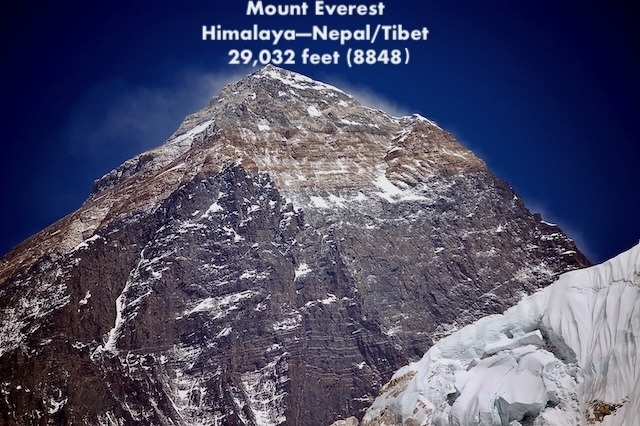
Everest FAQ's
Everest Home | Pictures | Climbs | Coverage | Statistics | Essays | Extras | F.A.Q. | Links
I summited Everest on May 21, 2011 and have climbed it three other times (all from Nepal) – 2002, 2003 and 2008, each time reaching just below the Balcony around 27,500′ (8,400 meters) before health, weather, or my own judgment caused me to turn back. I attempted Lhotse twice – 2015 and 2016. When not climbing, I cover the Everest season from my home in Colorado as I did for the 2004, 2005, 2006, 2007, 2009, 2010, 2012, 2013, 2014, 2015, 2016, 2017, 2018, 2019, a virtual 2020 season, 2021, 2022, 2023, 2024, 2025, 2026 and soon the 2027 season.
Follow Alan Arnette’s Annual Everest Coverage
“One of the world’s most respected chroniclers of Everest” — Outside Magazine
Read the Latest Season Coverage
Read the Latest Everest Statistics—summits, deaths, by sides, climbers
Sign up for post’s notification
This page has Frequently Asked Questinos & answers about climbign Everest and my 2011 summit
About me:
Q: Who are you, Alan?
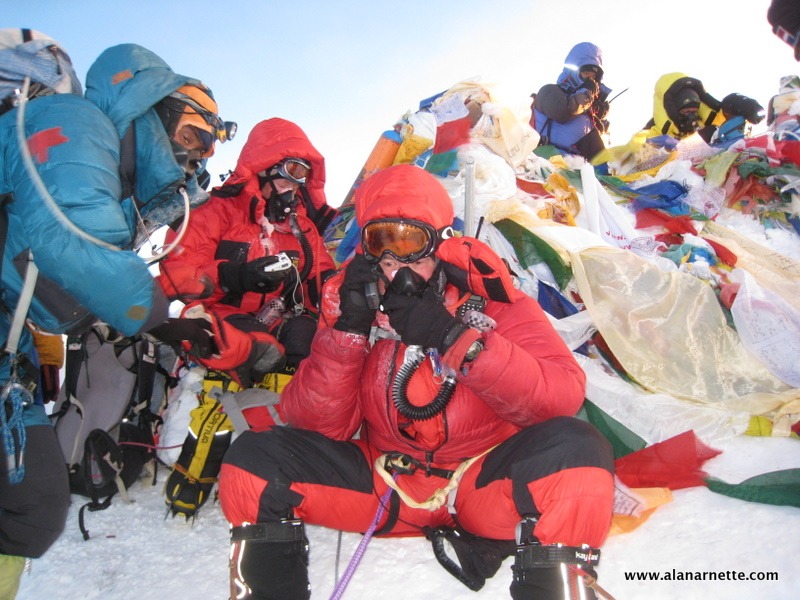
A: I am a typical person drawn to challenges and achievements. I was in my mid-40s when I first tried Everest and 54 when I reached the summit in 2011. I spent 28 years in high-tech before retiring in 2007. I began climbing in 1995 at age 38, with Mont Blanc as my first major peak. I do not claim to be exceptional or especially gifted, but I am ambitious and possess common sense. I believe I understand my limits and potential, so I enjoy testing myself across many fields. Alpine mountaineering suits me because it examines physical, emotional, and mental strength. To be clear, I am not a guide, expedition organizer, or professional climber.
Q: Weren’t you too old for Everest? Isn’t that why you failed earlier attempts?
A: Age is generally not the main factor in alpine mountaineering. The youngest person to summit Everest was a 13-year-old eighth-grader, Jordan Romero from Little Bear, California, via the north side in May 2010, overtaking Ming Kipa Sherpa, the Nepalese girl who reached the top at 15 in 2003. The oldest is Japanese Miura Yiuchiro, age 80 on May 23, 2013. Tamae Watanabe of Japan is the oldest woman to summit at age 73 on May 19, 2012. Most major climbers are in their mid-30s to late 40s. Unless you are a professional climber, guide, or photojournalist, it is hard to secure the right blend of experience, time, and money to attempt 8,000-meter peaks early in life. Age has not limited my summits; preparation and mental toughness have mattered more. Still, it is evident that youth offers many advantages.
Q: When did you start seriously considering Everest?
A: I first viewed Everest during a 1997 trek from Kala Patar and did not imagine it within my reach. After Cho Oyu, Ama Dablam, Denali, and other peaks, I developed greater climbing skills and confidence. In September 2000, while descending the Khumbu after summiting Ama Dablam, I began to consider Everest seriously. I climbed Denali in summer 2001; although poor weather turned me back, it deepened my interest, so in late summer 2001 I made a mental commitment and started training. Following unsuccessful attempts, I was unsure about returning, yet Alzheimer’s fundraising motivated me to go back a fourth time and summit in 2011.
Q: How did you secure two months off for two consecutive years while keeping your job?
A: More than twenty years with one company is the brief answer. I was pleased to remain with the same employer for over two decades, which earned substantial vacation time. I gave my work full effort and cared deeply about our success, so I believe I gained my bosses’ trust and respect. Work ethics and loyalty differed during my career. Today, staying with one company for a lifetime is uncommon. Yet careful choices can shape a work and lifestyle that support success in both. The core point for me is that while my work mattered greatly, it was not my whole life.
Q: Did you become one of those people obsessed with Everest?
A: I doubt it. Well, perhaps 🙂 I find deep satisfaction and pleasure simply being in the mountains. I genuinely enjoy living in a tent for weeks at a time! I value the bonds I form with teammates during a long ascent. I always depart the Khumbu improved by my contact with the Sherpa people and their culture. The risks are real, yet they keep me alert. A recurring theme here is that my aim is to do my best. I have long maintained that turning back without the summit is acceptable if I gave my best effort. All I know is that when opportunities arise in life, you must seize them.
Q: Now that you have summited Everest, will you ever return?
A: Now that we are in the mid-2020s, no. I had a strong run with 36 major expeditions and feel grateful for what I encountered with Everest, K2, the 7 Summits, and more. I will not be greedy. I do wish I had been able to attempt Everest from the Tibetan side.
General Expedition Questions:
Q: How do you join an expedition to climb Everest?
A: Most respected guides will request your climbing resume and demand substantial experience. Ideally, they seek at least one 8,000-meter climb such as Cho Oyu, though most accept Denali or Aconcagua. On my trips, individual backgrounds ranged from prior Everest climbers to those whose highest peak was Aconcagua. Clearly, those with experience above 8,000 meters felt more secure and faced fewer surprises.
However, it was striking to see people on Everest with minimal or insufficient experience. Typically, they paid a low fee to secure a team permit but never faced rigorous questions from a seasoned operator. Unfortunately, many climbers with this profile are the ones who encounter trouble.
Q: I understand Nepal will require a 7,000-meter summit of a Nepali peak before issuing an Everest permit. True?
A: This regulation forms part of a broader revision of Nepal’s tourism sector and is progressing through official review. It may not become a rule and is unlikely for the spring 2027 season.
Q: How many Sherpas, guides, and climbers typically join an expedition?
A: Most guided climbs include eight to fifteen climbers alongside a matching number of support staff. One or two Western guides are common but not guaranteed. Larger firms increasingly send twenty or more climbers, while the biggest Nepali operators may host 50 to 100 clients.
With so many participants, teams often carry substantial resources for emergencies, though not always. Ensure you understand their trip management. The strongest operators divide large groups into smaller units.
Q: What about the Sherpas—what role do they play?
A: Sherpas act as vital partners during major climbs. They secure ropes to the mountainside (fix the ropes), transport heavy loads, and manage much of the strenuous work. Cooks provide meals at most camps, melting snow and bringing ice to stoves at BC, C2, and C4. They carve tent platforms, assemble shelters, and later take them down for removal from the mountain.
On summit night, they stand out. They largely direct the effort and make sure we are ready for the push. They check crampons and harnesses, help with oxygen, and verify regulators are set. They naturally watch each climber during the ascent and step in when problems occur. I saw this across all Sherpas and expeditions from base camp upward. If you climb Everest without Sherpa support, which is technically not allowed on either side, I tip my hat to you.
Q: Do I really need a guide or Sherpas for Everest?
A: Solo or unsupported climbing is technically prohibited on either side, though exceptions occur. Your skills and experience matter, but I generally suggest some form of guide or logistics support on Everest.
Long expeditions involve a complex set of details. You might be surprised by the amount of gear, food, and supplies required for a major climb. On Everest, equipment weighs tons. It would be unfortunate to abandon a summit attempt because you ran out of stove fuel or lost a tent. I share more about guides on my Guide page.
People often say a climber was “drug to the summit by a Sherpa,” which is unfair to both sides. Sherpas are remarkable and perform an extraordinary amount of labor. Yet they do not compel climbers; individuals advance step by step under their own power. Sherpas serve as partners on the ascent.
Q: How much does it cost to climb Mt. Everest?
A: A car. Starting in 2015, Nepal’s Ministry of Tourism charges $15,000 per climber, while the permit on the Tibet side is about $18,000 but includes lodging and transportation to base camp.
Three options exist for a climb:
- organize your own expedition,
- an unguided commercial expedition, and
- a guided commercial expedition.
The solo route is clear: you manage everything, including arranging Sherpas, though companies in Kathmandu can assist.
An unguided expedition involves a company handling logistics—food, group gear, transportation, and Sherpa support—without traditional Western guides; more firms offer these trips for price-sensitive or experienced climbers.
A guided expedition includes all prior elements with full Sherpa support and usually Western guides; these full-service trips suit first-time Everest climbers.
Costs vary widely: solo efforts may reach $30,000 if you cut corners, a personal Sherpa guide runs around $50,000, and group Western-guided trips range from $75,000 to $125,000. Custom trips with your own Western guide and Sherpas may cost $250,000.
Q: What distinguishes a $100,000 Everest expedition from one priced at $45,000?
A: The cost typically reflects bundled items versus optional services. Nepal and Tibet influence expenses through regulations on wages and the treatment of Sherpas, cooks, and porters. Resource availability also matters: Western guides, backup supplies such as ropes and oxygen bottles, medical facilities, communications, and operator profit.
Comparisons remain difficult because company sites present nearly identical details under “what’s included and what’s not included.” Further research is therefore needed. For pricing, the best guidance is to shop around. Costs vary widely, so compare services closely. Larger firms often bundle everything into one fee. With low-cost options, verify whether oxygen and food are included. Ask about in-country flights and meals. Clarify tips and expected amounts. You will receive what you pay for, but avoid overpaying.
Q: How long does it take to climb Everest? And why so long?
A: Traditionally, the full climb spans six to eight weeks. The first week covers reaching base camp via a trek from Lukla in the south or a drive from Kathmandu or Lhasa in the north. Next, three to four weeks involve moving up and down to set camps with food, fuel, and oxygen. The average time from base camp to the summit is 37 days.
On most climbs, Sherpas carry the heavy loads while you acclimatize to high altitude. You still carry a 20- to 30-pound pack with personal gear. Acclimatization cannot be hurried. The summit push takes about one week, followed by four to six days to return home.
In the mid-2020s, many teams have reduced their total expedition trip schedule to four weeks.
Q: Are these two-week trips I hear about legitimate?
A: Yes, climbers may pre-acclimatize at home for 300–500 hours in an altitude tent, possibly summit a 20,000-foot trekking peak for further adjustment, then move from Base Camp to higher camps over several days using a high flow rate of 6 lpm or more at times.
Q: How do the traditional routes compare on Everest: North Ridge or Side Col?
A: Neither route is simple; they differ in character and shift each year with weather.
The south (Nepal) faces the Khumbu Icefall, where most fatalities since 2000 have occurred. The Hillary Step and slabs below the South Summit create challenges for certain climbers.
The north (Tibet) is somewhat more technical, requiring rock climbing near the two steps on the ridge—even with the ladder on the second step. Camps on the north sit 1,000–2,000 feet higher than comparable southern camps, shortening summit day duration, yet the body declines faster at higher elevation, creating a trade-off. The north can be colder and receive more snow than the south.
Finally, ladders in the Khumbu Icefall are maintained only through the end of May, setting a clear seasonal limit; no such deadline applies on the north, so climbers may stay as long as weather permits a summit attempt. See my pages on routes for a fuller description: North and South.
Q: How do you communicate back home and send updates?
For details on my expedition communications, please see this tutorial. Cell phones are common today. Foreigners can buy a SIM card from NCELL in Kathmandu for under US$50 and pay US$0.02 per minute for calls to the US, though coverage was somewhat uneven and I could rarely connect above Base Camp.
For reliable calls on the mountain, satellite phones are the standard choice. I rely on Thuraya, which sends voice and data, including email, from any location within its range. Expedition firms typically carry satellite phones and bill around US$3 per minute, so costs can rise quickly.The Hughes phone for Thuraya cost roughly $800 US and $1 per minute or less. If you expect more than 800 minutes across several expeditions, purchasing a phone makes sense.
Thuraya satellites cover Europe and Asia but omit the US and South America. Iridium is an option, though it has not performed as reliably in my experience. I have also used a Bgan satellite modem, which provides faster speeds and bills by usage rather than minutes. This setup suits blog or social media posting but may remain costly. For more details, consult the technology section on my gear page. For expedition communications, please review this tutorial.
Q: What about website coverage for climbs?
A: Most large guide firms post updates on their commercial sites, yet these serve more as public relations than actual reports. You will rarely find negative news or accounts of harsh conditions there. The most honest dispatches come from individuals posting independently.
A few commercial sites, such as ExWeb, summarize expedition reports. For all my climbs, I posted nearly daily updates here at Everest Dispatches 2003 and Everest Dispatches 2002, again for 2008 and for the 2011 summit. For details on my expedition communications, please see this tutorial.
Q: I read that Everest is a “cake-walk” these days and anyone can summit. Exactly how hard is it?
A: It is demanding. Anyone calling it a ‘cake-walk’ likely has not been there.The Khumbu Icefall is demanding and dangerous. The first climb takes time but becomes easier as you adjust to the height. The Lhotse Face is steep with firm ice and a long stretch carrying gear. Moving from C3 to C4 and onward to the South Col can be tough because of altitude. The Yellow Band required moderate rock climbing at 24,000 feet, and the Geneva Spur rose steeper and higher than I anticipated. The last section was 50 feet of 5.2 rock. Everest starts from the South Col with a 20–40 degree slope using fixed lines; in bad weather, this would be difficult. The climb from the Balcony to the South Summit surprised me most. In the end, Everest is a hard mountain because of the time, logistics, and altitude.
Q: What if I just want to trek to Everest Base Camp?
A: That trek started my climbing path. I went in 1997 and became hooked. You can read about my trek and visit the Everest Base Camp Trek Frequently Asked Questions page updated in April 2010 on common questions about trekking in the Khumbu and to Everest Base Camp.
Training and Preparation
Q: How do you train for Everest?
A: I have a full page on this based on my experience. I usually emphasize aerobic capacity, muscular strength, balance, and attitude. I favor real-world training such as long days climbing with a pack over running or gym work. Living in Colorado lets me climb 14,000-foot mountains regularly to build those miles. My preparation for my 2011 summit relied mostly on climbing Colorado and California 14ers with a 40–50 lb pack. I summited over 30 while climbing almost every weekend in all weather.
Q: Can you prepare for the altitude and how did it affect you in previous climbs?
A: Not really. The standard method is a gradual ascent—up to 1,000 feet per day—with daytime stays above your sleeping site before the summit attempt. The body faces strain at high altitudes, particularly above 8,000 meters (26,300 feet). As elevation increases, barometric pressure falls; although the air stays at 21 percent oxygen, each breath delivers fewer oxygen molecules.
You can do little to acclimatize at low elevations, but some companies claim to assist the process using tents that mimic reduced oxygen levels. I lack personal experience with these systems, but more information is available on the Hypoxico website. They cost roughly $7,000 or rent for about $170 a week.
Everest legend Tom Hornbein explained this to the American Lung Association as follows:
Lower oxygen activates chemoreceptors that increase breathing rates, lowering CO2 partial pressure and raising blood alkalinity. The kidneys release bicarbonate to offset this shift. Although adaptation may take many days, up to 80 percent happens within the first 48 to 72 hours. Other changes occur, such as low oxygen prompting erythropoietin release to raise red blood cell production—a natural form of blood doping that enhances endurance at lower elevations. Such shifts are not always helpful. Some South American high-altitude residents develop chronic mountain sickness from excess red blood cells; their blood may reach 84–85 percent red cells. Greater blood thickness and possible pulmonary hypertension can cause right heart failure.
Q: Did you use bottled oxygen?
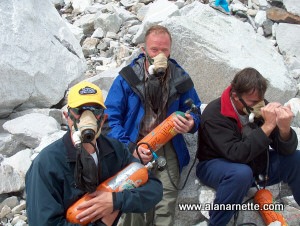
A: Yes, on all climbs. Supplemental oxygen is common on Everest but notably absent from some 8,000-meter peaks. Nearly everyone uses it above 7,000 meters, or 23,000 feet; today, many start at Camp 2 at 21,000 feet / 6,400 meters on the Nepal side.
I relied on it for Everest, Manaslu, K2, and Cho Oyu, as it simply avoids unnecessary risk. At Everest base camp, oxygen is about 50 percent of sea level; at Camp 3 it drops to roughly 40 percent, and at the summit only 33 percent remains—like climbing stairs while holding two out of every three breaths. Everyone on our expedition, along with most others I observed, used bottled oxygen, including climbers, guides, and Sherpas during the summit push. The added oxygen warms you but reduces altitude impact by only 3,000 feet, so at 27,000 feet your body still feels like 24,000 feet.
The tanks resemble those used by scuba divers. Bottles are sized by capacity, typically 3 or 4 liters; a 3-liter POSIX bottle weighs about 5.7 pounds. You use a mask and regulator. I prefer the mask from Summit Oxygen over the older Russian POSIX version, which fits poorly and leaks. The mask covers most of the face from the nose down.
Climbers usually set flow at 2 or 3 liters per minute, so a 3-liter bottle lasts about 6 hours, or 3 hours at 4 liters per minute. Most climbers need at least 4 bottles, perhaps 19 hours of oxygen, because flow may run at 3 or 4 liters per minute. This excludes bottles for sleeping at C4 and spares.
Q: How much supplemental oxygen did you use on Everest?
A: I ascended in 2011 with International Mountain Guides, which employs a higher-capacity oxygen setup. Each bottle holds 1800 liters and weighs roughly 17 pounds with the regulator, providing about 10 hours at 3 LPM, 15 hours at 2 LPM, or 30 hours at 1 LPM. I purchased additional oxygen delivered to the South Summit and used it as follows: one bottle shared at C3 at 1 LPM, then a climb to the South Col at 2 LPM with a fresh bottle and a 12-hour rest at 1 LPM. A new bottle reached the Balcony at 4 LPM, followed by another to the South Summit at 4 LPM. A further bottle carried me to the summit and back to the Balcony at 4 LPM, then onward to C2 at 2 LPM. I retained ample oxygen.
Q: Isn’t Everest dangerous?
A: Yes. Usually, 3 to 12 people die each year on both sides. Deaths occurred during every one of my Everest climbs, ranging from falls down the Lhotse Face to heart attacks. Avalanches and falls are the primary causes according to the Himalayan Database.
In 2014, 16 Sherpas died when an ice serac broke from Everest’s West Shoulder onto the Khumbu Icefall. In 2015, 19 people were killed after a 7.8 magnitude earthquake a hundred miles away triggered an avalanche from the Pumori ridge above base camp.
I have also observed severe frostbite requiring amputation and blindness from wind or bright snow conditions. In 2002, I twisted my knee descending the icefall, fell into a deep crevasse, and developed a severe lung infection that halted my summit attempt.
Q: What kind of gear do you take?
A: I depend mainly on the same equipment used on other major peaks, usually packing two 50-pound duffel bags. My strategy relies on multiple layers. My personal technical kit includes a long-handled ice axe, harness, carabiners, and crampons. Guarding my toes, fingers, and face is always essential because these areas are most vulnerable to frostbite. For warmth, I wear a knit cap and at least liner gloves as soon as I notice any chill—regardless of the outside temperature. I use a three-layer system: a Merino wool base layer (top and bottom), a heavier fleece such as the Mountain Hardware Power Stretch (a Farmer’s John style suit) or simply my Patagonia Guide Pants depending on the day’s cold, then my top wind or warmth layer. When winds rise and temperatures drop below 0°F, I add my Feather Friends 850 Fill down jacket and mitts. For summit night, I wear a full down suit. I keep a gear page for reference. I am quite satisfied with all my gear but emphasize a few standouts on that page. This video shows me explaining my gear before my 2011 summit.
A 10 Step Plan to prepare for an Everest climb:
Often people will ask what it takes to climb the highest mountain in the world. It comes down to a few areas: skills, experience, fitness, and commitment. Many people focus on the money, and of course that is important. Look to budget, including travel, at least $50K for a north or south side climb and $45K assuming you are looking to go a couple of years from now. Go with a quality organization, not the lowest-price one.
Here are ten key factors to consider for planning an Everest expedition:
- Build your climbing fund: create a plan to prioritize climbing expenses in your overall income and expense plan.
- Find like-minded climbers with similar goals you can train with and count on in difficult times: Join a club.
- Get in shape—you need a basic level of fitness to start climbing, including stamina and aerobic conditioning: Interval training, long runs and climbs, anything that takes several hours is good training: A good program can be found at UpHill Athlete.
- Learn the basics of wilderness medicine, avalanche training, and mountaineering through a course: Look into courses with RMI, REI and AIARE
- Accumulate the best quality gear you can buy. Don’t skimp because it could mean your fingers, toes, or your life at 8000m.
- Climb mountains that limit your risk but still allow you to learn, such as Rainier or difficult 14ers in Colorado or California.
- Test your skills on a high mountain such as Aconcagua and a tough snow mountain like Denali: Go with a proven guide who will teach you as well as guide.
- Climb to 8000m on Cho Oyu before Everest to experience expedition life, extreme altitude, and understand how your body performs: Ideally, go with the same guide you will select for Everest.
- Work on your mental toughness by pushing yourself in harsh conditions: Run in the pouring rain, climb on the coldest and windiest route at night you can muster, cycle when dead tired, climb with a pack heavier than you will use on your next climb.
- Hone your climbing skills to be as self-sufficient on every climb as possible, including knots, crevasse rescue, winter camping techniques, and cooking. Practice every chance you get.
You can read more ideas on my 8000m FAQ page, gear page, and on my Selecting a Guide page.
The 2011 Summit Climb
Q: Why did you return to Everest after 3 previous attempts?
A: To raise awareness and research funds for Alzheimer’s. Everest was my third climb of The 7 Summits Climb for Alzheimer’s: Memories Are Everything®, where I was climbing the highest peak on each of the 7 continents in one year. After my mom died from it in 2009, I felt I had to do something given the lack of progress towards finding a cure and the public’s poor understanding of the disease. So I searched for two years to find willing partners and was thrilled to secure International Mountain Guides as my climbing partner and the funding and support from the Alzheimer’s Immunotherapy Program of Janssen AI and Pfizer.
Q: Why did you select IMG and how did they perform?
A: I had climbed Cho Oyu in 1998 with them. Eric Simonson had developed one of the leading programs on the south side of Everest since then, and he offered several types of climbs from 1:1 Western guide to Sherpa-led teams. After my poor experiences with Western guides, I wanted a solid Sherpa team and to be as self-sufficient as possible but still needed professional, world-class logistics and a flexible oxygen plan. Eric understood not only my requirements but the broader goal for Alzheimer’s.
They performed very well and met all my expectations. The food was good, not over the top like some companies are trying. The group gear was solid. I had a radio on summit night. And I liked their oxygen program. Their Personal Sherpas were outstanding. Kami Sherpa (Ang Chhiring Sherpa – Pangboche) climbed with me and became my friend. He was a key to my summit.
Q: What route did you take and how were the conditions in 2011?
A: I climbed from the Nepal side, South Col route. 2011 was cold and snowy in April, very unusual. The global economy discouraged the usual crowds and only 122 Western permits were issued instead of the normal 300–400. The route through the Icefall was easier with only 15 ladders, not the normal 30 and high up on Everest there was a lot of fresh snow which made the climbing a bit easier.
Q: Why did you summit at age 54 in 2011 when you did not on three previous attempts starting in 2002 at age 45?
There were several reasons for my performance that I have broken out below:
A: PACE: Thanks to advice from many people and my own experience of pushing too hard and succumbing to the pressure of the guide clock; in 2011 I climbed at a pace I was comfortable with. IMG never put any pressure on me to meet climb times between camps, and Kami’s favorite word was “slowly.”
Obviously, I knew that I needed to be able to go fast through dangerous sections or if the weather turned, but allowing my body to acclimatize naturally was a huge advantage, and I did not waste energy competing against the clock or other climbers.
Also, when I got sick, I gave myself permission to be sick and get well. This was critical in that I did not stress over schedules and got the necessary rest, food, and hydration my body so desperately needed. Allowing myself to recover allowed me to enter the final acclimatization rotations strong.
A final factor in pace was that I employed every trick and technique I knew throughout the expedition, from sleeping to gear to eating, drinking, foot placement (simple, small steps), clothing layers, attitude, who I hung out with, etc. One proof of how it worked was that I never lost my appetite, rare for me.
PREPARATION: My fitness was at a different level than on the previous attempts, even though I was 9 years older. In the previous 18 months, I climbed over 30 14,000-foot Colorado and California mountains with 30-50lb packs. I also climbed Vinson and Aconcagua in the prior 4 months. I lost about 10 pounds before coming to EBC then lost another 15 pounds (mostly muscle mass, which is usual) in the early expedition time; which was a bit too much.
It is said you have to be in the best shape of your life to climb Everest. Well, I thought I was before, but now know I had to be in Everest shape to climb Everest.
In 2011, I always stayed at Camp 1 around 19,500′ on each rotation. The standard program is to stay there once, but I found by staying there each rotation, I was able to manage my energy more evenly and not wear myself out trying to go from BC to C2 in one big push. Also, I pushed the envelope a bit by staying at Camp 2 three nights instead of the normal two on the first rotation.
Reviewing my own prior performance, I changed my supplemental oxygen plan. I was very glad that IMG used the TopOut mask instead of the old Posix one that leaked 50% of the air. Also, I used an extra bottle of oxygen on the final summit push from the South Col. These two factors, mask and O’s, allowed me to climb using 4 lpm flow from Col to Summit and back instead of a leaky 2 lpm in my previous climbs – this was a huge difference.
PERSONAL SHERPA: This should be no surprise to anyone who followed my climb. Kami (Ang Chhiring Sherpa – Pangboche) was a perfect match for me. At age 46 with 12 Everest summits, K2, Cho Oyu, Ama Dablam, and many other climbs, he had the maturity, experience, and personality I needed.
We spent time getting to know each other with local climbs, shared tents, meals, and became friends. He understood the importance of this climb to me in spite of the culture and language difference. His gentle touch yet strong focus was what the Doctor ordered. He inspired confidence as did many of the IMG Personal Sherpas.
PURPOSE: In looking back at my other climbs, I hit my mental wall way before my physical wall and quit too soon. I never understood how much reserve my body really had. Again, many people talk about mental toughness, but a simple note one time from Clive Jones, a climbing friend, and discussing directly with Jim Davidson, a dear climbing friend, about his Rainier tragedy (www.speakingofadventure.com) showed me how far one can push their body if the mind is willing. So in the last few years, I have been working on mental toughness. When the time came on Everest to push my body, my mind was willing.
But the biggest difference was the inspiration and motivation that came from watching my mom struggle with Alzheimer’s. She did it with class, dignity, and humor. She never let on how much it hurt. Her strength and courage kept me going every time I felt weak – physically or mentally. In addition, knowing that there are millions going through the same struggle inspired me, knowing that all of you were watching me. I simply could not let you down. So perhaps the pace went a little quicker.
Q: Tell me more about Alzheimer’s.
A: Alzheimer’s is the most common cause of dementia, afflicting 34 to 40 million people worldwide. It is a progressive and terminal disease for which there is currently no cure. In its most common form, it occurs in people over 65 years old (although early-onset form also exists). It usually begins many years, up to twenty, before it is eventually diagnosed.
In its early stages, short-term memory loss is the clearest symptom: this leads to confusion, anger, mood swings, language breakdown, long-term memory loss, and the general “withdrawal” of the sufferer as his or her senses decline. Gradually, the sufferer loses minor, and then major bodily functions, until death occurs. Although the symptoms are common, people commonly experience them in a unique way. The duration of the disease is estimated between 5 and 20 years.
Q: Tell me more about the fundraising and your mom.
A: It was frustrating to see all her life memories just slip away. While she was comfortable and never complained, she slowly lost her short-term memory, then long-term memory, the ability to care for herself, her identity, and eventually her life. While there is excellent research underway, it is too late for my mom.
Funding is the key to research, and that is why I work with the Cure Alzheimer’s Fund—a nonprofit where 100% of ALL donations go directly to research and zero to their overhead or to my climbing expenses.
Q: Why didn’t you donate the money you spent on climbing instead of on your climbs?
A: I discussed this at length with the Cure Alzheimer’s Fund and my sponsors. We all agreed that awareness was equally important as money at this point. I hoped that by having 100,000 hits a day to my website during the climbs, the awareness of Alzheimer’s is increased and that will lead to donations now or in the future.
Q: Are you still accepting donations for Alzheimer’s fundraising?
A: Yes, thank you. You can donate online at Cure Alzheimer’s Fund. Every contribution supports research—none goes to the Fund’s overhead or my climbing.
The 2002 Climb
Q: Why did you choose Adventure Consultants in 2002, and how did they perform?
A: Their reputation on Everest and my time with them on Ama Dablam in 2000 guided the choice. Guy Cotter manages a reliable operation with full-time office staff. He relies on the same Sherpas and cooks for most Himalayan trips. They performed well. It was a large team that included researchers from Brown University; at one point, 30 people were at base camp. The base camp staff, with Chhombga as cook, were excellent, as were the climbing Sherpas. Pre-trip contact with AC from Wanaka, New Zealand, was strong, and all questions were answered quickly.
Guy was present as base camp manager and ensured smooth operations. Two guides, a dedicated doctor, and a highly experienced Sherpa team of climbing and expedition sirdars were involved. AC kept a full-time cook at Camp 2 and Camp 4, which helped after long days. Among the climbing Sherpas were Ang Dorjee Sherpa (Pangboche), who has summited 8,000-meter peaks 12 times, and Lhakap Dorjee (Syare) and Phu Tashi (Pangboche), whom I climbed Ama Dablam with in 2000.
Q: Which route did you take and how were the conditions?
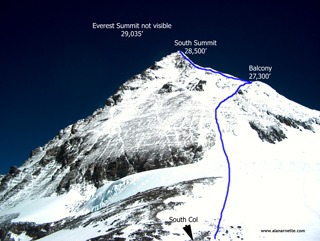
A: The South Col. After a 30-mile trek from Lukla to base camp—acclimatizing along the way—we climbed through the Khumbu icefall five times. This stretch was the most hazardous because the glacier shifts. It can move a foot a day and release blocks of ice the size of houses without warning. Four high camps sat at 19,500; 21,000; 23,500; and 26,300 feet, all leading toward the summit at 29,035. See the page on the South Col Route for a brief series of images and route details.
Conditions were hot, cold, and windy. It was warm in 2002, with temperatures often above 80°F. In direct sun on the Western Cwm, readings exceeded 100°F, so we had to guard against severe sunburn. At night, temperatures dropped to -30°F. Winds were a major issue that year and flattened many tents at Camp 2 during one storm. As each year, the jet stream pauses in early May, opening a window for summit attempts. This usually occurs around May 10, but in 2001 it was near May 23; in 2002, it fell around May 15.
Q: How did you do in 2002?
A: I climbed to roughly 27,200 feet (8250m) just below the Balcony. A lung infection sharply limited my capacity to move the scarce oxygen from my lungs into my muscles. The brief account is this: we departed the South Col around 10:30 p.m. on May 15. After about three hours, I began coughing. The cough was relentless and severe. At the close of each bout, I felt like vomiting and actually dry-heaved and gagged. I realize this is unpleasant, but it occurred. I persisted this way for nearly an hour. With a Sherpa behind me, I never felt endangered. I understood, however, that my summit attempt faced serious risk. Moving slowly, I was the final member of the AC team on the Hill. I drank water and consumed concentrated carbohydrates to test whether they might revive me. I rested. Yet it was not to be. I reflected carefully on turning back. My choice rested mainly on my lack of improvement and my capacity to descend safely after further ascent. Please consult the Everest 2002 page for a full trip report.
The 2003 Climb
Q: Why did you return in 2003? Was that too soon?
A: This question arises from everyone and remains difficult to answer. I think it came down to basic desire. Five elements must align for a project of this size: employer support, time away, funds, family backing, and a strong personal drive. Those conditions held during the 2002 attempt and returned in 2003. I often considered the night of May 15, 2002—what worked, what failed, and what I might adjust with another chance.
Q: Why choose Adventure Consultants in 2003 after they did not reach the summit in 2002?
A: That raises a notable point about responsibility for reaching the summit. For me, the distinction is clear: guides create the opportunity, but the climber determines the result. I was pleased with Adventure Consultants on Ama Dablam in 2000 and again on Everest in 2002. I appreciated their professionalism and attention to detail. Their shared gear was excellent, and their guides are world-class with all the experience one might require.
They use the same Sherpas each trip, so surprises are uncommon. I also reviewed International Mountain Guides, having climbed Cho Oyu with them; they share many strengths with Adventure Consultants. On Everest in 2002, I noticed several expeditions that were understaffed or seemed to have guides climbing for themselves. Dave Hahn with IMG’s American Women’s expedition was a clear exception; he is truly first-rate.
Overall, I was satisfied with Guy Cotter and the Adventure Consultants team in 2002. Logistics were well managed, the base camp food was outstanding, and the Sherpas were unmatched.
Q: So how did Adventure Consultants perform in 2003?
A: Our group was small. Guy nearly canceled the journey two weeks before departure because attendance was low, but another climber joined and kept the plan viable. The climbing Sherpas matched those from 2002: Ang Dorjee Sherpa (Pangboche), who has reached 8,000-meter peaks 12 times; Lhakap Dorjee (Syare); and Phu Tashi (Pangboche), whom I climbed Ama Dablam with in 2000.
Every Sherpa had stood atop Everest at least once, and Ang Dorjee eight times. I knew everyone on this trip except my two fellow climbers.Their performance varied. The Sherpas and base camp services stayed excellent, but pre-trip contact fell below AC’s usual standard. The expedition became difficult near the end when the guide turned abusive. All climbing Sherpas reached the summit, while neither clients nor the guide did.
I spoke with Guy afterward and sent a detailed letter about my concerns; he replied sincerely and adjusted his operation based on my feedback and that of several other clients.
Q: How did you fare in 2003?
A: I reached the same point as in 2002—about 27,200 feet (8250m) just below the Balcony. My body simply did not respond well. I struggled with altitude above C2, starting during an acclimatization trip to C3. After a night at C3, or 23,000 feet, I returned to BC but never regained strength. I dealt with a chronic cough and fatigue. I never felt at risk or that I endangered teammates, so I continued and climbed to the South Col at 8000m. I left with the team for the summit and turned back at 8250m. Please see the Everest 2003 page for a full report.
The 2008 Climb
Q: Why did you return after missing the summit in 2002 and 2003?
A: Two motives guided me: first, to raise awareness and funds for Alzheimer’s research; second, because I wanted to. Retirement shifts my choices, yet two elements remain vital: family support and a strong personal drive. My 82-year-old mother had Alzheimer’s in 2008 and lived in a full-time care facility. I devoted that year to the Memories are Everything®: The Road Back to Mt. Everest project, which included a five-climb plan alongside fundraising and public speaking. You can learn more through this link.
I understood from earlier climbs that Everest attracts far more attention than, for instance, Denali, making it the strongest choice for my awareness and donation goals. My website typically receives over 100,000 hits daily during major climbs. Beyond that, I truly want to stand on top of the world.
Q: Who accompanied you?
A: Mountain Professionals, directed by Ryan Waters. Phil Crampton and Kathmandu-based High Altitude Dreams (HAD) handled most logistics. Phil is known for a strong base camp and is an experienced Everest guide. HAD is a recognized, smaller logistics operator and guide service comparable to Asian Trekking, though smaller and more personal.
Q: How did they perform?
A: Ultimately, High Altitude Dreams (HAD) managed the expedition. HAD’s base camp services were excellent, with outstanding food and tents. Each person had an individual North Face 3-person VE-25 at base camp, and two per tent at C1, C2, and C3. Their Sherpas were capable; my Sherpa, Lam Babu, was solid. I believe the other team members were satisfied with their support.
Ryan acted more as a hands-off facilitator. Although I accept responsibility for not summiting, I was disappointed that my summit-night plan failed despite extensive discussion and planning with Ryan.
Q: I understand the Chinese closed the North side just before you were to leave. Was that true and how did it affect you?
A: On March 10th, the Chinese sent a fax to all expeditions holding permits, asking them to avoid Cho Oyu or Everest—North until May 10th. This timing made safe acclimatization and a summit attempt impossible. The Chinese intended to block protests during the Olympic torch ascent and a nationwide broadcast—pure propaganda. Phil Crampton managed the shift from north to south; without him, my climb would not have occurred, and I thank him sincerely.
Q: What was the impact of all this during the actual climb?
A: It was significant. You can read the full details in an extensive 2008 recap, but in short, the Chinese influenced the Nepal Government so strongly that Icefall ladders arrived late, climbing limits disrupted normal acclimatization, communication and censorship rules restricted dispatches, and climbers faced gunpoint threats to follow orders. It felt frightening at times, disturbing at others, and annoying at the least. I will never trust the Nepal Ministry of Tourism as I once did.
Q: Why did you consider the North side this time even though you ended up on the south?
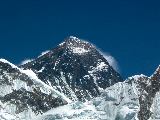
A: I considered returning to the south because I know it well, yet I believed my summit prospects and safety were stronger on the north. The Khumbu Icefall has grown more hazardous in recent years due to falling seracs and deep crevasses. Another factor was that the Icefall Doctors managing the ladders seemed somewhat careless.
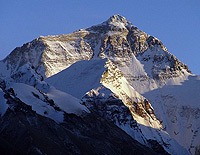
In 2008, the Chinese carried the Olympic torch to the summit for the Beijing games, which frightened many people who feared excessive control. (They were right!!) The northern camps sit higher than those on the south, so climbing days are slightly shorter. The North Col is at 23,000, matching C3 on the south. You depart for the summit at 27,390’/8300m versus 26,300’/8,000m on the south. See the page on the North Ridge Route for a brief set of images and route details.
Q: What else did you do differently this time?
A: The plan included more bottled oxygen, which let me use it at a higher flow or from lower positions. I weighed this decision carefully because either choice increases risk if equipment like a mask or regulator fails. Depending too much on supplemental oxygen could cause my body to fail above 8,000 m if it is suddenly withdrawn and I cannot descend quickly. I also had a personal Sherpa who helped with loads, such as carrying my −40°F sleeping bag to the North Col. I still carried most of my gear, but he was ready when I needed extra support. Overall, I felt confident about this approach, though it did not match when it counted.
Q: So, how did you do in 2008?
A: I did not reach the summit—again—and although I felt strong for most of the climb, I judged the route too dangerous and turned back just below the Balcony near 27,000 feet, roughly 2,035 feet below the highest point on Earth. This marked my greatest altitude to date. In hindsight, the choice was clear, yet it remained painful. The full account appears in the debrief, but the main points include heavy crowding—over 75 people on May 20/21. Conditions were hazardous as the line of climbers dislodged large rocks; we were lucky no one was killed that night.
Weather stayed steady with temperatures near 0°F, clear skies, and calm winds. The crowd moved slowly, though faster than I did. Ultimately, I sensed I was too slow to summit and descend safely. I allowed too many distractions to affect me and relied too much on the western guide when I reached the expected wall. Still, I needed greater mental toughness.
Q: Was there Internet coverage of the expedition?
A: I shared detailed updates on this site, but the Nepal Army stopped communication for several weeks and seized our satellite phones. The updates remain on the dispatch page, which acted as the central hub for all my recent climbs.
Q: Any regrets on turning around?
A: A few. Writing this two years later, I believe I might have acted differently. I trained hard and prepared for most scenarios, yet my mind faltered at extreme altitude. I am pleased with the awareness and funds raised, but I am glad to be home with my family to record this. I returned in 2011 and summited with IMG.
Some Thoughts
Being able to climb where and what I do is a gift. The opportunity to see so many awe-inspiring places, meet amazing people, and spend more than a moment in unique lands are the presents. I climb to discover, learn, and test— and in those regards, I never fail. I know I am fortunate. I am grateful and try not to take it for granted. Life is precious. Memories are the key. Taking risks makes the strongest memories. And it can all be taken away in a flash. Live life. Live a full and challenging life. Make it count. Do it today.
Preparing for a Climb is More Than Training
Everest, Denali, Aconcagua? What about K2? Regardless of your mountaineering goals, Summit Coach can help you prepare by selecting the best guides and gear and assisting with mental, physical, and emotional readiness. Alan Arnette has supported hundreds of climbers. Visit the Summit Coach website for affordable pricing and a wide range of customized services.
www.alanarnette.com is provided for informational purposes only and not for advice except through Summit Coach services. Please see the complete disclaimer.