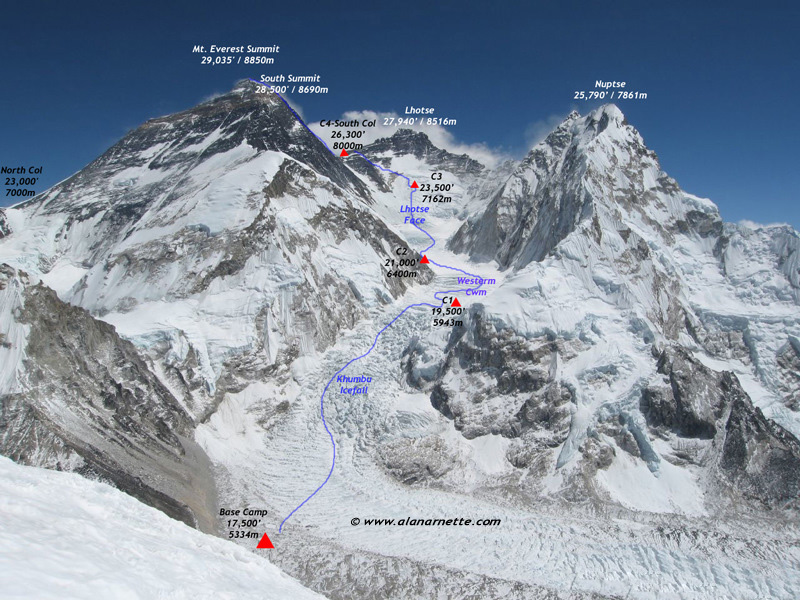
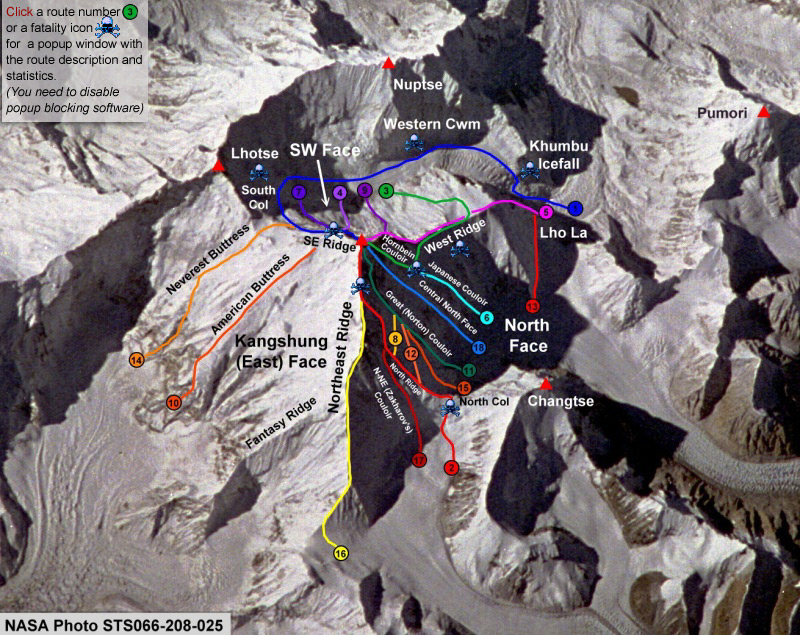
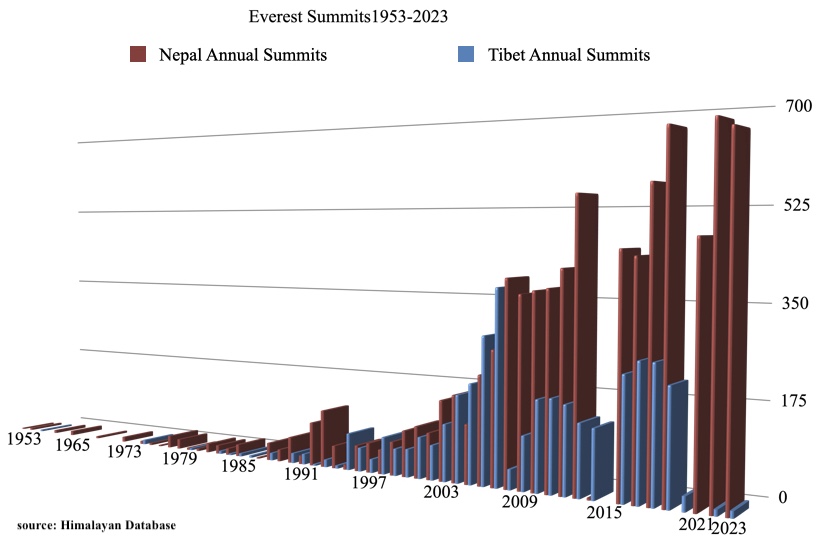
A trick question, I know! In all seriousness there are no “easy” routes up Everest, just degrees of difficulty. The so-called normal or standard routes are along the Southeast and Northeast Ridges via their respective Cols (click on the map to see the ridges). These are considered the most straightforward climbs that present the least amount of technical difficulty. But nothing is easy at those altitudes. Since Everest was first attempted in 1921, there have been many attempts and over 3500 successful individual summits along a variety of routes, 21 in total. Only two new routes on Everest have been opened continue reading

During my annual coverage of Everest, one of my most popular posts is about money; well how much money it takes to climb Everest. What most readers want to know is 1) how little do I have to spend and 2) where do I get it? This update for 2013 looks at both questions in detail. The Big Picture There are real costs involved to climb Everest and it is not the place to save money. However, with guided expeditions charging from $30K to $100K, it is confusing. You can sometimes get a deal, but don’t count on it given continue reading

My wife and I signed the “body disposal form” and sat quietly for a moment. That was in 1998 prior to my first 8000 meter climb, Cho Oyu. We were offered three choices: leave on mountain, return to Kathmandu or return home. We choose to leave my body on the mountain if I died. Obviously I did not but I did help bury a teammate that year on Cho Oyu. Around 225 climbers have died on Everest since 1953 with about 3,700 individuals standing on the summit. The vast majority of the dead are still there. This article will explore continue reading

Over four days in May 2012, around 250 Westerners and 270 Sherpas and Tibetans support climbers summited Mt. Everest. For many, attaining highest point on Earth was the culmination of endless training, personal sacrifices and hard work to achieve a meaningful and fulfilling lifelong dream. Yet it is common within the greater climbing community to bash Everest climbers, for using ladders in the Khumbu ice fall, for relying on bottled oxygen up higher, for having Sherpas carry their gear, fix their ropes and establish their camps. For the critics on the sidelines, Everest has become a joke. I am disturbed continue reading

An opinion piece … Everest is not for the inexperienced, the novice or someone looking for a walk-up. There, I stated the obvious, or did I? OK, so much for the drama! But as the 2013 season gets closer, I have noticed a few disturbing trends. You would think that after 10 deaths on Everest this spring, the operators would be hypersensitive to qualifying clients, setting expectations and focusing on improving safety. Most of the deaths had nothing to do with crowds but everything to do with personal responsibility and inexperienced guides. Setting High Expectations I recently read Alpenglow‘s promotion continue reading

If there was one phrase to sum up this season where over 500 people summited Everest, it might be: risk management. There were signs from the beginning that the Everest 2012 season would be different when Sherpas establishing base camp at the foot of the Khumbu Icefall reported that the upper mountain looked “dry”. Once climbers started moving up higher, urgent requests were made to the Icefall Doctors to move the route in the upper Icefall away from Everest’s West Shoulder where a huge snow and ice serac sat waiting to drop, potentially killing climbers and Sherpas making their way continue reading

Welcome to Alan Arnette’s Everest 2012 coverage Last 2012 Everest News – 31 May 2012 A sincere and deep thank you to everyone who made a donation to one of the Alzheimer’s non-profits. That is why I do this. Very rough, unconfirmed estimates: Total at base camps: 446 westerners plus 500 Sherpas totaling 946. 548 combined summits from both sides 57.93% summit to attempt rate. 10 total deaths. If you have a general Everest question, please post here as a comment and I will try to address it. Start or stop email notifications of new posts using the form in continue reading
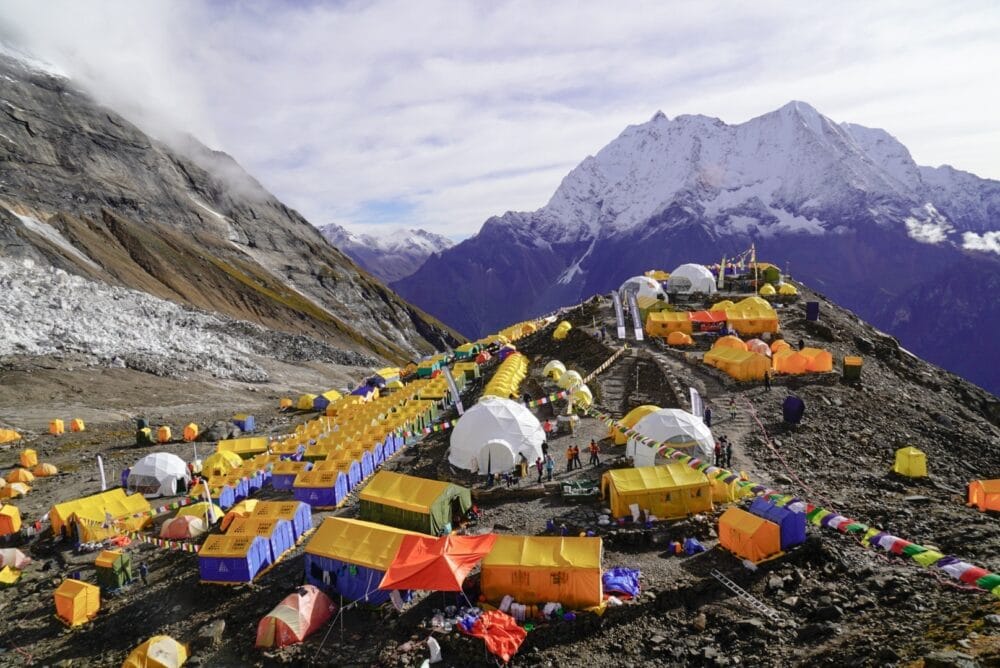
I’ve been in many base camps but I knew I was somewhere special when I was told “… and this is our garbage tent.” Welcome to Everest Base Camp, Russell Brice style. In 2011 while climbing Everest, I spent the afternoon with Brice getting to know this man and how he runs his expedition base camps. Let’s just say, it’s different. Most expeditions will promote their excellent base camp facilities and talk of gourmet food, individual tents, and clean kitchens. Today, this is the ante to play the game and let me say from the start that many operators take continue reading

Along with my annual coverage of Everest, I always update information on the climbing routes on Everest. I am surprised that there is always something new. For Everest 2012 season, I want to discuss an acclimatization technique that is becoming more common on Nepal expeditions, the climb of nearby Lobuche Peak. Lobuche Acclimatization Lobuche is often classified as a Trekking peak due to the lack of technical difficulty and the relatively mild altitude; it is “only” 20,075ft/6119m . Teams like to use Lobuche for acclimatization because the summit is the same altitude as Camp 1 and it eliminates at least one continue reading

I receive many questions on how I did my live dispatches for the 7 Summits so I put together this short tutorial for anyone wanting to communicate during an expedition from anywhere on our planet. While staying in touch is mandatory and part of an expedition for me, some people want to get away from it all and escape the modern noise that comes with 24 by 7 communications. If that is your case, then take a sat phone for safety but don’t use it unless there is an emergency! Tell everyone that no news is good news and you continue reading