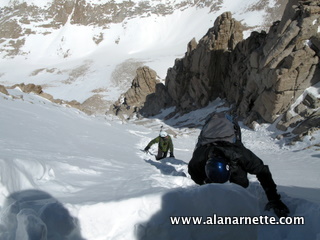
The 13 mountains above 14,000 in California
click on any heading to sort table
| ALTITUDE RANK | MOUNTAIN | HEIGHT | RANGE | EASIEST ROUTE DIFFICULTY* | COMMENTS |
| 1 | Mt Whitney (permit May-Nov) | 14,497′ ** | Sierra Nevada | Class 1 | Loved the MR Class 4 |
| 2 | Mt. Williamson | 14,375′ | Sierra Nevada | Class2/ 3 | |
| 3 | White Mountain Peak | 14,246′ | White Mountain | Class 1 | |
| 4 | North Palisade | 14,242 | Sierra Nevada | Class 4 | |
| 5 | Starlight Peak* | 14,220′ | Sierra Nevada | Class 4/5.6 | |
| 6 | Mt Shasta | 14,162′ | Cascade | Class 3 (snow/ice always) | |
| 7 | Mt. Sill | 14,153′ | Sierra Nevada | Class 2/3 | |
| 8 | Polemonium Peak* | 14,100′ | Sierra Nevada | Class 4 | |
| 9 | Mt. Russell | 14,088′ | Sierra Nevada | Class 2/3 (exposed) | |
| 10 | Split Mountain | 14,058′ | Sierra Nevada | Class 2+ | |
| 11 | Mt. Langley | 14,026′ | Sierra Nevada | Class 1+ | |
| 12 | Mt. Tyndall | 14,018′ | Sierra Nevada | Class 2/3 | |
| 13 | Middle Palisade | 14,012′ | Sierra Nevada | Class 3 | |
| 14 | Mt. Muir | 14,012′ | Sierra Nevada | Class 2/3 | |
| 15 | Thunderbolt Peak* | 14,003′ | Sierra Nevada | Class 3-5.9 |
* the peak is not more than 300′ higher than the adjacent 14er thus not considered a “real” 14er but still climbed by most going for all the California 14ers.
** Whitney’s elevation is of conseriable debate. The most recent measurement is 14,505′ but the summit plaque shows 14,497.
*Climbing Class Ratings
note: route difficulty is determined by the most difficult section so a route can have 50 feet of Class 3 and 6 miles of Class 1 and be classified as Class 3.
Class 1:
Trail hiking. Mostly groomed trails that are easy to find in the summer and relatively smooth. Walk upright without use of hands for balance. It can be a little steep at times. Mount Elbert, the highest 14er, is Class 1 on the standard route.
Class 2:
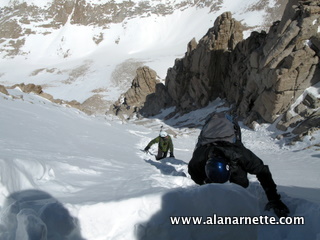
Simple off-trail hiking. Some scrambling may be required on the route with an occasional use of the hands for balance. Downclimbing is straightforward.This picture is of Mt. Whitney’s MR Chute, a class 2 route requiring some hands for balance.
Class 3:
This is actual “climbing” since you scramble a lot frequently using your hands. Handholds are easy to find. You can downclimb facing out from the rock. Mt Whtney’s Mountaineer Route is rated class 3 but like most routes it is easy class 2 most of the time with the upper sections becoming more difficult thus making the route a class 3.
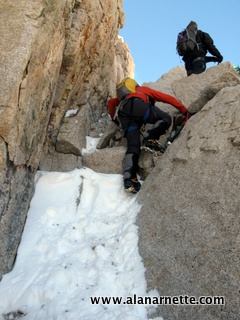
Class 4:
Simple climbing, with exposure. You must look for handholds and test them that they will hold you before using. You use your upper body muscles. A rope is often used for downclimbing (rappelling). Falls may well be fatal. The North Maroon Peak is class 4 with the traverse from South to North rated low class 5 on the upclimb on the North Bell. See my video of climbing this section.

Class 5:
True technical climbing normally using ropes, carabineers, anchors (protection), harness, etc. Climbers often belay one another. In the winter you use an ice axe and crampons. Long’s Keyhole route is rated “technical” in the winter beyond the keyhole since an axe and crampons are used. There are sub-ratings for class 5 ranging from 5.0 for “easy” climbs with frequent hand and foot holds to 5.13 that is has smooth and vertical rock on an overhang. There are an almost unlimited number of class 5 routes on California 14ers plus other non-14er climbs such as the Flatirons and Monastery near Estes Park.

Preparing for a Climb is More Than Training
Summit Coach
From Your First Summit to Everest. One Coach, the Whole Way.
Planning your next big climb? Work one-on-one with Alan Arnette, Everest and K2 summiteer, for personalized training plans, independent guide-service advice, gear recommendations, and experienced support from preparation through expedition.
No commissions. No conflicts. Just advice focused on your success.