How Much Does It Cost To Climb Everest? – 2026 Edition
Welcome to my ongoing Everest 2026 coverage! 2026marks my 23rd year covering all things Everest. If you’re a long-time reader, welcome back; if you’re new here, thank you for joining me. How Much Does It Cost To Climb Everest? – 2026 Editionis an exhaustive review of pricing and policies related to Everest mountaineering.
This post is based on publicly available information from Guide companies’ websites or direct contact with over fifty companies when prices weren’t listed. Prices typically, but not always, include logistics, group gear, fixed ropes and ladders, food, Sherpa support, oxygen, a mask, and a regulator. The companies mentioned are not an exhaustive list and do not imply endorsement.
Prices shown reflect either the only option offered or the base rate. Some Nepalese companies no longer publish prices because of the number of options and the need for direct contact. Estimated prices for 2026 are based on previous data; accuracy isn’t guaranteed—please check with the Guide directly.
A note on Guide terminology: In this post, I distinguish between Nepalese and Tibetan Operators, with what I now call International Operators—Guide companies based outside Nepal (e.g., the U.S., Europe, Asia, Australia, etc.) that run Everest expeditions but, by regulation, partner with Nepal- or Tibet-based logistics teams for permits and to meet government rules.
Background
I summited Everest on May 21, 2011, and have climbed on the mountain three other times, all on the Nepal side, in 2002, 2003, and 2008. In these attempts, my highest point was just below the Balcony at around 27,500 feet (8,382 meters), before health, weather, or my judgment forced me to turn back. I also attempted Lhotse in 2015 and 2016.
Although the climbing season is still a few months away, I’ve already published several big-picture articles before activity ramps up in early April, including:
Once the season begins in early April, updates become more frequent and more intense during the summit pushes in mid-to-late May. You can sign up for (or cancel) email notifications in the lower-right sidebar, or simply check the site regularly.
Ida Arnette
Why This Coverage?
I have one reason for this coverage: Alzheimer’s. I lost my mom, Ida, and four aunts to the disease, which has changed my life. Please read more at this link. I hope you find value in my coverage and consider donating to select nonprofits or any organization of your choice. I receive no financial benefit from your donations. Click the button here or on the right sidebar to donate.
0
Bottom Line
So, what does it cost to climb Mount Everest? As I’ve said for years, the short answer is a car, and cars are becoming more expensive each year. Most people pay between $40,000 and $80,000, and some will pay as much as $300,000! Operators now compete either on price or on luxuries and technologies, similar to the airline industry.
Over the past ten years, International Operators in Nepal have increased their median prices from $59,000 to $76,000 today, while Nepalese guides have risen from $32,000 to $45,250 but still offer significant discounts. Nivesh Karki, Executive Director of Nepalese Operator Pioneer Adventure, told me:
On the Nepal side, the main reason for the price adjustment is the recent increase in government royalty fees, which rose by USD 4,000 per climber. Along with this, the government also increased several taxes. Altogether, these changes resulted in a total increase of approximately from USD 5,000 to USD 6,000 per climber in expedition costs as compared to last year.
In my analysis, on the Tibet side, prices have increased from $32,000 to $91,000 when using International Operators, but, similar to the South side, Nepalese Operators offer significantly lower-priced climbs at around $47,000. With respect to the Tibetan side, Nivesh added:
… pricing is higher primarily due to limited visa availability and stricter regulations. Operators also need to account for additional expenses such as rescue arrangements (if needed), higher logistics costs, and Sherpa permits required by the Tibetan authorities. These factors together make the Tibet side operations more expensive.
UPDATE: Nepal increased the Everest climbing permit fee from $11,000 to $15,000 in September 2025.
What follows is a detailed overview of Everest 2026 prices. Please let me know if you see any mistakes or would like anything added.
Climbing Everest can be divided into pre- and post-commercialization periods, roughly before and after 1992. The pre-commercialization era was characterized by national teams (Swiss, British, Italian, American, etc.) pioneering new routes with minimal external support. Team members equally contributed to carrying gear and establishing high camps. Supplemental oxygen was limited by existing technology, which operated at a relatively low flow of 2 liters per minute, compared with today’s higher flow rates. If one member summited, the entire team was deemed successful. Climbers didn’t boast about their achievements until they returned home, and they had no real-time selfies from the summit!
From 1992 to 2010, International Operators dominated early commercialization and relied heavily on Sherpas to assist members with increasingly limited skills. It was common for one Sherpa to support two or more members. Climbing evolved into a “siege-style” approach, with several camps established between the base and summit, all supplied by Sherpas. Supplemental oxygen usage of two to four liters per minute (lpm) became standard. Nonetheless, most Everest climbers possessed solid experience and felt at home on the mountain.
However, climbing has changed dramatically since 2015. Nepalese companies now dominate commercial expeditions, employing hundreds of Sherpas and others from various ethnic backgrounds to assist a diverse clientele that has grown strongly from China, India, and Southeast Asia. Traditional operators from Argentina, Austria, Germany, New Zealand, the U.K., the U.S. and elsewhere continue to perform well; however, their teams have become noticeably smaller, accommodating only 10, 20, or sometimes up to 30 members, compared to 50, 60, or even 100 with Nepalese outfits. Higher supplemental oxygen flow rates of 4 to 8 liters per minute became standard, starting as low as Camp 2 on the Nepalese side and the North Col on the Tibetan side. It’s common to have two Sherpas per member, and sometimes more, depending on the required oxygen.
Today, we are witnessing a maturing and segment-focused industry on Everest. Nepalese companies primarily compete on price and have many members, while traditional or International Operators add more services, luxuries, and the latest technology each year, serving relatively fewer members, with a few exceptions. However, even those differences are beginning to narrow, so companies are trying to differentiate themselves through aggressive, sometimes overzealous, marketing, success and safety records that are difficult to verify objectively. Almost all companies utilize the best and worst of the Internet to market directly to often naive members.
If you want to climb Everest at the lowest possible cost, you will likely use a Nepalese Operator, as I’ll explain later. If you prefer the services of an International AMGA/IFMGA Guide, you will likely choose an International Operator. While you may reach the summit with either model, your experience could differ across areas such as language and cultural differences, food and shelter, support during the climb, mountain-guiding practices, rescue capability and risk tolerance profiles.
If there is one statistic to summarize the difference, it would be that 23 of the 26 members who died on Everest in 2023 and 2024 were with companies that charged less than the median price for the expedition. While it’s expected that guides with more members might have more incidents, the death rates are disproportionately higher for the most prominent operators compared to the smallest. In other words, the largest operators have the highest deaths per capita.
So, things have changed. Some call it progress, as more people than ever enjoy the sport; others call it a disaster that ruins the sport and the mountain. No matter your side, it will never go back to what it was, so let’s examine how much it costs to climb Everest in 2026.
2
Big Picture: Higher Tibet Prices, Nepal Stable
The headline for 2026 is that, despite Nepal’s $5,000 permit price increase, the median prices remained similar to those in 2025; however, on the Tibetan side, expedition fees increased by 14.5% to a median of $68,900, led by International Operators, which increased their fees by a staggering 22% to $90,800. The increases are likely due to inflation, wage increases for labor, higher pay and insurance for Sherpas with IFMGA certification, stricter Nepalese and Chinese regulations on minimum salaries and insurance, and strong member demand. As for the Tibetan side increase, only a few International Operators regularly guide there, and some offer so-called “speed” ascents, which entail higher operating costs and, consequently, higher member prices.
Several companies now offer luxuries never imagined for mountain climbing. These add-ons come at a price, with the upper end as high as $300,000 or even $1 million for a private climb with a famous Guide. Often, they cater to wealthy members with limited time who prioritize maximum comfort, support and speed. We will dive into this later.
So, do you have to be rich to climb Everest in 2026? Given Nepal’s strong tourism industry and high demand, Nepalese companies will continue to negotiate, but not as aggressively as in prior years. You can get on a low-end, essential services-only trip roughly in the low 30,000 dollar range. As for dealing with International Operators, don’t count on a significant discount. It’s customary to offer a little off if you pay a year in advance, but that’s about it. They fill their teams months in advance, so there’s little incentive to discount.
The following chart breaks down the current MEDIAN prices (midpoint for prices with half above and half below) by style and route. I’ll go into more detail later in this post; however, you can see how much the prices have increased on both sides for all styles. International Operators incur costs in Nepal and Tibet that locals don’t, which explains the significant price difference. I’ll go into that later. The “N/A” label reflects the lack of International Operators offering Sherpa-led climbs on the Tibetan side.
Nepal Side 2025
Nepal Side 2026
% Change
Tibet Side 2025
Tibet Side 2026
% Change
Nepalese Guide Service
$45,000
$45,250
0.6%
$47,000
$47,000
0%
International Guide Service with Sherpa Guide
$54,000
$54,000
0%
N/A
N/A
N/A
International Guide Service with International Guide
$76,000
$76,000
0%
$70,000
$90,800
+22%
As for safety, people die on both sides. Many of the deaths these days appear to be inexperienced members climbing with a Guide who “manages” your climb. However, climbing with a competent Guide who actively manages their members’ decisions can greatly reduce risk and potentially save your life.
4
2025 Review
Strong winds, drones, demanding climbing, and increasingly sophisticated logistics defined the 2025 Everest spring season. Frostbite cases and helicopter evacuations were common, though many incidents likely went unreported. Once again, Everest reminded members that at 8,848 meters, preparation is non-negotiable.
According to the Himalayan Database’s December 2025 update, 851 members reached the summit during the spring season, 731 from Nepal and 120 from Tibet, making 2025 the third-busiest Everest season on record, behind only 2019.
On the South side, 303 members were supported by 428 Sherpas, a 1:1.4 support ratio reflecting the growing need for assistance among less-experienced members. The North side saw 68 members and 52 Sherpas, a 1:0.76 ratio, consistent with its appeal to more seasoned alpinists.
Men accounted for 766 summits (56% summit success rate), while 85 women reached the top with a notably higher 76% success rate, continuing a strong upward trend in women’s participation and performance. Nearly every climber used supplemental oxygen; only four did not, underscoring its central role in modern Everest support.
For spring 2026, I expect 900 to 1,000 total summits from both sides combined, exceeding the previous high-water mark set in 2019, when 877 members summited (661 from Nepal, 216 from Tibet). A realistic breakdown for 2026 would include at least 225 summits on the Tibet side (members and hired combined) and well over 800 from Nepal, compared to 731 from Nepal and 120 from Tibet in 2025.
Nepal
Operationally, expect continued drone use, particularly in the Khumbu Icefall, to support the Icefall Doctors by ferrying ropes, ladders, and equipment across the Icefall, reducing the number of heavy-load carries and lowering Sherpas’ exposure to falling or collapsing ice structures. Drones are also expected to play a larger role in removing waste from high camps, helping clean the mountain without adding to Sherpa workloads.
Over the past year, Nepal has announced multiple new rules in the Tourism Bill 2081 that have not been approved. You can follow its current status at this link, which is listed as ‘Discussion in Committee’ as of February 2026.
Among the new rules from Nepal is a proposal to eliminate the $4,000 refundable trash deposit per expedition and replace it with a non-refundable $4,000 fee per climber to fund a Sherpa-staffed checkpoint at Camp 2 that will monitor that members bring down what they’ve brought up. It’s unclear how operators will manage this new fee when or if it goes into effect, i.e., absorb it or pass all or part of it on to members.
Nepal’s decision, implemented in September 2025 to raise the Everest climbing permit for International members from $11,000 to $15,000, is unlikely to significantly reduce overall demand. Price competition among lower-cost Nepalese Operators remains intense, while demand for premium, fully guided expeditions led by International Operators continues to grow. However, the higher permit fee may push a modest number of members toward the Tibetan side, particularly those seeking fewer crowds and a more controlled climbing environment. Note that this permit increase is in addition to the $4,000 trash fee.
Beyond the previously mentioned changes, there is widespread confusion about a set of new rules proposed by the Nepal Ministry of Tourism, as I described in a post last year. The most significant change is that all Everest permit applicants must have climbed a 7,000-meter peak in Nepal. Note that Aconcagua or Denali would not qualify you to climb Everest if passed.
Tibet
China has returned to normal operations after a few years disrupted by the pandemic. From 2019 to 2022, only Chinese scientists and technicians were allowed to climb, and they installed and maintained a weather station near the summit.
Unlike Nepal, which has no limit on the number of permits issued for Everest, China has a maximum of 300 annual permits for hired and members. The only time there were more summits than 300 was in 2007, when 197 members, supported by 178 hired, reached the top, totaling 375. Since 2010, the median has been well under the quota of 153 people, so this should not be an issue in 2026. However, we may see North Side crowds increase in 2026 as Nepal’s price increases for the Everest take effect.
Only a few International Operators, including Alpenglow Expeditions, Furtenbach Adventures, Kobler & Partner, and Summit Climb, regularly, but not always, guide on the Tibetan side. Several established Nepalese and Tibetan operators run expeditions, including but not limited to Lhasa-based Yala Xiangbo Mountaineering Adventure Co., Climbalaya, Satori, and Seven Summits Treks.
There are a few new rules for this season, but, as usual, China does not publish them publicly; it announces them only to selected operators. For example, last year they announced that all members must use supplemental oxygen on all three of their 8000-meter peaks, but not every Operator received that guidance. They also announced that, for 2026, all Everest members must have climbed a 7,000-meter peak. It’s unclear whether any of these requirements are enforced; for example, last year several members summited 8,000ers in Tibet without supplemental oxygen.
Who’s Climbing
As in the pre-pandemic years, expect more members from China,India, and Southeast Asia than ever. As I’ve detailed, China requires all Chinese Nationals to climb an 8000-meter peak before climbing Everest from China; thus, many go to Nepal, where there are no experience requirements. The Chinese have added a 7,000-meter requirement for all non-Chinese members. As for the Indian members, it’s folklore that if you summit Everest, you can leverage that into fame and fortune, a considerable miscalculation by many. However, many Nepalese/Indian Guide companies meet this market demand, create profitable businesses, run training programs for the under-20 crowd, and then take them to Everest. Unfortunately, this approach is a high-risk gamble that may backfire.
5
Where Does My Money Go?
There are four major components to any Everest climb, regardless of whether you are climbing from Nepal or Tibet:
Travel
Permits/Insurance
Supplies/Gear
Guides
For 2026, there will be no significant changes to this cost structure. The following discussion breaks down the expenses as if an individual wanted to climb without joining a team, but almost no one does this, as the numbers will show – it is just too expensive or risky.
I know a few individuals climbed on the cheap in years past, but few in the last five years. I usually get a reply to this article saying, “Alan, you’re crazy. I climbed Everest and only spent $5,000.” Congratulations if that’s true, but chances are it was in the last century, was illegal (no permit), or was on the North before China raised prices and implemented team-size minimums. If someone can tell me how to climb that inexpensively in the current environment, contact me with the details.
Travel costs depend entirely on where you live and how you like to travel. Flights to Nepal can cost a few hundred dollars to over $7,000 in Business Class. Many people use Qatar Airways, Turkish Airlines, Thai, Emirates, Cathay Pacific, China Eastern, Singapore Airlines, and Air India to reach Nepal.
Once in Kathmandu, you will fly to Lukla, Namche, or Lhasa to start the journey to base camp, so add a few hundred dollars for this airfare. But, of course, you can take a bus to Jiri and trek for five days to Lukla, then on to EBC, to save a little money. There are no paved roads between Kathmandu and Lukla. In recent years, flights to Lukla have been restricted for various reasons, forcing teams to drive 8 to 9 hours to Ramechhap (Manthali) Airport for 20-minute STOL flights to Lukla.
From Lukla, it takes about a week to trek to base camp and acclimate, so add food and lodging for you and your support team. The trek costs range from $400 to $1,000 per person. But, depending on your travel style and how many beers you buy, you can save money. Remember that everything becomes more expensive the closer you get to Base Camp, so buy batteries, toilet paper, etc., in Kathmandu, Lukla, Namche, or, better, at home.
Namche Bazaar Budget Hotel
Tea Houses have dramatically increased their prices in Khumbu. You can still find the $9-per-night teahouse, but expect to pay $10 to $15 per meal. Climbers can always camp in tents and cook their meals to save money, but if you camp and eat in the teahouse, expect to pay four times the price if you don’t sleep in the teahouse; they make their profit from selling meals.
You must get yourself and all your gear – tents, food, oxygen, etc., to base camp. Most people use porters and yaks, which cost at least $25 per day per load and often exceed $1,000.
Large operators will hire helicopters and bundle the expense with the overall price. On the Tibet side, your climbing permit includes all transportation–a 4WD driven by an employee of the China Mountaineering Association (CMA). In addition, the CMA will meet you where you arrive in China and never leave you during the entire expedition, except when you climb above base camp.
Travel $2,725 – $8,625
Airfare is $1,500 to $7,000, depending on class, routing, and excess baggage
Transportation from Kathmandu to Lukla is $500 round trip per person
Hotel and food in Kathmandu are $400 to $800, depending on delays and quality level
Nepal Visa $125 (90 days)
Immunizations $200
Getting to EBC $1,400 – $2,365
Yaks to and from Base Camp $40 per yak per day carrying 120 lbs (4 yaks for four days minimum or $640)
Extra yak in China is $300/yak
Porters to and from Base Camp: $25 per porter per day carrying 60 lbs (3 porters for six days minimum or $450)
Tea Houses and food on the trek to EBC $30 – $125/person/day – 7 days $210 – $875
Park Fee $100/team
7
2. Permits and Maximum Emergency Insurance $30,400 – $66,400 (Nepal) $19,800 – $55,800 (Tibet)
Nepal
The climbing permit simply allows a climber to climb. In Argentina, for Aconcagua, or in Alaska for Denali, the $1,300 or $800 permit fee helps fund high-altitude ranger camps, hire seasonal staff, provide mountaineering information, and keep the mountain environment clean. When you climb Denali, the permit includes helicopter evacuation for life-or-limb emergencies, but not for low-level sickness.
Nepal 2026 Updated Royalty and Insurance Provisions
Nepal requires a local company to organize your permit, which costs $3,500 per team, a refundable trash deposit of $4,000 per permit, and a Liaison Officer at $5,000 per team. These total $12,500 BEFORE the $15,000-per-person climbing permit. So, before you hire guides, yaks, food, or gear, you must come up with almost $25,000 to climb in Nepal.
In 2013, Nepal implemented a new rule requiring all international climbers to hire a local Sherpa Guide. It is still there for the 2026 season. It is very unclear how, or even if, this rule is enforced across all operators. It would add at least $5,000 to the absolute lowest cost. In 2017, a climber was caught without a climbing permit, deported and banned from climbing in Nepal for five years by Nepalese authorities. Tibet and Nepal have shown a willingness to penalize unauthorized climbing; be aware.
Most guide companies in Nepal and virtually all International Operators require at least evacuation insurance and medical coverage. Some International Operators require a complete physical check-up, with a stress test, for members over 50 years of age. One of the best investments you can make is to add trip cancellation coverage to your policy, though it can be costly. In 2014 and 2015, when the Everest season ended early, those with trip cancellation/interruption coverage received 100% reimbursement of their trip expenses, with some claims reaching $45,000.
Several “insurance” companies cover medical evacuations from the injury site to a local or home medical facility. Some also cover trip cancellations, while others offer medical insurance. These policies have become quite costly in 2026, so it’s wise to shop around. Many operators negotiate discounts with these companies; click the appropriate insurance link on your Guide’s site or call the company directly. There are many companies providing coverage, including Travelex, Global Rescue, Redpoint Ripcord Rescue Travel Protection, AIG Travel Guard, and International Medical Group’s TravelLX.
To save money, joining the American Alpine Club will provide $7,500 in evacuation coverage to a local hospital and, optionally, up to $300,000 to get you back home. These are bargains at $65/year and $250/year, respectively. Most people upgrade that basic coverage for a few hundred dollars.
To be covered by all these policies, you must follow their rules strictly, and I mean precisely. If you make one misstep, the policy will not cover your expenses. Again, exactly. Also, most do not cover search-and-rescue if you get lost, and those that do have low limits.
Tibet
An Everest climbing permit from the Chinese (North Side) costs $15,800 to $18,000 per person for a team permit of 4 or more. This price includes transportation from the entry point in China (usually Lhasa or Zhangmu–Kodari) to base camp, hotels, a liaison officer, a trash fee, five yaks in and four yaks out per member. In addition, there is an extra charge of $200 per day per person for time spent in Lhasa. If you want to bring a Nepalese Sherpa to climb with you in Tibet, budget an additional $4,500 for each Sherpa’s “work permit,” as required by the CTMA, plus a salary of $5,000.
The Tibet side is more complex for evacuation insurance, as a centralized team handles all on-mountain rescues. Rescue fees are not capped and can be substantial; the rescued climber is responsible for all associated costs. Helicopter rescue is usually not permitted but is expected to begin in the next few years, possibly by 2027. When climbing in China, it is wise to double-check everything with your provider and evacuation coverage company to ensure you understand the details.
Climbing TEAM Fees $30,400 (Nepal) $19,800 (Tibet)
The Nepal Agency fee is $3,500 per team (usually included in the total price from a Guide)
Nepalese Liaison Officer $5,000/team (usually included in the total price from a Guide)
South Base Camp Medical support from EverestER $100/person
Nepal permits $15,000 for each climber, regardless of team size
The Chinese permit costs $15,800 to $18,000 per person for teams of 4 or more. $4,500 for each Nepalese Sherpa
Nepal garbage and human waste deposit $4,000/team permit (refundable but not always)
Tibet garbage and human waste deposit $4,000/team permit (refundable but not always)
Icefall Doctors to fix route $2,500/team or $600 per climber
Contribution to fixed ropes above Icefall $200/climber, higher on the Tibet side
Rescue Insurance for any reason with medical insurance and trip cancellation coverage – $3,000 to $15,000 (Travelex)
Private pay helicopter evacuation from Everest South – $5,000 – $20,000 depending on start and end locations (not available in Tibet)
All insurance figures are representative and will vary widely with age, trip length, and total cost.
8
3. Supplies/Gear $32,500 – $60,550
You must eat and stay warm, and 98% of all Everest summiteers use supplemental oxygen. You can cook your food, but most people use a cook and helpers, costing $7,000 for base camp and budgeting about $1,000 per person for food and fuel while climbing Everest over six weeks.
Supplemental oxygen costs about $650 per bottle, with a minimum of five bottles totaling $3,250. You will also need a mask ($550) and a regulator ($550). You can carry your extra oxygen to the high camps, but most people use the Sherpas to cache it there. When hiring a personal Sherpa, the standard is for him to use supplemental oxygen at a lower flow rate, which will cost an additional $4,000 to $10,000.
Finally, you will need climbing gear, including 8000-meter boots, a down suit, clothing layers, gloves, sleeping bags, packs, and more. If you buy everything at list price, the total will be at least $21,000. High-altitude boots from La Sportiva or Millet run $1,200, a full-down suit from Feathered Friends or Mountain Hardwear is over $2,000, and a sleeping bag rated to -20F costs at least $1,000.
You can often find lightly used climbing gear on eBay or less expensive gear in Kathmandu. I recommend buying boots at home so you can get the correct size. Remember that your feet will swell by at least a full size at high altitudes, so buy your boots and try them on at home with your climbing socks to test the fit before leaving for the climb.
Misc $17,700 – $35,700
Full Medical kit $1,200 – $1,700 – add $3,000 for Gamow Bag
Sherpas, cooks’ tips and a bonus of $600 – $4,500++ per individual, depending on performance and summit
Personal Gear (down suit, high-altitude boots, sleeping bags, etc.): $21,000 (if you start with nothing)
Satellite phone (own) $1,000 to $3,000 depending on usage
Gear allowance for Sherpas: $3,500
EBC and High Camps $10,500
Tents $3,500 new (sleeping, cooking, toilet, storage at four camps for three people)
Cooks $6,000 per cook and assistant for six weeks per expedition
Food and fuel are $1,000 per person for six weeks
Climbing Support $4,350 – $14,350
Oxygen $650/bottle (5 bottles) $3,250 (doesn’t include costs to take to high camps)
Oxygen Mask (Summit Oxygen) $550
Oxygen Regulator $550
Climbing Sherpa $5,000 – $10,000 per Personal Sherpa with oxygen at $4,000
Welcome! Summit Coach is a consulting service that helps climbers worldwide to achieve their goals through personalized consulting services rooted in Alan Arnette’s 30 years of high-altitude mountaineering experience and decades as a business executive. On his 58th birthday, Alan set the American age record for summiting K2 after summiting Everest at age 54. We have helped many climbers reach their goals, from a Colorado 14er to Aconcagua, Denali, Cotopaxi, Everest, and even K2. Please visit the Summit Coach website for information on pricing and offerings.
9
4. Logistics (Guide) $30,000 – $85,000
Seeing all the previous costs broken out can be overwhelming. But don’t despair; you can join a fully supported or guided team that manages everything.
For decades, International Operators like Adventure Consultants, Alpine Ascents (AAI), Jagged Globe, International Mountain Guides (IMG), and a new generation like Climbing the Seven Summits, Furtenbach, and Madison Mountaineering have guided hundreds to the top of Everest for all-inclusive prices ranging from $49,000 to $115,000.
But that is changing. Over the last decade, there has been intense competition from Nepalese-owned and operated companies. With over 100 Sherpas having ten or more Everest summits, they advertise as Everest Guides and eliminate the traditional International Guide, who earns between $15,000 and $25,000 for the season. This cost-saving strategy is passed on to the members. In 2026, lead Sherpas will earn salaries comparable to those of International Guides, narrowing the price gap, but Nepalese companies remain less expensive, as we will discuss.
Some, but not all, Nepalese Operators are well-known for underpaying their staff. Thus, they charge half to a third of traditional International Operators for a Nepal Everest expedition. In 2025, some Nepalese Operators offered Everest expeditions for as low as $30,000 per climber. One common trend is that almost all Nepalese guides privately negotiate and discount, whereas most International Operators do not.
Many of the lead Sherpas now hold a subset of the IFMGA certification (e.g., without ski qualifications) from the Nepal National Mountain Guide Association (NNMGA) and have more summits than many International Operators. This certification allows the Sherpas to earn up to $10,000 during the Everest season, up from $4,000 to $5,000 previously. This trend will increase costs for Nepalese companies over time as more Sherpas become certified. One Nepalese Operator charges an additional $10,000 if you want to climb with an IFMGA-certified Sherpa Guide.
10
2026 Expedition Price Chart
With all this background, I compiled the 2026 Everest fees from the major Everest Operators. Prices typically, but not always, include logistics, group gear, fixed ropes and ladders, food, Sherpa support, oxygen, a mask, and a regulator. The companies mentioned are not an exhaustive list and do not imply endorsement. For instance, I have not included small, one-person private guiding companies that charge more than $200,000 per member.
The chart below uses publicly available information from various operators’ websites, as well as information provided directly to me upon request in the 30 days preceding this post. Additionally, the prices shown reflect their only offering or the base price. The final price may be significantly higher due to add-ons such as IFMGA guides, extra oxygen, fast climbs, etc.
Unlike most International Operators, many Nepalese companies no longer list their prices, citing too many options and the need for potential members to speak with them directly. For comparison, I used prior prices and estimated them for 2026. I can’t guarantee accuracy, so please contact the operator for pricing.
*All prices in USD converted at press time, subject to change.
12
Who Guides on Everest?
There are no enforced requirements to call yourself a Guide in Nepal. The Nepal Ministry of Tourism calls every Sherpa a ‘Sherpa Guide’ regardless of training or experience. However, this is slowly changing as more Sherpas attend basic climbing and first aid courses at the Khumbu Climbing Center.
There are three common options for Everest climbs: Sherpa-supported, Sherpa-guided, and fully guided commercial expeditions. I have changed from “Foreign Guide” to “Fully Guided” because several Nepalese guides are doing an excellent job. Hence, the term “fully” is more inclusive and leverages group costs, such as deposits, cooks, and tents, across multiple members.
A note on Guide terminology: In this post, I distinguish between Nepalese and Tibetan Operators, with what I now call International Operators—Guide companies based outside Nepal (e.g., the U.S., Europe, Asia, Australia, etc.) that run Everest expeditions but, by regulation, partner with Nepal- or Tibet-based logistics teams for permits and to meet government rules.
All teams on both sides use the same ladders and ropes, installed by dedicated Sherpas, Tibetans, or, in a joint effort, commercial teams. Some outfits will market that their price includes ladders and ropes, but it’s not a difference when everyone has access to them at the same prices.
When comparing prices, remember that International Guide companies must purchase a $15,000 climbing permit for each team member, including guides. In contrast, Sherpas pay nothing to climb Everest, reducing total expedition costs by thousands of dollars. These savings are passed on to members, enabling Nepalese Operators to offer lower expedition prices.
One final thought: I believe all these models can safely guide suitably experienced members to the summit of Everest and back home; however, your experience and style might vary significantly. I always suggest obtaining references from someone similar to you in terms of climbing experience, age, and budget. I routinely recommend these models to my Summit Coach members.
Let’s look at them:
Sherpa–Supported Expedition (Not Guided)
Please note that this is Sherpa-supported, not guided, and what most Nepalese-owned companies offer, even though they call each Sherpa a “Guide.” It’s a commercial expedition where the operator provides logistics and general Sherpa support, but you are primarily responsible for decision-making (pace, turnaround, risk tolerance), and you may not have a dedicated climbing Sherpa with you day-to-day.
You can climb on a Sherpa-supported expedition for between $30,000 to $55,000. The company organizes all the logistics: permits, food, group gear, transportation, plus Sherpa support, but does not provide International Guides. Sometimes, there will not be a lead Sherpa Guide or a Personal Sherpa who will climb with you throughout the expedition, but will only be with you for the summit push.
The Sherpas may not speak English or your native language well, and some will likely follow your lead on whether to proceed or turn back. You are fully responsible for your safety and well-being. I’ve had high-profile owners of Sherpa companies tell me, “It’s not our job to turn a member back.” This attitude is a risk you and your family need to understand and accept fully.
You must exercise extreme caution when choosing among these companies, as some are outstanding while others fall short. A Sherpa will usually accompany you on summit night. Still, you might find yourself partnered with different teammates during the rest of the acclimatization climbing process, including meal preparation at the high camps. It is common to end up climbing solo or with one Sherpa. While the Sherpas may have trained at a climbing school like the Khumbu Climbing Center (KCC), they might lack adequate medical training and usually provide limited assistance in a health crisis, primarily helping you descend, which can be critical and often life-saving.
Asian Trekking specializes in this style of climb and is outstanding. 8K Expeditions, Climbalaya, Satori, Thamserku, Pioneer, 14K Peaks and Seven Summits Treks are good options at a lower cost. Many small one-person Nepalese companies offer even lower prices. Look to pay between $30,000 and $50,000 for this option. This option suits members with significant high-altitude experience, including on other 8000-meter peaks such as Cho Oyu or Manaslu. It is not for the novice or first-timer on an 8000-meter peak.
Sherpa–Guided Expedition
Please note this is Sherpa-guided. It’s a commercial expedition where a designated, experienced Sherpa Guide (often a Sirdar or senior Sherpa) actively manages your climb and decisions, and you have consistent, direct leadership throughout the expedition.
A Sherpa-guided climb of the Seven Summits is a good example of a Sherpa-guided expedition, with an experienced Sherpa supporting the member throughout the route. CTSS charges $58,000 for this service. Local Nepalese Operators such as 8K Peaks, Expedition Himalaya, Imagine Nepal, and Dreamers Destination are among many worthy options. Typically, this model relies on an experienced Sherpa to make significant decisions, such as when to attempt the summit or turn back. Additionally, a highly experienced senior Sherpa, often called a Sirdar, often oversees the expedition from Base Camp.
Hiring a Personal Sherpa for an additional $5,000 to $10,000, plus 5% to 20% for tips and bonuses, is an option. These Sherpas have substantial experience and training in interacting with International members. Their English skills are generally excellent, but similar to a Sherpa-supported climb; they may lack formal medical training, but possess extensive real-world experience, ensuring you will never climb alone.
While they won’t carry all your gear, they may occasionally take some items off your hands. They will be with you exclusively on your summit night, even if you choose to turn around before reaching the summit. This style suits members with experience at the 7,000-meter level (e.g., Denali, Aconcagua) and strong climbing skills, but it is not appropriate for novices.
Fully–Guided
Please note, this usually implies an International Guide leading the climb. It’s a commercial expedition led by one or more professional guides (often IFMGA-qualified), with Sherpa support. The guide team provides active leadership, structure, and decision-making throughout.
Fully guided expeditions are considered ‘full service’ trips and are most suitable for members with 7,000 or 8,000-meter experience (e.g., Denali, Aconcagua), first-time Everest members, or anyone seeking additional support. The cost varies widely, typically from $65K to over $125K. This fee includes all services for a Sherpa-guided climb, with one or more highly experienced Sherpas and/or International Operators, who typically hold IFMGA certification. If you’re looking for a personal International or high-profile guide, expect to pay $120K or more, plus tips and bonuses, potentially totaling around $175K. Some guides even command several hundred thousand dollars.
The main benefit of this approach is that you will be climbing with a highly qualified Guide who has likely summited Everest and other 8000-meter peaks numerous times. Typically, there are no language barriers, and many guides will have at least Wilderness Medical Training (WMT) or higher qualifications. The Guide will handle all decisions related to turnaround times, weather conditions, and emergency management.
You can anticipate high-quality food on these premium expeditions, ranging from well-prepared meals to exotic dishes. For example, one Operator offers sushi while another features a 5-star chef. Additional amenities often include espresso machines and open bars; the possibilities are endless, all at a price. The most expensive guiding companies (Adventure Consultants, AAI, Alpenglow, Furtenbach, CTSS, Madison, etc.) typically provide multiple highly qualified guides, ensuring you never climb alone.
Top, Top End
Catering to a wealthy clientele with little time but lots of money, many companies offer an ultra-high-end expedition with a price to match.
Nepalese Operator Seven Summits Treks caters to the Chinese, Indian, and Southeast Asia markets and offers a “VVIP Everest Expedition.” They no longer list prices on their website, but the last time they did, it was $130,000; it’s likely at least $300,000 now. I’ve highlighted services above that would be part of a standard high-end expedition:
CLIMBING CONSULTATION: Free consultation with a high-altitude doctor and UIAGM-certified Guide upon expedition signup.
AIR FARE: International flight airfare (from and to Kathmandu).
ARRIVAL AND DEPARTURE : Airport – Hotel transfers – Airport (Pick Up and Drop), by private vehicle.
HOTEL ACCOMMODATION IN KATHMANDU : 5-9 nights hotel in Kathmandu (5-star category) – single room on Full Board Plan (inclusive Breakfast, Lunch and Dinner).
MEMBER’S INSURANCE POLICY : Insurance covering both medical and high-altitude evacuation costs (for, high-altitude rescue & air evacuation, medical treatment, repatriation, etc.)
MAP : Trekking and climbing map.
DUFFLE BAG : One Seven Summit Treks’ Duffle Bag.
MEDICAL CHECKUP : A medical checkup in Kathmandu before the expedition to ensure that the member is fit to climb and identifies any potential health risks.
REST IN NAMCHE OR KATHMANDU : Helicopter flight from Everest base camp – Namche OR Kathmandu – Everest Base camp (1 time) if required, with Full Board accommodation.
PHOTOGRAPHER / VIDEOGRAPHER : One Personal Photo / Videographer during the entire trip, including a filming permit. (Kathmandu – Basecamp – Summit – Kathmandu).
MEMBER LUGGAGE : Up to 200 Kg per member as personal baggage during the trek to be carried by porters or Yaks.
FOOD AND LODGING DURING THE TREK : Three (3) meals a day (breakfast, lunch, and dinner), including tea, coffee, and hot water, will be provided, along with accessible accommodation at hotels, lodges, or tea houses (single) during the trek. Hygienic foods will be served throughout the entire trek. (Fully – Upgraded Rooms with all VIP amenities)
BASECAMP LOGISTICS (FULL BOARD SUPPORT) : Three (3) meals a day (breakfast, lunch, and dinner), including tea, coffee, juice, soft drinks, etc., will be provided. Additionally, a comfortable box tent will be provided for accommodation at the base camp. Hygienic and fresh green vegetables, fresh meat, fruits, soft drinks, and juice will be served regularly throughout the entire expedition, facilitated by helicopter flights. A well-managed base camp setup, including a dining tent, kitchen tent, toilet, and shower tent, will be available for both members and staff.
PERSONAL EXPENSES : Telephone Calls, Internet, Toiletries, battery recharge, hot shower, bottled/mineral water, laundry, soft drinks, beers, or any Alcoholic beverages.
UNLIMITED INTERNET SERVICE : Internet facility will be provided during the expedition period at all available Spots.
INTERNET : Internet facility at Camp II.
PRIVATE COOK : A Private cook is provided during the entire expedition, preparing a variety of European, Continental, Asian, and Chinese meals for the members during both the expedition.
FULLY UPGRADED BASE CAMP TENT (VVIP) : Each member will have their own box tent at Base Camp, complete with a bed and comfortable mattress, electric blanket, power supply, and lighting facilities.
WHITE DOME TENT : One White Big Dome luxury tent, usable for dining, coffee station, and relaxation.
TELEVISION : One 42’’ television set with satellite dish home antenna at the base camp with DVD player and projector set.
PRIVATE BASE CAMP EQUIPMENT : Single Tent, foam mattresses and pillow per member, 1 Dining Tent, 1 Kitchen Tent, 1 Communication tent, Private 1 Toilet & 1 Private Shower Tent, 1 Staffs Tent, 1 Tent for Nepalese base camp staff, Store tent, Tables & chairs & all necessary cooking gears.
HEATER : Heater at base camp in each Dining and other necessary camps.
SOLAR/GENERATOR/LIGHT : 1 Solar panel and Generator for lights at base camp, for battery charges, laptop, and other electronic devices.
MEDICAL CHECKUP : Twice Medical checkup of each climber at the base camp before the summit attempt.
BAKERY AND BAR AT BASE CAMP : Bakery and bar for the team members of Seven Summit Treks. (Unlimited uses)
UIAGM GUIDE : 1 UIAGM Guide will be with you from Kathmandu – Basecamp – High Camps – Summit – Basecamp – Kathmandu all the time for your Guidance.
HIGH ALTITUDE CLIMBING SHERPA : 5 veteran and government-licensed climbing Sherpas per member (1 Member: 5 Sherpas including 1 UIAGM Guide), during the entire climb from Basecamp to the summit and back, and on each rotation.
ASSISTANCE : Climbing Sherpa to assist in carrying your gear to the high camps.
BONUS : Carry Bonus of Sherpas and Route Fixing Charges.
MEMBER PERSONAL EQUIPMENT : Clothing, Packing Items, Bags, Personal Medical kits, and all kinds of Personal Trekking / Climbing Gear.
NEW OXYGEN BOTTLE (O2) : Oxygen cylinder: Unlimited (not less than 25) oxygen bottles (4 ltrs.) for each member and 7 oxygen bottles for each high-altitude Sherpa. **
NEW OXYGEN MASK & REGULATOR : 1 Set of tested New Oxygen masks & regulator for each member and high-altitude Sherpa. **
BACK UP OXYGEN, MASK & REGULATOR : Additional oxygen bottles, along with one set of oxygen mask and regulator, will be available at base camp and high camps and can be used if necessary.
UPGRAGED VIP HIGH CAMP SERVICE (INFRASTRUCTURE AND LOGISTICS) : High Altitude Tent, Necessary cooking EPI gas, cooking pot, High food for a member, Sherpa, and other crews at (C1) (C2) (C3) and (C4). Group climbing gears, fixed and dynamic rope during the climbing period as required.
HIGH CAMP KITCHEN AND DINING : Member will have Private Space Station Kitchen and Dining Tent at Camp II.
HIGH CAMP KITCHEN AND DINING : SST will have one cook, kitchen, and dining tents in Camp I and Camp II.
SPECIAL CARE BY DIRECTORS : Guidance and instruction by Mingma Sherpa 1ST South Asian to climb all 8000m. peak and Chhang Dawa Sherpa all 8000er summiteer.
SATELLITE PHONE : Satellite Phone for emergency communication carried by Sherpa, also available for members.
12 HOURS HELI SERVICE : In case of need we have our Helicopter as the priority for your safety, all day.
RESCUE TEAM : A team of Sherpa at Camp II and Camp IV, for emergency and rescue purposes.
DOCTOR : One Medical Doctor during the trek along with a comprehensive medical kit for the member, there will be one Doctor at the base camp during the expedition period.
RELAXATION TENT : Personal relaxation tent at Basecamp for members, a serene space where individuals can engage in yoga, meditation, head and foot massage, reading, and other calming activities.
SUMMIT BONUS : Summit bonus for each climbing Sherpa.
TIPS : All other required bonus and tips to the involved staff.
Full support (including throughout the pre-expedition preparation phase)
Private mentoring from Lukas Furtenbach
Personalized consultation with a certified High-Performance Sports Dietitian
Pre-expedition medical consultation by a High-Altitude Doctor
Private IFMGA / AMGA mountain Guide for the duration of the whole expedition
2 personal Climbing Sherpas with a minimum of 5 Everest ascents to their name
Premium accommodation in Kathmandu/Chengdu, and Lhasa
30 m² heated dome tent with private bathroom in Basecamp
VIP transfers
Unlimited supplemental oxygen
Unlimited medical advice from the team doctor
Video footage and photographs of your expedition
Climbing the Seven Summits‘ ultra-high-end Everest offering, the Formula, is priced at a staggering $399,000 and includes a “Custom Everest simulation expedition on Ecuador’s volcanoes.” The low-end, high-end trip option, “8848- The Residence,” is not to be missed. An additional fee is charged on top of the standard fees, which range from $50,000 to $120,000.
Private WC & hot shower
Heating*
A 4-poster bed with comforter & pillows
CTSS unichill onesie PJs
Personal charging facilities, overhead lighting*
Table and chair to create a private workspace that allows professionals and business executives to productively use valuable downtime at base camp to continue to manage work obligations or to simply keep up with friends and family and update social media.
A chest of drawers and a clothes rack
Raised, carpeted flooring to insulate from the glacier
Personal humidifier
Morning beverage service
Shoe rack
Single rooming throughout the expedition in Kathmandu & tea houses
Almost every International Guide company offers multiple options today, from Sherpa-guided/supported to International guided to private climbs. Also, most companies now offer climbs to Camp 2 or the North Col, not to the summit. Some supply oxygen, and each climber has a Personal Sherpa, even starting from base camp. In other words, whatever you desire, there are companies that will provide it.
Speed Climbs
Increasingly, many International Operators—and a few Nepalese Operators—offer fast climbs that last two to four weeks, rather than the traditional six to eight weeks. This model is becoming increasingly popular.
The primary market consists of individuals who can spend over $100,000 but cannot be away from work for more than a month. Tahoe-based Alpenglow Expeditions and Austrian-based Furtenbach Adventures have been the most aggressive in this model.
The rationale is that by reducing expedition time, you conserve energy, reduce the risk of illness by spending less time on the mountain, and, according to the operators, have a safer experience. By using a hypoxic altitude tent 30 to 60 days before leaving home, you can arrive at base camp acclimatized to at least 17,000 feet, and in some cases up to 23,000 feet. This can eliminate one or more acclimatization rotations and enhance your chances of summiting. There is a growing market for this ultra-high-end product among high-altitude expedition teams.
The package typically includes a hypoxic-altitude tent for a month or two before departure, an IFMGA guide, virtually unlimited oxygen (in some cases up to 8 liters per minute), and ample Sherpa support. This additional support raises the cost to $100,000 or more.
At Summit Coach, we emphasize the entire preparation process for your climb beyond physical training. We begin with fitness, skills, and experience, then incorporate the mental and emotional tools necessary for a successful climb. Your teammates are welcome to join you at a discount, and we encourage your family to participate in your engagement so they understand what to expect during your climb. We strive to be affordable and provide our services at fair prices. Please visit the Summit Coach websitefor information on prices and offerings.
10
Q&A
Let’s look deeper at a few questions.
Am I required to take the standard routes?
No. However, you must obtain permission to climb or create any route. There are 20 named routes on Everest, or make up your own as I described in this post, “Comparing The Routes of Everest.” If you plan to traverse from Nepal to Tibet, or vice versa, you will need permits from both countries; however, China has refused to issue permits for many years. In 2017, a climber illegally made the traverse and was deported and banned for five years. He claimed it was a medical emergency.
Can I Climb Everest Alone?
Officially, no. The Nepal Ministry of Tourism requires every climber to hire a Sherpa Guide. The CMA has a similar requirement. But as with everything around Everest, there are exceptions, and many rules are inconsistently enforced. In my opinion, the only true solo ascent of Everest was by Reinhold Messner on the Tibet side in 1980, but even he had a base camp cook.
Climbing Everest alone on the standard route is almost impossible because of the crowds, especially in spring. Perhaps a quiet climb in summer or winter, as Jost Kobusch did in the winter of 2024/2025, would work; however, the Sherpa requirement is theoretically still in place.
What is the minimum I can spend to climb Everest?
You can climb independently without oxygen, Sherpa support (if you want to ignore the requirement to hire a Sherpa), cook support, paying only for fixed ropes on the South side to save money. Avoiding the ladders in the Khumbu Icefall would be almost impossible, but you could climb to the Western Cwm on Nuptse’s lower slopes and bypass the Icefall.
For one person, this would cost at least $41,000 from Nepal. See “Permits and Insurance” above in this piece. With the minimum rules on the Tibet side, it would be challenging to climb alone. Even after splitting group expenses, the base costs total $30,000 per person for a seven-person team. When you add oxygen and base camp support, a one-person climb with Sherpa support approaches $49,000, and a seven-person team leveraging group costs comes in at $39,000.
Old-timers will brag about climbing Everest in the early 2000s or before for $5,000. Even then, that price assumed no support, oxygen, contribution to the fixed ropes or ladders, weather forecasting, etc. This post is aimed at people who want to climb comfortably and avoid eating rice at every meal for six weeks.
What is the difference between a $30K and a $150K Everest Climb?
Some companies offer fundamentally different packages, while others provide very little, so it’s up to the climber to shop wisely.
The general rule is that the lower the price, the larger the team. A high-volume team may have 50 to 100 members at $30,000 each, compared to a small team with 10 members at $75,000 each. In other words, $1.5M to $3M vs. $750,000—it’s all about the business model, similar to airlines.
At the high end, much of the price difference is profit, overhead (home office and marketing), and the number of International or highly qualified IFMGA guides. The ultra-high-end will justify its price as safer and with higher summit rates.
Another key question is how many services are bundled into one price versus offered as options. The lowest-price outfits promote a low base price and then offer “options” such as oxygen, Sherpa support, or even food above base camp. One outfitter offers a low price on the North side but does not include oxygen, summit bonuses, or other items that most include in their base price.
Another common practice to keep expedition costs low is to pay support staff the absolute minimum, whereas fully guided expeditions usually pay a livable wage to their entire team. Often, however, the biggest difference is the availability of resources:
One well-known low-cost Operator had their tents destroyed one year. They had no backups and had to beg other operators for spares. They also ran out of food. Another, anecdotally, stole oxygen bottles at the South Summit to save costs by not buying enough to support their members.
An example of price confusion is Sherpa bonuses. A low-price service may not include a bonus, whereas another may. For instance, one Nepalese company asks the climber to pay their Sherpa $1,500 upon reaching the South Col and another $500 upon returning from the summit. These payments are in addition to the base price. However, a different company includes these bonuses in its overall package. Tipping your Sherpa and International Guide is customary in both cases. The amount is always debatable, but 10% is often considered the minimum, so factor this into your overall cost, whether it’s $ 30,000 or $130,000. Note that some Operators suggest 15% to 20% as a tip, similar to a restaurant, but, in my opinion, tips reflect the quality of the service provided, not the demands of an individual.
How many people have summited Everest?
Statistics Updated through January 2026
Looking at the overall numbers, there have been 13,737 summits of Everest, representing a 43% summit success rate (summits divided by attempts above base camp) through December 2025, on all routes, by 6,656 members and 7,081 hired members (Sherpas). Of those who have summited, 7,563 different people have reached the top. As for deaths on all routes, 339 people have died. Nepal remains the more popular—and more deadly—side. Hired support members now dominate with the most summits.
Repeat ascents account for a significant share of the total, with 1,179 members and 1,284 Sherpas, collectively responsible for 7,083 summits. Women members have recorded 1,047 summits, a figure that continues to grow steadily.
Summits and Deaths from 1922 to 2025
NEPAL
TIBET
TOTAL
Members
4,547
2,109
6,656
48%
Hired
5,340
1,741
7,081
52%
TOTAL Summits
9,887
3,850
13,737
69%
31%
Member Deaths
122
86
208
61%
Hired Deaths
107
24
130
39%
TOTAL Deaths
229
110
339
68%
32%
Death Rate
1.07
1.05
1.06
Summits
The Nepal (South) Side remains the most popular route and has recorded the highest absolute number of fatalities: 9,887 summits and 229 deaths, a fatality rate of approximately 2.3% (or 1.07 deaths per 100 summits, depending on methodology). The Tibet (North) Side has seen 3,850 summits and 110 deaths, a slightly higher fatality percentage of 2.8%, but a comparable normalized rate of 1.05 deaths per 100 summits.
Use of supplemental oxygen remains one of the strongest predictors of survival. On the Nepal side, 116 members who died (51%) were not using supplemental oxygen. On the Tibet side, 41 fatalities (37%) occurred among members without oxygen. Combined, 180 of Everest’s 339 total fatalities (53%) involved members ascending without supplemental oxygen. Tibet-side members tend to be more experienced on average, which likely contributes to the lower proportion of non-oxygen-related fatalities.
Importantly, these death rates include all members and hired support, encompassing incidents at base camp and during route preparation—not only summit attempts. The last time Everest recorded no summits from either side was 1974.
Kami Rita Sherpa (Thami) holds the record for most summits at 32, with Pasang Dawa (PA Dawa) Sherpa of Pangboche close behind with 28 summits. Britain’s Kenton Cool has 19 for the non-Sherpa record. Eleven Sherpas have 20 or more summits, and 101 Sherpas have summited Everest 10 or more times. Members from the USA have the most country member summits at 1,078, followed by China (683), India (605), and the U.K. (560).
How Safe is Everest?
As for Everest deaths, 335 people (203 Westerners and 129 Sherpas) died from 1922 to December 2024. These deaths account for about 2.7% of those who summited, resulting in a death rate of 1.11% among those who attempted to reach the summit. Westerners die at a higher rate (1.36%) compared to Sherpas (0.84%).
Descending from the summit is deadly, with 74 deaths, or 22% of total fatalities. Female members have a lower death rate (0.81%) compared to 1.14% for male members, and 14 women have died on Everest.
The Nepal side has seen 9,156 summits with 225 deaths through December 2024 (2.5%), representing a rate of 1.12 deaths per 100 summits. 130 deaths (27%) occurred among members who did not use oxygen. The Tibet side has witnessed 3,728 summits with 98 deaths through December 2024 (2.6%), a rate of 0.98 deaths per 100 summits. Thirty-eight individuals died without using oxygen.
Countries with the most deaths among members include India (28), the U.K. (19), Japan (19), the U.S. (17), and China (12), with South Korea (11) close behind. Nepal has the highest absolute number of deaths (135), dominated by Sherpas. Most bodies remain on the mountain, but China has removed many from view on its side. The top causes of death are avalanches (77), falls (75), altitude sickness (45), and exposure (26).
Everest is becoming safer despite more people climbing. From 1923 to 1999, 170 people died on Everest with 1,170 summits (14.5%). Deaths declined sharply from 2000 to 2024, with 11,714 summits and 165 deaths (1.4%). However, four years skew the modern death rates: 17 in 2014, 14 in 2015, 11 in 2019, and a record 18 in 2023. The reduction in deaths is primarily due to higher Sherpa support ratios, improved supplemental oxygen at higher flow rates (up to 8 lpm), better gear, more accurate weather forecasting, and increased participation through commercial operations.
Of the 8,000-meter peaks, Everest has the highest absolute number of deaths (members and hired) at 335, but ranks near the bottom with a death rate of 1.11%. Annapurna is the deadliest 8,000er, with one death for about every fifteen summits (73:514) or a 3.30% death rate. Cho Oyu is the safest, with 4,158 summits and 52 deaths, or a death rate of 0.54%, with Lhotse next at 0.61%.
Of note, 81 Everest members out of 206 member deaths died descending from the summit (39%). K2’s death rate has fallen dramatically from the historic 1:4 to around 1:8, primarily due to more commercial expeditions with larger Sherpa support ratios.
Should I Use Supplemental Oxygen?
Summiting Everest without supplemental oxygen is rare; only 229 people have done so. A closer examination of the data reveals that out of 335 deaths, 178 occurred among members who were not using oxygen at the time of death.
However, this can be misleading. 105 of those deaths occurred during route preparation, work done primarily by Sherpas. Most likely, many were not using oxygen because they were at a lower elevation on the mountain. For example, during the 2014 Khumbu Icefall ice serac collapse and the 2015 earthquake—events that claimed 31 lives combined—the victims were located below Camp 1 and were not using oxygen.
Looking at modern climbing (2000 to 2024), 96 members (excluding Sherpas) reached the summit without supplemental oxygen, including 32 who died, representing a 33% mortality rate. In comparison, 5,401 members summited with oxygen, including 73 who died, a 1.35% mortality rate. In other words, you’re about 24 times more likely to die if you don’t use supplemental oxygen.
Supplemental oxygen gives the body roughly a 3,000-foot advantage (some studies report different values). In other words, when a climber is at 28,000 feet, their body may “feel” closer to 25,000 feet. One of the biggest benefits is that oxygen helps members stay warmer, allowing the heart to pump more oxygenated blood to fingers and toes and reducing the risk of frostbite.
Climbing without oxygen is a serious accomplishment, but it isn’t for everyone. Many try, and few succeed.
Latest: Spring 2025
According to the Himalayan Database’s December 2025 update, 851 members reached the summit during the spring season — 731 from Nepal and 120 from Tibet — making 2025 the third-busiest Everest season on record, behind only 2019.
On the South side, 303 members were supported by 428 Sherpas, a 1.4:1 support ratio reflecting the growing need for assistance among less-experienced members. The North side saw 68 members and 52 Sherpas, a 0.76:1 ratio, consistent with its appeal to more seasoned alpinists.
Which side should I climb, North or South?
Both sides offer plenty: the Mallory and Irvine mystery of 1924 in Tibet and Nepal, and Hillary and Norgay’s first summit in 1953.
The comparison between the sides is straightforward. The North is colder, windier, and dustier; some feel technically harder since you climb on more exposed rock.
The South has the Khumbu Icefall, which some now fear. However, I believe the facts don’t support the fear. Through spring 2024, out of the 335 total deaths on the Nepal side, 46 occurred in the Icefall. By the way, virtually all of these deaths were Sherpas ferrying loads to camps in the Cwm and above:
22 – Avalanche (most from Everest’s West Shoulder from the hanging seracs)
18 – Icefall Collapse (Similar to what we saw in spring 2023, taking three Sherpas’ lives)
5 – Fall/Crevasse
1 – AMS
So, while these deaths, especially when occurring in large numbers like in 2014 and 2023, attract media attention, the real story involves inexperienced members with unqualified guides taking unnecessary risks concerning weather, climbing conditions (fresh snowfall- avalanches), and insufficient supplemental oxygen for a “normal” person, and failing to turn back when they encounter trouble. All of these are avoidable.
Since 1953, there have been 12,884 summits of Everest through January 2025, across all routes, by 7,269 different individuals. Climbing from Nepal is the most popular side and has a higher total of deaths and death rate, with 9,156 summits and 225 deaths, or 2.5%, resulting in a fatality rate of 1.12. Of these, 130 deaths, or 27%, did not involve the use of oxygen.
The Tibet side has experienced 3,728 summits with 98 deaths through December 2024, translating to a death rate of 2.6%, with a fatality rate of 0.98. Thirty-eight individuals died without oxygen usage.
When choosing sides, remember that as of 2025, China does not allow helicopter rescues. However, that might change as they build a massive mountaineering center at the base camp to cater to tourists. They have said they will start helicopter rescues as part of the center. This facility has long been rumored and is expected to open as early as 2027.
One can cherry-pick the numbers to prove nearly any point about which side is safer. The death rate in Nepal is 1.12, while in Tibet it is 0.98. Ultimately, death occurs on both sides of Everest, and it often comes down to being in the wrong place at the wrong time.
How Do I Pay for an Everest Climb?
Acquiring money is almost always more challenging than climbing Everest. People get very creative when seeking funds. Some take out loans and refinance their home mortgages; others rely on the infamous “rich uncle.” Then, some set up websites to sell T-shirts or solicit “donations” from strangers. Believe it or not, this can help raise some funds, but rarely enough to cover all the expenses.
However, the most common way to finance an Everest climb is to prioritize it in your budget by setting aside money each month for as long as needed. This strategy has financed 26 of my significant climbs since I started at age 38.
The question of securing a sponsor often arises. Unfortunately, securing backing from a major outdoor gear company or a similar entity is extremely difficult. People tend to have more success with large corporations, such as technology firms, insurance companies, or banks. There are methods to obtain sponsorship, but they require years of hard work, a solid plan, and proven experience. It often depends on connections and a fair amount of luck.
Climbing for charity or a cause is popular, but be careful not to exploit your cause to fund a climb. I believe asking for donations to cover climb expenses is a poor practice.
The Himalayan Database reports that between 2010 and 2025, members (not Sherpas) had a 63% summit success rate.
Historically, about 62% of all expeditions have sent at least one member to the summit. In recent years, long-standing International Operators such as Jagged Globe, Adventure Consultants, Furtenbach, Madison Mountaineering, smaller Nepalese operators and others have regularly sent almost every member to the summit.
Today, operators use the standard routes, so there are fewer unknowns. That, along with improved weather forecasting, extra supplemental oxygen, and generous Sherpa support, has made Everest one of the safest 8000-meter mountains and the most summited 8000er by a considerable margin.
Any Warnings?
Be wary of claims of 100% summit success. Recently, operators have calculated success by counting only those who left the High Camp for the summit. They don’t include anyone who paid to climb Everest with them, arrived at Base Camp, and didn’t leave for their summit bid from the High Camp. In other words, they may have started with 20 people, had five drop out before the summit push, and another three give up before reaching the South Col, leaving 12 to go to the top. All ten made it, and the Guide claims 100%, even though it’s 60 % of their original team. However, let’s say 4 of the original 20 left for solid reasons (family emergency, dental problem, etc.), and 16 from the original team summits, which is still 80% (16/20), not 100%.
14
Why Everest?
Let’s wrap up with why even climb Everest at all. It is trendy to criticize anyone who has climbed or is planning a climb. Jon Krakauer’s book Into Thin Air set a negative tone and portrayed the climbers as rich, inexperienced, and selfish, based on his single 1996 climb. Whatever one thinks of his portrayal, the commercial Everest landscape has changed significantly since 1996. In my experience with six climbs on Everest or Lhotse, the opposite is today’s reality.
To be fair, in recent years, the marketing of low-cost expeditions has attracted inexperienced members. This price move is all about supply and demand. The Nepalese government’s puffery about making Everest safer has had zero impact on this because everyone involved, from government officials to guide companies to guides, benefits from the profit.
If you want to attempt the world’s highest peak, do the work:
Get the proper experience, train your body to be in “Everest Shape,” and prepare your mind to push yourself harder than you ever thought possible.
Earn the right to climb Everest through experience; don’t just expect money to buy it.
Select a team that matches your experience; be smart, be humble, and savor every moment.
I summarized my thoughts in a post, “I want to climb Everest.” Climbing Everest is not easy. It is not for beginners. It is not to be rushed. Climbing Everest is a privilege. It is a right that should be earned. When you fly into Kathmandu, you may see Everest out your window. It is at the same altitude as your airplane. Let that sink in.
Climbing Everest is hard. It tests you in ways you never knew possible. You understand that several months after you get home, regardless of your result. So, yes, climbing Mount Everest, Chomolungma, Sagarmatha, or Peak XV is life-changing. Climb with confidence that you are prepared, knowledgeable, and with a clear sense of purpose.
If you summit, it will change your life. If you attempt it, it will change your life. But no matter the results, the experience is what you take away—not the summit. Research, train, prepare, and climb with confidence. The reward is worth the pain, and the climb is worth the cost.
Climbing Everest can change your life.
Climb On!
Alan
Memories are Everything
The Podcast on alanarnette.com
You can listen to #everest2026 podcasts on Spotify, Apple, Breaker, Pocket Casts, Anchor, and more. Just search for “alan arnette” on your favorite podcast platform.
Preparing for Everest is more than Training
If you dream of climbing mountains but are unsure how to start or reach your next level, from a Colorado 14er to Rainier, Everest, or even K2, we can help. Summit Coach is a consulting service that helps aspiring climbers worldwide achieve their goals through a personalized approach based on Alan Arnette’s 30 years of high-altitude mountaineering experience and 30 years as a business executive. Please see our prices and services on the Summit Coach website.
Everest (left) and Lhotse (back center) plus Nuptse (right) with Khumbu Ice Fall (lower center) and Western Cwm (middle)
Everest Base Camp 2015
EverestBase Camp Tibet
EBC with Khumbu Icefall
Khumbu Icefall
An avalanche off the West Shoulder of Everest onto the Khumbu Icefall in 2008.
everest Icefall
Crossing a crevasse in the Icefall
Climbing Upper icefall
Icefall
Western Cwm with Everest (left), Lhotse (center) and Nuptse (right). Camp 1 in the foreground
Camp 1 in 2008 in the lower Western Cwm
Lhotse Face
Lhotse Face
Everest SE Ridge from Geneva Spur
Trainagular Face Above South Col
Cornice Traverse
Everest Tibet
Alan on the summit of Everest May 21, 2011 5:00AM
A tour of Everest Base Camp
Alan Arnette became the oldest American to summit K2 in 2014. He has also made six expeditions to Everest or Lhotse, including a summit of Everest in 2011. He climbs to raise money and awareness of Alzheimer’s disease.
Alan. YOU ARE INCREDIBLY INSANE . I have never seen such a comprehensive study regarding Everest. Kudos for your scholarship!! What still confuses me is what are realistically the real TOTAL expenses. Travel, gear, American outfitter, oxygen, Sherpa fees——— It really appears that you can’t do it for less than. $100K Investment. Am I not interpreting this correctly? Best Regards. Dr. Bob Bruck
Guilty as charged, Bob! 🙂 Most people pay around $40K with a Nepalese operator and $75K with an International one (US, Europe, guide, etc.) For that, they get the $15K permit included, all food, tents, ropes and Sherpa support or International guide services. All that is left is travel to Kathmandu or Lhasa, and their climbing gear, which, if you have nothing, would cost $20K at list price. So, all in, you’re looking at between $60 to $100K. Hope this helps.
To provide the best experiences, we use technologies like cookies to store and/or access device information. Consenting to these technologies will allow us to process data such as browsing behavior or unique IDs on this site. Not consenting or withdrawing consent, may adversely affect certain features and functions.
Functional
Always active
The technical storage or access is strictly necessary for the legitimate purpose of enabling the use of a specific service explicitly requested by the subscriber or user, or for the sole purpose of carrying out the transmission of a communication over an electronic communications network.
Preferences
The technical storage or access is necessary for the legitimate purpose of storing preferences that are not requested by the subscriber or user.
Statistics
The technical storage or access that is used exclusively for statistical purposes.The technical storage or access that is used exclusively for anonymous statistical purposes. Without a subpoena, voluntary compliance on the part of your Internet Service Provider, or additional records from a third party, information stored or retrieved for this purpose alone cannot usually be used to identify you.
Marketing
The technical storage or access is required to create user profiles to send advertising, or to track the user on a website or across several websites for similar marketing purposes.
We use cookies to improve your experience on our site. By using our site, you consent to cookies.
This website uses cookies
Websites store cookies to enhance functionality and personalise your experience. You can manage your preferences, but blocking some cookies may impact site performance and services.
Essential cookies enable basic functions and are necessary for the proper function of the website.
Name
Description
Duration
Cookie Preferences
This cookie is used to store the user's cookie consent preferences.
30 days
These cookies are needed for adding comments on this website.
Name
Description
Duration
comment_author_url
Used to track the user across multiple sessions.
Session
comment_author_email
Used to track the user across multiple sessions.
Session
comment_author
Used to track the user across multiple sessions.
Session
Google Tag Manager simplifies the management of marketing tags on your website without code changes.
Name
Description
Duration
td
Registers statistical data on users' behaviour on the website. Used for internal analytics by the website operator.
session
cookiePreferences
Registers cookie preferences of a user
2 years
Statistics cookies collect information anonymously. This information helps us understand how visitors use our website.
Google Analytics is a powerful tool that tracks and analyzes website traffic for informed marketing decisions.
Used to monitor number of Google Analytics server requests when using Google Tag Manager
1 minute
_gid
ID used to identify users for 24 hours after last activity
24 hours
_gali
Used by Google Analytics to determine which links on a page are being clicked
30 seconds
_ga_
ID used to identify users
2 years
__utmv
Contains custom information set by the web developer via the _setCustomVar method in Google Analytics. This cookie is updated every time new data is sent to the Google Analytics server.
2 years after last activity
__utmx
Used to determine whether a user is included in an A / B or Multivariate test.
18 months
_ga
ID used to identify users
2 years
__utmc
Used only with old Urchin versions of Google Analytics and not with GA.js. Was used to distinguish between new sessions and visits at the end of a session.
End of session (browser)
__utmz
Contains information about the traffic source or campaign that directed user to the website. The cookie is set when the GA.js javascript is loaded and updated when data is sent to the Google Anaytics server
6 months after last activity
__utmb
Used to distinguish new sessions and visits. This cookie is set when the GA.js javascript library is loaded and there is no existing __utmb cookie. The cookie is updated every time data is sent to the Google Analytics server.
30 minutes after last activity
__utmt
Used to monitor number of Google Analytics server requests
10 minutes
__utma
ID used to identify users and sessions
2 years after last activity
_gac_
Contains information related to marketing campaigns of the user. These are shared with Google AdWords / Google Ads when the Google Ads and Google Analytics accounts are linked together.
90 days
Discover more from The Blog on alanarnette.com
Subscribe now to keep reading and get access to the full archive.




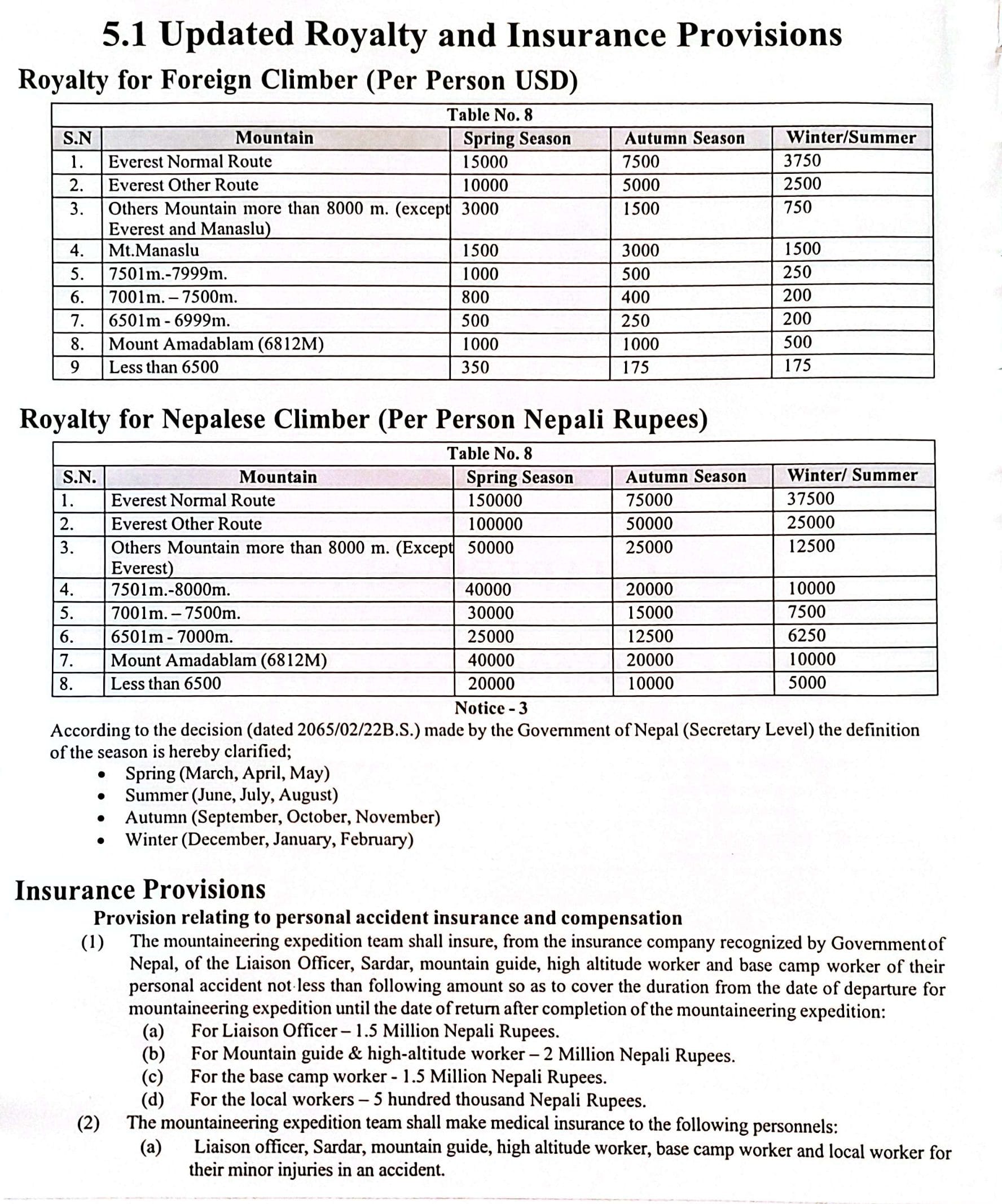
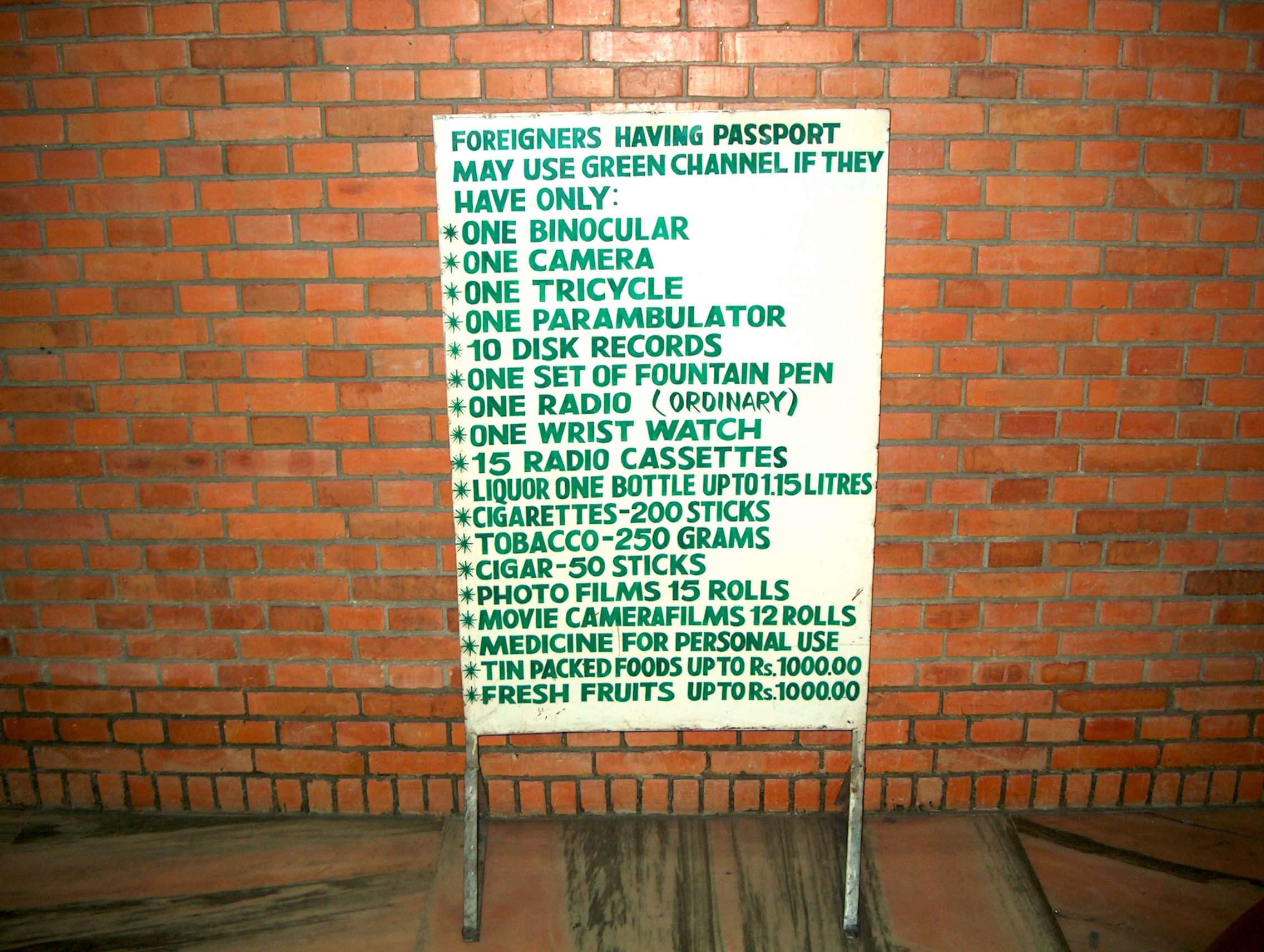 Nepal requires a local company to organize your permit, which costs $3,500 per team, a refundable trash deposit of $4,000 per permit, and a Liaison Officer at $5,000 per team. These total $12,500 BEFORE the $15,000-per-person climbing permit. So, before you hire guides, yaks, food, or gear, you must come up with almost $25,000 to climb in Nepal.
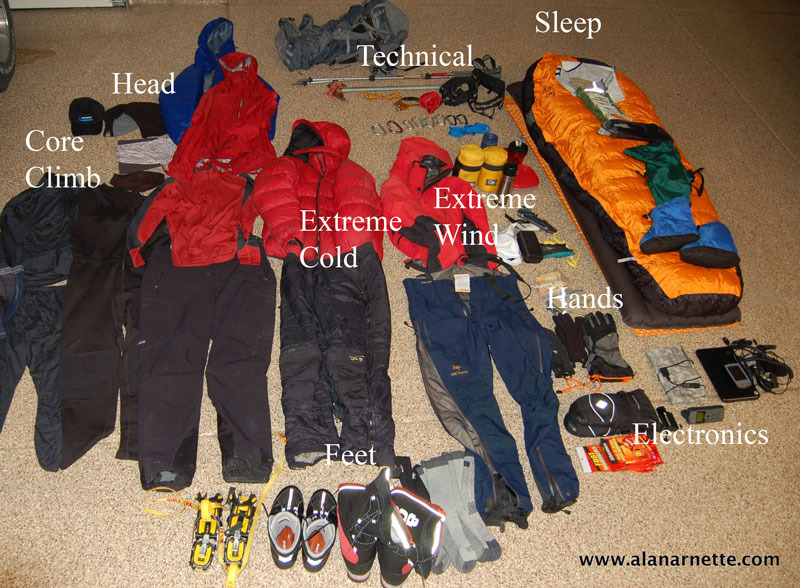 Supplemental oxygen costs about $650 per bottle, with a minimum of five bottles totaling $3,250. You will also need a mask ($550) and a regulator ($550). You can carry your extra oxygen to the high camps, but most people use the Sherpas to cache it there. When hiring a personal Sherpa, the standard is for him to use supplemental oxygen at a lower flow rate, which will cost an additional $4,000 to $10,000.
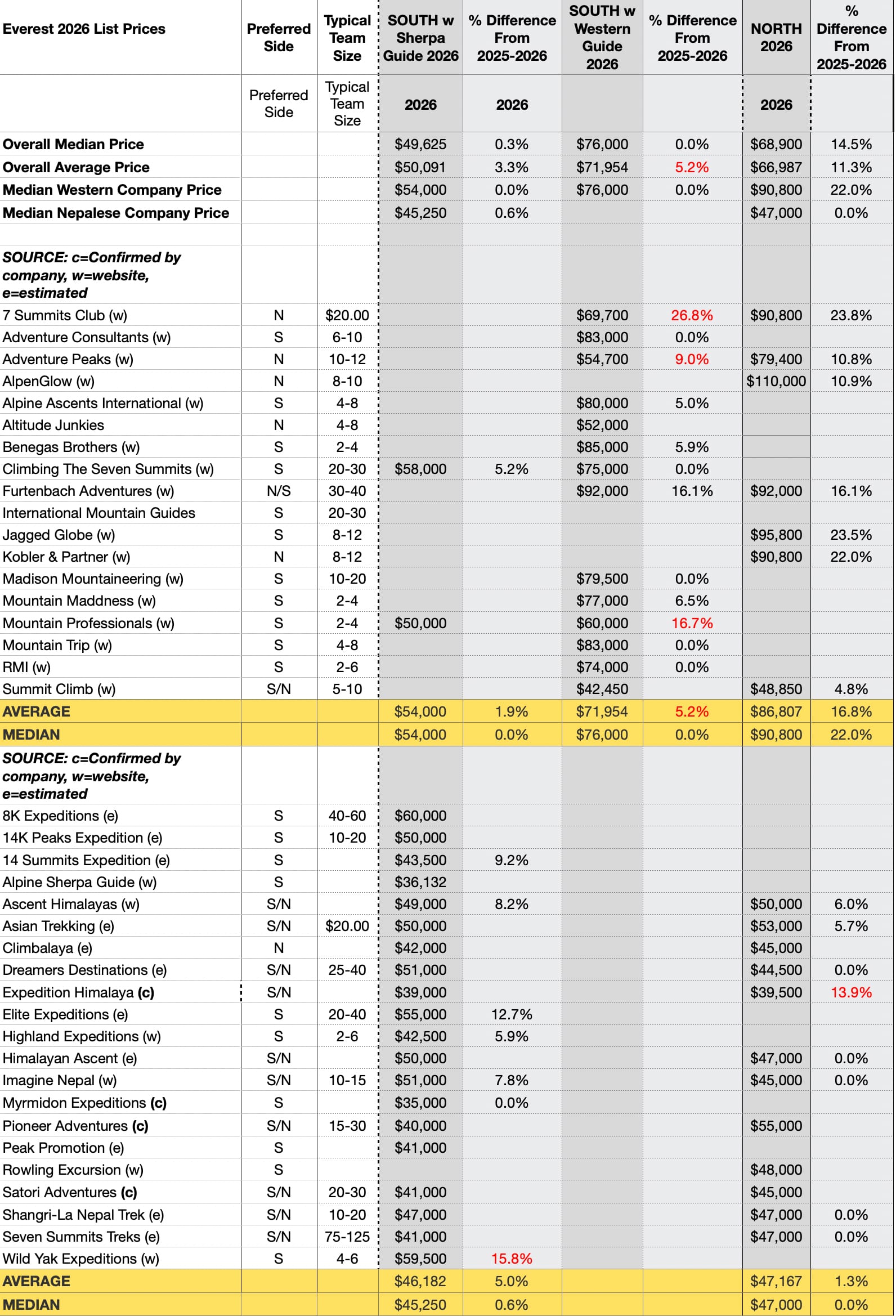
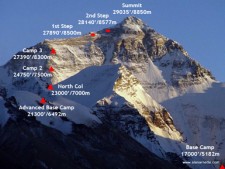
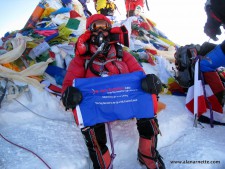
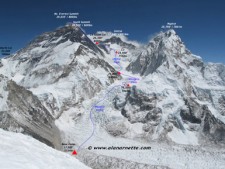
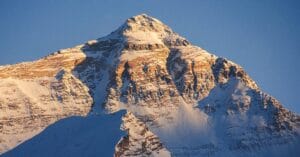
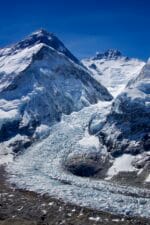
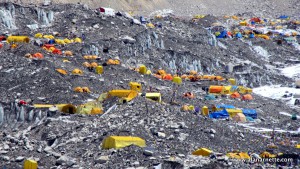
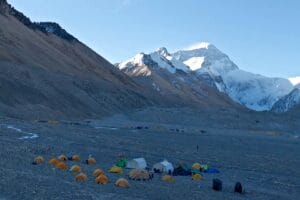
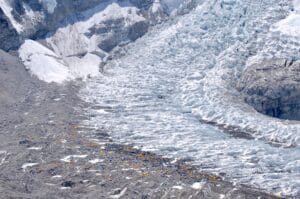
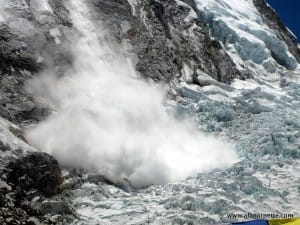
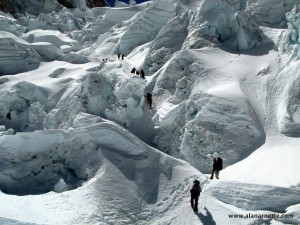
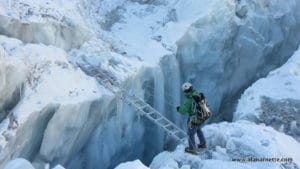
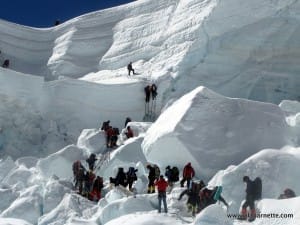
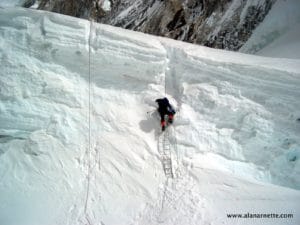
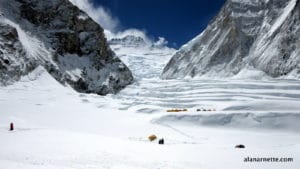
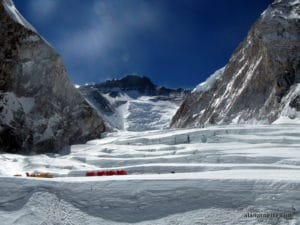
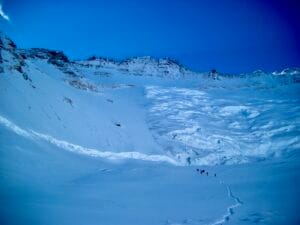
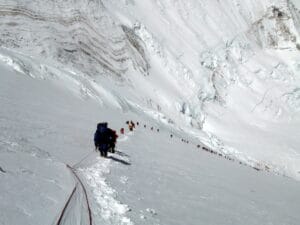
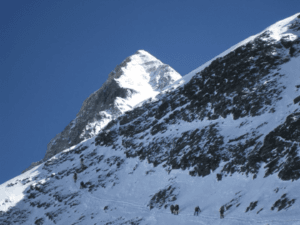
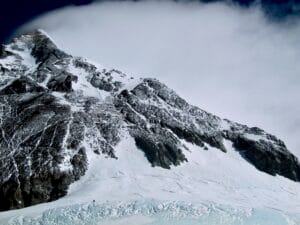
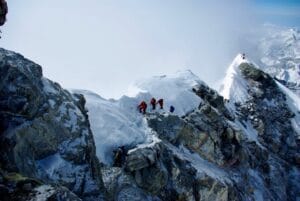
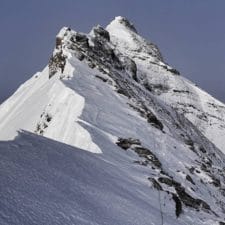
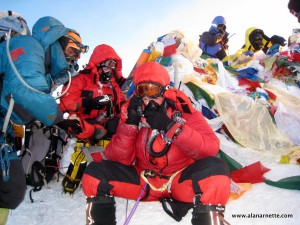
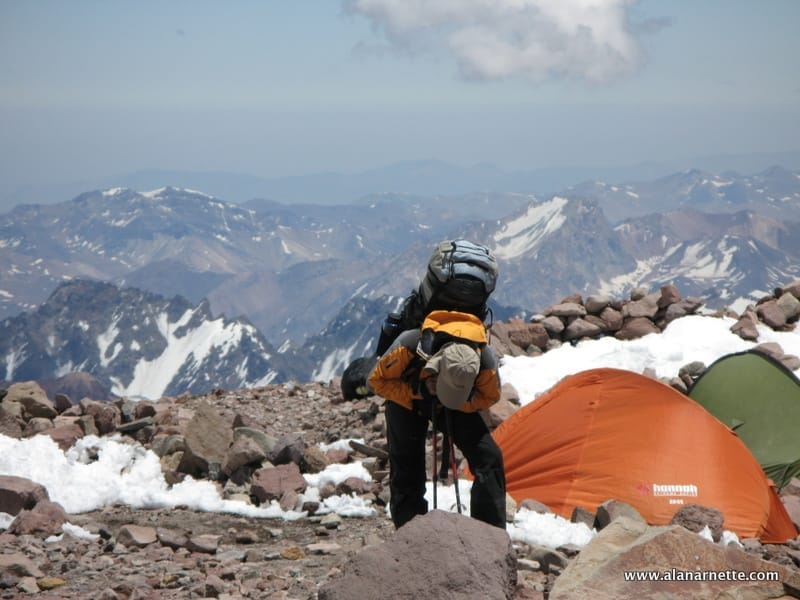
4 thoughts on “How Much Does It Cost To Climb Everest? – 2026 Edition”
Very impressive Alan so knowledgeable and informative. looking forward to your climbing updates for 2026.
Cheers.
Thank you Ian
Alan. YOU ARE INCREDIBLY INSANE . I have never seen such a comprehensive study regarding Everest. Kudos for your scholarship!! What still confuses me is what are realistically the real TOTAL expenses. Travel, gear, American outfitter, oxygen, Sherpa fees——— It really appears that you can’t do it for less than. $100K Investment. Am I not interpreting this correctly? Best Regards. Dr. Bob Bruck
Guilty as charged, Bob! 🙂 Most people pay around $40K with a Nepalese operator and $75K with an International one (US, Europe, guide, etc.) For that, they get the $15K permit included, all food, tents, ropes and Sherpa support or International guide services. All that is left is travel to Kathmandu or Lhasa, and their climbing gear, which, if you have nothing, would cost $20K at list price. So, all in, you’re looking at between $60 to $100K. Hope this helps.