
Denali is in central Alaska – 300 miles South of the Arctic Circle and 200 miles East of the Bearing Sea. In July 2001, I flew from Denver to Anchorage, drove to Talkeetna, and took a bush plane to land on the Kahiltna Glacier to begin the climb using the West Buttress route.
Denali offers some of the largest vertical gain of any mountain on Earth. With base camp at 7,200′ and the summit at 20,310′, this 13,110′ gain over twelve miles is larger than Cho Oyu (8,407) or even Everest (10,535).
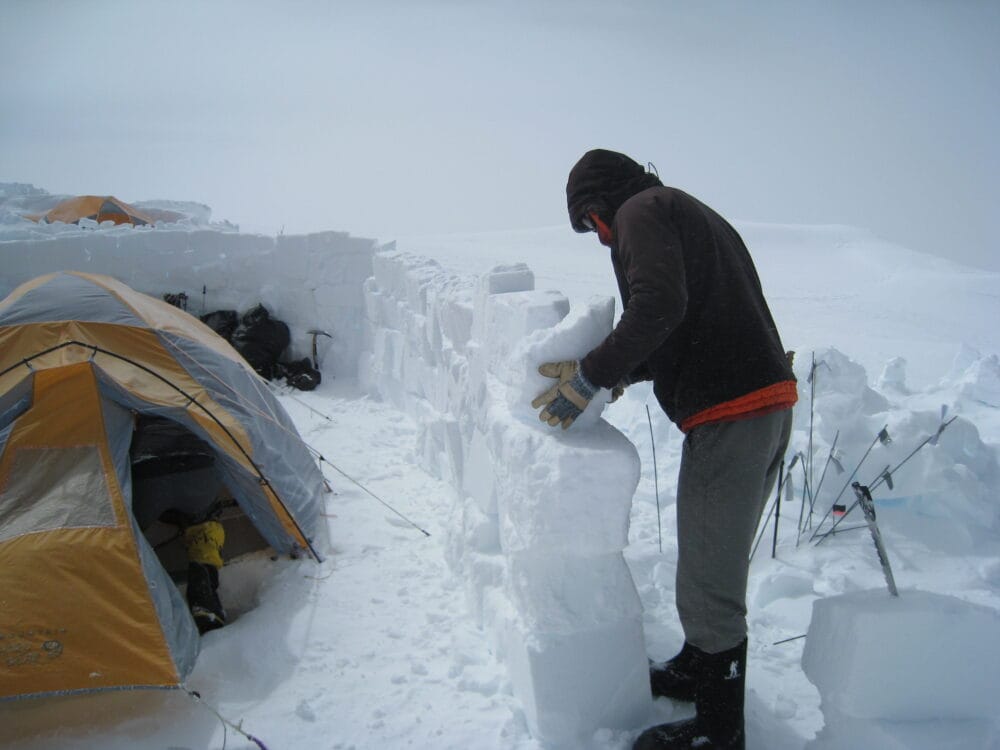
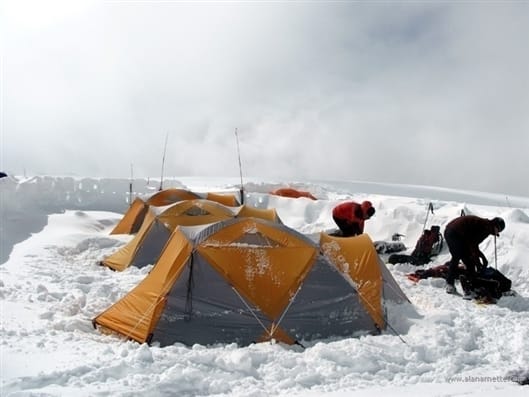
The biggest threat with Denali is the weather. It is well known for socking you in for days with high winds and snow, and this trip was no exception. We had pristine weather until we reached the High Camp at 17,000, when a front moved in, pummeling us with high winds, cold temperatures and blizzard conditions. The National Park Service issued a rare “evacuate the upper mountain” warning just as we arrived. We stayed a few more days, hoping for a break, but it was not to be.

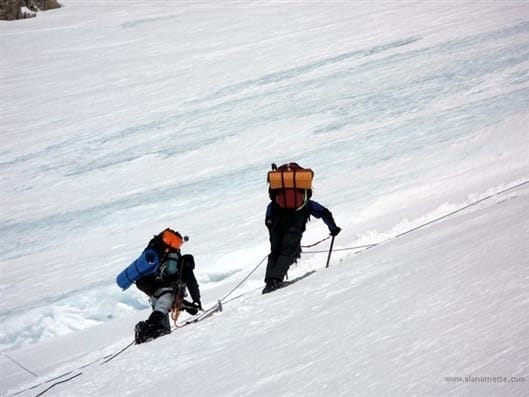
The trip up from base camp at 7,200′ was easy and straightforward. I found the sleds not to be as big of an issue as many people said by balancing my load between the sled and my pack. We followed the normal schedule of establishing camps and caches so that we climbed high and slept low. This way, we moved about 1,000′ a day from 7,200′ to 16,200′ in about 8 days.
After arriving at base camp on day 1, we set up tents, dug a 6-foot cache and prepared for a short night. Up at 3:00 AM, we packed all our gear and moved camp up the Kahiltna glacier to 7,800′. The next few days were spent moving gear by sled and pack to caches at 10,100′ up Ski Hill, then to the base of Motorcycle Hill at 13,300′ and finally around Windy Corner to 13,800. We returned to the previous camp each night before moving beyond the previous day’s cache to a higher camp.
When we reached the basin camp at 14,200, everyone was in high spirits. In fact, everyone was feeling so good that we skipped a scheduled rest day and climbed the 2,000′ headwall to establish the next cache at 16,200. With the weather and our health holding, we moved camp the next day to the High Camp at 17,200. This was the longest, most difficult day thus far for most of us.
Once at High Camp, some people began to feel the effects of the high altitude. Symptoms ranged from mild headaches and lethargy to severe headaches, nausea and a lack of motivation to continue. It was very disappointing, given how well everyone had been feeling.
We attempted a summit bid the following day since the weather was deteriorating quickly, and we knew it may be now or never for us. We made it to Denali Pass, where we were met with gusts of 60 mph, snow and extreme cold. When Bill Allen, owner of Mountain Trip and our guide, saw a lenticular on Foraker and another forming directly above us on Denali summit, he called the climb, and we returned to High Camp.
The next day, we sat outside in our tents with a blizzard howling. A few of us were prepared to attempt the summit again the next day, but with high clouds, plumes flowing from the ridge, and forecasts for more of the same, we decided to return to base and make this trip to the mountain.
Upon returning down the ridge to the basin camp, I hit a spot of soft snow with my right foot and hurt my knee when I twisted between my self-arrest and crampons, catching into the loose snow. It appeared to be an ACL tear but ended up being a severe strain, and nothing was torn. My trip down the fixed lines of the headwall was slow and painful. The following day’s 7,000′ return to base camp was the longest day of the climb. I had incredible support from my teammates – thanks, guys!
While coming within 2,000′ of the summit was disappointing, we had a great time, and everyone gave it their best. I was very pleased with how my body behaved once again at high altitudes, especially to the heavy loads. Before this climb, I knew I could control two critical variables: conditioning and attitude, but not the weather. In this case, two out of three were not good enough to make the summit. Next time!
Denali Resources
I have climbed on Denali three times. You can read about my climbs through these links: