
With the Everest 2026 season about six weeks away, the rumor mill is on fire, out of control. With the explosion of social media influencers and mainstream (and many outdoor/adventurous media) using seductive, misleading headlines to drive revenue, i.e., clickbait, for the regular person who usually reads the headline, first paragraph, and skims the rest, misinformation abounds.
Of course, this is not new in mountaineering, as shown by the massively inaccurate media coverage of the October 2025 blizzards in Tibet that stranded hundreds of tourists hiking in an area near Everest, which was widely reported as “One dead in Qinghai, hundreds still trapped on Mt Everest slopes in Tibet due to blizzard.”
The media with the most incorrect headlines include Asian, Southeast Asian, Western mainstream, and Nepalese-based websites, as well as Reddit, YouTube, Facebook, X, and Instagram. Let’s look at a few of these rumors and try to set the record straight (not that I’m 100% perfect myself!)
7000-meter Rule Headlines
These are a few headlines to get an idea of the issue:
- New Everest Regulations: You Must Climb a 7,000m Peak in Nepal First.
- Want to Summit Everest? A New Law Would Require Mountaineers to First Climb Nepal’s Other 7000ers.
- New Everest Regulations: You Must Climb a 7,000m Peak in Nepal First.
- Everest Climbing Rules Update: Proof of Previous 7,000m+ Summits Required.
- New Everest Rule 2025: Why Climbing an Easier 7,000M Peak Might Not Be Enough.
- Nepal Announces Stricter Rules for Climbing Mount Everest.
- Climbers sans 7,000 meters mountain experience to be barred from Mt. Everest-Parliament approves bill aimed at controlling increased traffic jams at the highest point on Earth.
- Nepal’s Big Rule Change For Anyone Who Wants To Climb Mount Everest.
To be fair, much of this is simply parroting what is published in Kathmandu-based media, as the Ministry of Tourism uses it as its mouthpiece, thus able to deny any report as not a valid rule since it was reported in a newspaper rather than a real law. More on this later, but here are the suspects:
- Nepali Times: New Everest Rules-A tourism bill in the Upper House requires climbers to have climbed a 7,000m mountain before attempting Everest.
- The Kathmandu Post: Everest to no longer be anybody’s climb-When open-to-all regime ends, a mountaineer must have summited a 7,000-metre peak before attempting Everest
- MyRepublica: Nepal mulls stricter safety rules for Everest climbers
- The Hindu: Nepal to restrict Mt Everest permits to only those who have already done 7,000m climbs
- The Annapurna Express: Nepal to restrict Everest permits to climbers who have scaled another 7,000+ meter Nepali mountain
With respect to the 7000-meter rule alone, I fully support the spirit of requiring all climbers to have sufficient experience before they attempt Everest; in fact, an 8000-meter peak like Gasherbrum II, Manaslu, or Cho Oyu would be best, but Nepal says it has to be a 7000-meter peak in Nepal. I get it, more money for Nepal, and that’s all that seems to drive these decisions.
I hope they will accept ANY 7000-meter peak worldwide; if not, it will eliminate many popular peaks regularly climbed to prepare for an Everest climb, such as Denali, Aconcagua, Ojos del Salado, Ama Dablam, Pik Lenin, and Huascaran Sur.
Many of Nepal’s 72 7,000-7,999 m peaks that are open for climbing are very difficult and remote. If the rule includes only Nepal 7000-meter peaks, the likely suspects will include Annapurna II, III, and IV (above 7555m), Pumori (7161m), Tilicho Peak (7134m), with Himlung Himal (7,126m), Baruntse (7,129m), and Putha Hiunchuli (Dhaulagiri VII, 7,246m) being regarded as some of the safest and easiest 7,000m peaks to climb.
By the way, the proposed rule, which has been marketed by many Nepalese and foreign guides to drive 2026 business, has NOT been approved. You can follow its current status at this link, which is listed as ‘Discussion in Committee’ as of late February 2026.
Impact?
I’m predicting 1000+ total summits from both sides, including all climbers and support, for the Spring 2026 season. However, it will most likely be the last year for the record if the 7000-meter requirement is enforced on the Nepal side, as many climbers from Europe, the United States, and South America may choose to wait until the rule changes so they can use their summits of Aconcagua, Denali, and other formidable peaks as proven experience instead of adding an expensive trip to Nepal just for a 7,000-meter climb.
New Rules Big Picture
But the Tourism Bill 2081 has more than this new requirement, which entered the legislative approval process on September 1, 2025. The most significant change was the increase in permit fees for Nepal’s most popular peaks, with Everest going from $11,000 to $15,000, effective November 2025.
The rest of the rules seem like window dressing or distractions designed to mitigate any negative press around the price increase. The Nepal Ministry of Tourism has effectively used this strategy for years.
Along with the permit fee increase, Nepal now requires at least one Sherpa or guide for every two foreign climbers. There is no specification of the minimum training for the “guide,” such as attending an entry-level mountaineering course at the Khumbu Climbing Center. With 300 to 400 members each season, this suggests Nepal has 600 to 800 trained “guides” ready to support the climbers.
For years, there has been a rule requiring each climber to hire a ‘guide,’ so this is not new and dilutes the previous 1:1 foreigner-to-guide ratio requirement. Note that there are already more Sherpas than members climbing Everest. In 2025, on the Nepal side, 303 members were supported by 428 Sherpas, a 1:1.4 support ratio reflecting the growing need for assistance among less-experienced members.
In February 2025, Narayan Prasad Regmi, director general of the Department of Tourism, was quoted in the Kathmandu Post, stating:
“We have made guides mandatory to ensure climbers’ safety, particularly on the 8,000ers. The solo climbing era on these peaks has ended, regardless of a climber’s experience. Whether alpine-style or expedition-style, from now on, no one can climb these mountains without a support guide.”
This is crushing news to true alpinists who prefer to climb solo like Jost Kobusch. However, this will likely be ignored or worked around, as most Nepalese rules are. Mingma Sherpa, managing director of Seven Summit Treks, likes the works program for local Sherpas but also sees it as more of a guideline than a rule, saying,
“If a professional climber hires a guide to comply with the rule, it doesn’t mean they can’t climb on their own.”
In other words, a climber can pay 7 Summits Treks for their guiding service but not use them. Once again, major headlines for a rule that has no teeth.
Another disturbing suggestion is to make it mandatory that the sirdar (head Sherpa), high-altitude guides, and helpers on every expedition be all Nepali citizens. Does this prevent any foreigners from working as guides in Nepal?
This is a list of the latest batch of new rules. I sorted them by those I think will make a difference and perhaps be enforced, those that make little difference in safety or keeping the mountain clean, and then those that have been in place with little impact thus far:
Could Make a Difference:
- Everest permit fee to increase from $11,000 to $15,000 per foreigner (previously announced, now implemented)
- The current $4,000 refundable garbage deposit per team will be replaced with a non-refundable $4,000 garbage fee per climber. (This is in addition to the permit fee increase, effectively taking the permit to $19,000 per climber)
- Must have climbed a 7000-meter peak in Nepal to get an Everest permit (NOT yet approved. See current status at this link)
Probably Makes Little Difference:
- Only Nepalese citizens can work as expedition sirdar (head Sherpa), high-altitude guides, and helpers
- Must declare in advance if attempting a record.
- If the climb is disrupted by war, disaster, or events beyond their control, no refund; a permit is valid for 2 years or an adjusted fee for another peak.
- Dead body management insurance, in addition to existing policies for accidents, health, and search and rescue, remains in effect for at least 3 months.
- Only Nepalese citizens can work as expedition sirdar (head Sherpa), high-altitude guides, and helpers
- Search and rescue will be the legal responsibility of the travel and tour companies managing foreign climbers.
- If a climber is missing for more than a year and remains unfound, they will be declared legally dead.
- Climbers submit a health certificate from a Nepalese government-approved medical institution, issued within the past month
- Nepali climbers found to be violating the law may be banned from climbing for 10 years, fined an amount equal to the cost of their climbing permit, or both.
Tried Before and Made Little Difference:
- Under 8000m, climbers must have one guide for each team (previously announced)
- 8000m+ climbers must have one guide for two climbers (previously announced)
- Climbers must submit photographs and other evidence of their summit within three months of the summit.
I’ve been tracking these rule announcements for over ten years, and it’s fascinating to see repeats. Still, the common theme is that virtually none are ever enacted or enforced due to the instability of the Nepal government and the revolving door of Ministers at the Ministry of Tourism.
This eye chart shows the ones announced and often promoted by the mainstream press; however, virtually none were ever enforced. I have a red check by the ones I believe were implemented. One interesting “new rule” is the ban on solo climbers. It was introduced in 2017, 2019, 2023 and 2025 and never enforced.
Click the chart to enlarge it.

Everest North (Tibet/China) Closed for 2026
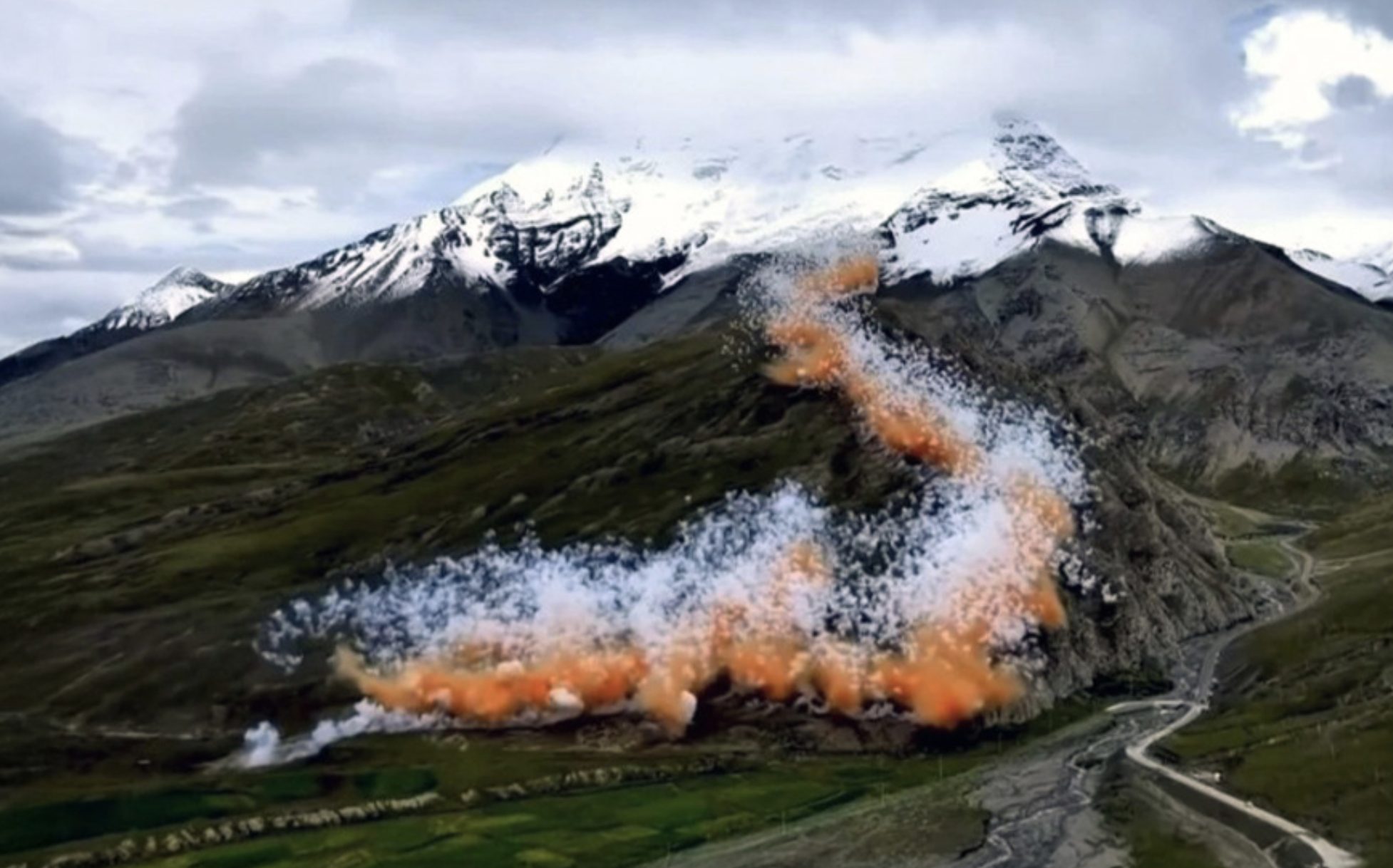
As I often say, Everest is to climbers what a bright light is to bugs. In this case, Everest rumors are like drugs mainlined into the veins.
Here’s to a safe season for everyone on the Big Hill.
Climb On!
Alan
Memories are Everything
The Podcast on alanarnette.com
You can listen to #everest2026 podcasts on Spotify, Apple, Breaker, Pocket Casts, Anchor, and more. Just search for “alan arnette” on your favorite podcast platform.
5 thoughts on “Everest 2026: Rumor Fire Season”
Will you be interviewing the guy from Train to Summit? he\’s doing the seven summits sea to summit. https://www.youtube.com/@TraintoSummit On 24/02/2026 00:00, The Blog
Good idea. Thanks.
I reached out to him. He said he’d get back to me, but hasn’t.
Thanks, Alan. As always, a calm and well-founded analysis of what we can expect this season.
Appreciate this, Stefan
Comments are closed.