Everest 2018: The Climb to Honor Ueli Steck
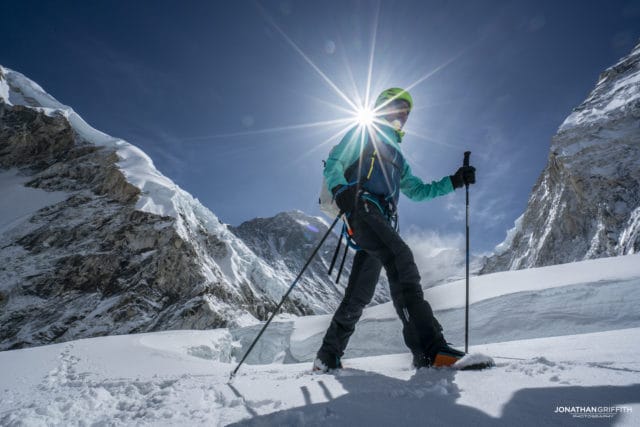
In late March, Tenjing “Tenji” Sherpa wrote on his Facebook page “Happy 4th months Birthday to my little princess, Chhenzum. Sometimes when I need a miracle, I look into my daughter’s eyes and I realize I’ve already created one.” The Sherpa wished for a miracle one year ago, almost to the day, when he was told that Ueli Steck had fallen to his death. He and Ueli Steck had formed an unlikely alliance that grew into a deep friendship based on mutual respect. The world-class, almost superhuman, Steck wanted to make his mark on Everest by climbing the West Ridge, to the summit then traversing to the world’s fourth highest peak, Lhotse at 27,940 feet in one long push. Since 2012 when Steck climbed in the Himalayan, he had used Tenji’s brother’s company Royal Orchard Treks for logistics. The young Sherpa caught a break of a lifetime when Steck invited him to join an Everest summit attempt. Steck soon became a mentor that climbers could only dream of. The next year, along with Italian climber Simone Moro and British photographer Jonathan Griffith, the team wanted to attempt the Everest-Lhotse traverse but an argument at 22,000 feet with a team of Sherpa who were installing the safety line for commercial members ended that project and generated global headlines with a brawl at Camp 2. At one point Steck feared for his life as Sherpas threw rocks at his tent and punched his face. The Fall Steck stayed away from Everest for the next few years, but the lure of the traverse challenge was consistently in the back of his mind. He lived for doing what others only dreamed of and this was a big dream. Steck’s last post on his blog read “Just spend two Nights in Camp two. Beautiful Weather and warm. I was taking the chance to go and have a look towards the West Shoulder. Conditions are great so far. But you never know it can change until in one month! So far we having a good time! Hopefully Tenjing Sherpa frostbite getting better soon so we can be together on the mountain again. Right now it looks we have to save again camp two again. Expedition weather forecast again very strong Winds for the next days. After we keep going getting climatized, I stick to the route to move on the mountain and not spending too many nights in camps. Like this we stay in shape and get used to the altitude!” Five days later, Steck fell 3,000 feet down the North Face of Nuptse Peak, only a mile away from the summit of Everest. Why he fell remains a mystery to this day. Perhaps it was rockfall, he misplaced a step or made a simple mistake, no matter the reason, Steck’s death shook the climbing world but also his friends, especially Tenji and Griffith, to their core. Climbing for Honor Now, Tenji and Griffith, are back on Everest hoping to honor their friend with a modified version of his dream. They will climb to the summit of Everest by the normal, Southeast Ridge route, then return to the South Col and on to Lhotse. Griffith told me today from Everest Base Camp on the Nepal side that he and Tenji were doing great on the acclimatization phase and were ahead of schedule. “We arrived quite late in the season (21st April) so we’ve only done one rotation up high. We spent 4 nights up at Camp 2 and I went up to Camp 3 whilst Tenji did a round to Camp 3 and then a climb up to 8000m two days later. I’m using bottled oxygen so its a completely different game for him of course – but I’ll be heading up on his next acclimatisation round for a night at South Col next week with him. To be honest we’re both doing great and feeling strong in the thin air, especially Tenji who’s proving to be a bit of a monster up there. Like I said I’m using O2 so the real focus here is on Tenji.” On April 29, 2018, the anniversary of Uli’s death, Tenji was returning from an acclimatization climb to 8,000 meters. He is not using supplemental oxygen so he must spend more time helping his body adjust to the hardship of high-altitude mountaineering by climbing to the South Col and spending the night. Griffith walked down to Lobuche and met up with Ueli’s brothers to lay a plaque on a rock chorten, a Buddhist shrine. Griffith added “I’ve been having very mixed feelings during this trip to be honest. This production was such a huge part of my life for the last two years that in an odd way it kept me in ’touch’ with Ueli over the last year after his death. Part of me is really excited to finish off this project and close this chapter on my life, but the other part is sad as I think it will be my final goodbye to him. Spending the morning with his bothers was very special as it’s something to close a close friend, but another thing entirely to lose a brother and all those childhood memories.“ Dream Project(s) For Griffith, this is a dream project as much as it is a dream climb for Tenji. “I cant think of anything that will challenge me more as a cameraman and producer than this project in the future. We’re shooting VR, video, photos, and Live Stream of a no O2 ascent traverse that has never been done before and with a very small team. Whatever happens it’ll be an incredible story and project, and one that I’ll be really proud of having done.” Griffith will be climbing with supplemental oxygen and live streaming Tenji’s no O’s climb. Griffith says it’s a complicated setup which is why it took two years to get to this point. The live streaming involves capturing the ascent in Virtual Reality which will use
Everest 2018: Pushing Hard before the Wait
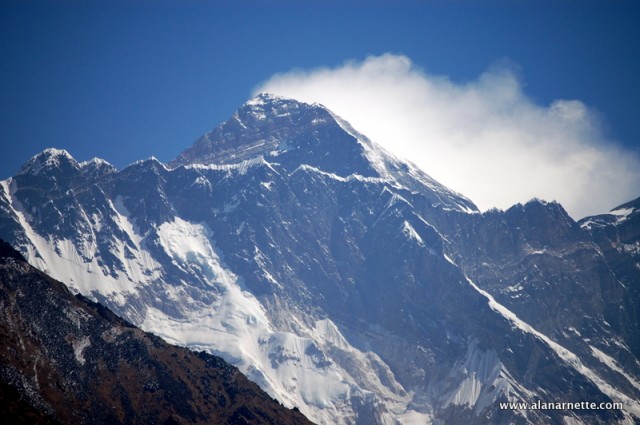
Sometimes you have to go slow to go fast. But right now, the pressure is building to get the last acclimatization rotations in as the weather looks to be turning on Everest for the worse. After a fast start for the rope fixing teams, they may get stalled for a week or more. Weather Woes 7 Summits Club said “Tomorrow we again go up to the North Col. 7000 m, where we plan an overnight. All 3 groups must have time to make this acclimatization hike before May 8. After May 8, a storm wind comes.” Madison Mountaineering, who is leading the rope fixing efforts along with Prestge Adventures warns that it could be late next week when the ropes reach the summit, around 11th May. In 2017, the ropes reached the Nepal side summit on 15th May and on the Tibet side, 13th May. In 2016, it was 11th May on Nepal side. According to our weather forecasts, it appears that a major wind event is approaching Mount Everest, probably in the next day or two. Our Sherpas will make good use of tomorrows marginal weather forecast to position additional loads at the South Col high camp, and then see if the following day is appropriate for climbing above 8000 meters. The jet stream will likely cover the Mount Everest region for up to a week and no climbing will take place above 8000 meters during this time, so we are preparing to hold tight and wait for the opportunity when the Jet Stream passes and the winds are calm enough for a summit attempt! Until then we plan to rest and enjoy the amenities of our Everest base camp! Jon Griffith who will live stream Tenji Sherpa‘s attempt to summit both Everest and Lhotse in one push with no O’s posted this amazing photograph along with “A massive sun dog sits atop Everest, Lhotse, and Nuptse. A phenomenon created by high altitude ice crystals which is normally indicative of moisture and bad weather in bound. Not sure I’ve ever seen such a big one before though.” I will be posting my interview with Jon and Tenji today or tomorrow. Slowing Down to go Faster Alpine Ascents delayed a few days to avoid being in the rush earlier this week and felt it payed off. Note that their acclimation plan is working as they are getting stronger and going faster. Ben Jones, Alpine Ascents: “the team was very efficient getting to Camp 1 today. We cut an hour and a half of time off of our first rotation time to Camp 1 without intending to. You just feel that much better on the second rotation and very obvious to us guides that our team is getting stronger, taking less time to catch their breath, and moving through the obstacles of the icefall much more efficiently now” Not everyone is slowing down however. Matt Moniz and Willie Benegas skied the Lhotse Face today after reaching Camp 3 for acclimatization. They intend to ski the Lhotse Couloir later this month. Rescue Resources Seven Summits Treks made an interesting comment regard safety on the Nepal side. For years, there have been calls for a “rescue team” to be stationed at Camp 2 throughout the season and it appears they are doing just that. I’m unclear if these are dedicated Sherpas who will not be assisting other climbers or regular duty Sherpas who would be called away in case of an emergency. In any case the training they are doing is excellent and welcomed on the Nepal side: Each year numbers of rescue between C1 to Summit Level has to be conducted, we can not stop accident in the mountains but we can reduce and make it more safe. With the same purpose SST has been appointed a rescue team of 10 climbers, which will be at Camp 2 and will be ready to operate rescue in an emergency. Nuptse Attempt Guy Cotter and his member are attempting to summit Everest, Lhotse and Nuptse this season, something rarely accomplished. Jumping on a good idea Tim Mosedale and Jon Gupta asked to join them and they made a strong attempt yesterday. Tim does a nice detailed write up well worth a read if you are into serious mountaineering but this is the money quote: After the next short pitch there was a lot of snow which had been blown across an open slope. It was the dreaded wind slab – wind blown snow that gives the impression of being strong and uniform but which can fail catastrophically … especially when 11 people are walking across it making perforations and lines of weakness in it and adding an extra ton of weight. Sadly this was to be our high point just 200m from the summit. It was a slightly crushing blow especially as we had spent three quarters of an hour lower down waiting for the weather to improve and when it had it had seemed that the mountain gods were on our side. It would have been very, very easy to try and force the route, push the boundaries and compromise rational decision making but this is not the place for taking risks. Firstly it wasn’t a personal decision, secondly if anything were to go wrong then the implications don’t bear thinking about and thirdly a risky and foolhardy choice would have far reaching consequences for anyone coming to the rescue. It is, after all, only the summit! Nuptse has only been summited 20 times and has a reputation as a difficult and steep climb. The summit itself is heavily corniced and few actually stand on the literal top stopping a few meters lower. Of course this is the route where Ueli Steck fell to his death last year. Jon posted this super video clip of Tim on the ridge: Makalu Summit This is the second summits of an 8000er this season after Lhotse last weekend. Xiaodan Gao (35) from China summited Makalu
Everest 2018: Inside the Mind During the Last Rotation
This week may be the most important week, including the summit attempt, of the Everest 2018 season. Climbers on both the Tibet and Nepal sides are making their last acclimatization rotations before the summit attempt, still a couple weeks away. Once completed they begin the waiting game back at base camp. They will need four to seven days of summit winds under 30mph/48kph with little to no snow for a safe summit push. Focus on Red Blood Cells, and the Weather As the 2nd of May comes to an end, there are climbers literally all over Everest. I try to keep track of their general locations on both sides with the Location Table, but it looks more like a scattergram today. From the base camps to the Cols they are spending difficult nights in tents trying to sleep. The first, or even last, night at attitude makes sleeping nearly impossible. It’s a fitful night of constantly rolling in your bag, occasionally waking up gasping as your body “forgets” to breathe and gives you a “gentle” reminder with a near-death experience. This Cheyne-Stokes pattern is well documented and not dangerous but scary, especially for your tent mate, also struggeling, who hears you stop breathing all together! There are no reports thus far of difficult snow or climbing conditions on either side. The ropes are making their way to the summit placed by superhuman efforts of Sherpas and Tibetans. The weather has been acceptable, just a bit of wind from time to time – actually a lot of wind but nothing too serious. The weather forecast looks decent for early May. There might be a front moving through this weekend bringing wind and snow above 7,000 meters. Winds near the summit will be over 50 mph/80 kph. Hopefully the Sherpas can get the ropes to the summit before this arrives and climbers can be at the lower camps. This is Not Easy Alain Riedacker hopped to summit Lhotse with IMG, but things went wrong: My journey towards Lhotse’s summit has come to a point where my physical condition is too weak and too painful. I’m suffering from breathing issues for very basic movements during the day, and it is also very difficult to breathe during the night, preventing to recover quickly within this harsh environment. My condition has unfortunately been worsening since my first rotation, and pumps up all my mental and physical energy. Following the discussion with my expedition leader and climbing team mates, I decided to leave the expedition, as it would have been too painful to pursue the same efforts for an additional 4 weeks. I cherished all the journey towards my dream, and would like to thank strongly my family, friends, colleagues, and climbing team mates for their warm and solid support. It is now time for me to go back home, and work on my health issues, before settling back towards the city lifestyle. There are over 400 foreigners with permits for Everest and Lhotse, but now 10, 15 or even 20% have ended their dream. That means perhaps a little over 300 hope to summit. Yes, the attrition rate is high. Sometime its fear, others its illness and then there is the human mind. And for those back home, it is definitely not easy. Tiffany, the wife of David Snow climbing with Seven Summits Treks, posted an update that he just had their Puja and will begin their acclimatization process, albeit a bit later than most teams. What caught my eye was this part about how she felt last year when David made an attempt and he was out of touch for days: This is the time period where I had a very small breakdown last year (ok, maybe not so small haha.) Dave didn’t have a way to communicate with me for about 4 days (no wifi and he wasn’t carrying a GPS device), he was super sick and I was getting some distressing intel from the guide and other group member’s wives. Everything turned out fine and we all learned some great lessons…. like never climb without a GPS texting device unless you want a crazy wife. Also, don’t accidentally omit information about being deathly ill to your wife (although he probably still would.) As for some on the mountain, it is time for mind games. Mathieu Durand quit his 2017 Everest climb early as his health deteriorated. He worked hard to return but seems to be struggeling again. In a personal post he says: I’m not ready to go, but I’m ready to let go. It’s not so much a reflection on Everest, but on my last 5 years. Thinking back on all the adventures and misadventures that I had during my 15 shipments. Traveling the 7 continents, meet great people and witnessed the world from the top of the mountains. Everything is beautiful in appearance, but on the other hand, I have spent over $ 250k, I sacrificed relationships and time with friends and family, I work just to pocket money to start, and I spend most of my time working out or recovered. Yes, the Seven Summits and especially Everest was a dream, but I think I now realize that there is more to do than climb in life. Edmund Hillary said “this is not the mountain we conquer, but ourselves” and I guess I finally conquered me. I’m not sure I found exactly what I was looking for, but it clearly mountaineering has filled a gap in my life that needed attention. now I want to settle down and enjoy the city more trips and take a real vacation. mountain life is difficult and m ‘ allowed to grow as an individual in many ways, especially at times like the last camp Denali waiting for the storm for 5 days or when one is “lost” on Ixta Mexico. will -I get to the top of Everest. Hopefully! As I said, I’m not ready to leave the Everest in 2018 but I am willing to let go.
Everest 2018: Mid Season Summary
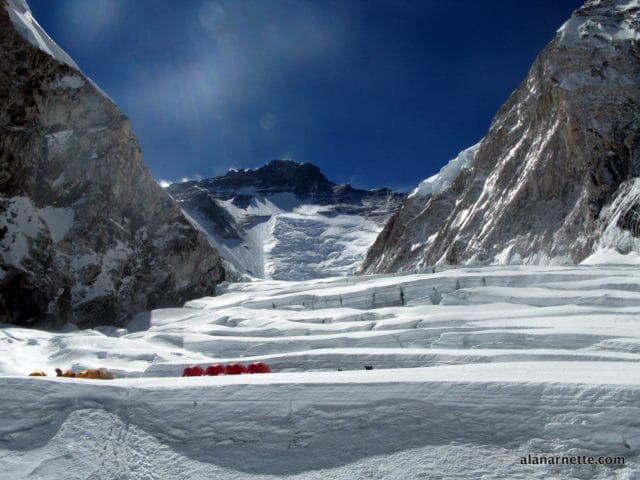
As we enter May, let’s look at the Everest season thus far and what to expect. Overall if there is one word for the season it might be “boring” 🙂 OK, not exactly for those who are doing the work. Actually “no bad surprises” might be a more accurate phrase Big Picture On both sides of the world’s highest peak, climbers are going through their acclimatization rotations and the support staff is busy setting the safety ropes and stocking the high camps. Each day someone mentions what great shape the mountain is in, meaning good snow, little avalanche danger and the normal movement in the Icefall. The weather has been good thus far but slightly on the windy side. However, nothing like the ferocious winds that stalled activity on the Nepal side last year for days at a time. I’ve seen comments saying it has been both colder than usual and warmer than usual – usual comments about the weather! It has been a good April as Everest goes – no large scale events, only one serious injury and no deaths. The route is in nearly to the South Col on the Nepal side, just about 8,000 meters, and above Camp 2 at 8300 meters on the North. Nepal This season progress is swift and mostly uneventful. There was one incident involving an injury in the Icefall. Two Sherpas were hit when a serac collapsed and had to be evacuated by helicopter. There have been many small events both in the Icefall and at the other camps involving illness and minor injuries like twisted ankles. There have been a few helicopter evacuations from the Western Cwm as high as Camp 2. EverestER has been busy with well over 200 patients and assisting in several evacuations for patients with High Altitude Pulmonary or Cerebral Edema (HAPE/HACE). Overall, this is normal for Everest and in fact a bit calmer than most seasons where by now a death would have occurred. Kuntal Joisher climbing Lhotse with Satori Adventures gave a nice update today that could suffice for most of the teams: Also see this interview I did with Kuntal last month on why he climbs and his support for the Sunsar Maya (@sunsarmaya) organization! I’m back at the base camp after completing a long acclimatization rotation high up the mountain. Our team touched 7000 meters on the Lhotse face and we are now all resting and recovering for the next few days at the base camp and also waiting for an appropriate weather window to make our summit bids! The route through ice fall is quite a bit safe and straightforward compared to 2015 and 2016. Hardly any ladders, however one does spend quite a bit of time walking under the western shoulder of Everest – scary! The biggest challenge though is between camp one and two where a climber needs to ascend a huge wall of easily about 50-60 feet with one of fixed lines having a slight overhang! After reaching camp two, we spent a few nights there building extra red blood cells that help carry all that extra oxygen! While there, we did a day trip up the Lhotse face while facing strong winds, snow and near white out conditions. And then earlier today morning we started our descent in extreme cold. Takeshi – who’s on Everest team and myself went all the way from camp two to base camp in about 3 hour 15 minutes or so! We hardly took any breaks and zipped through the section under Western shoulder. Good to be back in thicker and warmer air! While descending through the ice fall I had this thought about education system in this part of the world. Most of the time the standard of education is to teach rote memorization. There’s not much room for different approaches to learning, let alone, progressive education. We know the more ways and opportunities kids have to learn, the better the chances of success. That’s where programs like Sunsar Maya after-school come in. We try to expose our students to new ideas, new ways of thinking, and new ways of learning, through creative, hands-on projects. Not only do the kids learn how to think critically, they also have fun! In coming weeks, I’m looking forward to standing on top of Lhotse (mountain and weather permitting of course) and looking forward to representing the awesome Sunsar Maya (@sunsarmaya) organization! Another good read is from Simon Thomasson. It’s a long summary of his last rotation and well worth a read including this money quote: It’s hard to describe the Khumbu Icefall, mainly because at this time of day it’s dark with the only illumination provided by our head torches which is instantly swallowed by the vastness of it. The other reason is that your headtorch is constantly pointed at your feet so as to see the hundreds of small crevasses that you step over as you climb higher and higher. The sounds on the other hand are easily describable, creaking, moaning, snapping, plate smashing, tile cracking. Some as you place a foot down, others from the towering ice formations that surround you. Thankfully non of the cracking led to a thwump followed by a rumbling whooshing sound, there would be plenty of them in the coming days. Their team is loosing members as are other teams. Unfortunately this again is normal and often occurs at the mid point in the season. Tibet It’s a similar story on the north side with teams spread out from the Chinese Base Camp to the North Col on their acclimatization rotations. Many, many comments on how windy it is at base camp and a bit of snow each day. Again climbing on the North side means cold and wind so from that perspective all is as it should be. Since there is no Icefall to deal with, teams are making good progress as are the Tibetans who are fixing the rope to the summit. I will not be
Everest 2018: A Summit and a Death

Over the weekend there was good and sad news. The first 8000 meter summit was made on Lhotse and the first 8000 meter death occurred on Dhaulagiri. Teams are being aggressive on Everest with their acclimatization schedules, some already at Camp 3 on the Nepal side a d North Col on the Tibet side. Lhotse Summit Mingma G Sherpa lead his Imagine Climb team of two Sherpas and two Chinese members to the summit of Lhotse on the 28th. They had already gone to Camp 3 once for a rotation and on to the Lhotse Y. Mingma is quite the powerhouse these days. He is young, strong, ambitious and determined. As I have written about him over the past couple of years, He started a guide company, Destination Dreamers only to leave and start Imagine. He has a strong Chinese member following and with them have summited multiple 8000 meter peaks over the past year including K2, Nanga Parbat, Dhaulagiri and more. Now that the ropes are fixed on Lhotse, look for many of the 88 permits holders to make a push to the top. Mingma added that 10 Sherpas on his team had already reached the South Summit aka Camp 4 with a load of oxygen bottles and they now wait for the weather window for the summit push. Dhaulagiri Death A horrific and devastating event near Camp 3 on Dhaulagiri. As his teammate was talking to him, the tent that held Italian Simone La Terra slipped down a steep slope and out of sight after a gust of wind hit the area. La Terra was climbing on a permit with Prestige Adventure was later found dead. The 36 year-old was quite experienced with summits of Shishapangma, Broad Peak, Gasherbrum ll, Cho Oyu and Manaslu. Prestige’s Damber Parajuli, told the Himalaya Times “Simone went missing since yesterday morning after a strong wind blew away his tent. An aerial search was also conducted to locate the missing climber, he said, adding that the search team retrieved his body at a height of 6,100m this morning.” Nick Rice who is also on Dhaulagiri and climbing friend of La Terra posted these details: Simone had decided to pitch a tent below the normal place where Camp III is located. He chose a location on the ridge for his tent platform, and as he was taking shelter in his tent, a strong gust of wind blew him and his tent off of the ridge with him inside. Simone fell a significant distance before coming to a stop just underneath a serac (his final location was not known at the time). Desnivel has an update that his body has been removed and more details: The accident took place before yesterday afternoon. Simone ascended with the Polish Waldemar Dominic and decided to set up [camp 3 on a snow slope]. Waldemar did not like the site and decided to keep going up. He also did not like what he found above and decided to go down. [Waldemar said that as he] was talking to Simone, who was inside the camp, it slipped (probably Simone had not fixed it firmly) and fell down the very [steep] slope.His body has been recovered this morning under [camp] 2. The scene of Simone’s body hanging from the helicopter reaching the base camp has impressed us all. Waldemar Dominic was very affected in the base camp by the impression of being talking to a person who at that moment rushes into the void inside the camp. My condolence to his family, friends and teammates. Tibet Side at North Col The Tibetan rope fixing team has the fixed ropes now at 8,300 meters which would be Camp 3 according to Kari Kobler. The 7 Summits Club has climbers at the North Col as they continue their acclimatization rotations. They posted: “Today Andrey Poliakov with oxygen climb to North Col of Everest with oxygen without any acclimatization with 2 nights from EBC with oxygen.” Furtenbach has their C1 established but expects big winds to move in: “After setting up Camp 1 on the North Col at 7000m our sherpas carried loads to Camp2 at 7900m. Now they take a rest for the next rotation before strong winds hit the mountain on May 5th/6th.” Patrick McNight, whom I interviewed before the season start gave an excellent summary of his progress on the Summit Climb team and plans: We are just wrapping up our post-rotation rest period in CBC. Things are going well. All of us are itching to do something other than lounging, eating, and sleeping. So, what’s in store for us? Tomorrow, we head up to IBC. That trip is about a 10km walk up from CBC. IBC is a yak poop infested area barely suitable for humans….but perfectly suitable for us climbers. On the bright side, we get to rest before heading up to ABC – another 10km hike. These hikes can be really tiresome but they are necessary steps to reach most high mountains; Everest is no exception. Once at ABC, we rest for a full day before we head up the mountain. Our destination is the North Col once again but this time we will sleep one night there at 7000m. Now, when I say sleep, I don’t mean a restful night. We will get what sleep we can manage and then the following morning we will climb toward camp 2, turn around and head all the way to ABC in one push. Sound exhausting? Yep, it is. You might wonder how tired I was after round 1…. well, let me tell you. I got back to our dining tent at about 7pm – roughly 9 hours after setting off in the morning. The climb simply exhausted me to the point where I could barely raise a 12 ounce Coke can. Yep, I was spent. Mountaineering has a way of exhausting most of us. So tomorrow begins our second and final acclimatization round. I look forward to exhausting myself again and getting even closer to Everest’s summit. Thanks
Everest 2018: Weekend Update April 28
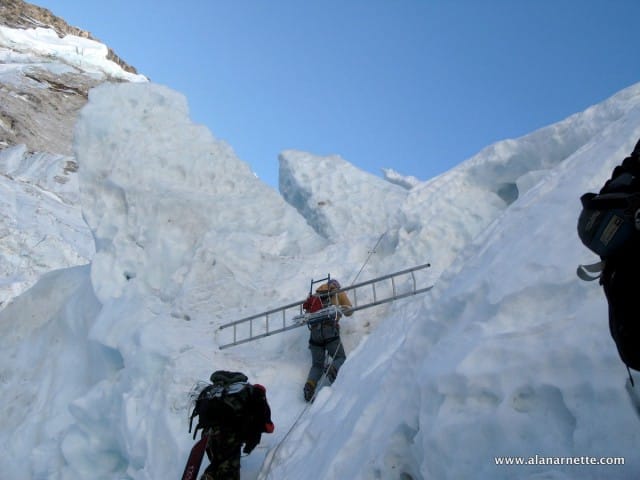
It was another good week on Everest. While it was windy and snowy at times, overall teams on both sides did well. There was one accident on the Nepal side when a tall serac in the Icefall collapsed onto the route injuring two Sherpas. As we enter May, talk of summit dates will increase. It looks like the Nepal side may see the first summits, but we have a long way to go. The Big Picture Most teams will do two or three “rotations” to high camps in order to force the creation of red blood cells and other physiological changes needed to perform at extreme altitudes. Known as “climb high, sleep low” this has been the practice for most high altitude climbers for decades. Today a few will try to “pre-acclimatize” at home in altitude tents but most people use the old fashion way. Even those who use tents still need a rotation or two since they only get pre-adjusted to about 17,000’/5200m, even though some advocates will dispute this saying they go even higher. So this is what has been going on for the last two weeks. Most teams are back at their respective base camps this weekend resting up and growing red blood cells. Next up will be another rotation to Camp 3 on the Lhotse Face around 23,500’/7162m and to the North Col on the Tibet side at 23,000’/7000m. Hopefully the ropes will get to the summit on both sides in the next ten days allowing for member summits starting around May 11. But for the 99% of climbers this season using supplemental oxygen, those bottles must be staged at Camp 4 on either side – and that takes a lot of work by the Sherpas. Nepal Summary Probably the topic most discussed, besides the weather, is the quality and safety of the route through the Khumbu Icefall. As you have read consistently, most everyone is saying the route is the best in years. By best, they mean it has few ladders, is as direct as it can be and seems to be a bit away from the hanging seracs on both Everest’s West Shoulder and off Nuptse. All in all this makes for fast times from EBC to the Western Cwm. Willie Bengas and Matt Moniz made it to Camp1 in 3:22 – that’s Sherpa time! However, even with a good route, it is not without danger. On Wednesday, a tall ice tower collapsed injuring two Sherpas and closing the route for a few hours. The Icefall Doctors brought up new ropes and ladders to replace those damaged or dropped deep into crevasses when the collapse occurred. While unsettling, this is not uncommon thus many people prefer to climb on the Tibet side where there is only a tiny Icefall to navigate through. Mike Foreal posted this video of when the collapse occurred in the Icefall and everyone had to turn back. Its was 4:00 am Jagged Globe gave an update on the fixed rope status. As you know this is a nylon climbing rope, sourced through Black Diamond this year instead of from Korea, that the climbers “clip into” using a piece of nylon webbing attached to their climbing harness then to a carabiner that is clipped to the rope. The rope basically runs from Everest Base Camp to the summit serving two purposes: first to mark the safe route and two to protect a person if they should fall on steep section or into a crevasse hidden by fresh snow. JG noted: ” The weather conditions have been good enough for them to complete their planned acclimatisation programme, but strong winds at altitude and moderate snowfall lower down the mountain have stalled the planned rope fixing. The rope fixing teams have not yet reached Camp 4.” But other guides are posting that the weather is great with low winds. Garrett Madison posted: “The weather has been good, only a little wind on the upper mountain and some daily snow fall in the afternoon, but not enough to worry about.” Nobukazu Kuriki is now at base camp for his secret climb by a different route. He will be fun to watch. The other climbers seeking new routes continue their acclimatization programs. EverestER gave a nice update: We’ve seen 148 patients so far, 57% are Nepali, 90% are men. As has been the experience for every single season in the past 15, we’ve been inundated with mainly respiratory issues as well as some gastroenteritis. Lucky we have Dr Subarna, a bone doc, who has been busy giving his expert care to lots of patients with musculoskeletal issues. We’ve now seen 3 cases of AMS in the last 2 days (1 in an ascending climber who skipped a couple of recommended acclimatization days en route.) We’ve facilitated 10 evacuations from base camp so far and have been missing sleep for the past 2 nights because of early morning accidents in the icefall. Luckily those patients suffered non life threatening injuries but were evacuated to Kathmandu for further care. As high camps become established, stakes are higher, our climbers get up into the very most extreme altitudes and we are ready to help them get there safely. Finally, so who pays $130,000 to climb Everest? Well, Seven Summits Treks profiled one of their three VVIP members this year on Facebook: Sun Yiquan (China), VIP member of Our Everest Expedition 2018. This year 14 Peak Expedition have 3 VIP members who will attempt to the summit world’s highest peak. Born on 31 Oct 1986, Mr. Sun is one of the most popular artist (painter) in China. Today on 28 April he reached to the basecamp (5364m). And who said that art history degree wasn’t worth anything? 🙂 Best of luck to them. Tibet Summary On the north side, teams have spent a few nights at Advanced Base Camp at 21300’/6492m. There are still teams just arriving at the Chinese Base Camp. In general teams arrive a bit later on the Tibet side because
Everest 2018: The Risks of Everest
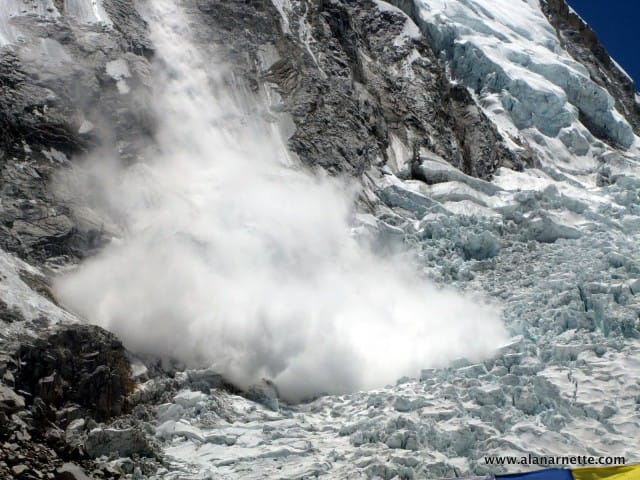
Climbing any mountain has inherent risks and Everest is no different. While, the death rate is actually lower in recent years compared to when commercialization began in the early 1990’s, people still get hurt and die each season. It has been snowing on both side of the mountain. A few of the Nepal side teams are staying in place at base camp or Camp 2 until the weather clears, yet still doing some active rest. Sherpas Hurt Yesterday two Sherpas were hurt near the Football field in the Khumbu Icefall when an ice serac collapsed. One was flown to Kathmandu and will recover, the other was treated at base camp. IMG reported that 100 meters of the route needed to be replaced with new ropes and ladders. It delayed their Sherpas by a day who were planning on going to Camp 3 on the Lhotse Face and begin chopping out tent platforms. Meanwhile those teams still at Camp 2 took a leisurely stroll to the base of the Lhotse Face. Jagged Globe has a nice track of their route. They added “All team members climbed to 6,750m at the foot of the Lhotse Face. In a cold and clear morning, with no other climbers moving above Camp 2, the team left Camp 2 at 06.00 following the trail to Camp 3. They turned back from the start of the fixed ropes at 08.30, and were back in Camp 2 for breakfast by 09.30. Conditions were a bit colder than expected, but they expect things to warm up a bit before they climb to Camp 3 next week.” The fixed ropes are now up to the Geneva Spur. Changes I like Ryan Water’s of Mountain Professionals look at how Everest has changed. They just got back from their Camp 2 rotations: It is quite interesting to see the changes in base camp living over 15 years of coming to the Himalaya. Gone are the days of the things called books, made out of paper, read over head lamps in your possibly shared base camp personal tent to pass time. Dining tents that had a heater were something out of a futuristic novel, and the first times I personally came to the Himalaya, a $7 a minute sat phone call home, maybe once every couple weeks was the only thread back to family and friends, unless you wanted to make the hour long trek down to Gorak Shep to sit in line at the “internet cafe” that consisted of 2 marginally functional laptops set up by an industrious Sherpa, to check your hotmail account. In the never ending “space race style” competition to make the logistics as posh as possible, it is good to actually get out on the hill and go climbing from time to time. To reconnect with the mountain and be in the actual elements. But, coming down to the luxuries of our Basecamp are not lost on this dirtbag who has seen the changes over time. Our huge personal box tents, carpeted and with a bed mattress are a game changer. And the ability to stay connected to the outside world and loved ones is a welcome diversion to the rigors of a long expedition. Tibet Progress with Pain On the Tibet side, teams are proceeding with their normal acclimatization rotations to Advanced Base Camp and some on to the North Col. Ricky Munday reports in. Click on his name to read the full post and see some nice pictures. Three days ago we left basecamp 5,150m for the 10km move to interim camp 5,700m. Last year this took me 4h 15m, but this year I was up in only 3h 10m, which I put down to a much more effective acclimatisation schedule, which saw me walk up to 5,850m. Sean had told me that the camp would be on the near side of a gorge, but I couldn’t see our camp anywhere. I sat and ate lunch with the Sherpas from the big Chinese team for 45 minutes, before deciding to head over to the other die of the gorge. I walked into every camp, but no sign of Makalu/Satori/Adventure Peaks anywhere. I considered walking up to ABC but didn’t have enough food or water. I decided to play it safe and re-cross the steep gorge, where I caught sight of Sean waving at me to cross back. In the end, we didn’t set up our own camp, but used Arun Trekking tents for the night. One of our extended group had lost the path and didn’t arrive until 8pm – a very long day for him! Next morning, we were off early, and Sean was off like a rocket. I knew I could never match his pace, but settled into a steady rhythm and started counting paces of a thousand steps at a time. This time last year I struggled quite badly on this section, and counted 80 paces at a time! I arrived at ABC in only 4 hours, which was 1hr 45m quicker than last year. Sean was already here, and I rested with a cup of tea as the Sherpas finished building the camp. Tomorrow we’ll leave at 08:30 to climb the north Col. It’ll feel great to be back climbing on Mother Goddess of the Earth. I’m looking forward to it, but have some level of apprehension, given the effort involved. That will complete our first rotation, and we’ll head back to base camp the following day to rest and recuperate. Getting the body adjusted to the thin air is hard. climbing with Furtenbach Adventures, Michael Lutz notes Me coming down from our first acclimatization circle. Acclimatizing is hard! The human body is only capable to adjust up to ~5500m. Everything above is only possible for a short term, accompanied with physical degradations. We spent one night at 6000m and three nights at 6400m, including some climbs above. After being back from our first circle I can still feel the tremendous impact that high altitude has on the
Everest 2018: The Day Nepal Shook
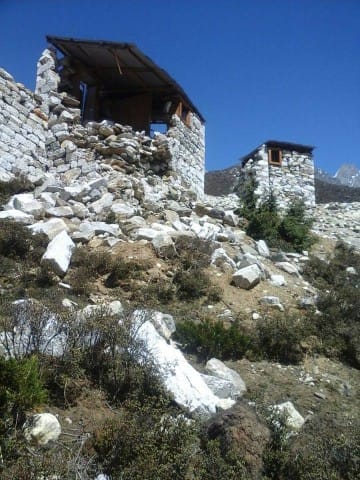
Some memories are so etched into your essence, that they will never go away and they will always be clear. The day my mom asked me “Now, who are you again?” The day I met Di and publicly committed to her in our backyard three years later. The day the Khumbu Glacier dropped by inches under my feet while hearing the roar of avalanches all around me. Yes, Memories are Everything. Three years ago today, at 11:56 am April 25th, 2015, a 7.8 magnitude earthquake hit in Nepal taking 9,000 lives, including 19 at Everest Base Camp. A Short Walk I awoke on May 25, 2015 at Camp 1 with the rest of the Madison Mountaineering Everest/Lhotse team. As usual for the first trip through the Icefall, we were all adjusting to the high altitude and a tough night at 19,500 feet. Louie, my fellow Lhotse climber and tent-mate, said “Glad we are only going to Camp 2 today, it’ll be a short walk.” His South African accent coming through strongly. Louie and I had summited Manaslu together in 2013 and had become good friends even though we were separated by half a planet. We packed our -20 degree down sleeping bags along with the rest of our gear into our packs, wiggled into our climbing harnesses, tighten the chinstrap on our helmets and started walking towards Lhotse. The clouds and fog soon covered up what is an amazing view of Everest, Lhotse and Nuptse defining the Western Cwm. But I had been there so many times that I felt like every detail was in my body and went on enjoying a light breeze and the occasional flake of snow on my face. Progress is always a bit slow in the lower sections of the Western Cwm as you crawl in and climb out of several shallow crevasses. But even this small amount of work takes its toll at these altitudes. The team bunched up, all clipped into the fixed rope. Kami was in the lead with me following closely behind, as always, when I heard a loud pop and crash to my left. I looked towards Everest’s West Shoulder but only saw the flat white light of a dense fog. A breath later, another loud crash, this time to my right off Nuptse. “Avalanches?” I told myself, but two, with one after the other and with such high energy? Then I felt it. The snow and ice covered ground of the Khumbu Glacier dropped by two inches. “Whoa.” I said out loud to no-one. About that time, my mind was running fast, processing all the incoming signals, trying to make sense of a scary and confusing environment. Then it happened again – the ground shook and dropped another inch. Then it all made sense “EARTHQUAKE!” Garrett yelled out “Put your buff over your mouth and nose.” His years of mountain experience told him we needed to protect ourselves from the incoming avalanche blast that was a certainty from one of the two nearby avalanches, if not both. I adopted the stance to fight a fast approaching tiger, legs shoulder width apart, focusing on maintaining my balance and low center of gravity not sure what would happen next. But then as quickly as the cacophony of sounds, shakes and uncertainty came upon us, it went eerily silent. It was clear that I had no control over my present or my future. We regained our composure and picked up the pace to Camp 2 where we would have shelter and food. The Sherpas were already there having established the camp a few days ago. Garrett took off fast leaving the team in the hands of the assistant guides. Base Camp has been Devastated Sitting in the dining tent about an hour later, the radio was full of chatter. Most of it in Sherpa or Nepali, but one voice came through clearly, and in English “Base Camp has been devastated.” And with that, I knew this was not a small localized event but something much larger in scope. The Sherpas began talking amongst themselves. There had been a large earthquake near Kathmandu. Village after village was destroyed, including those in the Khumbu. The Sherpas desperately tried to use their phones to call home, but the entire cell network was down. I offered my satellite phone but those calls didn’t connect given the local NCELL network was down. We sat in the dining tent silent, listening to the radio for any clue. I heard chatter around some guides trying to climb through the Icefall. “Base, we just had another strong aftershock so we are getting out of here ASAP before something comes down us.” The word was the ladders had fallen into crevasses and the Icefall was now impassable. Sitting at 21,500 feet in the Western Cwm, we might as well have been on Mars. As the situation set in, we discussed various options. Risk down-climbing through the Icefall not knowing if the deep crevasses could be crossed with ladders missing. Wait until the Icefall Doctors could repair the route but with such a strong earthquake, aftershocks were a certainty and they could be extremely violent and strong. The final option was to see if the helicopters that had been visiting base camp several times a day could somehow muster a rescue mission for the 150 climbers, most of which are Sherpas who desperately needed to get home to help their families. Garret was nowhere to be found so Assistant Guide Conan Bliss was handling communications and passing on critical information, soon we would understand why. As the afternoon of April 25, 2015 continued, one by one everyone gathered in the dining tent, mostly to support one another. It was at this point around 4 in the afternoon that Conan simply said; “Eve has been critically injured.” The tent went silent. Tears began to flow as we internalized that one of the most gentle persons I had ever met, Marisa Eve Girawong, had
Everest 2018: The Challenge of Acclimatization
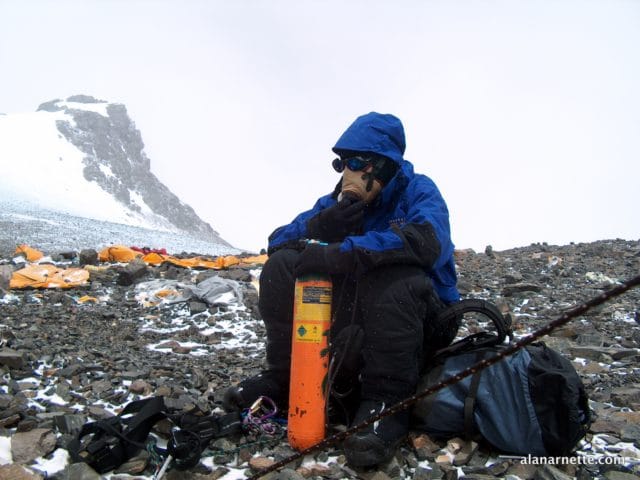
It has been a good day on Everest as climbers are working hard to acclimitize. Teams on the Nepal side are all over the Hill, from base camp to Camp 2 while it’s a similar map on the Tibet side with teams now at Advanced Base Camp. We are hearing from a few climbers who have returned from their rotations, mostly on the south side. The reports are consistent that the Icefall is good, it’s windy in the Cwm and they are having great time. The “Ice Cliff”In the Cwm IMG has been talking about a steep “ice cliff” in the Western Cwm for a week now. As other teams encounter it, we are getting a better feeling of what it entails. Adventure Consultants posts that: On the way there is a very steep wall of ice with a ladder, followed by some steep climbing with the ascender on the rope. This wall is a challenge! All of us climbed it very well and, puffing heavily, we reached the top and stopped for five minutes. This turned into half an hour as we watched some kind Sherpas essentially rescue someone who couldn’t climb the obstacle, using a 3:1 pulley and rope system. We even contributed a Prussik cord! This feature is certainly taller than most of the crevasse depressions above Camp 1 ands takes a toll on climbers as they are expecting a long gentle walk to C2! For the millionth time, this re-enforces that going to Everest assuming there is “no climbing” and no experience is needed is a serious misjudgement. Alpine Ascent’s Eric Murphy gives us a better view of it: Daniel Wallace with Henry Todd’s team has a nice overview of her first rotation. I like the line: “Climbing for me is all in the mind. I know I am fit enough but I have to keep positive. A negative mind set will drain your energy quickly.” And Lucy Rivers sums ups her time nicely: Another very windy night at C1 and we waited until the sun hit camp before starting our descent to BC. During the walk up to C2 yesterday, we had seen what looked like a small avalanche above C1, with dust falling lower. Turns out that debris had actually fallen into the ice fall and we had a new route down. A very scary reminder that the ice fall is not a place to hang around for too long if possible. The descent was stunning and I managed to take a few photos this time, after checking with Dorje that it was safe to do so! Ladders on the descent aren’t as scary but the steps (lurches in my case!) across the small crevasses are just as bad. We made it back to the comforts of our Mess tent at BC in just over 2 hours – Yummy food, clean clothes and a watering can esque shower. Heaven! Looks like Mingma G Sherpa of Imagine Climb reached Camp 3 on their Lhotse climb. He has suggested they might fix the ropes to the summit but apparently that didn’t happen. The climbers hoping to traverse from Everest West Ridge then the Lhotse Ridge, Horia Colibasanu and Peter Hámor did a rotation to Camp 2 and now are down route to Deboche for a little rest. They are climbing without supplemental oxygen so will need to spend at least one night at 8,000 meters to acclimatize before making their summit push. On the North Anish Luitel is an ambitious Nepalese climber. He is climbing on behalf of Boy Scouts everywhere. He wants to summit in 15 days by following the rope fixers. I asked him what’s with rushing? “Hi Alan I have rush to climb because I should attend 3rd national jamboree of Nepal scout which helds on first week of June.I had climbed Everest south side,Island peak,Pumari peak.my motivation behind this climb is to promote Nepalese youth and world youths as well for adventure and to take the flag of 24th world scout jamboree which helds on untied states.I am joining them on 20th of April .I will do my best . I want to climb with rope.fixing team to gain new experieance ” Anish summited in 2016 from the south and wants to bring the Boy Scout flag to the summit this year. He is a Scoutmaster in Jhapa as well leading a troop of 60 youth. He is from Duhlabari and is the first person from Jhapa district to have summited Everest. He is 24 years old and was raised by his grandparents and aunts and uncles. He sold property and got some local sponsorships for his first climb. This climb he received support from the local municipality and the Boy Scout council, and the Northern Star Council has picked up the rest of the cost for this climb according to Colleen Galloway of the North Star Council in Saint Paul, Minnesota. Inspiration I’ve written a bit about A 69-year-old Chinese climber, Bo-Yu Xia. He will be guided by Dawa Gyalje Sherpa as he makes his fifth attempt to summit Everest. He has had both legs amputated but is not willing to give up on his dream. Take a couple of minutes to enjoy this video – your daily inspiration! Russell Brice Appears! Himalayan Experience‘s website is finally back up and Brice has posted his first “newsletter” of the 2018 season. It’s a day by day summary of their trek to EBC and acclimatization on Lobuche. Today they are at Camp 2, leveraging their time on Lobuche to go directly from EBC to C2 in one push instead of stopping at Camp 1. As usual, Russ holds nothing back as he wraps up this first newsletter: It would appear that the rope fixing is progressing smoothly under the supervision of Himalayan Guides who has the contract this year. Once again the rope fixing equipment was flown to C2, and work has already started on the Lhotse Face, although these last two days have been to windy to work on the face. Garrett Madison has claimed that he is doing this work,
Everest 2018: The Right Age for Everest
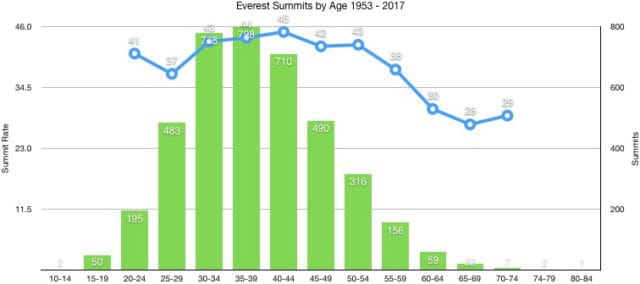
It’s busy on Everest just as it should be in late April. We have teams at Camp 2 on the South side and ABC on the North. Ropes are going higher so all is well. In this post I review the action and take a look at the best age to climb Everest. Icefall Update We have been hearing all season that the Khumbu Icefall route is in the best shape in years, meaning few ladders (about 7) and reasonably smooth (as much as a moving glacier ever is!), but that doesn’t mean it is without hazards. Remember the Khumbu Icefall starts dropping around 19,000’/5,791m and quickly drops 2,000’/609m over about a mile/1.6km to 17,000/5,181m. In the center it can move up to a meter/3′ a day. See this article I wrote last year detailing the Icefall. In any case, Zac Mahlum, with Mike Hammil’s Climbing the Seven Summits team, made an interesting comment today: “The route this year is one of the best in some time although the Khumbu Icefall has been more active than usual with serac collapses multiple times a day.” Another reference comes from Simon Thomasson” A constant reminder of the dangers we face are the sporadic avalanches that occur throughout the day and night. Not surprising as we are surrounded on three sides by towering mountains all 6000m+. It was from one of these that as we walked towards our training area that we watched an avalanche cascade across the top third of the Khumbu icefall. Due to the time of day there shouldn’t really have been any reason to be in the icefall and when enquiries were made later there were no reports of anyone being caught up in it. While this all may sound worrisome for those back home, it’s pretty normal to have small serac release onto the Icefall and seracs topple over. Most of this occurs when the sun is directly hitting the area but as we saw in 2014, it can also happen in the early morning hours. All of this just re-enforces that climbers must move as fast as possible, while being safe, especially crossing the ladders. I can tell you from personal experience, that when you cross the last ladder in the Icefall and hit crampon point, you let out a huge sigh of relief. Japanese Pride A surprise climber on the Nepal side is Japanese Nobukazu Kuriki. This is his 7th time on Everest without summiting. Previously the 34-year-old made mostly autumn attempts, solo and without O’s. He has tried from both sides and generally has been stopped by weather and snow conditions. In 2012 he attempted the West Ridge and had to be rescued by a Sherpa team. He lost most of his fingers to frostbite in that attempt. His last attempt was in autumn 2016 from the Tibet side. He planned on the North Face then to the Hornbein Couloir. This year he is hinting at a new route but is not saying what it is. He says he will climb both Everest and Lhotse without supplemental oxygen. As always, he is quite the showman and has a huge following in Japan. I wish him the best this time around. You can follow him on Facebook, Twitter (JP) and his website. He always brings a large film crew along to document his experience, primarily for the Japanese market. They usually post excellent photos of his experience on his social media. 77 Yaks For whatever reason, I really like this post by Arnold Coster, leading one of the teams for Seven Summits Treks on the Tibet side. It just makes me smile when he says “Today we loaded 77 Yaks with 3080kg of equipment for ABC 6400m” This one doesn’t look very happy! Adjusting at Chinese Base Camp This is a nice update from Kari Kobler’s member Andreas Neuschmid. For a week we acclimatize here now in Everest BC: fixed rope training and walks up to a height of 6.000m alternate with rest days in which we enjoy the luxury of our camp. At 23.4. the yaks will bring our equipment to the Advanced Base Camp (ABC) to 6.400m. There in recent days, the Sherpas have set up under the direction of Kusang Sherpa ABC. We start at 4.24. in the air: The two-day trek to ABC we will stay in the intermediate camp at 5.700m once. It’s important to be patient and not rush up the Hill once you get to base camp. Usually teams on both sides will take three to five days just to let them bodies slowly adjust, and often that includes those who “pre-acclimitized”. Strong professional climbers and guides might not take as long but people who do not climb for a living need to pay attention to their bodies and be smart. Another “adjustment” teams must make on the Tibet side is the constant supervision by the Chinese Mountaineering Association. I found this comment interesting from Jacek Jasniewski: “Today was last day in Everest Base Camp at 5200 m. In China Camp we can’t not use national flags, but others why not. Behind me Everest in the cloud and strong wind. Tomorrow we will go more up.” Click on his name to see the photo he posted. The Best Age to Climb Everest This season we are seeing climbers ranging in age from 16 to 79. I often get questions that start with “I’m 45 years-old, probably too old to climb Everest but …” If I can use myself as an example for a moment, my first attempt on Everest was at age 46. I was too young and ambitious for my own good 🙂 🙂 🙂 I tried two more times at ages 47 and 52 and finally made it on my fourth try at the ripe age of wisdom 🙂 🙂 54. So I always tell people to never think age is the limiting factor. My good friend Bill Burke summited twice at ages 67 and 72! With all this in mind, I did a