Everest 2013: The Continuing Search for Mallory & Irvine’s Camera
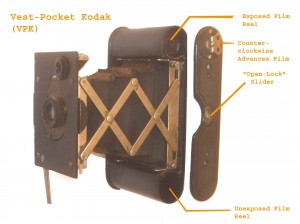
Who were the first climbers to summit Everest continues to be a mystery that enthralls Everest followers and borders on obsession for a few historians. The key question that remains is; can it be proven that George Mallory and Sandy Irvine summited Mt. Everest in 1924, or not? You see, Mallory’s body has been found but not Sandy Irvine, view and he had a camera. Without proof, the world will always accept that Sir Edmund Hillary and Tenzing Norgay were the first to summit in 1953, 29 years later. Everest Historian Tom Holzel, has new data on where Irvine, and perhaps the camera, might be found and is looking for partners to solve the mystery once and for all. Before we take a look at this effort, a tiny bit of background of the north. The north side of Everest is steeped in history with multiple attempts throughout the 1920?s. The first attempt was by a British team in 1921 when Mallory led a small team becoming the first known human to set foot on the mountain’s flanks by climbing up to the North Col (7003m). The second expedition in 1922 reached 27,300? before turning back, and was the first team to use supplemental oxygen – an unknown tool at that time. But it was the 1924 Mallory and Irvine effort that was most notable as a climber was sighted on the high summit ridge but then disappeared. Mallory’s body was found in 1999 but there was no proof that he died going up or coming down thus the importance of finding the camera and potential photos of a summit. The first summit of Everest from Tibet was by a Chinese team on May 25, 1960. Nawang Gombu (Tibetan) and Chinese Chu Yin-Hau and Wang Fu-zhou, who is said to have climbed the Second Step in his sock feet, claimed the honor. However without a summit photo, many doubted the summit claim. In 1975, a successful summit was again claimed by the Chinese when the ladder on the Second Step was installed. With the mystery of who was first dominating Everest gossip for almost a century, teams have looked in vain for positive proof of a 1924 summit. There have been valiant efforts and vague clues throughout the years. In 1933, Irvine’s wooden ice axe was found in the fall line of the climber’s last known route. A Chinese porter reported seeing an “an english dead” in 1960 but there were no pictures. Then in 1999, a team led by IMG founder Eric Simonson conducted a serious search. Conrad Anker found Mallory’s body on the north side below the Chinese reported location. Neither Irvine’s body nor the camera was located. Simonson returned in 2001 to look for the camera, without success. It was the classic needle in the haystack search complicated by snow cover. While the discovery of Mallory’s body created excitement throughout the climbing world, it did not provide any evidence of a summit. In fact it just fueled the speculation. One of the members of that 1999 expedition, Jake Norton wrote a very interesting view on the summit question on his blog in 2010 making the case that they did summit. But no one knows for sure and the camera might be able to close the case. Tom Holzel, who conducted a thwarted search expedition in 1986, took a new approach to locating the camera using two images; one from a photo taken in 1933 and another taken in 1984 from a SwissPhoto, AG, Learjet flying over Everest. This last image was very high-resolution. Holzel used imaging technology to compare the photographs and discovered that the location of an ice ax marking a certain fall of the two climbers, was misplaced by 60 yards. Everyone was looking in the wrong place! Following the new line, he identified what he calls an “oblong blob”. The blob is near where the Chinese porter reported his sighting in 1975. Holzel strongly believes this is Irvine who is thought to have been carrying the Vest Pocket Kodak camera when he and Mallory disappeared. Now Holzel wants to be certain by taking a new image with another flyover using the latest advancements in photography, but he needs $10,000. Once he proves the location of Irvine, he wants to continue the search with a small team that would include Thom Pollard and Jake Norton of the 1999 expedition. Kodak Scientists have consulted with them on the project so if they find the camera, they have processes on how to handle it to prevent further damage. Tom was kind enough to do yet another interview with me. Mind you, he has been interviewed extensively and asked almost every question imaginable so we explored his latest thoughts and case for the flyover. AA: Tom, you’ve been after the Mallory & Irvine (M&I) mystery for quite a while now. And general opinion of what really happened to them is still all over the map. Are we any closer to finding out how far they actually got? TH: I think so, but the conclusion we are being driven to is not what most Mallory &Irvine fans want to hear—and I’m the one at fault. In 1971 in Mountain Magazine #17 I did an analysis of all the known climbs on Mt Everest—69 segments in all—to plot how much of a difference the use of oxygen made on climbing speed. And because M & I were using oxygen, it looked to me like their chances of success had been grossly underestimated. The pre WW-II British leaders thought any theoretical advantage was nullified by the added weight. The chart showed a marked speed advantage for using oxygen. AA: And how were those calculations used? TH: It let us estimate how fast M & I would have climbed on June 6th. However, it also showed a dramatic drop in climbing speed the higher one went—which was an unknown factor to the pre-WW-II British climbers. So M & I weren’t aware
Is The Search for Irvine’s Camera On?
The weather on both sides is proving difficult even stopping the Sherpas from fixing the route above camp 3 on the Lhotse Face. So most climbers are resting in their -40F sleeping bags, reading or playing cards in the dining tents. The Sherpas continue to carry oxygen bottles to camp 2 in anticipation of further carries to the South Col. IMG reports over 130 and Altitude Junkies 70 already at C2. A strong Austrian team lead by Jochen Hemmleb could be searching for the infamous camera of 1924 British climbers George Mallory and Sandy Irvine. As I reported February 3 this year with my interview with Everest historian Tom Holzel; he had made significant progress in narrowing the search area for the camera. He posted the map and GPS coordinates on his site and the race was on.
Search for THE Camera: a brief visit with Everest Historian Tom Holzel
Once again, an Everest expedition is trying to solve the who done it mystery of Everest: did George Mallory and Sandy Irvine summit Mt. Everest in 1924? You see Sandy Irvine, who went missing on Everest’s North side in 1924, medicine had a camera. A plan is emerging for a new search for the missing camera that could solve the mystery once and for all. We have seen this headline but this time is very different – there is a clue and a map! Before we take a look at this effort, a tiny bit of background of the north. The north side of Everest is steeped in history with multiple attempts throughout the 1920’s and 1930’s. The first attempt was by a British team in 1921. Mallory led a small team to be the first human to set foot on the mountains flanks by climbing up to the North Col (7003m). The second expedition, that of 1922 reached 27,300′ before turning back, and was the first team to use supplemental oxygen. It was also on this expedition that the first deaths were reported when an avalanche killed seven Sherpas. The 1924 British expedition with George Mallory and Andrew “Sandy” Irvine is most notable for the mystery of whether they summited or not. If they did summit, that would precede Tenzing and Hilary by 29 years. Mallory’s body was found in 1999 but there was no proof that he died going up or coming down thus the importance of finding the camera and potential photos of a summit. It was a Chinese team who made the first summit from Tibet on May 25, 1960. Nawang Gombu (Tibetan) and Chinese Chu Yin-Hau and Wang Fu-zhou who is said to have climbed the Second Step in his sock feet, claimed the honor. However without a summit photo, many doubted the summit claim. In 1975, a successful summit was claimed by the Chinese when the ladder on the Second Step was installed. Tibet was closed to foreigners from 1950 to 1980 preventing any further attempts until a Japanese team summited in 1980 via the Hornbein Couloir on the North Face. The north side started to attract more climbers in the mid 1990s and today is almost as popular as the South side. But it is who summited first that dominates Everest folklore. Was it Mallory and Irvin in 1924, or Tenzing and Hillary as we know in 1953. Some even speculate it was British climber, Maurice Wilson in 1933 With the mystery dominating Everest gossip for almost a century, teams have looked in vain for positive proof of a 1924 summit. There have been valiant efforts throughout the years. In 1933, Irvine’s wooden ice axe was found in the fall line of the climber’s last known route. A Chinese porter reported seeing an “an english dead” in 1960 but there were no pictures. Then in 1999, a team led by IMG founder Eric Simonson conducted a serious search. Conrad Anker found Mallory’s body on the north side below the Chinese reported location. Neither Irvine’s body nor the camera was located. Simonson returned in 2001 to look for the camera, without success. It was the classic needle in the haystack search complicated by snow cover. While the discovery of Mallory’s body created excitement throughout the climbing world, it did not provide any evidence of a summit. In fact it just fueled the speculation. Now a decade later, technology has given a boost to the search. Everest Historian Tom Holzel, who conducted a thwarted search expedition in 1986, took a new approach. This time he used two images; one from a photo taken in 1933 and another taken in 1984 from a SwissPhoto, AG, Learjet flying over Everest. This last image was very high-resolution. Holzel used imaging technology to compare the photographs and discovered that the location of an ice ax marking a certain fall of the two climbers, was misplaced by 60 yards. Everyone was looking in the wrong place! Following the new line, he identified what he calls an “oblong blob”. The blob is near where the Chinese porter reported his sighting in 1975. It was Irvine who is thought to have been carrying the Vest Pocket Kodak camera when he and Mallory disappeared. Holzel wants to continue the search as soon as he can raise the estimated $150K to fund his small team that includes Thom Pollard and Jake Norton of the 1999 expedition. They will search in a narrow area in the Yellow Band where the photographs show the blob. If they find the camera, they have processes on how to handle it to prevent further damage. Kodak has consulted with them on the project. Tom was kind enough to do yet another interview with me. Mind you, he has been interviewed extensively and asked almost every question imaginable so we explored a few surrounding areas. Q: You have had several lengthy interviews recently, but is anything else you would like to share? Take a look at these two blog postings for the latest theorizing: http://www.velocitypress.com/CopyIrvine.shtml http://www.velocitypress.com/IrvineSearch.htm {note: these are superb articles that deserve a full read and not a shortened summary} Q: Why the public’s fascination with Everest for long? Partially because it is one of the end-points of terrestrial exploration, along with the poles and deepest Africa and the Amazon. The mystery of men going and not coming back is a certain draw. With the secret feeling that anyone of use might have done it–and perhaps come back! Q: Has the negative attitudes about solving the M&I mystery by the British mountaineering community abated? No. They are still bitter that not only did they not discover anything (they never even tried), but those crude AMERICANS once again pulled their chestnuts out of the fire. It all stems from the grievous affront suffered by the Alpine Club and the RGS when it was filled with Gentlemen only. Sir Percy Wynn Harris was terribly miffed when I failed to list