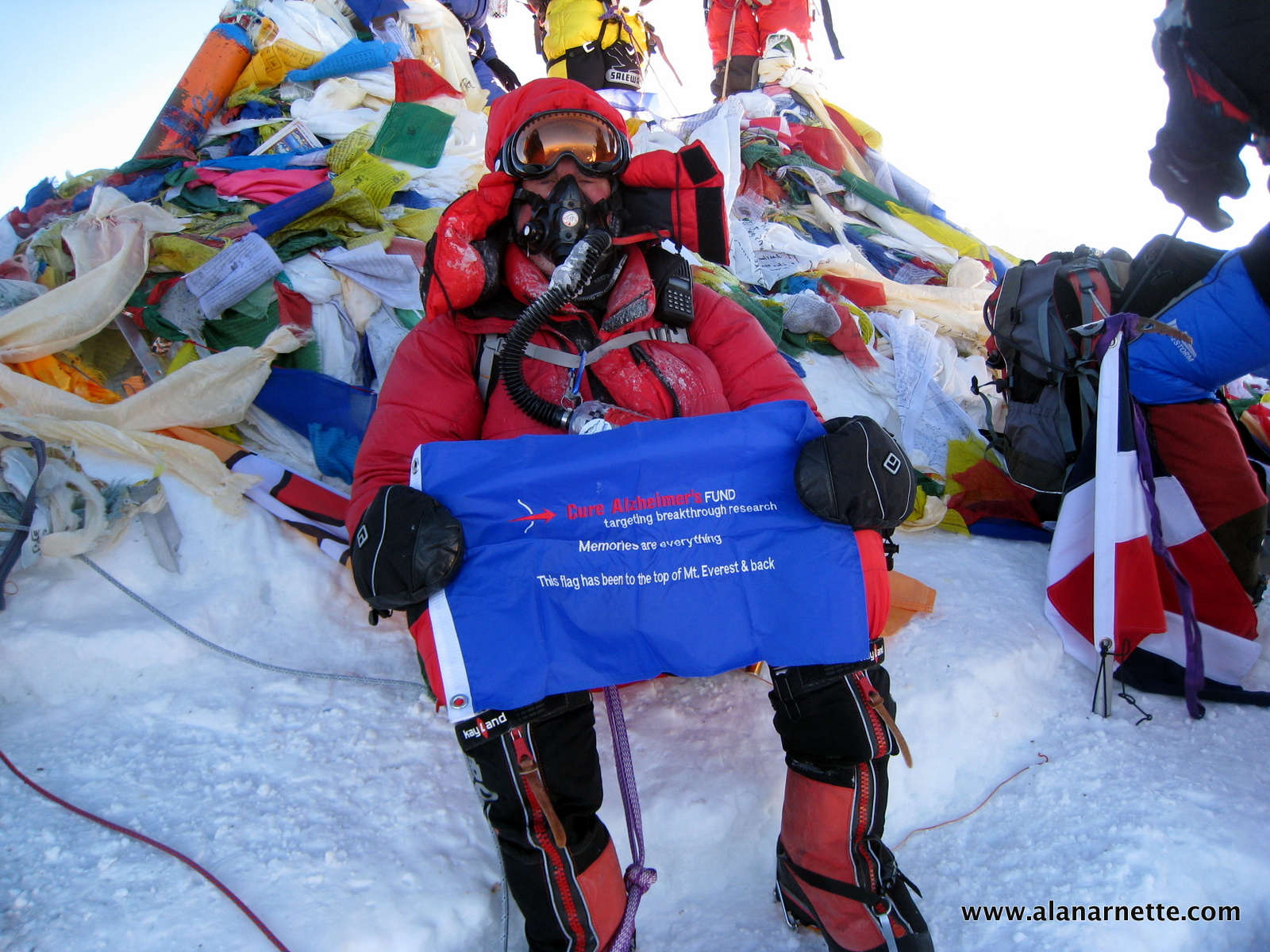
Recently, I recorded a podcast with Lainie Holcomb and Dr. Tammy Awtry from the Cure Alzheimer’s Fund.
It was my first Podcast focused entirely on Alzheimer’s, not mountaineering, and it left me with a clear realization:
We’ve made real progress.
But we are not there yet.
The Moment That Changed Everything

In 2006, my mom, Ida, looked at me and asked, “Now, who are you again?”
That moment changed the course of my life.
For nearly two decades, I’ve honored that promise by climbing mountains and raising money for Alzheimer’s research.
Since 2007, I’ve supported Cure Alzheimer’s Fund—an organization where 100% of every donation goes directly to research, with all overhead covered by its board.
This is personal—but it’s also universal.
It’s about what we can do—together—right now.
Why This Matters Today
We are closer than ever to changing the course of this disease:
- Scientists can now detect Alzheimer’s years before symptoms appear
- New treatments are beginning to slow progression in the early stages
- Research is accelerating faster than at any time in history
But none of this happens without funding.
Join Me, It’s Urgent — I’ll Match Your Impact
I ask you to take one simple step:
Make a donation today to the Cure Alzheimer’s Fund.
I will personally match the first 50 donations with $100 each.
After donating, please add this note in the comment box:
“This donation is a result of Alan Arnette’s podcast with Lainie Holcomb and Dr. Tammy Awtry.”
And if you feel comfortable, include the name of someone you’re honoring.

I’ve also committed 10% of Summit Coach’s revenue each year to the fight.
What’s Changing in Alzheimer’s Research
If you want to understand why there is real hope, here’s what’s happening behind the scenes.
🧠 What Is Alzheimer’s Disease?
Alzheimer’s is the most common form of dementia—but not all dementia is Alzheimer’s
It is a progressive brain disease where cells die, causing memory loss, cognitive decline, and eventually dependence.
🧠 Alzheimer’s Begins Long Before Symptoms
By the time memory is affected, it has often been developing quietly for over 20 years.
- Amyloid-beta proteins begin to accumulate.
- Tau proteins form damaging tangles inside neurons.
- The brain’s immune system triggers chronic inflammation.
🧠 Why Memory Loss Starts the Way It Does
The disease begins with short-term memory loss due to its early impact on the hippocampus, which forms new memories.
This explains why someone may forget recent conversations but recall events from years ago.
🔬 Breakthroughs Changing the Landscape
1) “Alzheimer’s in a Dish.”
A 3D cell model now allows researchers to replicate Alzheimer’s in weeks instead of decades.
This means:
- Faster testing of potential treatments
- Lower research costs
- More rapid innovation
Traditional funders initially rejected this approach until The Cure Alzheimer’s Fund supported it.
2) New Treatments
Two recently approved drugs—Leqembi and Kisunla—are important steps forward.
They:
- Target amyloid plaque in the brain
- Help remove buildup
- Slow progression in early-stage patients
They are not cures—but they prove progress is possible.
3) Blood-Based Diagnostics
Simple blood tests can now detect Alzheimer’s-related changes.
This is a major shift:
- More accessible than PET scans
- Less invasive than spinal taps
- Enables earlier intervention
The goal: routine screening before symptoms ever begin.
⚠️ What Still Needs to Be Solved
We are not finished.
- Current treatments work after symptoms begin
- By then, tau-related damage may already be significant
We still need therapies that:
- Target tau proteins directly
- Reduce harmful inflammation
- Strengthen brain resilience
The ultimate goal is clear:
Stop Alzheimer’s before it starts.
🌟 What You Can Do Today
While science advances, your daily choices matter more than you might think:
- 🚶 Exercise – Supports brain health and blood flow
- 🥗 Diet – Mediterranean-style eating shows protective effects
- 😴 Sleep – Clears waste, including amyloid, from the brain
- 👥 Connection – Reduces dementia risk
- 🧠 Learning – Builds cognitive reserve
- 😌 Stress Management – Protects long-term brain function
🏔️ Why This Is Personal for Me?
My mom began showing symptoms in the early 2000s. Four of her sisters also died from Alzheimer’s.
Like many families, we didn’t understand it at first.
From 2006 to 2009, I stepped away from my corporate career to help care for her.
And yet, even as the disease progressed, there were moments of grace:
- She remained calm and present
- Music—especially church hymns—still reached her
- Connection was never completely lost
She passed away on August 19, 2009.
🏔️ From Mountains to Meaning
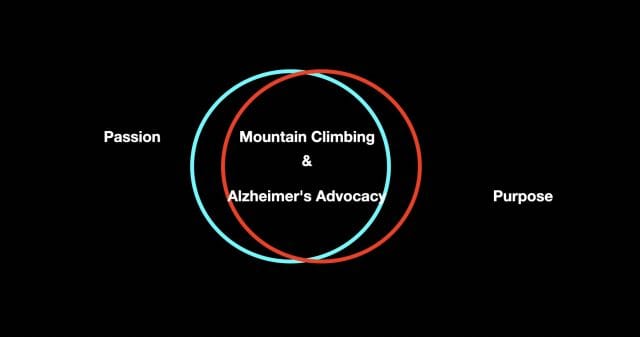
In 2007, I began working with the Cure Alzheimer’s Fund.
In 2011, I completed the Seven Summits in a single year—using each climb to raise awareness and funds.
My life has become the intersection of:
Passion — climbing mountains
Purpose — fighting Alzheimer’s
🤝 A Final Thought
Alzheimer’s remains one of the most complex diseases we face.
But for the first time, we are seeing real progress:
We understand more.
We can detect earlier.
We are developing treatments that make a difference.
And with continued support, we can go further.
Take the Next Step
Join me. Donate today—and I’ll match your impact.
Donate today—and I’ll match your impact.
Together, we can support the work of Cure Alzheimer’s Fund and move closer to a world without this disease.
Climb On!
Alan
Memories are Everything
The Podcast on alanarnette.com
Podcast with The Cure Alzheimer’s Fund’s Dr. Tammy Awtry (Science Communicator) and Lainie Holcomb (Community Fundraising Manager)
You can listen to #everest2026 podcasts on Spotify, Apple, Breaker, Pocket Casts, Anchor, and more. Just search for “alan arnette” on your favorite podcast platform.
5 thoughts on “Podcast: Memories Are Everything: Why Alzheimer’s Research Needs Us Now”
I just made a small contribution ($150) to the Alzheimer’s fund in honor of your Mom and my two friends that died in the past year from this terrible disease. Your advocacy is to be admired.
Thank you also for your wonderful blog.
Best wishes,
Marty Madden
Thank you so much, Marty. I will make a matching $100 donation. I’m sorry for the loss of your friends.
Alan, I always enjoy your podcasts and blog. But this podcast goes straight to the top of my favourites list. Thank you for the excellent discussion and all the points made, the education, and for alerting us to the excellent research funding organisation. Many thanks!
Thanks so much, Emily. I appreciate that you understand how meaningful it is to find a cure for all involved.
Still praying for your mom and you, Alan. She raised an awesome individual.