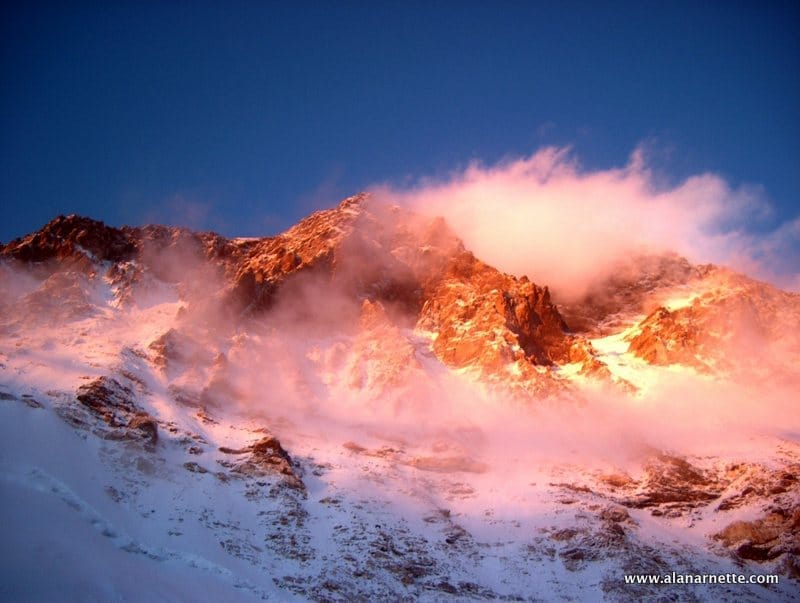
Welcome to my annual Everest summary, where I review what happened and who did what. Quirky. That’s my word for Everest 2026. Or perhaps, “normal.”
The 2026 Everest spring season has come to a close. There were delays, strong winds, changing drone and helicopter rules, moments of concern and challenging climbing. Despite the dramatic headlines in the mainstream press, it was actually a fairly normal season, as evidenced in part by roughly 80% of this year’s 1,008 summits occurring between May 17th and May 26th, consistent with historical trends. The Himalayan Database will publish what I consider to be the definitive results later this year.
There is a lot of detail here, broken down by:
- Big Picture
- Building the Route
- Summits
- Climbers We Watched
- 2026 Notable Records
- South Col Mess
- Permits Overview
- Death Total
- Other 8,000ers
- Celebrate
- 2027 Outlook
- The Climber’s Depression
Big Picture
The season began with confusion, as Nepal’s proposed new tourism Bill 2081 contained many new mountaineering regulations. One in particular created the fuss: the requirement to climb a 7000-meter peak in Nepal to qualify for an Everest permit. To be clear, the laws have only passed one chamber of Nepal’s Federal Parliament and still need to pass the lower chamber and be signed by the President before taking effect.
However, this didn’t stop guide companies from emphasizing the proposal in their marketing, which may have encouraged some climbers to accelerate their plans to avoid it. There’s no way to know, but it might certainly have brought people to the mountain who lacked the necessary experience.
Let’s walk through how the Everest 2026 spring season unfolded.
With only a couple of weeks’ notice, China closed its side of Tibet for unknown reasons. One unverified rumor said it was due to a fireworks display. I was told there was at least one Chinese team that climbed, but we have no updates on how many, dates, or status–common for that side of the mountain when China closes it to non-Chinese climbers.
All the action occurred on Nepal’s South Col route this year. No new routes were attempted. As usual, there were reports of frostbite and helicopter evacuations, but many of these incidents never went public, whether due to operator discretion, privacy concerns, or public relations considerations. However, as noted, the season was overall successful, with record numbers of permits (495) and summits (1,008), including 274 on a single day, and low death rates.
It appears that a high percentage of clients with permits (495) summitted. If I make a rough assumption of a 40/60% split between clients (400) and support (600), that suggests around 400 clients, roughly 80%, summited. We need to wait to verify this until we receive the final data from the Himalayan Database.
Building the Route
The Icefall Doctors arrived at Everest Base Camp right on time in mid-March, ready to fix the route to Camp 2. The first week of work on the Icefall was unusually quiet.
A huge ice block near the top of the Icefall proper blocked the route. The usual concern is that the hanging seracs off Everest’s West Shoulder would collapse onto the Icefall like in 2014, taking 16 Sherpa lives. This giant ice cube was teetering, and the Docs feared it would fall on the route. So they stopped working – for almost two weeks – and no one really said much about it. Teams were acclimatizing nearby on Lobuche East, and some established alternative camps on Mera Peak to acclimatize there, thus avoiding the Icefall altogether.
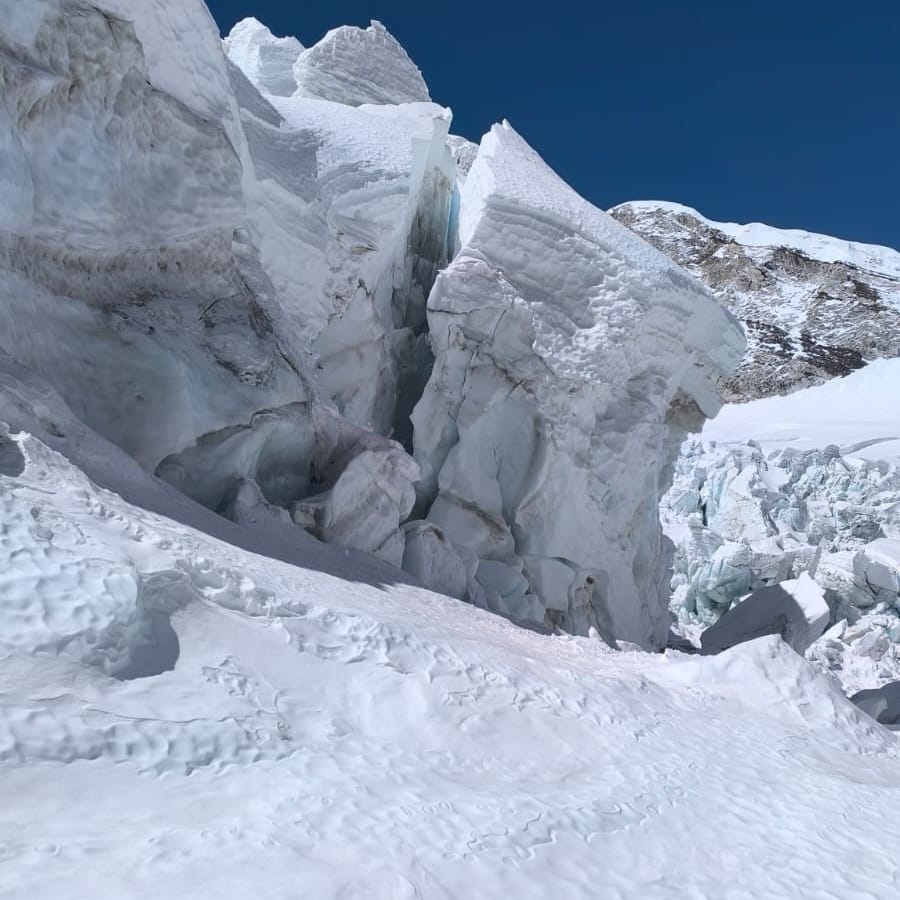
Last year, 2025, the Icefall was fixed by April 10. Now it was April 26. Mingma G, in his usual style, took control and asked five Sherpas to find a route – and they did:
Today, three Sherpas from @imaginenepal, along with one from Elite Exped and one from Altipro, together with Polish pioneer Mr. Barteek Ziemski, climbed over the Icefall blockage and fixed some ladders and ropes toward Camp 1. They had to turn back just very close to Camp 1 due to a whiteout, but the route to Camp 1 is almost complete. They found the route far safer than it is being talked about. All climbers who have been above the ice blockage think the route is safe. We believe Mother Qomolangma has shown us a path to make a safe climb.
1. @sensaipema_waiba__official Pemba Waiba – Drone pilot
2. @dawatenjin Dawa Tenzing (30 years of climbing experience on Everest, first winter K2 Ascent)
3. @saila_mingma (Altipro)
4. @d_line8848.86 Dipen Gurung (IFMGA Aspirant Guide)
5. @phuri_sherpa1997 Phuri Kitar (Elite Exped)
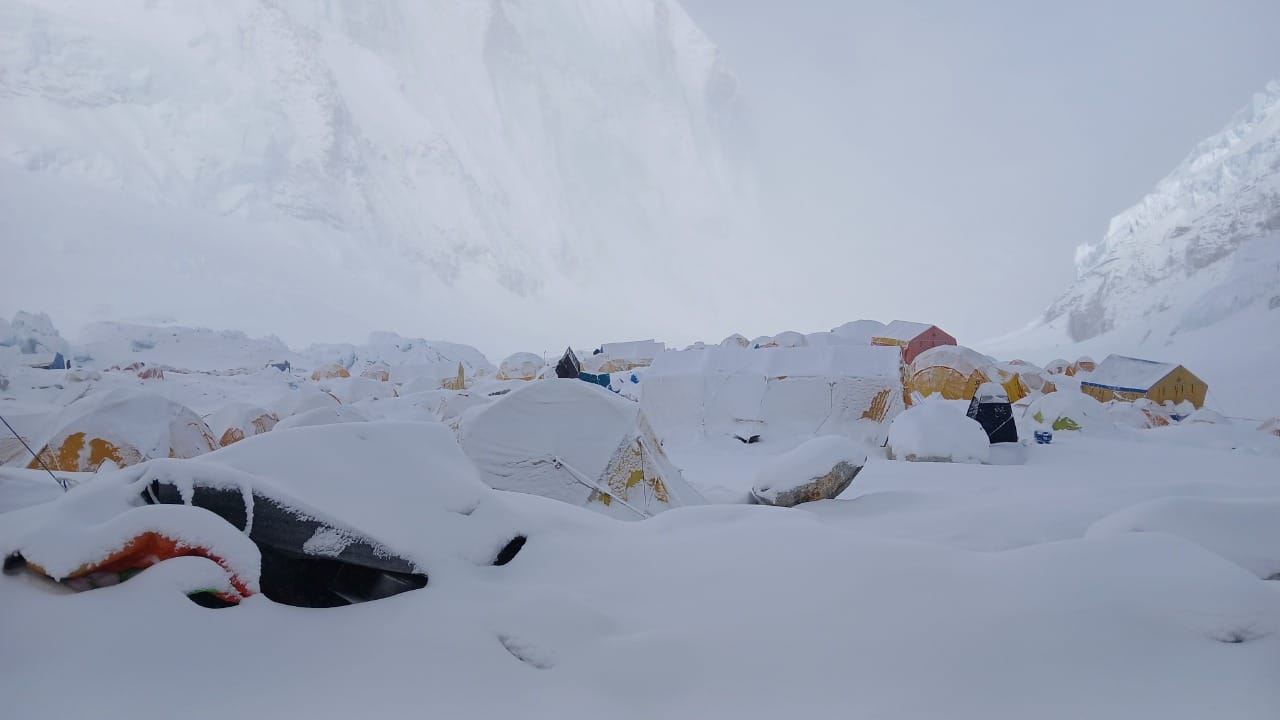
Soon, the Docs returned to work, secured the route to Camp 2, and Sherpas began ferrying gear to the higher camps. However, another snag was about to hit – weather. The jet stream hit Everest and the Himalayas with a vengeance. High winds and heavy snow locked down climbers at Base Camp and Camp 2 for several days, also delaying the rope team from getting the lines above Camp 2.
Meteorologist Chris Tomer of Tomer Weather Solutions correctly made this prediction on Thursday, May 7, 2026:
Really tough road ahead. The serac delay has put them between a rock and a hard place. Storm system slides across Everest 5/9-5/10 with up to a foot of snow accumulation. Brief summit window thereafter. Then the jet stream sits on the summit 5/14-5/18. If they can’t get the summit open by 5/13, then you can see what happens.
People began to worry. A perfect storm was brewing: record crowds, supported by a record number of Sherpas, in a steadily narrowing window as the monsoon season would bring climbing on the Nepal side to a hard stop at the end of May. Tick tock, tick tock. The season had about seventeen days left.
Teams continued to bide their time acclimatizing on trekking peaks; some made one rotation to Camp 2, a few tagged 7000 meters on the Lhotse Face, while others, in my opinion, mistakenly, exposing them to unnecessary risk of illness, made “get-away” trips to Namche or even Kathmandu to breathe thicker air.
The winds relented, and the rope fixers reached the South Col, opening the route to stock the camp with critical supplies such as oxygen bottles. An unusually large and strong Sherpa team reached the summit on May 13. A small group of six members also summited, climbing right behind the rope team – the season’s first commercial summits of Everest.
People began to relax. Then the jet returned, staying for four days. The next summit would be on May 18 in quirky winds. The Icefall Doctors announced they would remove the ladders in the Icefall on May 29, leaving only eleven days for hundreds to attempt the summit. Echoes of 2019’s cheek-to-jowl line between the South Summit and the summit came back to many leaders and climbers. That year, there were only three “summit days” when the winds were under 35 mph (56 kph) for over 600 people.
Summits!
Leaders felt the pressure. Over the next week, there would be daily summits, including a mind-blowing 274 on Wednesday, May 20th. Reports came in of taking twelve hours to climb from the Col to the top. There were reports of snow blindness, frostbite, and rescues, but, as usual, bad news tends to stay on the mountain rather than in public.
The trend of large teams receiving substantial support from Sherpas continued unabated. Seven Summits Treks reported over 100 clients, while 8K claimed 50 clients. Furthermore, several Western teams, including CTSS and FA, appeared to have large team sizes. China, the U.S., and India led in permit holdings, with 109, 77, and 61 permits, respectively.
Elsewhere in the Himalaya, on Manaslu, Ukrainian Alexandr Moroz and Kyrgyz Mark Ablovacky summited. They were the only climbers on the peak this spring. Also, an impressive accomplishment occurred on Nuptse. A large multi-team group summited the 7,861-meter dangerous peak.
Tragically, on Everest, there were five fatalities and one missing Sherpa, the same as 2025 but down from the eight deaths in 2024 and eighteen in 2023, which constituted a record season for fatalities. This year’s total is lower than the historical average of seven fatalities per year since 2010, as cited by the Himalayan Database. Two climbers died on Makalu.
Climbers We Watched
There were a handful of climbers trying something unique, not to discount others’ climbs. Let’s review:
Ski Descents
Polish skier/climber Bartek Ziemski, 31, made two historic no Sherpa support, no-O2 summits with ski descents on Everest and on May 12th, on Lhotse, the first of the season. This was incredibly impressive and a first. He also helped find the route around the ice block.
No O2
Ryan Mitchell, 21, and Justin Sacket, 28, wanted to attempt a no-O2 climb on Nepal’s normal route with limited Sherpa support (a couple carrying emergency oxygen). Ryan summited Everest with Madison Mountaineering in 2024. Last year, he came short on K2 due to dangerous rockfalls that killed one climber. Justin is a guide and founder of Skyline Mountain Guides.
Delays on the Icefall route led Ryan and Justin to take a “holiday” in Kathmandu after camping at 19,000 feet, feeling well acclimatized. When Ryan returned, he got sick, was diagnosed with HAPE, and flew home. Justin stayed, continued acclimating, and attempted no-O2 but turned back near the South Summit, feeling slow.
Lithuanian, Saulius Damulevicius – a veteran with nine expeditions and six 8,000m summits, all without supplementary oxygen or personal Sherpa support, and climbing alone. He tried to reach the summit of Everest on May 27th but turned around at 8,400m.
Marcelo Segovia (Ecuador), a policeman and mountain guide, made his second no-O2 attempt and succeeded.
Fast Known Time (FKT)
Last year, both record-seeking Everest runners turned back, primarily due to the windy conditions. Swiss-Ecuadorian Karl Egloff, 45, stopped near Camp 3, while Tyler Andrews, 35, reached Camp 4 before stopping. They both returned in 2026 with mixed results. Karl wanted to climb without oxygen from Base Camp to the summit and back down.
Tyler took a trial run with oxygen, which raised questions about whether his second attempt was valid. Many in the climbing community thought this voided his second planned no-O2 attempt; however, the Himalayan Database ruled that ‘trial use of O2’ did not invalidate the attempt, distinguishing it from ‘medical use of O2,’ despite having told Ryan Mitchell that his use of medical O2 to treat his HAPE invalidated his no-O2 attempt. Ryan left Nepal immediately because of his illness, so the ruling became moot… however…
Tyler went on to break the O2 record set by Lakpa Gelu Sherpa, who ran a record 10 hours and 56 minutes in 2003. Andrews said he made the climb in 9 hours and 55 minutes, reaching the summit at about 5 a.m. Nepal time. He wanted to go sans O2, but with the blustery conditions, he did the smart move and used supplemental oxygen. The record remains controversial depending on how one defines support, oxygen use, and timing standards. Tyler stands by it without apology and says he’s done with the Nepal side due to complications and crowds.
Egloff turned back at an altitude of 7903 meters after 13:41 when his climbing partner, Nicolas Miranda, developed health problems.
Triple Crown
There were several people who achieved the so-called “Triple Crown” this season of Nuptse, Lhotse and Everest, which is pretty rare.
Norwegian mountaineer Kristin Harila, 39, who holds the record for the fastest ascent of all 14 eight-thousanders with O2, wanted to summit Nuptse, Lhotse, and Everest without supplemental oxygen. She used O2 on Lhotse but got the other two. She was supported by Ming Temba Sherpa, who summited Everest with the rope team and again with Kristin and also summited Lhotse.
Tenzing David Sherpa & Chen Tao successfully completed “Triple” within a remarkably short, five-day window: Nuptse-May 17th, Everest-May 20th, and Lhotse May 21st.
Fly Like an Eagle
British adventurer Tim Howell, 36, wanted to fly off Lhotse in a wingsuit. He attempted last year, but high winds stopped him. This year, he got snakebit – literally! He was bitten by a poisonous snake while training before he left home, thus canceling the trip.
Sea to Summit
Australian climber Oliver Foran, 26, summited. An amazing story that harkens back to Swedish mountaineer Goran Kropp, the first person to travel from Sweden by bicycle and on foot to climb Mount Everest without supplemental oxygen. Kropp summited on May 23rd,1996. While Foran’s accomplishment is not the same, it’s impressive nonetheless.
Foran started from India’s coast, cycled 1,150 km/715 miles to the foothills of the Himalayas, then trekked 150 km/93 miles, and completed an acclimatization climb of Mera Peak before reaching Everest Base Camp to begin the ascent. The current world record was 67 days, held by South Korean national Kim Chang-ho; Oliver was targeting 60 and made it in 50. He explains his “why”:
After losing my mum to brain cancer, I struggled with my mental health. For a long time, I felt lost. Like I was searching for something, but didn’t know what it was. When I found mountaineering, something clicked. It showed me what I’m capable of. And I believe as humans, we are all capable of amazing things. And now, this is bigger than just a climb. Together with Youturn, this expedition is for the kids out there struggling in silence. The ones who feel lost, like I once did.
Romanian Madalin (Cris) Cristea, 26, has been on a journey to climb the highest mountain on each continent, starting from sea level and back to sea level – on foot. Cris calls his project “Traintosummit.” He began in 2024 with Aconcagua and Kilimanjaro, and after two months, he summited both peaks, from sea to sea, in the process covering more than 1,400 km/870 miles. On March 8th, 2026, he left from the village of Digha, India, covering 2,000 km/1242 miles over the course of more than 100 days. He summited on May 20th, 2026.
Notable 2026 Records
2026 saw several records, ranging from age to repeat summits, country firsts, speed and more. They included:
- Kami Rita Sherpa (Thame Village), 56: Achieved a record 32nd Everest summit.
- Lhakpa Sherpa, 53, increased her female record to 11 summits.
- Pole, Bartek Ziemski, 31, summited Everest and Lhotse, unsupported, no O2 and skied down.
- Passang Dawa Sherpa: Achieved a record 30th Everest summit.
- Ang Dorje Sherpa, 56, 25th career summit with Adventure Consultants on May 21.
- Pema Chhiring Sherpa hit his 25th summit.
- Brit Kenton Cool, 52: A non-Sherpa record of 20th Everest summits.
- American, Tyler Andrews, 35, on May 28th, ran on O2-EBC to Summit in 9:55 hours: tracker.
- Bianca Adler, 18, summited, becoming the youngest Australian to summit Everest.
South Col Mess
Not everything went as planned. The Nepalese government introduced several new rules requiring climbers to bring trash from all camps to EBC. It appears the directives were ignored, especially in videos posted online, particularly at the South Col.
At 8,000 meters, climbers try to minimize time spent there, are usually on supplemental oxygen, and are in a hurry to leave. This dynamic encourages team leaders to leave tents, food packaging and fuel bottles. The only items deemed too valuable to leave are the oxygen bottles, each of which can fetch $65. This video was taken by IFMGA Nepal guide Vinayak Jaya Malla on May 26, after most teams had returned to base camp.
Other 8,000ers
While most of the world watched Everest, there were summits on Annapurna, Makalu, Lhotse, Dhaulagiri, and Kanchenjunga, and a rare solo pair who summited Manaslu without support. A few climbers summited multiple 8,000ers, starting with Annapurna, and then moving to others. The use of helicopters and the mountain being fixed by strong Sherpa teams has made this more practical. While I’ll never say “easy”, more achievable.
Nepal Permit Update
As of June 1st, 2026, the Ministry of Tourism had issued 1,195 climbing permits to 149 teams across 31 peaks, generating $8.47 million in permit fees, with Everest accounting for $7.2 million. Everest climbers were from 56 countries. China had the most climbers at 109, followed by the U.S. at 77, India at 61, and the UK at 32. There are 105 female climbers on Everest this season. This is the current tally for the 8,000ers.
| Peak | Teams | Male Clients | Female Clients | Total Permits |
| Annapurna I | 4 | 19 | 8 | 27 |
| Dhaulagiri | 4 | 18 | 12 | 30 |
| Everest | 52 | 390 | 105 | 495 |
| Kanchenjunga | 5 | 23 | 14 | 37 |
| Lhotse | 16 | 103 | 47 | 150 |
| Makalu | 11 | 51 | 21 | 72 |
| Manaslu | 1 | 2 | 0 | 2 |
| TOTALS | 93 | 606 | 207 | 813 |
Death Total–Seven, possibly eight, across the Himalaya
In total, this Spring was safer than recent years, with deaths on “only” two 8,000ers – Makalu and Everest. During the last days of this season, a Sherpa is missing and presumed to have perished, but this has not been verified.
On May 29, Dawa Sherpa, aka Hillary Sherpa, was last seen near Camp III after his client, a Polish climber, developed frostbite and then descended with another Sherpa. Dawa was to follow but never arrived, and his disappearance was reported only later. Because the Icefall Doctors had removed the ladders before his death was reported, helicopters were the only option to search for him, but the MD of the Nepali guide company, Himalayan Traverse, did not have one dispatched for unknown reasons, according to multiple media reports. As of today, June 2, there are no resources on the mountain to conduct a search. Dawa Sherpa’s whereabouts remain unknown.
Other 8,000ers – Two Deaths
- May 10 – Makalu II, Czech climber, David RoubÃnek, 38, fell ill at high altitude and died while being assisted down from Camp III.
- May 10 – Makalu, American Shelley Johannesen, 59, was struck by an avalanche around 7,000 meters during her descent after summiting. Expedition Himalaya supported her.
Everest – Five (four climbing) Deaths, 1 Missing
- May 3 – Lakpa Dendi Sherpa, 51, from Gudel village, died at about 5,200 meters on his way to Everest Base Camp.
- May 10 – Bijaya Ghimire Bishwakarma, 35, the first Nepali Dalit climber to summit Mount Everest, died on Sunday while ascending from Base Camp to Camp 1. He worked for TAG Nepal.
- May 11 – Phura Gyaljen Sherpa, 20, from Thame village, slipped and fell at around 7,000m on the Lhotse Face, just below Camp 3.
- May 22 – Indian climber Sandeep Are died descending after summitting with Pioneer Adventures.
- May 22 -Indian climber, Arun Kumar Tiwari, died descending after summitting with Pioneer Adventures.
- May 29 – Dawa “Hillary” Sherpa, missing at Camp 3.
One disturbing fact about the two Indian deaths is that there are reports that both climbers were feeling unwell during their ascent. If true, they should have been turned around and not allowed to continue to the summit. I see this mistake every year. We need more training in high-altitude medicine for every support climber with client responsibility. Based on currently available reports, these two deaths were preventable, in my view.
Celebrate!
I understand that not everyone in the general public feels summitting Everest is something to celebrate. However, I can tell you that after three attempts, I celebrated. Each person on Everest this year had a unique experience – some life-changing, others they might regret.
I think President Roosevelt said it best in the speech “Citizenship In A Republic”, delivered at the Sorbonne, in Paris, France on April 23rd, 1910:
“It is not the critic who counts; not the man who points out how the strong man stumbles, or where the doer of deeds could have done them better. The credit belongs to the man who is actually in the arena, whose face is marred by dust and sweat and blood; who strives valiantly; who errs, who comes short again and again… “
2027 Outlook
The key question for next season is whether the 7,000-meter requirement actually becomes enforceable law. The Integrated Tourism Bill cleared Nepal’s National Assembly in early 2026, but it is not yet enacted — it still has to pass the House of Representatives and be signed by the president. Whether the new parliament passes it unchanged, waters it down, or lets it stall is genuinely open.
Nepal has been here before. In the mid-1990s, it floated an experience prerequisite for Everest, then walked it back under pressure from operators and foreign climbers. That history cuts two ways: it shows the government has the appetite to impose such rules, but also that it has folded when the revenue math turned against it — and the math is bigger now, with Everest royalties alone running into the millions each spring.
If the rule is enforced as written, my view is that permits could fall 40 to 60%. This is simple math, not history: most of today’s commercial clients haven’t summited a 7,000-meter Nepali peak, and the rule excludes the very peaks they train on — Aconcagua, Denali, Ama Dablam, even an 8,000er like Manaslu. Adding a separate Himalayan expedition, with its own cost, time, and risk, would price out a large share of the high-volume market that budget operators depend on — putting an estimated $3 to $4 million in annual royalties at risk, which is exactly why I expect pressure to dilute enforcement once that impact comes into focus.
But the fee and the experience rule target different problems — one filters on wallet, the other on competence — and they don’t screen the same climbers. So much depends on what the new parliament actually does, and Nepal’s lawmaking on Everest has rarely been predictable. If I had to guess, I’d say the likeliest path is that the $15,000 fee holds while the 7,000-meter rule stalls or gets watered down. Should that happen, the season ahead may look much like the last: the price would thin the budget end of the market without doing much to screen out inexperienced climbers who can simply write the check. That, more than the revenue question, is what I’ll be watching as 2027 takes shape — though I’d be glad to be proven wrong.
This poses a financial risk for Nepal. When a similar 6,000-meter requirement was introduced in 1995–96, climber numbers fell sharply enough that operator pressure forced the government to scrap it within a couple of seasons. Decades later, the market response could be different.
Crowding on the Nepal side remains a major concern, especially if China’s Tibet policies stay unpredictable. The market dynamic of high-volume, low-price operators will persist alongside medium-volume guides and the ultra-high-price guiding model, each continuing to appeal to three distinct markets.
Climate change also remains front and center for the world’s highest peaks. This season, we saw the base of the Khumbu Icefall covered in rushing water, and even running water at Camp 2 (21,500 feet). What this means for long-term safety is uncertain, but an increase in unstable avalanches, collapsing seracs, and crevasses certainly does not bode well.
What remains clear is that Everest will continue to draw dreamers, veterans, and record-seekers alike.
Trekking the centuries-old dirt trails to Everest Base Camp, seeing the Khumbu kids, the monks chanting in ancient monasteries, and, if you choose, climbing the final steps to meet Miyolangsangma on the summit, you will return home a better version of yourself.
The Climber’s Depression
I wrote this piece several years ago after speaking with climbers of all skill levels about their experiences and post-climb feelings. It was written based on my personal experience, and I hope it helps others process theirs.
Christine, 84 years young, came up to me after a talk I gave about my K2 summit, which was both a success and an epic. “I don’t understand.” She said, shaking her head in a bit of disapproval. I simply replied, “I understand that you don’t understand.”
With that, I expect only a handful of my readers to understand this post.
You summit the mountain of your dreams. You did it in style with great friends or teammates. Everything was perfect. You come home excited and full of energy, and then it hits… your emotions drop like a rock in a still pond. All ambition is gone. You mope around like you just lost your dog.
At first, you chalk it up to being tired; after all, you trained for a year, pushing yourself to reach the summit and back. You are tired. But something else is going on. You are depressed, not really, but you are really, really down.
I understand. I’ve been there – a lot.
Let’s look at three results of a climb: summit, no summit – your issues, no summit – out of your control.
Summit!
You come home, and friends, families, strangers, and the family dog are thrilled to see you. Heartfelt congratulations are offered, and drinks are on the house. Just as you get ready to talk about your proud achievement, all the drama, how you dug deep, and the personal life lessons you learned, your audience turns the tables on you. “Great job. You must be so happy to get this one done. So, what’s next?”
And, so, it begins. Of course, you have pondered this question and have some ideas, but you want to take some time to reflect on the last climb before thinking about the next one. But this is not why you are feeling down, and it goes much deeper.
The last year has been all about your goal. You made sacrifices. So did your family. Your closest friends grew accustomed to the fact that the ‘climb’ was all you wanted to talk about. You denied it had become an obsession, but everyone else said it was. And now it was gone. You have a huge hole in your life.
Instead of celebrating your success, you are drawn into the “no future goal abyss.” Trying to explain it is futile; no one understands except for a few fellow climbers, a friend, and your partner.
How long you remain in the hole is a big question. There are no ladders, no shortcuts out. It just takes time.
No Summit – What Happened?
This one is easier to understand. You “failed” (I don’t like that word used in association with climbing, I prefer ‘non-summit’), and it’s your fault. You reached that point in the climb where you met yourself, and you turned back. You know it. You know it deep down, and it hurts.
You thought you had trained, but you knew you could never “overtrain.” You thought you had studied the route, but you had never been there. You had planned to be self-sufficient, but you ultimately depended on others. You thought you had the right gear, but something went wrong. You thought…
Rationalization is a wonderful thing–a coping mechanism at best and at worst. You struggle to explain to friends, family and the dog what happened. It’s difficult to say, “It’s all on me, full-stop.” But that’s the truth, and the truth hurts. But the dog is still thrilled to see you every time you reenter the room.
And those friends who ask, “How did it go?” Well, the conversation starts with “Did you summit?” And you respond cautiously, beginning with “No, but…” and go into a lengthy explanation of how the planets align, tectonic plates, vagaries of weather forecasting, bacteria versus viruses, and… When your audience regains consciousness, they ask, “Wow. So, what’s next?”
Back into the abyss.
No Summit – It Wasn’t Me!
Perhaps the easiest and the hardest of our three scenarios. You have a built-in excuse, but you still didn’t accomplish your goal. On the flight home, you go through the five stages of climber’s denial: 1. Pissed off, 2. Dejected, 3. Heavy drinking, 4. Sleep, 5. Planning the next climb.
Everyone understands, but no one wants to hear the details. Once again, you find yourself alone in a climber’s depression.
Not summiting or achieving your goal because someone else didn’t do their job is tough to accept. After all, their lack of “whatever” was not your problem until it became yours. Not summiting because nature decided to do a random act of “whatever” was never on your radar. Still, once it occurred, you had no choice but to accept her wrath, hopefully with dignity…but some days that is harder than others.
Your friends, knowing you didn’t summit, tread lightly upon the first meeting. “Tough break. You did yours, but these things happen. Hang in there.” and then…. “So, what’s next?”
Back into the abyss.
So, What’s Next?
If you have ever climbed rock, ice, foothills, or the big ones, you know how it feels. The elation of reaching your goal, the loneliness of not. After the climb is often the toughest phase. The land of “tweens.” The time of annoying questions.
And the time to pick yourself up, get on with life and tell your entire story, in vivid detail, to the family dog…
Climb On!
Alan
Memories are Everything
The Podcast on alanarnette.com
Here’s the Podcast of this 2026 Season Wrap-Up
You can listen to #everest2026 podcasts on Spotify, Apple Podcasts, Breaker, Pocket Casts, RadioPublic, Anchor, and more. Simply search for “Alan Arnette” on your preferred podcast platform.
Previous Everest 2026 Season Coverage Posts
- Everest 2026: Season Summary – Records, Crowds, Trash & Winds
- Everest 2026: May 31st Weekend Update – Record Season Over & 1 More Death?
- Everest 2026: Last Summits?
- Everest 2026: Another Wave of Summits
- Everest 2026: May 24th Weekend Update – Nearing the End
- Everest 2026: A Few More Summits, Speed Runner is Climbing
- Everest 2026: Garrett Madison Podcast from Camp 2
- Everest 2026: The Western Team’s Turn, My Summit Anniversary
- Everest 2026: May 20th Summit Recap: 270 Summits!
- Everest 2026: Ski Descent and More Summits
- Everest 2026: Weather Alert and More Summits
- Everest 2026: May 17th Weekend Update – Climbers to the Summit
- Everest 2026: Ropes to Summit, Time to Wait
- Everest 2026: May 10 Weekend Update – Ropes to South Col, Everest Death
- Everest 2026: May 3rd Weekend Update – Climbing!
- Everest 2026: Route In – With Risks
- Everest 2026: April 27th Weekend Update – Icefall Route In?
- Everest 2026: April 19th Weekend Update – 8000er Summits
- Everest 2026: April 12th Weekend Update – The Khumbu is Alive!
- Everest 2026: Are Everest Climbers Being Poisoned?
- Everest 2026: Climber Rescue Alert
- Everest 2026: Climbers to Watch this Season
- Everest 2026: North Side Closed, New Rules in Effect: Everest 2026 Season Update
- Everest 2026: Icefall Doctors Launched
- Everest 2026: Rumor Fire Season
- Welcome to Everest 2026 Coverage – An overview of what to expect during the Spring 2026 climbing season
Background
- Everest by the Numbers: 2026 Edition – A deep dive into Everest statistics as compiled by the Himalayan Database
- Comparing the Routes of Everest: 2026 Edition – A detailed look at Everest’s routes, commercial, standard, and non-standard
- How Much Does it Cost to Climb Everest: 2026 Edition – My annual analysis of Everest climbing costs, from solo and unsupported to fully guided
Why this coverage?
I like to use these updates to remind my readers that I’m just one guy who loves climbing. With 38 serious climbing expeditions, including four Everest trips, and a summit in 2011, I use my site to share those experiences, demystify Everest each year, and raise awareness for Alzheimer’s Disease. My mom, Ida Arnette, died from this disease in 2009, as have four of my aunts. It was a heartbreaking experience that I hope no other family will have to go through; thus, I asked for donations to non-profits, which 100% go directly to them and never to me.


Book Pre-Publishing Notification:
If you would like to be notified when my memoir, “Hard or Impossible? Summiting K2 for Ida is available – I’m still looking for an agent. Complete the form at the bottom of this introduction page: