Podcast Series: 7 Summits Episode 10–Everest with Adrian Ballinger & Mike Hamill Interview

Welcome to my limited series on climbing the Seven Summits. For eight weeks, I’ll drop a new episode discussing one of the 7 Summits in detail. Today is Episode 10, Everest with special guests Adrian Ballinger, founder of Alpenglow and Mike Hamill, founder of Climbing the Seven Summits. #7summits

Mount Everest is the highest mountain in Asia and the world, at 29,031.69 feet or 8848.86 meters, making it the highest of the Seven Summits. With seemingly unlimited attraction, climbing Chomolungma has dramatically changed over the decades.

Stradling the border of China (Tibet) and Nepal, it grows by about 0.0063-0.021 inches or 0.16 to 0.53 millimeters annually due to the northward movement of the Indian tectonic plate and a “rebound” effect caused by merging rivers. Everest is so high that it juts into the jetstream, atmospheric winds that typically travel west to east at speeds ranging from 80 to 140 miles per hour but can accelerate up to 275 miles per hour.

Through January 2024, there have been 12,015 summits (5,907 members and 6,108 hired). In other words, more support climbers, primarily Sherpas, have summited than foreigners. Yet more foreigners, 200, have died on Everest than support climbers, 117.

It has become an economic powerhouse, attracting millions into the Nepal economy, an estimated 10% of GDP, through flights, hotels, taxis, restaurants, teahouses, yak herders and massive, dominating guiding enterprises. In 2024, 80% of the Everest summits were on Nepali-owned guide company teams, compared to 20% a decade earlier. However, with that dominance comes a downside: an all-time record 18 climbers died on Everest in 2022. Twenty-six people have died in the last two years climbing Everest; of that total, 23 were clients of Nepali operators. That’s 88% of the total for the two years.

In this last 7 Summits Podcast, I briefly overview the peak and then delve into several topics with guests Adrian Ballinger, founder of Alpenglow and Mike Hamill, founder of Climbing the Seven Summits.

All Episodes

Introduction
Mt. Kosciuszko, Australia – 7,310/2228m
Mt. Blanc, France/Italy – 15,771’/4807m
Vinson, Antarctica – 16,067/4897m
Carstensz Pyramid (Puncak Jaya), New Guinea – 16,023/4884m
Elbrus, Russia – 18,513/5642m
Kilimanjaro, Africa – 19,340/5896m
Denali, Alaska – 20,320/6194m
Aconcagua, Argentina – 22,902/6960m
Everest, Nepal/Tibet – 29,035/8850m

Podcast Series: 7 Summits Episode 9–Aconcagua with Garrett Madison & Ed Vesturs Interview

Welcome to my limited series on climbing the Seven Summits. For eight weeks, I’ll drop a new episode discussing one of the 7 Summits in detail. Today is Episode 9, Acocangua with special guests Garret Madison and Ed Viesturs.

Next week, I wrap up this series with an Everest episode and special guests Adrian Ballinger, founder of Alpenglow and Mike Hammill, founder of Climbing the Seven Summits. #7summits

Aconcagua is the highest peak in South America, at 22,902/6960m. It is an excellent warmup before climbing Everest, testing your fitness at altitude and thoroughly testing your gear in harsh conditions. It’s a cold peak and an excellent cultural experience.

Garrett Madison & Ed Vesturs Interview

I managed to nab these two legends to discuss Aconcagua and other mountaineering topics.

Ed guided Ryan, my 19-year-old Summit Coach client, who summited Everest in style this year, up Aconcagua as he prepared for his climb. Obviously, Ed is a wealth of mountaineering knowledge, so we discussed Acocangua, common climbing mistakes, and, of course, Everest, as well as finding Sandy Irvine’s foot in his boot this year.

Garrett is well known as the founder and owner of Madison Mountaineering. He will be on Everest for his hopefully 15th summit, tying Dave Hahn for the second-most summits by a non-Sherpaa. Kenton Cool has the title at 18. Garrett also recently summited Carystensz after a five-year break when the government closed the peak due to violence in the area. He gives us a quick update on that.

Episodes will drop each week:

September 15: Introduction
September 22: Mt. Kosciuszko, Australia – 7,310/2228m
September 29: Mt. Blanc, France/Italy – 15,771’/4807m
October 6: Vinson, Antarctica – 16,067/4897m
October 13: Carstensz Pyramid (Puncak Jaya), New Guinea – 16,023/4884m
October 20: Elbrus, Russia – 18,513/5642m
October 27: Kilimanjaro, Africa – 19,340/5896m
November 3: Denali, Alaska – 20,320/6194m
November 10: Aconcagua, Argentina – 22,902/6960m
November 17: Everest, Nepal/Tibet – 29,035/8850m

Podcast Series: 7 Summits Eposide 8–Denali with Dave Hahn Interview

Alan and his sled climbing Denali

Welcome to my limited series on climbing the Seven Summits. For eight weeks, I’ll drop a new episode discussing one of the 7 Summits in detail. Today is Episode 8, Denali with special guest Dahn Hahn who has summtied it 38 times. #7summits

Alaska’s Denali is the highest peak in North America at 20,310 feet (6,190 meters). It requires the strongest fitness level, Everest’s altitude notwithstanding, of the Seven Summits to climb. Yet it offers some of the most spectacular mountain scenery on the planet. It’s not a climb to be underestimated, but a rewarding experience if you can climb it.

Overview

Denali is located in central Alaska, 300 miles South of the Arctic Circle and 200 miles East of the Bearing Sea. Denali is the native American name for the mountain, but in 1896, Prospector William Dickey renamed the peak Mt. McKinley for Presidential nominee William McKinley of Ohio. Denali National Park and Preserve was established as Mount McKinley National Park on February 26, 1917. The surrounding area was named Denali National Park by the National Park Service in 1980. In 2015, the mountain’s name was officially renamed Denali.

The 20,310-foot south summit was first attempted in 1903, and the first summit was in 1913 by Hudson Stuck, Walter Harper, Harry Karstens, and Robert Tatum. Harper was a Native Alaskan.

Like many of the Seven Summits, Denali has gained in popularity, with well over 1,000 people attempting each year. The attempts peaked in 2005 at 1,340, and 2013 had the most summits with 775. 2023 was a difficult weather year with only a 30% summit rate. Through 2023, 49,818 climbers have attempted Denali, with 25,835 summiting, a 52% success rate.

Deaths occur almost yearly due to frostbite, weather, and poor preparedness. Nearly 100 have died, including 11 in 1992.

Dave Hahn Interview

I’ve known Dave for years, having run into him on Denali and Everest several times.

Dave is a world-class mountain guide. He has been a guide for Rainier Mountaineering Inc. (RMI) for nearly 40 years. His summits are impressive: 300+ on Rainier, 40 on Vinson, 38 summits of Denali out of 49 attempts, Cho Oyu and Aconcagua, plus others. He also loves to guide the Shackleton Crossing on South Georgia Island. Also, Dave had more Everest summits at 15 than any foreigner until Kenton Cool passed him with 18.

He is an accomplished climber and an impressive writer who provides some of the most insightful dispatches from any climb. I was lucky to catch him at home in Taos, where he has been a professional ski patroller at Taos Ski Valley since 1985.

I wanted to do a deep dive into climbing Denali and mine his experience for the nuances of climbing the “Great One.”

Episodes will drop each week:

September 15: Introduction
September 22: Mt. Kosciuszko, Australia – 7,310/2228m
September 29: Mt. Blanc, France/Italy – 15,771’/4807m
October 6: Vinson, Antarctica – 16,067/4897m
October 13: Carstensz Pyramid (Puncak Jaya), New Guinea – 16,023/4884m
October 20: Elbrus, Russia – 18,513/5642m
October 27: Kilimanjaro, Africa – 19,340/5896m
November 3: Denali, Alaska – 20,320/6194m
November 10: Aconcagua, Argentina – 22,902/6960m
November 17: Everest, Nepal/Tibet – 29,035/8850m
Podcast Series: 7 Summits Eposide 6–Elbrus, Russia

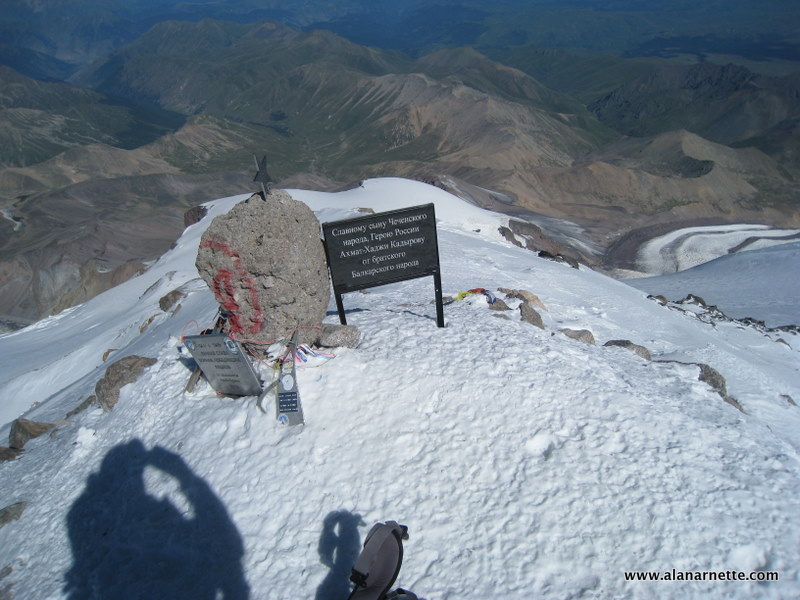
Elbrus Summit

Welcome to my limited series on climbing the Seven Summits. For eight weeks, I’ll drop a new episode discussing one of the 7 Summits in detail. Today is Episode 6, Elbrus, Russia. #7summits

Of all the Seven Summits, Elbrus offers a unique cultural experience as it lies in Russia. Thus, it is the highest peak in Europe and is considered an active volcano. Mont Blanc is second and highest in Western Europe. The Ukraine war has discouraged many climbers from going there, but a few still make it, including Americans. However, the US State Department strongly advises Americans against entering Russia for any reason.

Overview

Mount Elbrus is an extinct volcano in the Caucasus Main Range, the European border with Asia in southern Russia between the Black and Caspian seas. It has two main summits: the western summit at 18,513’/5642m and the eastern summit at 18,442’/5621m. A Russian army team was the first to ascend the West Summit in 1829, and an English team at the East Summit in 1874.

The regular climbing season is from May to September. The climb is relatively short by 7 Summit standards, taking less than a week at most. I climbed from the north side using a base camp and a high camp, where we launched the summit bid. This side offers more of a climbing experience and is significantly less crowded.

The 7 Summits idea was hatched and first accomplished by American Dick Bass. He started with six summits in 1983: #Aconcagua, #Kilimanjaro, #Elbrus, #Denali, #Vinson and #Kosciuszko. Then, with guide David Breashears, he became the oldest person, 55 at the time, to summit #Everest in 1985. Canadian Patrick Morrow became the first to summit all seven with Carstensz in addition to Kosciuszko in 1986. Italy mountaineering legend Reinhold Messner summited all the peaks without supplemental oxygen, a first, and completed the task in 1986. #7summits

Episodes will drop each week:

September 15: Introduction
September 22: Mt. Kosciuszko, Australia – 7,310/2228m
September 29: Mt. Blanc, France/Italy – 15,771’/4807m
October 6: Vinson, Antarctica – 16,067/4897m
October 13: Carstensz Pyramid (Puncak Jaya), New Guinea – 16,023/4884m
October 20: Elbrus, Russia – 18,513/5642m
October 27: Kilimanjaro, Africa – 19,340/5896m
November 3: Denali, Alaska – 20,320/6194m
November 10: Aconcagua, Argentina – 22,902/6960m
November 17: Everest, Nepal/Tibet – 29,035/8850m
Podcast Series: 7 Summits Eposide 5–Carstensz Pyramid (Puncak Jaya), New Guinea

Carstensz Pyramid

Welcome to my new limited series on climbing the Seven Summits. For the next eight weeks, I’ll drop a new episode discussing one of the 7 Summits in detail. Today is Episode 5, Carstensz Pyramid

Of all the Seven Summits, Carstensz Pyramid, aka Puncak Jaya, in New Guinea is undoubtedly the most exotic and technical to climb. It’s also part of the “list” discussion. Are there seven or eight “Seven Summits?” But just getting there can be the real challenge. The Freeport Mining company controls the area and employs 12,000 people. They often close roads, detain climbers trespassing on their land, and labor strikes can bring the entire area to a halt.

Kosciuszko and Carstensz Pyramid vie, for which is the seventh of the Seven Summits. Most people who want to climb all seven climb all eight! Carstensz Pyramid (Puncak Jaya), New Guinea, is 16,023 feet/4884 meters high. The mountain is in the Sudirman Range of the highlands of Mimika Regency, Central Papua, Indonesia. It’s expensive, in the mid-$20,000 range for the 2024 season.

The 7 Summits idea was hatched and first accomplished by American Dick Bass. He started with six summits in 1983: Aconcagua, Kilimanjaro, Elbrus, Denali, Vinson and Kosciuszko. Then, with guide David Breashears, he became the oldest person, 55 at the time, to summit Everest in 1985. Canadian Patrick Morrow became the first to summit all seven with Carstensz in addition to Kosciuszko in 1986. Italy mountaineering legend Reinhold Messner summited all the peaks without supplemental oxygen, a first, and completed the task in 1986. #7summits

Episodes will drop each week:

September 15: Introduction
September 22: Mt. Kosciuszko, Australia – 7,310/2228m
September 29: Mt. Blanc, France/Italy – 15,771’/4807m
October 6: Vinson, Antarctica – 16,067/4897m
October 13: Carstensz Pyramid (Puncak Jaya), New Guinea – 16,023/4884m
October 20: Elbrus, Russia – 18,513/5642m
October 27: Kilimanjaro, Africa – 19,340/5896m
November 3: Denali, Alaska – 20,320/6194m
November 10: Aconcagua, Argentina – 22,902/6960m
November 17: Everest, Nepal/Tibet – 29,035/8850m
Podcast Series: 7 Summits Eposide 4–Antartica’s Vinson Massif

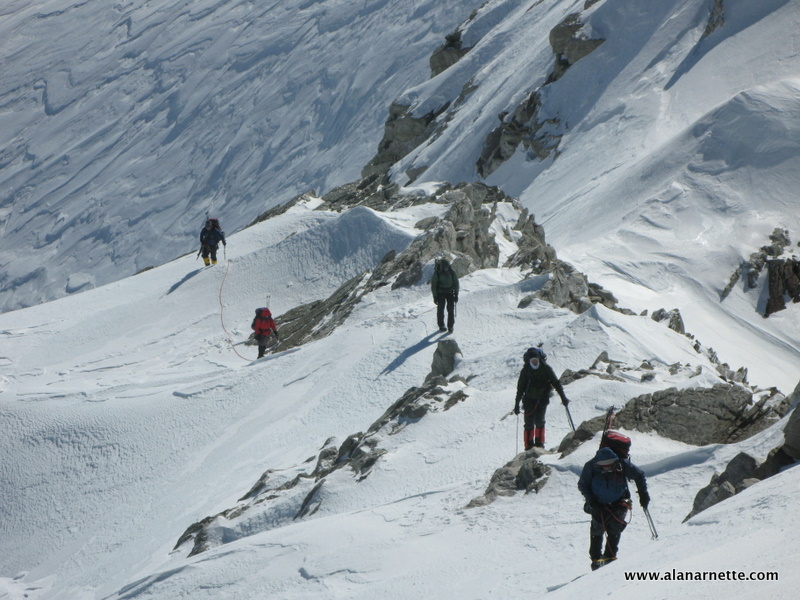
Team Working the Ridge to Vinson's Summit

Welcome to my new limited series on climbing the Seven Summits. For the next eight weeks, I’ll drop a new episode discussing one of the 7 Summits in detail. Today is Episode 4, Antarctica’s Vinson Massif.

The Vinson Massif is 16,050 feet/4892 meters high. The elevation gain from Vinson Base Camp to the summit is 9,160 feet/2792 meters, all on snow and ice-covered terrain. The primary issue most climbers face is the endless winds. Snow walls built from snow blocks carved out of the landscape are built at each camp to protect tents from the winds. Vision has a short climbing season on the Antarctica continent from mid-November to the end of January. It’s also among the Seven’s most expensive, in the mid $50,000 range for 2024. #7Summits

The 7 Summits idea was hatched and first accomplished by American Dick Bass. He started with six summits in 1983: Aconcagua, Kilimanjaro, Elbrus, Denali, Vinson and Kosciuszko. Then, with guide David Breashears, he became the oldest person, 55 at the time, to summit Everest in 1985. Canadian Patrick Morrow became the first to summit all seven with Carstensz in addition to Kosciuszko in 1986. Italy mountaineering legend Reinhold Messner summited all the peaks without supplemental oxygen, a first, and completed the task in 1986. #7summits

Episodes will drop each week:

September 15: Introduction
September 22: Mt. Kosciuszko, Australia – 7,310/2228m
September 29: Mt. Blanc, France/Italy – 15,771’/4807m
October 6: Vinson, Antarctica – 16,067/4897m
October 13: Carstensz Pyramid (Puncak Jaya), New Guinea – 16,023/4884m
October 20: Elbrus, Russia – 18,513/5642m
October 27: Kilimanjaro, Africa – 19,340/5896m
November 3: Denali, Alaska – 20,320/6194m
November 10: Aconcagua, Argentina – 22,902/6960m
November 17: Everest, Nepal/Tibet – 29,035/8850m

Podcast Series: 7 Summits Eposide 3–Mont Blanc

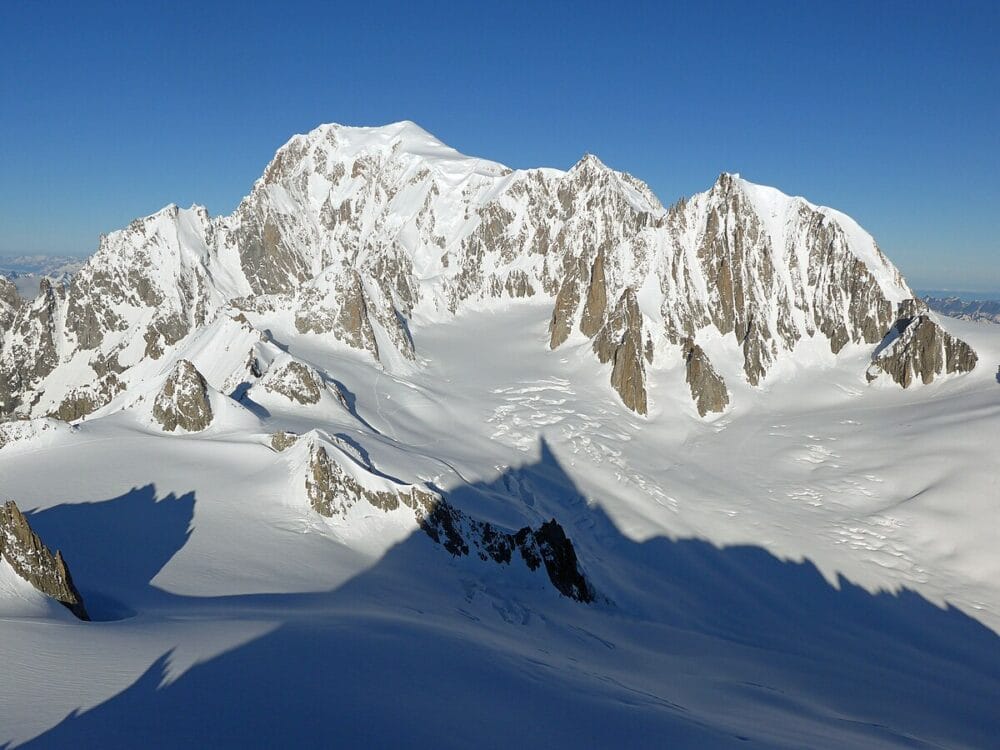
Mont Blanc

Welcome to my new limited series on climbing the Seven Summits. For the next eight weeks, I’ll drop a new episode discussing one of the 7 Summits in detail. Today is eposide 3 Mt. Blanc.

OK, I know what you are thinking, “Alan, Mont Blanc is not one of the Seven Summits!” Yeah, I know, but hear me out. On the border between France and Italy, Mt. Blanc stands at 15,771 feet or 4807 meters high, putting it between Kościuszko and Carstensz Pyramid on the “list(s).”

Month Blanc is a vast massif with three primary subpeaks: Mont Maudit, Mont Blanc du Tacul, and Aiguille du Midi.  Most people find Mont Blanc a serious climb given the objective dangers, such as crevasses, rockfall and avalanches, but it is also a cold and windy peak. While it is usually climbed in one day, it’s a long day of ten to fifteen hours, gaining up to 5,413 feet or 1,650 meters on most routes. Summer is the most popular time to climb, but as in 2022, it can be brutally hot. If you climb in winter, you must be a highly experienced mountaineer.

The 7 Summits idea was hatched and first accomplished by American Dick Bass. He started with six summits in 1983: Aconcagua, Kilimanjaro, Elbrus, Denali, Vinson and Kosciuszko. Then, with guide David Breashears, he became the oldest person, 55 at the time, to summit Everest in 1985. Canadian Patrick Morrow became the first to summit all seven with Carstensz in addition to Kosciuszko in 1986. Italy mountaineering legend Reinhold Messner summited all the peaks without supplemental oxygen, a first, and completed the task in 1986. #7summits

Episodes will drop each week:

September 15: Introduction
September 22: Mt. Kosciuszko, Australia – 7,310/2228m
September 29: Mt. Blanc, France/Italy – 15,771’/4807m
October 6: Vinson, Antarctica – 16,067/4897m
October 13: Carstensz Pyramid (Puncak Jaya), New Guinea – 16,023/4884m
October 20: Elbrus, Russia – 18,513/5642m
October 27: Kilimanjaro, Africa – 19,340/5896m
November 3: Denali, Alaska – 20,320/6194m
November 10: Aconcagua, Argentina – 22,902/6960m
November 17: Everest, Nepal/Tibet – 29,035/8850m

Podcast Series: 7 Summits Eposide 2–Kościuszko

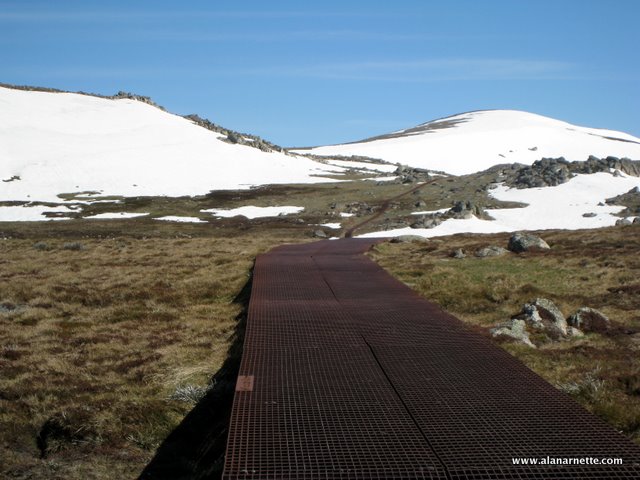
Metal Boardwalk to Kosciuszko

Welcome to my new limited series on climbing the Seven Summits. Episode 1 is an introduction plus a brief update on the Autumn climbing activity in Nepal and Tibet. For the next eight weeks, I’ll drop a new episode discussing one of the 7 Summits in detail. Today is eposide 2 Mt. Kościuszko.

Australia’s Kościuszko (7,310’/2228m), located in the Snowy Mountains, is the lowest of the 7 Summits but is perhaps the most controversial. First, there is the pronunciation, then there is the debate about how it compares to other high peaks in Oceania (is New Zealand continent?) ), and last is the relative ease of this “hill” located next to a ski resort. In any event, today, it’s considered one of the seven on the Bass list, so most people seeking the 7 Summits will tick the box. The first summit was in 1840 by the Polish explorer Paul Strzelecki. I assume the Aborigines or the Morano had a crack centuries earlier, but I could be wrong, as many Indigenous people treat mountains as sacred and not to be climbed.

The Seven Summits, aka 7S, represent the highest point on each of the seven continents. However, as with most things in mountaineering, there is controversy. From a geological viewpoint, there are only six continents on Earth: Africa, Antarctica, Australia, Eurasia, South America, and North America. Europe is considered a peninsula of the Eurasia continental platform and is not an actual physical continent. However, from a political perspective, Europe is regarded as a continent; thus, Elbrus (18,513’/5642m), located on the border with Asia in southern Russia, represents Europe and not Mont Blanc (15,771’/4807m), which lies in the Alps on the border of France and Italy.

The 7 Summits idea was hatched and first accomplished by American Dick Bass. He started with six summits in 1983: Aconcagua, Kilimanjaro, Elbrus, Denali, Vinson and Kosciuszko. Then, with guide David Breashears, he became the oldest person, 55 at the time, to summit Everest in 1985. Canadian Patrick Morrow became the first to summit all seven with Carstensz in addition to Kosciuszko in 1986. Italy mountaineering legend Reinhold Messner summited all the peaks without supplemental oxygen, a first, and completed the task in 1986. #7summits

Episodes will drop each week:

September 15: Introduction
September 22: Mt. Kosciuszko, Australia – 7,310/2228m
September 29: Mt. Blanc, France/Italy – 15,771’/4807m
October 6: Vinson, Antarctica – 16,067/4897m
October 13: Carstensz Pyramid (Puncak Jaya), New Guinea – 16,023/4884m
October 20: Elbrus, Russia – 18,513/5642m
October 27: Kilimanjaro, Africa – 19,340/5896m
November 3: Denali, Alaska – 20,320/6194m
November 10: Aconcagua, Argentina – 22,902/6960m
November 17: Everest, Nepal/Tibet – 29,035/8850m

Podcast Series: Introducing The 7 Summits

Welcome to my new limited series on climbing the Seven Summits. Episode 1 is an introduction plus a brief update on the Autumn climbing activity in Nepal and Tibet. For the next eight weeks, I’ll drop a new episode discussing one of the 7 Summits in detail.

The Seven Summits, aka 7S, represent the highest point on each of the seven continents. However, as with most things in mountaineering, there is controversy. From a geological viewpoint, there are only six continents on Earth: Africa, Antarctica, Australia, Eurasia, South America, and North America. Europe is considered a peninsula of the Eurasia continental platform and is not an actual physical continent. However, from a political perspective, Europe is regarded as a continent; thus, Elbrus (18,513’/5642m), located on the border with Asia in southern Russia, represents Europe and not Mont Blanc (15,771’/4807m), which lies in the Alps on the border of France and Italy.

The 7 Summits idea was hatched and first accomplished by American Dick Bass. He started with six summits in 1983: Aconcagua, Kilimanjaro, Elbrus, Denali, Vinson and Kosciuszko. Then, with guide David Breashears, he became the oldest person, 55 at the time, to summit Everest in 1985. Canadian Patrick Morrow became the first to summit all seven with Carstensz in addition to Kosciuszko in 1986. Italy mountaineering legend Reinhold Messner summited all the peaks without supplemental oxygen, a first, and completed the task in 1986. #7summits

Episodes will drop each week:

September 15: Introduction
September 22: Mt. Kosciuszko, Australia – 7,310/2228m
September 29: Mt. Blanc, France/Italy – 15,771’/4807m
October 6: Vinson, Antarctica – 16,067/4897m
October 13: Carstensz Pyramid (Puncak Jaya), New Guinea – 16,023/4884m
October 20: Elbrus, Russia – 18,513/5642m
October 27: Kilimanjaro, Africa – 19,340/5896m
November 3: Denali, Alaska – 20,320/6194m
November 10: Aconcagua, Argentina – 22,902/6960m
November 17: Everest, Nepal/Tibet – 29,035/8850m