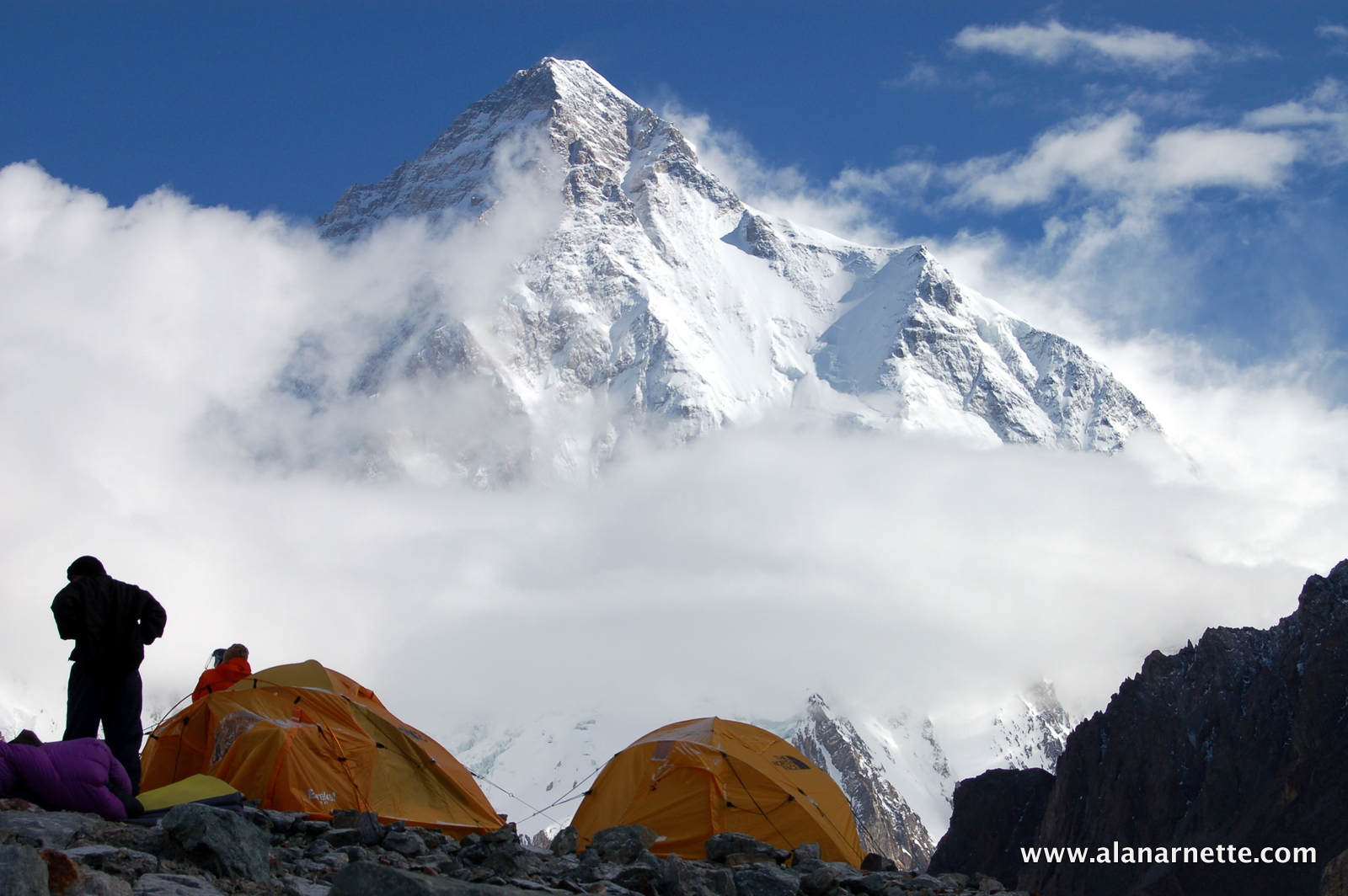
K2 Summer 2022: Weekend Update July 30, 2022 – A Summer of Summits
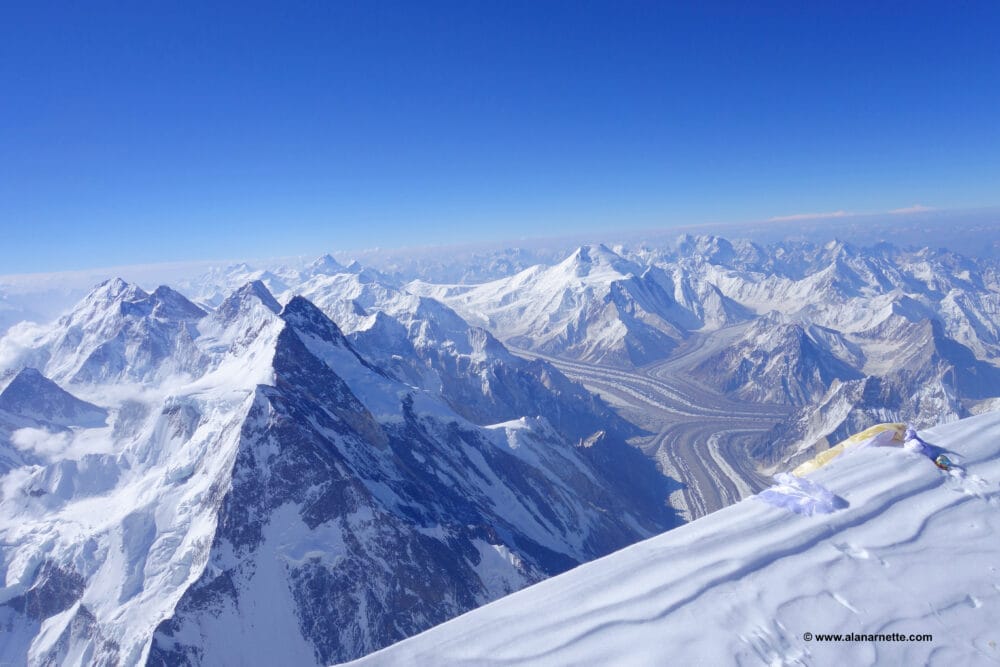
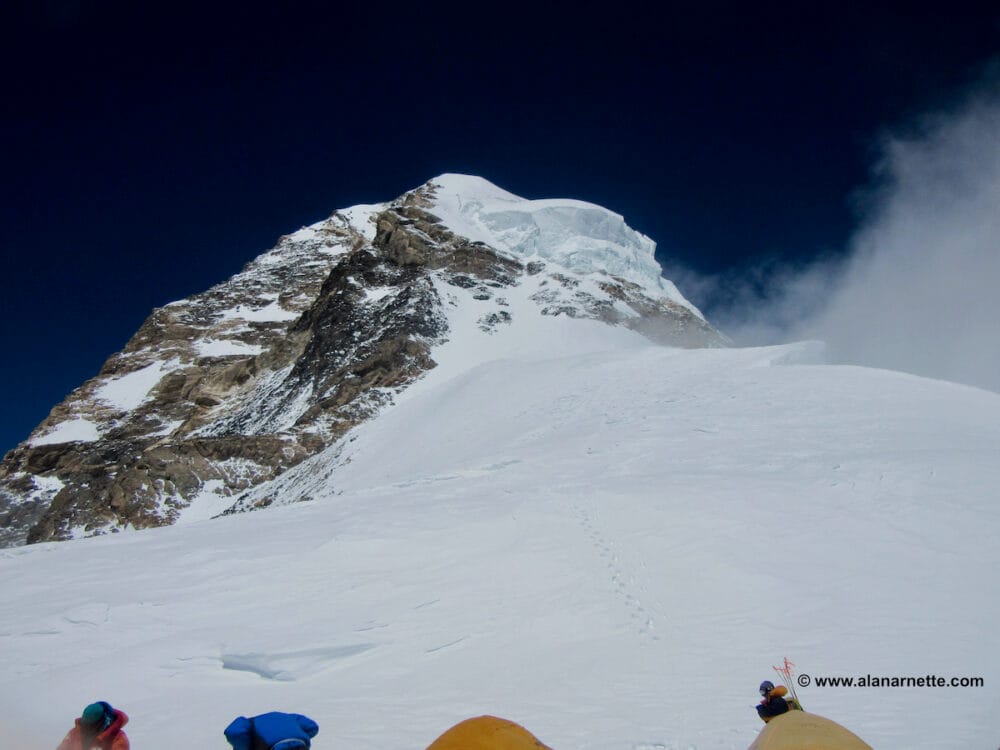
K2 Summit View into Pakistan. © www.alanarnette.com

And the summits keep going with many firsts, records, and races to the top thanks to this summer’s, and for that fact, this spring’s, unusually stable weather across the Himalayas. It’s not uncommon for climbers to have three, four, or even five, or more 8000er summits this year. Let’s run a few down with more to come before it’s all over.

Big Picture

The season is winding down. I think the action is over on Nanga Parbat. The snow conditions were getting too dangerous a couple of weeks ago, and several highly skilled and experienced climbers abandoned their efforts. On Gasherbrum II, there are a few climbers, mostly the record seekers, still to make attempts, the same for Gasherbrum I.

Several K2 climbers are moving to Broad Peak to attempt their double. And on K2, you never know for sure, but I think it will be quiet until winter when someone will try. Well over 90% of the K2 summits occur in July. Still, some seep into mid-August, and there have been a couple in October, but that was decades ago when the weather was much different.

Note, expect the same for Everest – a winter, no O’s, perhaps with a “solo” label even though attached to a commercial team for logistics. Life has become interesting, and I’m not sure in a good way.

This year, 2022, the weather has been good overall. Occasionally, heavy snow storms have offered challenges to teams, but on the whole, most people will not claim they didn’t summit because of bad weather. As of July 30, I estimate 190 K2 summits and three deaths or 1.6%. I have reached out to Pakistani Officials for an official count.
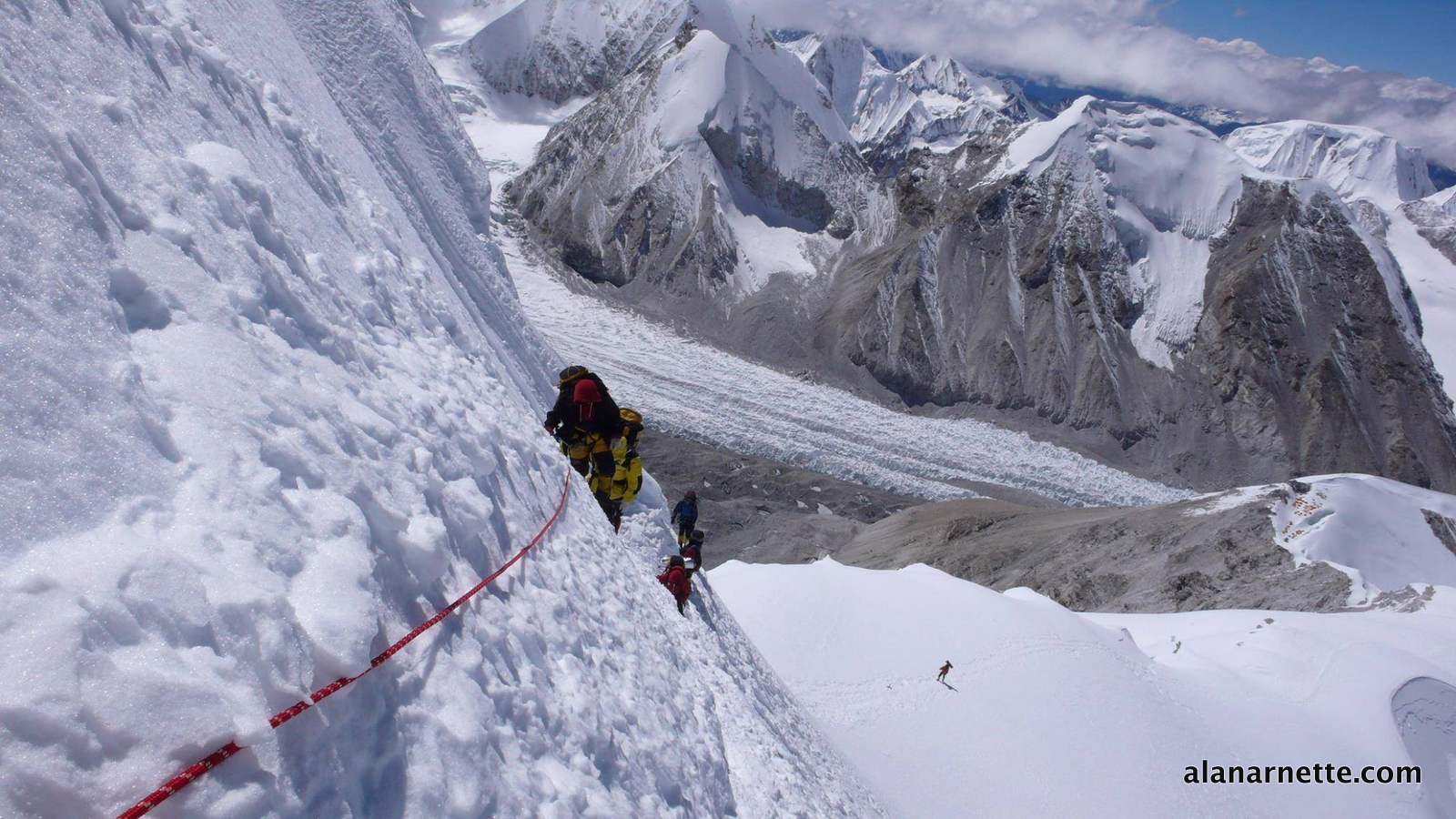
K2 Summer 2022: Weekend Update July 24, 2022 – Summiting Like Never Before

K2 Traverse

Well, the K2 climbers pulled it off. Congratulations to the 150++ who summited and especially to the Sherpas who fixed the lines to the summit. The weather cooperated, and there were limited problems, albeit with one death and one K2 climber is currently missing. We are approaching 200 K2 summits.

Big Picture Summits Continue, Missing K2 Climber

Several media outlets report that Canadian Richard Cartier, 61, is missing while descending from a rotation to lower Camp 4. He was last seen between C2 and C1 by teammates. A search is underway. They had mentioned using the Cesen route but were on the Abruzzi when he disappeared.

At least 10 more K2 summits brought the total ever closer to 200. Summit Karakorum reports that Abid Asad Sadpara, the nephew of the late Ali Sadpara, who died on K2 last year, made the top with no O’s. Also, Paul Etherdge, Peter ? and Muhammad Hussain Pakista. Makalu Extreme team reports summits from French alpinists Pascal Claude France and Christophe Jean France with Pasang Lama and Pasang Dorjee Sherpa.

This has been a great year across all the 8000ers for female climbers. Adding to the K2 list is Spanish (Andalusian) climber Lina Quesada. She is joined by these female summiteers this season: Andorian Stefi Troguet, Taiwanese Grace Tseng, Chinese He Jing, Pakistanis Naila Kiani and Samina Baig, plus Iranian Afsaneh Hesamifard and UAE’s Saeed Almemari. Also, American Sarah Stratton made the top.

K2 Summer 2022: Weekend Update July 16: K2 Summer 2022: Summit Push Drama

View from Traditional Camp 4 on K2.

This has been a ‘lay-low’ week with storms hitting the higher elevations of Pakistan’s 8000ers. Yet, there were thwarted attempts. Many teams are finalizing preparations for their summit pushes beginning soon in what could be very short weather windows, but the predicted conflict with so many people has begun.

Big Picture – The Summit Rush

With this odd statement, “We are not ready for summit push but we will give our best as always.” teams are leaving base camp for their summit pushes at least a week, if not two, earlier than in previous seasons. The leaders must think the gamble is justified.

I’m estimating that around 125 people who had K2 permits are no longer going to the summit, and most have already given up. So that leaves 250-350 people left to attempt. I hear of serious disagreements among the teams led by egos pushing to go and some pushing to wait or just jostling for a slot that they feel is less crowded and gives their team a better chance.

As I said before, with so many people, it will take communication, cooperation, and comprise to avoid, or at least minimize, tragedy this season. Currently, it appears none of those three are in play.

K2 Summer 2022: Weekend Update July 10: Deaths, Rescues and Summits

K2

It’s been a dramatic week in the Pakistani mountains. We saw summits, climbers in trouble, summits on a couple of 8000ers, and tragically two deaths. The weather is currently keeping the K2 teams at base camp but look for a rush starting later this next week—all in all, a normal season thus far, despite the record number of climbers.

Big Picture – Will 2022 K2 be like Everest 2019?

As I’ve mentioned multiple times, Pakistan has taken a page out of Nepal’s tourism book and issued permits to anyone and everyone this season. Some reports say 1,400, others closer to 1,000, but there are at least twice the number of tourists in the Northern Terorities than ever before.

Among these drivers of these crowds is pent-up demand from COVID and aggressive marketing from five Nepali operators: 8K Expeditions, Elite Expeditions, Imaging Nepal, Pioneer Adventures, and Seven Summits Treks. Combined, these account for 253 people – clients and support of mostly Sherpas from Nepal. However, the western operators are also cashing in with Madison Mountaineering and Furtenbach Adventures, accounting for 54 spots on the mountains.

Now, is this too many people spread across five 8000-meter peaks? The answer is it depends. Taking Everest as an example, these days, we see 300, 500, or even 700 people climbing from the Nepal side each spring season. This year, 2022 (click to read my analysis), I estimate 325 clients supported by 500 Sherpas were on the Nepal side and 640 summited Everest with no serious crowding issues. These are huge mountains that can accommodate lots of people – spread out.

The problem occurs when there are only a few suitable weather days to summit, i.e., winds under 30 mph. In 2019 (click to read my analysis,) we saw a nightmare situation with only three good days for 600 people; thus, long lines from the South Summit to the Summit resulted in 660 summits and nine deaths. Note that in my judgment, four of the eleven were ‘crowd-related’ deaths and an additional seven with ‘low-cost’ operators.

So just looking at K2 because it is the steepest of Pakastani’s 8000ers with the smallest spots for tents at the traditional camps, will the estimated 250 to 350 climbers experience an Everest 2019 scenario, especially at the traditional crowded spots like House’s Chimney, and the Bottleneck? Well, if K2 behaves like it traditionally has with short weather windows between strong wind and snow storms, yes. But, if teams can coordinate summit pushes and tent space, things might go smoother than expected. I’ve been told teams are communicating well and sharing tents thus far. If this turns out to be true, look for many leaders to jump in front of the summit parade and claim it as their own.

On a side note, it appears communication at least using the 4G mobile network, is back up and running; no word on the mysterious satellite disruptions. Also, the overall weather this season has been significantly warmer or should I say milder than usual, making for some sloshy climbing conditions. Cleary climate change is having an impact on the world’s mountains. The last time I checked, snow does not like warm temperatures and it brings out the rocks!

K2 Summer 2022: Weekend Update July 3: Karakorum Summits

K2

Several strong Sherpas from various Nepali operators fixed the ropes on Nanga Parbat over the past few days thus facilitating a handful of clients to reach the summit. In total, there were 18 summits consisting of six members supported by 12 Sherpas, a 1:2 ratio of support. Pakistan issued 100 (member with support) permits this season; thus, look for more activity on Nanga.

Big Picture

The 2022 summer season is moving along with few, if any, issues reported by the teams. Most are talking about getting the fixed ropes put in by their super-strong Sherpas to the low-medium altitude camps while on Nanga, we are using a few summits. A shortage of porters and general support due to the record number of permits issued have delayed some teams from reaching their base camps.

As usual in Pakistan, the weather is variable with great, then tough days. Nothing out of the ordinary. Most of the commercial teams are taking the usual trade routes. A few independent climbers are taking less-traveled routes, but overall, this summer, climbing in Pakistan looks a lot like climbing in Nepal. Not a huge surprise since most of the teams are led by large Nepali operators using their proven formula of high oxygen rates with strong Sherpa support.

As for summits on the most-watched K2, don’t expect them for another couple of weeks at the earliest. Most K2 summits occur between July 25 and August 1.

Everest 2022: Weekend Update May 15 – Summits, Summits, Summits in Great Weather

We saw hundreds of people summit Mt. Everest with almost unprecedented weather this past week. And from all indications, summits will continue into next week, albeit at a slower rate, with the exception of Tuesday, May 17th, when the winds will spike over 30 mph/50kph. However, at this rate, this season could be over soon.

No on-mountain deaths or rescues were reported, but we may still learn of difficulties. Overall, the weather was ideal, with low winds and temperatures around 0F/-20C.

Big Picture

We have what I’d consider a ‘normal’ season for once in a long, long time. Of course, it’s mostly due to the lingering impact of COVID – the Chinese closed its border, and India was hesitant to sponsor the droves of young climbers who have filled the slopes for the last several years. But the big deal is the missing Jet Stream resulting in this period of low summit winds, thus allowing team after team to thoughtfully plan their attack.

So how to sum up the week and season thus far – two words – low drama. Well, at least what we know of. Sadly, today’s social-media-driven mountaineering has turned into a public relations game where no one will admit they messed up, from clients to guides to anyone. Thus it’s hard to know if a helicopter flight was a rescue or a resupply of oxygen at a high camp.

We have seen many summits. I estimate 341 from the Nepal side made up of 140 members supported by 201 Sherpas, or high-altitude workers of other ethnicities. And on the Tibet side, 50. There have been many, many people who fought a good fight but came up short. Sometimes due to lack of preparation, others from illness, personality conflicts, logistics miscues, or just bad luck. It’s all part of climbing an 8000-meter peak. Most will try again.

There have been a plethora of ‘records.’ Many of these are from a person who is the first from their country to the summit, and then others have a personal story that they view as a record. We’ve also seen an unusual linking of multiple 8000-meter peaks.

Again well done, but we need to look deeper into style. By that, I mean what most veteran climbers call “fair play.” Use of oxygen starting at what camp? Level of support to break trail? Use of helicopters to shortcut treks to base camp. Did they reach the true summit or a false one? All of these are fair questions in my mind. And, to be clear, they don’t invalidate a genuine summit but only put the achievement into perspective, especially if the climber claims a ‘record.’ Many of these claims are solid, and the individual deserves the praise they receive back home.

I’ll try to recap all the records in my annual season summary without comment. 🙂 However, records are not in my lane, so I leave it to Guinness and the Himalayan Database to vet these claims. But congratulations to those who made X summits in Y days or were the first from your universe. I’m sure that 2023 will be a record year on Everest, especially when (if) China reopens its side. 

So with all of this, teams are taking their time and spreading out their pushes so as to minimize but eliminate the ques in the traditional bottlenecks.