Podcast Series: 7 Summits Eposide 5–Carstensz Pyramid (Puncak Jaya), New Guinea

Carstensz Pyramid

Welcome to my new limited series on climbing the Seven Summits. For the next eight weeks, I’ll drop a new episode discussing one of the 7 Summits in detail. Today is Episode 5, Carstensz Pyramid

Of all the Seven Summits, Carstensz Pyramid, aka Puncak Jaya, in New Guinea is undoubtedly the most exotic and technical to climb. It’s also part of the “list” discussion. Are there seven or eight “Seven Summits?” But just getting there can be the real challenge. The Freeport Mining company controls the area and employs 12,000 people. They often close roads, detain climbers trespassing on their land, and labor strikes can bring the entire area to a halt.

Kosciuszko and Carstensz Pyramid vie, for which is the seventh of the Seven Summits. Most people who want to climb all seven climb all eight! Carstensz Pyramid (Puncak Jaya), New Guinea, is 16,023 feet/4884 meters high. The mountain is in the Sudirman Range of the highlands of Mimika Regency, Central Papua, Indonesia. It’s expensive, in the mid-$20,000 range for the 2024 season.

The 7 Summits idea was hatched and first accomplished by American Dick Bass. He started with six summits in 1983: Aconcagua, Kilimanjaro, Elbrus, Denali, Vinson and Kosciuszko. Then, with guide David Breashears, he became the oldest person, 55 at the time, to summit Everest in 1985. Canadian Patrick Morrow became the first to summit all seven with Carstensz in addition to Kosciuszko in 1986. Italy mountaineering legend Reinhold Messner summited all the peaks without supplemental oxygen, a first, and completed the task in 1986. #7summits

Episodes will drop each week:

September 15: Introduction
September 22: Mt. Kosciuszko, Australia – 7,310/2228m
September 29: Mt. Blanc, France/Italy – 15,771’/4807m
October 6: Vinson, Antarctica – 16,067/4897m
October 13: Carstensz Pyramid (Puncak Jaya), New Guinea – 16,023/4884m
October 20: Elbrus, Russia – 18,513/5642m
October 27: Kilimanjaro, Africa – 19,340/5896m
November 3: Denali, Alaska – 20,320/6194m
November 10: Aconcagua, Argentina – 22,902/6960m
November 17: Everest, Nepal/Tibet – 29,035/8850m

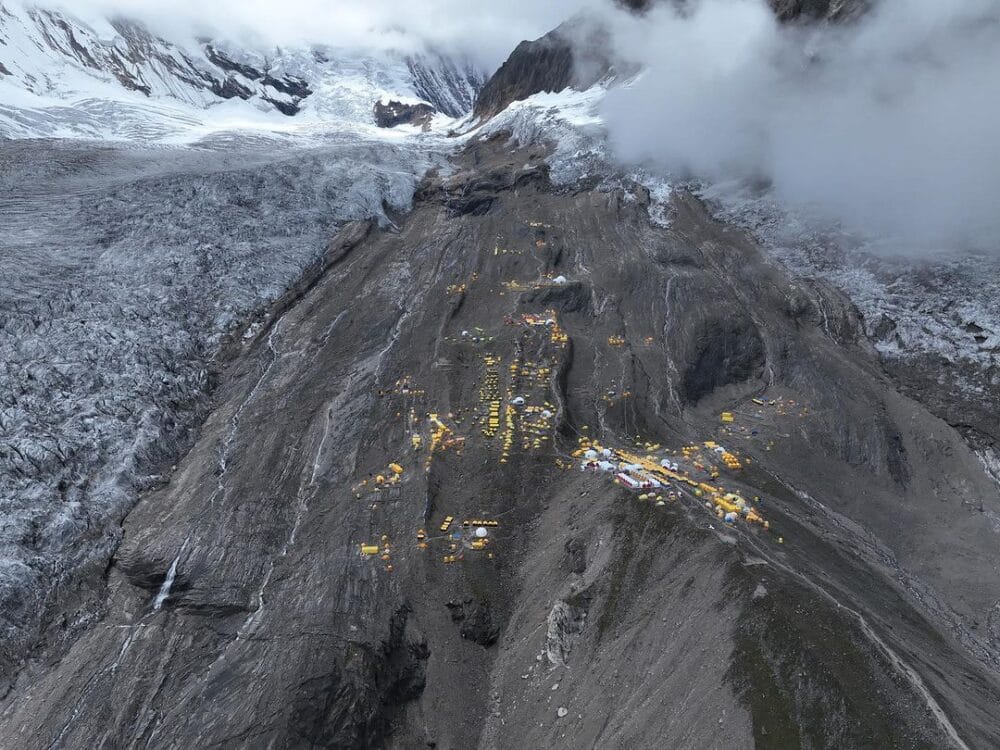
Remains thought to be Andrew ‘Sandy’ Irvine found on Everest

Photographer and filmmaker Jimmy Chin was leading a National Geographic team below the north face of Mount Everest in September when they discovered a boot and sock embroidered with “A.C. Irvine,” believed to belong to the lost mountaineer Andrew Comyn Irvine. PHOTOGRAPH BY NATIONAL GEOGRAPHIC/ERICH ROEPKE

One of the most enduring mysteries of mountaineering, or perhaps in all sports, was the 1924 British expedition with George Mallory and Andrew Sandy Irvine. It’s most notable for whether they summited or not. If they did summit, that would precede Tenzing and Hilary by 29 years. Mallory’s body was found in 1999, but there was no proof that he died going up or coming down, thus the importance of finding the camera and potential photos of a summit.

Now we have more clues. This past Autumn 2024, a National Geographic team hoping to ski the Hornbein Couiler on the Tibet side of Everest had to abandon their project due to weather and timing. Instead, once they got home, they told the world that they discovered a leather hobnail boot containing what they thought was Sandy Irvine’s foot. An attached sock has a tag sewn onto it reading “A.C. Irvine.” They found it at the base of a glacier, where recent warm temperatures may have released its icy grip. They took a DNA sample for positive identification with the family’s permission.

Podcast Series: 7 Summits Eposide 4–Antartica’s Vinson Massif

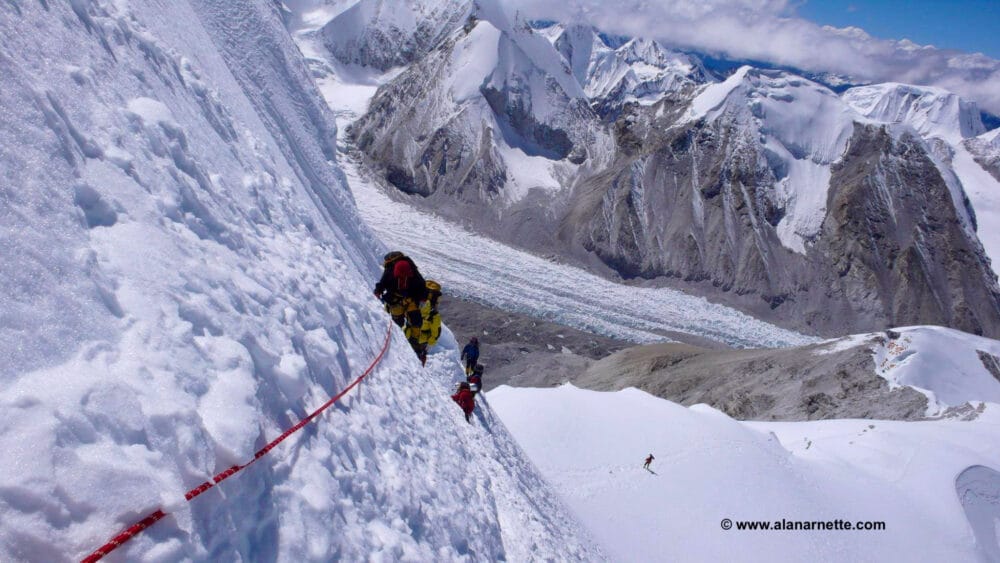
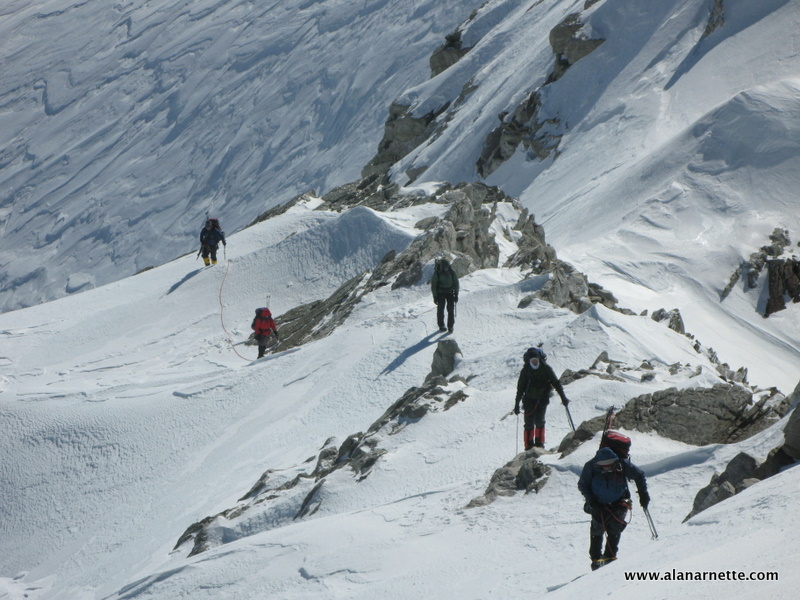
Team Working the Ridge to Vinson's Summit

Welcome to my new limited series on climbing the Seven Summits. For the next eight weeks, I’ll drop a new episode discussing one of the 7 Summits in detail. Today is Episode 4, Antarctica’s Vinson Massif.

The Vinson Massif is 16,050 feet/4892 meters high. The elevation gain from Vinson Base Camp to the summit is 9,160 feet/2792 meters, all on snow and ice-covered terrain. The primary issue most climbers face is the endless winds. Snow walls built from snow blocks carved out of the landscape are built at each camp to protect tents from the winds. Vision has a short climbing season on the Antarctica continent from mid-November to the end of January. It’s also among the Seven’s most expensive, in the mid $50,000 range for 2024. #7Summits

The 7 Summits idea was hatched and first accomplished by American Dick Bass. He started with six summits in 1983: Aconcagua, Kilimanjaro, Elbrus, Denali, Vinson and Kosciuszko. Then, with guide David Breashears, he became the oldest person, 55 at the time, to summit Everest in 1985. Canadian Patrick Morrow became the first to summit all seven with Carstensz in addition to Kosciuszko in 1986. Italy mountaineering legend Reinhold Messner summited all the peaks without supplemental oxygen, a first, and completed the task in 1986. #7summits

Episodes will drop each week:

September 15: Introduction
September 22: Mt. Kosciuszko, Australia – 7,310/2228m
September 29: Mt. Blanc, France/Italy – 15,771’/4807m
October 6: Vinson, Antarctica – 16,067/4897m
October 13: Carstensz Pyramid (Puncak Jaya), New Guinea – 16,023/4884m
October 20: Elbrus, Russia – 18,513/5642m
October 27: Kilimanjaro, Africa – 19,340/5896m
November 3: Denali, Alaska – 20,320/6194m
November 10: Aconcagua, Argentina – 22,902/6960m
November 17: Everest, Nepal/Tibet – 29,035/8850m
Podcast Series: 7 Summits Eposide 3–Mont Blanc

Mont Blanc

Welcome to my new limited series on climbing the Seven Summits. For the next eight weeks, I’ll drop a new episode discussing one of the 7 Summits in detail. Today is eposide 3 Mt. Blanc.

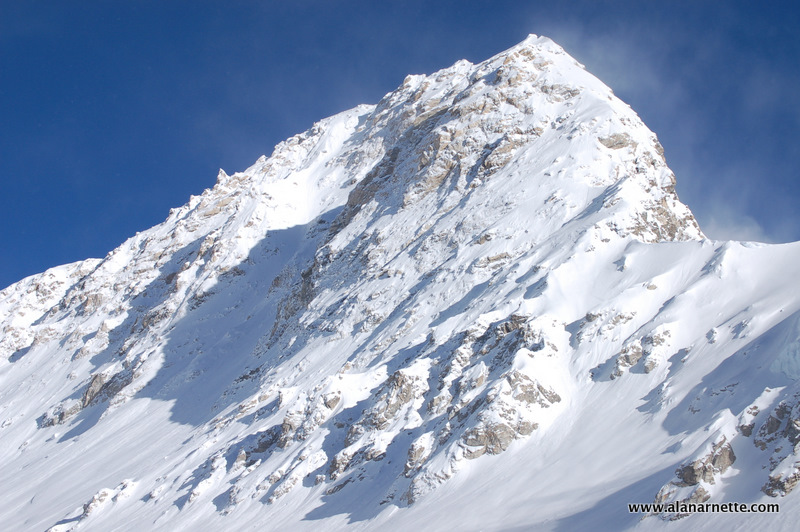
OK, I know what you are thinking, “Alan, Mont Blanc is not one of the Seven Summits!” Yeah, I know, but hear me out. On the border between France and Italy, Mt. Blanc stands at 15,771 feet or 4807 meters high, putting it between Kościuszko and Carstensz Pyramid on the “list(s).”

Month Blanc is a vast massif with three primary subpeaks: Mont Maudit, Mont Blanc du Tacul, and Aiguille du Midi.  Most people find Mont Blanc a serious climb given the objective dangers, such as crevasses, rockfall and avalanches, but it is also a cold and windy peak. While it is usually climbed in one day, it’s a long day of ten to fifteen hours, gaining up to 5,413 feet or 1,650 meters on most routes. Summer is the most popular time to climb, but as in 2022, it can be brutally hot. If you climb in winter, you must be a highly experienced mountaineer.

The 7 Summits idea was hatched and first accomplished by American Dick Bass. He started with six summits in 1983: Aconcagua, Kilimanjaro, Elbrus, Denali, Vinson and Kosciuszko. Then, with guide David Breashears, he became the oldest person, 55 at the time, to summit Everest in 1985. Canadian Patrick Morrow became the first to summit all seven with Carstensz in addition to Kosciuszko in 1986. Italy mountaineering legend Reinhold Messner summited all the peaks without supplemental oxygen, a first, and completed the task in 1986. #7summits

Episodes will drop each week:

September 15: Introduction
September 22: Mt. Kosciuszko, Australia – 7,310/2228m
September 29: Mt. Blanc, France/Italy – 15,771’/4807m
October 6: Vinson, Antarctica – 16,067/4897m
October 13: Carstensz Pyramid (Puncak Jaya), New Guinea – 16,023/4884m
October 20: Elbrus, Russia – 18,513/5642m
October 27: Kilimanjaro, Africa – 19,340/5896m
November 3: Denali, Alaska – 20,320/6194m
November 10: Aconcagua, Argentina – 22,902/6960m
November 17: Everest, Nepal/Tibet – 29,035/8850m
Podcast Series: 7 Summits Eposide 2–Kościuszko

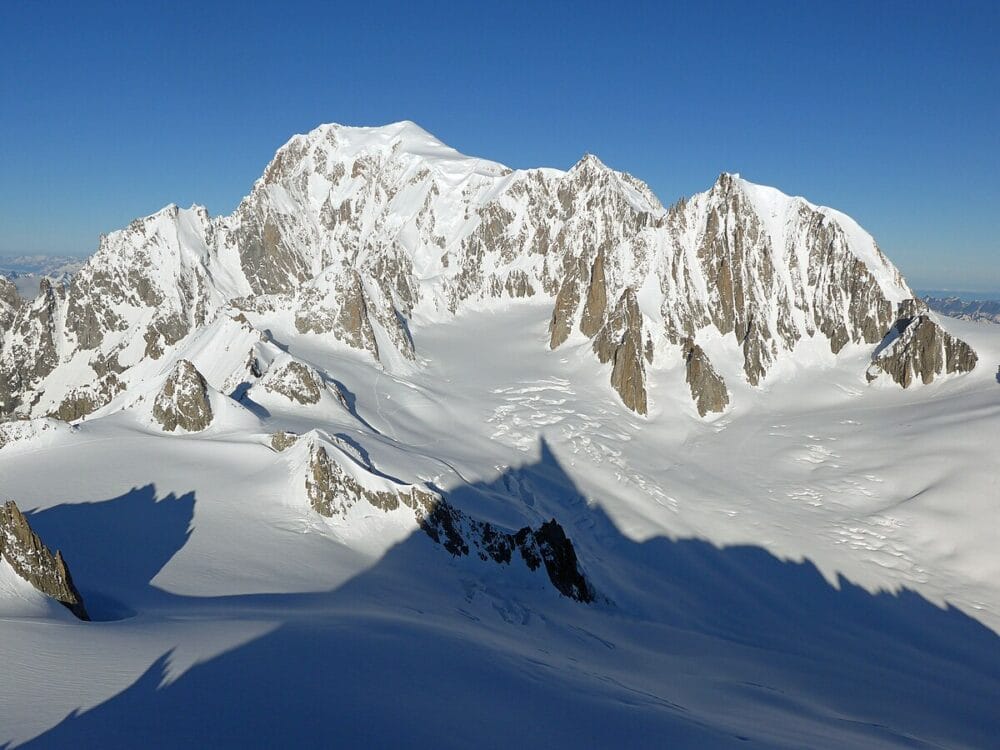
Metal Boardwalk to Kosciuszko

Welcome to my new limited series on climbing the Seven Summits. Episode 1 is an introduction plus a brief update on the Autumn climbing activity in Nepal and Tibet. For the next eight weeks, I’ll drop a new episode discussing one of the 7 Summits in detail. Today is eposide 2 Mt. Kościuszko.

Australia’s Kościuszko (7,310’/2228m), located in the Snowy Mountains, is the lowest of the 7 Summits but is perhaps the most controversial. First, there is the pronunciation, then there is the debate about how it compares to other high peaks in Oceania (is New Zealand continent?) ), and last is the relative ease of this “hill” located next to a ski resort. In any event, today, it’s considered one of the seven on the Bass list, so most people seeking the 7 Summits will tick the box. The first summit was in 1840 by the Polish explorer Paul Strzelecki. I assume the Aborigines or the Morano had a crack centuries earlier, but I could be wrong, as many Indigenous people treat mountains as sacred and not to be climbed.

The Seven Summits, aka 7S, represent the highest point on each of the seven continents. However, as with most things in mountaineering, there is controversy. From a geological viewpoint, there are only six continents on Earth: Africa, Antarctica, Australia, Eurasia, South America, and North America. Europe is considered a peninsula of the Eurasia continental platform and is not an actual physical continent. However, from a political perspective, Europe is regarded as a continent; thus, Elbrus (18,513’/5642m), located on the border with Asia in southern Russia, represents Europe and not Mont Blanc (15,771’/4807m), which lies in the Alps on the border of France and Italy.

The 7 Summits idea was hatched and first accomplished by American Dick Bass. He started with six summits in 1983: Aconcagua, Kilimanjaro, Elbrus, Denali, Vinson and Kosciuszko. Then, with guide David Breashears, he became the oldest person, 55 at the time, to summit Everest in 1985. Canadian Patrick Morrow became the first to summit all seven with Carstensz in addition to Kosciuszko in 1986. Italy mountaineering legend Reinhold Messner summited all the peaks without supplemental oxygen, a first, and completed the task in 1986. #7summits

Episodes will drop each week:

September 15: Introduction
September 22: Mt. Kosciuszko, Australia – 7,310/2228m
September 29: Mt. Blanc, France/Italy – 15,771’/4807m
October 6: Vinson, Antarctica – 16,067/4897m
October 13: Carstensz Pyramid (Puncak Jaya), New Guinea – 16,023/4884m
October 20: Elbrus, Russia – 18,513/5642m
October 27: Kilimanjaro, Africa – 19,340/5896m
November 3: Denali, Alaska – 20,320/6194m
November 10: Aconcagua, Argentina – 22,902/6960m
November 17: Everest, Nepal/Tibet – 29,035/8850m
Podcast Series: Introducing The 7 Summits

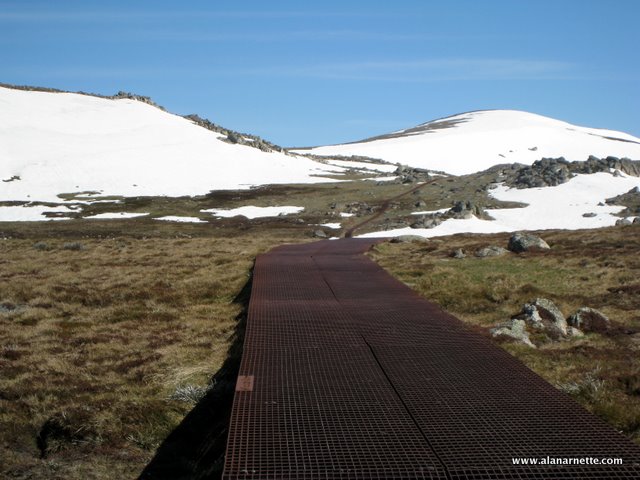
Welcome to my new limited series on climbing the Seven Summits. Episode 1 is an introduction plus a brief update on the Autumn climbing activity in Nepal and Tibet. For the next eight weeks, I’ll drop a new episode discussing one of the 7 Summits in detail.

The Seven Summits, aka 7S, represent the highest point on each of the seven continents. However, as with most things in mountaineering, there is controversy. From a geological viewpoint, there are only six continents on Earth: Africa, Antarctica, Australia, Eurasia, South America, and North America. Europe is considered a peninsula of the Eurasia continental platform and is not an actual physical continent. However, from a political perspective, Europe is regarded as a continent; thus, Elbrus (18,513’/5642m), located on the border with Asia in southern Russia, represents Europe and not Mont Blanc (15,771’/4807m), which lies in the Alps on the border of France and Italy.

The 7 Summits idea was hatched and first accomplished by American Dick Bass. He started with six summits in 1983: Aconcagua, Kilimanjaro, Elbrus, Denali, Vinson and Kosciuszko. Then, with guide David Breashears, he became the oldest person, 55 at the time, to summit Everest in 1985. Canadian Patrick Morrow became the first to summit all seven with Carstensz in addition to Kosciuszko in 1986. Italy mountaineering legend Reinhold Messner summited all the peaks without supplemental oxygen, a first, and completed the task in 1986. #7summits

Episodes will drop each week:

September 15: Introduction
September 22: Mt. Kosciuszko, Australia – 7,310/2228m
September 29: Mt. Blanc, France/Italy – 15,771’/4807m
October 6: Vinson, Antarctica – 16,067/4897m
October 13: Carstensz Pyramid (Puncak Jaya), New Guinea – 16,023/4884m
October 20: Elbrus, Russia – 18,513/5642m
October 27: Kilimanjaro, Africa – 19,340/5896m
November 3: Denali, Alaska – 20,320/6194m
November 10: Aconcagua, Argentina – 22,902/6960m
November 17: Everest, Nepal/Tibet – 29,035/8850m