Jordan Romero – my thoughts Updated Jan 2012
The first time I heard that an 11 year-old was climbing the 7 Summits, I dismissed it. 11 years old? Where does he get the money. Who will take him on these climbs? And, what does a 11 year-old know about climbing anyway. Well a few years went by and I heard about this kid again, but this time he had climbed 5 of the 7 and was on his way to Everest. Whoa. Jordan Romero is not your ordinary 8th grader and his father Paul is not your ordinary Dad. Jordan saw a painting at school showing the highest mountain on each continent, aka the 7 Summits. He promptly went home to tell his dad that is what I want to do, climb all 7. Like a good father, Paul pushed back thinking this was one of those things 10 year-olds say, like I want to be a pilot, or a policeman or the Chairman of Goldman Sachs. Paul took his young son on a few climbs near their home in Big Bear, California. Still enthralled with the dream, Paul saw this an an educational opportunity and put the plan in motion. Using his knowledge and experience as a California helicopter paramedic, a trained rescue and high altitude medicine tech, he watched his child carefully for signs that it was too much. On Kilimanjaro, Jordan had a tough time and thought about stopping; but he didn’t. Once he got past the mental crux, he gained his stride and sprinted the last few yards to the summit. On Denali, he found his groove and Everest became a realistic objective for them. They trained hard and as their plan gained more publicity, the critics came out. There were three themes: It is Paul’s dream and he is pushing Jordan. It is Jordan’s dream and he has no idea what he is getting into. To dream this up at age 9; it was beyond his years. They both knew what they are doing so good luck. It was ambitious and inspiring. Also, some felt that just because a 10 year-old wants something, doesn’t mean they always get it. There is a reason US States wait to issue driver’s license until age 16. There is an age where individuals simply are not ready to make their own decisions. However, there were serious concerns around their skills and a teenager’s physiology; Did Jordan have the skills to climb Everest? What would the altitude do to the teenager’s developing body and brain? There was no solid research on how high altitude affects a 13 year-old during the climb or for their future While there was debate on the motives, it was the plan that fueled even more debate. They would not go on a commercial expedition or use a western guide. They hired 3 Sherpas and base camp logistics from a Kathmandu company and would go on their own, make all their own decisions and answer to no one. They had no choice but to go on the, arguably more dangerous, north side because Nepal does not issue permits for climbers under the age of 16. From what I could tell, Paul is a highly organized individual who puts logic above emotion. And he cares deeply for his son to achieve his dream. It was obvious that this was going to happen. Paul, and Jordan, had made up their minds; declared their intentions to the world and obtained a few small money sponsors. No one would, or could, talk them out of it. Critics be damned. My pre-climb concerns for them focused in several areas. If this was about the goal and not records or publicity then: What’s the rush to climb the 7 now? Why not use a western guide who knows the route intimately and language skills would never be an issue at 8000m in howling winds and extreme fatigue if there was an emergency? Why not climb Cho Oyu and see how Jordan did above 8000m. We all know altitude is exponential and you can do great at 23K and crater at 26 or worse at 29K? Why not wait 3 years and take the arguably safer south side? It has less wind, warmer temps and more resources in case of a rescue; including helicopters which are not available on the north side. But my largest concern was not if something happened to Jordan, what if something happened to Paul or Karen or one of the Sherpas. It takes huge manpower to conduct a rescue on Everest; as many as 10 Sherpas are required to conduct a rescue on the Southeast ridge for one incapacitated individual. With only 6 people, one a 13 year-old; how would they manage to keep everyone safe in the event of a storm, an accident or an altitude issue? This would be their first time above 8000m, much less almost 9000m. Yes, I thought it was risky. No, if I had a 13 year-old son, I wouldn’t let him do it. So, concerns tossed aside, they traveled to Tibet with their 3 Sherpas and 2 cooks. By now most of the free world knows that Jordan summited on May 22 with Paul and Karen and the three Sherpas. We watched on his SPOT tracker as he moved swiftly and smoothly with no visible problems. On script, Paul was quoted on their website “Jordan not only climbed Mt. Everest, but he climbed with unbelievable strength and skill.” In his post-climb press conferences, Jordan is positioning his climb as a way to encourage kids to get off the couch, a great message. He is also talking about his final climb of the 7 Summits, the Vinson Massif in Antarctica this Fall. And he added that he will be climbing Cho Oyu, another 8000m mountain. With the benefit of his experience, however, Jordan is now quoted as saying he thinks no one younger than him should climb Everest. Is it time for all the critics to eat crow? Yes
Final Everest 2010 Stats: 513 Summits
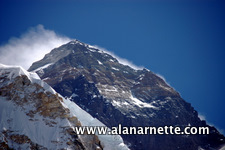
There were 513 total summits on both sides of Everest in the spring 2010 season. This according to Asian Trekking’s Ang Tshering Sherpas regular news letter. He said there were 157 foreigners who summited along with 190 Sherpas on the south and an estimated 165 on the north side. He further quotes the Grand Dame of all Everest statics, Ms. Elizabeth Hawley that 5070 people have now summited Everest since 1953 and about 3431 of those are single summits with the rest being multiple summits.
Continue to Follow the Climbs
Please continue to follow the climbing news and my own adventures by reading The Blog on alanarnette.com. Everest 2010 is now over so all future updates on Everest and other climbing news will be posted on The Blog. I regularly add dedicated pages to my main site for my own climbs such as the recent climbs of Colorado’s infamous Little Bear Peak or the US’s highest peak, Mt. Whitney. Use the menu in the upper left of this page to explore the site.
Everest 2010 Follow Up- Race for Youngest
Even though the season is over and climbers are back home, the ramifications from 2010 still echos throughout the climbing world. There are two developments – youngest records and the search for proof that Mallory and Irvine summited in 1924. First, the records race. This is precisely what people feared from the 13 year-old Jordan Romero’s summit. According to this article, Sherpa Pemba Dorje wants to find a younger climber to summit in 2011 saying that all Everest records should belong to Nepalese.
Everest 2010 Season Summary
By recent standards, view Everest 2010 was a safe and successful year. There were about 513 summits with 4 reported deaths, search all on the north, and several injuries and rescues. The total Everest summits broke the total 5,000 (about 3500 are multiple summits by Sherpas and guides) level since the first in 1953. This year’s story line for climbers and their families was the weather, however it was all Jordan Romero and Apa Sherpa for the rest of the world. For the first time in several years, the north operated in an almost normal manner. Teams dealt with a few border restrictions early but arrived at base camp and immediately began their acclimatization rotations. On the north, a team run by the Chinese Tibetan Mountaineering Association (CTMA) responsible for fixing the ropes to the summit were held up by strong winds and cold temps thus created delays for teams trying to tag the high camps. On the South, the ropes were in early and the weather seemed drastically different from the North, at least in April. A multi-expedition group of 9 Sherpas took the line all the way to the summit on May 5 thus opening the gate. A few climbers followed the Sherpas a day later and made the first summits of the season before Mother Nature changed the play book. Similar to previous years, the south side’s greatest danger remained the Khumbu Icefall. No collapsing seracs from Everest’s West Shoulder like last year, but dangerous nonetheless. There were several incidents of climbers and Sherpas falling through soft snow bridges and even broken bones from falling ice seracs necessitating rescues. As the season progressed and temperature became warmer, teams ventured into the Icefall in the dark and cold of the early morning hours hoping the moving ice was more solid. The Weather Windows The weather. Ah, Everest weather. With the forecasts available to teams, this season was filled with debate, calculated gambles and indecision. In other words, normal. The weather pattern followed the expected flow as the Everest region moved from winter to summer: a good April, followed by a transitional May. The April winds and snow were a bit stronger than in previous years, however teams pushed through to reach the high camps and many were prepared for their summit bids by early May. They reed down valley for R&R and to eat and breath as much as possible. However for the first two weeks of May, the winds picked back up and the threat of typhoon Laila off India fueled the anxiety. A similar scenario in 2009 hit Everest after the last summits and trapped teams at base camps for over a week. Leaders became concerned that the harsh weather would hit in the middle of their pushes. There were two windows identified by forecasters: May 16-17 and May 22-26. The first was deemed too short for most teams but others worried about crowds if they waited for the second and longer one. In what might have been considered an act of courage, several teams set out on May 16th looking to squeeze a summit, and back, into a two day window of acceptable winds and minimal snow. And they were right. Over 50 climbers made the summit in this window but there were reports of frostbite in the declining conditions. The next window was shaping up to be a record day with climbers chomping to get their crack at the top of the world. However typhoon Laila was lurking in India playing with forecasts and climber’s minds. The bet was it would veer off to the east thus avoiding a direct hit to Everest. It was the correct bet but the chance of heavy snow now appeared in the forecast. With time running out, almost every team on both sides moved higher on the mountain. The weekend of May 21-23rd was awesome. More than 300 climbers made the top in great conditions. But those who waited late in the window began to feel the effects of an early monsoon and a low pressure system north of Everest. Once again, extreme winds combined with heavy snow almost shut down the Hill for the season. Duncan Chessell, an Everest veteran, called his summit day of May 25th, the worst conditions he had ever encountered by a factor of ten. Two north climbers died in this period. Huge Efforts, Mysteries and Firsts With every Everest season it is about individuals and teams all doing interesting and mind-boggling feats. A huge effort to clean Everest on the Nepalese side was driven by a team of 20 Sherpas called Everest Extreme. They removed several bodies from the mountain but left the familiar ones of Rob Hall and Scott Fischer. They also brought down almost 900 pounds of garbage. In a new effort to eliminate garbage from the start, climbers were encouraged to use the ‘blue bag’ for their solid waste and return it to base camp for the first time on Everest’s south side. No such effort exists on the north. Climber Gerlinde Kaltenbrunner summited without supplemental oxygen this year to knock off her 13th 8000m summit. Other non-O’s summits were completed by Silvio Mondinelli, Abele Blanc, Marco Camandona, Michele Enzio and Laval St. Germain. Also without O’s was Austrian mountain guide Wilfried Studer who summited on May 23rd – together with his wife Sylvia and their daughter Claudia. Simone Moro and Melissa Arnot wanted to go sans O’s but switched at the last minute. Jamie Clark, sponsored by Hanesbrands, tested a new material based on a compound called Aerogel. It is incredibly thin and is warmer than down. Previously used by Everest climbers in socks, this was the first time to demonstrate it in full clothing at altitude. He wore it as high as camp 3, but I was under the impression they would replace the “puffy” suits with their SuperSuit all the way to the summit. In any event, Jamie seemed just fine at C3 so apparently
Everest 2010 Team Locations
My coverage of Everest benefits Alzheimer’s research. If you enjoy this coverage, check please donate generously today. 100% of all donations go to research – zero to me. On this page you will find the 2010 team’s final statistics based on their public information and an overview of this season’s most recent stories. Click on any headline to read the full story. 513 total 2010 summits South Col Route TEAMS BC C1 C2 C3 C4 Summit: 347 Adventure Consultants (5) e 4/10 Alpine Ascents Int. (12) e 9/11 Altitude Junkies (7) e 5/5 Asian Trekking Eco e 5/9 Australian Everest (5) e 5/5 Canada West (NGJG) (6) e 2/2 Exploradus e Dream Guides (5) e 4/2 Extreme Everest (20) 6 Finnish Everest-Lhotse (2) 1 Hanesbrands Everest (2) e 2/3 Himex (23) e 16/17 IMG Main (19) e 15/18 IMG Hybrid (9) e 5/4 Jagged Globe (6) e 7/8 Malta Everest (4) e 5/5 Mountain Trip (5) e 7/12 Patagonia Brothers (10) e 8/5 Peak Freaks (19) e 10/15 RMI (9) e 7/6 Summit Climb (9) e 2/3 others 31+/44+ 157/190 Northeast Ridge Route TEAMS BC ABC C1 C2 C3 Summit: 165 Adventure Peaks (21) e 5/6 Adventure Dynamics (8) e 6/7 Chessell Adventures (10) e 8/8 Project Himalaya (4) e 3/2 Jordan Romero (3) e 3/3 Summit Climb (20) e 6/2 WRET (3) e 1/2 7 Summits (12) e 10/10 others 67++ e= climb ended, x=last reported location, x+ = on summit bid, -x = descending h=high point. Summit number = member/sherpa Locations are estimates derived from public websites I climbed Everest four times – 2002, 2003, 2008 and last summited in 2011. This section of my website is devoted to my personal coverage of the 2010 Everest expeditions. I did similar coverage of the 2004, 2005, 2006, 2007, 2009 seasons. I try to provide insight and interpretation of the activities ranging from routes to weather to the challenge of climbing Everest.
Cleaning the Mountain (updated)
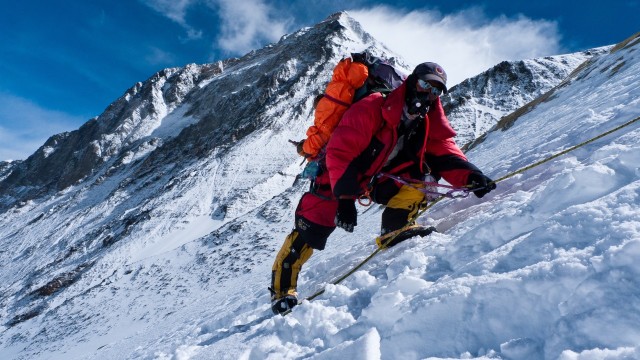
It looks like the Everest season has finally ended with a big cold slap in the face to many teams on both sides. The weather deteriorated for the few teams making a push this week so much so, some classified it as the worse ever. Another death was reported earlier this week of a Japanese climber on the north, still no details. But another death was also mentioned and again now. Details are vague at . Duncan Chessell told the Australian news: “They were the worst conditions I have ever encountered by a factor of at least 10 on the summit, ” Mr Chessell said today. “There was a fresh dump of snow and winds were howling. They were at least 30-40 knots on the summit and it was minus 26C, which is not great for humans at 8848m above sea level. “We almost called it off, but we all made it up and down safely.” On their way up the mountain Mr Chessell’s group was asked to help a Japanese climber who had summitted on Monday. But by the time they reached him, the man was already dead. “Also, another climber, I think from the US, or at least a US team, which was on the summit about the same time as us, died on descent and we were not able to help him on our descent,” Mr Chessell said. By now almost everyone is at Base Camp or back in Kathmandu. This week, the Sherpas were still finishing up work by bringing everything down from the high camps. This is literally back breaking work. In many cases they will bring double or triple loads from the North Col or C2 back to Base Camp. Think of all the supplies they brought up to support the climbs, all that has to be taken back down. IMG notes the huge clean-up effort: Our IMG sherpas put in a big day yesterday and all the gear is down, and everyone is safe and sound. We still have some packing chores and cleanup to do: burnable rubbish is heading for the incinerator in Namche, bottles and cans to Kathmandu for recycling, empty O2 cylinders back to the USA for refilling, human waste down to Gorak Shep for burial. The climbers have all left, and the first wave has already reached Kathmandu. Our team leaders will do the final briefing with the Ministry back in Kathmandu, and we will file for getting the garbage deposit back. However, Summit Climb reported a disturbing item that on the north, one or more teams actually abandoned their camps above the North Col leaving tents, still standing. The only rational that they were too tired to be bothered. This is what creates the problem. The Nepalese have a trash deposit that discourages such behavior as well as on-mountain liaison officers to monitor teams. Also, the Nepalese and the large commercial operators have done a nice job of instilling a sense of responsibility in the overall environment. Clearly, work remains to be done on the North. The Summit Climb post gives some details on the north: We made it down to camp 2, which was completely abandoned. All of our tents and equipment had been removed by our sherpas working busily down below. Camp 2 again looked like an enourmous car park after a car boot , completely trashed. In several instances we saw teams that had left their entire camp behind, including standing tents. I’ll have to say that some of our members were a bit astounded when they started calculating the value of some of this equipment that had been left up there because it was too difficult to carry down. I contacted Jamie McGuiness from Project Himalaya since many of you were asking. He and two members summited. If you know Jamie, you will smile that he is one of the only people who would wait out a storm at a high camp to get a great picture! Eric and Barry summited, no problems at all with two really competent sherpas, Kaji and Nima Guriman. Three is a crowd in tents at C2 and C3 so two pairs was tidy. Fernando had torn breathing muscles and a terrible cough – he didn’t summit. I wanted to summit on the fine day to take lots of pictures with my NEW 5D mark ii and so waited 3 nights at North Col and 2 nights at C2 watching Wx forecasts but could see the Wx wasn’t going to be right. Duncan’s team summited in real wind… others in total whiteout… It seems the helicopter situation at Everest it totally out of control. Well respected high-altitude Physician Dr. Peter Hackett sent me this email about my post on recent accidents. He was at Base Camp this season. Alan- I know you want to publish accurate information, so here’s a correction. The HRA doctors at base camp did NOT suggest a rescue from Camp 2 for Phil Crampton’s member. In fact, we were very much against it. We felt it unnecessary and it set a very bad precedent. Our take was that he could have made it down through the icefall without much difficulty, and in retrospect that was correct. In addition, helicopter requests from base camp were totally out of control, many were unnecessary. Peter Hackett and Steve Halvorson, HRA base camp doctors See http://www.everestER for more details of all these rescues. Note that the information he is referencing is from the Altitude Junkies’ dispatch. Thanks to EverestEr for the clarification and for all their work. I will do an update upon more information on the reported death. If true then that would be 1 on Lhotse, and 4 on the north for 2010. update: Finally, it would appear the search for the camera from Mallory & Irvine’s 1924 expediton remains unfound; or does it? We really we don’t know. Given the recent heavy snows, several teams who said they would look for it have reported it unlikely
The Everest Rescues and another Death (update 3)
With the summits mostly ended, climbers are making their way back down to Base Camp. As they recover from their summit push, there stories are emerging of rescues. Once again, we are seeing tangible proof that the climbing community is a tight one; especially in times of need. We are also seeing that pure accidents happen in spite of every precaution and mountaineering is dangerous and altitude s everyone the same; regardless of experience. While impressive and motivating to non-climbers, one of the downsides of having a 13, 16 and 22 year old summits this year is that it could portray Everest as an easy walk-up that requires little to no experience. The press coverage touts Bonita Norris as a “Novice climber becomes youngest British woman to reach Everest summit” and how 13 year-old Jordan Romero summited Everest with little experience. Even his own site said “Jordan not only climbed Mt. Everest, but he climbed with unbelievable strength and skill.” With all due respect to these talented young climbers, their experience is not representative of many climbers through the years. It is a dangerous message for those who do not know better. If you climb enough, you know that if everything goes perfectly, you were lucky; full stop. With this, the real stories are starting to surface. As the Altitude Junkie team were climbing on May 23rd, they were making good progress. Then one of their climbers started to act strange, it was apparent he was in trouble. British climber Mike Herbert had HACE. This is a condition when the brain leaks fluid into skull; putting pressure on the brain itself and eventually will cause death. The only cure is to descend rapidly and immediately. Phil Crampton and his Sherpa team took charge to do just that. But he had help. Phil’s short but instructive dispatch describes the details: I have highlighted the individuals and teams involved: Mike, who is a seasoned Himalayan climber and an Everest veteran developed a case of HACE at 8,700 meters and was helped down the mountain by the following people who we are so grateful to for their assistance. Both of our Sherpas, Sirdar Dorjee Sherpa, Lhapka Tsheri Sherpa and myself assisted Mike from the rock steps just below the South Summit all the way to the South Col. We were assisted by Willie and Damien Benegas along with their team doctor Roman and their Sherpa, Lhapka Nuru, who assisted Mike from the rock steps to the Balcony. From the Balcony our Sherpas and I were assisted by Lhapka Rita, the Sirdar from Alpine Ascents who ascended from the South Col, Pasang Gumba Sherpa who was descending from the Mountain Trip expedition and Pasang Yula also descending from the Benegas Brothers expedition assisted to the South Col. Mike showed a huge improvement and traveled on his own power from the South Col to camp three but again found himself needing help from camp three down. Dorjee and Lhapka Tsheri Sherpa along with some mental coaching from Bill Allen of Mountain Trip got Mike back to camp two after an epic two day descent. Our Sherpas Temba Bhote, Cheddar, Pasang Nima, Pasang Wangchu and Pasang Dawa all ascended from camp two to assist. On the advice of the doctors from the Himalayan Rescue Association we helicoptered Mike out from camp two so he could medical attention immediately. His condition is good at present. I would also like to thank both Vern Tejas from Alpine Ascents and Dave Hahn from RMI for keeping contact on our radio frequency throughout the descent monitoring the rescue. Melissa Arnot on the First Ascent blog tells that during her descent she and her partner, Dave Morton, were at camp 2 when told of a climber who had fallen into a crevasse in the Khumbu Icefall. A rescue was being mounted. Instead of spending the traditional night to recover at C2, they hurried down to give what aid they could. The climber was rescued. We gathered some rescue gear and medical equipment and headed down to the Icefall below Camp I, where we were told we would find a female climber who had been involved in an ice bridge collapse and fell about 30 meters. We arrived around 5 p.m., 12 hours after leaving Camp IV. The other climbers who had come to help were already in the process of stabilizing the women and getting ready to move her uphill, where she would spend the night until a rescue could be completed in the morning. We are now hearing the real story about that young British climber Bonita Norris’ accident as she descended from her summit. It was deadly serious and could have resulted in death if, once again, the climbing community had not pitched in, Bonita herself describes in detail on her blog that she slipped and hit or twisted her head and neck thus causing her pain when she walked. She was literally drug down to the South Col. 20 minutes later though, my neck and shoulders had siezed up to such a point that i took one last step and a shooting pain went up my spine- it was so painful i yelped and Lakpa stopped. He saw i was crying- but this time with pain. It was then i realised something was wrong- i must have pulled a muscle in my neck, maybe whiplash. I didnt know what it was, but moving was excruciating. We were in trouble. Finally, about an hour below the balcony, another group of sherpas arrived, from here on i dont remember much- apart from the pain of being dragged across ice and rock as the attempted to get me back to camp 4 as quickly as possible. My neck was blinding with pain, but i remember having covnersations with the sherps and thinking i felt OK bar the neck- i knew if i just let them do the job we would all be home safe. Yet another harrowing tale told by
Wave 4 Recap (updated)
On what could have been the final push for 2010, many climbers summited from the south including a record 12th summit for Dave Hahn who was guiding Leif Whittaker. The weather cooperated for the teams however it was extremely cold at 18 below zero F. Once on the summit, the winds started to pick up so climbers hustled down as quickly as possible. In addition to Hahn and Whittaker, mind climbing under the First Ascent/RMI banner, the rest of team made it to the top including Michael Brown topping out for his 5th time. They commented once back at Base Camp they thoroughly checked themselves for frostbite and thankfully found none. In a bit of drama, Robert Hill with No Guts Know Glory, named due to Robert’s Crohn’s Disease, stopped at the South Col after spending two days at the South Col waiting for improved weather. His site Manager did an excellent job of keeping everyone informed throughout the climb and posted this emotional statement from Robert at the South Summit: 8:45 AM Everest: Rob Hill has finished his Seven Summits dream! “I’ve gone as high as I ever will,” said a elated sounding Rob from the South Summit. “John and I have been sitting here for the past 30 minutes talking about all that we’ve done, all that IDEAS has managed to accomplish and all that this 7Summit campaign has done for people fighting inflammatory bowel diseases and living with an ostomy. Even though my Everest summit sits several hundred meters below the true summit, I can hold my head high with pride. I will come home safe to my family and loved ones. I don’t have the energy to continue. The hours I spent in the South Col drained me of everything, I’ve given it my all, my and I am happy to be here with my good friends and climbing partners. Darrell is within spitting distance of the summit now along with our three Sherpas. John and I will sit here and bask in his glory as he, too, finishes his 7Summits dream today. With Robert safe, his guide John Furneaux and climber Darrell Ainscough made a “quick” run from the South Summit to the true summit. There were other teams on the South including the young new married Colorado couple Brandon and Kristine Chalk. They stopped an attempt the previous night due to blizzard conditions, stay at the Col and summited last night. Congratulations to them on their perseverance. They were climbing under a Henry Todd permit. There was finally some information on the speed attempt by Chad Kellogg posted, not on their main site but as an answer on his sponsor’s Facebook page. It simply read: Here’s the update: Chad is back at basecamp after being on track for the speed ascent, climbing to his high point in ~12hrs. Just below the Balcony, 40+ mph winds and stormy conditions turned him around for a ~7hr descent back to basecamp. Chad is resting for a couple days before making a second summit bid, though this climb will not be intended for setting a speed record. We wish Chad a strong climb and a solid weather window! On the north side, Summit Club had 16 people attempting the summit but no word from them. Duncan Chessell and Jamie McGuiness were also on their summit bids but no word from them either. I will update this page once I receive any information. Finally, the First Ascent site posted a teaser saying that Melissa Arnot and Dave Morton assisted in a rescue in the Icefall. There was a report of a Sherpa who was hit by a falling serac and broke an arm or leg but he was evacuated to Base camp. I have heard of other rescues as well but thus far no details. To be clear, there has been one reported death, Sergei Duganov, on the south side this year, actually on Lhotse, another, Laszlo Varkonyi, on the north near the North Col and a third of a north climber, Tom Jørgensen, suffering from HACE who died a few days alter in a Tibetan village. It looks like the weather is slowly deteriorating however there may still be a few small teams to summit from both sides. Once the camps are clear on the South, the Icefall Doctors will remove the ladders thus ending the season; this usually happens no later than June 1st. There is no such restriction on the North and summits can go as long as the weather holds. update: Summit Climb reports 5 members and 4 Sherpas summited on the 25th in windy conditions. Duncan Chessell also reported summits of 8 climbers. he did not mention the Sherpas. They had already returned to the camp 3/2 levels. Congratulation to all these climbers. On a personal note: It’s been great covering another Everest season. Congratulations to all the climbers, regardless of their results. There are a few more updates and my annual summary later this week and then I am going to start some climbing of my own. Thanks for all the comments and emails throughout this Everest season. And thanks everyone for your support of my Alzheimer’s efforts and a special thanks to those who made previous donations to the Cure Alzheimer’s Fund and also during this season. You are making a difference (you can make a donation anytime). It goes 100% to research, none to me. Climb On! Alan
Summit Wave 4 (update 3)
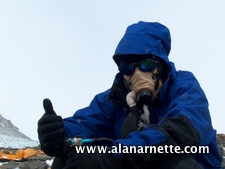
update #3: South summits. First from RMI: Seth Waterfall is on the summit of Mount Everest. He has the summit all to himself. It is a bit chilly but he has plenty of oxygen and is feeling good! The rest of the team is at the Hilary step continuing up. Then Dave Hahn and Leif Whittaker. Thus far another 12 summits. Their announcement: Dave, Leif, Seth, Casey, Michael, Scott, Tendi, Tshering Dorjee, Dawa Jamba, Da Gyldjen, Nima Tenji, Pasang Temba. On top of the world. All are doing well. Robert Hill and his team reached the South Summit and made this declaration: Rob Hill has finished his Seven Summits dream! “I’ve gone as high as I ever will,” said a elated sounding Rob from the South Summit. “John and I have been sitting here for the past 30 minutes talking about all that we’ve done, all that IDEAS has managed to accomplish and all that this 7Summit campaign has done for people fighting inflammatory bowel diseases and living with an ostomy. Even though my Everest summit sits several hundred meters below the true summit, I can hold my head high with pride. I will come home safe to my family and loved ones. I don’t have the energy to continue. The hours I spent in the South Col drained me of everything, I’ve given it my all, my and I am happy to be here with my good friends and climbing partners. Darrell is within spitting distance of the summit now along with our three Sherpas. John and I will sit here and bask in his glory as he, too, finishes his 7Summits dream today. No word on the north at this point. Summit Climb, Duncan Chessell and, I think, Jamie McGuinness’s teams are all enroute. Congratulations to all and a tip of the hat to Leif Whittaker. update #2: Summit Climb reported bids by 10 members with 6 Sherpas currently underway. RMI and Dave Hahn, Leif Whittaker are all together and above the Balcony. They report clear skies and calm winds. update #1: With fickle weather, teams debated if tonight was the night or not. But a few teams have left the South Col reporting acceptable winds. first out was Robert Hill’s group who left around 8 PM. A few hours later, the RMI team departed. I like Mark Tucker from RMI’s thoughts as they left the South Col: We have not been purposely holding out till the bitter end, I promise. You all deserve the final summit push. So lets bring it to you today and tonight. We sure hope that the old adage,” good things come to those who wait”, comes true. But Dave Hahn saw it differently: Hello, this is Dave and here we are at the South Col. The mountain showed this is not going to be easy for us. We were hoping we’d just waltz up in a perfectly forecasted weather window. Instead, the Himalaya showed a mind of its own. Sent a little unexpected snowstorm in on us. We’re sitting that out; it’s not the worst. Still, we certainly wanted better for our climb. Life’s not so bad for us here at the South Col, it’s just the tension of not knowing whether we’re gonna get to make good on our 2-month climb and ring the bell at the top. But if we get half a chance, we are gonna do that. So we’re keeping ourselves ready right now and keeping our spirits up. That’s the Everest game, that’s how we play it. But then they made their final call and they are off as well: Hi, it’s Michael Brown at the South Col of Mt. Everest. I’m here with First Ascent Guide Seth Waterfall. Next tent over has Leif Whittaker and Expedition Leader, Dave Hahn. And the next tent is guide Casey Grom and climber Scott Jones. It’s a little after 9:30, and about 11 o’clock we’re going to have our crampons on and we’re going to start walking uphill. We got a forecast yesterday that indicated there’d be a lot of wind; but, according to a forecast we’ve been trusting all along, the wind shouldn’t be too bad today. We’re going to go for it in about an hour and a half. We’ll try to stay in touch. Everybody here is pretty damn excited. So here we go. No word from the few north teams. Look for more updates as they get near the summit around dawn Nepal time. start of original post With hundreds of climbers summitting over the past few days, only a few teams are left on both sides of Everest. Sunday night was the most difficult of the season with high winds at times but steady snow through the night and day. Whiteout conditions were reported as well with a foot of new snow at the North Col. At the South Col, RMI, Dave Hahn and Leif Whittaker and Robert Hill’s No Guts Know Glory teams lead by Canada West Mountain School’s John Furneaux are all looking to go up tonight. Robert Hil reported some theft of oxygen bottles at the South Col but was able to replace them from teams who had already summitted. This is certainly bad but an occasional occurrence and happens more on the north than the south. Robert said about tonight’s push: During the day, the weather has cleared up enough to make a summit attempt a realistic option. Winds at the South Col remain light and the snowfall has stopped accumulating on the ground. The team plans to leave C4 at around 7:30 PM Everest time. Two other well-established climbing expeditions will also leave the South Col at the same time. Rob, Darrell, John, Mingma, Dawa and Teng Dorje Sherpas will need all the help they can to compress the newly snowed trail. “It’s going to be hard climbing tonight,” said John Furneaux, who reached the summit of Everest in 2008. “With fresh snow on the ground and few climbers