Well done, Alan. I really appreciate your thoughtful, compassionate commentary on this. Thanks as always!
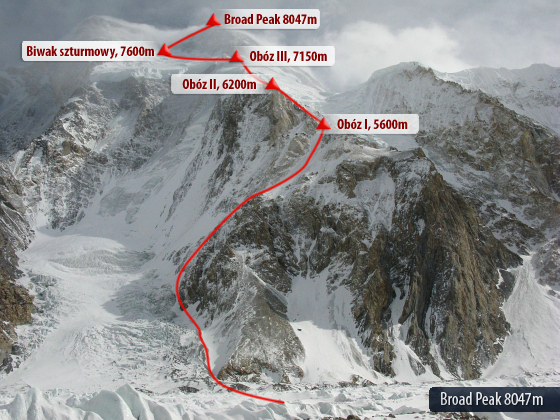
Two weeks ago today, on July 30, 2026, ten climbers died in a single avalanche on Broad Peak. The event has received extensive media coverage, in part because Nirmal “Nims” Purja, one of the most consequential mountaineers of his generation, died. Also among the dead were six other highly experienced high-altitude guides — one with 28 8,000-meter summits — two very experienced clients, including one with 12 8,000-meter summits, and a Texas climber attempting her first 8,000er.
The discussion across social media has ranged from praise to blame, sparking an intense debate over responsibility and judgment — with some pointing fingers and naming names. There were ten climbers across four independent teams with no single leader. It would be easy to start speculating, and that’s not what I’m doing here.
I begin with what matters most: who they were, not just how they died. Then I ask the harder question. Heavy snow had fallen for days. The route above Camp II crosses obvious avalanche terrain — I stood on that exact slope during my 2006 Broad Peak attempt, and I remember it clearly. Other climbers on the mountain last month were concerned about conditions and went home.
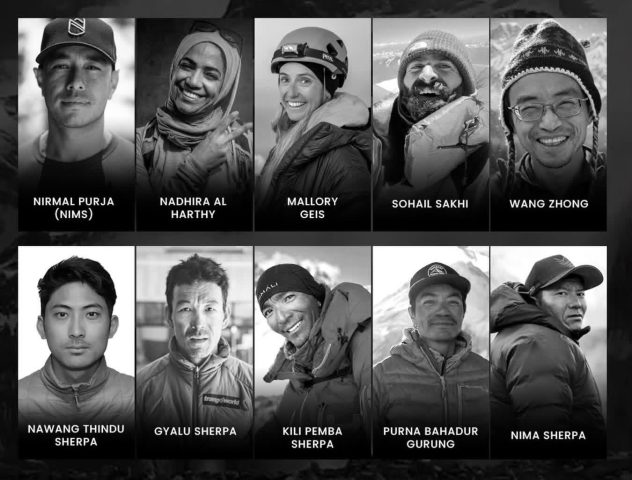
I sat down over lunch this week with one of them, Ian Overton, who was climbing with Hungarian climber David Klein and was trapped at Base Camp for two weeks due to heavy snow after making an acclimatization climb to Camp 3. When Ian ascended to Camp 3, he noticed a heavy wall of snow above a loaded snowfield, and thought, “I hope this doesn’t go.” They left Broad Peak four days before the accident. When I asked Ian why the teams went on July 30, he told me he didn’t know and couldn’t explain it.
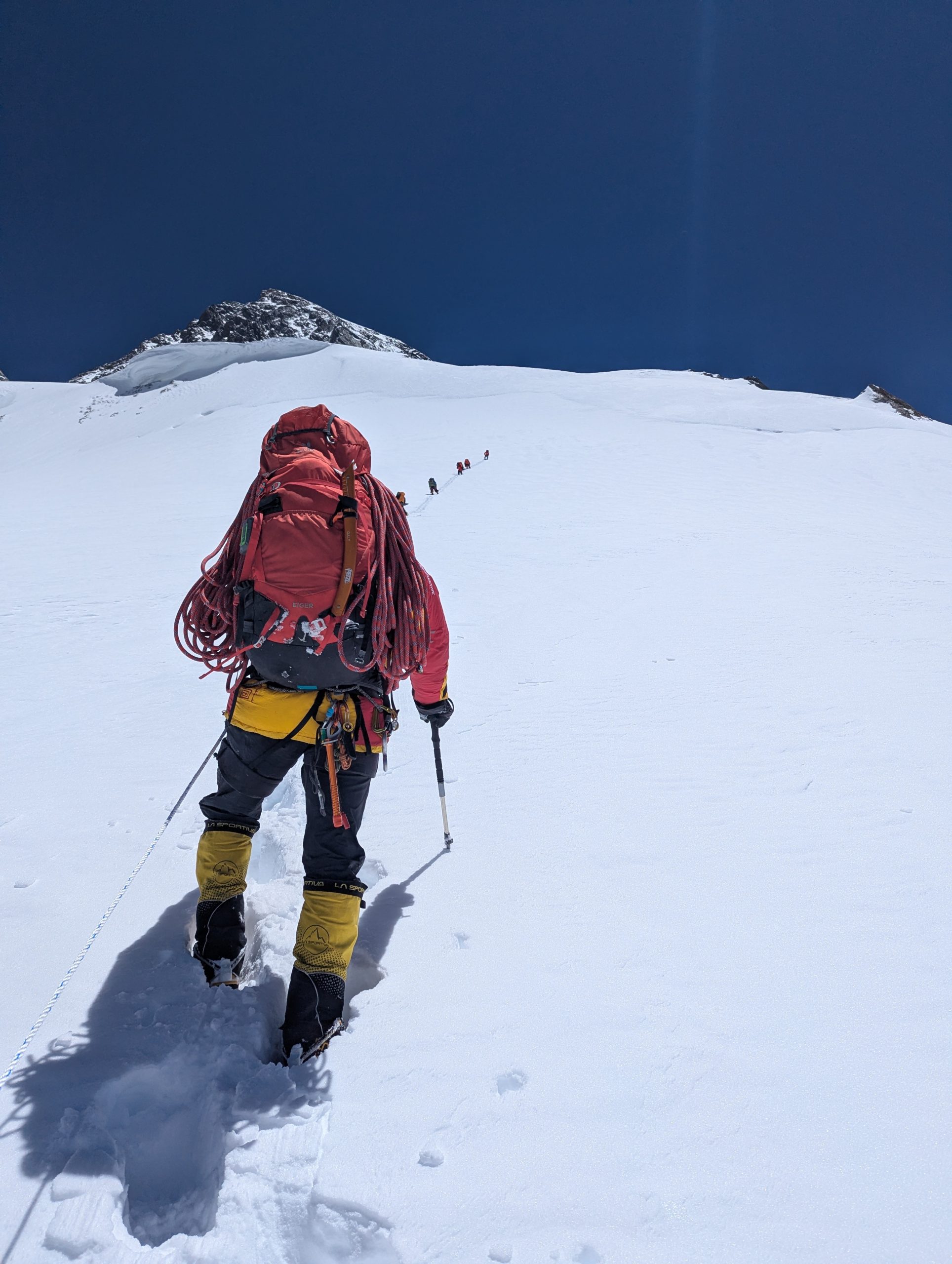
This isn’t a trial of people who can’t defend themselves. As mountaineers, we’ve seen similar patterns on other peaks and in other seasons. It’s an opportunity to ask questions of our community and examine how collective judgment forms in the presence of serious warning signs, such as after a multiday snowstorm.
We should ask ourselves whether factors like a closing weather window, ambition, or the quiet pull of group momentum — the instinct to think, “If climbers this experienced are going, it must be okay” — played any role.
Because the avalanche tells us how they died. It doesn’t explain why they were there.
My deepest condolences to the families, friends, teammates, and communities of all ten climbers.
With a climber’s respect,
Alan
Memories are Everything
Receive Publication Notification of Alan Arnette’s Memoir
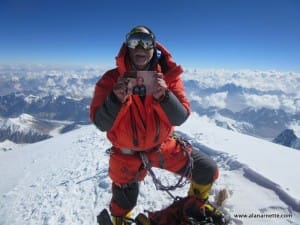
A surge of debilitating fatigue overtook me. My shoulders drooped. I stared at my yellow boots, crushed by disappointment. I had trained hard for K2 and tried to anticipate every scenario, but now I was failing, and there was nothing I could do.
Closing my eyes, I was powerless, hopeless, and ready to surrender to the mountain. Everything I wanted—the summit, a safe return, my vow to my mother—was slipping away.
My ice axe fell onto the snow.
Staring at the small yellowish spot illuminated by my headlamp on the snow, it was over, and, oddly, I didn’t care.
It was 12:30 a.m. on July 27, 2014—my fifty-eighth birthday.
If you would like to be notified when my memoir, “Hard or Impossible? Summiting K2 for Ida” is available – I’m still looking for an agent. Complete the form at the bottom of this introduction page.
8 Responses
Well done, Alan. I really appreciate your thoughtful, compassionate commentary on this. Thanks as always!
An outstanding comment and podcast Alan. I firstly want to commend you on maintaining an “I don’t know” overall status, and secondly on listing a number of likely reasons. In aviation, accidents are always analysed for cause and human factors are part of the study. We save future lives by understanding past accidents. Importantly no blame is placed in a good investigation, because that’s not the point. But not daring to try to understand is not acceptable, and I believe that mountaineering should increasingly focus on understanding fatalities fully.
I have no doubt that there was quite some unspoken and potentially some spoken pressure. I will guess that the sudden arrival of Nims changed things (for those who didn’t see it, he posted on Instagram several days before the accident that he was popping across to Broad Peak without having planned it because he suddenly realised he could bag one more peak for his no O2 record). I also think that the fast in/climb/out approach can miss what Overton/Klein saw by spending time in place watching the mountain. Their decision to walk away came about by having built a multi-week history of climbs, weather, observations and snow on the route. The others may have had professional weather reports, but that’s not the same.
There isn’t much more to say, is it? Thank you so much for this excellent and thoughtful podcast!!
There isn’t much more to say, is it? Thank you for this excellent and thoughtful podcast!!
Alan – this was “spot on!”. Thank you for the information, your philosophy, and for the reminder that judgment means so much more than experience. RIP to all ten climbers and their loved ones – such a tragedy.
Ten climbers in four independent teams without a single leader… That’s the key point… All but one had high-altitude mountaineering experience. In this situation, everyone is responsible for their own decision—whether to go or not, and why they go. Any attempts to assign blame are completely out of place. I am deeply sorry for these mountaineering legends, and my condolences go out to their families and loved ones. May they rest in peace.
Thank you again for this thoughtful summary. A very difficult tragedy with new lessons to learn. Your commentary has always places dignity over rumor. God bless
Thanks Alan, I thought your podcast gave excellent big questions to think about. I turned around on Manaslu despite a lot of pressure to stay from my guide and expedition leader. But I knew myself and my situation and it was the absolute right call and I have zero regrets. As you said, it is hard when you’ve trained for years, paid so much money and invested in a dream. But knowing your risk tolerance and trusting yourself go a long way. I will keep pondering the big questions you raised. But you are certainly right about one thing, you should never outsource 100% of your judgement and decision making to someone else on a mountain.