Injury on K2, Everest Summit Push Next Week
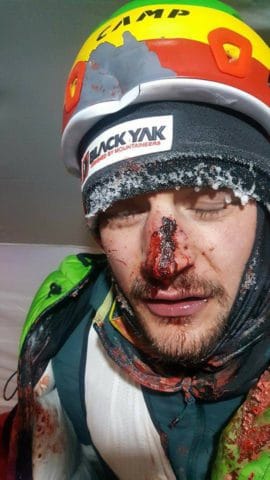
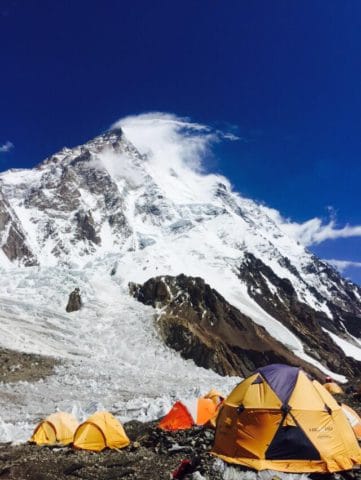
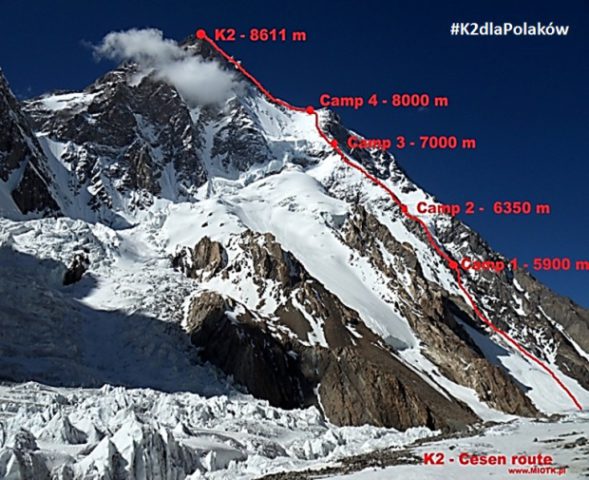
A member of the K2 Polish team was injured by rockfall. While serious, he will continue climbing. Over on Everest, they remain locked down at base camp waiting out the weather but hope to start the summit push next week. See this post for full background on the K2 and Everest expeditions and the history of winter attempts on the highest two mountains on Earth. Both expeditions need to summit no later than the spring equinox on March 20, 2018, at 0:15 PKT for K2 and 18:00 NPT for Everest to meet a winter summit definition. Big Picture Of all the objective dangers in climbing mountains, rockfall might be the one most feared. Along with avalanches and “disappearance” rocks hitting climbers are the most common dangers on K2. What makes rockfall on K2 so serious is the angle of the slopes – once a rock gets going, it becomes a deadly missile – without warning. Climber wear helmets but they do little to stop a moderate size rock zooming down a steep face. deven small rocks can cause serious injury. In 2015, Kami Sherpa had his shoulder dislocated and arm broken when he was hit by a rock on the Abruzzi Ridge. In 2006 Irish Climber Gerard McDonnell was hit in the head by falling rock and had to be helicoptered off the Hill. Winter K2 The Polish team took advantage of a low-wind day to continue their acclimatization rotations. After sleeping at Camp 1, Maciek Bedrejczuk then went to Camp 2 at 6,300-meters. Janusz Golab and Adam Bielecki left base camp towards Camp 1 at 5,900-meters. But the big news was that while only 100 meters below Camp 1, a falling rock hit Adam Bielecki in the face breaking his nose. He was helped back to base camp by two high-altitude ports where he received six stitches to close a large gash. He never lost consciousness and will return to the climb after a few days of rest. The team reported a snowstorm at base camp but the next few days should be good enough to make progress to Camp 3 with winds right at the edge of 30 mph/50 kph. You can follow them directly on their website, Facebook, and SPOT tracker Winter Everest Alex Txikon and the team continue to stay at base camp after reaching 7,850 meters between Camp 3 and the South Col. The winds continue to be too strong to climb higher – 70 mph/112 kph at the South Col. The computer models show strong winds for the rest of the week, but that can change quickly. Over on Muhammad Ali Sadpara‘s Facebook page he noted: Team is resting on base camp. Weather is very bad. Wind is blowing at approximately 70mi/hr tearing down our tents. Some portions of khumbu ice fall has collapsed near camp one. A team of sherpas headed by me has fixed the ropes and ladders again. We got the report of a clear weather window after Feb 11. Hopefully we’ll push for summit in coming week. All team members are in great shape and health. You can follow their movements on Alex’s GPS tracker,  Twitter,  Instagram, and Facebook. Other Winter Climbs There are a couple of other climbs this winter: It’s over for the Pakistani climbers attempting the first winter summit 7200 meter Masherbrum West Peak aka Masherbrum 2; too much snow.  Maaz Maqsood. has lots of pictures on his Facebook page. Simone Moro and Tamara Lunger established their Camp 1 in perfect weather according to his Facebook post. He notes that it is cold, -40/45°C and there is a lot of snow. They are attempting Pik Pobeda, 3003 meters, in the Siberia’s Chersky Range region. Climb On! Alan Memories are Everything

Historic K2 and Everest Winter Climbs Staying Patient
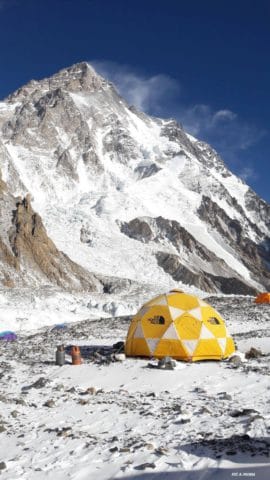
Winds continue to keep climbers in place or being very careful with limited acclimatization rotations. The forecast doesn’t look great for either K2 or Everest but there are days with low winds that may be suitable for some progress. See this post for full background on the K2 and Everest expeditions and the history of winter attempts on the highest two mountains on Earth. Both expeditions need to summit no later than the spring equinox on March 20, 2018, at 0:15 PKT for K2 and 18:00 NPT for Everest to meet a winter summit definition. Big Picture So what are their chances of summiting? I think comes down to one word: wind. If on their summit push, the winds stay below 30 mph, about 50 kph, they can safely push. They might even go if the winds don’t gust higher than 40 mpm/65 kph.  But this is still a couple of weeks away at the earliest. On K2 they have reached 6,300-meters with the fixed rope and need to get to the high camp, aka C4 at 8,000-meters. On Everest, they have fixed the rope to 7950-meters so they are slightly ahead – not that this is a competition. But keep in mind that these are extraordinary climbers – uniquely strong and extremely determined so given the chance to go for the summit in a safe but narrow weather window, they may skip a camp altogether and climb fast and hard. And that is what makes this even more exciting. Winter K2 The Polish team continues to battle high winds on K2. Marcin Kaczkan and Denis Urubko slept at C1, 5,900-metres then moved up to C2 at 6,300m. They are making day by day decisions on whether to go higher or back to base camp. They said they are dealing with high winds but it’s “manageable.” All other members remain at base camp as the winds are expected to go even stronger late 5 February. This is a drone photo of their base camp on the glacier about an hour from the start of the Cesen route: You can follow them directly on their website, Facebook, and SPOT tracker Winter Everest Alex Txikon and the team continue to stay at base camp after reaching 7,850 meters between Camp 3 and the South Col. The winds continue to be too strong to climb higher – 70 mph/112 kph at the South Col. The computer models show strong winds for the rest of the week, but that can change quickly. You can follow their movements on Alex’s GPS tracker,  Twitter,  Instagram, and Facebook. Other Winter Climbs There are a couple of other climbs this winter: A small team of Pakistani climbers is attempting the first winter summit 7200 meter Masherbrum West Peak aka Masherbrum 2. Lead by Maaz Maqsood. We finally have something of an update from this team. The three Pakistani climbers, Maaz Maqsood, Ali Durrani, and Ali Rozi, established a Camp 1 but are fighting deep snow. They posted over the weekend they will leave for their summit bid directly from base camp with only one camp established. They posted this video on facebook: Another big winter climb is by Simone Moro and Tamara Lunger on a very northern peak in Siberia, Pik Pobeda, 3003 meters, in the Chersky Range region.  Note there are two peaks named Podeda, their’s in Sakha Republic, Russia and the other on the border between China and Kyrgyzstan at 24406 ft / 7439 m. To complicate it further, the higher peak’s official name in Kyrgyz is Jengish Chokosu, which means “Victory Peak”; its Russian name is Pik Pobedy (or Peak Pobeda) which has the same meaning. I *think* I have this correct: -? . source  You can follow them on Simone’s SPOT. They posted this rare update today on facebook: “Simone, Tamara Lunger, Matteo Zanga and Filippo Valoti-Alebardi have been stuck for about a week in a little village in the middle of nowhere, or better, in a shack belonging to three reindeer herdsmen. The spot is marked on the map. Each day seemed good to start heading off with the reindeer drawn sledges, towards the base of the mountain (Pik Pobeda 3003 m.), but the weather conditions have forced them to postpone day after day. With a quick call by satellite phone they have let us know that tomorrow they will be setting off nonetheless. It is still snowing but temperatures have gone back to normal: only -28°.” Climb On! Alan Memories are Everything

K2 and Everest Winter Climbs Back in Business
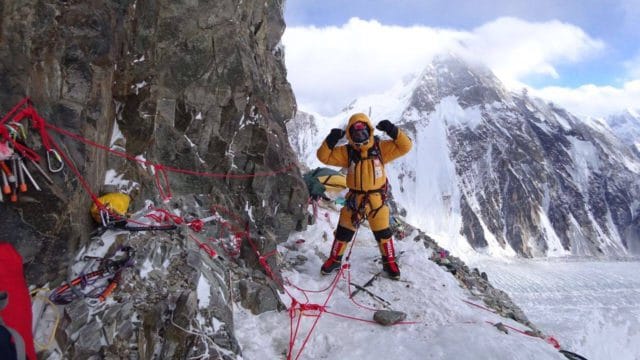
The winter climbs of K2 and Everest were progressing normally but with the recent rescue on Nanga Parbat, the activity paused to help out. Now that Elisabeth Revol is recovering in a hospital and the Polish K2 rescue team is back at base camp, the on-mountain activity has picked back up. See this post for full background on the K2 and Everest expeditions and the history of winter attempts on the highest two mountains on Earth. Big Picture Both K2 and Everest are not “easy” anytime but in the winter the challenges are amplified. This past week has shown how the best plans are often stopped by the weather – high winds to be precise. Currently on Everest winds are a sustained 160 kph/100 mph and on K2, slightly lower but still high. I can tell you from personal experience that these winds can easily toss you around like a piece of paper. A well-known story of deadly wind gusts comes from the 1995 death of Alison Hargreaves and five teammates on K2. They summited in good weather but it deteriorated quickly as a storm approached. The next day, climbers who had turned back fearing the storm found her jacket, boot and harness. A body, presumed to be her, was spotted near Camp 4. It was assumed all six were blown off the mountain during the storm. Winter K2 The Polish team is now back together but once again hit by high winds on K2. The members who went to Nanga Parbat caught a small break in the weather that allowed the helicopter to fly from Skardu to K2 base camp. Late in the week, other team members, Marek Chmielarski and Artur Małek, slept at Camp 1 and Camp 2 keeping the Česen Route aka Basque Route open and acclimatizing. This is a good video showing Marek and Artur climbing between C1 and C2 on the Česen Ridge. You can follow them directly on their website, Facebook, and SPOT tracker Winter Everest Alex Txikon and the team are back at base camp after reaching 7,850 meters between Camp 3 and the South Col. They are experiencing windy conditions as shown in this video they posted on Facebook: You can follow their movements on Alex’s GPS tracker,  Twitter,  Instagram, and Facebook. Nanga Parbat Elisabeth Revol continues to receive treatment for frostbite on her hands and feet in a Swiss hospital.  She gave a complete interview to AFP this week revealing that they did summit and Tomek Mackiewicz got in trouble almost immediately on the descent. She said he became blind and suffered frostbite on his feet, hands, and face. When they couldn’t reach any of the high camps, they took refuge in a crevasse for the night. At sunrise, Mackiewicz was worse and Revol saw blood streaming from his mouth – a sign of altitude sickness and the only cure is a rapid descent but he was now immobile. Revol was told by the rescue team to descend to 6,000-meters due to limitations of the helicopter, weather and lack of a suitable landing spot higher. She said leaving Mackiewicz was not her decision. She spent another night out, again in a small crevasse but began to hallucinate. She saw people giving her tea and she gave them a boot as payment thus exposing her foot to the harsh temperatures for five hours. This is when she began to develop frostbite on her hands and feet but continued to climb down the mountain. Eventually, she met up with Denis and Adam. The fundraiser has been redirected on behalf of Mackiewicz’s wife and three children. Other Winter Climbs There are a couple of other climbs this winter: A small team of Pakistani climbers is attempting the first winter summit 7200 meter Masherbrum West Peak aka Masherbrum 2. Lead by Maaz Maqsood. Another big winter climb is by Simone Moro and Tamara Lunger on a very northern peak in Siberia, Pik Pobeda, 3003 meters, in the Chersky Range region. They have arrived at the peak but there is little information. Climb On! Alan Memories are Everything

Winter Climbs: K2, Everest and Wind

K2 summit winds July 13, 2016. Courtsey of Dawa Sherpa Seven Summits Treks

The death of Polish climber Tomek Mackiewicz and the rescue of French climber Elisabeth Revol by the Polish K2 team had followers at the edge of their seat over the past five days as once again the world’s attention was focused on high-altitude mountaineering. Now the K2 team is trying to regroup and over on Everest, there has been excellent progress this week. But with high winds hitting both Hills, we can expect a pause for a few days. See this post for full background on the K2 and Everest expeditions and the history of winter attempts on the highest two mountains on Earth. Big Picture Climbing an 8000-meter peak is difficult enough in the normal seasons – pre and post-monsoon for Everest and summer for K2 – but doing them in winter takes the difficulty to an entirely new level. There are two major issues: wind and cold. Winter weather is just an unpredictable as summer for high mountains because they make their own conditions poking into the jet stream. The cold is beyond brutal, at times can be -40F/C. Even the best down suits will only do so much. Add in the winds, and exposed skin will almost instantly suffer frostbite. So it becomes a bit of a game to climb as high as you can, as fast as you can and return to the safety of camp before a disaster occurs. If you target a short weather window and are wrong, the results can be deadly. Depending on the year, heavy snow can be an issue. The Poles had reported that K2 had little snow on the flanks and they were climbing on ice-covered rock most of the time. Of course, we will see what they find at Camp 4, about 8,000-meters. The big issue on Everest will be near the South Col and perhaps the Triangular Face. All the climbers are not using supplemental oxygen thus the risk is even higher. Extra O’s primarily help keep the climber warm. When cold penetrates the layers, the body will abandon the fingers, toes, nose and shift more blood to save the heart, lungs and other organs. This natural triage must be consciously managed throughout an expedition. The only cure for these conditions is to get lower and warmer. Winter K2 The Polish team is not 100% back together as the members who went to Nanga Parbat are stuck in Skardu waiting for better weather for the helicopter. The winds are 50kph/30 mph at base camp and stronger up high. The estimate at Camp 2, around 6,300-meters, is winds blowing at 80kph/50 mph. Once back together, they will continue to fix the route up the Česen Route aka Basque Route, hopefully establishing Camp 3 around 7,000-meters. You can follow them directly on their website, Facebook, and SPOT tracker Winter Everest Alex Txikon and the team took advantage of good weather. Two days earlier they established their Camp 3 on the Lhotse Face. They put up two tents assuming they can support seven climbers on their summit push.  They planned to spend a night at C3 then tag the South Col but it appears they only went a bit higher than C3, perhaps 7,800-meters and are descending. They also are expecting high winds and will return to base camp. Wind gust might reach 150 kph/93 mph at 8,000-meters. Tixkon Garmin Tracker shows they reached just above Camp 3: You can follow their movements on Alex’s GPS tracker,  Twitter,  Instagram, and Facebook. Nanga Parbat Elisabeth Revol is now in Geneva Switzerland undergoing treatment for frostbite on her hands and feet. She is receiving drugs (vasodilators), treatment in a hyperbaric chamber. A decision on amputation will be made in a few days according to Frédéric Champly, emergency chief at Mont Blanc hospital in an interview. source Tomek Mackiewicz is presumed dead. In a write-up about the incident, Revol said that after they had summited Nanga, he began to suffer from frostbite, and snow blindness. She made the decision to leave him protected in a sleeping bag in a crevasse at 7,280-meters. He was unconscious and immobile. Desnivel has a good interview with Denis Urubko. Other Winter Climbs There are a couple of other climbs this winter: A small team of Pakistani climbers is attempting the first winter summit 7200 meter Masherbrum West Peak aka Masherbrum 2. Lead by Maaz Maqsood. Another big winter climb is by Simone Moro and Tamara Lunger on a very northern peak in Siberia, Pik Pobeda, 3003 meters, in the Chersky Range region. They have arrived at the peak. Climb On! Alan Memories are Everything

Nanga Parbat: 1 Saved, 1 Lost and the Spirit of Mountaineering is Strong
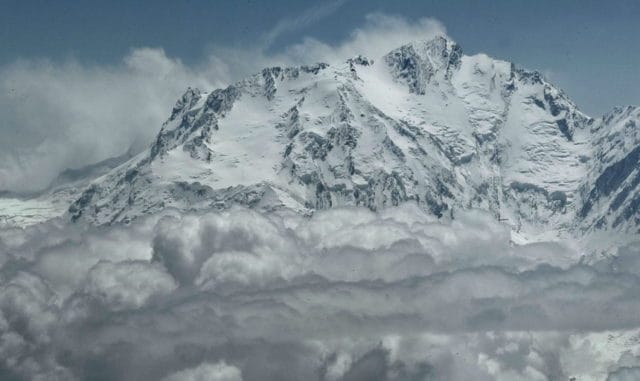
By now, the story is well known and earning global headlines in both the mountaineering and mainstream press. Two climbers joined together to attempt the world’s ninth highest peak, Nanga Parbat at 8,126-meters/26,660 feet. They got in trouble descending from 8000-meter level and life and death decisions were made. Tomek Mackiewicz‘s dream was to summit Nanga in the winter. This was his seventh attempt on the peak. The polish climber had teamed up with French climber Elisabeth Revol who had come within a breath of summiting last year. She was on her third attempt. The two highly skilled climbers made the summit was confirmed by one, but this detail seems less important given what happened next. The duo arrived in Pakistan on December 16 planning to travel to base camp and climb via the Diamer Face – a route both knew well. They touched 6300 meters on an acclimatization rotation on January 3 but then, as is expected on the high peaks in winter, the winds moved in. The temperatures dropped to -45 Fahrenheit or Celsius – no matter the scale, skin instantly freezes in these conditions. After waiting a couple of weeks, they left for their summit bid, aiming at a tiny window when the winds would calm, perhaps enough time to sneak to the top and get back down before winter returned. January 25 became the target summit day. On January 24, they had reached 7,300 meters and followers cheered them on. Then, all communications stopped. The mountaineering community went into action. Their home teams and local logistics organizer started to call for helicopter rescues. Polish and French embassies got involved. But, as is standard and well known in Pakistan, no cash, no rescue. A private company, Askari Aviation, would fly military helicopters but their flying ceiling was 6,000-meters and the climbers were thought to be at 7,900 meters. A fundraiser was launched and with hours, tens of thousands of Euros were raised from tiny and large donors across the world. Then the money problem was instantly erased as the Ministry of Foreign Affairs of Poland said they would guarantee all rescue costs. Plans were developed and the only humans on the planet that had the skills and readiness to help with the operation were on K2, 111 miles to the North. The Polish K2 team had already spent several nights at Camp 2 on the Česen Ridge, a 6400-meters.  When contacted they didn’t take another breath before saying yes. The plan took shape starting with a helicopter picking up Denis Urubko, Adam Bielecki, Piotr Tomala and Jarek Botor and flying them as high up on Nanga as possible. Denis Urubko posted on Facebook: Ciao Matteo. Everything is in correct way finally. Tomorrow morning rescue team will fly to Diamir. We will try to go by Kinshoffer route as soon as possible. Adam and me are in head-team, going light style. Will be necessary to climb, sure, because old ropes shall be into the ice. Our group can be 4-6 members finally. We’ll try to do our best. What developed was fundamental battlefield triage, save those who have a chance and get to others next. They would attempt to rescue Revol first who was reported to have tried to descend to a safer altitude near Camp 3. She had sent her GPS location via her SPOT tracker. Then they would return to attempt to retrieve Mackiewicz near Camp 4, suggesting he would have spent over 48 hours near 8,000-meters blind and frostbitten with no food or water. The unpredictable winter weather – high winds and heavy snow played with the plans. The choppers were on and then off. They could fly higher but were stopped for safety when dense fog developed above 6,000-meters. the first rule of being a rescuer is not to become a victim. Urubko and Bielecki were dropped at 4,900-meters –  a long way to climb to reach Revol. She reported that Tomak was suffering from frostbite, snow blindness and was unconscious. She was faced with a decision most will never experience and ever fewer may understand. She began to carefully descend knowing that was her only chance to live. Only Revol will know what she felt, what she said and how the weight of her decision will bear on her for the rest of her life. For others to criticize is a mistake and an exercise in ignorance and arrogance. The Poles climbed at a superhuman pace – covering 1,250 meters in 7:30 – this is 166 meter per hour or 550 feet per hour – at 6,000-meters, ~20,000 feet. This is phenomenal considering the technical terrain at night on the Kingshofer Wall. They found Revol at midnight. The rest of the K2 team, Piotr & Jarek, followed them with more rescue gear ready to reach Tomak. As the weather deteriorated, the three alpinists descended, Revol with frostbitten toes and virtually no food or water for the past 48 hours. The choice was made to leave Tomek in a tent at 7,400 meters as the clouds moved over Nanga and the winds picked up. The last person to see him was Revol, 24 hours earlier.     Reaching base camp, the wind was strong – too harsh for a helicopter to fly in – or for a rescue attempt of Tomek. As one of the thousands who posted on social media said, “Tomek is now asleep in the arms of Nanga.” The helicopter flew the rescue team and Revol to Islamabad where she is receiving treatment for her toes, and for her heart. The fundraiser continues now shifted from rescue to care for Tomek’s wife Anna and their 3 children. The K2 team will return to K2 with their attempt to be the first to reach the summit of K2 in winter, according to this interview with Denis Urubko. Climbing any mountain in winter is dangerous. Adding in the altitude and terrain of an 8000-meter mountain makes success almost always impossible. For those who try, they fully understand the risks. For those who watch

Disaster Developing on Nanga Parbat, K2 Team to Launch Rescue – Update 4
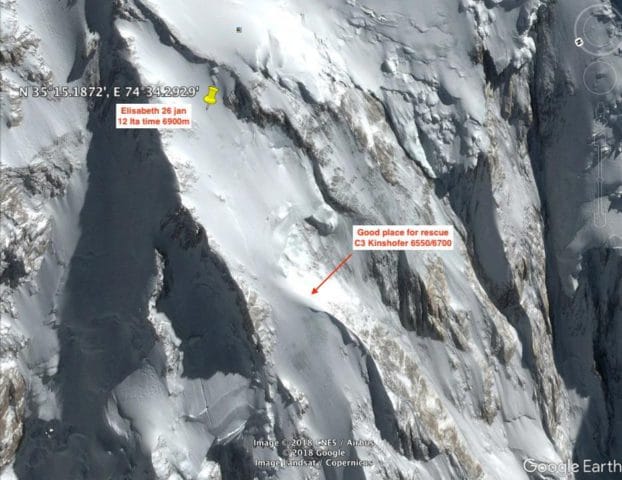
Courtesy Mountain TV

Many media outlets and multiple press reports plus posts on Facebook are describing a developing disaster scenario on Nanga Parbat for Polish climber Tomek Mackiewicz. He and his French climbing partner Elisabeth Revol were on their summit bid in a tiny weather window when Mackiewicz developed frostbite and snowblindness. There has also been a mention of injury, but that is unclear. Update 5 Horribly sad but also part of mountaineering for a winter 8000er, due to impending bad weather the rescue efforts for Nanga climber Tomek has ended. The K2 climbers who stopped their historic effort for a winter K2 summit will descend with Elisabeth Revo – one life saved. I will have a full recap and what’s next tomorrow. Amazing effort and well done to all. RIP Tomek. Update 4; 02:00 28 January Pakistan time: We are witnessing a superhuman effort by the K2 team to climb so fast at night. There are only a handful of climbers who could be doing what is happing before our eyes. They climbed at a rate of 400 feet or 121 meters per hour at 20,000 feet/6000 meters up a very steep, icy and technical Kingshofer wall. This is simply incredible. After being helicoptered from K2 base camp, Denis Urubko and Adam Bielecki are with Elisabeth Revo a bit more than 200m above the Kingshofer wall around 6000 meters. She is reported to have frostbite on several toes but in generally good shape. They still need to get lower but this is great news. Medical assistance is ready to give aid as soon as possible. She is a survivor to be sure.  source Other K2 climbers will continue to try and reach Mackiewicz . He was last reported at 7200 meters but there has been no recent contact with him. If you are accessing any SPOT or other GPS trackers for Nanga Parbat, a request has been made to stop as it is taking up bandwidth, delaying information and preventing access at times. Thanks. Not important now, but there is a report both Revol and Mackiewicz did summit Nanga Parbat on the 25. – not confirmed. Update 3 19:30 PM 27 January Pakistan time: The fundraiser target has been increased to help with more expected expenses. The K2 climbers are now on Nanga Parbat. “The helicopter did not succeed in getting high enough to pick up Eli. It has dropped off rescuers including Denis Urubko and Adam Bielicki at C1 at 4,800m. They have a tracker on them and have last been seen at 5,225m. They will continue climbing up through the night. They are both well acclimatized on K2 and extraordinarily strong. Elisabeth took a decision to start a descent down from 6700m towards them provided she can find fixed ropes. She has no battery power left. We believe in the strength of her spirit.” Update 2 08:00 27 January Pakistan time The helicopters are waiting for better weather before flying to K2 base camp thus delaying the attempt to help those on Nanga. If the K2 team cannot be reached four high altitude porters will be helicopter to 6300 meters to render aid. Revol has been in contact and reports frostbite but she seems to be surviving. Update 1: Latest Update from Crowdfunding page: 19:00 26 January – Eli managed to bring Tomek down to 7280m this morning and set him up in a tent to spend the night while the rescue effort gets under way early tomorrow morning. – There is a good coordination of the French/Polish diplomats and the military – Eli is in the process of descending down and has last communicated from 6671m. Though she has no tent, she is clearly lucid and is making progress on descent to help get rescue effort under way. – K2 Polish climbing team of 4 will be picked up tomorrow from their base camp by a helicopter to mount a rescue attempt from the base camp of Nanga Parbat. – If the weather allows, rescuers with oxygen and food will be dropped off at a higher altitude – Your generosity and the help of Ministry of Foreign Affairs of Poland has helped fund the effort. Background A rescue plan was developed when the Polish K2 team agreed to fly to his location around 7,300-meters. They are already acclimatized to this altitude from their efforts on K2 and are the only viable team available on earth. Also, Polish climber, Adam Bielecki knows Nanga well since he attempted it by the same route in the winter of 2016. Denis Urubko posted on Facebook: Ciao Matteo. Everything is in correct way finally. Tomorrow morning rescue team will fly to Diamir. We will try to go by Kinshoffer route as soon as possible. Adam and me are in head-team, going light style. Will be necessary to climb, sure, because old ropes shall be into the ice. Our group can be 4-6 members finally. We’ll try to do our best. The commercial company, Askari Aviation flying a Pakistani military helicopter, refused to launch the mission without $100,000 rescue costs guaranteed.  This is standard procedure in Pakistan. Mackiewicz doesn’t have insurance but Revol does. The government of Poland stepped into secure payment but two crowdfunding efforts, crowdfunding 1 / crowdfunding 2 have already raised over € 80,000 within hours. Two helicopters, standard on Pakistan, will conduct the operation. First, they will pick up K2 climbers, Denis Urubko, Adam Bielecki, Piotr Tomala, Jarek Botor and Marek Chmielarski, Saturday morning then fly to Nanga which is 111 miles from K2 – about one hour flight. UPDATE: Several reports have the helicopters have left Skardu to pick up the K2 climbers but unconfirmed. Given the location of the climbers, the helicopters will drop off the rescue team around 6,000-meters and they will need to climb up the Diamer Face to aid the climbers. They will attempt to rescue Revol first who is reported to have tried to descend to a safer altitude near Camp 3. She has sent her GPS location via her SPOT tracker. Then they will return to attempt to

K2 Winter Update and News from Everest
As expected the K2 team is making excellent progress while the Everest gang is about to re-engage climbing Everest. The climbers on the other winter 8000er, Nanga Parbat, have been staged high on the mountain waiting for calm winds. See this post for full background on the K2 and Everest expeditions and the history of winter attempts on the highest two mountains on Earth. Big Picture There are two styles often discussed when climbing the worlds highest peaks: alpine and siege. With alpine style, climbers make one push from their base camp to the summit, carrying all their gear with them and making camps as needed. This is often impossible on 8000-meter peaks due to the need for acclimatization but has occurred when climbers acclimatize on other peaks. With siege or expedition style, teams will establish and stock several intermediate camps roughly 1000-meters or 3,000 feet apart. This takes more time but is generally safer and provides an opportunity to rest or wait out bad weather. Both Everest and K2 teams are climbing in siege style without supplemental oxygen. Alex Txikon is doing almost a hybrid given he summited a 7,000-meter peak last weekend. Winter K2 The Polish team has had some illness in their camp that is slowing some of the team. Due to what was called a “minor health problem”, one team member, Dariusz Zaluski was flown to a hospital in Skardu for treatment but plans on returning.  Meanwhile, other members are taking advantage of good weather – tolerable winds – to acclimatize and continue fixing the Česen Route aka Basque Route with ropes. They have established two camps: C1 at 5,900-meters and C2 at 6,300 to 6,400-meters and are rotating members between camps. There is only one tent at C1 and two tent at C2 according to outstanding pictures posted by Denis Uruboko. He reported very high winds when he was at C1 and C2. Denis Uruboko, Marcin Kaczkan, Marek Chmielarski and Adam Bielecki have either spent the night in C2 or are currently there. Rafał Fronia and Piotrek Tomala are currently at C1. You can follow them directly on their website, Facebook, and SPOT tracker Winter Everest Alex Txikon and the team are completing a rest cycle after their rare and successful summit of Pumori Peak at 23,419’/7138-meters – equivalent to Camp 3 on the Lhotse Face. They are leaving Base Camp tomorrow for another climb, perhaps as high as Camp 4 at 8,000-meters or the South Col. Most climbers who do not use supplemental oxygen try to climb and preferably spend one night, at 8K to ensure their acclimatization. Txikon had previously said he expected to attempt the summit in the third week of February, about a month away. This gives them plenty of time to deal with weather delays, illness or unexpected conditions. They need to summit no later than the spring equinox on March 20, 2018, at 18:00 NPT to meet a winter summit definition. Prior to their summit, there have only been 17 winter summits on Pumori. Tixkon posted on facebook: You can follow their movements on Alex’s GPS tracker,  Twitter,  Instagram, and Facebook. Nanga Parbat Tomek Mackiewicz and Elisabeth Revol over on Nanga Parbat have posted that they were at C3 in 60mph/100 kmh winds. Today, Wednesday 24 January, they planned to move to  C4  and go for the summit on 25 January. This is the seventh attempt for the 42 year-old Polish climber, Mackiewicz. Quiet Winter Climbs There are a couple of other climbs this winter: A small team of Pakistani climbers is attempting the first winter summit 7200 meter Masherbrum West Peak aka Masherbrum 2. Lead by Maaz Maqsood. Another big winter climb is by Simone Moro and Tamara Lunger on a very northern peak in Siberia, Pik Pobeda, 3003 meters, in the Chersky Range region. They have arrived at Yakutsk on their way to the peak. Climb On! Alan Memories are Everything

Winter K2 and Everest Climbs – A Rare Summit on Pumori!
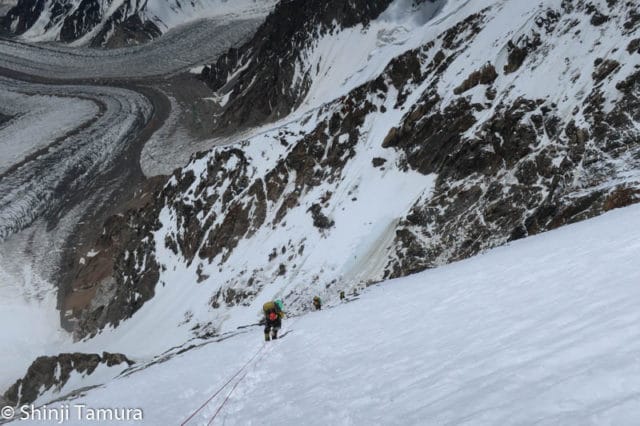
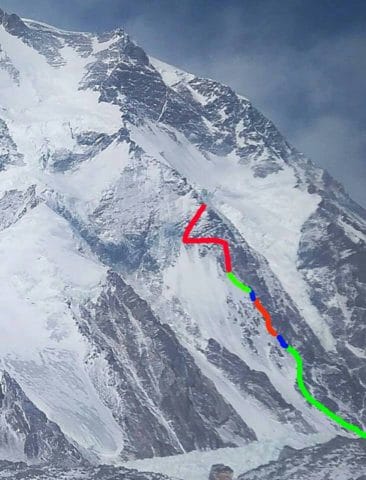
This week both the Everest and K2 team should make huge progress.  Over on Nanga Parbat, the two-person team will attempt to summit midweek. See this post for full background on the K2 and Everest expeditions and the history of winter attempts on the highest two mountains on Earth. Big Picture Entering their third week, both the K2 and Everest teams continue to set the route and acclimatize. They are busy establishing the low camps i.e. under 7000-meters before moving higher. Winter K2 The Polish team reports excellent weather for the first time in a few days. They continue to rotate climbers up the Česen Route aka Basque Route in two or three person teams to fix the route. Today they noted they were able to establish a small Camp 1 about 5,900-meters. The ridge is very steep and there is little room for even one tent in many spots. Climber Jarosław Botor posted 26 pictures on his Facebook feed. It gives a good idea of what they are facing. Denis Uruboko posted an update on fixing the lower part of the route from a few days ago. He said it was extremely windy and took them about an hour to reach the base of the Česen ridge from base camp. They investigated fixed ropes last set by Russell Brice’s Himalayan Experience 2017 summer effort on the Česen but were deeply embedded in the ice and impossible to pull out. Even if they could retrieve them, they would have been rotten due to the exposure from direct sun at this extreme altitude. He went on to add that the climbing was on hard black ice meaning the ice covered the black rocks of the ridge. As they approached 6,000-meters the winds really picked up. He felt that they had gone as high as possible given the conditions. This may be the story throughout their expedition – to take what the mountain will allow. I am told by their home team that there is less snow than they expected and more hard ice and rocks, so they must be mindful of rockfall. This is one of the key dangers climbing K2 by any route. Denis Urubko has a nice post with an overview of their effort thus far. This picture shows the route: You can follow them directly on their website, Facebook, and SPOT tracker Winter Everest Alex Txikon and five Sherpas have fixed the ropes through the Khumbu Icefall and reached Camp 2 at 21,000’/6400m. However, this week Alex Txikon, Ali Sadpara, Pemba Bhote Sherpa and Nuri Sherpa summited nearby Pumori Peak at 23,419’/7138-meters – equivalent to Camp 3 on the Lhotse Face. This is a rare event these days given many climbers avoid Pumori due to avalanche danger. Tixkon posted on facebook: Pumori was first summited by the German team of Gerhard Lenser, Ernst Farrer, Ueli Huerlemann, Hans Ruetzel on 17 May, 1962. Since then, there have been 507 summits and 41 deaths – 19 from avalanches and 13 from falls. Pumori has a death rate of 2.13 compared to Everest’s 1.22. The most recent summit prior to Txikon was by a Czech Republic team on 1 November 2011. There were unsuccessful attempts in 2012, 2013, 2014, 2015, 2016 and 2017 on multiple routes. You can follow their movements on Alex’s GPS tracker,  Twitter,  Instagram, and Facebook. Nanga Parbat Tomek Mackiewicz and Elisabeth Revol over on Nanga Parbat are reported to go for the summit this upcoming Wednesday. They made an attempt over the weekend but turned back due to winds. They are staying at a camp at 7,000-meters to wait for better conditions. This will be their only attempt. If they don’t make it, it’s over for this trip. This is the seventh attempt for the 42 year-old Polish climber, Mackiewicz. Quiet Winter Climbs There are several other climbs this winter but they are not updating from their base camps so I will list them for reference only: A small team of Pakistani climbers are attempting the first winter summit 7200 meter Masherbrum West Peak aka Masherbrum 2. Lead by Maaz Maqsood. Another big winter climb is by Simone Moro and Tamara Lunger on a very northern peak in Siberia, Pik Pobeda, 3003 meters, in the Chersky Range region. Climb On! Alan Memories are Everything

Winter K2 and Everest Updates

K2 Česen Route aka Basque Route

Progress when climbing 8000-meter mountains is often measured in small steps, and that is what we have this week.  Also, it appears the Nanga Parbat team is heading for a summit attempt. See this post for full background on the K2 and Everest expeditions and the history of winter attempts on the highest two mountains on Earth. Big Picture Both the K2 and Everest teams continue to acclimatize as well as trying to establish the low camps i.e. under 7000-meters before moving higher. The main issue has been, is and will always be wind. If it is about 30 mph/48 kph the windchill becomes deadly. Winter K2 The Polish team is starting to send members up the Česen Route aka Basque Route to scout out conditions. High winds hit K2 a couple of days ago but seem to have calmed allowing further progress. A big decision was made on Wednesday, 17 January, by Janusz Gołąb and Denis Urubko to skip establishing a Camp 1 at 5,900 meters and move on to Camp 2 at 6,200 meters. This means the climbers will have a very long day from Base Camp to Camp 2 but might save some time in the long run by spending less time on the exposed ridge. I’m told by their home team that they choose the Česen Route primarily because it was faster. It is steeper than the Abruzzi so these strong climbers should be able to cover more ground faster. Also, it avoids House Chimney and the Black Pyramid which are time-consuming technical rock climbs at extreme altitude. While Gołąb and Urubko rest, another group of climbers will continue fixing the route and establish C2 over the next few days. The four Pakistani High Altitude Porters are Sadiq, Amina Ullah Baig, Jalal Uddin and Fazal Ali. They are from the Pakistan valley of Shimshal. Their primary role is to help ferry gear to the camps, not to fix the route even though they have for previous summer expeditions. This is a nice video at the extreme lower part of the route by Janusz Gołąb and Denis Urubko: And a good photo from at the beginning of the route. This is their commentary: Simple approach from base to wall-About 1 hours. Other than in summer – without dodging the podtopionych ponds or getting closer to the kuluarów that can leave something. The team team is heading to the right of Spurs rock, against the wall. You can follow them directly on their website, Facebook, and SPOT tracker Winter Everest Alex Txikon and five Sherpas have fixed the ropes through the Khumbu Icefall. They have established Camp 1 at 6,050 meters in the Western Cwm and did a day hike to Camp 2 just below the Lhotse Face. Currently, they are climbing Pumori, adjacent to EBC. It’s unclear how high they intend to go. It’s quite common for Everest climbers to go to Camp 2 on Pumori for day hikes and acclimatization. This is an easy hike with no serious avalanche danger. Above C2 to the summit has been dangerous with significant avalanche danger. From Pumori, there are stunning views of Everest Base Camp, the Khumbu Icefall, Western Cwm, Nuptse, Lhotse and Everest. I took this photo in 2015. You can follow their movements on Alex’s GPS tracker,  Twitter,  Instagram, and Facebook. Nanga Parbat Tomek Mackiewicz and Elisabeth Revol are working their way up NB this winter. They have been experiencing poor weather and have been locked down the past two weeks but today reported the weather is clearing. They suggest they are going for the summit now. They have a cache of supplies at 6700 meters.  This will be the seventh attempt for the 42 year-old Polish climber, Mackiewicz. Quiet Winter Climbs There are several other climbs this winter but they are not updating from their base camps so I will list them for reference only: A small team of Pakistani climbers are attempting the first winter summit 7200 meter Masherbrum West Peak aka Masherbrum 2. Lead by Maaz Maqsood. Another big winter climb is by Simone Moro and Tamara Lunger on a very northern peak in Siberia, Pik Pobeda, 3003 meters, in the Chersky Range region. Climb On! Alan Memories are Everything

K2 and Everest Winter Efforts Begin Climbing
K2

Now that both the K2 and Everest teams are nicely established at their respective base camps, they are beginning to make progress climbing the Hills.  See this post for full background on the K2 and Everest expeditions and the history of winter attempts on the highest two mountains on Earth. Big Picture Both teams are dealing with the same challenge: establish camps to support their summit push. Both will put in fixed lines to protect them from falls. Along the way, they will set up camps along the route. The highest camps will most likely be created on their summit push. Each camp will be stocked with tents, food, stoves, and fuel. Neither team is using supplemental oxygen thus significantly reducing the loads but also greatly increases the risk of frostbite. Establishing the low camps is critical but in the grand scheme not the biggest challenge. That will come when they break 7,000 meters or about Camp 3 for both the Everest and the K2 efforts. This is when high winds, heavy snow and avalanche conditions will come into play for their winter attempts. So the next couple of weeks should be calm by comparison to what we may see in mid to late February. The short-term issues will include climber health, a good acclimatization program and sufficient good weather to establish the route. Winter K2 The Polish team has established their BC and set up a solid camp complete with an Internet connection. 16 Jan update: I’m being told by their home team that high winds have hit K2 and the team may be stuck at base camp for a week or more. More details tomorrow. 17 Jan UPDATE: Janusz and Denis, according to info from the base camp, have reached about 5.900m, then return to the base. There will be no Camp I just Camp II at an altitude of 6,200. Part of their team has already gone to the base of K2 to scout out Camp 1 on the Česen Route aka Basque Route. They have very short days- starting at 8:30 with sunset at 15:30 – 7 hours total! High winds continue to be reported and we can expect to read this throughout their effort. In fact, in my opinion, that will be the only reason they don’t summit this year, short of a disaster. This is a nice video of the team at base camp and the extreme lower part of the route:  You can follow them directly on their website, Facebook, and SPOT tracker Winter Everest Alex Txikon and five Sherpas have fixed the ropes through the Khumbu Icefall. They have established Camp 1 at 6,050 meters in the Western Cwm. Today they did a day hike to Camp 2 just below the Lhotse Face. Alex posted this video on his Facebook feed: You can follow their movements on Alex’s GPS tracker,  Twitter,  Instagram, and Facebook. Quiet Winter Climbs There are several other climbs this winter but they are not updating from their base camps so I will list them for reference only: A small team of Pakistani climbers are attempting the first winter summit 7200 meter Masherbrum West Peak aka Masherbrum 2. Lead by Maaz Maqsood. Another big winter climb is by Simone Moro and Tamara Lunger on a very northern peak in Siberia, Pik Pobeda, 3003 meters, in the Chersky Range region.  Tomek Mackiewicz and Elisabeth Revol are hoping to get a winter summit of NB this year.  This will be the seventh attempt for the 42 year-old Polish climber, Mackiewicz. Their organizer did Tweet: “…Eilsa & Tomek back to BC, due to the strong winds they have deposed at (6700m), the weather extremely cold and windy increasing, they will continue next journey for up soon.” Aconcagua The highest peak outside the Himalaya is seeing the normal busy season. High winds have stalled quite a few attempts but one I’m following is a British team working on their 7 Summits. Chris and Ian Beale at age 70 have left for their summit bid. They report that Cecile Korg and team are attempting to take a Norwegian comedian to the summit via the False Polish Glacier Route! A Greek climber died on Aconcagua. 59 year-old Dimitri Constantinou was found near the summit in high winds and low visibility. Meanwhile, a valiant effort to break the speed record on the South Face of Aconcagua has come to an end due to winds and heavy snow. Ecuadorian Karl Egloff and Nicolas Miranda were out to beat the current time of 22 hours by Bruno Suzac, France in 2002 from Plaza Francia to the North Col as reported by Aconcagua Online. Climb On! Alan Memories are Everything