Everest/Lhotse 2016: Wave #3 Summits and Major Push On

Once again the Everest 2016 teams are getting summits from the Nepal side but they are having to work for it dealing with high winds and deep snow. Russell Brice told me by email “When they [Himex Sherpas] made the route to the summit the snow was thigh deep between South Summit and top of Hillary Step.” When I climbed the same route in 2011 to the summit, I found the snow between the South Summit and Hillary Step not a factor at all. Meanwhile teams on both sides of Everest are moving into position for the next wave of summit attempts. Wave 3 In Wave 3, the Adventure Global team summited at at 6.45 am on 15 May. They included Kevin Farebrother, Jason Snell, James Roth, Furi Sherpa, Lhakpa Sherpa, Tendi Sherpa. Their base camp team posted that they stayed at the South Col last night due to fatigue. Everyone is doing well, but they are exhausted and as a result a little concerned about descending the steep terrain to Camp 2 feeling weary, so they have decided to sleep at the South Col tonight, leave early morning and descend all the way to Base Camp. Seven Summits Treks noted that Mr. Jingchaun Jhang and Mingma Tinduk Sherpa summited at 7:10am. I’m sure there were other summits but am not aware of them at this posting. Summit Challenges For a revealing look at exactly what this year’s Nepal summiters are dealing with, Jagged Globe‘s David Hamilton, a very experienced Everest guide, posted this excellent recap of their summit on 13 May. This paragraph captures it all: At approximately 07.15 we reached the South Summit just as the winds rose to 30 knots plus. This was accompanied by blowing snow and visibility of less than 50m. I was strongly of the view that continuing to climb upwards in these conditions was unacceptably dangerous and aimed to cancel the ascent. I consulted with the two most experienced Sherpa guides with the team (Pem Chhiri and Nima Gyalzen) and they suggested resting in a small hollow just below the South Summit for a short while to see if conditions would improve. I was skeptical of this, as I feared that the wind strength would increase. Low Winds? With a forecast of more moderate winds, multiple teams are moving up both sides of Everest looking for summits on May 18th, 19th and 20th. A computer generated weather forecast, not curated by humans, show low winds for the next several days. As always the expeditions professional weather forecasts from experienced sources. Who is Left? Many teams are on the move but not all are reporting their position or plans. We started the season with 289 Everest Nepal permits. Many members have left due to illness and other reasons, perhaps as many as 50. We have already had 20 members summits thus leaving about 200 left and not all of those will go for the summit. Everest ER suggests over 150 people – not clear who this includes. My own estimate is closer to 300 including members and Sherpas on the Nepal side and close to 150 on the Tibet side. The large Chinese team (25) hosted by Seven Summits Treks already had 1 member summit and the collective military expeditions totaling 60 (UAE, Indian, etc) are difficult to track. In any event, these teams are reported to be moving up now: NEPAL Adventure Consultants Alpine Ascents Altitude Junkies Asian Trekking Furtenbach Adventures High Adventure Expeditions IMG Hybrid IMG Classic 1 IMG Classic 2 Madison Mountaineering Summit Climb Tim Mosedale 360 Expeditions TIBET On the North, teams have made excellent progress in spending acclimatization nights at the North Col and higher. There are multiple individuals climbing without using supplemental oxygen – the Tibet side seems to attract them more than the Nepal side – and have almost touched 8000 meters on their rotations. Similar to some teams on the south about a week ago, there is some degree of frustration that the lines are not fixed to the summit. Dutch climber Peter Boogaard noted on his blog: The skies are bright, no clouds, no wind but…. no fixed ropes beyond 8300 m. For whatever obscure reasons the CMA (Chinese Mountaineering Association), which is responsible for fixing the ropes doesn’t proceed. On the Nepalese side everything is ready and the first summit attempts are underway. There are all kind of rumours why the Chinese delay but basically nobody knows. Teams headed up from Tibet include: Asian Trekking Alpenglow members Alpenglow No Os Adventure Peaks Summit Climb 7 Summits Climb see my estimate of where every team is now on the mountain at the location table. Hillary Step Collapse? David Liaño who summited on 13 May made some news with a Facebook post that the 2015 earthquake caused the rocks that define the Hillary Step to have collapsed. He noted that the Step has been reduced to a benign snow slope and posted this picture: This was David’s fifth summit of Everest from the Nepal side and sixth overall and I fully respect his opinion. I consulted with multiple operators and Sherpas who have collectively over 100 Everest summits and had been on the Hillary Step after David. They felt the rocks had not collapsed and it appeared dramatically different due to an unusual amount of snow. This will be another great story for the press that will live for decades. We will probably not know for sure if there was any movement until the snow melts or blows away enough for the rocks to re-emerge. I assume some of the commercial guides will take a closer look this next week. In any event, getting up and down the Step will be much easier in 2016 and should not result in any delays. Lhotse Ropes Ah, my nemesis seems to have been lost in the Everest shuffle. There are a number of Everest climbers that want to add a Lhotse summit on their way back from the South Col. And there are a handful of climbers who want to summit the old fashion way, from base camp. One report said the ropes had been fixed through the Lhotse Couloir to the summit but an avalanche had taken them out
Everest/Lhotse 2016: Fast Summit Start Slows with Wind
Gambling that the current high winds will let up during the summit climb, multiple climbers and at least one team, Adventure Global are on their push to summit Everest. Most teams however are looking at topping out on the 18th or 19th of May. Fast Start to the Season After a fast start to the season with an impressive team of Sherpas fixing the ropes to the summit on May 11th, a couple of high profile climbers who were under the radar at base camp, made a stealth climb to summit on the heels of the Sherpas to claim first foreigner summit status. What I called Summit Wave 1, on May 12th, the UK’s Kenton Cool got his 12th summit while guiding member Robert Richard Lucas. Sherpa Guides Pemba Bhote and Dorchi Gyalzen summited with them. 13 minutes later, Mexican climber David Liano Gonzalez and Pasang Rita Sherpa also summited. This was Liano’s fifth summit and he was planning on not using supplemental oxygen. Next was Wave 2, when targeting a very short weather window, climbers from Himalayan Experience (Himex), Jagged Globe and Asian Trekking pushed thru high winds and some felt, deep snow, to put 25 people on the summit on May 13th. All climbers are reported to be back at either Camp 2 or Base Camp. Greg Paul with Himex, summited at age 61 with two artificial knees. Today, Wave 3, May 14th more climbers are fighting high winds as they move towards the summit. I will post an update on their status when more information is available. Summit Conditions It takes about seven days from Everest Base Camp on the Nepal side to reach the summit and back: climb to Camp 2 and spend 2 nights, climb to Camp 3 and spend a night, then climb to South Col and leave that same day for the summit, hopefully summit early the next morning and return to South Col or Camp 2 and finally return to base camp. Climbers can tolerate poor weather on the first and last couple of days but for the summit push, they need winds lower than 30 mph/48 kph. Wind speeds higher than that can easily result in frostbite or worse. Lite snow is acceptable but when combined with high winds can create dangerous blizzard conditions and even following a fixed rope, can result in climbers getting lost or going too slowly to summit and using up all their supplemental oxygen. Going too slowly and not turning around is one of the largest contributors to death while on the summit push. Finally a condition called hoar frost can create dangerous conditions when the humidity from air, or even from climbers, crystallizes creating a thin layer of ice on surfaces, including a climber’s down suit, making everything look like an ice sculpture, obscuring visibility and creating cold conditions. This happened to several teams in 2012 on their summit push forcing most to re. Most reputable teams a weather forecast from sources like Michael Fagin in Seattle, Meteotest in Switzerland or freelance sources like Chris Tomer in Denver. These provide guidance as to incoming fronts and wind speeds. Other teams “draft” off the larger well established teams saving a tiny amount of money relative to the overall expense but increasing their risks., not to mention poor style. Tibet As of this post, the ropes have not been set to the summit by the Chinese on the Tibet side. This has stalled most summit plans. Seven Summits Club made an attempt but stopped lacking fixed ropes and poor weather conditions a few days ago. Meanwhile there are climbers above the North Col, mostly those acclimatizing while attempting to climb without supplemental oxygen, but there have been no summits in 2016 thus far. I expect to see a massive push once the ropes are in and a good weather window emerges, perhaps as soon as May 18/19, similar to the south. Still Early To state the obvious, it is still early for Everest. I have posted this chart before of the summits from Nepal but you will see a significant number of summits well into lateish May. And on the North where there is little worry about a melting Icefall that needs to be maintained by the Icefall Doctors, summits can regularly go into early June. This is a time when the leadership of the teams must explain this and exercise patience. Joining the rush based on peer pressure can be a huge mistake. Normal Season As I have been saying for a few weeks now, Everest 2016 continues to behave like a ‘normal’ season down to the weather conditions. Also as noted, there have been warm temps at base camp but these warm conditions have not had a serious impact on the upper mountain and in fact, the snow conditions are more like a cold season up high with a layer snow at the South Col which is usually barren rock. With at least another 200 foreigners and that many Sherpas still waiting for their summit opportunity, the hope is for several days of low winds. This will allow teams to spread out and reduce potential crowds. My sincere hopes for a continued safe season for all. Climb On! Alan Memories are Everything
Everest/Lhotse 2016: Summit Wave #2 has Success – Updated
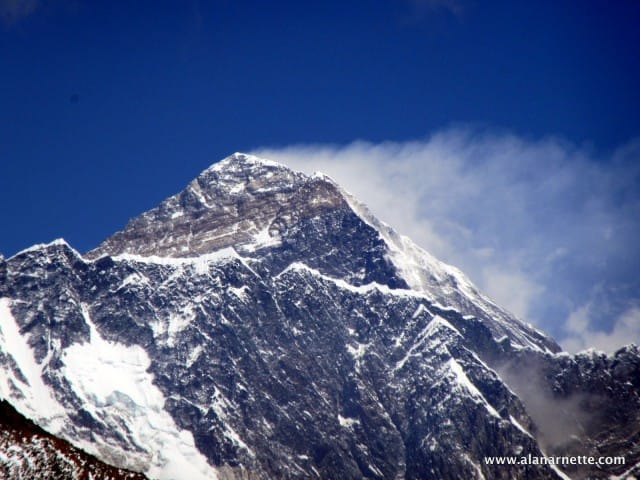
After a few individuals – three foreigners and three Sherpas – summited just after nine Sherpas fixed the route to the summit, the first commercial teams are seeing success on Friday morning, May 13, 2016 Himex sent their entire team up and are reporting that all six have summited about 9:00 am along with at least that many Himex Sherpas. They had 5 members climbing, plus 1 guide and at least 6 Sherpas. Update: The summitters were: Richard Grant Hunter, Andreas Friedrich, Tracee Lee Metcalfe, Jacob Wilem Ottink, Gregory Scott Paul, Semba Takayasu, Lakpa Nuru, Ngawang Tenjing, Ngima Sona, Phura Namgya, Son Dorjee, Sonam Tashi Jagged Globe has at least two climbers on the summit around 9:45 am local time. They were near the South Summit just past 8:00 am. They had four members plus at least that many Sherpas. Update: JG reported the summits as David Hamilton, Nick Talbot, Mary Scannell and Steve Waterman with Sherpas Pem Chhiri, Tamding, Nima Gyalzen, Chhimi and Ang Rinji. They descended to the South Col where they spent the night. Asian Trekking Asian Trekking reports Jelly Veyt, Tahar Manai and Julian David Moutain also summtied on 13 May at 10:31 am along with Dawa Tshering Bhote At this point, the climbers are both elated and exhausted. Most arrived in the full light of the morning sun after climbing for 8 to 12 hours, mostly in the dark. There will be hugs, smiles and definitely tears. Hopefully, no one forgot their cameras as selfies and poses with their Sherpa will be in order. The Sherpas will take a lot of pictures including of themselves. These days, the Nepal Ministry ask for a full picture from head to toe with your eyes and face showing to grant you a summit certificate. In respect for the mountain, most people will not stand on the very top as that is where Miyolangsangma, the Tibetan Buddhist goddess lives. Congratulations to all and safe climb back to camps. Names and details on this updated post when available. Climb On! Alan Memories are Everything
Everest/Lhotse 2016: Sherpa and Western Summits

For the first time since May 24, 2013, climbers officially summited Everest from Nepal. First this year was the rope fixing team of nine Sherpas then on their heels were two Sherpas and two UK climbers. A slew of other teams are on stand-by but the weather is closing the window quickly so it will be a race to see if anyone else summits in the next few days. Sherpa Summits A team of nine Sherpas from multiple teams completed the rope fixing to the summit from the South Col on Wednesday, May 11, 2016. These were the first summits since Jing Wang claimed a summit on May 23, 2014 – which is disputed by many not only for her using a helicopter to bypass the Khumbu Icefall but some even claim she did not summit at all given the absence of proof. The previous summit was on May 24, 2013 by Lhapka Nuru Sherpa (Thami) at 6:00 am. The nine Sherpas who fixed the rope this year were reported as Gyalzen Dorje (Himalayan Experience), Ang Pemba (International Mountain Guides), Nima Tshering (Himalayan Guides), Sera Gyalzen (Asian Treks), Pasang Tenzing (Ascent Himalaya), Mingma (Seven Summits), Mingma Tsiri (NCC), Ang Gyalzen (Arun Treks)and Lhakpa Tsering (Himalayan Guides) Western Summits On the heels of the Sherpas who broke the trail to the summit, Sherpas from HG Everest Expedition 2016 – Pemba Bhote from Hatiya, Sankhuwasabha and Dorchi Gyalzen, Khumjung, Solukhumbu summited along with Kenton Cool and Robert Lucas bringing the total to 13 in 2016 from the Nepal Side. This was Cool’s 12th summit of Everest. A few hours later, Asian Trekking announced that David Liano Gonzalez from Mexico summited Everest today at 8:24 am along with his climbing sherpa Pasang Rita Sherpa. He did not use Oxygen. This was Liano 6th summit of Everest. Standing By Multiple teams are staged from Camp 2 to the South Col waiting for a good weather forecast. They include: Madison Mountaineering. Jagged Globe, Himalayan Experience and others. Heavy snow is predicting for the next couple of days followed by high winds, but there there may be an 18 hour window of opportunity. This is narrow and risky. Many teams are content to wait for another week. Khumbu Icefall Instability The Icefall continues to be very unstable as I personally saw when I was there. There have been two events that have stopped climbing due to ladders being destroyed by falling ice in the past 24 hours. There were no injuries reported. Best of luck to all. Climb On! Alan Memories are Everything
Everest/Lhotse 2016: A New Face of Everest Guiding?
Before I get to an interview with a new face on Everest, a quick update on the summit push news from the mountain. The ropes were fixed to the summit from the Nepal side on Wednesday, May 11. The Sherpas were from Adventure Consultants, Ascent Himalaya, Asian Trekking, Arun Trek, Himalayan Ascent, Himalayan Expedition, International Mountain Guides, Madison Mountaineering and Seven Summits Trek according to Russell Brice, Himex. This opens the door for the upcoming short summit window. I still expect to see over 100 climbers (members and Sherpas) on this first wave. Look for summits from the Nepal side early Sunday morning, May 15, 2016 – Nepal time. Climber Colin O’Brady reported that a small avalanche in the Khumbu Icefall stopped progress for 3 hours today but is fixed now – there were NO injuries North Summit Push? 7 Summits Club reported an abbreviated summit push apparently not waiting for the CTMA to fix the ropes to the summit: Our impulse to move sharply upward was stopped by snow and the lack of a fixed ropes. But this, in some sense, the audit showed the willingness of absolutely all the participants for the assault at any moment. Information from the Chinese changed about when they will finish fixing ropes to the summit. So there are many reasons to be fidgety. We are encouraged by the fact that no one in our team use it. Everyone understands that patience– it is a part of successful expedition. Mountain Rescue For some excellent news, the two Slovakian climbers Vladimír Štrba and Zoltán Pál who were trapped on the Southwest Face after being hit by a snow avalanche have been rescued by four Sherpas hosted by Seven Summits Treks. They are Mingma Gabu, Lakpa Thinduk, Ngima Dorchi and Ngima Wangdi. I’m sure this was filmed as there were helicopters attempting a rescue the prior day but stopped due to bad weather. A television crew for the Travel Channel had set up a team named ‘Everest Air’ as sort of a 911 on the mountains and were aggressively inserting themselves into many events, camera in hand. The team was hosted by Seven Summits Treks. In the Himalayan Times, one of Seven Summits owners, Mingma Sherpa used this event as a platform to answer critics that low cost outfits like his lack experience. They are the largest team on Everest this year with 45 members and have had twice that many in previous years reportedly charging as little as $20,000 per climber. He said: “It is an answer to all commentators, especially to the international expedition operators, who explicitly raised questions over the capability of Nepali companies including Seven Summit which started handling a large number of expeditions on its own.“ The Sherpas climbed above the two climbers, secured by an ice screw on the icy slope to set up a fixed rope. They were lowered to a safer spot of the slope and then descend to Camp 2. The injuries were described as minor and involved the eye of one climber. They were evacuated by helicopter from Camp 2 to Kathmandu. Interview with Lucas Furtenbach While on my Lhotse attempt, our camp was located next to the camp of an impressive and confident young Austrian, Lucas Furtenbach owner of Furtenbach Adventures. This was his first guided trip to Everest after establishing himself in Europe for the past 18 years. I had a chance to sit down with the 38 year-old from Innsbruck in his domed community tent for a talk, his young members all around working on their computers. Lucas employees 15 European IFMGA Guides and merged in 2014 with his business partner Harald Fichtinger who specializes in heliskiing and a mountaineering school. He also runs an outdoor film production company and had several cameras to record their Everest climb this year. They have run trips to all seven continents, including six 8000 meters peaks and to Greenland, Patagonia, Georgia and more. Lucas was a bit surprised as what he had seen on his first trip to Everest. He told me today via email that they are waiting for the second weather window as this first one does not seem to be to stable. His weather sources are forecasting heavy snowfall for May 12 & 13 and high winds from May 14 to 17. They are using Iceland-Trekking for their logistics and base camp services. Please meet Lucas Furtenbach: Q: What is your experience on 8000 meters mountains? Overall success rate for members on 8000m mountains above basecamp is around 70%. But we do not work with success rates as it is not always easy to communicate. K2 for example – we had to abort the climb due to safety concerns, success rate 0 would destroy our overall success rate. Anyway, we will openly communicate our statistics on Everest from our first season on as we think possible members need and want that. Q: What makes Furtenbach Adventures different from other guide companies working in the Himalayas? We follow our own acclimatization program. This involves altitude tents for 6 weeks at home and further acclimatization on other peaks than the final expedition goal. This program was developed in cooperation with Martin Burtscher, MD – researcher at University of Innsbruck and expert in high altitude medicine and acclimatization. This program makes the expedition duration shorter, makes members feel better during acclimatization with less symptoms of altitude, raises success rate and makes the dangerous prevention use of drugs like diamox or even dexamethason obsolete. And on Everest of course it means less rotations through the icefall. At our current expedition we have only 1 rotation before summit push but still 4 nights at camp 2 (we skip camp 1) and one night at camp 3 (we think this night is essential for safety and success. And if acclimatization process done right the night is not hard at all). We only work with European IFMGA guides on our expeditions. This is the highest qualification level worldwide and ensures safety on the mountain and in critical and / or emergency situations. We only use latest high end equipment. This involves the latest Summit Oxygen system with masks, regulators AND bottles. The newest Summit Oxygen bottles are almost 1 kg lighter than any other
Everest/Lhotse 2016: Stampede for the Summit

With a narrow summit window opening, many teams are rushing to make their summit bid while many veterans are content to wait this one out. In spite of the warm temps at Everest Base Camp, the summit conditions can be deadly and a few more days can make all the difference in conditions. There are two currently anticipated summit windows: May 14-16 and May 19-20, with more to come to be sure. Summit Chess South African Ronnie Muhl’s Adventures Global, Seattle’s Garrett Madison’s Madison Mountaineering and the Jagged Globe team are all reported to be pushing towards the top. There are many other smaller teams hoping to draft off these efforts so we may see upwards of 100 people on this first push of the season. As this chart shows, we are approaching the sweet spot of summit days with May 18th being the top day historically. Timing is always a chess game for the climbers – some believe early will beat the crowds, but others will just wait and let the eager ones go first. I always found it interesting that Dave Hahn who has 15 summits and is not on Everest this year, was consistently one of the last people to summit each year. What did Dave know? The ropes are now fixed just below the Balcony at 27,500’/8348m on the Nepal side and near 27,000’/8230m on the Tibet side. The Sherpas will fix to the summit over the next few days most likely as the teams follow them closely behind – a dangerous strategy if something goes awry with the rope fixing. You may get stalled or forced to re and use precious energy waiting at the South Col. Its Always Something Again, the season is progressing nicely with little drama – and that is a great thing!! But on Everest there is always something and I guess if one needs to find something to complain about it is the speed of the Sherpas fixing the ropes to the summit. Several small operators have made it the center piece of their Facebook and blog posts that they are being inconvenienced and delayed by rope fixers … Meanwhile other guides proudly declare that “our Sherpas have fixed the ropes …” For the record, IMG notes that Sherpas from these teams are fixing the lines: 7 Summits Treks, Adventure Consultants, Alpine Ascents, Altitude Junkies, Arun Trek, Ascent Himalaya, Asian Trek, Happy Feet, Himalayan Expeditions, Himalayan Holidays,Himex, Icelandic, IMG, Jagged Globe, Madison Mountaineering, Satori, and Summit Climb. That is 17 of the 34 teams on Everest this year. Climbers Caught in Snow Avalanche The two Slovakia climbers aiming to summit via the rarely climbed South West Face were caught in a snow avalanche while climbing just after the recent heavy snowfall. The Himalayan reports one climber is injured and needs rescue but helicopters have been stopped by bad weather. Note this is NOT the normal Southeast Ridge route even thou they ascend from just above Camp 2 in the Western Cwm. The climbers are Vladimír Štrba and Zoltán Pál. They are the only climbers on Everest this year not using one of the two normal routes. Illness Takes Toll I’ve commented on this before but it is worth repeating that many teams have lost multiple members. Madison Mountaineering says they have seen 3 of their 9 members leave due to medical reasons. Of course, I left our Altitude Junkies team with a upper respiratory infection. TA Loffler is in Kathmandu with HAPE, Furtenbach Adventures lost one of their seven members early on, Summit Climb lost a couple as have IMG and Himex and the list goes on and on. From what I can determine, none of these are a result of poor hygiene or any issue with how the expedition is being run but rather the result of altitude, ‘normal’ illness or just bad luck. In any event, the remaining climbers have been reduced from 289 to somewhere in the 225 range making the mountain a bit less crowded. Since 2000 according to the Himalayan Database, the typical member summit success rate is around 56% for members (foreigners, not Sherpas) who reach base camp: 1,728 summits for 3,624 who reached base camp on the Nepal side. The last time we saw member summit numbers under 100 from the Nepal side was in 2006 with 88 member summits. The most for both sides, members plus Sherpas, was in 2007 at 632 . Best of luck to all. Climb On! Alan Memories are Everything
Everest/Lhotse 2016: Normal Season, Summit Windows Next
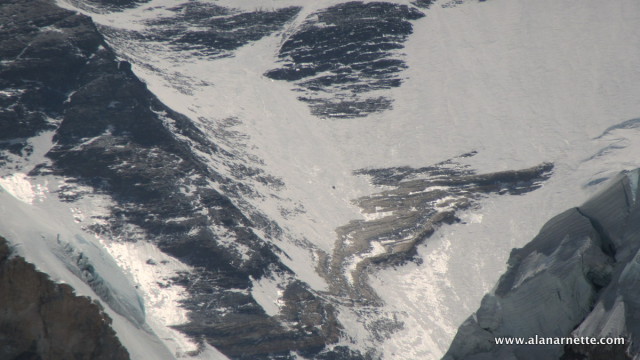
What can I say but 2016 continues to progress like the seasons of old – acclimatization rotations getting completed, ropes put up to the Cols and soon will be to the summits. Teams are eagerly awaiting that spat of calm winds that define the summit window. The summit window is rumored to begin around May 11, but in my opinion, only the overly eager will push to summit at that time as it is still extremely cold near 9000 meters and frostbite risks are real. Waiting another week is not a big deal. With the good overall weather, there should be – should be – a long series of suitable weather windows this year thus crowding should not be an issue on the Nepal side of the mountain. Good Conditions The Lhotse Face is reported to be hard packed causing some climbers a bit of leg fatigue as they need to occasionally kick their crampons into the hard surface. Snow is reported at the South Col, a but unusual as this area is usually wind blown. However the Triangular Face between the Col and the Balcony should have a layer of snow keeping loose rocks in place. Climbers will still wear helmets. On the South, team have spent nights as high as Camp 3 and on the North, the North Col. Touch Grass Many teams on the Nepal side are keeping the helicopter companies very busy by chartering choppers to take them to the lower villages for a few nights of rest and recreation; some teams have gone as low as Kathmandu and stayed in 5 star hotels. The cost can range from $2,000 to $5,000 depending on destination – one way – and is usually split among 3 to 5 people This has become quite common in the last 5 years. But it was Anatoli Boukreev who coined the phrase “touch grass” before the summit, and by that he meant walking down to one of the villages in the Khumbu, not flying 🙂 Risks Family and friends back home are usually starting to worry about the summit push, and rightfully so. By now, each climber has seen how they perform at relatively high altitudes – Camps 2 to Camp 3 or near 7000 meters. The guide blogs only talk about “how impressed they are with the strength of their team”. This is part of the letterhead and a standard comment each season. By reading the individual blogs you can get the real sense that the Lhotse Face is hard, the Icefall dangerous, and their bodies are fatigued. None of this is out of the ordinary. The real test is on summit night. The doubts about health and skills are now amplified. But this is where all the training (and hopefully experience) will come into play. Now is the time. Between now and then, the climbers need to rest, to recover from pushing themselves. They need to get their minds in the right place to push when needed and put all the small aches and pains behind them – to ignore the distractions and focus on the task at hand. This is not easy. This is another point where the team dynamics begin to play a role. By selecting whom you spend time around may make or break your mental ability to deal with summit night – postive will beget positive, negative, well will kill you. With the summit bids starting late next week, the next 7 days will be key. Recap Here is a recap that I have on my team location page: Season moves along nicely with no major issues Sherpas are ferrying oxygen and supplies to North and South Col Many teams have take a short trip back to Namche or even Kathmandu before the summit bid Rumors have ropes to summit by May 10, now to South Col on Nepal side More rumors have summit window on May 11 Teams slept at North Col and completed their acclimitization Rope fixed on North side to 27,000 feet Climb On! Alan Memories are Everything
Everest/Lhotse 2016: All Good in this Weekly Update

The spring Everest season continues to move along nicely. A bit of snowfall this past week slowed the rope fixers down but nothing seriously in spite of gripes from a couple of small western commercial guides that they were inconvenienced by the delays. South Many teams have now completed their acclimatization rotations to Camp 3 on the South side and are back at Everest Base Camp. The next step is to wait for the weather window when four to seven days of low winds are forecasted for the summit. Once that occurs, the mad rush will be on for many teams anxious to get it done. North Over on the North side, teams are at the North Col doing their acclimatization process. Winds are strong as usual but this year the temperatures are just as warm as on the Nepal side so it’s not quite as brutal as in previous years – but this is all relative as teams are reporting cold and windy at high camps on both sides! These are good conditions for those attempting the summit without using supplemental oxygen because as you know, those extra Os really help keep the body warm and reduce the risk of frostbite. Locations I am updating the chart where each team is located. You can see this and get a snapshot of the daily news at this link: http://www.alanarnette.com/blog/2016/02/01/everest-2016-team-locations/ Illness and Evacuation I’m not really sure what is going in 2016, but my gut tells me there are more people getting sick thus ending their climbs, I was one of them. The ill range from young to old (like me at age 59), to those who have been there before, others ‘pre-acclimatized’ using altitude tents. Some got blood clots, others with upper respiratory infections. There has been a rumor that the bacteria in the upper Khumbu have become resistant to antibiotics, but I’m no doctor and this is a rumor … however I do now that I took copious amounts of antibiotics and it didn’t seem to help. I know many people view these drugs like they do Coke and Walmart but for many people they work. In any event, for those still climbing, and I am estimating it is down to 240 foreigners on the Nepal side, down from 289, bathe in Purell!! Annapurna Summits A few days ago 30 people summited Annapurna,after exhibiting great patience in waiting for a suitable weather window – even then, by most reports they threaded the needle and escaped. 77 year-old Carlos Soria made the top as did my K2 teammate Matt Du Puy and Chris Burke. Climb On! Alan Memories are Everything
Everest/Lhotse 2016: Season Continues, But Not For Me

Everest/Lhotse 2016 carries on as smoothly as a season goes, and now without me. I’ll get to my situation in a moment but as I write this on Sunday May 1 climbers on the Nepal side are dealing with fresh snowfall. Many are back in base camp after successful rotations to Camps 1 and 2 with a few even following the Sherpas up the Lhotse Face and spending a difficult night at Camp 3. I hate to be a broken record, well actually not in this case, but the season – on both sides – continues to progress nicely with few surprises and little drama. However, the press seems to be able to create drama where there is none, or perhaps it is their sources ing publicity for their companies, or careers that creates the drama. Media Induced Drama There have been various media reports of avalanches on the Lhotse Face and in the Khumbu Icefall. These are a bit overstated and unnecessarily dramatic, especially the one about the Lhotse Face. IMG reported the names of the Sherpas and their teams who are fixing the ropes as Rinji and Nima Tshiri from Adventure Consultants; Nawang and Namgya from Himex; Fura Gyalzen and Tenzing Cholar from Asian Trekking; Tamding and Nima Gyalzen from Jagged Globe; and Chewang Lendu and Damai Serki from IMG. This team of Sherpas began to fix the line from Camp 2 to the summit and found the bergshrund (a large crevasse at the base of a hill) to be larger than expected. They simply went further to the climber’s right bypassing the shrund and continued their work. All in a day’s work for these guys. Sadly, this report of “An ice collapse has closed the Lhotse Face” was widely distributed on climber’s Facebook accounts, other websites and in the general press. It created unnecessary angst for those back home. Why this made news is another example that anything remotely out of the normal, especially if can be consider negative, makes news, around Everest. I find it particularly disturbing that some commercial guides perpetuated the story. One can only guess at their motive but I’m sure their sites got a nice uptick in volume, and their names appeared in a newspaper. Another silly report is that helicopter flights are putting climbers in danger by flying too close to the mountain thus could cause avalanches. I invite you to Google “can helicopters cause avalanches” and decide for yourself if there are any facts to support this report from the BBC. But this is a good, credible read on the subject; One thing remains clear – reports about Everest, no matter the source or angle brings readers and other media, social and reputable, to repost with zero fact finding. Latest Everest News – Monday May 2, 2016 If you scan the location chart I am trying to keep updated, you will see teams on the Nepal side from base camp to Camp 3. Over on the Tibet side, they are spread from Chinese Base Camp (CBC) to Advanced Base Camp. As usual, there are reports of strong winds on the Tibet side. This is one reasons many people prefer to climb from Nepal as the mountain itself blocks the brutal north winds and base camp is much more comfortable – of course this is all relative. Teams are continuing with acclimatization rotations Teams are climbing the Lhotse Face, some at C3 for the night Ropes expected to set to the summit on South by May 10. At Lhotse Y cutoff now. North teams making normal progress with rotations 2016 Everest Base Camp Tour This is video I took at Base Camp last week. It’s a tour from top to bottom – 17,500′ to 17,250′, about 1.1 miles in total length. Sorry about the wind noise, it drops down for most of the video but you may need to turn your volume up as Russell Brice speaks at the end. I hope you enjoy seeing what is home for a lot of people right now. For those only interested in Everest overall, you can stop reading now as the next (long) section goes into my experience and why I had to stop my Lhotse climb. I will continue to report on Everest as I have since 2002 over the next month. As always, if you get value from my reporting please consider a donation to find a cure for Alzheimer’s. No Lhotse for Me As Mark Twain said — ‘I didn’t have time to write a short letter, so I wrote a long one instead.’ I will go into a fair amount of detail on my Lhotse attempt mostly to present my experience with the hope that it can be used as a learning experience for others. I don’t have any specific lesson to suggest and leave it to the reader to glean their own, but this is what I experienced. I am now in Kathmandu, my attempt of Lhotse over. If you climb as long as I have, things happen. I started climbing at age 38 and have now been on over 35 expeditions. This was my 6th expedition that took me into the Western Cwm. It is safe to say I know my body very well and how it performs at altitude. And I have come to accept that when things go wrong, there is a fine line between pushing and acceptance. With that said, as I have previously mentioned, I have been fighting a cough and perhaps an upper respiratory infection almost to the day upon arriving in the Khumbu. I sought medical advice from the Docs at EverestER and from other expedition doctors. I turned back on my first climb into the Icefall after the cough became violent. I have been taking antibiotics, inhalers and standing by the Puja altar for hours on end tossing rice into the air 🙂 Early Signs A few days ago, Kami and I took off for our rotation to Camps 1 and 2. We were on our own as the rest of the team had left
Everest/Lhotse 2016: A Mid-Season Update

Everest 2016 is developing into a ‘normal’ season. As we enter the last week of April, climbers are working hard to get their acclimatization programs in before the traditional poor early May weather but based on this year current weather, that may or may not happen. I’m starting to sound like a professional meteorologists! 🙂 There are 32 teams at Everest Base Camp with 287 Everest permits issued and some number of Lhotse and Nuptse permits as well. The non-Everest permits are a bit misleading as anyone who wants to enter the Icefall or just go to Camp 2 needs a permit for that maximum altitude but may have no intention of trying to climb that mountain. Overall, the Everest numbers are down about 15% and trekking in the Khumbu, down 40%. Numbers from Tibet are not available. For what’s it worth, I estimate about 200 foreigners on that side this year, up a bit from previous years. A Welcome Change I’ll get to my own experiences in a moment but this is starting to feel like a regular season. The last time we had one was arguably in 2011. Of course in 2014, there was the avalanche followed by the Sherpas strike to get improved conditions from the Nepal Government, then there was last year’s earthquake. In 2012, Russell Brice made the unprecedented decision to cancel his entire season fearing a release of the hanging serac over the Khumbu Icefall and in 2013, there was the silly fight between a few Sherpas and Simone Moro over who had the right to be on the Lhotse Face while the Sherpas were fixing the route. Climbing from the North side aka Tibet, while lacking some of the geophysical events has still had its share of issues re-enforcing that climbing from Tibet is never a sure thing. The Chinese seem to refuse permits at random with no explanation, they closed all of Tibet to climbing in 2015 after the earthquake thus stopping all Everest summits that year and this year, teams have had a frustrating time just getting into China with unexplained border closures. In any event, 2013 was the last time we saw significant and legitimate summits on Everest from Nepal and 2014 from Tibet. History aside, everyone I’ve spoken with this year from porters, Sherpas, climbers to operators are eager for a ‘no-drama’ year and thus far they have gotten their wishes. A Warm Season The most popular conversation around base camp are the warm temperatures. Of course this is not an Everest phenomena as 2016 is starting off as one of the hottest on record for the planet. This is my sixth time at EBC and I have never seen so much running water at base camp in April. Of course the fear is that with the warm temps, the potential for hanging seracs to release, rock fall and avalanche danger is higher, but thus far that has not materialized. In speaking with Russell Brice, who has been climbing and guiding on Everest since 1987, he suggested the lack of snow this past winter combined with the warm temps are causing the seracs to ‘lay back’ or to have less of an overhanging profile thus releases are less likely to occur. Of course he adds the disclaimer that no one ever knows for certain what might happen. There certainly has been a lot of activity off Nuptse, which overlooks the Icefall and base camp, but there seems to be only one small area that release many times a day. Everest Base Camp is in kind of an amphitheater at the end of a long valley and the beginning of the downhill turn for the Khumbu Glacier, thus any sound is greatly amplified. I can tell you that I am awoken several times a night by a small, insignificant release that sounds like the entire mountain is coming down! There have been a few small releases onto the Khumbu Icefall but nothing that has put any climbers in danger … thus far. Every year since the Icefall has been climbed, serac releases have been reported so this is nothing new. However, the temperatures have changed some teams climbing strategy with earlier start times and fewer rotations. Many teams will enter the Icefall at 1:00 am in order to climb in the night when the sun is not heating up the seracs or the ice pinnacles that decorate the Icefall become unstable. Once the suns hits the Icefall around 10:00 am, it heats up dramatically becoming very uncomfortable plus, in theory, increases the objective danger. Where are the Ladders? There are fewer ladders in the Khumbu Icefall this year, perhaps less than seven crossings as compared to 20 or more in previous years. While some cite the earthquake as changing the terrain, the Icefall Doctors have moved the route away from the hanging seracs off Everest’s West Shoulder and towards Nuptse to minimize the objective danger. The route through the lower section of the Icefall is now more direct but requires some true climbing on a couple of steep sections. Some people have found this too difficult and have abandoned their climbs. When I was there a few days ago, a bottleneck occurred with 15 climbers, mostly Sherpas with loads, waiting ly in the dark for their turn to climb this short section. I suspect the Doctors will put a ladder in this area soon. Towards the top of the Icefall there are the usual vertical ladders to lead to the Western Cwm proper. The route from Camp 1 to Camp 2 is a zig-zag maze avoiding the usual crevasses crossing. It was taking over four hours to make the journey about an hour longer than usual. Reports now have it that the Docs have put in a few crossings to shorten the journey. All this said, this section is on a moving glacier – from base camp to Camp 2 – the Khumbu Glacier that can move up to