The 8000 Meter Mountains
1-Everest Other names: Sagamartha, Chomolangma or Qomolangma Altitude: 8848 m, 29,028 feet Location: Tibet / Nepal First ascent: May 29, 1953 by Sir Edmund Hillary and Tenzing Norgay with a British expedition Summits/Deaths: 7,000/276 or 4.14% Challenge : The two normal routes are mostly non-technical climbs but it is the altitude that makes Everest difficult. The south has the Khumbu Icefall that has claimed many lives and on the summit push, the Hillary Step, a short section of rock, challenges some people. The North side is windy and cold with a lot of exposed rock. On both routes fixed ropes are used from Base Camp to the summit. Nowadays crowding is mentioned as a factor. My Experience: I summited Everest on May 21, 2011. I climbed fast with IMG’s Kami Sherpa, making the climb from the South Col to the summit in 7:40 and returned in 3:20. This was my 4th attempt with non-summits in 2002, 2003 and 2008. read more 2-K2 Other names: Mount Godwin-Austen or Chogori or Dapsang Altitude: 8611 m, 28,251 feet Location: China / Pakistan First ascent: July 31, 1954 by Achille Compagnoni and Lino Lacedelli, Italian Summits/Deaths: 354/82 or 23.16% Challenge: Arguably the world’s most difficult mountain to climb. It’s high, steep, with a high risk for avalanches and rock fall. The weather is often bad and there are no easy route to the peak’s summit. It is technical climbing from start to end. The North Ridge is a bit easier but the approach through China is demanding and long. My Experience: I summited K2 on July 27, 2014. I climbed with Garrett Madison of Madison Mountaineering and Kami Sherpa once again.. It was an incredible climbed that started steep and never let up. The most fun was technical rock climbing on the Black Pyramid at 23,000′. 3-Kangchenjunga Other names: Kanchanfanga Altitude: 8586 m, 28,169 feet Location: India / Nepal First ascent: May 25, 1955 by George Band and Joe Brown Expedition: Great Britain Summits/Deaths: 284/43 or 15.14% Challenge: It’s one of the largest of the peaks of the 8000ers and the route to the summit is long. This fact and the many short, but technical sections place Kangchenjunga firmly in the higher end of the difficulty list. The altitude is also a factor. 4-Lhotse Altitude: 8516 m, 27.940 feet Location: Tibet / Nepal First ascent: May 18, 1956 by Ernst Reiss and Fritz Luchsinger Expedition: Switzerland Summits/Deaths: 525/14 or 2.67% Challenge: The normal route share the South Col route on Everest and starts with the Khumbu Icefall. The altitude and exposure on the final climb to the summit are contributing to the peak’s reputation of being one in the middle of the list in terms of difficulty. 5-Makalu Other names: Makalufeng Altitude: 8463 m, 27,838 feet Location: Tibet / Nepal First ascent: May 15, 1955 by Lionel Terray and Jean Couzy Expedition: French Summits/Deaths: 377/39 or 10.34% Challenge: One of the more technical peaks and is amongst those considered hard climbs. Steep passages, both on rock and snow, exposure and avalanche danger makes this peak a tough target. 6-Cho Oyu Altitude: 8201 m, 26,906 feet Location: Tibet / Nepal First ascent: October 19, 1954 by Joseph Joechler, Pasang, Dawa Lama and Herbert Tichy Expedition: Austrian Summits/Deaths: 3,171/49 or 1.55% Challenge: Technically speaking the easiest of the 14. No technical climbing, but large snowfields and long distances. Many climbers don’t reach the true summit, as it’s located some distance from where you enter the summit plateau and is only marginally higher than the fore summit. My Experience: My first 8,000m peak. I climbed it from Tibet with IMG. A 5 week expedition, I reached 26,600′ (8,060m) on the summit plateau before turning back. It was a learning experience that I never forgot. 7-Dhaulagiri Other names: Aulagiri Altitude: 8167 m, 26,795 feet Location: Nepal First ascent: May 19, 1960 by Kurt Diemberger, Peter Diener, Nawang Dorje, Nima Dorje, Ernst Forrer and Albin Schelbert Expedition:Switzerland Summits/Deaths: 448/69 or 15.40% Challenge: Considered to be a hard peak to climb by the pioneers in the area, but it’s nowadays considered as one on the lower half of the list. The normal route on the peak has some short technical sections and some avalanche danger, but overall it’s a quite straight forward climb. 8-Manaslu Other names: Kutang Altitude: 8163 m, 26,781 feet Location: Nepal First ascent: May 9, 1956 by Toshio Imanishi and Gyalzen Norbu Expedition: Japanese Summits/Deaths: 672/67 or 9.97% Challenge: On the lower half of the peak’s normal route, avalanche danger is usually a main problem. Higher on the peak, the climb is mostly non-technical and easy. Manaslu has one of the higher death rates and is considered a dangerous peak. My Experience: I summited Manaslu on September 25, 2013. The route was the most difficult in years due to a large avalanche in 2012 plus other mountain movements and a low snow year. The tiny summit was scary indeed! 9-Nanga Parbat Other names: Diamir Altitude: 8126 m, 26,660 feet Location: Pakistan First ascent: July 3, 1953 by Hermann Buhl Expedition: Austrian Summits/Deaths: 335/68 or 20.30% Challenge: Nanga Parbat’s normal route is not extremely technical, but it’s long and exposed. The mountain is infamous for bad weather and the route offers many tricky sections. It’s considered as one of the harder peaks. 10-Annapurna Other names: Morshiadi Altitude: 8091 m, 26,545 feet Location: Nepal First ascent: June 3, 1950 by Maurice Herzog and Louis Lachenal Expedition: French Summits/Deaths: 191/67 or 35.08% Challenge: Considered the most dangerous of the 14. The north and its original route is not that technical, but extremely avalanche prone. The south is of high technical Challenge and also holds lots of objective danger. 11-Gasherbrum I Other names: Hidden Peak or K5 Altitude: 8068 m, 26,444 feet Location: China / Pakistan First ascent: July 5, 1958 by Andrew Kauffman and Peter Schoening Expedition: U.S. Summits/Deaths: 334/29 or 8.68% Challenge: When the icefall and some easy ground have been covered, the climb gets more difficult. Steep
Lhotse 2015: A Personal Commitment
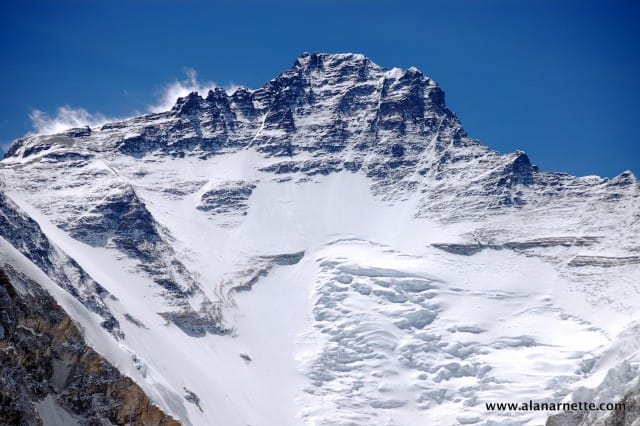
In early April, advice I’m returning to Nepal, the Himalaya and to the Everest region. This will be my 11th trip since 1997 and I will be climbing the world’s fourth highest mountain, Lhotse at 27,940 feet or 8516 meters. As always, I will use my attempt to bring awareness to Alzheimer’s Disease but this time not only for donations to research but to ask readers and followers to join the Alzheimer’s Prevention Registry. A Personal Commitment The day my mom, Ida, asked me “Who are you?” was the day my life changed forever. I made a personal commitment to do everything I could to make a difference in finding a cure for Alzheimer’s. I began to dedicate my climbs to raise awareness about AD: no cure, always fatal, not a part of normal aging. Thus far, thanks to many of you, we have reached 50 million people and raised $250,000 for Alzheimer’s research. But there is so much more to be done, more I can do. In finding a cure for Alzheimer’s, al trails play an important role. Many of the headlines you read about potential breakthroughs are done on mice or small scale human trails. In order for a new therapy to reach those in need, it must go through human trials and there is a severe shortage of volunteers thus stalling progress. In fact, 80% of studies fail because too few people sign up. Alzheimer’s Prevention Registry The Alzheimer’s Prevention Registry strives to overcome that hurdle by engaging people 18 and older of all races and ethnicities who are committed to ending Alzheimer’s, whether or not they have a family history of the disease. From simple questionnaires and surveys, to brain imaging studies and even pharmaceutical trials to evaluate investigational medications and therapies, the Registry offers members many ways in which to participate. In no way does joining the Registry obligate you to take part in a study or al trial. The Alzheimer’s Prevention Registry is part of Banner Alzheimer’s Institute (BAI), a nonprofit organization dedicated to the goal of ending Alzheimer’s disease without losing another generation. It is helping to launch a new era of Alzheimer’s research—detection, ment and prevention at the pre-symptomatic stage—and to establish a comprehensive model of care that can be the national standard. BAI was founded in 2006 by Phoenix-based Banner Health, one of the country’s largest nonprofit healthcare systems. • In no way does joining the Registry obligate you to take part in a study or al trial. • Each study has a defined set of eligibility requirements, which means not everyone will qualify for enrollment in a particular study. • All studies associated with the Alzheimer’s Prevention Registry are approved by an ethics committee and ensure participants’ privacy and confidentiality. I have made the personal commitment and joined the registry. Project 8000 With my summits of Everest, K2 and Manaslu, I have set an ambitious goal to summit the remaining 11 of the 14 8000 meter mountains over the next five years. Through my climbs, I hope to reach 100 million people, and make a difference in the fight against Alzheimer’s through raising awareness, promoting the desperate need for joining al trails and raising $1 million for research. If I’m successful, I would become only the second American to summit all 14, following in the steps of Ed Viesturs (note: Ed did them all without supplemental oxygen and on private climbs, nothing like me at age 58). Also, I might be the oldest American to summit many given I’m 58 now. Read more on Project 8000 including the schedule. Lhotse I feel like I have climbed Lhotse four times already, just not to the summit as it shares 80% of the same route used to summit Everest. I will fly into Kathmandu in early April, make the life-changing trek to Everest Base Camp and begin my acclimatization rotations before attempting to summit Lhotse in mid to late May. I will be climbing with Madison Mountaineering and Garrett Madison who I summited K2 with last summer. Also, I am thrilled beyond words to have Kami Sherpa (Ang Chhiring Sherpa – Pangboche) climb with me. I summited Everest in 2011 with Kami as well as K2 last year. Also joining me will be Louis Carstens whom I summited Manaslu with in 2013. The Climb Lhotse is known as a “technical” climb meaning you need to use protection, climbing gear and full on hands and feet to gain the summit. As I make several climbs through the Khumbu Icefall, I’ll be thinking of the Sherpas who lost their lives in this section last year. I hope to minimize my, and our Sherpas, exposure by limiting the gear I carry to the high camps. The real crux of climbing Lhotse is the final 300 meters or last 1,000 feet. Once leaving the Camp 3 at 23,500 feet on the Lhotse Face, I will cross the Yellow Band and then turn right continuing straight up the Face instead of contouring across the Geneva Spur to the South Col as I did on my Everest summit climb. We will make camp at 25,750 feet or 7850 meters on the snow covered steep slopes of Lhotse. It is almost 2,200 feet to the summit on 50 to 60 degree slopes. Leaving early the next morning, we will climb about 400 feet eventually reaching the bottom of the Lhotse Couloir, a narrow, rock filled gully that leads to the summit that is only 9 feet wide in some spots. This is the most challenging part of a Lhotse climb and will require every mountaineering skill I have obtained on my previous 37 expeditions. I will stem off the rocks, scramble and full on rock climb the final sections. Lhotse’s summit is a small rock block that is often covered in snow making it dangerous. The return involves rappelling and arm rapping back to Camp 4 or Camp 2 where I will spend the night. The entire summit push
Project 8000 for Alzheimer’s
First, click I want to wish everyone a wonderful 2015. As many of you know, K2 was a tough climb for me causing me to go to places I never knew existed within myself. Now that I have taken time to reflect on that experience, I want to build upon what I learned. The fight to find a cure for Alzheimer’s needs our unified support, caregivers need more help than ever and for me, I want to feed my passion for climbing. I am driven by the intersection of purpose and passion thus with great excitement I want to share the details of Project 8000 for Alzheimer’s where over the next 5 years I will attempt the 11 remaining mountains above 8000 meters that I haven’t summited. Background I saw first hand what Alzheimer’s does to individuals and families when I lost my mom, Ida, and two aunts (my mom’s sisters) to Alzheimer’s Disease (AD) in 2009. The more I learned about AD, the more helpless I felt. Now six years later there is still no reliable means of diagnoses, no way of stopping it once a person has it and Alzheimer’s is 100% fatal – this is totally unacceptable in 2015. That experience moved to to redefine my life’s purpose to become an Alzheimer’s Advocate using my passion of mountain climbing as the method to reach people. My Memories are Everything ™ climbs have reached 50 million people with a message of hope, need and urgency around AD. Through your generosity, we have raised over $250,000 that went 100% to Alzheimer’s non-profits, including the Cure Alzheimer’s Fund who uses the funds exclusively for research. Other non profits that have benefited included the Alzheimer’s Association, UsAgainstAlzheimer’s and the Caregivers Action Network. Thanks to these organizations and others, progress has been made in understanding Alzheimer’s yet due to lack of money, not ideas, a cure remains elusive. Meanwhile every 4 seconds, another family in the world begins the same fatal journey my family did with my mom. It is with this urgency, I remain committed to making a difference. While climbing is an unusual method to raise awareness for Alzheimer’s, I have been able to reach an audience not usually touched by many Alzheimer’s non-profits. These include youth and young adults who are usually forgotten as caregivers. My partners have asked me to continue my efforts as it compliments their own. Project 8000 for Alzheimer’s There are 14 mountains above 8000 meters or 26,246 feet. 34 people have summited all 14, including only one American, Ed Viesturs. I will attempt to summit them from 2015 to 2020. With my summits of Everest, K2 and Manaslu and good efforts on Shishapangma, Broad Peak and Cho Oyu, I feel well prepared to attempt these 11 mountains and optimistic we can reach the $1M goal for Alzheimer’s research. My objectives for each climb include: safety, cause results, and climb success. To minimize costs, I will try to organize the climbs leveraging logistics from local organizations. Each climb will be conducted in small, safe teams utilizing proven Sherpa support, hopefully including Kami Sherpa whom I summited both Everest and K2 with in 2011 and 2014. I will utilize the services of Garrett Madison for some of the climbs. As the 18th and oldest American to summit K2, I attracted world-wide attention, reached 5 million people and raised $70K in just 6 weeks. The Cure Alzheimer’s Fund said this was one of “most successful campaign ever” of its type. This combined with my 7 Summits campaign in 2011 that reached 30 million people, validated my model of using climbing to raise awareness and critically needed funds. I want to again thank Janssen Alzheimer Immunotherapy and Abila for their support on those campaigns. Sponsor Opportunities I am ing sponsors for Project 8000. The expenses are modest when spread over five years, but the public relations need is large. Ideally, one company will see the opportunity and support the entire project but individual climbs are still available to reduce the size of the investment. With the proper PR backing, I believe we can conservatively reach 100 million people. Using my website and social media, I can document a strong connection with my followers resulting in over 2.5 million annual interactions. I am confident we can raise significant money from each climb reaching a total of $1 million from my Memories are Everything™ climbs. Please contact me for overall budgets and marketing opportunities. Schedule I would attempt approximately two climbs each year. My first climb is already scheduled for April/May 2015 of Lhotse, the world’s 4th highest. More on this soon but please note I will be doing my Everest season coverage as usual but this time from Everest Base Camp. Lhotse and Everest share 90% of the same route. This is the proposed schedule, and I’m positive it will change. Next Steps I believe I can be used as living proof that if we live an active life, fully engaged, we can do amazing activities as we age. Please remember I am living with the fact that my mom and two aunts have died from Alzheimer’s and I may very well have the gene. I hope you are as excited about Project 8000 as I am. I strongly believe we will raise awareness for Alzheimer’s but more importantly fund the search for a cure. Climb On! Alan Memories are Everything The 8000 meter Mountains 1-Everest Other names: Sagamartha, Chomolangma or Qomolangma Altitude: 8848 m, 29,028 feet Location: Tibet / Nepal First ascent: May 29, 1953 by Sir Edmund Hillary and Tenzing Norgay with a British expedition Summits/Deaths: 7,000/276 or 4.14% Challenge : The two normal routes are mostly non-technical climbs but it is the altitude that makes Everest difficult. The south has the Khumbu Icefall that has claimed many lives and on the summit push, the Hillary Step, a short section of rock, challenges some people. The North side is windy and cold with a lot of