Podcast Series: 7 Summits Episode 10–Everest with Adrian Ballinger & Mike Hamill Interview

Welcome to my limited series on climbing the Seven Summits. For eight weeks, I’ll drop a new episode discussing one of the 7 Summits in detail. Today is Episode 10, Everest with special guests Adrian Ballinger, founder of Alpenglow and Mike Hamill, founder of Climbing the Seven Summits. #7summits
Mount Everest is the highest mountain in Asia and the world, at 29,031.69 feet or 8848.86 meters, making it the highest of the Seven Summits. With seemingly unlimited attraction, climbing Chomolungma has dramatically changed over the decades.
Stradling the border of China (Tibet) and Nepal, it grows by about 0.0063-0.021 inches or 0.16 to 0.53 millimeters annually due to the northward movement of the Indian tectonic plate and a “rebound” effect caused by merging rivers. Everest is so high that it juts into the jetstream, atmospheric winds that typically travel west to east at speeds ranging from 80 to 140 miles per hour but can accelerate up to 275 miles per hour.
Through January 2024, there have been 12,015 summits (5,907 members and 6,108 hired). In other words, more support climbers, primarily Sherpas, have summited than foreigners. Yet more foreigners, 200, have died on Everest than support climbers, 117.
It has become an economic powerhouse, attracting millions into the Nepal economy, an estimated 10% of GDP, through flights, hotels, taxis, restaurants, teahouses, yak herders and massive, dominating guiding enterprises. In 2024, 80% of the Everest summits were on Nepali-owned guide company teams, compared to 20% a decade earlier. However, with that dominance comes a downside: an all-time record 18 climbers died on Everest in 2022. Twenty-six people have died in the last two years climbing Everest; of that total, 23 were clients of Nepali operators. That’s 88% of the total for the two years.
In this last 7 Summits Podcast, I briefly overview the peak and then delve into several topics with guests Adrian Ballinger, founder of Alpenglow and Mike Hamill, founder of Climbing the Seven Summits.
All Episodes
Introduction
Mt. Kosciuszko, Australia – 7,310/2228m
Mt. Blanc, France/Italy – 15,771’/4807m
Vinson, Antarctica – 16,067/4897m
Carstensz Pyramid (Puncak Jaya), New Guinea – 16,023/4884m
Elbrus, Russia – 18,513/5642m
Kilimanjaro, Africa – 19,340/5896m
Denali, Alaska – 20,320/6194m
Aconcagua, Argentina – 22,902/6960m
Everest, Nepal/Tibet – 29,035/8850m
Podcast with Adrian Ballinger, Alpenglow: Records, Rescues, Deaths and More
The past few months have been difficult in the mountaineering world. We have seen climbs on many 800ers that turned out tragically: Mohammed Hassan on K2, Anna Gutu, Migmar Sherpa, American Gina Marie Rzucidlo and Tenjen Lama Sherpa on Shishapangma. A few dramatic rescues and a neverending quest for records.
I turned to long-time alpinist Adrian Ballinger, co-founder of Alpenglow, to try and make sense of what’s going on, what can be done to prevent these seemingly preventable deaths and if the pursuit of records is worth the risks. We also discuss his return to Everest planned for 2024 after missing the last four seasons, due to China’s closure of their side of Everest.
Video Interview Adrian Ballinger, Alpenglow, on his Makalu Record Ski Descent
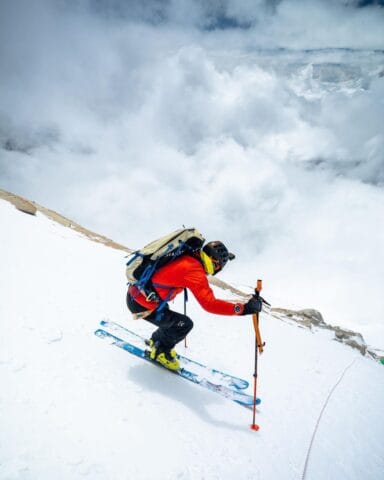
The world’s fifth-highest at 27,765 feet (8,463 meters), Makalu saw multiple successes this season. Still, on Monday, May 9, 2022, Adrian Ballinger, co-founder of Alpenglow, texted me, “I summited today with Dorji Sonam and Pasang Sona (Alpenglow Sherpa). We fixed to the summit from where rope fixing ended by French couloir. And….I skied Makalu!!!!!! I just got back to ABC. First on top for the season. Alpenglow pride”
He walks through the climb, discussing how the Sherpas fixed the summit ropes, poor weather at times, or narrow windows of opportunity. I asked him to discuss his “ski technique” for those listeners who are avid skiers. As he was making his way down 8,000 feet of snow and ice, plus a rock gulley or two, he passed climbers going up—what fun.
Finally, we wrap up with a short discussion about how high-altitude mountaineering is changing, especially on those ‘other’ 8000ers like Kanchnugua, Dhaulagiri, Makalu, and Annapurna.
Climb On!
Alan
Memories are Everything
Video Interview with Kuntal Joisher – 100% Vegan Mountain Climber

Every person who climbs Everest is unique. So, of course, that person feels special, but some stand out. Take Kuntal Joisher, for example. He has summited Everest from the Tibet and Nepal sides, plus Lhotse, and completed many other amazing adventures like the Northern Icecap in Chile. But what makes Kuntal stand out is his dedication to a vegan lifestyle that goes all the way to shunning any item that uses animal products – including using a full synthetic climbing suit. We discuss how he got to this point, his outstanding photography skills, and what it’s like being an ambassador for “Save the Ducks.” We also discuss his next climbing project his passion for bodybuilding and photography. Finally, we share a common family situation with my mom, Ida, and his father, both dying from forms of Dementia, Lewy Body syndrome, and Alzheimer’s.
Everest 2022: Video Interview with Adrian Ballinger, Alpenglow

With the Everest 2022 season just around the corner, it appears the Tibet side will be closed and continued uncertainty about the wisdom of climbing on the Nepal side. There are questions as to whether operators should run their programs at all. Many are moving forward but a few are not. I discuss the situation with Adrian Ballinger, founder of Alpenglow Expeditions who has canceled his expedition from the Tibet side this spring. We also talk about his plans for a no O’s, ski descent on Makalu.
Everest 2019: Interview with Adrian Ballinger on China’s New Rules

With lots of buzz about the new rules from China and banning tourists from going Everest Base Camp on the Tibet side, I reached out to Adrian Ballinger, founder of Alpenglow, for his thoughts. Adrian has been running Everest expeditions only from the Tibet side for several years now. He left the Nepal side after the 2014 serac crash that killed 16 Sherpa in the Khumbu Icefall. He strongly believes it is immoral and unethical to put his staff and clients at risk by climbing on the Nepal side and has become a strong advocate of only climbing from the north side until as he adds ” … helicopters are used to overfly the Khumbu Icefall becomes practical (for equipment, staff and climbers).” This year, he will be back with his Alpenglow Rapid Ascent clients plus providing logistics for a new route attempt. AA: Hope all is well and your spring Everest trip is coming together AB: Yep, should be a good season with a couple of unique privates, a small but strong main team, and a cool research project. AA: Adrian, you have become quite linked to the North side of Everest running trips annually, so what is your view on the recent changes China has imposed on Everest for their side, especially the cap on foreign permits at 300, given the largest number of summits ever by foreigners was in 2007 at 197. Adding in support staff of 176 the total is 373. However, China closed Everest in 2008 to take the Olympic torch to the summit stopping any momentum they had over Nepal. After almost 10 years with foreigner summits well under 90 each season, it has popped back up the last two with 120 each year for 2017 and 2018. So is this a real cap or a marketing ploy? AB: I think China is looking forward on this. For two years they have been holding conversations with respected guide companies on the North Side asking our opinions on how to improve safety, mountain ethics and cleanliness. While they certainly didn’t make rules exactly as I’d hoped, they are taking first steps. The CTMA, in my opinion, is clear that they want Everest to remain a “sacred” place, and that means environmental and ethical standards. They do not seem focused on how much money they can make on Everest. Limits on climbers on popular peaks is pretty much standard in the US (Mt.Whitney is a great local example here in CA). I think it makes sense on Everest. I would have preferred it was done via setting experience limits (requiring 8k peak experience for foreign climbers like they do for Chinese climbers would have immediately cut numbers in half) but China went this route instead. With that said, I have gotten verbal confirmation that the new limit is 300 foreign climbers, not including Nepali and Tibetan Mountain workers. AA: Is the north side that trashed up, that they need to limit the climbers? AB: To answer your specific question – yes, high mountain camps on N Side (specifically Camp 2 and 3) are trashed, similar to Camps 2 and 4 on South Side. Since they are on rock, annual snow doesn’t cover the trash (which is mostly old destroyed tents and fuel bottles frozen into ice). I am 100% in support of China’s plan to clean these camps this spring, and then utilize new much higher garbage fees (1500$/person) to staff “rangers” in these camps to ensure teams meet standards and remove trash and human waste. IF this actually happens, it is similar to what Denali now does, and it works. Cheap teams just will not hire additional sherpa to remove trash and all equipment each season if they are not forced to. China is trying to force this and I am fully in support. AA: Did your team report seeing bodies last year? AB: Yes – if you know where to look you can still see a number of bodies from previous seasons. They have all been removed from the exact rope line. And of course in 2018 there was also at least one new body actually on the route. AA: My understanding is that most have been moved out of sight, including Green Boots. AB: Correct – they are still there and visible if you know where to look or have them pointed out to you AA: Do you think limiting the number of permits will have any impact on 2019 crowds/traffic/business? AB: No, because it is my understanding we do not yet reach the cap. CTMA thus far this year has not mentioned any chance of my team’s permit request not being met. AA: Are there other “quiet” requirements you are seeing that has not been made public? AB: I heard Nepali companies have been temporarily banned. This is not my ideal solution for removing cheap unethical teams (it should have been done by clear standards applied to both foreign and Nepali companies) but this, in my understanding, was their first attempt at limiting teams that have the vast majority of accidents, leave the vast majority of trash, and tend to not meet common sense worker standards. AA: Has any of this impacted your business? I’m being told that some specific nationals are not getting permit approvals. AB: Once again I believe there is “scaremongering” going on suggesting China is unstable and permits may be denied at any time. This is the main way I see it currentIy effect business – potential clients are hesitant to commit to a North Side trip. I always try to remind people that since 2008, China has not closed for the Everest season (unless you count post-earthquake). They have actually had more open seasons over the past decade than Nepal (who has had 2 closures in past decade – after the icefall accident in 2014 and after the earthquake in 2015) AA: I understand you are attempting a new route this year. Can you share any details? AB: Alpenglow
Wave 1 Recap (updated)
May 22nd, 2010 will be a day recorded in history: the youngest person to summit Everest and the person with the most summits in history on the same same day yet from different sides. Apa Sherpa at age 47 made his 20th summit with the Eco Everest team and on the other side of the mountain, 13 year-old Jordan Romero along with his dad and Sherpa team made the top of the world, his 6th of the 7 summits. What a day. Jordan showed his strength by going directly from camp 2 to the summit. I am not sure of the exact time but believe it was around 9 hours. They are reported to be back at camp 2 and will descend to ABC. The SPOT technology and the map produced by ESRI worked extremely well. There were only a few times when a signal was not plotted on the map – two periods of about 45 minutes, which was probably due to the line of site being blocked to the satellite. But the world watched as the flashing red dot moved in a steady pace. Yet with all this excitement, many other “mere mortals” also summited including elite Sherpa climber Ang Dorge Sherpa who made his 14th summit with Adventure Consultants. With the AC team was Mandy Ramsden, 1st South African woman to complete the 7 Summits. With the Eco Everest team were the youngest Indian climber ever Arjun Vajpai at age 16 and David Liano, who intended to climbed Everest from both sides but became ill and had to go back to Kathmandu during his north attempt, was cleared, and returned to the south to climb with Apa Sherpa! Also on that team were two members of the Finnish team: Timo Jaatien and Mika Pitkamaki plus 9 Sherpas. There were many more summits Saturday morning, including the large Himex team, and I will try to note as many as possible over the next few days. I have updated the location chart based on what I know from last night. In the next post I will begin today’s summit wave. My sincere congratulations to all. update: This from Himex guide Adrian Ballinger: All 12 members, 4 guides and 17 sherpa successfully climbed to the roof of the world, and back down to Camp 4 at the South Col. The weather was perfect, no wind, cold at the summit, but quite warm lower down. The summit was totally clear, with incredible views all around. There were very few other climbers summiting at that time, affording our climbers time to savour their triumph at the top, and meaning they did not face the traffic jams that occured last year at the Hillary Step. Half the team have opted to continue on down to Camp 2 before stopping for the night, the others will overnight where they are at Camp 4. Great job everyone! Climb On! Alan