Podcast: Memories Are Everything: Why Alzheimer’s Research Needs Us Now
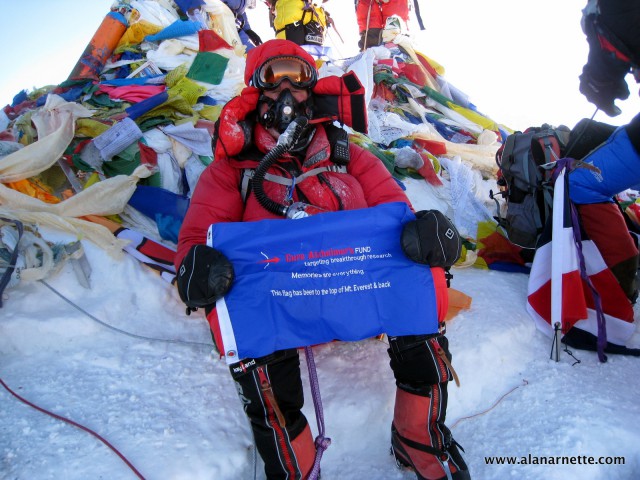
After recording a powerful podcast with Lainie Holcomb and Dr. Tammy Awtry of the Cure Alzheimer’s Fund, I was reminded that while meaningful progress has been made in understanding, detecting, and slowing Alzheimer’s, we are still far from a cure.
This mission is deeply personal—sparked by my mother’s diagnosis in 2006—and has driven nearly two decades of climbing and fundraising to support research where every dollar goes directly to finding solutions.
Today, breakthroughs like early detection, new treatments, and innovative research models offer real hope, but continued funding is critical; that’s why I’m asking for your help now, and I’ll match the first 50 donations to amplify our collective impact in the fight to end this disease. #alzheimer’s #Curealz
10 Years after Ida’s Death

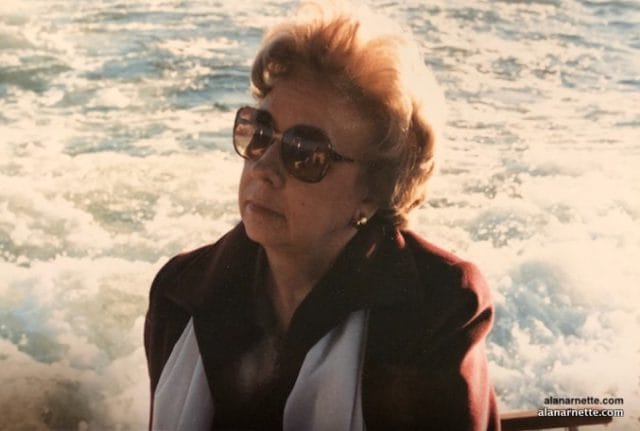
Ten years ago on August 16, 2009, Ida Arnette died from Alzheimer’s disease. Hard to believe it was a decade ago. As I try to do each year on this anniversary, I climb Mt. Ida at 12889′ in Colorado’s Rocky Mountain National Park, a perfect peak to honor Ida. The Long Goodbye With an average life expectancy after diagnosis of eight to 10 years, Alzheimer’s disease has been called “the long goodbye.” Unlike other terminal diseases, when a person with Alzheimer’s dies all of their personalities traits, tendencies and abilities have disappeared. It was in 2003 when Ida began to show the earliest signs that something was wrong. It was December when as a family, we went to the Peabody Hotel in Memphis, where my parents lived and I was raised, for their famous holiday brunch. As usual, we all got up to visit the buffet and indulge until we could no more. I noticed Ida walking around aimlessly. She was lost, not knowing where she was or who we were. As I went over to her, she seemed startled at my approach. “What do you want to eat?” I asked her gently. “Oh, you know, the usual.” was her noncommittal answer. Over the next three years, she became more confused, more lost and less independent. It was in 2006 that our worse fears came true. As we sat in Jim’s, my Dad, hospital room, Ida didn’t recognize her husband of 58 years. She had no idea that he was dying. They had been a powerful team raising my brother, Ken, and I. In their sunset years, they had cared for each other and Jim had hidden many of his wife’s symptoms. By 2009, her disease had progressed to the final stage where her basic daily functions were no longer under her control. She needed assistance with all aspects of life. She went on a hospice service to make her final time as comfortable as possible and to go on her own time. She died on August 16, 2009. I said hello to her on July 27, 1956, and goodbye on … well, I guess I still haven’t. Disturbing Facts Over 5.8 million have AD just in the US alone, and an estimated 44 million worldwide. It is the sixth leading cause of all deaths in the United States, and the fifth leading cause of death in Americans aged 65 and older. Whereas other major causes of death have been on the decrease, deaths attributable to AD have been rising dramatically. Between 2000 and 2017, the number of deaths from Alzheimer’s disease as recorded on death certificates has more than doubled, increasing 145 percent, while the number of deaths from the number one cause of death (heart disease) decreased 9 percent. Every 65 seconds, someone in America develops AD1 Climbing the World to End Alzheimer’s As I went through the journey with Ida, I made a vow that Ida Arnette would not become another number on an invisible list of people who had been killed by Alzheimer’s disease. I vowed to use whatever voice I could muster through my website, speaking and climbing to help educate the world on what this disease does to individuals, their families, and their caregivers. That Alzheimer’s disease is the only disease in the top 10 causes of death in the US that cannot be prevented, slowed, or cured. That money was needed to fund scientific research. To be clear, while climbing is my passion, doing my part to find a cure is now my life’s purpose. Climbing for Research Since Ida’s death, researchers have learned a lot about AD. For example, the hallmark beta-amyloid plaques begin to form years, if not decades, before someone begins to shows signs of extreme forgetfulness. They have excluded many of the myths about the causes of AD, for example, that Alzheimer’s is caused by aluminum, flu shots, silver fillings, or aspartame.2 And that coconut oil is not a cure.10 Climbing for Education However even with all this information out there, nearly 60 percent of people worldwide incorrectly believe that Alzheimer’s Disease is a typical part of aging4 – it’s not – it is a disease just like Cancer or Heart Disease. In that same study, 40% believed AD was not fatal. So when I talk about education and awareness, these are the scary figures that push me up a mountain. What can be done to prevent getting Alzheimer’s? They have found a link between a possible role of lifestyle factors. For example, a healthy diet, especially the Mediterranean Diet and the so-called MIND diet can reduce the risks.8 Also exercise, being social, and doing things that challenge your mind might lower your risk.3 Again, at now age 63, I’m trying to model the very lifestyle I advocate. Research Funding For all the bad news, there is a lot of good news around funding. In 2009, funding for Alzheimer’s research thru the National Institutes of Health in the US, was about $500M annually, for 2019 it is close to $2 Billion5. Most experts believe this is the level it will take to make significant progress. Organizations like the Alzheimer’s Association and UsAgainstAlzheimer’s have done yeoman’s work to lobby Congress. Individuals have made countless phone calls, personal visits and even walks in Washington to shine a light on this epidemic. A slew of not-for-profit organizations has made amazing progress in understanding the root causes of Alzheimer’s. The Cure Alzheimer’s Fund was able to create “Alzheimer’s in a Dish” so that researchers could cut years off the trial and error research approach by testing drugs in the lab and not on humans. The CAF is privately funded and one I highly support thru my efforts. Yet for this progress, the lack of human volunteers throttles the pace of progress. It is estimated that 80% of all all trials fail due to lack of enrollees. The Banner Alzheimer’s Institute has a simple and effective program for anyone who wants support enroll in a study – many are simple non-invasive mind tests not involving drugs. And there are many creative approaches to raising awareness
Bolivia 2019: Poor Weather in Bolivia, But Got a Summit!
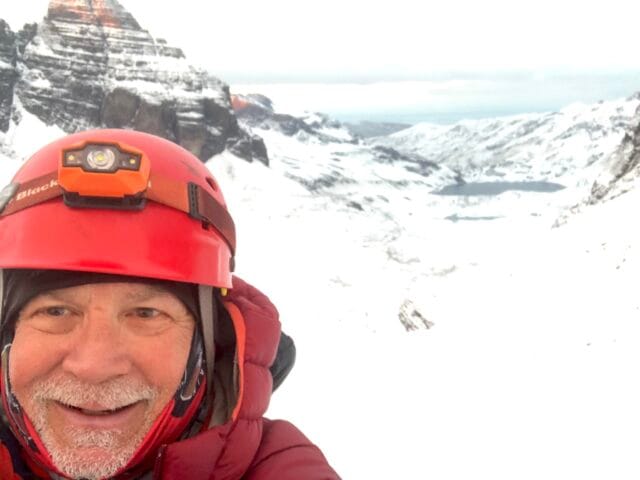
As we left Copacabanna for the trailhead for our attempt of Pequeño Alpamayo, or Little Alpamayo Condoriri Group in La Coordillera Blanca, I was a bit apprehensive. I had felt good on our acclimatization hikes but we were now going over 17,000 feet and then on to almost 20 and then over 21,000. The drive along the Bolivian roads was peaceful. The scenery calming and soon I was enjoying the ride. At some random kilometer marker, the driver of our small bus turned left onto a dirt road. The skyline of the Condoriri Group stood tall, covered in white snow as this is winter in Bolivia. We drove for an hour stopping at a nondescript house built out of mud and straw. A family was standing there to meet us along with our logistics contact from La Paz. We unloaded the bus as we took in the views. That evening we took an acclimatization hike to over 14,000′ and said hello to a group of Llamas and alpaca! Stunning to say the least. The next morning we walked about 1:30 to the “end of the road” From there we took a small trail that meandered ever higher towards base camp and more awesome views. The Coordillera Blanca unfolded before our eyes with each step. We jumped over streams while careful not to twist an ankle on the loose and slippery rocks. Quickly after arriving at base camp, the tents went up as well as the cooking tent with our two wonderful Bolivian cooks. The food thus far has been excellent. We spent the next day hiking to 17,400′ on a nearby peak but the weather gave a hint of what was to come. Loud thunder and crisp lightening lit up the sky just as we reached the summit requiring a fast but orderly retreat lower. At one point we took cover in a shallow ravine hoping the storm would pass. That night it returned with a vengeance along with heavy graupel then deep snow. Overall, a foot of fresh powder. Great if you are skiing but not so good for glacier climbing. With growing concern over avalanche danger we discussed various options and selected to attempt Tirija at 17,500 feet and not go for Pequeno Alpamayo, our original objective. This was a straight forward decision as you have to summit Tarija to get to Pequeno. We left roped up into small subgroups around 4:17 am on Sunday, July 21, 2019. We made good time to Crampon point at the base of the glacier then steady progressed higher. The snow was fresh and ankle to shin deep at times. We climbed through the dark approaching 17,000 feet just about sunrise. The last scramble to the true summit of Tirija as fun. The slope was steep around 40 degrees and the top was a rocky outcropping. And the views simply amazing. We spent about 15 minutes up there and then returned to base camp arriving around 11:30 to pack up and hike back out to catch the bus and return to La Paz. More pictures from the summit. Next Peak Our next peak is Huayna Potosi at 6,088 m (19,974 ft). We are a bit on edge as the weather calls for over 20 inches of new snow over the nest 24 hour. We have delayed our departure from La Paz by one day to let the storm pass. The current plan is to drive to the trailhead early Wednesday, July 24, 2019 then hike the 2-3 hours to the High Camp (hut) and leave early Thursday morning for the summit return to La Paz the same day. After that is Illimani on Monday. I’ll report by social media as I can but a full blog post when I’m back. Support Alan’s 63rd Birthday with a Donation to Alzheimer’s Research CLICK HERE TO DONATE Alan’s 63 Birthday – Alzheimer’s Research I am asking that for my 63rd birthday this Saturday, July 27th, 2019 that a donation in any amount that is meaningful to you be made to the Cure Alzheimer’s Fund using this Crowdrise site. 100% of your donations goes to research, none ever to me. Read more about why this cause is so important at this link and how Alzheimer’s took Ida Arnette’s life. Climb On! Alan Memories are Everything
Bolivia 2019: Acclimatizing in Bolivia

We are well into our Bolivian climbs and I want to announce a change for the Alzheimer’s fundraising. Thus far I’m very impressed with the mountains of Bolivia. Our Mountain Madness team of eight with two guides spent the first week in Bolivia touring the city of La Paz before moving to the lakeside city of Copacabana on Lake Titicaca. We took hikes up to 13,200’/4023m for acclimatization and took in some extraordinary views of the area. On the way out of La Paz we had a nice view of Illimani at 21,122 ft / 6,438 m the highest mountain in Bolivia’s Cordillera Real east of La Paz.We hope to summit it on July 29, 2019. Copacabana on Lake Titicaca Lake Titicaca borders Bolivia and Peru. It’s acknowledged as the world’s highest, largest lake and often called the “highest navigable lake” It sits at 3,812 m (12,507 ft). There is a tremendous amount history associated with the lake pre-dating the Incas. According to Wikipedia, in 2000, a team of international archaeologists found the ruins of an underwater temple, thought to be between 1,000 and 1,500 years old, perhaps built by the Tiwanaku people. The ruins have been measured to be 200 by 50 m (660 by 160 ft). Copacabana We had a local cultural guide, Rosa Maria, who was a wealth of knowledge and talked in detail about the Tiwanaku people, their traditions today and the impact of the lake on Bolivian and Peruvian culture. Copacabana is a popular tourist destination with families boating and swimming on the beaches. By the way, the lake trout was amazing, more like salmon! The first night, to continue our acclimatization, we took a short hike to the top of Cerro Calvario Hill, 13,215′ to watch the sun set. This is a sacred hill with the summit lined with small monuments representing the 14 Stations of the Cross. Pilgrims visit the Stations for prayer and penance and many tourists climb the hill for its fine views. Isla del Sol We spent two nights at Copacabana, hiking, including an acclimatization hike to 13,300’ on the Isla del Sol that started and ended with an hour boat ride from Copacabana to the island. Once again, the sights were impressive as we walked about six miles that day. Next was the drive to the trailhead for our attempt of Pequeño Alpamayo, or Little Alpamayo Condoriri Group in La Coordillera Blanca. I’ll cover that experience in the next post. Support Alan’s 63rd Birthday with a Donation to Alzheimer’s Research CLICK HERE TO DONATE I was hoping a new idea might bring new opportunities for Alzheimer’s fundraising but there has not been any individual, group or company contact me to on my offer to speak at any event in any mainland US city as long as the organizers would guarantee a minimum of $5,000 will be donated directly to a research-oriented Alzheimer’s non-profit. It’s not too late Click this link to add your “bid” and the highest bid over $5,000 will win! But there is always the traditional method! Alan’s 63 Birthday – Alzheimer’s Research Instead of the event, I am asking that for my 63rd birthday this Saturday, July 27th, 2019 that a donation in any amount that is meaningful to you be made to the Cure Alzheimer’s Fund using this Crowdrise site. 100% of your donations goes to research, none ever to me. Read more about why this cause is so important at this link and how Alzheimer’s took Ida Arnette’s life. Climb On! Alan Memories are Everything
Bolivia 2019: Fun in La Paz

Our climbing of three peaks in Bolivia is underway. I arrived early, as in 1:30 am Thursday morning, to El Alto at the world’s highest commercial airport at 13,175’/4061m and was promptly met by the Mountain Madness team and liaison. We made our way to our great hotel in La Paz where I’ve been adjusting to the altitude of 11,607’/3550m for the last couple for days. Today, Sunday, July 14 along with Mountain Madness guides Gaspar Navarrete, and Paul Guerra we took a walking tour of the city including the market and the Witches Market where you can buy all things dealing with spells including potions, dried frogs, medicinal plants like retama and armadillos used in Bolivian rituals. The most stricking, and disturbing in my opinion, are the dried llama fetuses. They are taken when llama is killed for food and was unknown to be pregnant. The fetuses are buried under the foundations of many Bolivian houses as a sacred offering to the goddess Pachamama. Something a bit less dramatic was the market. Similar to most market around the world like in Ecuador, Moshi or Namache Bazzar, it is a feast for the eye with all sorts of native fruit, vegetables, clothing, hand-woven accessories and more. Of course, its often the people that make the experience. Here are a few scenes from today. Click to enter the slideshow. One of the mountains we will be climbing is Illimani at 6,438 m – 21,122 ft which is constantly overlooking La Paz Bolivia with its famous gondolas. Another cultural experience we had was a visit to the “Teatro del Charango” where multiple acts entertained the audience with their talent, humor and creativity. They play every Saturday night. The charango is a small Andean stringed instrument of the lute family, which probably originated in the Quechua and Aymara populations in post-Colombian times. It was traditionally made with the shell from the back of an armadillo but now is made of wood. I picked one up in the market and tried to play with zero success! This is short example from the show: The First Climb: Pequeno Alpamayo Standing at 17,749 ft / 5,410 m, Pequeño Alpamayo, or Little Alpamayo is located at the Condoriri Group in La Coordillera Blanca in Bolivia. It is a pyramid of snow, with the standard route being about 55 degrees, snow, nice in the morning, but sticky later in the day. It was first climbed in August 1962 by South Africans Irene and Keith Whitelock. We will take the West Ridge route. We are hopping to summit on Friday, July 19, 2019. Then we are back in La Paz for a day then off to the next peak, Huayna Potisi. Alzheimer’s Fundraising Opportunity Please don’t forget the new fundraising concept for this time. For this Bolivian expedition, I want am offering to speak at any event in any mainland US City as long as the organizers (individual, group, organization, company, etc.) will guarantee that a minimum of $5,000 will be donated directly to a research-oriented Alzheimer’s non-profit. I am coving all of my own expenses. Click this link to add your “Event Bid” and the highest over $5,000 will win! I’ll update the bids on my blog throughout July and announce the winner on August 1, 2019. Of course, as always, direct donations in any amount are appreciated. Read more about why this cause is so important at this link and how Alzheimer’s took Ida Arnette’s life. You can read more about my professional speaking at this link Climb On! Alan Memories are Everything
Bolivia 2019: Climbing Bolivian Peaks for Alzheimer’s
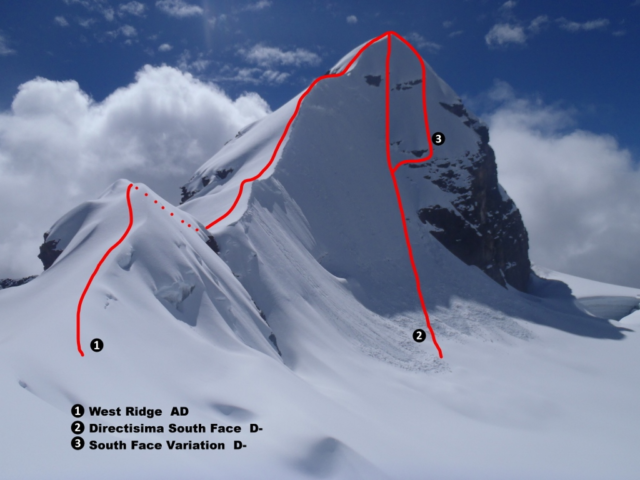
I’m very excited to announce my plans to climb in Bolivia in July 2019 and an Alzheimer’s fund raising event opportunity. I’ve climbed in South America six times: three on Argentina’s Aconcagua at 22,834-feet/6,960 meters and once on Peru’s Alpamayo at 19,511-feet/5,947 meters. In January of this year, 2019, I went to Ecuador for Cayambe at 18,997 feet/5,790 meters, Cotopaxi at 19,348 feet/5,897 meters, and Chimborazo at 20,703 feet/6,310 meters. I climbed in Ecuador with Mountain Madness and will again in Bolivia. And a bit of trivia, I’ll turn 63 while on Illimani – 21,122 ft / 6438 m! Alzheimer’s Fundraising Opportunity Before I talk about the climbs, I want to introduce a new fundraising concept for this time. Those who have followed me over the years know that I promote direct donations to research-oriented Alzheimer’s non-profits or supporting clinical trails during my climbs. This has resulted in hundreds of thousands of dollars in direct donations, none ever to me. For this Bolivian expedition, I want to offer to speak at any event in any mainland US City as long as the organizers (individual, group, organization, company, etc.) will guarantee that a minimum of $5,000 will be donated directly to a research-oriented Alzheimer’s non-profit. Click this link to add your “Event Bid” and the highest over $5,000 will win! I’ll update the bids on my blog throughout July and announce the winner on August 1, 2019. Of course, as always, direct donations in any amount are appreciated. Read more about why this cause is so important at this link and how Alzheimer’s took Ida Arnette’s life. You can read more about my professional speaking at this link Why Bolivia? These peaks have become extremely popular climbs for aspiring high-altitude climbers. With relatively easy access, low cost and reasonably high success rate, many people new to climbing seek these out for their first big peak. I have a few different reasons. First up, I’ve never climbed in Bolivia but they are perfect for some of my Summit Coach clients looking to build their skills at modest altitudes so I want to climb them myself. My Ecuador trip with Mountain Madness was outstanding from their back office support to the in-country team led by Ossy Frier. I did this interview with Mark Gunlogson, their CEO, were he discussed MM’s business, Scott Fischer and Christine Boskoff. Finally, do I have one more 8000er in me? These climbs will help me understand if I do. Bolivia Bolivia is a country in central South America, with terrain spanning Andes Mountains, the Atacama Desert and Amazon Basin rainforest. At more than 12,000-feet, its capital, La Paz, sits on the Andes’ Altiplano plateau with Mt. Illimani in the background. Nearby is Lake Titicaca, the continent’s largest lake, straddling the border with Peru. We will fly into La Paz, the world’s highest capital city and the world’s highest commercial airport at 13,200-feet. The Climbs We are taking a well-thought out acclimatization program that starts at 12,000-feet and gradually moves higher to the summits of three peaks ending with Illimani at 21,125-feet. Pequeno Alpamayo Located at the Condoriri Group in La Coordillera Blanca in Bolivia it stands at 17,749 ft / 5,410 m. The Pequeño Alpamayo, or Little Alpamayo is located at the Condoriri Group in La Coordillera Blanca in Bolivia. It is a pyramid of snow, with the standard route being about 55 degrees, snow, nice in the morning, but sticky later in the day. It was first climbed in August 1962 by South Africans Irene and Keith Whitelock. We will take the West Ridge route. Huayna Potosi Huayna Potosí is 19,974-feet/6,088-meter in the Cordillera Real. Huayna Potosí is the closest high mountain to La Paz. Surrounded by high mountains, it is roughly 15 miles due north of the city, which makes this mountain the most popular climb in Bolivia. The climbing sounds like fun! As one person put it “The summit ridge of Huayna Potosí provided a spectacular finish to this climb. The snow at the top is too narrow for pickets, and too soft for ice screws. If someone falls the only recourse is, hopefully, to jump off the other side in time – in other words “watch you step!” ” The normal ascent route is a fairly straightforward glacier climb, with some crevasses and a steep climb to the summit. The first ascent of the normal route took place in 1919 by Germans Rudolf Dienst and Adolf Schulze. Illimani At 21,122 ft / 6438 m, Illimani is the highest mountain in the Cordillera Real of western Bolivia. It lies near the cities of El Alto and La Paz at the eastern edge of the Altiplano. It is the second highest peak in Bolivia, after Nevado Sajama, and the eighteenth highest peak in South America. Towering over the south of the town of La Paz, Illimani is a revered mountain by the Bolivians. The name seems to derive from the word Aymara Illi mani, meaning Golden Eagle. Follow Along! I will be on the mountains for most of this trip with limited internet access but will update this Blog and social media as I can. A full trip report will be available after the climbs. Climb On! Alan Memories are Everything
2019 Alzheimer’s Fundraising Event

Support Alan’s 63rd Birthday with a Donation to Alzheimer’s Research CLICK HERE TO DONATE I was hoping a new idea might bring new opportunities for Alzheimer’s fundraising but there has not been any individual, group or company contact me to on my offer to speak at any event in any mainland US city as long as the organizers would guarantee a minimum of $5,000 will be donated directly to a research-oriented Alzheimer’s non-profit. It’s not too late Click this link to add your “bid” and the highest bid over $5,000 will win! But there is always the traditional method! Alan’s 63 Birthday – Alzheimer’s Research – WE DID IT!!!! $6,0000 AND COUNTING!!!! THNAK YOU!! Instead of the event, I am asking that for my 63rd birthday this Saturday, July 27th, 2019 that a donation in any amount that is meaningful to you be made to the Cure Alzheimer’s Fund using this Crowdrise site. 100% of your donations goes to research, none ever to me. Read more about why this cause is so important at this link and how Alzheimer’s took Ida Arnette’s life. Those who have followed me over the years know that I promote direct donations to research-oriented Alzheimer’s non-profits or supporting clinical trails during my climbs. This has resulted in hundreds of thousands of dollars in direct donations, none ever to me. For this Bolivian expedition, I want to offer to speak at any event in any mainland US city as long as the organizers (individual, group, organization, company, etc.) will guarantee that a minimum of $5,000 will be donated directly to a research-oriented Alzheimer’s non-profit. Simply add your “Event Bid” at this page and the highest over $5,000 will win! I’ll update the bids on my blog throughout July and announce the winner on August 1, 2019. Of course, as always, direct donations in any amount are appreciated. Read more about why this cause is so important at this link and how Alzheimer’s took Ida Arnette’s life. You can read more about my professional speaking at this link Details: Event to be held in October 2019 All parties agree to promote the event on respective social media and with local press Venue can be simple and inexpensive, perhaps a local REI store which will donate space. Any event expenses borne by the organizer Alan self-funds all of his travel expenses There is no speaking fee A minimum of $5,000 must be donated directly to an agreed upon Alzheimer’s non-profit within 7 days of the event. Climb On! Alan Memories are Everything
Back to Nepal for Alzheimer’s

My passion is climbing and my life’s purpose is as an Alzheimer’s Advocate. In that spirit, I’m excited to share this announcement with my friends, supporters, and followers that I’m returning to Nepal in October 2018 for the 12th time. I will be climbing again and raising money for the Cure Alzheimer’s Fund, a non-profit organization dedicated to funding research with the highest probability of preventing, slowing or reversing Alzheimer’s disease through venture-based philanthropy. I’ve worked with them since 2008. This will be a personal milestone for me as well. On February 10, 2017, while training for the 8000-meter peak Dhaulagiri, I was on a simple 11,000-foot peak here in Colorado when a wind gust cartwheeled me into a scree field breaking my right tibia and fibula in three places. A full year went by before I started to feel like myself. However, I was nowhere near where I was or where I wanted to be. Over the past 18 months, I have had some serious questions to answer about my physical future and it required digging deep into who I thought I was. The October 2018 Climb Plan I will join with Kami Sherpa to climb the relatively simple peak Island Peak aka Imja Tse at 20,305-feet/6,189-meters. It is located just over the ridge from Everest and Lhotse and you reach it by trekking through the Khumbu. As you may remember Kami and I have summited Everest (2011) and K2 (2014) and had two attempts on Lhotse (2015/2016) that were stopped by the earthquake and me getting sick. As usual, I will be live blogging throughout the trek and climb. Cure Alzheimer’s Fund – 100% for Research and $ for$ Donation Match!!! Also, I’m very excited to announce that through the Cure Alzheimer’s Fund Jim and Carol Beers will match every donation from my followers during this expedition up to $10,000, and perhaps even more. I’ve worked with the CAF since 2008 finding their research model both effective and efficient. All of their overhead is underwritten by their founders so that 100% of all donations go directly to fund research projects. Since it’s founding, the CAF has funded more than $74,000,000 to 337 research project. Their funded initiatives have been responsible for several key breakthroughs—including a potential treatment selected by the National Institutes of Health (NIH) for its elite “Blueprint” drug discovery program, and the ground-breaking “Alzheimer’s in a Dish” study, which promises to greatly accelerate drug testing and was reported by the New York Times as a “giant step forward”. Charity Navigator scored the CAF with 100 percent regarding its overall financial health. Form or Join a Team! You can make a donation at our Crowd Rise fundraising site and also form a team to see who can help us reach the goal of $20,000 (I would love to see $25k!) A Long Journey Anytime there is a major trauma in your life, including watching a loved one go through a horrible disease, it requires time and support to cope and recover but most importantly it requires maintaining a positive attitude. For me, with my injury, this meant being patient, open and vulnerable. I surrounded myself with positive people from whom I could learn, depend upon for support and open myself up with admissions of my fears. I found professionals that could help me with the physical recovery. In addition to my orthopedic Doc, Riley Hale, who put my leg back together, my physical therapist, Nina Patterson took theory into reality with a deep understanding of sports injuries and how the body responds. Simply put, I wouldn’t even be thinking about climbing again without these two professionals. It also required that I be honest with myself. This is very complex. While I have framed my incident as something that happened and I could choose how I responded, I was also honest that it was not something in my “plan.” I strove to not position myself as a victim or a martyr AND at times I simply gave into the feelings of despair. I gave myself permission to go into that pity party, let my emotions flow freely AND to pull out after I had had enough. For my 62nd birthday, I was planning a climb of Longs Peak, my favorite Colorado 14,000-foot peak. As I was falling asleep a few nights before the climb, I suddenly woke up saying out loud “I don’t want to be in the rocks. I don’t want to be in the rocks.” Diane, my wife lying by my side, gently talked me through the experience and soon I fell asleep in her loving arms. The 2018 climb on Longs was another step in progress. Surrounded by dear friends, we were stopped by rain and snow – in late July. But it was a “non-summit” and not a failure as we all learned and grew through the experience. Not to give up, I summited Longs today 18 September 2018 for the 43rd time. The summer of 2018, I have been focused on regaining my fitness through losing the weight I gained through almost a year of inactivity and doing active triggering of the deep memories in my essence of the sport I love. I set a goal of climbing back to back 14ers in July – something I have wanted to do for years. Over a five day period, I summited 4 of 5 14ers coving over 50 miles and 21,000 feet in vertical gain. It felt good. In August, on the 9th anniversary of the death of Ida Arnette from Alzheimer’s Disease I hiked to the summit of Mt. Ida in Rocky Mountain National Park. The 12,840-foot peak was not difficult but a year earlier it took me 10 hours. This year I cut that time in half. Yes, I felt the progress and now could measure it. However, the real victory was connecting with my mom, Ida, who died in 2009 from Alzheimer’s Disease. As I said, in 2017 her memory pulled me to the summit of Mt. Ida as
Looking for Alzheimer’s Signs over the Holidays
With Christmas just around the corner and other holiday celebrations in full swing, now is the time to raise our awareness of early signs that a loved one may have Alzheimer’s or some other form of dementia. Ida’s Story I have shared this before but in the department of “could of, would of, should of” it is a constant reminder of my own “what if” story. In 2001 we returned to Memphis to visit my parents over Christmas, something I had regularly done since leaving Memphis to start my career over three decades earlier. One of our annual traditions was going to the Christmas buffet at the famous Peabody Hotel in downtown Memphis. It was always special. We said hello to the ducks in the lobby fountain, enjoyed the huge, beautifully decorated Christmas tree and made our way up to the top floor ball room to enjoy the buffet. It was grandiose as usual. Smart white table clothes covered round tables that surrounded the dance floor. There, the tables were filled with an endless selection of Eggs Benedict, smoked salmon, Belgian waffles, applewood smoked bacon, and prime rib. The service was impeccable. Ah, it was good to be home! We each got up, taking plate in hand, and started our search for our favorite dish. The following moment is locked in my memory forever. I noticed my mom walking around aimlessly. She was lost, not knowing where she was or who we were. As I went over to her, she seemed startled at my approach. “What do you want to eat?” I asked her gently. “Oh, you know, the usual.” was her noncommittal answer. We had noticed earlier that morning that my mom was not changing clothes, putting on makeup or fixing her hair. Highly unusual given the importance she placed on how she looked in public. We asked if she was going to change clothes and she dismissed it quickly saying she looked fine. We helped her select a nice outfit. During the half hour drive to the hotel, she asked four times where we were going. We exchanged worried glances as the signs were there. Over Christmas and the following days it was clear my mom’s condition had worsened. But I didn’t know what I didn’t know. She had developed an odd pattern of repeating questions over the past several years when we spoke to her on the phone every Sunday. She told me the same story about her friends several times during the same conversation. She had lost interest in some of her favorite things, she seemed to have become more withdrawn, very usual for this social bee. She had trouble sleeping throughout the night. She no longer did her crossword puzzles. I spoke with neighbors who said they were worried about her wandering the street. Her church friends told me of similar experience with her memory loss. Her large clan of brothers, sisters, nieces and nephews in Memphis confirmed my observations. My mom was not growing old, she was sick. We talked to my dad privately. He said, yes he thought she had some issues but nothing out of the ordinary given her age. She was only in her mid 70s. My brother and I pushed him hard to get help, see their family doctor. I remember being on my knees, holding my dad’s 80 year-old hands as he sat in his favorite chair begging him to take action. He promised he would. Asking for help was difficult for this proud, independent man. Fueling the concern was that two of my mom’s sisters were already diagnosed with Alzheimer’s. In hindsight my mom had gone through the early and mid stages of dementia, probably Alzheimer’s, for as many as 10 years without us understanding what was really happening. Alzheimer’s disease had sneaked up on us. The next few years saw her condition decline, we did what we could. Her doctor confirmed, as he could, she had Alzheimer’s. My dad tried to keep her on Aricept but let the prescription lapse over and over. I don’t blame him, but now understand we could have done more. We represented the typical family today, spread across the country; established in cities with jobs, houses, families of our own. No luxury of snapping a finger to make things different. Maybe I should have. My mom died from Alzheimer’s on August 16, 2009. Your Story? So as you make the pilgrimage across the country or town to see your aging relatives this Christmas, stay alert for any signs that something is amiss. If there is, take action, help. Learn the 10 warning signs. If you are looking make a difference in the world of Alzheimer, make a donation to a non-proift for research, awareness, education, public policy or caregiver support. Make a donation. If you are visiting someone with dementia this holiday, just treat them like you would anyone – that’s what they want. They didn’t ask for this condition but deep inside they are the same person they have always been. Learn holiday practices. Make a Video Finally, as you sit around a fireplace, the table or a tree, pull out your phone, sit it on the table or a knee and video the conversation. It doesn’t matter what you are talking about but get them on video. Ask them how they met their spouse, or their first memory swimming or first kiss – you will cherish those videos for the rest of your life. I know I do of Ida. The holiday are a special time, an opportunity to reflect, renew and enjoy. I wish the very for each of you. Climb On! Alan Memories are Everything [poll id=”3″]
World Alzheimer’s Day starts with You
September 21 is World Alzheimer’s Day and with it comes the normal volume of news with huge numbers – millions, billions and trillions – trying to capture the scope and size of the problem, people impacted and costs and it comes with scary words like crisis, tsunami, and urgent. But, with respect to these stories, it all about you. For me the millions who have Alzheimer’s’ pale in comparison to the one who was killed by it, Ida Arnette. Never in my wildest moment did I think she would develop the disease and would not recognize me the last years of her life. Nor did I accept that four of her sisters would also die from Alzheimer’s: Kay, Chris, Carolyn, and Hazel. Scare and Fear With this post, all I want to do is make Alzheimer’s personal to you. If you have a family member with it, or know someone who does, you are already there. Often these outreach programs cater to those who already understand the problem. We need to reach those who don’t. I don’t like scare and fear tactics for building awareness and promoting action. Seeing those commercials about starving and abandoned puppies causes me to change channels, not take action. Similarly, showing me pictures of people in nursing homes, with their chin against their chest, slowly dying is not a call to action. We all will die at some point, the question is can we pass with dignity. Alzheimer’s often does not allow someone to pass with dignity. Many become angry, violent and are put into an almost coma like state to “control” their outburst. Again, this is unacceptable but for some, the only way and even for some physicians, their only “cure”. Facts If you have read my previous writings you already know these facts from the Alzheimer’s Association: 1. Half of adults aged 85 and over have Alzheimer’s. 2. More than half of the 5.4 million Americans with the disease may not know they have it. 3. More women have Alzheimer’s. 4. Symptoms of the disease can develop in people as young as age 30. 5. The incidence of Alzheimer’s will increase to every 33 seconds by 2050. 6. The disease is the 6th-leading cause of death in the U.S. 7. There are over 15 million American caregivers for someone with Alzheimer’s or another form of dementia. 8. There is an increased likelihood of depression, emotional stress and financial problems among caregivers for those with the disease. 9. The total cost of health and long term care services for Alzheimer’s is $259 billion. 10. There are an estimated 800,000 Americans with the disease living alone. Your Choices There is no proven way to stop Alzheiemr’s once you get begin to develop the plaques in your brain. Research suggest it starts 10 to 20 years before you show any symptoms. So the best defense is the same advice we have all heard about maintaining a healthy heart: diet and exercise plus staying socially active. Your Action Research is the key to finding a cure and it takes money. The US Congress is slowly adding funding to the National Institutes of Health for research on aging, Alzheimer’s and related dementias – against the Executive Branch’s wishes. In 2009, funding for Alzheimer’s research thru the National Institutes of Health in the US, was about $500M annually, for 2017 it is close to $1 Billion. Most experts believe it will take an annual research budget of $2 Billion to make significant progress. In 2017, Cancer will receive $6B in funding, HIV/AIDS, $3B. Your Children Education is critical to action. Nearly 60 percent of people worldwide incorrectly believe that Alzheimer’s Disease is a typical part of aging – it’s not – it is a disease just like Cancer or Heart Disease. In that same study, 40% believed AD was not fatal – it is. If you do nothing else today, sign a petition on these links here or here to tell Congress to act (believe it or not, these things work). Also please consider making a donation of any value to any of these organizations, or one of your choosing. So, take care of yourself, become informed and become involved. Climb On! Alan Memories are Everything