Everest 2014: Ellis Stewart – Never Giving Up
As Everest 2014 approaches, climbers all around the world are training hard, medicine reviewing gear and enjoying their last weeks sleeping in a real bed. One climber must be both excited and apprehensive more than most. Ellis Stewart has dreamed of climbing Everest for, well, for a long, long time. I have rarely seen someone so focused on attempting Everest so he was a natural for an in-depth interview looking at his motivation, approach and thoughts. I first became aware of Ellis, who lives in northeast England, from an email back in 2002: I am hoping to climb Mount Everest next spring from the North and I am hoping that if you get a chance you will have a look at my web site by following the link below. He didn’t go in 2003, 2004, or 5 or, well you get the idea. We talked again in 2009, this time via Facebook when he said: I am hopeful of going to Everest in the next two years. I have started a facebook group for my family and friends to follow my attempt and the run up. His Everest Dream didn’t materialize over those next couple of years primarily due to lack of funds. However, he was becoming very adapt at talking to potential sponsors. In 2012, Ellis started up a small business and website selling T-Shirts to raise money, his profession today. This 40 year-old was determined if nothing else. I thought the dream had come to an end when Ellis wrote on his April 28, 2013 blog entitled “A cruel dream and the harsh reality“ Then for others dreams remain just that, dreams, no matter how much we long to make them happen. Incidentally I fall into the latter category. I will never stop believing that this thing is going to happen for me. I might have to sit around for another year watching another climbing season on the mountain. I wish just having the passion, the dedication and the steely determination and focus that I possess was enough. I truly do. If it was I would have achieved my dream a long time ago. But alas sadly, this is not the case. For now climbing Mount Everest still remains my one true life’s dream and it remains tantalisingly out of reach.. Clearly discouraged, his next few blogs lamented his situation but carried on with an uncommon optimism and belief that something was going to change. Then out of the blue on October 4, 2013 he wrote the bulk of the money I need to climb this mountain has now suddenly presented itself. Through a combination of s of Everest Dream garments, personal gift donations from some very special people in my life and with what I am able to throw into the pot myself I am now just $10,000USD away from paying outright for the entire climb. Still £6,000 ($10,000) short, Ellis was on his way. A 20 year dream is about to realized. But I’m sure he would still appreciate a donation or two 🙂 Please meet Ellis Stewart: Q: Your tenacity to climb Everest is almost unprecedented in my experience. First, let’s talk about your overall drive. Have you ever pursued anything else with such fervor?? Thank you Alan and no I don’t think I have pursued anything in my life with as much passion and dedication and sheer vigor as I have in my goal to reach Everest. I cannot pinpoint any specific episodes, which stoked this love specifically for Everest, but I do recall sitting in on a talk given by the British high altitude climber Alan Hinkes in the early nineties. Ironically his talk wasn’t even about Everest, it was K2 but I do recall that I left the talk feeling like I had just discovered a new purpose in life. This resolve has never left me since, remaining as staunch a purpose now as it was all those years ago. I am a huge believer that for certain individuals who have this desire and drive to want to climb Everest as I myself do that the call of the mountain is far too strong to ignore. I personally feel that I have been obligated to try to climb this mountain ever since I first laid eyes on the peak. For the vast majority of people the thought of attempting to climb Everest would fill them with dread but for those of us who have this calling, then attempting to climb this mountain is one of the single most defining, life changing and glorious things to do on this earth, and I firmly believe that, which in all probability is why I have been so determined to climb Everest at least once in my lifetime. Q: When did your Everest dream begin? I would say I have had an active interest in this mountain for over 20 years now but climbing it probably first crossed my mind 14 years ago when I trekked to the mountains southern base camp through Nepal. This trip lit the fuse paper for what has since become a 14 year long dream to one day return to the mountain and to hopefully go considerably higher than I did on my first visit. That day is now finally just weeks away. Q: What Everest legends influenced you the most? Doug Scott undoubtedly due to the fact that he was the first British subject to step foot onto the summit but also because I have been fortunate enough to attend several of his talks and I never fail to be in awe and truly captivated by his mountaineering exploits. He is one of the true pioneers of Himalayan climbing as an elite member of ‘Bonningtons boys of Everest’ and that whole golden era of pushing the limits on the worlds highest mountains will sadly never be repeated in such splendid isolation ever again. I think what Stephen Venables achieved on the Kangshung face in 1988 was also remarkable and possibly
Everest 2014: Can I be Rescued on Everest?
A common question for Everest climbers is if they can be rescued. Yes, s rescues are available by human power and with helicopters but with huge risks. I update this popular post as as we prepare for Everest 2014. In this world of instant communication, even from the summit of Everest, some people believe rescues are easy and available on the high mountains. Nothing could be farther from the truth. When a climber gets sick there are generally three options: on your own, help from others or helicopter rescue. If the climber needs assistance, it generally falls on the Sherpas to help. Strong expedition guides also sometimes contribute. Manpower I have seen climbers with snow blindness short roped by Sherpas down the Lhotse Face. This is a technique where the climber is tied to another climber, sometimes in front and behind to guide him or her lower. The climber is able to walk on their own but needs significant help. It is slow, cumbersome and dangerous. I have also seen climbers dragged down steep faces using their sleeping bags or in rare occasions, a canvas sled. Again, this takes enormous manpower to keep the individual going straight, or carried over crevasses or bumps. If the grip is lost, the climber risk more injury or even death by dropping into a crevasse. It can take five to ten Sherpas to safely lower someone on Everest. In 2012, it took a dedicated team of seven Sherpas, two days to retrieve the body of Shirya Shah-Klorfine after she died between the South Col (Camp 4) and the Balcony. She was helicoptered back to Kathmandu from Camp 2 at a reported cost of $25,000. Helicopters Helicopter are available but only from some camps on a huge mountain like Everest. There are no helicopter rescues available on the north side of Everest as the Chinese prohibit helicopters flying over Everest or to Base Camp. In the “old” days, 2008 and earlier, the Nepal Army was the dominate provider of helicopter services for climbing expeditions. It was dangerous, difficult, expensive and took a lot of work to arrange an evacuation. Today, a private company, Fishtail Air, is often hired for evacuations with their helicopter fleet. While not a tourist flight in Hawaii, it is slightly safer and much easier and more reliable than the Army. The Army still helps with large load transport. I wrote an article in 2010 on Fishtail that examines helicopter services in Nepal. Today they land at Camp 2 (21,000’/6400m) in the Western Cwm, but not higher. Depending on where the helicopter flights starts and fly to, it costs between USD$4,000 to $20,000 per flight and is very weather dependent. Some years over 30 people are helicoptered from Base Camp to Lukla at a cost of $4,000, or more, each due to illness. Most climbers have rescue insurance to cover the costs but insurance companies are getting wary of this coverage. 2013 Highest Rescue Ever In 2013, Sudarshan Gautam summited but fell near the Yellow Band on May 21st. He was rescued using a ‘long line’ from a helicopter. This was a record for an alpine helicopter rescue as it was at 7800 meters. They did not land but dropped a line that was attach to the injured climber. The previous record was 6,900 m (22,637 ft) by a team of Fishtail Air & Air Zermatt on 29th April, 2010 also using ‘human sling operation’ on Mt. Annapurna. 1996 Rescue Helicopter rescue on Everest came to the world’s attention during the 1996 disaster. In his book, Into Thin Air, Jon Krakauer detailed the daring rescue of climbers at the top of the Icefall at 19,800?. Nepal pilot and army captain, KC Madan, became a hero with his rescue of Beck Weathers and Makalu Gau via a stripped down helicopter, a B-2 Squirrel A-Star Ecuriel helicopter, that barely flew in the thin air of the Western Cwm. Today, the helicopters are more advanced. Fishtail air in Kathmandu worked on new techniques with Switzerland’s Air Zermatt’s who has a track record of rescue operations have saved many lives in Europe. Helicopters can fly higher than the summit of Everest but landing to take on a passenger or body is dangerous as as previously mention has never occured above Camp 2 on the Nepal side. Air Zermatt is also known as an expert in conducting Human Sling Operations, a difficult aerial rescue maneuver involving dropping an expert mountain guide at an inaccessible point to lift stranded people using ropes. In 2005, Eurocopter claimed a helicopter landing on the summit of Everest. It was a serial Ecureuil/AStar AS 350 B3 piloted by the Eurocopter X test pilot Didier Delsalle. They reported landing on the summit for 2 minutes before returning to Lukla. According to an interview with climber and helicopter pilot Simone Moro, the Fishtail helicopters are rated to reach an altitude of 23,051’/7026m but have flown as high as 7400m. This would be between Camp 3 and the South Col on Everest. Crashes It is easy to be lulled into thinking helicopters are a safe and easy, albeit expensive, way of getting to the high camps. But as I reported in November 2010, one of the Fishtail helicopters crashed performing a rescue on nearby Ama Dablam (22,349′ /6812 m). There have been two other crashes of the Fishtail helicopters. On Ama Dablam two climbers needed help. One was successfully snatched from the mountain side and as the helicopter was returning for the second climber, it crashed. It appeared to “fall out of the sky”, according to eye-witnesses. In 1973, an Italian Army helicopter crashed around 20,670’/6300m. Wreckage from that crash was only removed in 2011 after the Khumbu Icefall took it lower. There have been multiple deadly helicopter crashes at Everest Base Camp including 1997, 2003, 2005 and 2007. Just last year, an Air Dynasty helicopter crashed at the Lukla airport when the tail section hit a wire fence. And in June, the helicopter
Everest 2014: Altitude Tents, More O’s – Acclimatization is Changing
A collection of well known Everest guides are questioning the conventional wisdom around time spent acclimatizing on Everest. As a result, capsule they are reducing the time it takes to climb the big Hill by weeks. However there is a big ‘but’ to their trick. One of the reasons an Everest expedition takes almost two months is the time required for multiple rotations up and down the mountain to help the body adjust to the thin air. A typical Everest climber will spend 10 to 15 days sleeping high on the mountain above Base Camp before going on their summit attempt. They sleep at ever-increasing altitudes to trick the body into making the necessary physiological changes, especially with respect to respiration, the key to survival at extreme altitudes. This ‘climb high, sleep low’ program has been in place since modern-day explorers began climbing the large peaks. Of note, of the 6,871 summits through February 2014, only 192 climbers summited without supplemental oxygen, about 2.8% according to the Himalayan Database. The Oxygen Science The air we breath has a mixture of gases including oxygen and nitrogen. The atmosphere contains about 21% oxygen at all altitudes. What changes as we go higher is the air pressure. Gravity pulls on gas molecules in the air. The closer to the Earth’s surface, the more pressure. At the summit of Everest, the pressure was measured in 1981 by the American Medical Research Expedition and later documented in a Nova movie at 253 mmHG. At sea level it is 760 mmHG. The reason for the lower pressure is that there is less atmosphere pushing down from above. This reduced pressure allows the air molecules to scatter. This means that on Everest the air is not as dense or “thick”. In other words there is the same percentage of oxygen but the molecules are scattered thus the term “thin air”. So in each breath, there is less oxygen. To be precise about 66% less! In looking at how the body reacts to this reduced oxygen level, Everest legend Tom Hornbein explained it to the American Lung Association this way: The lower oxygen stimulates chemoreceptors that initiate an increase in breathing, resulting in a lowering of the partial pressure of CO2 and hence more alkaline blood pH. The kidneys begin to unload bicarbonate to compensate. Though this adaptation can take many days, up to 80% occurs just in the first 48 to 72 hours. There are many other physiologic changes going on, among them the stimulus of low oxygen to release the hormone, erythropoietin to stimulate more red blood cell production, a physiological and still acceptable form of blood doping that enhances endurance performance at low altitudes. Adaptive changes are not always good for one’s health. Some South American high altitude residents can have what’s called chronic mountain sickness, resulting from too many red blood cells; their blood can be up to 84-85% red blood cells. The increased blood viscosity and sometimes associated pulmonary hypertension can result in right heart failure. Climb High, Sleep Low The age old approach to acclimatizing is the climb high, sleep low technique. This animation I created shows the schedule many teams have used for years: As this animation shows, climbers spend a lot of energy going up and down the mountain. In fact, they almost climb it twice! Thus many guides have looked at ways to shorten the time spent on the mountain to reduce risk and time away from family and work. Those few who climb without using supplemental oxygen will go to the South Col or near 8000m to sleep before their summit attempt. Personally, I think spending time on the mountain is the reason for going in the first place, but not everyone has the luxury of time or shares my view. Pre-Acclimitization As a method to jump start the acclimatization process, an emerging trend for mountain climbers is to use so called altitude tents where the oxygen level is reduced through introducing more nitrogen into the mix. Athletes have used this system for years and many claim great success. In essence, you spend a significant amount of time living inside a clear canopy, aka tent, breathing this adjusted mixture. Your body reacts to this with a series of changes. As if spending $50,000, and two months away from home was not enough to put a strain on any relationship, try asking your spouse to sleep in a tent with you for two months before you go! Everest guide Adrian Ballinger of Alpenglow, swears by the system and has many of his members use it before arriving in Kathmandu. Adrian offers Everest climbs for as short as one month, half of the standard schedule. Because I have no personal experience with these systems, I reached out to world-renowned high altitude doctor, Peter Hackett who also runs the excellent site Institute for High Altitude Medicine and Brian Oestrike, CEO of Hypoxico, the industry leader, for his thoughts. First up is Brian: Q: What is the mix of your typical customer? A: We’re fortunate to work with a wide range of athletes, mountaineers, researchers, and members of the armed forces. Historically the bulk of our business came from endurance athletes, specifically runners, cyclists and triathletes. This still holds true but we have seen a big uptick in interest from ultrarunners, many of whom are competing at high altitudes, as well as families using the equipment prior to their high-altitude climbs and vacations. In addition, new research has confirmed that short interval hypoxic training can be used to enhance performance in sprint-based sports such as basketball and football, so we have been working with different NBA and NFL teams more recently. Q: Have you seen an increase in Everest climbers over that past few years and what results did they report? A: We’ve definitely seen a steady increase in Everest climbers pre-acclimatizing with our equipment over the past few years. What’s more exciting is that we’re seeing more climbers utilizing our equipment
Everest 2014: Henry Todd – The Small Quiet Guide, today
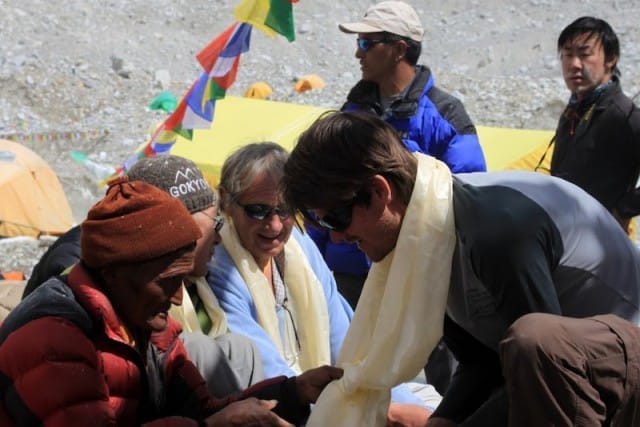
There are many names associated with Everest from climbers to guides. If you are a long time follower of Everest, mind one name that is very familiar is Henry Todd. Henry has, sick well, let’s just say a reputation for his Everest activities and some would say, for activities outside of Everest. But that is an old, tired story and not something I wanted to rehash. I wanted to understand what he was doing today because each year his name comes up, albeit quietly. Even though everyone I asked told me that Henry doesn’t do interviews preferring to stay under the parapet, I reached out to him anyway and he was gracious enough to give me a few words. I also contacted his long time friend and climbing associate, Rob Casserley plus recent member Brandon Chalk. I met Henry in 2003 at Everest Base Camp. We visited his private tent. I felt like I was meeting royalty as Henry was sitting behind a desk aka table, where he pointed out route features on a large map taking pride in talking about the history of Everest. He was generous with his time, knowledge and scotch! Henry has been involved with over 60 major expeditions. At age 69 he no longer climbs, but has had some impressive climbs including Everest in 1989 via the West Ridge and summits on Cho Oyu, Manaslu, Pumori and Ama Dablam. On Everest he has seen it all from the early summits to the 1996 disaster to the recent crowds and fights. Henry has been organizing climbs for over 25 years. Today his company ICE8000, runs the logistics for very independent climbers wanting to share the $70,000 permit fee each season. He is also on other large mountains including Manaslu where I saw him in 2013. He says on his site that he has run 44 8000m expeditions, 39 of which have had members on the summit. He has run expeditions on 10 of the 14 8000m peaks in Tibet, Nepal and Pakistan. Henry also helps other expeditions obtain and refill their oxygen bottles. It is clear he is still heavily involved with Everest. He has little overhead thus keeps his costs low and passes that on to his members. While in the past he ran teams with a large number of climbers, today he stays somewhat small by modern Everest standards. As he has done for over a decade, he and his long time, very loyal Sherpa team set up Base Camp at the base of the Khumbu Icefall; he only runs on the south side. Brandon and Kristine Chalk climbed with Henry in 2010. The Chalks recently summited Vinson making them the youngest couple to climb all of the 7 Summits together. Brandon said the food was basic and simple but good enough to get them to the summit. He was very impressed with Henry’s Sherpa team, and base camp facilities. But more than anything, Brandon was impressed with Henry’s knowledge of the mountain, weather and how he ran the expedition. Overall, we had a really good experience with Henry. Yes, at first he can be a bit abrupt, but once you get to know him, he is a fantastic guy who cares more for his climbers and Sherpas than most. He keeps to himself a lot but if you need something, advice, whatever, he is there for you. I remember when I first got to base camp, he knew I was an engineer so employed me essentially to go fix the microwave in the cook tent. It took me all day, but I succeeded which got me in his good graces. Like he said, he is not a guide, but an expedition manager. He is good at it. We have kept in touch over the years due to the friendship garnered on Everest and I cherish his continued friendship. A times, sure there were frustrations with the ” not knowing” and maybe him keeping to himself, but as a climber I learned to appreciate that. Many times he entrusts you to make your own decisions – something that I think climbers come to appreciate since they are used to making their own decisions in the mountains. I asked Brandon about Henry’s style and Sherpa team He is simply there to provide logistics, manage the climbers from base camp, and provide guidance and support. He gives you a lot of comfort on the mountain knowing he is behind you and there for you. I found his Sherpa team top-notch. Really super fellows who have multiple summits under their belts and with whom we became friends. All very supportive and there for you if you should need them. We had a 1:1 climber to Sherpa ratio on summit day like most everyone else. All other days on the mountain, us climbers would basically climb by ourselves with guidance from Henry and the Sherpas would be going back and forth between camps shuttling gear and providing support. Specifically, Thundu and Namgel Sherpa were fantastic, who went onto work for our friend Mike Kobold (who was on Henry’s 2009 and 2010) climbs making watches and opened a shop in Kathmandu. I did a more extensive interview with Rob Casserley who is a guide (Trek8848), climber and a physician in Canada. He has eight summits of Everest including summiting twice in each of two seasons (2007 and 2010) plus climbs on other 8000m peaks. In 2008 he was a high-altitude cameraman for Sir Ranulph Fiennes’ Everest Challenge expedition. In 2010, following the 1st summit, he was credited for saving the life of one of his teammates who had an episode of tracheitis, a life-threatening closure of the airway. Oh, by the way, Rob’s other passion involves rowing across oceans as he did in the annual Woodvale Atlantic Rowing Race. Rob describes his relationship with Henry as family. He has a long association with him and credits Henry for help in building his climbing career. Q: With 8 summits
Everest 2014: Interview with Ellen Gallant – Life Priorities
Would you quit your job to climb Everest? If your job was slow, stalled or dead, mind maybe. But what if you were a successful cardiologist in a growing practice? Ellen Gallant did just that. Ellen leaves for Everest in 6 weeks. Ellen lives in Salt Lake City and today is spending her time training. Similar to many people, including me, her love affair with climbing and Everest began on a trek to Everest Base Camp. She began climbing on rock in 2000 and found it fed something deep inside of her. But when she read “Into Thin Air”, the fire was fueled. On that trek to EBC in 2002 she met an all women’s team going to Everest and the fire raged inside of Ellen. With that motivation, Ellen went on to climb Aconcagua, Denali, Cho Oyu, Vinson. She felt at home with multiple climbs in the nearby Teton Range and in Ecuador. But her favorite was the climbing in the lower 48, Mt. Rainier. She has now climbed it five times by four different routes, including the infamous and difficult Liberty Ridge. Ellen was raised on the East Coast, obtaining her medical degrees in New York. She moved to California for her fellowship in Interventional Cardiology. She never looked back East as she felt at home on the West Coast and near the mountains. She loved her job but also felt the call of the mountains. Like many successful professionals, she struggled to live her life to the fullest while trying to balance her professional requirements along with her passions. She felt guilty and selfish taking the time and money to go climbing. But she also felt alive being on a long climb. Finally it was a conversation with International Mountain Guides’ Phil Ershler on a trek in Bhutan that brought it all into perspective. She returned from that trek and fully committed to Everest, including quitting her job in order to take the time to train properly. An emotional person, she does not hold back. As she neared the summit of Vinson, the tears flowed as she felt an overwhelming sense of satisfaction and confidence. Everest would be next. This quote may sum up Ellen: “After reading “Into Thin Air” in 2001, I decided I had to see Everest base camp. Perhaps not a normal reaction to the book, but I’m not a normal girl.” Please meet Ellen. Q: What is your motivation to attempt Everest? A: For me a lot of what I have done athletically is about finding my limits, both physical and mental. Competitive swimming and track, marathons, short distance followed by Ironman distance triathlon, rock climbing, back country skiing, mountaineering….where do I cry “uncle”? I have not found that limit yet. I honestly do not know what will happen on Everest. I quit my job to climb Everest. I train for hours a day now and will be physically ready for this adventure, but I do not know if that will be enough. I have done some pretty painful things athletically. I intellectually know that summit night will be the most painful event of my life. That said, I think the reality is going to be beyond what I have imagined or read about. Will I be strong enough? I just don’t know but am looking forward to finding out the answer to that question. Q: You quit your job as a cardiologist last summer in order to climb more. What is the story behind that decision? A: Briefly, I went to Bhutan in the fall of 2012 for 2+ weeks trekking with a great group of people. Phil Ershler was our guide. Over the course of the trek, Phil and I chatted about what I had climbed and gradually about my Everest aspirations and my hesitations. I had created a story in my mind about why I should not climb (too much money which could be better used/donated elsewhere…. too dangerous…. too self-indulgent). Phil helped me debunk all of these excuses, and I came back to the US having decided to commit to the climb in spring 2014. Only problem was my job as an interventional cardiologist. Hard to get big blocks of time off. After talking to my partners, I realized what I wanted was not compatible with the needs of the group. I either needed to give up on this adventure or resign; I chose the latter. I shall never regret having resigned to climb Everest; I genuinely believe I would regret not having resigned to give it a shot….. Q: One of your climbs was the Liberty Ridge on Rainier, serious route! How was it? A: I have climbed Rainier 5 times by 4 different routes. Liberty Ridge is my favorite. I had the pleasure of climbing a few years ago with the amazing Olivia Cussen as head guide. Liberty Ridge is a fun climb because you are really climbing. Nothing easy about summit day. I am much stronger now, but Lib Ridge was another piece in the training plan/puzzle for Everest. Q: I always say that the trek to Everest Base Camp will change your life. It seems to have done that for you in 2002. Tell us about that. A: I read “Into Think Air” around 2001 and planned a trip to Asia in 2002 to just see EBC. Spent time in Thailand and Cambodia first followed by meeting some friends in Nepal for a trek to EBC. I arrived in Kathmandu a few days before my friends and decided to take that little plane ride along the Himalayas. While I was at the airport, I met Mark Tucker (I had no idea who he was or what a guide did….). He told met quite a bit about climbing, and he was heading to Everest. Over the course of the next 14 days or so, friends and I trekked toward EBC. Monasteries along the way. Namche Bazaar. The beauty of Everest from the top of Kala
Everest 2014: Interview with Alex Staniforth – Young and Motivated
What were you doing at age 18? I know I was dreaming of cars and girls, mind not of climbing Mt. Everest. But for Briton Alex Stanifoth, illness Everest has become his dream, not only to summit but to become the youngest Brit to summit from the South side. This spring he is off for the adventure of his young life. Alex, from Cheshire England, was diagnosed at age 9 with a mild form of Epilepsy. He suffered from stammering, bullying, panic attacks, anxiety and a lack of confidence. Determined not have his life defined by the disease, Alex has worked hard to overcome it. He has always been motivated. In 2012, he carried the Olympic Torch through Chester, U.K.; a nod to his ambitions and achievements already age at 16. He set a record for soloing the Three Peaks Challenge, where climbers walk the highest mountains in Scotland, England and Wales. During this event, he raised £1,700 ($2,778) for a conservation charity and Cancer Research, in memory of his grandfather and aunt. Alex likes to say he wished his parents would just write him a check for the climb, but he knows that is not possible, and perhaps not what he would do even if it was. He has worked tirelessly to raise money from sponsors, as well as from his own work after school. His training has taken on a life of it’s own spending 3 hours on a bike at 75% of his maximum heart rate, swimming, and climbing in the Scottish Highlands. He recently wrote on his blog: “… I camped alone in Glen Nevis, in a field in about 40mph winds. At about 8pm I’d walked past the Youth Hostel with it’s warm glow, lit windows, central heated bedrooms and cafe ushering me in…. and kept walking. ‘Man up!’ I told myself. I’ll be camping in much worse on Camp 4 on Everest.” He has the right attitude. Please meet Alex. Q) Please summarize your motivation to attempt Everest? A) Like a lot of Everest climbers- I can’t quite pinpoint why I am so infatuated with this big, beautiful mountain! It became a goal for me about 4 years ago, and ever since I’ve been on a journey to ‘live the dream’. Why settle for small ambitions? I want nothing more than to step foot on the worlds’ highest point. I can’t imagine a more rewarding, invigorating feeling. Perhaps it’s the passion, the challenge, overcoming more obstacles, pushing my limits and finding what I’m capable of. It just inspires and drives me- I can’t ignore it. Undoubtedly it’ll be a life-changing experience that will enrich my life and open opportunities. It will be well worth every painful slide up the fixed rope. Not forgetting an awesome view from the top too! It’s also great to be able to raise money for great causes and hopefully inspire others to make change happen at the same time. Q) Are you concerned your of Epilepsy at age 9 will have any impact on you on Everest? A) Not at all. Fortunately, my Epilepsy was a mild form and brought under control quickly. It hasn’t affected me or any of my outdoor pursuits at all. I’ve been off medication for a long time and seizure-free. If I wasn’t, things would be very different. An epileptic seizure on Everest would be an extremely dangerous situation for me and others around me. It was more the ‘side effects’ like the low self-confidence, speech problems, anxiety that it brought with it, which affected me back then. At one point I was too nervous to leave the house alone! I guess that’s part of what drives me now. Having turned things around, I’m striving to find my potential inside and what else I can overcome. Q) Given your high altitude experience is somewhat limited with Baruntse and Mont Blanc, why not climb some more big peaks before attempting Everest? I think it’s quality rather than quantity here. Not everyone has the opportunity or money to build up years of high altitude experience. I wouldn’t want to approach Everest feeling under-prepared just for the sake of it- but I honestly believe I have what it takes. I don’t think anybody understands our true capabilities more than ourselves. More big peaks would be great but I think 2014 is my opportunity to climb Everest. I spoke to other successful Everest summiteers and developed a clear perception of the preparation needed and knew that 2014 would give enough time to prepare properly whilst having the opportunity, time and commitment to get to base camp through sponsorship: Everest has become my full time job. Realistically the only way I’ll get there without waiting a long time is sponsorship, and I’m grateful for the support. I don’t have rich parents to slip me a cheque (and wouldn’t want one, either). My circumstances could change down the line and it could end up being nothing more than a childhood dream for a long time, like so for a lot of people. And I feel I’m ready this year- so why wait, miss the chance and lose my momentum? I guess it depends how you define ‘enough’. Baruntse, at 7,129m, became the key part of that preparation, and unfortunately a host of problems meant we didn’t get to the summit. My whole trip to the Himalayas last autumn was a painful, daunting learning lesson that made me up my game with training big time! I wasn’t prepared to give up. I took enough away from it to understand the commitment and hard work needed to summit Everest (and be proactive with it). Surely it’s true that no matter how experienced or strong you are, Everest always calls the tune. It’s always going to be a gamble and you can only give your . Carpe Diem! Q) You are climbing with Tim Mosedale. Why did you select Tim as your Everest guide? Tim’s a great bloke and your interview with him
Everest 2014: Joby Ogwyn to Fly off Everest
Everest 2014 is getting closer so the public relations experts responsible for the annual stunts are starting to pave the way with press releases and teasers. First up is the expected wing suit flight from the summit to Base Camp by Joby Ogwyn. I have known about this for a while but the Discovery Channel issued a release with more details. The big news is the media coverage by Discovery. They are dedicating hours of programming to the stunt similar to how the space jump by Felx Baumgartner, medical and Nik Wallenda’s tightrope walk cross the Grand Canyon were covered. My sources tell me Joby will be equipped with multiple cameras to record the flight plus tracked by helicopters so as to give viewers every possible angle during the flight. He will use a specially designed suit to accommodate the low air density and cold air at 29,035 feet. He has a private guide taking him to the summit and a large support staff and film crew, perhaps as many as 20 people, following his every move from Base Camp to the acclimatization rotations. He is expected to get ahead of the crowds by attempting his flight early in May, more than likely either with or a day after when the Sherpas fix the rope to the summit. Historically this has been between May 1st and May 10th. Joby, 40, is no stranger to climbing. The Himalayan Database shows 10 Himalayan expeditions including Lhotse, Makalu, Cho Oyu, Ama Dablam and three on Everest. In 2008 he summited Everest via the north east ridge in a reported nine and half hours. He has climbed the 7 Summits. This is nice video of his climb on Everest and fly-by. However his main passion is human flight. He completed three base jumps from the Eiger north face in one day and completed the first wing suit flight around the Matterhorn. In the autumn of 2010 Joby jumped out of an airplane near Everest to became the first person ever to fly a wing-suit next to Everest. He landed back at Base Camp. As you would expect, Discovery is hyping this to the max starting with this teaser on their site. This will not be the first time someone has flown off Everest. On May 5, 2013 Russian Valery Rozov flew off the north face from 23,688 feet. And in 2011 Babu Sunuwar and Lakpa Tshering Sherpa did a tandem paraglide off the summit, landed in Namache Bazzar then touched the ocean off Bangladesh traveling by bike and kayak. I wish Joby well, but somehow also wish that Everest could remain the domain of climbers and not used for stunts. I know this is a personal bias and many others will enjoy watching him climb and fly so as I said, I wish him a safe and successful journey. Climb On! Alan Memories are Everything [poll id=”13″]
Everest 2014: Why Climb Everest?
“Why?” may be the most provocative question ever asked of anyone attempting extraordinary things. And for many, it is often the hardest to answer. Why run a marathon? Why compete in a bike race? Why swim the English Channel? Why climb Everest? For most people, medical it comes down to some very personal reasons. Many cite goals, or to test themselves or to break the boredom of life. Of course the most famous answer regarding “Why Everest?” was actually a sarcastic quip given to reporters by George Mallory in 1924; “Because it is there.” But he went on to say “Everest is the highest mountain in the world, and no man has reached its summit. Its existence is a challenge. The answer is instinctive, a part, I suppose, of man’s desire to conquer the universe.” And Sir Edmund Hillary explained that his summit of Everest was more being part of a team “I never had a vision to climb Mt. Everest. As with everything else, it just more or less grew … It was a growing process and a learning process. Never, in my early days, did I ever think of attempting to reach the summit of Mt. Everest. “ I decided to reach out to a few friends who have attempted Everest over the past few years to get their thoughts. Bob Kerr, 36, attempted Everest in 2013 without a summit: “When I was young, I was scared of heights. At age 12 I set myself a life goal of climbing Ben Nevis by age 16, Mont Blanc by 30 and Everest by age 50 to overcome my fear. Having set these goals I intend to complete them. Everest is my only outstanding goal. I didn’t summit in 2013 aged 35, but had a good recce and will be back to try to complete my challenge. I believe that it in life you should always set yourself challenges and work towards them as it gives a great sense of fulfillment.” Bill Burke, 72, is one of the oldest climbers on Everest with a summit in 2009 and is returning in 2014: George Mallory’s famous answer comes to mind, but I’ll try to be more original. My love affair with Chomolumna began in 1998 with the release of the IMAX film “Everest,” recounting the disaster that occurred on Mt. Everest in the 1996 climbing season. I remember viewing that film at a theater in New York City and thinking: what a beautiful mountain. I’d like to try to climb it some day. That day did not arrive until nearly 10-years later. My first expedition on Mt. Everest was in 2007. I attempted the climb to fulfill my dream in 1998 and to complete the “Seven Summits,” which I started in 2002. I summited Mt. Everest in 2009. It was a glorious and life changing experience. After my summit in 2009, my reasons for returning to Everest year-after-year changed. I love that mountain and think about it often. Mt. Everest is beautiful, powerful, awe inspiring, fearsome and benevolent, all at the same time. It is always the same, and it is never the same. When I find myself blessed to be on its flanks, I feel like I am standing on sacred ground. I’ll be going back to Everest this year, for the seventh time. If I am fortunate enough to stand on the summit at age 72, I’ll be a happy man. If I don’t make it to the summit, I’ll also be a happy man. In either case, I’ll thank God for giving me this marvelous friend to challenge and inspire me. Scott Smith made the top in 2013 from the south side: My reason for climbing Everest began during my teenage years in Vermont as a very simple quest to stand on top of the world. The sheer beauty and magnificence of that mountain rising above the world’s tallest peaks captivated me, and I wanted to be there. Later, in my early forties, as the possibility of meeting Everest’s attendant costs and logistical demands became a reality, I tried in earnest to keep that original quest simple. Just get to the summit, or as high as you can, and enjoy the views. But that original reason became increasingly complicated as I made my way up that mountain. The physical and mental demands changed me, and I saw life and death, beauty and discord, success and failure, in their various forms together in that one place in inexplicable, yet seemingly perfect harmony. High altitude climbing, I came to believe, was actually a very selfish act IF you didn’t make it home safely. So I found myself searching for other, yet undiscovered reasons to make that summit, but could not agree on just what those additional reasons, beyond the selfishness of it, might be. I had lost my father to cancer when I was 7 and my mother to a car accident while in graduate school, but decided that climbing in their memory might lead only to further, self-imposed disappointment if I failed. Plus, I had no interest in going backward, only moving forward. It wasn’t until weeks later, after having reached that glorious summit and returned safely home, albeit 30 pounds lighter, that my original reason seemed so distant. It was Father’s Day Weekend. After months apart with limited communication, I embraced my two sons, ages 13 and 11, who simply said “great job dad, we knew you would make it”. Nelson Dellis who attempted Everest twice (South 2011, North 2012) without a summit added: The most personal reason for climbing Everest was because I wanted the ultimate challenge. Ever since I had climbed Mt. Rainier as my first peak, it left me desiring more and more – this somewhat insatiable appetite for achieving REALLY challenging and difficult things. Everest has always seemed like the ultimate challenge to me (because you can’t go anywhere higher in the world), and that is why I’ve been so attracted to it.
Everest 2014: Interview with Dan Nash – Small for a Reason
For 2014, I will be interviewing some of the smaller Everest guide services in addition to the climbers. The big name guide companies take about half of the total climbers to Everest so who guides the rest? There are many small companies to fill this gap including Dan Nash out of the US. I welcome suggestions for anyone climbing in 2014. Now here’s Dan Nash: Dan does not live in the Pacific Northwest, Colorado Rockies, Alaska or Nepal. No, he lives in springfield, Missouri where he has carved a great niche in the climbing and hiking world. Surrounded by the Ozarks that max out at 2,500 feet, he takes pride in helping people achieve their dreams. Dan’s company Satori Adventures guides members around the world, including Everest. Like most small guides, he is not the lowest or highest price but comes in the middle of today’s price range. Over the past five years, he has put 13 people on the summit. On Dan’s site, he explains the name Satori “… is a Buddhist term for enlightenment that literally means “understanding”. In the Zen Buddhist tradition, Satori refers to a flash of sudden awareness, or individual enlightenment and is considered a “first step” or embarkation toward nirvana. Satori Adventures and Expeditions assists in this individual enlightenment by providing our members with the possible outdoor experiences in some of the world’s most amazing locations. Our goal is to provide you with a life changing experience that will help transform and enrich your life for years to come.” Dan is a field ambassador for Lowa boots and regularly tests and reviews gear for various outdoor companies and places like the Gear Institute, Backpackers Review and Backpacker Magazine. He is also the founder and editor of the site Hiking the Ozarks. And perhaps an emerging filmmaker! Please meet Dan. Q: Can you tell us a bit about your company Satori Adventures? Satori Adventures & Expeditions is a small “boutique style” expedition guide service offering over 50 mountaineering and trekking expeditions in over 20 countries worldwide. We are affiliated with several local guide services that emphasize the same values we do – helping our members achieve a life-changing outdoor experience with guides who make safety their utmost concern. We are proud of our people and the experiences we offer. Satori was founded out of my love and passion for mountain climbing and trekking in the world’s most beautiful places; I want to help others experience that same love and passion. Q: Do you have a favorite mountain in Peru or the Himalaya? The Andes and the Himalaya both have so many amazing mountains, but I always seem to be drawn to those that offer a unique mountain experience that I can really share with others. For a beginner’s peak, I love Mt Pisco in the Andes, not only because it is a beautiful climb, but because I have had the opportunity to share this peak with so many wonderful people and climbers. To teach and share this experience with so many new climbers and to see the emotion – the joy and the pain – as they set out to achieve their goals of reaching the summit, makes me feel very lucky. These are the people that will carry this sport on into the future. In the Himalaya I love Cho Oyu for the amazing views and the massive bulk. Q: You have been guiding for 15 years and seen a lot of changes. What are a couple of the most significant ones in your mind? The popularity of mountain climbing continues to grow, so certainly the number of participants and number of guides has changed dramatically. Whereas mountains were at one time more for experienced climbers and trekkers, it has become a more inclusive sport, thereby making diversity in experience more noticeable. There are obviously more safety concerns with this, but the good thing is that it is nice to see more and more people getting out there to experience the beauty of the mountains and test their limits of what they can achieve. Q: What are your thoughts on Everest these days, routes, safety, crowds, conflict? I understand why Everest has become so popular. It is a beautiful mountain and the ability to summit it represents one of mankind’s great feats of physical and mental toughness. Unfortunately, the crowds can at times make it that much more dangerous for everyone. I am always saddened to hear about conflict in the area, especially because the Sherpa are such a wonderful and hard working people. Without the Sherpa, we could not accomplish the things we do on Everest. I worry that sometimes their quiet voice is not always heard nor defended. That makes me sad. And while climbing a mountain like Everest carries with it an inherent danger, it also saddens me that we do not better control the danger that we can control. Part of what makes the Himalayan mountains so beautiful is that they are mountains that are lived in; it is a beautiful thing to pass by villages and get a taste of that culture on the mountain. But I worry that tourists and the Nepalese government does not always take this into consideration in protecting the area in which these people have lived for thousands of years. Q: What is the profile of your typical member and team size? For the bigger peaks, we typically have smaller teams, around 4-6 climbers. I like this size as this gives us the chance to really get to know our members much better, plus it really affords our guides the opportunity to teach the members and be educators and mentors on the mountain. Due to the variety of trips we offer, our members range from amateur members attempting their first peak, and experienced members attempting one of the various 8,000 meter peaks that we offer. Q: Please tell us a bit about your film “Ordinary Mountaineers”? There are so many films about professional mountaineers, so I
Everest 2014: What’s More Important: Mental or Physical Toughness?
Some people say climbing Everest is mostly mental not physical but I beg to differ. Climbing Everest is about ands. The first time I attempted Everest, I was not ready, physically or mentally. The second time, only a year after the first, was a sad repeat. And the third? Well physically, I was better but mentally, that is a long story. But for the fourth, everything came together. I was in Everest Shape plus had the right mental toughness to go beyond what I thought was possible. The physical part of any climb is a given, but many climbers underestimate what it takes. They toll for hours in the gym on the treadmill, the stair master (with pack), lifting weights as if they are going to the Olympics but still fall short at 23,000 feet on the Lhotse Face. It is there that the harsh reality of climbing comes into focus. It is not about how strong you are but rather how you prepared. Climbing at altitude is about having your body in balance. It is a system. Can your lungs feed your heart, your heart feed your muscles, your muscles power that next step? Can your mind control your doubts? If any part fails, every part fails. When you are at 27,000 feet where there is 35% the oxygen of sea level, the real test comes into play. Your lungs, heart , legs – your total body simply screams, STOP! It is at its limit and can go no further. Similar to a marathoner at mile 23, your body has had enough. If you don’t stop, it will stop for you. What to do? I have been amazed at how far I can push my body, safely. But it came with years of experience, proper preparation and motivation. As I often tell my audiences, there are a thousand reasons to stop and only one to keep going. To summit Everest, you must find that one reason. And it is unique and personal to you. Perhaps no one else will understand your reason and that is OK, at 27,000 feet in the harsh winds, unbearable cold with the wind blowing against your goggles, there is no one else. You are alone on the mountain, in your own world, fighting your own demons. If you don’t know why you are there, you will probably not summit; or perhaps return home. Trek to Everest Base Camp This is arguably the part of an Everest climb. Seeing the Khumbu, surrounded by the highest of the Himalaya, you are inspired in ways you never knew possible. Walking along with your teammates you share stories of dreams. Each night you go to sleep in a teahouse wondering if this is really happening or just another dream. Everest Base Camp Arriving at BC, the excitement is almost palatable. Looking around you see hundreds of tents. Yaks go by indifferent to your excitement. Walking the dirt paths is a Tower of Babel. It seems every nationality is represented. You look at each climber with an air of competition. Hmm, she looks fit. He looks a bit soft. You are judgmental yet insecure that you can compete. The Khumbu Icefall A flowing river of ice. Getting dressed at 3:00AM at 17,500 feet awakens your senses unlike anything you have ever experienced. Damn that headlamp, why did the batteries have to fail now? You struggle with the simplest tasks. You stumble into the dining tent to stare at your fried egg, toast and coffee. Your appetite is gone. The first ladder shatters your self confidence. You struggle for breath. The Western Cwm As the sun bears down, the sweat flow into your eyes, it stings, you hurt. The climb to Camp 2 starts flat but at the end, you wonder what happened to your fitness. You trained hard. When the machine at the gym beeped and flashed “workout over”, you proudly pushed harder for 2 more minutes. Maybe you should have done another hour. Lhotse Face You have been staring at the Lhotse Face on every rotation knowing when the time came, it would be a test. From afar, it looks vertical, in real life it is worse. Clipped into the fixed rope, you follow the climber in front. At this point, it is no longer a competition, it is survival. Get to Camp 3 for the acclimatization night or perhaps for the summit push. You forgot the reason, now it is all about the next step. The Base Camp Wait Finally back in Base Camp, you await the weather window. Over dinner, a teammate asks the unspoken question, “Do you think you will summit” The bravado is over, exhausted. Everest has erased any sense of over-confidence. Chomolungma has shown you that you are not ready. You dared to shout to the world you can climb her, but she has shown you who you really are. You look at your teammate, struggling to give a simple answer. Words are no longer adequate. You both sit in silence. To the South Col The climb past Camp 3, along the Geneva Spur, you arrive at edge of the Death Zone. Now you get it. You feel strong, yet weak. Excited, yet afraid. You long to go higher, and to go home. The contradictions are like nothing you have experienced in life. Balcony The Icefall gets all the fame but the climb to the Balcony deserves equal billing. It starts steep in the dark. You start walking when you normally go to bed. Knowing you have 18 hours of constant movement ahead, you focus on each step. The climber ahead of you steps aside. You pass. A fleeting moment of confidence enters your mind and you increase your pace. Then reality slaps you in the face as you heave for breath. What is my oxygen level? Can my Sherpa turn it up? Too late to train harder now. Slowing down, you regain control. Short, simple steps – a mantra that you