K2 2019 Summer Season Coverage
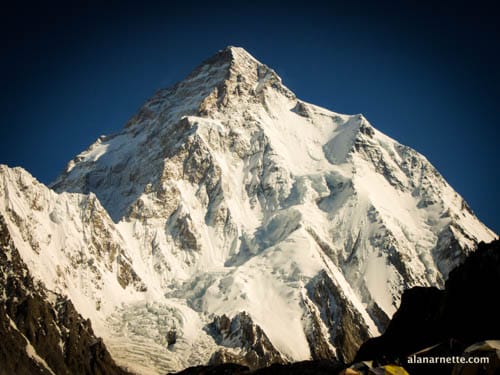
Welcome to my annual coverage of the K2 summer climbing season. I will be reporting from my home in Colorado this year based on my personal experience of our successful 2014 K2 summit and covering the action the last four years. I try to report on K2 in the same style as my annual Everest coverage but accurate information is much more difficult to obtain from Northern Pakistan than from Nepal. I’ll do my best to throw in occasional coverage for climbers on Broad Peak, Nanga Parbat and Gasherbrum I and II. Currently there are 391 people scheduled to be climbing in the Karakorum this summer with 164 just on K2. As always, I use my blog to raise awareness of Alzheimer’s and if you appreciate my coverage, please consider a donation where 100% goes to Alzheimer’s non-profits and nothing ever to me. Read more about why this cause is so important at this link and how Alzheimer’s took Ida Arnette’s life. The Savage Mountain As I discussed in a post a few years ago, “Why K2 will not become Everest“, K2 is a totally different climbing experience requiring a honed set of skills and alpine experience. It is the second highest mountain in the world at 28,251’/8611m and remains the only 8000er not summited in winter. While 164 people climbing K2 is a large number, it is dwarfed by the nearly 1,000 who attempted Everest this spring. Climbing K2 is technical – meaning you are using feet and hands to climb; the exposure is dramatic – meaning if you fall you will most likely die; and the weather is extreme – meaning it is less predictable due to standing alone to the west of nearby mountains thus creating its own systems. It is common to have very different conditions on K2 than on Broad Peak or the Gasherbrums that are only a few miles away. Unlike Everest, there are no long, flat sections i.e. the Western Cwm. K2 starts steep, ends steep and never lets up. Objective dangers are constantly on the minds of K2 climbers. Avalanches and rock-fall are rampant and injuries are common. These are not bravado or ego-based comments on my part given I have summited both peaks, but my effort to help readers understand that K2 is in a different league than most of the other 8000ers. Just because you summited Everest, doesn’t mean you are ready for K2. A bit of trivia, there are less than 200 people who have summited both Everest and K2. It is well documented that K2 sees significantly more deaths than Everest. Thru the spring of 2019, I estimate 9,950 summits by about 6,000 people and 306 deaths on Everest – 3% compared to 379 summits with 85 deaths on K2 – 22%. Of the 8000 meter peaks, Everest has the highest absolute number of deaths at 306 but ranks near the bottom with a death rate of 1.13. Annapurna is the most deadly 8000er with one death for about every three summits (72:293) or a 3.71 death rate. Cho Oyu is the safest with 3,681 summits and 50 deaths or a death rate of 0.55. While some will quibble with these statistics, it is a measure of risk. The number one reason listed for death on K2 is “disappearance” suggesting that the climber fell in a highly exposed area, was blown away by winds or buried in an avalanche. 33 climbers have died while descending from the summit. 11 died in 2008 including my friend Gerard McDonnell when the towering ice serac just below the summit let a tiny fraction of its 100 meter vertical face loose. If you attempt K2, you must accept that dying is a real possibility. Years with No K2 Summits The first summit of K2 was on July 31, 1954, by Italians Lino Lacedelli and Achille Compagnoni. The first attempts began in 1902 by Brit Aleister Crowley. But it was the Duke of Abruzzi who made the most valiant attempts in the early 1900’s thus named the ridge most popular used today, the Abruzzi Spur. After five separate American attempts, Louis Reichardt and Jim Wickwire summited on September 6, 1978, and John Roskelley and Rick Ridgeway the next day. Amazingly Jim Wickwire spent a night in the open just below the summit at 27,000 feet without food, oxygen, or shelter in temperatures of -40 degrees. According to research, plus my own research, from 1986 to 2018 there were 12 years with no summits. From 2009 to 2018, there were only five years with summits – 2011 only from the Chinese side by Gerlinde Kaltenbrunner who became the first woman to get all the 8000ers san Os. In 2012, 2014 and 2018 each saw about 30 – 50 people summiting – record-breaking years as a result of a week of excellent and rare summit conditions. Everest went from 1974 to 2014 with summits every year – 40 straight years! The best year ever for K2 was last year, 2018 with 62 total summits followed by 2004 with an estimated 51 summits. [poll id=”30″] 2018 K2 Results 2018 was a record year on K2 with over 60 total summits plus the first true ski descent. The Kathmandu based and Sherpa owned guide company, Seven Summits Treks (SST), used their Everest formula to put 24 people on the summit on July 21st made up of 10 members supported by 13 Sherpas and 1 HAP. This is becoming a familiar formula to commercialize K2 – a 2:1 member to support ratio and plenty of supplemental oxygen and wait for 4 days of good weather. This happened in 2014 and again in 2018 when about 50 people summited. Also on July 21st, there were seven other people who summited taking the day’s total to 31. 2018 was a good year for female K2 climbers with six women including Gangaamaa Badamgarav who became the first Mongolian to summit K2 as well as the first female from her country. Other females summiting were American Lisa Thompson, Chinese Jianhong Li, Japanese Naoko Watanabe, Mexican Viridiana
Winter K2 Attempt Over – Can It Ever Be Done?
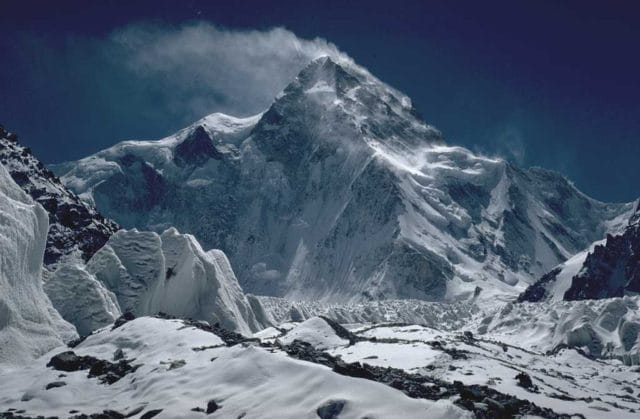
With little fanfare, Alex Txikon and team returned to K2 Base Camp yesterday thus ending the only remaining team aiming for the first winter K2 summit this winter. Not a surprise, big winds stopped the climb as it did for the Kazakhstan, Russia and Kyrgyzstan team earlier this month. To keep this in perspective, the two teams this year marked the fifth and sixth winter attempt on K2 while over on nearby Nanga Parbat, 31 teams made winter attempts before one was successful in 2016; the second to last 8000er to succumb to a winter summit. K2 remains alone. The first K2 winter attempt was a 1987/88 Polish expedition followed by another Polish expedition in 2002/3. Then in 2011/12, a Russian expedition tried and had one death. Finally last year was yet another Polish expedition that was ripe with drama but no summit. This winter the RUS-KAZ-KYG team reached 7634-meters/25,045-feet and the Basque/Sherpa team topped out at 6,906-meters/22,537-feet according to their respective GPS trackers on the 8,611-meter/28,251-foot peak. Well done by both. Winter Putting aside the emotional discussion of exactly when winter begins and ends in the astronomical winter season (winter solstice thru vernal equinox) or the meteorological winter (December thru February), is even possible to summit K2, let’s say – in February? If you look at all the previous attempts, weather has stopped almost all of them, specifically deadly wind chills approaching -100F/-73C. Summits winds this past winter were consistently above 80mph/128kph and still air summit temps well above -40F/-40C. All of the K2 winter expeditions thus far were not using supplemental oxygen in an effort to summit by “fair means”, thus their bodies were impacted even more so by the extreme cold. Keys To A Winter K2 Summit So can it be done? The Poles and Denis Urbuko has already teased that they will be back on K2 the winter of 2019/20 (and between December and February which is Urbuko’s definition of winter). But can they do it? I think so but it will require a different approach than the previous efforts, in my opinion. There are four keys: acclimatization, teamwork, weather forecast, speed. Acclimatization K2 stands at 28,251-feet/8,611-meters the second highest mountain on earth after Everest. Any climber, even Sherpas, must enable their bodies to adjust to the reduced oxygen availability at this altitude. The historical method has been to “climb high and sleep low” but this takes time and a large physical toll on the human body. Both of the teams this season spent almost two months on K2, mostly living at base camp where the altitude was 16,240-feet/4950-meters. In total each individual climber probably spent less than 10 days above Base Camp. Using so-called “altitude tents” is very fashionable these days marketed as helping a climber to “pre-acclimatize” in the comfort of their homes and not on the mountain thus reducing an expedition’s time and risk. Even if this is true, the tent only gets a body to around the altitude of K2 base camp (some will argue this point with me) but no matter, for a climber not using O’s there is still a need to acclimatize usually to 8,000-meters/26,246-feet before attempting the summit – at least this has been the norm on Everest and K2 during the regular season. This winter the high point reached was around 7634-meters/25,045-feet. Last year, Urboko said he topped out at 7,600-meters/24,934-feet before turning back. So, an alternative to acclimatizing on the steep, rocky Abruzzi route (which has been used by most in winter), a team could acclimatize on Broad Peak to the traditional Camp 4 at 24,200-feet/7375-meters – while not 8,000-meters, it would probably be good enough for a climber with skills to even attempt a winter K2. The traditional route on Broad Peak from base camp to Camp 4 is really a snow climb with little technical rock (but avi danger to be sure), unlike having to climb House Chimney and the Black Pyramid to reach a similar attitude on K2 expending precious energy. Teamwork In reviewing many of the previous K2 winter efforts, it seems that team dynamics have plagued more than one expedition. Any climber worthy of attempting K2 in winter will have tremendous skills with an ego to match. It will take strong leadership to manage these thoroughbreds and the climbers themselves will have to work together as a tight, well-functioning team. By this I mean when climbing, switching the lead often when breaking trail through deep snow, sharing the burden of carrying rope to fix the route, and even the mundane, yet critical, task of melting snow for water and meals. Ideally this “prefect” team will have previously climbed difficult peaks together (in winter) and have a deep mutual respect. And as we saw with Txikon ‘s team, Sherpas were included and I would also add the elite Pakistani climbers to the mix. In other words – a true multi-national effort. Weather forecast As already discussed, a winter K2 summit is all about the weather. K2 stands somewhat isolated from her neighboring 8000ers – Broad Peak, and Gasherbrum I/II. Nanga Parbat is 150-miles/241km away. In winter the barometric pressure is lower thus making the “feel-like” temps colder. This isolation makes K2 have a unique weather pattern since most of the fronts come from the West hitting K2 first in Northern Pakistan. As we witnessed this year, the winds can blow for days or weeks at a time with little respite. The key to a winter summit, in my view, is a fast climb in a solid short window. This would mean no longer than a three day effort. Speed Climbing K2 in three days implies speed. The team would launch from Advanced Base Camp and establish their first camp just below House Chimney. This would be a 3,460-feet/1,040-meter day most likely taking eight hours. The next leg would take the climber to their high camp around 25,080-feet/7600-meters, another big day with a gain of 2,970-feet/900-meters, probably requiring 12 hours. This leaves 3,171-feet/1,011-meter to
2018/19 Winter Climbs: K2 Summit Bid Underway – Update 2
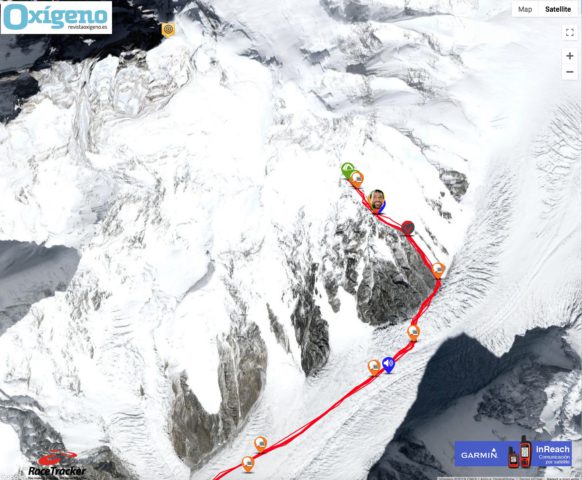
UPDATE 2: 16 March 2019: They established their Camp 3 at 7,050-meters a bit short of traditional C3 at 7,200-meters/24,000-feet. This is just over the crest of the Black Pyramid. They report the winds are extremely strong but they will continue to climb towards the summit if the weather allows. The next day will be critical as it gets into a fairly open area until they reach the Bottleneck, where a different set of challenges emerge. Tomorrow’s wind chill will be -50C/-50F. They sound optimistic but realistic. UPDATE: 15 March 2019: They are just below House Chimney, slightly lower than traditional Camp 2 which is horribly windy. They report the winds have calmed and are going to Camp 3 Friday 16 March. While no clear objective has been stated, it’s assumed that Alex Txikon and team are on their K2 summit bid today. He had previously said he would return in the summer of 2019 for an attempt thus he may be scouting out the route this time, but that seems quite dangerous to do a practice run in winter for a summer summit bid. There are many questions at this point including if their camps above C2 are established and stocked by the Sherpas who stayed at K2 during the Nanga event, how high is the route fixed, are they gong to use any of the Russian lead team’s kit already on the mountain? Of course, Alex had hinted at climbing in alpine style thus all these questions would be moot. His tracker, showed a high point above Camp 2 but no details are available who was there or if supplies were left. That was over two weeks ago – a lifetime in the harsh weather of K2. Remember that he and Felix Criado, Ignacio de Zuloaga and Dr. Josep Sanchis spent over a week on Nanga Parbat assisting in the search effort for Tom Ballard and Daniel Nardi and that must have taken a toll – physically and emotionally. Winter They were hoping to be the first climbers to summit K2 in the astronomical winter season (winter solstice thru vernal equinox) instead of the meteorological winter (December thru February.) They would need to summit no later than 02:58 March 21, 2019, local time. In an interview with Atrem Brown by Wspinanie.pl, the subject of winter definition came up once again: We take note of the calendar winter, but in our countries [Artem is referring to Russia, Kyrgyzstan, Kazakhstan, and possibly other countries of the former Soviet Union – ed.], The principle for climbing, according to which winter lasts from November 15 to March 15. For us, however, this is not a hard rule. It is more important to understand how to look this winter in the mountains. Txikon At C1 They were last reported at ABC and Camp 1. The weather looks decent for the next few days but the real story will develop once they leave Camp 4 and into the Bottleneck and Traverse. Txikon posted on Facebook: The time has come. We are ready. K2 has given us unique and unrepeatable moments… we will never forget what we have lived here. We have innovated, we have grown as a person and as a mountaineer and above all we have felt loved and supported. I would say that even more than in my whole career. You have been with me from the beginning, every step of the way. I have done more than 30 expeditions, but the atmosphere surrounding the mountain will never cease to amaze me. Tomorrow, Thursday, Cheppal, Walung, Geljen, Pasang and I will go up to Camp 1, while Felix and Ignacio went to Advanced Base Camp this morning. Nuri will not be able to continue on the adventure as he has returned home to recover from frostbite. Thank you very much for all your help. We will do everything in our hands to climb the mountain, but always keeping a cool head and thinking that our goal is to return to Base Camp. Because that is the moment when the summit becomes reality…and we want to continue sharing with you each and every adventure. Thank you very much to all the sponsors and collaborators who make this possible. Thank you for supporting mountaineering. The RUS-KAZ-KG team has left base camp and may already be back home by now after topping out around 7,500-meters/24,965-feet when stopped by poor weather. You can follow their movements on Alex’s GPS tracker, Twitter, Instagram, and Facebook. Climb On! Alan Memories are Everything
2018/19 Winter Climbs: 2 “shapes” Spotted on Nanga, K2 Team Near C4
There was a lot of buzz today but followers of the search for Nardi and Ballard on Nanga Parbat were left unsure what the communications means. On K2, the Russian lead K2 team made slow progress and stopped for the night below Camp 4 but are still hopeful they can summit soon. “Objects” Sighted on Nanga The Italian ambassador based in Pakistan, Stefano Pontecorvo, tweeted that Alex Txikon and his team spotted two figures or “silhouettes” low on the Mummery Rib late yesterday. Txikon was using a high-powered telescope from the base camp to make one last visual survey of their route. To be clear, its unknown of the objects are bodies, or even Nanga Parbat climbers Tom Ballard and Daniel Nardi, and if so, were they moving at all. Tixkon and team were schedule to be picked up by a Pakistan military helicopter and flown back to K2 to continue their summit ambitions. However, once the sighting was made, a call for the helicopters to come immediately was made but the conflict with India stopped that opportunity for March 7. Pontecorvo is saying the choppers will pick up Txikon tomorrow morning, weather permitting, and fly to the location of the object sighting for further inspection. In a move that signals an end to the overall search effort, the base camp of tents, cooks, etc used by Ballard and Nardi was taken down and the entire staff along with Txikon and teammates, went down Valley to the tiny village of Ser. This is where the helicopters will pick Txikon up tomorrow. If the objects are the climbers, that would help bring closure for their families. The two have now been missing for 11 days. You can follow them on their sponsors site, Montane and Facebook. K2 Progress K2: Kazakhstan, Russia and Kyrgyzstan Team – Near C4 established Part of the Kazakhstan, Russia and Kyrgyzstan team climbed a bit higher today to 7,400-meters a bit short of their traditional Camp 4 location objective around 7,600-meters. If the weather holds, they may make a summit attempt from this location but closer would be better. You can follow them on Instagram but Facebook and their site are the best sources. K2: Spanish/Galician Team – Still on Naga, Sherpas on K2 Four members of the K2 team lead by Alex Txikon’s , Alex Txikon, Felix Criado, Ignacio de Zuloaga and Dr. josep Sanchis, are all at the village of Ser waiting for the helicopter tomorrow. Txikon and one or two other searchers will take a helicopter tour where the objects were sighted. I assume, they will return to K2 for their attempt once there is clarity on the objects. Txikon believes winter ends on March 20, so in his mind there is still time for a winter summit. You can follow their movements on Alex’s GPS tracker, Twitter, Instagram, and Facebook. Climb On! Alan Memories are Everything
2018/19 Winter Climbs: Search Draws Down for Nanga Climbers, K2 Team at C3
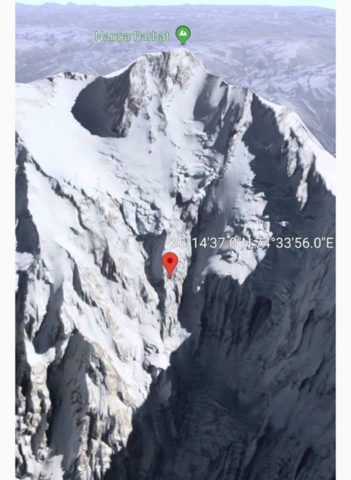
Another disappointing day on Nanage Parbat. The Russian lead K2 team made good progress and are hopeful they can summit soon. Search Draws Down on Nanaga Several sites are reporting that the search has officially ended for Nanga Parbat climbers Tom Ballard and Daniel Nardi. But the official page acknowledges today’s search on the Kinshofer route, which is to the climbers left of the Mummery Spur, yielded no positive results but the search continues. It appears the families have asked for another, perhaps last, search Thursday in an area of the spur that is sheltered from avalanches. K2 climbers Alex Txikon and team were scheduled to be picked up today but the helicopters were needed elsewhere so they are scheduled to pick them up tomorrow, March 7, 2019, perform a fly over where the families have requested and then, reportedly, return to K2. The two have now been missing for 10 days. You can follow them on their sponsors site, Montane and Facebook. K2 Progress K2: Kazakhstan, Russia and Kyrgyzstan Team – C3 established Part of the Kazakhstan, Russia and Kyrgyzstan team have established Camp 3 at 7,400-meters/24,280-feet. The weather forecast seems favorable, if it’s to be believed, for a complete attempt to summit on this push. The real test will began once they leave Camp 4 and make the club through the Bottleneck and across the Traverse. You can follow them on Instagram but Facebook and their site are the best sources. K2: Spanish/Galician Team – Sherpas at C2 on K2 Four members of the K2 team lead by Alex Txikon’s , Alex Txikon, Felix Criado, Ignacio de Zuloaga and Dr. josep Sanchis, were helping with the search on Nanga but as mentioned earlier, I assume, will return to K2 for their attempt. However, a lot of energy has been used and the Sherpas who remained on K2 climbed to C1 but were stopped by high winds yesterday and there was no update on their position today. They were stocking camps for a summit bid. Txikon believes winter ends on March 20, so in his mind there is still time for a winter summit. You can follow their movements on Alex’s GPS tracker, Twitter, Instagram, and Facebook. Climb On! Alan Memories are Everything
2018/19 Winter Climbs: K2 Winds, Nanga Search to 6500M
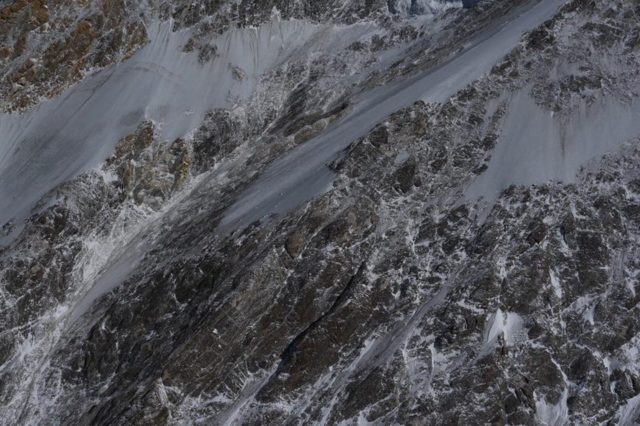
The search on Nanga Parbat has made progress with searchers on the Mummery Rib using drones, however, no sign of Tom or Daniel at the end of Tuesday, March 5, 21019. The searchers will look on the Kinshofer route on Wednesday. The K2 teams have been stopped near Camp 3 and Camp 1 by high winds, once again. Nanga Search Overview It has now been 9 days since Nanga Parbat climbers Tom Ballard and Daniel Nardi went missing and their last sat phone communication with base camp. By now there have been multiple searches using helicopters with trained mountaineers and mountain rescue personal. They have sighted avalanche and tent debris but no signs of humans. A GOFUNDME account is open to help offset the estimated $50,000 a day when helicopters are used. Search Details On Nardi’s Facebook page, which is the official source of news, they posted that climbers Alex Txikon, Muhammad Ali Sadpara, Felix Criado and Rahmat Ullah Baig searched the area between Camp 2 and Camp 3 plus used their drone to go as high as 6,500-meters/ 21,325-feet on the Mummery Rib with no signs of the climbers. One of the three drones they brought with them was lost in the process. Notably, they didn’t find tents where Camp 3 was supposed to be located. Due to low temperature and avalanche risks, the search team was going down to lower camps for the night, perhaps even base camp before searching on the Kinshofer route on Wednesday Anna Piunova, who is Editor-in-Chief at Mountain RU, Facebook page posted this picture from the search: You can follow them on their sponsors site, Montane and Facebook. Italian Peers Weigh In: Suicidal, Hopeless and Silent Respect Perhaps correct but somewhat insensitive to the families of the Nanga climbers, Italian Simone Moro tells the UK Times that the route taken was “suicidal” because of avalanches and tumbling chunks of ice as big as cars. He went on “Going up the dangerous Mummery Spur on the mountain was like playing Russian roulette, and a Pakistani climber who was due to go with Nardi and Ballard pulled out weeks before the climb, claiming he did not want to die. When I heard they were missing I immediately suspected they were lost, and believe we are now looking for bodies.” Tragically, Ballard’s girlfriend, Italian Stefania Pederiva, told another UK paper: “… has been ‘crying constantly’ since her boyfriend disappeared, “It’s pointless. No hope any more. It is hopeless.” Finally well respected Italian alpinist Marco Confortola told Montagna.tv. ” … that he had nothing to declare except that what was already said to Dario Ricci of Radio24, a friendship he shares with Daniele Nardi. “It does not seem right to me to release interviews right now,” he tells us. “Out of respect for a mother, a father, a child” it is better to be silent than to say that pontificating from above explains. “It would be a bit of silence,” he reiterates.“Respect for Tom’s wife, Daniele’s wife and son” . K2 K2: Spanish/Galician Team – Helping on Nanga, Sherpas at C2 on K2 Four members of the K2 team lead by Alex Txikon’s , Alex Txikon, Felix Criado, Ignacio de Zuloaga and Dr. josep Sanchis, are helping with the search on Nanga. The Sherpas who remained on K2 climbed to C1 but were stopped by high winds. They are stocking camps for a summit bid by Txikon if/when he returns from Nanga. Txikon believes winter ends on March 20, so in his mind there is still time for a winter summit. You can follow their movements on Alex’s GPS tracker, Twitter, Instagram, and Facebook. K2: Kazakhstan, Russia and Kyrgyzstan Team – Stopped near C3 by Winds Part of the Kazakhstan, Russia and Kyrgyzstan team are resting in Base Camp while others are now below the traditional Camp 3 around 7,200-meters just above the Black Pyramid. They were stopped once again by high winds. You can follow them on Instagram but Facebook and their site are the best sources. Climb On! Alan Memories are Everything
2018/19 Winter Climbs: K2 Resumes, Nanga Search Update
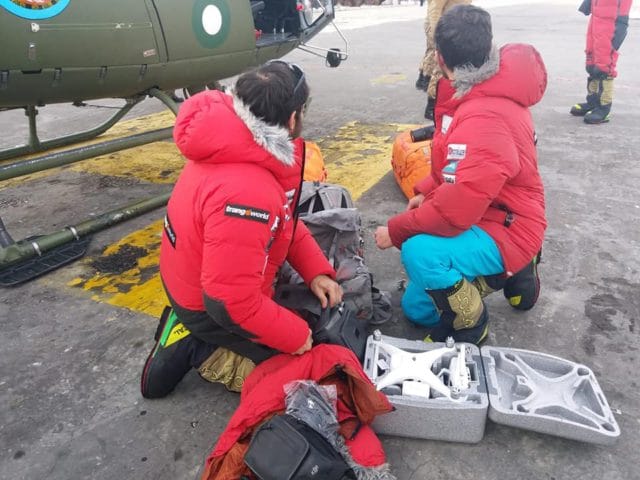
The search on Nanga Parbat continues to suffer delays, mostly weather related. On K2 one team has left to help on Nanga, similar to last year, while another is climbing towards the summit, weather permitting. This week will close many open questions. Nanga Search Overview It has now been a week since Nanga Parbat climbers Tom Ballard and Daniel Nardi went missing. Repeated attempts to use Pakistan quasi-military helicopters have been thwarted by low clouds, or heavy snow. Bureaucratic issues have taken precious time away from the search due to the helicopter operations requiring cash upfront before launching missions. Ground search by brave Pakistani volunteers have also come up empty. Now one of the two teams attempting K2 have tried to fly to NP base camp to use their drones in the search but were detoured just short of base camp when low clouds made flying too dangerous. So, today, late Sunday, March 3, there are qualified climbers, already acclimatized, with three drones ready to help. They are close to base camp but still a helicopter flight away. A GOFUNDME account has raised well over $100,000 to fund the helicopters but the weather is not cooperating and with every hour, the hopes for a rescue fade. Search Details On Nardi’s Facebook page, which is the official source of news, they posted today, March 3, 2019: With a heavy heart, we inform you that the Pakistani aviation helicopters were not able to lead the rescue team led by Alex Txikon to the base camp of Nanga Parbat, due to the snowfall that began to fall copiously on the mountain. Given the weather situation and safety risks, the pilots decided to land in Jaglot and eventually return to Skardu. A new attempt is scheduled for tomorrow morning, weather permitting. And Anna Piunova, who is Editor-in-Chief at Mountain RU, Facebook page she posted these videos taken by Txikon and crew on board a Pakistan Army Aviation’s Écureuil B3: She added these details about the difficult flight: Pakistan Army Aviation pilots were on standby since this morning to pick up the Spanish rescuers from K2 Base Camp and drop them off on Nanga Parbat. As soon as the route weather cleared up, they took off from Skardu AAB around 1230hrs PST. They passed via Paiju and started their flight from Paiju to K2 BC around 1310hrs. The weather from Paiju to Concordia was quite difficult with very low clouds. The pilots took the risk because of the importance of the mission and flew very slowly during this stretch. The low cloud cover improved significantly when the formation reached Concordia and entered Godwin Austin glacier. Having reached K2 BC, the four Spanish rescuers were picked up with their gear and brought to Paiju. After a brief stopover in Paiju, the two Écureuil B3s brought the rescuers to Skardu AAB. After a brief stopover in Skardu, the formation started their flight towards Nanga Parbat. Time being of essence, the pilots wanted to drop off the rescue team today on Nanga Parbat and took the risk of flying in the overcast weather. Unfortunately, around 8kms short of Nanga Parbat, the cloud cover was extremely low (around 3000m). Given that Nanga Parbat BC is much higher, the pilots after discussing with rescuers decided to turn around and head towards Jaglot. After checking the weather again at Nanga Parbat, the formation decided to fly back towards Skardu given the security risks involved in attempting to land at Nanga Parbat is such low visibility. Pakistan Army Aviation would be attempting to drop off the Spanish rescue team tomorrow morning. The team includes Alix Txikon, Felix Criado, Ignacio de Zuloaga and the Dr. Josep Sanchis. You can follow them on their sponsors site, Montane and Facebook. K2 K2: Spanish/Galician Team – Helping on Nanga Four members of the K2 team lead by Alex Txikon’s have left base camp to help with the search on Nanga. The members who left are Alex Txikon, Felix Criado, Ignacio de Zuloaga and Dr. josep Sanchis. That would leave all of the Sherpas still at K2, leaving open the question of an attempt once the crisis on Nanga is resolved. Txikon believes winter ends on March 20, so in his mind there is still time for a winter summit. You can follow their movements on Alex’s GPS tracker, Twitter, Instagram, and Facebook. K2: Kazakhstan, Russia and Kyrgyzstan Team – Summit Push The Kazakhstan, Russia and Kyrgyzstan team are now at Camp 1 on their last effort to summit. The climbers included Pivtsov, Aubakirov, Brown, Danichkin, Smailov and Temirbaev. They had reached 7,200-meters just above the Black Pyramid and left gear, but in past pushes their tents had been destroyed by wind or buried in deep snow. You can follow them on Instagram but Facebook and their site are the best sources. Climb On! Alan Memories are Everything
2018/19 Winter Climbs: No Sign of Nanga Climbers
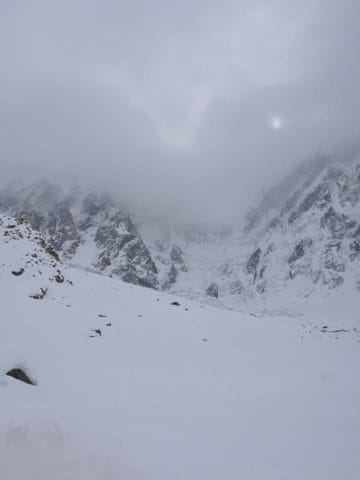
Update on missing Nanga Parbat climbers Tom Ballard and Daniel Nardi. In spite of two helicopter passes plus a foot search to Camp 1, there is no sign of the climbers. They have now been missing almost 6 days, and last heard from on Sunday, February 24th. The weather has hampered further air searches. A helicopter search on Friday, March 1, was cancelled due to poor weather. Plus, as is normal in Pakistan, payment (perhaps 30% of the total estimated bill) must be made before a helicopter search begins and that created some delays. The Italian Ambassador Stefano Pontecorvo had to intervene to prevent any further delays however this should be yet another warning to anyone climbing in Pakistan to have resources ready at moments notice to fund a rescue. Latest News 2 March 2019 On March 2, 2019, local time, the weather still has not cleared according to the official site with information Daniele Nardi The weather forecast on the nanga parbat and k2 area provides for snowy rainfall and low-altitude clouds with winds throughout today. We are in contact with the mountaineers at the base camp and with the Pakistani government to decide how to proceed, on today and tomorrow with the research of Daniele and Tom. In these hours of particular apprehension we want to thank the institutions of the Italian government, in particular to ambassador Pontecorvo, and to those Pakistani and the centre of askari who are working together to ensure the best functioning of Daniele and Tom’s research operations. A special thanks goes to Ali Sadpara and the team at the base camp and research done yesterday in the day. This is a video posted on multiple social media of an avalanche that occurred in their area Drones Not a 100% Solution Alex Txikon has offered his three high-altitude drones to assist in the search. But bad weather stopped the flight to get the drones plus Alex and Ignacio de Zuloaga, Josep Sanchis and Pawel Dunaj to assist in the search. Also complications with airspace control due to the fighting with India has complicated matters. The use of drones is not a guarantee. Last year on Broad Peak, British climber Rick Allen was lost. A cook in base camp sighted him through a telescope and opportunistically a team on nearby K2 had a drone and sent it over to the area where Allen was sighted … and they found him. Otherwise searching the huge flanks of a mountain like Nanga Parbat with a drone with limited battery and range capacity is like searching for a needle in a haystack. The very fact they want to avoid sending a search party to the area due to avalanche danger speaks for the dangers Ballard and Nardi experienced. The Last Hours More details of hours before Nardi and Ballard went missing were revealed on the Italian website Le Iene Nardi also told us that he did a variation in climbing : “For the first part we were on the path that I did with Elizabeth Revol few years ago, then the insight! With Tom we saw a couloir, casting an ice and snow, in the midst of the rocky walls that would allow us to go up, up, much faster. ” They climbed for a long stretch of soft snow, bare ice, rocks and arrived around 6,200, 6,300 meters high . Then I went back down to camp 4 at 6,000 meters, to eat and rest. Since that time, communications were interrupted. It was the second time that Daniel came so high on the spur, but this time by a new route, other than that he had always used in previous attempts to Mummery with Revol. (source) On another development, Elisabeth Revol is reported to be assisting the search in some capacity. Last year she was rescued in a similar area after her teammate Tomek Mackiewicz died. You can follow them on their sponsors site, Montane and Facebook. K2 Now that some climber’s definition of winter (December to February) has passed, even if there is a summit, many climbers will not accept it as a winter summit. Others feel winter ends on March 20, the Spring Equinox. Similar to last year, the K2 teams have responded to humanitarian needs for rescues on nearby Nanga Parbat but thus far have not left their base camps due to weather. If they both stay for a summit attempt, I hope they join forces and stop competing. A K2 summit in March would be amazing. K2: Spanish/Galician Team – Base Camp The K2 team lead by Alex Txikon are at base camp waiting for better weather and one last summit attempt on K2. You can follow their movements on Alex’s GPS tracker, Twitter, Instagram, and Facebook. K2: Kazakhstan, Russia and Kyrgyzstan Team – Base Camp The Kazakhstan, Russia and Kyrgyzstan team are also waiting for better weather and one last summit attempt on K2. You can follow them on Instagram but Facebook and their site are the best sources. Climb On! Alan Memories are Everything
2018/19 Winter Climbs: NP Drone Search, K2 Resumes
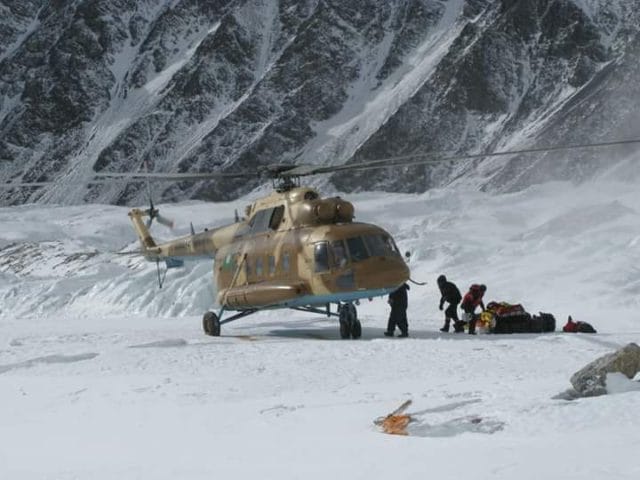
Update: 1 March 2019: No rescue fight today due to poor weather. In what has become a deadly sad and uncertain season, the K2 climbers have been asked to stand down for helping with the search for British climber Tom Ballard, 30, and Italian Daniele Nardi, 42, on Nanga Parbat instead drones will be used. The K2 climbers are now refocused on their own summit aspirations. Winter Nanga Parbat – Search Continues After no Contact for 5 days Daniele Nardi, and British Thomas Ballard were last reported at Camp 3 on the Mummery’s Spur but there has been no contact since Sunday. There has been two helicopter searches and more to happen on March 1. The initial information that Nardi and Ballard tent was spotted seems incorrect according to a new post by Philippe Poulet is with Muhammad Ali Sadpara. A tent found half buried at 5500 m but no trace of the mountaineers Pakistani information is clear. The two reconnaissance flights, from 3 h30 in everything, allowed visual research on the entire spur spur, from 7 000 to 5 100 m. The only clue found is a red / Orange Tent, half buried in a snow slope around 5 300 m. For now the authorities believe that it could be the tent of Camp III, established at 5 700 m and which would have therefore been swept into the slope, probably by an avalanche since traces of flows have been observed in The sector. The Doc provided by the pakistan army however is confused because the tent location is located in the middle of the kinshoffer wall, far too far from the axis of the mummery spur and especially too steep to match the images provided. In addition, the altitudes do not correspond, 18 000 feet are rather around 5 500 M THAN 5 300 m. Maybe it is a infographic approximation or then the tent spotted has nothing to see tom and Daniele’s material and could thus be the relic of a camp of the way path? The night arriving the helicopters are anyway back to their base and the research will resume tomorrow. You can follow them on their sponsors site, Montane and Facebook. K2: Spanish/Galician Team – Base Camp The K2 team lead by Alex Txikon are at base camp relaxing and posting about how good the food is The cooks are very important at the Base Camp. Since Eneko Garamendi Meabe is with us, things are so different. This will be his second winter with us, after the Everest expedition of last year. I used to lose between 10-12 kg in winter expeditions due to the work of carrying material and all the effort made in the mountain at the most extreme conditions. However, now I only lose 6 kg !! With his tasty meals, he makes our days happier. Eating well is fundamental when climbing… You can follow their movements on Alex’s GPS tracker, Twitter, Instagram, and Facebook. K2: Kazakhstan, Russia and Kyrgyzstan Team – At Base Camp The Kazakhstan, Russia and Kyrgyzstan team are regrouping and planning for a summit attempt on K2: The Italian coordination center for search and rescue operations at Nanga Parbat, given the high risk to the lives of rescuers, decided to use drones to continue the rescue operation. Our team remains in K2 base camp and will make a final summit bid attempt in the coming days. You can follow them on Instagram but Facebook and their site are the best sources. Plans The next 24 hours will provide clues as to the fate of the NP climbers and the next attempt on K2 will reveal if its possible this season. Climb On! Alan Memories are Everything
2018/19 Winter Climbs: What Now? – Updated
Update 28 February 21:00 local time: First Helicopter search completed with Pakistani climber Ali Sadpara on board. He reports seeing their tent at Camp 3 at 5,700-meters but also evidence of avalanche in the area. Tomorrow, March 1, is for four climbers from the Russian lead team to be picked up and dropped off at NP Camp3 for ground search. Update from Nardi’s Facebook page by his home team: Following the sweeps this morning, in agreement with the Italian Embassy and Pakistani Aviation, two helicopters helicopters, weather allowing, early morning from skardu for the base camp of k2. There will be the four Russian Mountaineers, LED by Vassily Pivtsov, who have been available this morning to support the rescue operation on the nanga parbat in favour of Daniele Nardi and Tom Ballard. Mountaineers will be deposited as close as possible to field 3. Ali Sadpara has announced that the 3 field tent invaded by snow has been detected by the helicopter. In the area, traces of avalanche have been identified on the slope which indicates the danger of the area. Also, Txikon has volunteered his team to assist in the search. The winter climbs on Nanga Parbat and K2 are in deadly trouble. As I fully covered in my last post, on NP a search is underway for British climber Tom Ballard, 30, and Italian Daniele Nardi, 42, on the Mummery Rib after their base camp and home teams lost contact with them over this past weekend. And on K2, the two independent teams are back in base camp after retreating from harsh weather. The Kazakhstan/Russia/Kyrgyzstanm team has offered to assist in the search on NP. In many ways this is Déjà vu from last year when Polish climber Tomasz Mackiewicz died during a winter attempt on Nanga and his partner, French alpinist Elisabeth Revol, was rescued in a dramatic effort by climbers who left their K2 attempt to render aid. On their Facebook page, the Russian lead team said they were ready to help: The international Kazakh-Russian-Kyrgyz expedition officially declares that it is ready to take part in search and rescue operations in the area of Mount Nanga Parbat in the number of four climbers. The Txikon lead team with six Sherpas has made no public comment on their facebook page. A helicopter search was schedule to start early on Thursday, February 28, with Pakistani climber Ali Sadpara leading the search. Other reports say a helicopter will pick up three climbers from the International K2 team to assist. The deepest hope amongst climbers worldwide is that Ballard and Nardi’s sat phone battery went dead or perhaps one was injured and not able to move and they are laying in wait for a rescue. I join all in hoping for the best outcome. Alan Memories are Everything