Everest 2012: Trekking the Khumbu
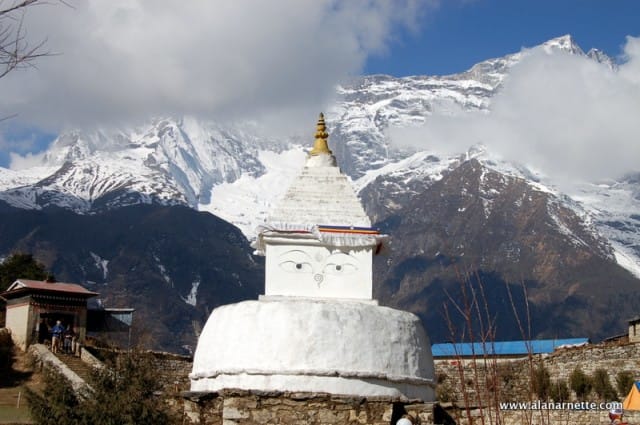
In 1997, I trekked from Lukla to Everest Base Camp. Those three weeks changed my life forever. This first week of April 2012, thousands are doing the same journey and, I expect, with many experiencing the same results. We now have most of the Everest south teams en-route to Base Camp. Himex just reported as massive group of 55 (!) climbers, trekkers and Sherpas  as they are preparing climbs on three different mountains this season: Everest (24), Lhotse (7) and Nutpse (5). Nutpse is the most visible peak as you approach base camp situated on the Southwest corner of the Western Cwm. It is rarely climbed so it will be fun watching a team of four women attempt it this year. The Khumbu continues to be the hotbed of activity with Bandar once again keeping us updated on the eating habits: The local bakeries along the trek to basecamp are famous and rightfully so. If there is one standout so far, it is definitely the one at tangboche. The selection would be adequate for a bakery in the middle of a large metropolitan city and the group favorites were the apple crumble cake, dutch apple pie and apple strudel.I ate all three and all three were delicious. There are undoubtedly many beautiful places on earth and many cultures that leave a lasting impact on their visitors. The Solo-Khumbu area of Nepal is one of these. Located south of Mt. Everest following the Dudh Kosi River, this is an area that remains simple yet complex as it struggles with the double-edge sword of tourism. It is the region that the Sherpa people of Tibet migrated to over centuries and today represent the largest concentration of those families. Many work in the climbing, trekking and tourism industries bringing a better standard of life for their families. Beyond the metrics, it was the people and the environment that left a lasting impression on me in 1996 and again last year, 2011; my sixth trek through the Khumbu. A Simple Smile The trek starts in Lukla, following the Dudh Kosi River towards Namche. This first section reveals a hint of what is to come- wide vistas of pine trees set against the snow covered foothills of the Himalaya. You pass through multiple villages located outside the Sagarmatha National Park. Kids walk the trails in uniforms going to school eager to say hello and practice their English or just to offer a smile. It doesn’t take long to let the simplicity of the area sink in. No cars, motorcycles and even bicycles – in fact no wheels! You share the trail with fellow trekkers and climbers but also with the human and animal labor that brings raw materials to the upper villages. It is not surprising to see a young man with several doors strapped to his back, walking in sandals, smoking along the way – pass you. A train of Zos, the cross between a yak and a cow, are loaded with barrels or duffles on their way to base camp. An occasional horse goes by but only a couple as they don’t like this rarified air. Unlike Argentina, mules are rare. Daylight in the Dark Once above Namche, the trails takes a dip to the river and gains again to the village of Tengboche and it’s monastery. This milestone in the trek allows for insight into the Buddhist culture. Less than 100 monks now call this home, dramatically down from previous years. If your timing is correct, you can join them for daily prayers. Entering the dark monastery, you take your shoes off outside the door as you enter and turn right following the well worn wood floor. The huge alter occupies your view and a giant Buddha takes up the back of the space. Several rows of padded benches fill the center and guests are asked to sit quietly against the side walls. It is quiet. It s cold. A monk smiles as he offers you a warm rug to sit upon. Against this serenity, the monks gather quickly, with purpose, to perform their daily ritual. Each one takes their spot, there is only the occasional word. Without notice, the chanting begins and in perfect harmony, all the voices join. In spite of the monotone first impression, you soon realize they are speaking individual words in rapid succession – almost without breathing. The sounds lulls you into a place of peacefulness, solitude. In your own thoughts, you take the moment in until a young monk bangs the drums followed by a clash of the cymbals. With eyes now open, you look around and for the first time notice the dust suspended in the sun’s rays as they pass through the smoked windows. Stepping out of the Monastery, another feast. Ama Dablam stands to your right –  majestic, formidable, daring; and then there is Everest off to the north – waiting. A Moment of Reality Further up the Khumbu, another milestone. Almost every Everest climber and many trekkers will spend an hour with Lama Geshe. The elderly Lama now mended from serious illness two years ago welcomes guests in his modest home along with his wife and sometimes his daughter. The ceremony takes place where he prays for permission for you to climb and for your safety. This experience warrants a separate post, no, a book. His presence is deep, it is meaningful. He is real in a world of reality. Leaving the trees behind, the trail becomes more rock than dirt. The yaks now occupy the open spaces. Huge and gentle, these beast meander along carrying their loads. Mostly blue barrels and white rice bags filled with all the gear climbers think is necessary. Occasionally there will be the yak annoyed by a table, or a satellite dish lashed to his carpet covered back. Surprises are common up here. The Upper Reaches More up and down, more views of “hills” higher than the highest back home. The air is clear, the