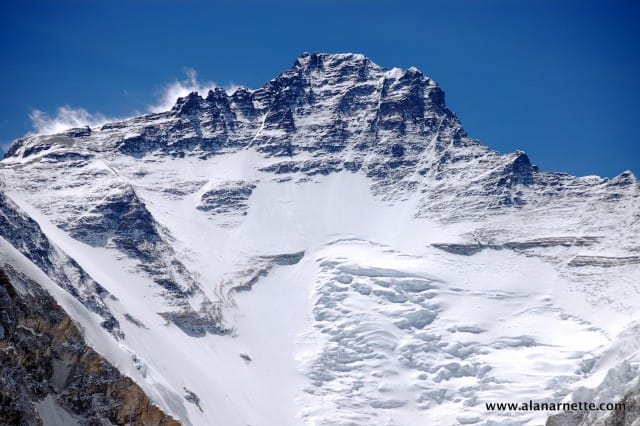
Everest 2015: The Right Gear
With a month before most climbers arrive in Nepal to begin their Everest climb, gear decisions have been made, but I thought it might be good to submit a few last minute ideas. As I pack for Lhotse, I will use the same gear I used in 2011 to summit Everest since they share 80% of the same route, however I will make a few changes. I like to think of Everest, in terms of gear, in four stages: Trek to Base Camp Base Camp life Acclimatization Rotations Summit Bid If you have looked at my gear list, you will know what I have used for years and works for me. That said, gear is so personal and everyone has their favorite brand, so these are just my thoughts. I list what I use but I get no monetary value from these recommendations. There are many great gear companies with excellent products so go with what you know or like. I won’t go through the whole list in this post but will highlight a few critical areas. If you ask me what is the most important, it might surprise you with sleeping at the top of the list. Sleeping If you don’t get a good nights sleep at base camp or at the higher camps, you are in trouble the next day. I bring two down sleeping bags (Mountain Hardwear Wraith), both rated at -20F for use at base camp and at the higher camps. Some commercial guide companies provide a bag for the higher camps but I have never found them to be satisfactory given they have been used for years and the down is packed or the bag is beyond dirty. I have used a 0F bag at the higher camps and slept in my down suit to save on weight but found it marginally warm, tight fit and not conducive to a good nights sleep. Yeah, you save a pound in weight but you lose the benefit with an uncomfortable nights sleep. A critical component to the sleep system I use is a thick sleeping mat at base camp (Exped Downmat 9) and a lightweight one (Thermarest NeoAir XLight) for the high camps. I’m a side sleeper so thickness and R-Value are important. Also, light and small are critical for carries higher. Again, don’t count on your outfitter to provide “thick, comfortable mattresses” they are neither. Finally, a pillow is non-negotiable for me. I bring a small pillow from home for use at base camp and a soft, cotton pillow case stuffed with my down jacket(s) for higher camps. Footwear Next in my importance list is what you put on your feet from sleeping to climbing to relaxing. I hesitate to discuss boots because everyone is different and has their own preferences. I have been using the full on 8000m boots for all my big climbs and have been miserable to relaxed on many. Currently I use the La Sportiva Olympus Mons. I have use Millets (yes) and Kayland (no) in the past. Other brands that are good include Zamberlan, Lowa and Scarpa. The key is the fit, so you must try them on and be willing to invest a lot of time (and money) to get it right. Believe me, wrong boots will destroy your climb. Feet swell at altitude, crampons influence the fit, going uphill or down hill makes a difference in how your toes feel and on and on. I looked at the current generation of boots a while back in this post. While the boots are the obvious decision, socks are another factor – one thick pair, two thin, two thick and more. The way to know for you is to experiment during your training and whatever feels , go for it. While at base camp, I like Uggs to relax in and Forty Below down booties while in the tent. While speaking of Forty Below, another option for climbing is to use double plastics like Kolfachs and Forty Below overboots to provide more agility in the Icefall but warmth on the summit push. Crampons are required on an Everest climb. In my experience most people use Grivel or Black Diamond. I use the BD Sabertooth or Grivel G14 with good success. Finally many people use a foot warming system such as Hotronics. A good solution as long as you have a full battery. I will try a new approach on Lhotse, the ThermaCELL ProFLEX heated insoles, smaller and more compact than the Hotronics but with a shorter battery life. Hands Hand protection is critical when climbing Everest given the need for manipulating carabiners and jumars while keeping fingers warm in below zero temps. My go-to for the summit has been the Black Diamond Mercury Mitts. I Use them with a thick fleece liner glove. This combo fits into the jumar with ease and allows me to climb with confidence and warmth. Some people like OR Alti Mitts but I find them too bulky to fit into my Petzel jumar. I always pack a spar set of mittens in my pack, The North Face down mitts in case of an emergency for myself or a fellow climber. When climbing lower, I use a lighter pair of leather gloves. I used The North Face work glove on K2 but they discontinued them (why???) so I recently bought the Black Diamond Super Rambla Glove which I like thus far. I always have hand warmers in my pack for those times when I need a bit extra warmth. Packs I trek to base camp with a small day pack. Most any brand will do well and no more than 30 liters is sufficient as all I carry is a jacket, water bottle and my computer because I don’t trust Yaks! But for climbing, I have used a lot of packs and still come back to the Mountain Hardwear South Col 70. It is easy to load and access and carries well. Sadly, I cannot find
Lhotse 2015: A Personal Commitment

In early April, advice I’m returning to Nepal, the Himalaya and to the Everest region. This will be my 11th trip since 1997 and I will be climbing the world’s fourth highest mountain, Lhotse at 27,940 feet or 8516 meters. As always, I will use my attempt to bring awareness to Alzheimer’s Disease but this time not only for donations to research but to ask readers and followers to join the Alzheimer’s Prevention Registry. A Personal Commitment The day my mom, Ida, asked me “Who are you?” was the day my life changed forever. I made a personal commitment to do everything I could to make a difference in finding a cure for Alzheimer’s. I began to dedicate my climbs to raise awareness about AD: no cure, always fatal, not a part of normal aging. Thus far, thanks to many of you, we have reached 50 million people and raised $250,000 for Alzheimer’s research. But there is so much more to be done, more I can do. In finding a cure for Alzheimer’s, al trails play an important role. Many of the headlines you read about potential breakthroughs are done on mice or small scale human trails. In order for a new therapy to reach those in need, it must go through human trials and there is a severe shortage of volunteers thus stalling progress. In fact, 80% of studies fail because too few people sign up. Alzheimer’s Prevention Registry The Alzheimer’s Prevention Registry strives to overcome that hurdle by engaging people 18 and older of all races and ethnicities who are committed to ending Alzheimer’s, whether or not they have a family history of the disease. From simple questionnaires and surveys, to brain imaging studies and even pharmaceutical trials to evaluate investigational medications and therapies, the Registry offers members many ways in which to participate. In no way does joining the Registry obligate you to take part in a study or al trial. The Alzheimer’s Prevention Registry is part of Banner Alzheimer’s Institute (BAI), a nonprofit organization dedicated to the goal of ending Alzheimer’s disease without losing another generation. It is helping to launch a new era of Alzheimer’s research—detection, ment and prevention at the pre-symptomatic stage—and to establish a comprehensive model of care that can be the national standard. BAI was founded in 2006 by Phoenix-based Banner Health, one of the country’s largest nonprofit healthcare systems. • In no way does joining the Registry obligate you to take part in a study or al trial. • Each study has a defined set of eligibility requirements, which means not everyone will qualify for enrollment in a particular study. • All studies associated with the Alzheimer’s Prevention Registry are approved by an ethics committee and ensure participants’ privacy and confidentiality. I have made the personal commitment and joined the registry. Project 8000 With my summits of Everest, K2 and Manaslu, I have set an ambitious goal to summit the remaining 11 of the 14 8000 meter mountains over the next five years. Through my climbs, I hope to reach 100 million people, and make a difference in the fight against Alzheimer’s through raising awareness, promoting the desperate need for joining al trails and raising $1 million for research. If I’m successful, I would become only the second American to summit all 14, following in the steps of Ed Viesturs (note: Ed did them all without supplemental oxygen and on private climbs, nothing like me at age 58). Also, I might be the oldest American to summit many given I’m 58 now. Read more on Project 8000 including the schedule. Lhotse I feel like I have climbed Lhotse four times already, just not to the summit as it shares 80% of the same route used to summit Everest. I will fly into Kathmandu in early April, make the life-changing trek to Everest Base Camp and begin my acclimatization rotations before attempting to summit Lhotse in mid to late May. I will be climbing with Madison Mountaineering and Garrett Madison who I summited K2 with last summer. Also, I am thrilled beyond words to have Kami Sherpa (Ang Chhiring Sherpa – Pangboche) climb with me. I summited Everest in 2011 with Kami as well as K2 last year. Also joining me will be Louis Carstens whom I summited Manaslu with in 2013. The Climb Lhotse is known as a “technical” climb meaning you need to use protection, climbing gear and full on hands and feet to gain the summit. As I make several climbs through the Khumbu Icefall, I’ll be thinking of the Sherpas who lost their lives in this section last year. I hope to minimize my, and our Sherpas, exposure by limiting the gear I carry to the high camps. The real crux of climbing Lhotse is the final 300 meters or last 1,000 feet. Once leaving the Camp 3 at 23,500 feet on the Lhotse Face, I will cross the Yellow Band and then turn right continuing straight up the Face instead of contouring across the Geneva Spur to the South Col as I did on my Everest summit climb. We will make camp at 25,750 feet or 7850 meters on the snow covered steep slopes of Lhotse. It is almost 2,200 feet to the summit on 50 to 60 degree slopes. Leaving early the next morning, we will climb about 400 feet eventually reaching the bottom of the Lhotse Couloir, a narrow, rock filled gully that leads to the summit that is only 9 feet wide in some spots. This is the most challenging part of a Lhotse climb and will require every mountaineering skill I have obtained on my previous 37 expeditions. I will stem off the rocks, scramble and full on rock climb the final sections. Lhotse’s summit is a small rock block that is often covered in snow making it dangerous. The return involves rappelling and arm rapping back to Camp 4 or Camp 2 where I will spend the night. The entire summit push
The “New” Route on Everest
This past week, there has been extensive media coverage of a “new” route on Everest. Once again, ambulance shallow journalism has misstated reality. The fact is that there is not a totally new route but rather a small change within the Khumbu Icefall that amounts to about 4% of the traditional Southeast Ridge route being effected. The BBC is mostly responsible for this headline with their article and other outlets picking it up and simply parroting the story. In the first version, since changed, the BBC article, as I read it, suggested the route would no longer traverse through the Icefall at all. While theoretically possible to avoid the Icefall by climbing from Lhotse’s East Face or traversing the flanks of Nuptse, it is practically impossible for the hundreds of climbers, mountains workers drawn to Everest each year. All of the coverage is driven by the tragic deaths of 16 mountain workers on April 20, 2014 from a release of an ice serac off the West Shoulder of Everest into the Khumbu Icefall. The route is installed and maintained by a team of dedicated Sherpas under the direction of the Sagarmatha Pollution Control Committee (SPCC), Each member pays $600 as part of their permit for this service. For the last two decades or so, the route went directly underneath the fall line of a serac (the bottom of a hanging glacier) thus increasing the exposure to anyone in the area if the serac released. The route had migrated towards the West Shoulder from a safer but longer route in the center of the Icefall to accelerate the climb through the Icefall for workers and members alike. Almost every year the serac had released thus the danger was well known, but accepted by most of the workers in order to move faster. Western guide companies, led by Russell Brice, had asked for a safer route for years but their request fell on deaf ears. Brice even canceled his 2012 season based on this danger. After the 2014 tragedy and with immense pressure from the Nepal Government, operators, world media and climbers, the SPCC re-evaluated the current route and is planning – note future tense – to shift the route away from the West Shoulder and more towards the center for the upcoming 2015 season. The current estimate is to move the route about 150 feet towards Nuptse and the center of the Icefall from last years position. This may not be far enough if a larger release occurs than last year’s. The Icefall is approximately 1,500 feet long and the section in danger is maybe 500 feet of that. The total route from Everest Base Camp to the summit is 11,535 feet so we are talking about 4% of the route. There are few good options for climbing through the Icefall. The center of a glacier moves the fastest and has tall seracs and ice blocks that shift without warning. By moving the route to the climber’s right as seen from EBC, climbers are exposed to avalanches and serac releases from Nuptse. In general, the Icefall is estimated to move 3 feet or 1 meter a day. In all cases, the higher one goes in the icefall, the more jumbled and dangerous it becomes. Ladders are commonly used to scale high ice walls. Pete Athens, 7 time Everest summiter, was interviewed on NPR in an objective, non-sensationalize style. He had recently returned from Everest to work with the SPCC on the proposed route change. Click this link to listen to his interview. He also said: We had a much colder season this year. We had more snow, and I think that that bodes well, actually, for the icefall. If there’s greater coverage, if there’s greater snow, I think we actually see the icefall route be somewhat more predictable. From other sources, it appears using helicopters to ferry gear into the Western Cwm has not been approved by the Nepal government for environmental reasons. The modified route will make the climb from Everest Base Camp to Camp 1 in the Western Cwm longer by about an hour according to some estimates. Finally these stories of a “new” route have provided a platform for those wanting to promote climbs from Tibet. The following table is an objective look at the statics from the Himalayan Database comparing the deaths of hired, their term for mountain workers, who went above their respective base camps and died. This covers the time frame from the first deaths in 1922 on the Tibet side to last year’s 19 total worker deaths on the Nepal side. Above Base Camp Deaths % North 3,419 23 0.7% South 6,800 82 1.2% Total 10,219 105 1% So with all this pre-climb publicity, the world’s attention once again includes Everest. The reality is no one knows where the route will be placed until the Icefall Doctors can evaluate the dangers in person. This should start in late March. Climb On! Alan Memories are Everything
Everest 2015: Permit Status for 2014 Climbers – Updated
Updated March 19, 2015 After 11 months of delay, Nepal finally approves permit extension to 2019 for Everest, Lhotse and Nuptse permit holders from the spring of 2014 climbers. They must climb with their 2014 company (not members), and pay additional $1,000 to match the current $11,000 permit fee. Questions remain for 2015 climbers who are eligible if they will get a refund since many have already paid. Thanks to Rajan Pokhrel at The Himalayan for this story. If this timing was designed to delay 2014 climbers to 2016 to avoid “crowding”, it only partially worked since many 2014 climbers are returning in 2015, albeit with different companies thus are not eligible to use their 2014 permit according to this story. Overall it is sad to see such a mishandling of a simple matter. This is one of those posts that may be unnecessary but I do it for completeness. Roughly 250 climbers bought a permit to climb Everest in the spring of 2014. Of course we all know the season was effectively canceled after a small band of Sherpas influenced the others to stop climbing including the critical Icefall Doctors who manged the ladders and route through the Khumbu Icefall. The deaths of 16 mountain workers from a release of an ice serac off Everest’s West Shoulder was the primary reason for the work stoppage. Their deaths were used to successfully get the Nepal government to increase life and medical insurance for the workers. A representative from Nepal’s Ministry came to Everest Base Camp on April 24, 2014 after several teams announced they were ending their seasons . He announced that Everest was open and everyone was welcome to climb from Nepal. However, this was the critical part of his comments, those with Everest 2014 climbing permits could use those permits for the next five years. This was viewed as a goodwill gesture by many at Base Camp and plans were made to return in 2015 saving the $11,000 permit cost. But as months went by, the offer took on new twists including a requirement that the original team must return in tact or everyone’s permit on that team would be revoked. That twist was eventually rescinded but other new rules were added. Now on February 13, 2015, no decision has been made as to whether the 2014 permits are valid for 2015 much less through 2019 as originally promised. The hold up is that the extension must be approved by the Nepal Government and they continue to ask for changes or simply do not put it on the Cabinet agenda for a vote. Rajan Pokhrel, an excellent reporter with the Himalayan Times in Kathmandu has been tracking this situation and providing occasional updates through his newspaper. He said today, he expects the permits to be extended. He also suggest the ability to transfer that permit to another team may not be approved. So, at the risk of over communication, this is the status of the 2014 as I read the situation today: NO decision has been made to extend a 2014 permit into the future, of any timeframe My speculation: It appears likely an Everest 2014 permit will be extended for 5 years – 2015-2019 An additional $1,000 fee will be required to raise the permit to the current $11,000 fee from the original $10,000. The permit should be valid for the original team Permits might not be allowed to be transfered to another team. No requirement for all teams members to return OK, there you have it, a post with a lot of speculation. I usually don’t do these things but felt an update of some sort was required. The Cabinet meets on Thursdays so look for more information each week, or not. Even if it is approved even today, that will be too late for anyone waiting until the last minute to get ready for 2015 IF they wanted to use their 2014 permit. Climb On! Alan Memories are Everything
Everest 2015: The Moment You Know
For many people, ed they can tell you the exact moment when a dream became reality, when planning became real, capsule when the butterfly began to move from within. For many Everest climbers, that was this week. Everest is not a spur of the moment decision, it’s sometimes a life long dream – literally. Some climbers, in their teenage years, carefully read each word in famous books, letting the imagery sink in as they tried to envision themselves on the Lhotse Face or at the North Col. Now decades later they will get their chance. Other climbers, later in life, made a huge decision to move from dreaming to planning. They looked out the window of their office and seized the moment. This week as they looked at the calendar, they counted the days. 60 In sixty days, they will arrive in Kathmandu; step off Thai TG319 and smell the warm, moist air of Nepal. Their dream will transform into an experience of a lifetime. This week, they began to finalize all the preparation – bought rescue insurance, finalized payments to an outfitter, made a decision on what goggles to use, what color lens. Their training has taken on a new intensity, yet the fear of injury tempers their zest to push too hard. The butterflies took off. Each day brings them closer. They look at their families with a more tender eye, taking a moment longer to listen to each story, lingering as they make eye contact. No, Everest is not some wide-eyed romantic adventure. It is serious mountaineering. People die. It is this reality that gives flight to the butterfly. The moment is exact, it is sealed for eternity. Climb On! Alan Memories are Everything
An Inside Look at What Everest 2015 May Bring
In only 90 days, climbers from around the world will arrive in Kathmandu ing to summit the world’s highest mountain. However with the deaths of 19 Sherpa in 2014, the world’s attention, salve and media, will be focused hoping to record the drama that comes with every Everest season. I reached out to the leading Everest guides around the world, including local Nepali companies and some Sherpa, to get a feel for how their preparations were going as well as what they anticipated from this spring season. The bottom line: a slightly smaller number of climbers on the South, a bit more on the North, little change from the Nepal Government, Sherpas still willing to work and more hands-on management from the Western Guides as to routes and safety. But not every operator feels Everest is safe. Canada’s Peak Freaks, long time Everest guide service, officially canceled their 2015 Everest climb from the South citing environmental, policy and political concerns. Peak Freaks have been expressing concerns about climate change and the impact on Everest for years. They had consistently run solid climbs from the South for a long time and will be missed this year. Many of the guides I spoke with said they have been approached to host film crews, but said the crews had no “story line” and were going to be there in case there was another tragedy. Apparently there are as many as 8 separate crews preparing to be at base camp. Such a sad use of resources when there are much more significant stories to be reported in Nepal, in my opinion. Now for the details. Business Across the board, the operators I interviewed said on and off the record that their teams were filling up and had sufficient paid members to run at or near their traditional levels. This was for both Nepal and Tibet side climbs. However, expect to see a few small companies announce cancellations but be aware that the lack of paying members may be their real reason, not the stated concerns, my opinion only. Sherpa Relations The global media focused on a few high profile Sherpa who said they would stop working on Everest due to the danger. While it appears to be true a few have retired, some of the ones quoted continued to work on Cho Oyu and other 8000m meter mountains after the spring Everest tragedy. There was full Sherpa support on Manaslu, Ama Dablam, and K2 this past year as well. Of all the guides I interviewed, they said they had no problem retaining their long time Sherpa and hiring qualified Sherpa for Everest 2015. Some older Sherpas took the opportunity to retire but the younger ones are eager to continue now that wages and insurance coverage have increased. Phil Crampton of Altitude Junkies opined: I personally don’t think the events in the spring of 2014 will affect Everest too much in the future, at least not in the long run. All of my Sherpas who were present at base camp in 2014 (30 of them) did not want to go home then and many of them plan to return to Everest in the spring if they are offered work. I have many loyal Sherpas who have worked for me for many years and all of my regular guys who want to work on Everest in the spring will be working. Garrett Madison of Madison Mountaineering posted on his site: As far as the political and labor situation on Everest is concerned, I believe it will be fine in 2015. I have spoken with many Sherpas since the accident and all of them want to return to climb and support foreign climbers on the peak, time has a way of healing us and rekindling our desires. Many climbers have lost confidence in Nepal, and will go to the North (Tibetan/Chinese) side to climb. Others who prefer to climb on the Nepalese (South) side will wait at least one year to see how things play out. There was a drop in the number of trekkers this autumn season, and the locals are worried this will continue into the next year as a worldwide perception that “Everest is closed” persists. I believe there will be a decrease in the number of climbers in 2015, and ultimately this will affect the families of the Khumbu. Less expeditions means less Sherpas are needed. Generally, a Sherpa usually makes 10 times the average income of a Nepalese person by working 2 months on Everest. This money is used to support his family. Without foreign climbers to support on the mountain, the alternative sources of income for these Sherpa who rely on expedition work is scarce. My personal opinion is that we will return to climb in 2015 and have great success as we have had in the past. Icefall Danger Every Guide was consistent in acknowledging the long time danger of the hanging serac that collapsed onto the Khumbu Icefall last year. They all said they would be pro-active in working with the Icefall Doctors to move the route more to the center and away from the West Shoulder. Guy Cotter, Adventure Consultants, summed it up : When we first started guiding on Everest we were responsible for putting the route through the icefall which generally went up the middle. However the job of putting the route through the icefall was taken away from us (late ninety’s) to be run by the SPCC as a fundraising exercise for the environmental initiatives in the Khumbu valley, with some of the money being spent on the icefall doctors and their equipment. At that stage we lost any influence on where the route would go and it wasn’t until after a tragedy in April 2006 when 3 Sherpas lost their lives that the route was moved out to the true right side the following year. This true right side had always appeared like it would be an easier route as it wasn’t so
An Open Letter to Everest 2015 Climbers
While at a holiday party this week, I struck up a conversation with a gentleman who had recently attempted several peaks in Peru. He told me of his struggles and how he turned back around 6000 meters not sure of himself. He went on to proudly tell me about his 2008 trek to Everest Base Camp and how he had amazing views from Kala Patar of Everest. I asked him several questions about his experience and tried to very, very briefly share a bit of mine wanting to let him know that turning back from a summit was a wise move in many cases. I mentioned my experience on Everest in 2008 turning back after losing my “Mojo” just below the Balcony. Later in the evening, he looked at me during a pause in a group conversation and said. “I understand you climbed K2.” I smiled and replied “Yes, it was quite the experience.” A few minutes later he said to the group. “I would never climb Everest. Standing in line below the Step. Besides, it’s too expensive. You know, it’s just not my thing.” Few if anyone in the room acknowledged his comment. Later I pondered our conversation and his declaration. This was not the first time, someone felt compelled to declare to me their non-intent with respect to Everest.It seemed to be a popular party game to diss Everest, her climbers – past, present and future. Maybe it makes them feel better about themselves that attempting the world’s highest mountain was off their plate. Maybe they felt superior knowing they would not suffer at altitudes where planes fly. Perhaps they felt uncomfortable climbing with trusted teammates, drawing on a collective strength when they wanted to turn back. Maybe they knew deep in their heart they lacked the ability and willpower to push themselves to a place few go and survive. I rarely get drawn into the tired old arguments around Everest. You know the ones – did you use oxygen, what about the crowds, the trash, the guides, the Sherpas, the risks, the deaths, the selfishness, the lack of challenge, how easy Everest has become – I have heard it all by now. There are answers to all these points, but not what someone wants to hear after half a bottle of wine. They know the answers already. They read “Into Thin Air”, after all. All I know is that I am proud of my four climbs on Everest, three resulting in “non-summits”. When I did stand on the summit, a clear morning just after sunrise on May 21, 2011 with Kami Sherpa, it was a magical moment that instilled pride and deep satisfaction in me that I carry to this day. It was that experience that I leveraged to summit K2, three years later. It was that experience that I will take as I attempt over the next five years the remaining eleven 8000m mountains I haven’t summited. No, Everest isn’t the most technical climb in the world, in fact 90% of the South Col route involves steep snow slopes. Yes, Sherpas carry tents, food and fuel to the high camps and chop out tent platforms on the Lhotse Face. Yes, 97.3% of all climbers, including Sherpas and guides, have used supplemental oxygen. Yes, of all the 8000m mountains “only” 267 people have died, a mere 4% of the summits paling in comparison to Annapurna with a staggering 35% death to summit ratio. And yes, the self adorned “elites”, many who have never been on Everest, refuse to call anyone attempting Everest a “climber”. Those who climbed decades ago seem to carry the flag that Everest is not what it used to be, conveniently forgetting to mention their own use of oxygen, Sherpas and fixed ropes. Instead of using their own marvelous experiences to encourage others, they protect their egos with condescending remarks on those who admire them and to relive their experiences with their own eyes. But try telling these facts, stats and slurs to the families back home as their climber goes to the summit. Tell their friends that it is a cake walk and the Sherpas will “drag them to the summit”. Tell them not to worry, after all they just paid $65,000 so what could go wrong. By now, you, the Everest 2015 climber, know different. You have done your research. Yes, you too have read “Into Thin Air” but you read between the lines, letting the struggles sink in as described by Mr. Krakauer. Your have internalized that people, world-class guides to members, die on this mountain each year. Your experience on other mountains have taught you not to paint everyone with the same brush, that some will not belong on the climb, others you will befriend knowing they might save your life. Some of you will be returning after non-summits in previous years, or worse not getting a chance in 2014. You are hungry, you have learned to focus on your training, research and preparation; ignoring the uniformed shots from the cheap seats. Your motivation is clear. You know why you are climbing Everest. You don’t need to explain it to anyone now. You are not an elitist. You are following your dream. And everyone’s dream should be nurtured, encouraged and fed. Everest is not about summits, it’s about dreams. So, Climbers, continue your training, finalize your gear, connect with your future teammates; be clear with your family, leaving nothing left unsaid. When you go to your next party and someone asks you what are you doing next year, smile inside and softly tell them, “I am off to do some climbing.” Climb On! Alan Memories are Everything
Everest 2015: The Cost to Climb Everest
This post was first created in December 2014 anticipating the Everest 2105 spring season. I will updated it in late 2015 for the 2016 season, but you can be assured prices are increasing dramatically from what is covered in this article! Many climbers will be in for sticker shock as prices have dramatically increased for 2015. Also, the North side will see much more activity as some operators have fled the south after the strange policies and actions of the Nepal government and some Sherpas. If you value this post and find the ads interesting, clicking on them will help support this site. The Big Picture For 2015, costs have once again increased pushing the prices higher on both sides, especially for the low cost operators. There are several drivers for the price increases. First the permit cost has gone up, not down as advertised by the Ministry. It is now a flat $11,000 per climber instead of $70,000 for a team of 7 or $10,000 per climber. Second, after the tragic deaths of 16 mountain workers in 2014, many companies will increase the life insurance required by the Ministry. It is now USD$15K up from USD$10K for what they call High Altitude Workers. Most operators will abide by these new levels but it is unclear if the requirement will be enforced evenly across the board and those competing on price will meet the requirement. The third reason for increased costs is inflation. Nepal’s inflation rate is currently 9.47%. Additionally, Nepal has implemented a new rule that requires every foreign climber in Nepal to hire a local Sherpa Guide. This policy has been in place for trekkers since 2012 but not enforced. After the large number of trekker deaths in the Annapurna region earlier this year, the policy was re-communicated. I remain unclear if it will really be enforced in 2015 for Everest climbers but if so, will add a minimum of $4,000 to the absolute lowest cost. Many non-Nepali operators are adding additional guides and services to their offering. Each Western Guide can make between $10K and $25K and this cost is passed on to the members. Some companies are adding European chefs, adding to costs. Some are offering extra oxygen starting lower, adding to costs. In the end, this is real money and the member pays the tab. Those at the high-end have again held their prices steady absorbing the increases. The average price of the companies I surveyed looks to be about $41,700 with no Western Guide and $57,000 on the south with Western Guides and $46,000 on the north. The primary difference between north and south are the permit costs and support staff salaries. The North has seen dramatic prices variances for 2015 with high-end operators of Alpenglow ($79,000) and Himex ($64,000) entering the market and skewing averages. The traditional north operators average about $37,000. A Change is Coming But this is the real story: Nepal operators are taking over Everest from the south side. They are offering credible support at lower prices than non-Nepali operators. Asian Trekking has been doing this well for years. Other local operators include Monterosa, High Altitude Dreams, and Himalayan Ascent. The newest and major player today is Seven Summits Treks who reportedly had 98 members on Everest in 2013. They offer a good product but are reported to pay staff a lower wage than non-Nepali operators. Everest is no longer the sole domain of an affluent middle class in Europe, Russia, Australia, New Zealand and the US. It is now attractive to the same demographics in India, Nepal and China. These new members seem to be attracted to the lowest price and Nepali owned support thus creating demand for companies to meet that need. With Nepali companies offering Everest in the $25K-35K range and non-Nepali from $40K to $65K, the lines are being drawn. But there is a huge difference in what you get for these prices, it remains a er beware environment where selecting an unprepared operator (Nepali, non-Nepali, solo – all companies included) may mean your life. Clearly, each individual must go to Everest ready to be self sufficient with the proper skills, experience and attitude. People die each year assuming their guide will take care of them in a crisis. The end result is a continuation of the trend of Nepal based companies leading more Everest members than non-Nepali operators. Ten years ago non-Nepali operators lead 80% of the members up Everest, I predict in five years that will drop to 20%. This is one reason prices will continue to go up – more services at the top vs. a commodity offering at the bottom. Cost Influences There are real costs involved to climb Everest and it is not the place to save money. However, with guided expeditions charging from $30K to $100K, it is confusing. You can sometimes get a deal, but don’t count on it given the popularity of Everest. Most leading commercial guides sell out months in advance each year. The Nepal and Tibet governments control much of the costs today with permit fees and requirements on wages, insurance and ment of Sherpas, cooks and porters so a base price has been effectively established. There are three ways to climb Everest: put together your own expedition, join a logistics only expedition or join a fully guided team. Some climbers believe a solo expedition in the Messner 1980 north style is the way to save money; however the notion of a solo climb is somewhat academic today. Before the explosion of commercially organized guides with dedicated Sherpas, ropes and ladders; a climber could go to the mountain (usually the north) and climb alone without using any of the common support systems. Some people try these days but end up using a ladder someone else put across a crevasse or a cook at base camp thus never really making a true solo climb. The you can really achieve is without Sherpa support and still the costs
Nepal Continues to Play with Everest Climbers – Updated
In April of 2014, over 300 climbers saw their dreams of climbing Everest come short when the most deadly incident in the history of Everest brought an early end to the season. 16 mountain workers were killed from the release of an ice serac on the west shoulder of Everest onto the Khumbu Icefall. The resulting actions taken by some in the Sherpa community resulted in an effective cancellation of the season as they refused to support the member climbers. However, one climber, Jing Wang of China flew a helicopter to camp 2 and went on to summit with a small team of Sherpas. This tragic accident continues to have deep echoes throughout the Everest community. Operators are still adjusting prices, even with signed contracts in place with members with set prices. They are asking for more money to cover higher insurance polices for the mountain workers. Some operators are still unsure if they will switch to what is now perceived as a more politically stable north side for their spring 2015 expeditions. Others are offering climbs on both sides letting the members choose. One large question was if and how the Nepal government would follow through on their promise made in June of 2014 to honor climber’s Everest permits for 5 years. We now have an answer. Technically thee permits will be honored but practically they have been refused. Once again, the government is showing an amazing disdain for the very people who bring millions into their economy. As reported today in the Himalayan: the government issued a directive last month to extend by five years all group permits that were issued to Mt Everest expeditions during the last spring season. This effectively means that the same members of the expedition will have to scale Mt Everest together within the next five years. If even one member of an expedition scales the mountain, permits of others will be cancelled. This is an amazing twist on what should have been a simple gesture. It is practically impossible for the exact same people to come together under the same guide service. This is as absurd as the Nepal government saying Everest was “open” when the icefall was not being safely maintained last spring. However, when Jing Wang summited, albeit using helicopter assistance, the government proudly declared Everest was open in spite of initially chastising her for “illegally” using a helicopter. Later they gave her an award as they took her $30,000 “gift” for schools in Kathmandu. So, the net effect will be that anyone who had bought a permit for $10,000 for a spring 2014 Everest expedition will be forced to a new permit that now costs $11,000 if they want to attempt Everest from Nepal. On a slightly more pleasant note, a new company has announced WIFI service throughout the Khumbu including at Everest Base Camp. EverestLink announced: Everest Link is a fixed-wireless access service to the Internet. We operate our own wireless network. It is versatile, reliable and scalable. Founded in 2014 and headquartered in Kathmandu. We offer our services in Lukla, Phakding, Monju, Sewangma, Namche,Thame, Tengboche, Pangboche, Dingboche, Pheriche, Lobuche, Gorekshep, Phortse, Dole, Macharmo, Gokyo, Shyangboche, Chomay go, Tawoche ri, Lobuche ri, Everest BC, Phanga ri, Thaknak ri and more in some areas. Access is available as low as US$2.33 a day. It will be interesting to see if this new system really works as thousands of climbers, support staff, mountain workers and trekkers gather next spring. Personally I would still carry a satellite phone as communicating back home to friends and family plus getting reliable weather reports are important to me. Update Nov 19, 2014 Nepal reverses the crazy Everest 2014 team requirement permit policy that required original team to climb together if they wanted to use their permit. Now individuals can use their 2014 permit once until 2019. Excellent decision by Nepal and puts them on a good track of respecting the customer. source Climb On! Alan
A Preview to Everest 2015
Everest 2015 starts a short six months from now when climbers arrive in Kathmandu or Lhasa to begin their attempt on the world’s highest mountain. I will cover the action as I have since 2002. This will be my 13th season of Everest: 9 times providing coverage and another 4 seasons of actually climbing on Everest. Look for extensive postings starting in early 2015. I did similar coverage for the 2004, 2005, 2006, 2007, 2009, 2010, 2012, 2013 and 2014 seasons. I summited Everest on May 21, 2011 and have climbed Everest four times – 2002, 2003, 2008 and 2011. My goal is to provide insight and analysis of what is going on up there with no favorites or agendas. I use sources directly from the mountain, public information and my own experiences to develop my posts. Usually I post once a day as the season gets started in early April and ramp up to almost hourly coverage during the intense summit pushes in mid to late May. I spend several hours a day to create these updates. You can sign up for (and cancel) notifications on the lower right sidebar or check the site frequently. Why do I do this? Well, one word : Alzheimer’s. I hope that you enjoy my coverage and make a donation to any of my selected non-profit partners as a tangible thank you. I never benefit financially from your donations. Just click on this button that is always on the top right sidebar. 2014 Update 2014 was the most deadly and unusual season in the history of Everest. 19 Sherpas died either from an avalanche off Everest’s West Shoulder or during other parts of the season. The season was effectively canceled and there was only one non-Sherpa to summit from the South side. Meanwhile it was business as usual on the North with about 125 summits. Everest was effectively closed in the spring of 2014 when the few young Sherpa manipulated the media and held climbers effectively hostage until their demands for improved pay, insurance and other benefits were met by the Nepal Government. While I agree with many of their issues, their approach was misguided and reeked of a traditional labor dispute between unions and management using the customer as the pawn. It was a turning point that cemented climbing Everest is a business for the Sherpas while remaining a dream for the members. The deaths on the Nepal side brought into focus the Sherpa community supporting Everest. It brought attention to the primary issue of life insurance and support for families of the d. However, the way a few young Sherpa manipulated the tragedy brought attention on the future of the Sherpa community and their relationship to climbers. In a sign of support for the Sherpas, over a million dollars was raised to benefit the families. But it was sad to see a few outspoken indviudals shape the view of a proud people. It was also sad to see how some shouted in outrage and blamed western climbers and operators for the turmoil when the reality is that the majority of Sherpa Guides, porters, cooks and other support staff for the Everest business are employed by local Nepal based companies, not U.S. or European or Asia/Pacific guide companies and the majority of climbers are no longer from the US or Europe. The mis-information and bad publicity around Everest continues and the mainstream media and many outdoor/adventure publications play right along with uninformed articles leading with sensationalized, misleading headlines all designed to attract readers and advertising, not credible reporting on Everest. Adding to the 2014 controversy was the amazing decision by the Nepal Ministry of Tourism to award Wang Jing an “international mountaineering award for her successful summit” . Wang as you may recall was the only non-Sherpa to summit Everest in 2014 after all the other expeditions left the mountain when the Icefall was effectively closed as a result of the Icefall Doctors halting maintenance of the route. While the Ministry denied Everest was ever closed, it was in reality. Wang started her summit attempt from Camp 2 instead of Base Camp given the Icefall was effectively closed. She provided multiple versions of her summit attempt leaving followers to guess at what really happened. She finally admitted she used a helicopter to fly to C2. The bottom line was that she was attempting to break a 7 Summits plus both poles female record and was determined to summit using any method available. While I salute her determination and Everest summit, she is not deserving of any special recognition, or record in my opinion. For an excellent objective overview of what happened since the tragedy visit this article on NatGeo by Chip Brown. Another good article is by Grayson Schafer on OutsideOnline with a long review of the tragedies’ timeline But the real tragedy is the continuation of how Everest is being used for blackmail, stunts and propaganda. That said, climbing Everest is still a rare feat that 0.000001% of the world’s population has achieved. It is difficult, deadly and deserving. 2015 Overview So what does 2015 look like? Look for prices to be higher, the North side to have more climbers and the South to be business as usual. From conversations with many climbers who left early in 2014, they are returning next year. Spaces are filling up as usual with the leading commercial operators. Higher Prices As I am updating my “How much does it cost to climb Everest?” post (to go live soon), I noticed an increase in pricing over the past few years. This is a representative sampling: Ranier Mountaineering Inc. (RMI) $59K to $66K or 11% International Mountain Guides (IMG) $40K to $44K or 9.5% Jagged Globe $54K to $58K or 7% Altitude Junkies $42.5K to $45K or 5% Peak Freaks $47K to $49K or 4% 7 summits club $49K to $50.5 or 3% Adventure Consultants, Alpine Ascents, Himex all remained at $65K There are several drivers