Death on Colorado’s Longs Peak
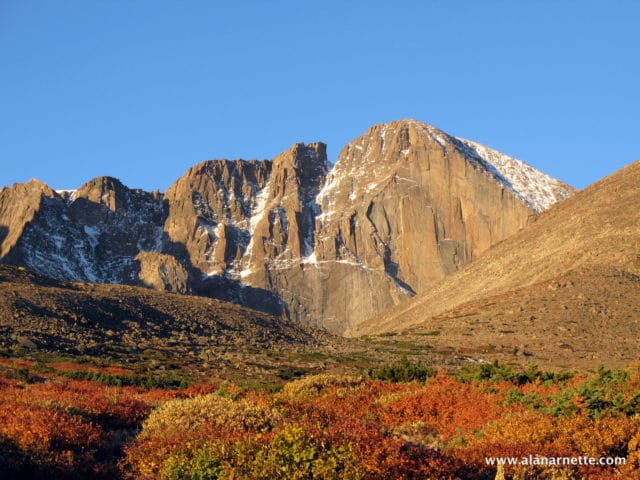
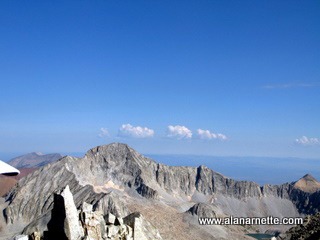
Over the weekend the popular Colorado 14, 000 foot mountain, Longs Peak, saw the first death of 2016. According to rangers at Rocky Mountain National Park, the victim was a 61 year old man from Greeley, Colorado. He was on a section called The Narrows when he slipped on ice and fell approximately 100 to 150 feet. Other climbers used their cell phones to contact park rangers The rangers were flown to the summit of Longs Peak via helicopter and reached the man’s body at approximately 4 p.m. His body was recovered by a long line helicopter operation at 5:40 p.m. and transferred to the Boulder County Coroner’s Office. His name has not been released. Longs Longs is one of the most popular Colorado 14ers with over 15,000 attempts each year and a 50% success rate. It is consider attainable by the normal Keyhole route, but the Park Service provides stern warnings about underestimating the route. In addition to the attainable routes of the Keyhole and Loft, Longs offers over a hundred of more difficult climbs including some of the big wall climbing in the world on the Diamond. I have summited Longs 42 times and use it as my training peak for Himalayan mountains. Longs has extensive coverage on my website The section where this fatality occurred is a relatively short section of maybe 1,000 feet (300 meters) but as the name implies it starts very narrow, perhaps 3 feet (1 meter) in width. To the climber’s left is a 300′ vertical rock wall and to the right a 200′ drop onto rock. This section can accumulate snow and ice throughout the year, including summer, so it is advisable to always carry microspikes at a minimum and to turn back if you are not prepared (or experienced) or the route is extremely icy. Reports from other climbers over the weekend said the Keyhole route from the Keyhole feature upwards was “… covered in frost and ice and there was snow in the trough” About 62 people have died on Longs with falls representing 60% of the casualties. There were eight deaths from falls off the extremely technical Diamond, followed by six off the Ledges on the Keyhole route then five off the Narrows including this event.1 On June 6, 2013 I summited Longs for the 30th time. I climbed up via the Keyhole route and descended using the Loft route. It was spring weather with winter climbing conditions above 12,000′. This 12 minute video takes you through the climb from start to finish: 10 hours, 5500′ gain, 14 miles roundtrip. My condolences to the climbers family and friends of the deceased this weekend. Climb On! Memories are Everything Alan 1 The Coloradan
Going Through a Cave to Reach Longs Peak Summit
It is not often you go through a cave to reach a mountain summit. But I recently did just that on Longs Peak. I guess I have to say Longs Peak in Colorado’s Rocky Mountain National Park is my favorite 14er given I have climbed on it over 125 times reaching the summit on 33 occasions. I’m not an overly technical climber and use Longs as training for my higher altitude climbs so it was a to explore a new route (for me) with some good friends on July 23, 2013. The Northwest Couloir was first documented by Enos Mills (aka Mills Lake) in 1896. He noted previous evidence of earlier human activity in the couloir. Today it is rarely climbed and often goes unnoticed by the thousands who pass underneath on the Ledges as part of the normal Keyhole route. I have been guilty of this for over a decade. A bit more on Mr. Mills. He went on to summit more than 40 times solo and served as a guide 300 more times. He was instrumental in obtaining National Park status for what we now call Rocky Mountain National Park in 1915. The first documented summit of Longs was by John Wesley Powell and a party of seven in 1868 but it is almost certain the local Native Americans summited well before him. The Northwest Couloir The Northwest Couloir is a Class 4 climb but we used ropes to protect the team as we found verglas near the crux move midway through the gully. It could be climbed without protection but the margin of error is very small and would need to be dry or climbers having solid experience in my opinion. This is a different level than the Keyhole or Loft routes. I had scouted it a few weeks before in early July and found significant ice on the route. The route follows the normal Keyhole approach through the Boulderfield, Keyhole and onto the Ledges. The NW Couloir is the last gully on the left (East) just before the Trough. There is an earlier gully that can be mistaken for the NW but a large rock formation at the top of the gully resembling the Knight chess piece is the landmark to use. The lower climb is straightforward but with the loose rock, it requires attention especially for those below you on the Ledges. The handholds are tenuous, more like something you would find in the Elk Range, not on Longs. Water is often running down the Couloir making the up climb sloppy at times. A series of narrow rock benches create a somewhat easy route but in general staying to the climber’s right worked well for us. The Cave The crux, and most fun move is navigating the cave. Technically it is not a cave but rather a gap between two huge slabs that have become lodged in a narrow chimney, aka pancake rocks. While an alternate route is to the right of the cave, it is a 5.2 – 5.4 slab rock climb. If covered in verglas, as parts were on our day, it would be challenging. The exposure to the lower Couloir is extreme. It doubtful that a cell phone would receive a signal in the Couloir but I didn’t try. The approach to the cave is via the lower chimney leading to a false gap. From there, a move to the right is required to see a decades old ring piton half way hammered into the rock. I would love to know the history of this piece. A decent rock ledge allows for a good foothold to reach the piton and from there a couple of aggressive moves takes you to the entrance of the cave. It was on this move where we put in a couple of nuts for protection. Once at the entrance, we crawled in to see a 16 inch high gap with sunlight on the other end. Our team use a variety of gymnastic moves to wiggle through the gap ranging from bellyflop, to backstroke to sideways crawl but all required removing our packs. Once through the gap, a solid rock platform allows for a safe foot plant. To the Summit The Couloir opens up above the cave returning to a Class 3 rock scramble. At the top it joins the Keyhole Ridge route but well above the rated 5+ sections. A long series of connected slabs take you to the summit plateau. The views of the Trough and climbers looking like ants, dominate the view 600’ below. The views of the irregular rock blocks stacked like dominoes was astounding. Given we had a 60m rope and harnesses, we rappelled down the North Face completing a unique and satisfying day on Longs Peak. Our little team was Stuart Smith, Noelle Smith, Jim Davidson and Alan Arnette The following video was taken by myself and Jim Davidson. I hope you enjoy. Climb On! Alan Memories are Everything
Climbing a Classic: Longs Peak
Longs Peak standing at 14, 259 feet/4346m is the highest mountain in Colorado’s Rocky Mountain National Park. It is my base for training. There are over 100 routes on Longs, most on the extremely technical Diamond, which is one of the premier rock climbing faces in the world. However two routes dominate most of the traffic: the Keyhole route and at a distant second, the Loft route. What makes Longs so special is the opportunity to gain over a mile in vertical altitude and experience a wide variety of conditions. I summited Longs Peak on June 6th for the 30th time. Climbed up via the Keyhole route and descended using the Loft route. It was spring weather with winter climbing conditions above 12,000′. This 12 minute video takes you through the climb from start to finish: 10 hours, 5500′ gain, 14 miles roundtrip. And a few pictures of the climb. Climb On!AlanMemories are Everything
Finding Clark's Arrow on Longs Peak
Sometimes it is the little thing. I have climbed on Longs Peak perhaps 70 times in all kinds of weather by multiple routes. But one small goal has eluded me for years. You see, way back in the early days of Rocky Mountain National Park, an enterprising ranger named John Clark decided to help out his fellow climbers by painting an arrow directing climbers to the saddle between Longs Peak and Mt Meeker. The area is a rock filled gully and can be very confusing so some type of semi-permanent sign would have been useful. Of course today that would be illegal and considered graffiti!
Breaking Trail at 14K on Longs Peak
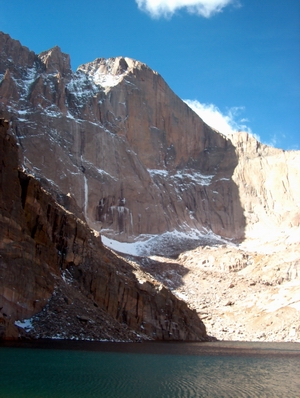
Climbing Colorado 14ers in the winter is always a crap shoot. If the winds don’t get you, then the deep snow will. Recently I met up with a group assembled from the web community 14ers.com to climb the highest peak in Rocky Mountain National Park, Longs Peak at 14, 256′. The plan was to meet up with another climber visiting from out of state. He was motivated to claim a winter summit of Longs. However, when we met up with him, he was suffering from mild AMS and smartly declined to go up. So our team of six made the climb to the feature called the Keyhole at about 13,000′. However once we all converged, one by one the team lost their mojo and return to the trailhead. Understandable but still disappointing. I returned six days later to give it another go – solo. One of the skills I have been working on is mental toughness – the ability to keep going when you want to stop. I have climbed Longs Peak 16 times with 2 previous winter summits so I knew what I was getting into. The late winter of 2010 had seen a lot of snow in the high country but not a lot down lower. I was not quite sure what snow conditions to expect. I got up at 3AM and was on the trail head at 5 – well before sunrise on a perfect day: no winds, clear skies, temps in the 20s. I made good time to tree line and went off-trial staying on the snow pack to protect the fragile tundra. Soon I was at the Keyhole once again. As I turned the corner, I stepped onto Longs Peak’s west shoulder, aptly called the Ledges. A boot path in the snow marked the way but came to a full stop only 20′ from the Keyhole. As I looked ahead. All I saw was a 25 degree angled hillside of rock and deep snow. Motivated to make the winter summit, I pressed on. Back at the trailhead I met several groups also climbing Longs but by different routes. However, at this point all I saw was one lone climber well behind me in the Boulderfield and another climbing up from Glacier Gorge. The snow was soft and knee deep at times. I carefully placed my crampons step by step keeping my ice axe uphill in case of a fall. After a long while, I found myself at the base of the next feature, the Trough – a 600′ coulair filled with more snow. I had hoped it was crusted and would let me ascend quickly but it was more knee deep snow that took all my strength to break thru. Topping the trough, the next obstacle came into view – the Narrows. This is an infamous section of Longs. The Narrows is relatively short, maybe 1/4 of a mile but it is … narrow. Perhaps 10 feet at the widest and 3 at the narrowest. In the summer this is not too bad. But with fresh snow, it was difficult to see the somewhat flat section that provided a stable shelf on which to walk. So again I proceeded gingerly testing each step along the way for a frim(ish) foundation. If I slipped the consequences would be severe. The drop-off is several hundred feet with almost no opportunity to self arrest. Mental toughness. I made it through the narrows and climbed the Chock stone at the end and came face to face with my least section – the Homestretch. This is another sloping slab of rock, maybe 300′ high. It was covered with snow that was shallow down low but knee deep about halfway to the summit. At this point the other two climbers were making the turn from the Narrows. So after more trail breaking, I came onto the summit. It felt good. The views of rocky Mountain National Park, the Continental Divide and the Colorado Front Range were impressive. The downclimb was uneventful, following my trail, I made good time. Back at the trailhead, I gave myself permission to consider the day. My goal was to summit. The snow conditions from 12,800 to 14,256 were tougher than anything I had seen on Longs. I felt good. It was a good day in the mountains. [imagebrowser id=3] Climb On! Alan
My Favorite Colorado 14er

There are 58 Colorado peaks over 14, and 000′, order so to pick one as your favorite is tough. I have climbed 51 of them so this may be a tad premature but here I go anyway. For years, I told anyone who asked that Longs Peak was my favorite. It had everything a mountain could offer: a variety of routes from easy to impossible, unpredictable weather, and amazing views. Longs will always be close to the top of my list. But in the late summer of 2009, another climb took the top spot – Capital Peak in the Elk Range of central Colorado near the Aspen. As I wrote in this trip report The most talked about feature of climbing Capital is the Knife Edge section of the summit ridge. This is a short section, maybe 100′, with steep drop-offs on both sides. A fall would most likely be fatal. On 14ers.com, the route description simply says “It’s a short, exposed section on the ridge that requires concentration and solid nerves. If you are spooked by exposure, this area may twist you in knots. Scramble along the crest or walk along the left side while holding onto the ridge. Experienced climbers can carefully walk across most of the Knife Edge.” To climb Capital, first it is quite a hike just to get to the base of the mountain. But is one of those classic Colorado back country environments complete with running streams, open grassy areas all surrounded by high snow covered mountain peaks. The climb itself starts simple with a 1000′ easy walk-up to a beautiful saddle. Then is gets a bit ugly as you cross a never-ending section of talus. And then it gets interesting. Once atop a feature aptly named K2, you see the final ridge to the summit. Many people turn back here.[singlepic id=2 w=320 h=240 float=right] The infamous knife edge section was as advertised – sharp and filled with exposure. A slip would be fatal. As I found myself solo on the knife-edge, it did cross my mind – what if I slipped? But I went on. The final climb to the summit was fantastic. By taking a more direct route, I was using all my rock skills in high class 4/low class 5 features and it was a blast. Climbing at 14,000′ with a few thousand of air under my feet. I know it sounds crazy if you are not into this stuff; but if you are, then add Capital to your list. But go on a near perfect day. As crazy as I am, I would not want to climb it in rain or ice Please read my complete trip report for the full description and the video of me crossing the knife-edge! Climb On! Alan
Ptarmigans – Nature's Perfect Camouflage
I love to climb or more specifically to be out in nature. This past week, I took a long climb to almost 13, 000′ on Longs Peak in Colorado’s Rocky Mountain National Park. It was a rare winter day with mild temps in the high teens and virtually no wind – unheard of for Longs in January. The scenery of the snow covered Continental Divide was stunning as was the lightly peppered Diamond on Longs’ East Face. I was completely alone for the majority of the day. I had started just before sunrise and enjoyed watching the sun light up the Colorado eastern plains. But it was a few minutes of a six hour day that sticks in my memory. I have climbed on Longs over 50 times, probably more like 70 at this point. And I have come to know a small family who lives there throughout the year. They are hard to spot in the summer and almost impossible to see in the winter. They sport a natural camouflage that is awe-inspiring to even the most skeptical of nature’s mysteries. The ptarmigan family is smart, they look like rocks in the summer and snow in the winter. They stay still unless threatened by an impending step. They are quiet as the wind and still as a leaf. The only clue that they are alive and not a rock, are the black specks that mark the tips of their beak and their sharp eyes. Up close you see a layering of feathers that would make any jacket designer jealous. Boot makers might take notice, their steps are solid and betray their camouflage only through a trail of multi-point foot prints. As I walked along scouting out a route that avoided deep snow drifts, a sudden movement caught my eye. I knew it might be one of my friends. I stopped dead in my tracks and looked carefully. There she was – perfectly white, except for those black specs. I knew if there was one there would be more, so I slowly glanced ahead. Sure enough, the entire family or flock was there. Some had stood up but some were content to stay warm in their tiny snow cave that kept the warmth from their belly captive. I took a few more steps and spoke softly to the team. All in all there were eight ptarmigans including the first one I almost stepped on – sorry. Amazing creatures – gentle, adapted, social and beautiful – nature at her finest. Climb On! Alan
Longs Peak Diamond Climb – video
If you have explored my site, you know that Longs Peak is one of my favorite climbs. In under two hours, I can be on the trail at 9400′ and reach the summit at 14,256′ in a few hours on a good day. It has all types of routes from simple walkups to world-class technical trad climbing. And it offers the and worst in mountaineering weather all year-round thus making for excellent training for Denali, Aconcagua or serious Himalayan climbs. Of all my pages on 14ers, I have more about Longs than any other since have climbed on it well over 60 times and summited it 16. So when I saw this video of professional climber Steph Davis climbing the Diamond, it captured what I love most about Longs and climbing in general. I hope you enjoy her video as much as I did. Climb On! Alan