Podcast Series: 7 Summits Episode 10–Everest with Adrian Ballinger & Mike Hamill Interview

Welcome to my limited series on climbing the Seven Summits. For eight weeks, I’ll drop a new episode discussing one of the 7 Summits in detail. Today is Episode 10, Everest with special guests Adrian Ballinger, founder of Alpenglow and Mike Hamill, founder of Climbing the Seven Summits. #7summits

Mount Everest is the highest mountain in Asia and the world, at 29,031.69 feet or 8848.86 meters, making it the highest of the Seven Summits. With seemingly unlimited attraction, climbing Chomolungma has dramatically changed over the decades.

Stradling the border of China (Tibet) and Nepal, it grows by about 0.0063-0.021 inches or 0.16 to 0.53 millimeters annually due to the northward movement of the Indian tectonic plate and a “rebound” effect caused by merging rivers. Everest is so high that it juts into the jetstream, atmospheric winds that typically travel west to east at speeds ranging from 80 to 140 miles per hour but can accelerate up to 275 miles per hour.

Through January 2024, there have been 12,015 summits (5,907 members and 6,108 hired). In other words, more support climbers, primarily Sherpas, have summited than foreigners. Yet more foreigners, 200, have died on Everest than support climbers, 117.

It has become an economic powerhouse, attracting millions into the Nepal economy, an estimated 10% of GDP, through flights, hotels, taxis, restaurants, teahouses, yak herders and massive, dominating guiding enterprises. In 2024, 80% of the Everest summits were on Nepali-owned guide company teams, compared to 20% a decade earlier. However, with that dominance comes a downside: an all-time record 18 climbers died on Everest in 2022. Twenty-six people have died in the last two years climbing Everest; of that total, 23 were clients of Nepali operators. That’s 88% of the total for the two years.

In this last 7 Summits Podcast, I briefly overview the peak and then delve into several topics with guests Adrian Ballinger, founder of Alpenglow and Mike Hamill, founder of Climbing the Seven Summits.

All Episodes

Introduction
Mt. Kosciuszko, Australia – 7,310/2228m
Mt. Blanc, France/Italy – 15,771’/4807m
Vinson, Antarctica – 16,067/4897m
Carstensz Pyramid (Puncak Jaya), New Guinea – 16,023/4884m
Elbrus, Russia – 18,513/5642m
Kilimanjaro, Africa – 19,340/5896m
Denali, Alaska – 20,320/6194m
Aconcagua, Argentina – 22,902/6960m
Everest, Nepal/Tibet – 29,035/8850m

Everest 2018: Mike Hamill Breaks out to Start his Own Company
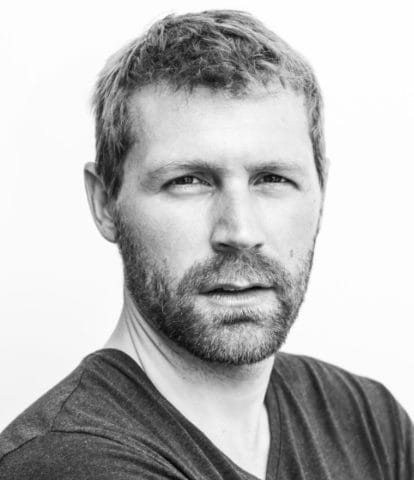
Mike Hamill Profile Pic

Starting any new business is expensive and the chance of success is low. Apply that to the mountain guiding industry and double the expenses and half the success rate. So why would Mike Hamill, already a very successful mountain guide, give up his current job and start his own company in a crowded field? Mike’s new company Climbing the Seven Summits (CTSS) has just begun. The website is fresh and Mike is gathering members for peaks from Orizaba in Mexico to Everest and Lhotse in Nepal this Spring. I caught up with him just before he left for New Zealand for an in-depth look at what it takes to start a guide company these days. Mike is well known in the guiding world having spent many years working his way up the International Mountain Guide (IMG) guide ladder. When he recently left, Mike was the lead guide for “private” or 1:1 commercial trips on Everest. A role that commanded well above average fees for both him and IMG. Those who have climbed with Mike have nothing but praise for this young man. Kent Stewart told me: I’ve had the pleasure of climbing with Mike on several expeditions over the past 12 years from Antarctica to Alaska to Russia to Everest.   Not only is he one of the most respected mountain guides in the world, he is as fine a person as you will ever meet.  There is no one I would rather have on my team should something go wrong on a big mountain.   I was fortunate to be on Mike’s first Climbing the Seven Summits expedition last month on Orizaba and it was flawless.   Mike’s professionalism and attention to detail will serve him well with his new company.   I have been encouraging Mike to start his own company for years as I have no doubt he will be successful. And Louis Carstens who just signed up to attempt Lhotse this Spring with Mike adds: Mike guided me to the summits of Denali, Cho Oyu and Everest.  I like his guiding style: he provides clear boundaries but enough freedom for individuality. I have seen him make tough decisions, at times perhaps an unpopular decision, but he makes good decisions. As a guide Mike provides me with flexibility given my own experience, climbing strengths and weaknesses. It is important for me that a guide must be flexible – I have found that with Mike on all my expeditions with him. He is well dialled into his members, understanding individual needs and catering for that as far as what is practically possible. Now, let’s talk to Mike: AA: Mike, where did your love of climbing start? MH: Climbing has long been in my blood. When I was 12 I heard a story of some fellow New Englanders who ran a gear shop to fund their mountaineering addiction, who managed to put together an Everest expedition. I remember being in awe of them climbing hard locally and challenging themselves on the tallest peaks on earth even though it seemed like a really obscure pursuit. For some reason it called to me and I knew early I wanted to be like them. My young life was probably most defined by competitive nordic ski racing. I think I was attracted to the sport for the endurance –  the harder it was, the more I loved it. I saw the discomfort of training and racing as a way to progress and overcome barriers. Climbing is similar in many ways and the physicality of it has always attracted me. My love for climbing really matured in college, when I got involved in the St. Lawrence Outing Club and Outdoor Program and started rock and ice climbing. Outside of class I devoured all the climbing literature I could get my hands on. I know I spent too many hours perusing pages of books by Messner and Bonington instead of my text books (sorry Mom)! Climbing was like my 5th class in college. Reading about those escapades everything seemed so exotic. My yearning to experience those places for myself and be like those climbers; tough, brash, unconstrained by society, unconstrained by the rules, completely free, grew stronger and stronger. They were climbing only by the rules that they imposed upon themselves. They were courageous, bold and brave. Climbing is not like in a conventional sport where if you lose, you get a knock to the ego, and another game next weekend. In the mountain playground, the stakes are high and the consequences are dire. Before I knew it, I had signed up for a Semester in Alaska to climb and train for skiing, and started undertaking mountaineering courses with Carl Tobin. The Alaska range changed my perspective entirely. AA: You moved to the PNW and began guiding on Rainier. Does every American guide start there?   🙂  MH: Rainer is a well-known proving ground and a great starting point for both climbers and mountain guides. Why? It’s a big mountain environment at moderate altitude, in the lower 48 states, an hour and a half from a major metropolitan area. It’s very accessible and therefore a lot of people want to climb Rainier. Yes it’s a great place to get technical climbing experience but with so much memberele constantly flowing through, it’s also a school to learn good member care. Guiding certainly isn’t all the glory and glamour of lofty summits, it’s also motivating people when they’re tired, cold, frustrated. It’s the tedium of cooking and cleaning and spending hours melting snow into drinking water after a long days of extreme physical undertaking. It’s a constant mental challenge, yes you are leading people up the mountain but more so, you’re helping them navigate through some of their lives biggest successes and failures.  I joke that my job is half mountain guide, half psychologist. It’s on the hill that you see people’s true colors; the good, the bad and the ugly. The huge flux of people on Rainier helps you learn to deal