Bolivia 2019: Poor Weather in Bolivia, But Got a Summit!
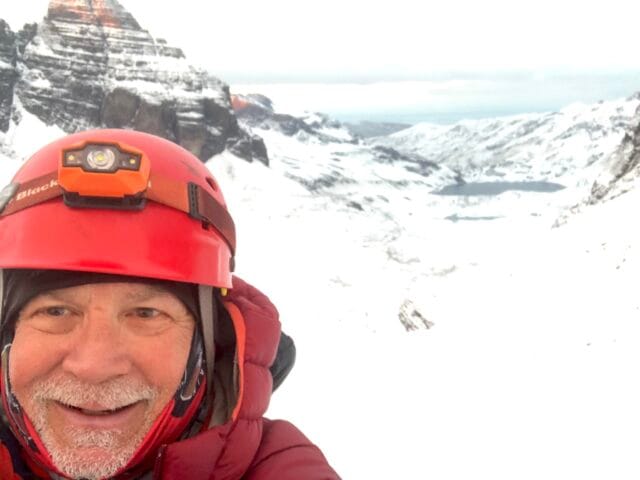
As we left Copacabanna for the trailhead for our attempt of Pequeño Alpamayo, or Little Alpamayo Condoriri Group in La Coordillera Blanca, I was a bit apprehensive. I had felt good on our acclimatization hikes but we were now going over 17,000 feet and then on to almost 20 and then over 21,000. The drive along the Bolivian roads was peaceful. The scenery calming and soon I was enjoying the ride. At some random kilometer marker, the driver of our small bus turned left onto a dirt road. The skyline of the Condoriri Group stood tall, covered in white snow as this is winter in Bolivia. We drove for an hour stopping at a nondescript house built out of mud and straw. A family was standing there to meet us along with our logistics contact from La Paz. We unloaded the bus as we took in the views. That evening we took an acclimatization hike to over 14,000′ and said hello to a group of Llamas and alpaca! Stunning to say the least. The next morning we walked about 1:30 to the “end of the road” From there we took a small trail that meandered ever higher towards base camp and more awesome views. The Coordillera Blanca unfolded before our eyes with each step. We jumped over streams while careful not to twist an ankle on the loose and slippery rocks. Quickly after arriving at base camp, the tents went up as well as the cooking tent with our two wonderful Bolivian cooks. The food thus far has been excellent. We spent the next day hiking to 17,400′ on a nearby peak but the weather gave a hint of what was to come. Loud thunder and crisp lightening lit up the sky just as we reached the summit requiring a fast but orderly retreat lower. At one point we took cover in a shallow ravine hoping the storm would pass. That night it returned with a vengeance along with heavy graupel then deep snow. Overall, a foot of fresh powder. Great if you are skiing but not so good for glacier climbing. With growing concern over avalanche danger we discussed various options and selected to attempt Tirija at 17,500 feet and not go for Pequeno Alpamayo, our original objective. This was a straight forward decision as you have to summit Tarija to get to Pequeno. We left roped up into small subgroups around 4:17 am on Sunday, July 21, 2019. We made good time to Crampon point at the base of the glacier then steady progressed higher. The snow was fresh and ankle to shin deep at times. We climbed through the dark approaching 17,000 feet just about sunrise. The last scramble to the true summit of Tirija as fun. The slope was steep around 40 degrees and the top was a rocky outcropping. And the views simply amazing. We spent about 15 minutes up there and then returned to base camp arriving around 11:30 to pack up and hike back out to catch the bus and return to La Paz. More pictures from the summit. Next Peak Our next peak is Huayna Potosi at 6,088 m (19,974 ft). We are a bit on edge as the weather calls for over 20 inches of new snow over the nest 24 hour. We have delayed our departure from La Paz by one day to let the storm pass. The current plan is to drive to the trailhead early Wednesday, July 24, 2019 then hike the 2-3 hours to the High Camp (hut) and leave early Thursday morning for the summit return to La Paz the same day. After that is Illimani on Monday. I’ll report by social media as I can but a full blog post when I’m back. Support Alan’s 63rd Birthday with a Donation to Alzheimer’s Research CLICK HERE TO DONATE Alan’s 63 Birthday – Alzheimer’s Research I am asking that for my 63rd birthday this Saturday, July 27th, 2019 that a donation in any amount that is meaningful to you be made to the Cure Alzheimer’s Fund using this Crowdrise site. 100% of your donations goes to research, none ever to me. Read more about why this cause is so important at this link and how Alzheimer’s took Ida Arnette’s life. Climb On! Alan Memories are Everything
Bolivia 2019: Acclimatizing in Bolivia

We are well into our Bolivian climbs and I want to announce a change for the Alzheimer’s fundraising. Thus far I’m very impressed with the mountains of Bolivia. Our Mountain Madness team of eight with two guides spent the first week in Bolivia touring the city of La Paz before moving to the lakeside city of Copacabana on Lake Titicaca. We took hikes up to 13,200’/4023m for acclimatization and took in some extraordinary views of the area. On the way out of La Paz we had a nice view of Illimani at 21,122 ft / 6,438 m the highest mountain in Bolivia’s Cordillera Real east of La Paz.We hope to summit it on July 29, 2019. Copacabana on Lake Titicaca Lake Titicaca borders Bolivia and Peru. It’s acknowledged as the world’s highest, largest lake and often called the “highest navigable lake” It sits at 3,812 m (12,507 ft). There is a tremendous amount history associated with the lake pre-dating the Incas. According to Wikipedia, in 2000, a team of international archaeologists found the ruins of an underwater temple, thought to be between 1,000 and 1,500 years old, perhaps built by the Tiwanaku people. The ruins have been measured to be 200 by 50 m (660 by 160 ft). Copacabana We had a local cultural guide, Rosa Maria, who was a wealth of knowledge and talked in detail about the Tiwanaku people, their traditions today and the impact of the lake on Bolivian and Peruvian culture. Copacabana is a popular tourist destination with families boating and swimming on the beaches. By the way, the lake trout was amazing, more like salmon! The first night, to continue our acclimatization, we took a short hike to the top of Cerro Calvario Hill, 13,215′ to watch the sun set. This is a sacred hill with the summit lined with small monuments representing the 14 Stations of the Cross. Pilgrims visit the Stations for prayer and penance and many tourists climb the hill for its fine views. Isla del Sol We spent two nights at Copacabana, hiking, including an acclimatization hike to 13,300’ on the Isla del Sol that started and ended with an hour boat ride from Copacabana to the island. Once again, the sights were impressive as we walked about six miles that day. Next was the drive to the trailhead for our attempt of Pequeño Alpamayo, or Little Alpamayo Condoriri Group in La Coordillera Blanca. I’ll cover that experience in the next post. Support Alan’s 63rd Birthday with a Donation to Alzheimer’s Research CLICK HERE TO DONATE I was hoping a new idea might bring new opportunities for Alzheimer’s fundraising but there has not been any individual, group or company contact me to on my offer to speak at any event in any mainland US city as long as the organizers would guarantee a minimum of $5,000 will be donated directly to a research-oriented Alzheimer’s non-profit. It’s not too late Click this link to add your “bid” and the highest bid over $5,000 will win! But there is always the traditional method! Alan’s 63 Birthday – Alzheimer’s Research Instead of the event, I am asking that for my 63rd birthday this Saturday, July 27th, 2019 that a donation in any amount that is meaningful to you be made to the Cure Alzheimer’s Fund using this Crowdrise site. 100% of your donations goes to research, none ever to me. Read more about why this cause is so important at this link and how Alzheimer’s took Ida Arnette’s life. Climb On! Alan Memories are Everything
Bolivia 2019: Fun in La Paz

Our climbing of three peaks in Bolivia is underway. I arrived early, as in 1:30 am Thursday morning, to El Alto at the world’s highest commercial airport at 13,175’/4061m and was promptly met by the Mountain Madness team and liaison. We made our way to our great hotel in La Paz where I’ve been adjusting to the altitude of 11,607’/3550m for the last couple for days. Today, Sunday, July 14 along with Mountain Madness guides Gaspar Navarrete, and Paul Guerra we took a walking tour of the city including the market and the Witches Market where you can buy all things dealing with spells including potions, dried frogs, medicinal plants like retama and armadillos used in Bolivian rituals. The most stricking, and disturbing in my opinion, are the dried llama fetuses. They are taken when llama is killed for food and was unknown to be pregnant. The fetuses are buried under the foundations of many Bolivian houses as a sacred offering to the goddess Pachamama. Something a bit less dramatic was the market. Similar to most market around the world like in Ecuador, Moshi or Namache Bazzar, it is a feast for the eye with all sorts of native fruit, vegetables, clothing, hand-woven accessories and more. Of course, its often the people that make the experience. Here are a few scenes from today. Click to enter the slideshow. One of the mountains we will be climbing is Illimani at 6,438 m – 21,122 ft which is constantly overlooking La Paz Bolivia with its famous gondolas. Another cultural experience we had was a visit to the “Teatro del Charango” where multiple acts entertained the audience with their talent, humor and creativity. They play every Saturday night. The charango is a small Andean stringed instrument of the lute family, which probably originated in the Quechua and Aymara populations in post-Colombian times. It was traditionally made with the shell from the back of an armadillo but now is made of wood. I picked one up in the market and tried to play with zero success! This is short example from the show: The First Climb: Pequeno Alpamayo Standing at 17,749 ft / 5,410 m, Pequeño Alpamayo, or Little Alpamayo is located at the Condoriri Group in La Coordillera Blanca in Bolivia. It is a pyramid of snow, with the standard route being about 55 degrees, snow, nice in the morning, but sticky later in the day. It was first climbed in August 1962 by South Africans Irene and Keith Whitelock. We will take the West Ridge route. We are hopping to summit on Friday, July 19, 2019. Then we are back in La Paz for a day then off to the next peak, Huayna Potisi. Alzheimer’s Fundraising Opportunity Please don’t forget the new fundraising concept for this time. For this Bolivian expedition, I want am offering to speak at any event in any mainland US City as long as the organizers (individual, group, organization, company, etc.) will guarantee that a minimum of $5,000 will be donated directly to a research-oriented Alzheimer’s non-profit. I am coving all of my own expenses. Click this link to add your “Event Bid” and the highest over $5,000 will win! I’ll update the bids on my blog throughout July and announce the winner on August 1, 2019. Of course, as always, direct donations in any amount are appreciated. Read more about why this cause is so important at this link and how Alzheimer’s took Ida Arnette’s life. You can read more about my professional speaking at this link Climb On! Alan Memories are Everything
Bolivia 2019: Climbing Bolivian Peaks for Alzheimer’s
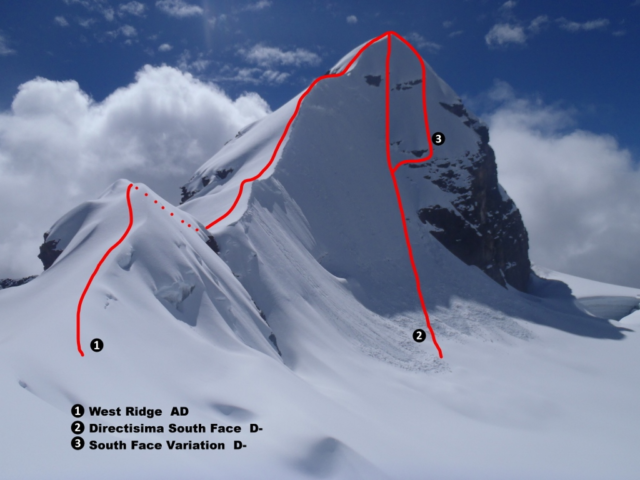
I’m very excited to announce my plans to climb in Bolivia in July 2019 and an Alzheimer’s fund raising event opportunity. I’ve climbed in South America six times: three on Argentina’s Aconcagua at 22,834-feet/6,960 meters and once on Peru’s Alpamayo at 19,511-feet/5,947 meters. In January of this year, 2019, I went to Ecuador for Cayambe at 18,997 feet/5,790 meters, Cotopaxi at 19,348 feet/5,897 meters, and Chimborazo at 20,703 feet/6,310 meters. I climbed in Ecuador with Mountain Madness and will again in Bolivia. And a bit of trivia, I’ll turn 63 while on Illimani – 21,122 ft / 6438 m! Alzheimer’s Fundraising Opportunity Before I talk about the climbs, I want to introduce a new fundraising concept for this time. Those who have followed me over the years know that I promote direct donations to research-oriented Alzheimer’s non-profits or supporting clinical trails during my climbs. This has resulted in hundreds of thousands of dollars in direct donations, none ever to me. For this Bolivian expedition, I want to offer to speak at any event in any mainland US City as long as the organizers (individual, group, organization, company, etc.) will guarantee that a minimum of $5,000 will be donated directly to a research-oriented Alzheimer’s non-profit. Click this link to add your “Event Bid” and the highest over $5,000 will win! I’ll update the bids on my blog throughout July and announce the winner on August 1, 2019. Of course, as always, direct donations in any amount are appreciated. Read more about why this cause is so important at this link and how Alzheimer’s took Ida Arnette’s life. You can read more about my professional speaking at this link Why Bolivia? These peaks have become extremely popular climbs for aspiring high-altitude climbers. With relatively easy access, low cost and reasonably high success rate, many people new to climbing seek these out for their first big peak. I have a few different reasons. First up, I’ve never climbed in Bolivia but they are perfect for some of my Summit Coach clients looking to build their skills at modest altitudes so I want to climb them myself. My Ecuador trip with Mountain Madness was outstanding from their back office support to the in-country team led by Ossy Frier. I did this interview with Mark Gunlogson, their CEO, were he discussed MM’s business, Scott Fischer and Christine Boskoff. Finally, do I have one more 8000er in me? These climbs will help me understand if I do. Bolivia Bolivia is a country in central South America, with terrain spanning Andes Mountains, the Atacama Desert and Amazon Basin rainforest. At more than 12,000-feet, its capital, La Paz, sits on the Andes’ Altiplano plateau with Mt. Illimani in the background. Nearby is Lake Titicaca, the continent’s largest lake, straddling the border with Peru. We will fly into La Paz, the world’s highest capital city and the world’s highest commercial airport at 13,200-feet. The Climbs We are taking a well-thought out acclimatization program that starts at 12,000-feet and gradually moves higher to the summits of three peaks ending with Illimani at 21,125-feet. Pequeno Alpamayo Located at the Condoriri Group in La Coordillera Blanca in Bolivia it stands at 17,749 ft / 5,410 m. The Pequeño Alpamayo, or Little Alpamayo is located at the Condoriri Group in La Coordillera Blanca in Bolivia. It is a pyramid of snow, with the standard route being about 55 degrees, snow, nice in the morning, but sticky later in the day. It was first climbed in August 1962 by South Africans Irene and Keith Whitelock. We will take the West Ridge route. Huayna Potosi Huayna Potosí is 19,974-feet/6,088-meter in the Cordillera Real. Huayna Potosí is the closest high mountain to La Paz. Surrounded by high mountains, it is roughly 15 miles due north of the city, which makes this mountain the most popular climb in Bolivia. The climbing sounds like fun! As one person put it “The summit ridge of Huayna Potosí provided a spectacular finish to this climb. The snow at the top is too narrow for pickets, and too soft for ice screws. If someone falls the only recourse is, hopefully, to jump off the other side in time – in other words “watch you step!” ” The normal ascent route is a fairly straightforward glacier climb, with some crevasses and a steep climb to the summit. The first ascent of the normal route took place in 1919 by Germans Rudolf Dienst and Adolf Schulze. Illimani At 21,122 ft / 6438 m, Illimani is the highest mountain in the Cordillera Real of western Bolivia. It lies near the cities of El Alto and La Paz at the eastern edge of the Altiplano. It is the second highest peak in Bolivia, after Nevado Sajama, and the eighteenth highest peak in South America. Towering over the south of the town of La Paz, Illimani is a revered mountain by the Bolivians. The name seems to derive from the word Aymara Illi mani, meaning Golden Eagle. Follow Along! I will be on the mountains for most of this trip with limited internet access but will update this Blog and social media as I can. A full trip report will be available after the climbs. Climb On! Alan Memories are Everything
Ecuador Volcanoes 2019: Acclimatization and Rare Bird Sightings!
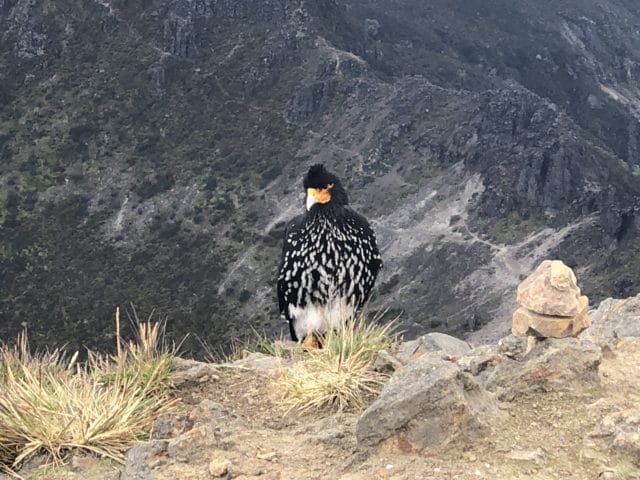
Ecuador keeps getting better and better. Today was a real acclimatization hike on a super trail above Quito We had another fabulous breakfast at Hacienda Rumiloma and hopped in Ossy’s FourRunner for the 10 minute drive to the telefèric or cable car to the Start of the trail to the summit of Pichincha Volcano which is considered extinct although it is next to Guagua Pichincha which erupted in 1996 covering Quito in a foot of ash. The modern convenience of the cars on cables (image that!!) to 12,950’/3,947-meters to start the hike. It was a clear, mostly cloudless cool day offering up unlimited views of Quito but not of our three volcano objectives we are here to attempt. The trail were full but not crowded with groups of all ages, nationalities and objectives laughing and huffing as we all hiked higher. Click on any image for a larger view. The trail is well worn due to continuous use by visitors and locals alike and offers up some surprises as you go above 15,000-feet. The trail turns into a sandy hill that requires full use of legs and balance, then it graduates to the Eagle Rock, a rocky buttress that ask for easy Class 3 to 4 rock scrambling before surrendering to a rocky summit with great views at 15,407-feet/4696-meters. On the summit we were greeted by two Mountain Caracara birds who seem to originate in Panama but like to live in Ecuadoran Mountains above 14,000-feet. Like most mountain birds, they have figured out people mean food, but I saw no one feeding them. Ossy lead the way all day setting an excellent pace for acclimatization. It took us 3:30 hours up and 1.5 down with a total distance of 6 miles and 3,750-foot gain Our clear skies gave way to low cloud that masked the descent but also cooled down the activity. With light down jacket and food gloves were were comfortable. We did wear helmet near the top due to other people above us on loose rock. One the way day, once again we were rewarded with the sighting two Condors – a unique sighting of a male and a female, flying another 1,000-feet above us. Both the Caracara and Condors are somewhat rare sightings so we were pleased to see them in one day. Now back at Hacienda Rumiloma, we will have dinner and sadly leave tomorrow for Otavalo with an afternoon hike at Lake Cuicocha for more acclimatization. The schedule calls for us to spend the first part of next week on Cayambe, preparing to climb with summit near dawn on the 22nd. This is an excellent acclimatization schedule that should set us up nicely for the summits of Cayambe, Cotopaxi and Chimborazo all with a 7 day period. One final note about Hacienda Rumiloma., we will spend three nights here. In conversations with Amber and Ossie the Hacienda as often used as a base camp of sorts for visors to the Galapagos Islands, Ecuadorean Amazon Rain Forest and Quito. Since the opening 2007, it has become a tradition for families around the world to visit as well as the locals to celebrate marriages, anniversaries or just a weekend get away. Again, Mark Gunlogsonand team at Mountain Madness deserve a hat tip for such a find along with Ossy Friere who directs their South American programs. Climb On! Alan Memories re Everything
Ecuador 2019: I’m Off to Climb the Volcanoes
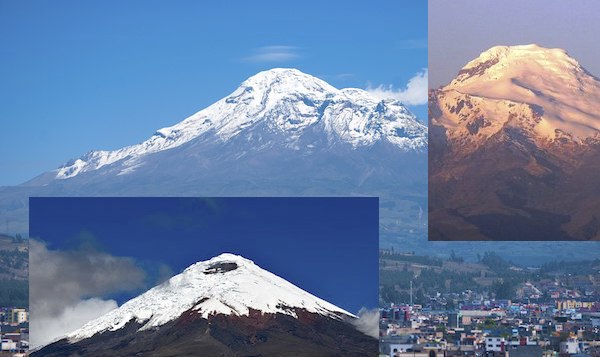
I’m very excited to announce my plans to climb in Ecuador in January 2019 with my good friend Robert LeClair. We leave the US in mid January. Before I get to the climbs, I need to share this story. I was doing a talk on my mountain climbs to a group of 8 to 14 year-old school kids. At one point, a “confident” 6th grader raised his hand with sound purpose. I continued with my talk but he was persistent. I know this type …. Finally, I made eye contact. “Yes, Do you have a question?” He stood up, adopting a stance. I took a step back but smiled. “My dad says Everest is not the tallest mountain.” He declared as the other kids looked at him, then me. I felt the pressure knowing where this was going. He continued. “He says it’s Chimborazo. Have you climbed it?” All of a sudden my summit of Everest, K2 and others melted under the scrutiny of this 12 year-old. I took a deep breath and gather my composure to enter the debate with this expert, anointed by his father to be the keeper of mountain statistics. “Well, your father has a point …” As I will explain later in this post. Needless to say, I consider my debate with the aspiring member of Congress to be a learning experience 😆 I’ve climbed in South America four times: three on Argentina’s Aconcagua and once on Peru’s Alpamayo. I summited each time so I hope to keep this success rate up as we will climb Cayambe at 18,997 feet/5790 meters, Cotopaxi at 19,348 feet/5897 meters, and Chimborazo at 20,703 feet/6310 meters. Logistics will be provided by Mountain Madness Why? These peaks have become extremely popular climbs for aspiring high-altitude climbers. With relatively easy access, low cost and reasonably high success rate, many people new to climbing seek these out for their first big peak. I have a few different reasons. First up, I’ve never climbed these peaks but they are perfect for some of my Summit Coach clients looking to build their skills at modest altitudes so I want to climb them myself. Also, I’ve never climbed with Mountain Madness but they are one of the best out there and have been developing their South American programs for years. I did this interview last year with Mark Gunlogson, their CEO, were he discussed MM’s business, Scott Fischer and Christine Boskoff. Next, Robert and I have summited almost all of the Colorado 14ers together as well as Mexico’s Orizaba. He signed-up for these climbs almost a year ago and invited me then. Finally, my Island Peak climb in October 2018 was a bit more difficult than I had anticipated so I want to get back to that 20,000-foot level and figure out whats going on. I will be doing few things differently this time around. The Climbs I used the text from the Mountain Madness site as an overview of each peak. I’ll revise with my own thoughts after the climb and also at the FAQ page. Cayambe Good climbing and interesting glaciers characterize our chosen route on this beautiful 18,997 foot mountain, the third highest in the country. With easy access from a comfortable hut, the glaciers of Cayambe offer an outstanding venue for our Mountaineering School. Huge crevasses, complex icefalls, and seracs provide participants the ideal setting for learning ice climbing, crevasse rescue, and a variety of other fundamental skills. The ascent of Cayambe follows diverse glacier terrain to near the summit crater where often challenging route-finding around a gaping bergschrund provides an exciting climax to the climb. Cotopaxi This 19,348 foot peak are located in beautiful Cotopaxi National Park, an area complete with alpine lakes, pine forests, and the stark, desolate landscape of the paramo. Standing in high isolation above the paramo, the striking cone-like perfection of this symmetrical mountain strikes the climbers imagination. From the 15,750-foot hut we ascend moderate glacier slopes to the summit. Along the way however, complex crevasse patterns and snowbridge crossings over deep crevasses make the climb interesting. After passing through a heavily crevassed area midway through the climb, we reach the final summit slope. Here a challenging section of 35-40 degree snow leads to the abrupt finish of the climb on the crater rim of the world’s highest active volcano. Chimborazo At 20,703 feet this are Ecuador’s highest peak. Depending on conditions Mountain Madness groups will ascend one of two routes on the magnificent western flank of the peak. The direct route, the most commonly used, and the Whymper route are relatively straightforward glacier climbs. While never difficult, the 30-35 degree slopes hold the climber’s attention throughout the more than 4,000 feet of elevation gain to the summit. From the 16,400ft Whymper Hut, our ascent follows a low angled glacier ramp that leads to the long summit ridge. Here we encounter a few short 40 degree snow/ice slopes (no more than 100-300 feet in length) and groups typically find themselves negotiating a few crevassed sections on the upper slopes of the mountain. This are a long, difficult day of 12-14 hours roundtrip. Many people belive that Chimborazo is the highest peak on earth because it’s the farthest point on the surface from Earth’s center – the summit is the fixed point on Earth that has the most distance from the center – because of the oblate spheroid shape of the planet Earth, which is “thicker” around the Equator than measured around the poles. The Battle for Highest So back to my epic debate with the 6th Grader …. According to a Wikipedia article: “Chimborazo is one degree south of the Equator and the Earth’s diameter at the Equator is greater than at the latitude of Everest (8,848 m (29,029 ft) above sea level), nearly 27.6° north, with sea level also elevated. Despite being 2,585 m (8,481 ft) lower in elevation above sea level, it is 6,384.4 km (3,967.1 mi) from the Earth’s center, 2,163 m (7,096 ft) farther than
Everest 2017: Mountain Madness, the Quiet Comeback

If you say “Mountain Madness”, what comes to mind? Many people will say Scott Fisher and others may bring up Everest 1996. And while not wrong, they might be missing one of the quietest comeback stories in expedition guiding. Now under the leadership of Mark Gunlogson, MM is preparing a return to Everest in 2017 in addition to gearing up for other big mountain expeditions. Scott Fisher led the ill-fated team on Everest in 1996. While all of his team summited and survived, Fisher died on the way back down from the summit. Christine and Keith Boskoff bought MM in 1997 and continued to build the company until Chris’s death in Tibet on Genyen Peak in 2006. Keith had passed away in 1999. These sad events along with Fisher’s independent style created an image of MM that lasts today for some people – bold, a bit out there and unpredictable. Enter Mark Gunlogson. In 2008, Mark took over leadership of MM and slowly has modeled the company after his personality – thoughtful, diligent and prepared to think out of the box. They regularly run trips to mountain ranges other guide companies ignore and most climbers have never heard of, but offer challenges and adventures that many seek. With Everest 2017 around the corner, I reached out to Mark for his thoughts on MM today, the guiding industry and why they are returning to Everest with partner Mountain Trip. Q: Let’s get to know you first Mark. What drives your passion for climbing? MG: When I first got into climbing in my teens I was driven by the elevation of a peak; it didn’t matter how I reached the summit, I just wanted to go after the highest. That quickly changed though as my technical abilities evolved and then it became more about the route and climbing along the way than reaching the highest peak. This is one of the reasons I never ended up on Everest I suppose or on many other big expeditions I was invited on; I was more interested in moving than sitting around in base camp or slogging for two months. I get the attraction of the big peaks, it’s just not for me as much; but, of course I’m happy to help those that have that ambition! These days though I’m driven by it all; going to wild places, the people, the technical challenge, and trying to wrap it all into one experience. Q: Do you have a favorite style and a favorite route or peak? MG: Ha, that makes me laugh, mostly because I sometimes feel like I got stuck in a generation that was in between big expedition-style climbing and fast and light. So, my partners and I did a lot of things old school, slow and heavy, but we had fun and maybe that’s the best part of it all. We did Bhagarathi III in India in 11 days up and down, we lost twenty pounds and went home and nobody even knew we did it – I suppose it could be done in two or three days now. My buddy and I did the North American Wall on El Cap 30 years ago or so and took 9 days; complete with coconuts, big wall stereo, wine, and we had to climb through major High Sierra storms, soaking it in as it were as we climbed through the ephemeral falls. Now it’s done in a day or two.., no need to expose yourself to the elements if you can go fast. But, I don’t regret taking our time and enjoying the experience, even if it was more work. El Cap for me was all about the bivis, so I spent way too much time in the Valley looking for the ultimate ledge, but loved it! We knew we were not going to be on the top of the heap of elite climbers so we, the self-proclaimed Tippy Turtle Alpine Grope, went out and suffered and just had fun and never took ourselves too seriously. But now, 40 years of climbing has led me to believe, like everything else these days, compressing experiences into the shortest amount of time isn’t always the best thing to do. But, I’ll contradict myself here and say for sure, alpine-style, fast and light, is the way to go for so many reasons on climbs like we did on Bhagarathi III. I’m blown away what climbers are doing now. I can say I clearly missed the boat on that one though, so these days I just like keeping my heart rate up; give me a 2,000-foot easy rock climb that I don’t need a rope on and I’m happiest – wish I knew where to find such a climb! Mount Kenya, one of my all-time favorites, comes close though and some things in the Cascades close enough. Ultimately, just getting out is good enough for me while trying to manage a business and family. Q: You started guiding for Mountain Madness in 1994 when Scott was leading the company. What three words would you use to describe Scott in those days? MG: Alluring, fun, and wild; I could throw out a lot more words, but suffice it to say, we had a short-lived, good time full of dreams. Q: In the early 1990s, MM was in stiff competition with Adventure Consultants to establish commercial guiding around the world. What was that competition like? MG: I was not too involved with the early 90’s part of this, but was around for the preparation of the 96’ expedition and just remember there being a lot of wheeling and dealing, trying to get this, that, and the other involved with the MM trip, all of which was happening on the flip-side with Adventure Consultants – this was to be a launch pad of sorts, so we were all eager to out-do one another. Everyone was trying to position themselves as the best company to go with as it was so new