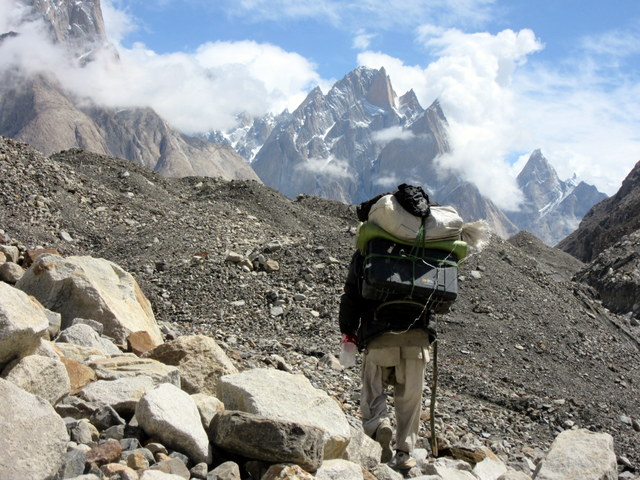
2018/19 Winter Climbs: At K2 Base Camp, Climbing Nanga
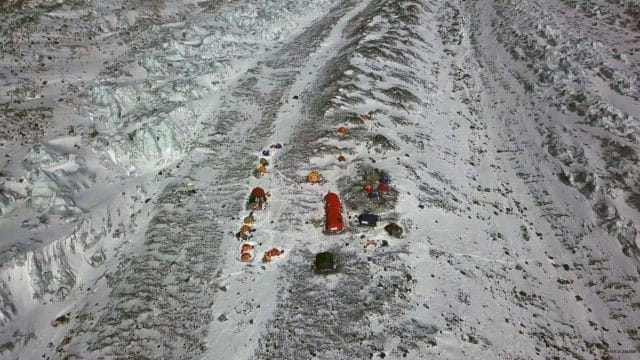
One of the K2 teams arrived at base camp but poor weather is already hindering progress. Climbing is going well on Nanga Parbat, but also some weather concerns. K2: At Base Camp K2: Kazakhstan, Russia and Kyrgyzstan Team – at BC The seven member team from Kazakhstan, Russia and Kyrgyzstan arrived at K2 Base Camp in good condition. They tried to do a recon to Advanced Base Camp, a short walk from BC, but turned back when they hit poor weather. You can follow them on Instagram but Russian Climb is the best source. K2: Spanish/Galician Team – At Concordia The other K2 team, lead by Alex Txikon, are at Concordia enjoying great views of K2. They should arrive tomorrow, January 16. A third Polish climber, Waldemar Kowalewski, is joining their team and is on the trek in. You can follow their movements on Alex’s GPS tracker, Twitter, Instagram, and Facebook. Winter Nanga Parbat – Poor Weather This team of Daniele Nardi, British Thomas Ballard and two Pakistani teammates Rehmatullah Baig and Karim are back at Camp 3 at 5,714m with a cache of gear. They found their tents buried in deep snow and had to dig them out – hard work at that altitude. They are attempting the Mummery’s Spur. Winter Manaslu – At Manaslu BC Simone Moro and Pemba Gyalje Sherpa are now at Manaslu base camp after summiting Mera Peak for acclimatization. Winter Alaska – Over American climber Lonnie Dupre is back in Talkeetna, Alaska after giving up on his MT. Hunter attempt: With the ice fall leading to the Ramen route on Mount Hunter completely impassable this year, I explored an alternate route which proved to have a high risk of serac falls and avalanches. I called for a pickup at basecamp and am now in Talkeetna. More to follow…pictures, video, and future ice climbing. Best of luck to all this winter. Climb On! Alan Memories are Everything
2018/19 Winter Climbs: Trekking

Not a lot of new information from any of the teams. The K2 teams are still on the trek and others are still early in their climbs. K2: Trekking to Base Camp K2: Kazakhstan, Russia and Kyrgyzstan Team – Trekking the Baltoro The seven member team from Kazakhstan, Russia and Kyrgyzstan are trekking towards K2 Base Camp. They are currently at the Urdukas Camp. You can follow them on Instagram but Russian Climb is the best source. K2: Spanish/Galician Team – Trekking the Baltoro The other K2 team, lead by Alex Txikon, are also trekking the Baltoro Glacier towards K2 Base Camp and at Paiyu. You can follow their movements on Alex’s GPS tracker, Twitter, Instagram, and Facebook. Winter Nanga Parbat – Poor Weather This team is attempting a new route on Mummery’s Spur. Daniele Nardi, British Thomas Ballard and two Pakistani teammates Rehmatullah Baig and Karim have established Camp 3 at 5,714m. Winter Manaslu – Cold and Windy Mera Simone Moro and Pemba Gyalje Sherpa summited Mera Peak and now are at Khare. They posted a video talking about how cold it was. “Back to CB after a night spent at 5800 m. Here in the video we’re descending in complete whiteout. The weather forecast for the next days is strong wind at 130 kph. ” Winter Alaska – Flying American climber Lonnie Dupre is in Talkeetna, Alaska is on MT. Hunter now but had to change route due to the Icefall being “completely impassable” with all the crevasses. Best of luck to all this winter. Climb On! Alan Memories are Everything
2018/19 Winter Climbs: K2 Climbers en route, Nanga Climbers Climbing, New Everest Route?
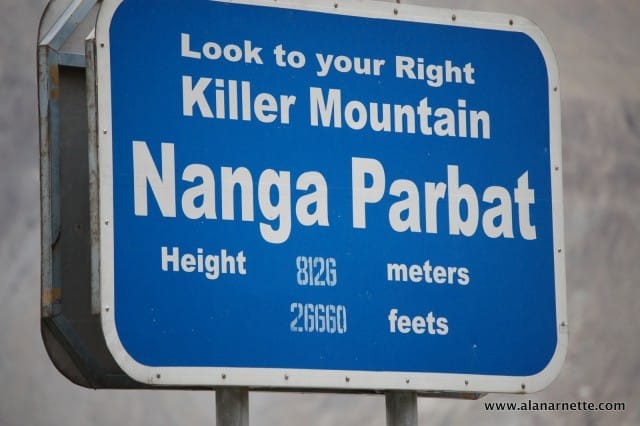
The winter 8000-meter teams are well on their way to their respective peaks. On Nanga Parbat, the climbing has begun. K2: In Skardu K2: Kazakhstan, Russia and Kyrgyzstan Team – Arrival Pakistan The seven member team from Kazakhstan, Russia and Kyrgyzstan are in Skardu after taking a bus on Karakoram Highway for 30 hours. It seems there was some construction and repairs along the way that delayed their progress but all is well now. Next up is the 8 to 10 hour drive in Toyota 4Runners to the end of the road in Askole where they will being the trek to K2 Base Camp. You can follow them on Instagram but Russian Climb is the best source. K2: Spanish/Galician Team – On the road The other K2 team, lead by Alex Txikon, are also in Skardu. While no final decision has been made on which route they will take, it appears they are open the 1978 American Route. Also, Txikon told the Spanish media, Marca in December that if they end up on the same route as the Russian International team, most likely the Abruzzi, that they will work together. He said they will share kitchen facilities at base camp. He also said “K2, there is less chance than on Everest” for a winter summit and suggested he will return in the summer of 2019 to do a traverse of K2 combing the Pakistani and Chinese sides. You can follow their movements on Alex’s GPS tracker, Twitter, Instagram, and Facebook. Winter Nanga Parbat – Poor Weather This team is attempting a new route on Mummery’s Spur. After a short period of heavy snow, Daniele Nardi, British Thomas Ballard and two Pakistani teammates Rehmatullah Baig and Karim have established their Camp 1 at 15,49-feet/4,700-meters , and touched Camp 2 at 16,730-feet/5,100-meters They posted this video on YouTube Winter Manaslu – Summited Mera Simone Moro and Pemba Gyalje Sherpa summited Mera Peak for acclimatization and posted this update on Instagram: “Today we reached the Mera Peak summit at 15:30 after five hours of ascent. Cold and heavy gusts of wind on top, but it took us only eight hours to climb up and down.” Winter Alaska – Flying American climber Lonnie Dupre is in Talkeetna, Alaska hoping to fly to the glacier tomorrow for his winter attempt on Mt. Hunter. Everest: New Route Attempt Spring 2019 Cory Richards posted on Instagram “2019. The biggest and most immediate goal is our attempt to establish a previously unclimbed route on Everest come May. We have 14 weeks until we leave…” He is said to be climbing with Adrain Ballinger. Best of luck to all this winter. Climb On! Alan Memories are Everything
2018/19 Winter Climbs: K2 Climbers Enroute, Antarctic Update, 28 Everest Summits?
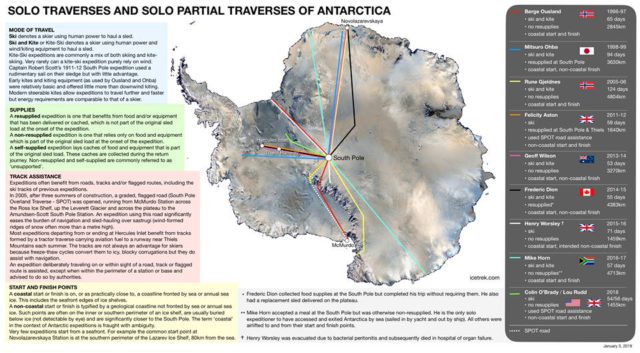
The winter 8000-meter teams are all arriving or are already acclimating towards their objectives. Remember this will be a long effort, especially on K2, with summits near the end of January at the earliest. K2: Kazakhstan, Russia and Kyrgyzstan Team – Arrival Pakistan The seven member team from Kazakhstan, Russia and Kyrgyzstan are in Islamabad and are preparing to fly to Skardu for the 4Runner drive to the end of the road in Askole where they will being the trek to K2 Base Camp Vassiliy Pivtsov is the expedition leader and Basil Pivtsov (Kazakhstan) is the head of the expedition and the team captain. Artem Brown (Russia) is listed as the project organizer. The rest of the team now includes: Abildayev Novel (Russia), Roman Abildaev (Russia), Michael Danichkin (Kyrgyzstan), Mikhail Danichkin (Kyrgyzstan), Tursunali Aubakirov (Kazakhstan), Tursunov Aubakirov (Kazakhstan), Dmitry Ants (Kazakhstan), Dmitry Muraviov (Kazakhstan), Konstantin Shepelin (Russia), Konstantin Shepelin (Russia) You can follow them on Instagram but Russian Climb is the best source. K2: Spanish/Galician Team – On the road The other K2 team is lead by Alex Txikon is now traveling by bus from Kathmandu to Islamabad while his Spanish teammates will fly from Madrid. He will be climbing with his long time friend and partner Felix Criado from Galicia, Spain and two additional teammates: Polish climbers Marek Klonowski and Paweł Dunaj. They will have a strong team of eight Sherpas with them in support including Nuri Sherpa, Chhepal Sherpa, Geljen Sherpa, Hallung Sherpa and Pasang Sherpa. He has not announced what route they will use, Abruzzi or Česen or even the East Face. The pair attempted K2 in 2013 but stopped just above Camp 2 at 6,900-meters. You can follow their movements on Alex’s GPS tracker, Twitter, Instagram, and Facebook. Winter Nanga Parbat – Poor Weather Daniele Nardi with British Thomas Ballard and two Pakistani team members Rehmatullah Baig and Karim Hayat are attempting a new route on Nanga Parbat. They reached Camp 1 on the mountain while the two Pakistani mountaineers had hoped to move up to Camp 2 but heavy snow has forced everyone back down to base camp. Winter Manaslu – On Trek Simone Moro and Pemba Gyalje Sherpa are on the trek to acclimatize on Mera Peak before attempting Manaslu via the normal route in alpine style. In more noise around when winter begins and when an expedition starts, Moro has said “the only ascent to the Manaslu during an astronomical winter , that of the Poles of 1984, could not be considered a totally winter expedition , since it began before December 21 and was already above 7,000 meters when it began the station.” source Winter Alaska – Arriving Alaska American climber Lonnie Dupre, well known for his amazing attempts to summit Denali in true winter, left for Alaska yesterday for his winter attempt on nearby Mt. Hunter. An Antartica “Unassisted” Record? Antartica expert and veteran polar guide Eric Philips added a bit more on American Colin O’Brady’s claim of a solo, unassisted, and unsupported 54-day Antarctic traverse. O’Brady pulled a 136Kg/300lb sledge from one coast to Antartica to the South Pole then to another costal point. The total journey was 1,487km/923 miles. He beat fellow racer, British Army Captain Lou Rudd by 2 days. Both extremely impressive. However, the record part of his journey has come under scrutiny given he traveled on the McMurdo-South Pole Highway, or the South Pole Overland Traverse Road (SPOT), a flattened trail groomed by tractors towing heavy sledges carrying personnel and supplies from McMurdo Station to the South Pole making travel on groomed ice vs the uneven and often impossible sastrugi (wind built ice formations) easier, and faster. Philips posted on Facebook: To add further clarity to the discussion about Colin O’Brady’s claim on the first solo, unsupported and unassisted crossing of Antarctica, I have made up this map of solo crossings to date with some supporting narrative. Other factors also have a bearing on modern polar expeditioning such as the psychological benefit of satellite phones, accessible weather forecasting and sponsor obligations, and economic and logistic pressures that encourage people to choose routes that start and/or finish closer to logistics hubs. The terms unsupported and unassisted are no longer adequate in themselves so I have refrained from using them as labels. Other News Kami Rita Sherpa at age 48 holds the record for most Everest summits at 22. He says he wants to continue climbing for the next 6 years. If he summits each year, that would put him at 28 Everest summits. source He used to work for foreign guide services but landed a lucrative contract with Seven Summits Treks to climb with them. And finally the young Sherpa who lost both set of fingers to frostbite while guiding a Pakistani client, Col Abdul Jabbar Bhatti , on Everest in spring 2017 has returned to Nepal. In an ironic move, he has agreed to take a job with the very company, Seven Summits Treks, that sent him in harms ways, very unprepared according to Sange Sherpa himself. Sange spent most of the last year undergoing reconstructive surgery by world-class doctors in Vail, Colorado due to the generosity of mostly US donors to cover his living and medical expenses and reportedly none from SST or Col Abdul Jabbar Bhatti. Best wishes in his new career. Best of luck to all this winter. Climb On! Alan Memories are Everything
Nanga Parbat: 1 Saved, 1 Lost and the Spirit of Mountaineering is Strong
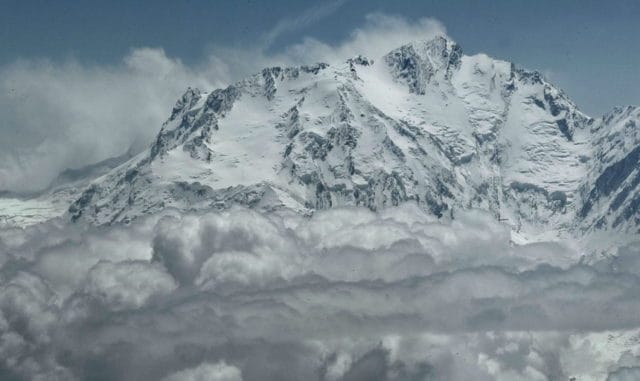
By now, the story is well known and earning global headlines in both the mountaineering and mainstream press. Two climbers joined together to attempt the world’s ninth highest peak, Nanga Parbat at 8,126-meters/26,660 feet. They got in trouble descending from 8000-meter level and life and death decisions were made. Tomek Mackiewicz‘s dream was to summit Nanga in the winter. This was his seventh attempt on the peak. The polish climber had teamed up with French climber Elisabeth Revol who had come within a breath of summiting last year. She was on her third attempt. The two highly skilled climbers made the summit was confirmed by one, but this detail seems less important given what happened next. The duo arrived in Pakistan on December 16 planning to travel to base camp and climb via the Diamer Face – a route both knew well. They touched 6300 meters on an acclimatization rotation on January 3 but then, as is expected on the high peaks in winter, the winds moved in. The temperatures dropped to -45 Fahrenheit or Celsius – no matter the scale, skin instantly freezes in these conditions. After waiting a couple of weeks, they left for their summit bid, aiming at a tiny window when the winds would calm, perhaps enough time to sneak to the top and get back down before winter returned. January 25 became the target summit day. On January 24, they had reached 7,300 meters and followers cheered them on. Then, all communications stopped. The mountaineering community went into action. Their home teams and local logistics organizer started to call for helicopter rescues. Polish and French embassies got involved. But, as is standard and well known in Pakistan, no cash, no rescue. A private company, Askari Aviation, would fly military helicopters but their flying ceiling was 6,000-meters and the climbers were thought to be at 7,900 meters. A fundraiser was launched and with hours, tens of thousands of Euros were raised from tiny and large donors across the world. Then the money problem was instantly erased as the Ministry of Foreign Affairs of Poland said they would guarantee all rescue costs. Plans were developed and the only humans on the planet that had the skills and readiness to help with the operation were on K2, 111 miles to the North. The Polish K2 team had already spent several nights at Camp 2 on the Česen Ridge, a 6400-meters. When contacted they didn’t take another breath before saying yes. The plan took shape starting with a helicopter picking up Denis Urubko, Adam Bielecki, Piotr Tomala and Jarek Botor and flying them as high up on Nanga as possible. Denis Urubko posted on Facebook: Ciao Matteo. Everything is in correct way finally. Tomorrow morning rescue team will fly to Diamir. We will try to go by Kinshoffer route as soon as possible. Adam and me are in head-team, going light style. Will be necessary to climb, sure, because old ropes shall be into the ice. Our group can be 4-6 members finally. We’ll try to do our best. What developed was fundamental battlefield triage, save those who have a chance and get to others next. They would attempt to rescue Revol first who was reported to have tried to descend to a safer altitude near Camp 3. She had sent her GPS location via her SPOT tracker. Then they would return to attempt to retrieve Mackiewicz near Camp 4, suggesting he would have spent over 48 hours near 8,000-meters blind and frostbitten with no food or water. The unpredictable winter weather – high winds and heavy snow played with the plans. The choppers were on and then off. They could fly higher but were stopped for safety when dense fog developed above 6,000-meters. the first rule of being a rescuer is not to become a victim. Urubko and Bielecki were dropped at 4,900-meters – a long way to climb to reach Revol. She reported that Tomak was suffering from frostbite, snow blindness and was unconscious. She was faced with a decision most will never experience and ever fewer may understand. She began to carefully descend knowing that was her only chance to live. Only Revol will know what she felt, what she said and how the weight of her decision will bear on her for the rest of her life. For others to criticize is a mistake and an exercise in ignorance and arrogance. The Poles climbed at a superhuman pace – covering 1,250 meters in 7:30 – this is 166 meter per hour or 550 feet per hour – at 6,000-meters, ~20,000 feet. This is phenomenal considering the technical terrain at night on the Kingshofer Wall. They found Revol at midnight. The rest of the K2 team, Piotr & Jarek, followed them with more rescue gear ready to reach Tomak. As the weather deteriorated, the three alpinists descended, Revol with frostbitten toes and virtually no food or water for the past 48 hours. The choice was made to leave Tomek in a tent at 7,400 meters as the clouds moved over Nanga and the winds picked up. The last person to see him was Revol, 24 hours earlier. Reaching base camp, the wind was strong – too harsh for a helicopter to fly in – or for a rescue attempt of Tomek. As one of the thousands who posted on social media said, “Tomek is now asleep in the arms of Nanga.” The helicopter flew the rescue team and Revol to Islamabad where she is receiving treatment for her toes, and for her heart. The fundraiser continues now shifted from rescue to care for Tomek’s wife Anna and their 3 children. The K2 team will return to K2 with their attempt to be the first to reach the summit of K2 in winter, according to this interview with Denis Urubko. Climbing any mountain in winter is dangerous. Adding in the altitude and terrain of an 8000-meter mountain makes success almost always impossible. For those who try, they fully understand the risks. For those who watch
Disaster Developing on Nanga Parbat, K2 Team to Launch Rescue – Update 4
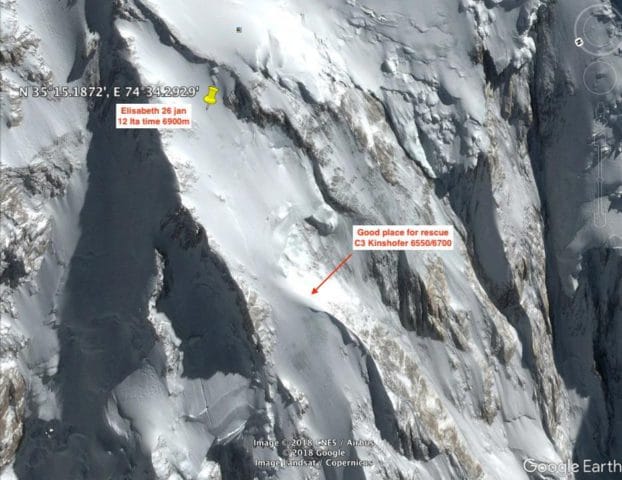
Many media outlets and multiple press reports plus posts on Facebook are describing a developing disaster scenario on Nanga Parbat for Polish climber Tomek Mackiewicz. He and his French climbing partner Elisabeth Revol were on their summit bid in a tiny weather window when Mackiewicz developed frostbite and snowblindness. There has also been a mention of injury, but that is unclear. Update 5 Horribly sad but also part of mountaineering for a winter 8000er, due to impending bad weather the rescue efforts for Nanga climber Tomek has ended. The K2 climbers who stopped their historic effort for a winter K2 summit will descend with Elisabeth Revo – one life saved. I will have a full recap and what’s next tomorrow. Amazing effort and well done to all. RIP Tomek. Update 4; 02:00 28 January Pakistan time: We are witnessing a superhuman effort by the K2 team to climb so fast at night. There are only a handful of climbers who could be doing what is happing before our eyes. They climbed at a rate of 400 feet or 121 meters per hour at 20,000 feet/6000 meters up a very steep, icy and technical Kingshofer wall. This is simply incredible. After being helicoptered from K2 base camp, Denis Urubko and Adam Bielecki are with Elisabeth Revo a bit more than 200m above the Kingshofer wall around 6000 meters. She is reported to have frostbite on several toes but in generally good shape. They still need to get lower but this is great news. Medical assistance is ready to give aid as soon as possible. She is a survivor to be sure. source Other K2 climbers will continue to try and reach Mackiewicz . He was last reported at 7200 meters but there has been no recent contact with him. If you are accessing any SPOT or other GPS trackers for Nanga Parbat, a request has been made to stop as it is taking up bandwidth, delaying information and preventing access at times. Thanks. Not important now, but there is a report both Revol and Mackiewicz did summit Nanga Parbat on the 25. – not confirmed. Update 3 19:30 PM 27 January Pakistan time: The fundraiser target has been increased to help with more expected expenses. The K2 climbers are now on Nanga Parbat. “The helicopter did not succeed in getting high enough to pick up Eli. It has dropped off rescuers including Denis Urubko and Adam Bielicki at C1 at 4,800m. They have a tracker on them and have last been seen at 5,225m. They will continue climbing up through the night. They are both well acclimatized on K2 and extraordinarily strong. Elisabeth took a decision to start a descent down from 6700m towards them provided she can find fixed ropes. She has no battery power left. We believe in the strength of her spirit.” Update 2 08:00 27 January Pakistan time The helicopters are waiting for better weather before flying to K2 base camp thus delaying the attempt to help those on Nanga. If the K2 team cannot be reached four high altitude porters will be helicopter to 6300 meters to render aid. Revol has been in contact and reports frostbite but she seems to be surviving. Update 1: Latest Update from Crowdfunding page: 19:00 26 January – Eli managed to bring Tomek down to 7280m this morning and set him up in a tent to spend the night while the rescue effort gets under way early tomorrow morning. – There is a good coordination of the French/Polish diplomats and the military – Eli is in the process of descending down and has last communicated from 6671m. Though she has no tent, she is clearly lucid and is making progress on descent to help get rescue effort under way. – K2 Polish climbing team of 4 will be picked up tomorrow from their base camp by a helicopter to mount a rescue attempt from the base camp of Nanga Parbat. – If the weather allows, rescuers with oxygen and food will be dropped off at a higher altitude – Your generosity and the help of Ministry of Foreign Affairs of Poland has helped fund the effort. Background A rescue plan was developed when the Polish K2 team agreed to fly to his location around 7,300-meters. They are already acclimatized to this altitude from their efforts on K2 and are the only viable team available on earth. Also, Polish climber, Adam Bielecki knows Nanga well since he attempted it by the same route in the winter of 2016. Denis Urubko posted on Facebook: Ciao Matteo. Everything is in correct way finally. Tomorrow morning rescue team will fly to Diamir. We will try to go by Kinshoffer route as soon as possible. Adam and me are in head-team, going light style. Will be necessary to climb, sure, because old ropes shall be into the ice. Our group can be 4-6 members finally. We’ll try to do our best. The commercial company, Askari Aviation flying a Pakistani military helicopter, refused to launch the mission without $100,000 rescue costs guaranteed. This is standard procedure in Pakistan. Mackiewicz doesn’t have insurance but Revol does. The government of Poland stepped into secure payment but two crowdfunding efforts, crowdfunding 1 / crowdfunding 2 have already raised over € 80,000 within hours. Two helicopters, standard on Pakistan, will conduct the operation. First, they will pick up K2 climbers, Denis Urubko, Adam Bielecki, Piotr Tomala, Jarek Botor and Marek Chmielarski, Saturday morning then fly to Nanga which is 111 miles from K2 – about one hour flight. UPDATE: Several reports have the helicopters have left Skardu to pick up the K2 climbers but unconfirmed. Given the location of the climbers, the helicopters will drop off the rescue team around 6,000-meters and they will need to climb up the Diamer Face to aid the climbers. They will attempt to rescue Revol first who is reported to have tried to descend to a safer altitude near Camp 3. She has sent her GPS location via her SPOT tracker. Then they will return to attempt to
Autumn Himalayan Climbing: Surprise Summits!
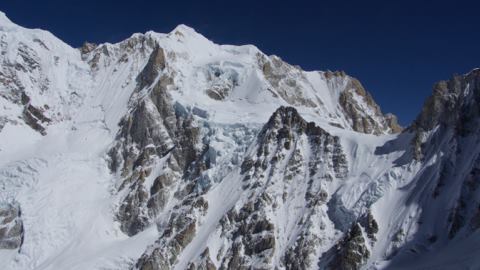
This week has shown never say never about climbing big mountains. When people say it’s over, it may be just starting. When people say it’s impossible, someone proves them wrong. Manaslu wound down this week with a few more summits, a first summit was accomplished in Nepal and a missed summit was corrected in Pakistan. First Ascent accomplished on Burke Khang Bill Burke, the oldest American to summit Everest and live, finally saw his namesake peak summited. He attempted the peak three previous times: 2015, 2016 and this past spring of 2017. This time on his fourth expedition, Bill pulled in professional mountain guide, Noel Hanna. While Bill did not summit, Noel and three Sherpas: Sirdar Naga Dorje Sherpa, Pemba Tshering Sherpa and Samden Bhote, all did on 5th October, 2017 at 12:05pm. Bill, at age 75, apparently made it to Camp 1 and chose not go higher. I’m sure he will fill us in through his blog when gets home. Noel was a lead guide for the Seven Summits Club and has summitted Mt. Everest eight times, twice with his wife, Lynne. He has completed the 7 Summits with a twist that has never been repeated: after each summit, he returned to sea level by his own power: bicycle, walking and skis. Noel is an ultra athlete. He has competed in dozens of the world’s most extreme adventure races, with podium finishes and accomplishments that put him in the Guinness Book of World Records. A film crew was along to document this summit. We should expect the film in 2018. Congratulations to Bill and his team. Nanga Parbat – Redux for Mingma Sherpa guide, Mingma Gyalje Sherpa missed the summit on his first attempt on Nanga Parbat saying he believes he mistakenly stood on a sub summit by his own admission earlier this year. He also is assumed to have missed the summit on Broad Peak but has not made a public statement. However, the 31 year-old appears to have successfully summited in 2017: Dhaulagiri on 30 April, Makalu on 14 May, and K2 on 29 July. Now he said he secretly returned to Pakistan and stood on the true summit of Nanga Parbat with a simple post on Facebook, albeit, no pictures or GPS track yet: pictures are now posted on his Facebook account. We 8 climbers made Nanga Parbat 8125m Summit on 02-10-2017 at 12:40pm. We had really good weather during our climb and we are all safely back from mountain. We are sorry for no updates as our friends suggested us not to give any information about this climb. By this climb, I understood that Pakistan’s tourism agencies need to focus on Autumn climbing and trekking around Nanga Parbat area as the weather remains very fine and clear all the days. Congratulations to all climbers on Manaslu for successful ascent and other climbers who made safe descent from Dhaulagiri and Makalu. Ps: photo and videos will be shared once we are back in city. Congratulations on an excellent year for Mingma. Manaslu – Successful Season A busy season wrapped up with Seven Summits Club out of Russia putting all their team on the summit -17 people as well as Adventure Consultants waiting out some high winds in order to summit 10. This year was especially crowded on Manaslu as the Chinese had closed Tibet for autumn climbing due to sensitive political meetings being held in the area. No reports of large issues with the crowds as they enjoyed an unprecedented two weeks of good weather compared to the more usual period of a few days. These teams are reporting summits and I estimate around 250 when the final numbers are tabulated once the Himalayan Database and the Nepal Ministry of Tourism contact all the teams. Himalayan Experience: 2 members, 2 Sherpas Seven Summits Treks: 14 Chinese, 1 Australian, 1 Indian, 1 Irian, 7 Koreans, 1 Hungry, 1 US, over 20 Sherpas – 45 total Arnold Coster (part of Seven Summits Treks): 4 Mexico, 2 Netherlands, 1 Australia, 1 China, 1 US, 2 Taiwan, 10 Sherpas – 21 total TAGnepal (Tendi Sherpa): 4 members, 4 Sherpas SummitClimb: 1 UK, 2 Australia, 1 Sweden, 1 Finland, 2 US, 1 Spain, 1 German, 1 Canada and 5 Sherpas Satori Adventures: 2 Indian, 1 Australian, 3 Italians, 1 French, 1 Israeli, 1 Romanian and 13 Sherpas Climbalaya Treks: 6 members, 5 Sherpas Ascent Himalaya: 3 Norwegians, 8 Sherpas Snowy Horizon Treks: 2 members, 2 Sherpas Kobler & Partner: 5 members, 3 Sherpas Seven Summits Club: 9 members, 8 Sherpas Adventure Consultants: 4 members, 6 Sherpas Amical: 9 members, 9? Sherpas Congratulations to all who summited. Lhotse – South Korean Returns South Korean, Sung-Taek Hong, 51, along with Spanish climber Jorge Egocheaga, 49, are attempting Lhotse’s South Face. They established their base camp and are now climbing. Winter Everest or K2??? This is always a question as we approach winter. And teams usually keep their plans quiet. The recent suspects include Alex Txikon on Everest and the Poles on K2. Stay tuned! The Rest of the World The climbing activity now moves to the 6,000 and 7,000 meter peaks of Nepal including Ama Dablam and Cholatse plus in South America including Aconcagua. Of course it won’t be long until the big airplane begin to fly climbers to Antartica for Mt. Vinson. Climb On! Alan Memories are Everything
Nanga Parbat 1st winter Summit
SUMMMMITTTTT!!! It “only” took 31 attempts over 27 years but the first winter ascent of the world’s ninth highest peak, Nanga Parbat, at 8,126 meters or 26,660 feet, has finally occurred. At 3:37 pm local time February 26, 2016, three of four climbers who banded together after team after team stopped, quit or left in frustration or mystery, summited the Killer Mountain. All the climbers are now back in their Camp 4 at 7100 meters. The team of Alex Txikon and Ali Sadpara stayed together as did Simone Moro and Tamara Lunger but they joined forces after Moro/Lunger abandoned their original plans due to dangerous serac and crevasse conditions on the Messner Route. They had reached 5800 meters on the Diamer Face. Alex Txikon, Ali Sadpara and Daniel Nardi were the so-called International Team and set out from the beginning to climb in the traditional siege style using fixed ropes but not using supplemental oxygen on what is considered the normal route on Nanga. In a bit of drama, Italian Daniel Nardi, apparently stormed out of base camp after Spaniard Alex Txikon shared with the world that Nardi allegedly had not paid his share of the bills for the expedition. All of this played out in a series of dueling tweets, Facebook and blog posts with the end result of Nardi leaving the team. A long Season Many of the teams arrived back in December 2015 with the aim to climb quickly during the expected narrow weather windows. Some teams tried to acclimatize on other peaks, including as far away as South America, in order to attempt Nanga in alpine style, but all of these strategies proved unsuccessful as the weather had other ideas. One of the reasons Nanga has proved so difficult to summit in the winter is summed up in one word: weather. And this winter proved to be no exception. There were long periods of high winds and heavy snow, plus a few serious avalanches that took out routes and camps. When a window appeared it was short and sometimes nothing close to what was predicted. So the climbers remained flexible and focused. In the end, the summit team was on the mountain for two and half months. Summit Push After several false starts, a window was forecasted for February 24-26 so the team jumped on it leaving base camp on February 22nd knowing they would be climbing at the end of a storm. They spent a night at Camp 2 at 6100 meters after climbing for 10 hours. But instead of moving higher, high winds that were anticipated arrived and they stayed for another night and a half. This effort is even more impressive as the climbers had not been able to acclimatize as they would have preferred due to weather and avalanches. Txikon and Sadpara had reached 6700m, and Moro and Lunger had touched 6100m. Leaving their tents in the middle of the night on the 24th, they climbed to Camp 3 at 6700 meters. Finally on February 25th, they established the high point for everyone on the summit team and camped that night at 7100 meters overlooking a steep drop-off that creates the Bazhin Basin, and the route to the summit, still 1000 meters higher. They left for the summit at 6:00 am local time on February 26. Climbing steadily all four alpinists reached the summit ridge. Tamara Lunger who was battling illness all day choose to stay on the summit ridge while the others topped out. Alex Txikon’s base camp team received a radio call from the summit team and posted thiis on his Facebook account and blog. 3:37pm (in Pakistan). SUMMIT! We just got the confirmation by walkie: Alex Txikon, Ali Sadpara and Simone Moro have reached the top of NANGA PARBAT (8.126m) FOR THE FIRST TIME IN WINTER. Tamara Lungerstopped some meters below. Will spend night in C4 (7.200m) and tomorrow will be back in BC. Then they’ll have completed THE FIRST WINTER ASCENT OF NANGA PARBAT. Congratulations for such an excellent job! and then on their return to 7100 meters: Extremely tired, Alex Txikon, Ali Sadpara, Simone Moro and Tamara Lunger have already reached C4 (7.200m). Feel obviously happy and satisfyed, but admit that today’s work was “very hard and long”; that the summit-trapeze is “steeper than expected” and terrain was “really icy” on the last couloir. On the other hand, it was just extreme fatigue and early-morning-pukes what made Lunger desist not very far away from summit. Tomorrow will begin to descend at 10:00am. Congratulations Ali Sadpara is first Pakistani to reach the summit of an 8000er in winter. Alex Txikon is first Spaniard to reach the summit of an 8000er in winter. Simone Moro now has 4 winter 8000 meter summits – Shisha Pangma, Makalu, Gasherbrum II and Nanga Parbat Wrap-Up Summary Five teams planned a winter ascent from the Diamir side and one from the Rupal side. Status High Point Nanga Revolution over 5800m International Team summit 8126m North Face summit 8126m Rubber Duck over 7500m Nanga Dream over 7300m Cleo Weidlick over ? Nanga Revolution – Kinshofer Route/Diamer Face/Alpine Style Their plan was to climb in alpine style, but after a huge effort and a hand injury to Adam Bielecki, he and Jacek Czech ended their attempt. They had reached 5800 meters. Bielecki had an 80 foot fall where he had the injury. They first acclimatized on Ojos del Salado, 6893m, in the Andes. International Team – Kinshofer Route/Diamer Face/Seige Style Alex Txikon, Ali Sadpara summited and and Daniel Nardi left early. They climbed in traditional seige style using fixed ropes but not using supplemental oxygen. They summited via what is considered the normal route on Nanga. The North Face team – Messner Route/Diamer Face/Alpine Style Italian Simone Moro with 15 winter expeditions under his belt was attempting the Messner Route with teammate Tamara Lunger. They both summited. They had planned on acclimatizing on Spantik, 7027m, in Pakistan before heading to NB. They teamed up with the International team after abandoning their original plans due to dangerous serac and crevasse conditions on the Messner Route where they had reached 5800 meters. Rubber Duck Team – Messner Route/Diamer Face/Alpine Style After reaching 7500 meters, Elisabeth Revol (France), Tomek Mackiewicz (Poland) and Arslan Ahmed Ansari (Pakistan ended their attempt. They had established their
Nanga Parbat to see 5 winter Attempts, None on K2
Only two of the fourteen 8000 meter mountains have not seen climbers top out in the winter: K2 and Nanga Parbat in Northern Pakistan. But this winter of 2015/2016 will see five attempts on Nanga Parbat. However before predicting a summit, there has been 27 previous winter attempts on the “Naked Mountain” without success thus preparing the teams for most any outcome. K2 will see no attempts this winter after seeing no summits in the summer. K2 remains a formidable challenge in any season. 8000ers playing tough in 2015 As I previously reported, 2015 has been a difficult year on the world’s highest mountains. Nanga Parbat This season, four teams will climb from the Diamir side and one from the Rupal side. Nanga is the world’s ninth highest at 8,125 meters or 26,6565 feet. In addition to a long history of mountaineering, Nanga became infamous in the summer of 2013 with the murder of 11 people at base camp by alleged Taliban terrorists. Nanga Parbat is notorious for having difficult winter conditions: high winds, deep snow, and unpredictable weather that creates few, if any, narrow weather windows for summit pushes. Many teams try to climb in alpine style after acclimatizing on other peaks in order to take advantage of these short windows with fast climbs to the summit. This season, many of the teams have a unique and sometimes unusual name. Let’s look at each one. Nanga Revolution – Kinshofer Route/Diamer Face/Alpine Style Climbing in alpine style, Adam Bielecki, who has the first winter ascent of Broad Peak and G1 with Jacek Czech. They will first acclimatize on Ojos del Salado, 6893m, in the Andes before heading to NB. International Team – Kinshofer Route/Diamer Face/Seige Style Janusz Golab, Alex Txikon, Ali Sadpara and Daniel Nardi will climb in traditional seige style using fixed ropes but not using supplemental oxygen. The North Face team – Messner Route/Diamer Face/Alpine Style No stranger to winter summits, Italian Simone Moro has 15 winter expeditions. His teammate is Tamara Lunger. They will first acclimatize on Spantik, 7027m, in Pakistan before heading to NB around December 21, 2015. Moro has said he will not post any updates during his expedition so as to keep his plans and location from the other teams as there is global publicity for the first person, and their sponsor, to claim the first winter ascent. Rubber Duck Team – Messner Route/Diamer Face/Alpine Style After reaching 7800 meters in 2014/15, climbing in alpine style, Elisabeth Revol (France), Tomek Mackiewicz (Poland) and Arslan Ahmed Ansari (Pakistan) will try to reach the summit this year. Justice for All Team – Schell Route/Rupal Slide/Seige Style The largest team on the mountain this season, with nine members (seven from Poland, two Pakistani) in a traditional style with fixed ropes and camps. The Schell Route is one of the longest on Nanga and climbers usually plan on at least one bivy during their summit push. They are acclimatizing on Rakaposhi, 7788m, in Pakistan. Best of luck to all, Climb On! Alan Memories are Everything
Climbing News: Deaths on Broad Peak, Naga Parbat
The winter of 2013 has come with strong summits, valiant efforts and unfortunate deaths. Climbing in the winter is dangerous at and deadly in many cases. A coveted summit is one of the fourteen 8, 000m mountains. As of this winter, only K2 and Nanga Parbat remain to be summited in the winter in spite of repeated efforts. Broad Peak Broad Peak sitting in the shadow of K2 is 26,414 feet (8051 meters) is in Pakistan and has a deceptive reputation as one of the “easier” 8000m mountains. It is not, especially in the winter. The Polish team of Maciej Berbeka, Adam Bielecki, Tomasz Kowalski and Artur Ma?ek stuck out harsh weather to successfully summit on March 5. Sadly, two of the team, Berbeka (58) and Kowalski (27), became separated from their teammates while descending extremely slowly. Berbeka was sighted through a telescope at the saddle and reported to have made the normal 1 hour descent from the summit to the saddle in over 7 hours. He is thought to have fallen into a crevasse. Expedition leader, Krzysztof Wielicki, said “Tomasz didn’t make it to the pass. He stayed on the Chinese side. It’s been 30 hours that he’s been there and he won’t be coming down. He was already weak. He wasn’t able to push on. For hours, I kept pushing him (via telephone) to move on but he was no longer capable of doing so.” Once missing, for the next 48 hours, the entire team searched the route both in person and with telescopes from base camp without success. Night temperatures were approaching -35C (-31F) and the climbers had no shelter or sleeping bags. Helicopters were not available to search at these altitudes and also due to weather. On Friday, March 7, a big storm moved in discouraging the team. The expedition leader, Krzysztof Wielicki, said Thursday there are “no chances at all” of finding them alive. I recall my own climb on Broad Peak in 2006 (no summit). It is an unforgivingly steep climb with extreme winds and strong snow storms. The lower section of BP is steep then transitioning to a heavily crevassed section just below a saddle that leads to the summit ridge. There is a false summit before a treacherous, narrow and exposed section to the true summit. It takes extremely strong climbers to reach the true summit. The Polish team had made an earlier attempt to summit a few weeks ago reaching 7820m (25,656 ft) before bad weather stopped them. This is such a sad ending for the Polish climbing community. They have set the standard for winter mountaineering in the Himalayas and have been the first on 10 of the 14 8,000m peaks in winter. My deep condolences on this loss and also a sincere congratulations on achieving the first summit of Broad Peak in the winter. Update March 8, 2013: Krzysztof Wielicki, leader of the winter expedition of Polish Mountaineering Association to Broad Peak just posted this official statement: Considering all the circumstances, conditions, my experience, history of Himalayan mountaineering, knowledge regarding physiology and high-altitude medicine as well as consultations with doctors and co-organizers of the expedition in Poland, I have to declare Maciej Berbeka and Tomasz Kowalski dead. Taking into account the time that has passed since the last contact, altitude where it took place, their condition, current weather conditions and all other factors, I have to claim openly that both climbers are dead. The expedition has come to an end. We are packing the base camp and start to descend. March via the Baltoro Glacier will take approximately 5 days. We will come back to Poland on approximately 20th March. Nanga Parbart Nanga Parbat is 26,600 foot, 8126 meter mountain, also located in Pakistan and known as one of the most difficult in the world. A Hungarian/US team of David Klein (Hungarian), Zoltan Acs (Hungarian), and Ian Overton (American) attempted to be the first to summit Nanga Parbat in the winter. They did not use porters, Sherpas or supplemental oxygen. Poor weather forced them to abandoned their effort as did the Itialian-French team of Daniele Nardi and Elisabeth Revol on the unclimbed Mummery Face. French snowboarder Joel Wischnewski was attempting to solo snowboard the Rupal face on Nanga Parbat. Sadly he disappeared without a trace. Denali For the third time Lonnie Dupre attempted a solo ascent of Mt. McKinley aka Denali in the winter. This year, he topped out at the 17,200 foot High Camp only to find hard packed snow and threatening conditions. This conspired to prevent him from making a suitable snow cave to rest up before his summit bid. He abandoned his bid soon after. He had spent 19 days on the mountain. There have only been two December or January summits of McKinley but no one has done it alone. There were two other climbers this year, Japanese Masatoshi Kuriaki, aka the Japanese Caribou attempting a winter solo climb on Mt. Hunter and Japanese photographer, Norio Matsumoto, looking for that perfect shot of the aurora. Kuriaki was back at the landing strip with Lonnie at end of January. Ang Nima Sherpa The Everest family lost one of their long time Sherpas with the death of Ang Nima Sherpa. He was one of the longest serving Ice fall doctors. He was 59 and died in his home village of Pangboche on January 25, 2013. The Ice fall Doctors are a small team of Sherpas who set the route each year in the Khumbu Ice Fall and Western Cwm. They carry the aluminum ladders, ropes, pickets, wands and ice screws on their backs into the icy labyrinth only to return almost every day to reset the route as the ice moves up to three feet a day. They repeat this ritual each year given the constant movement of the ice. I took the attached picture in 2008 of the Doctors heading into the Icefall. These guys work hard and play hard and without them, climbers would not stand a chance of summiting each year. Thanks to Ang