Everest 2018: Dead on Everest Japanese Alpinist Nobukazu Kuriki
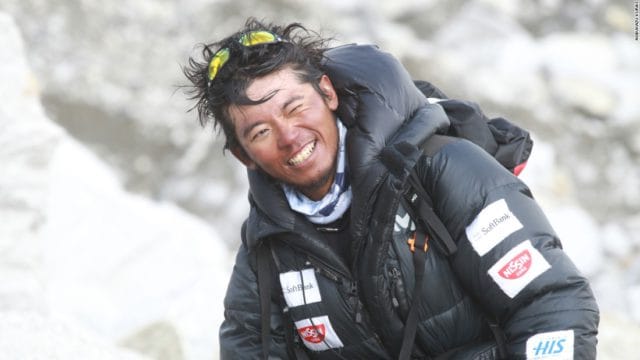
Stunning news that Japanese climber Nobukazu Kuriki was found dead at Camp 2 on the Nepal side of Everest on the Standard route. The Himalayan Times reports that Sherpas found him at C2. I had just reported that he was feeling better after a cough and was prepared to go higher on an unspecified route. He had struggled in 2018 with a high fever and a cough. Personally, I am shocked as I always found his climbs inspirational. Update: Its now being reported that he reached C3 on the Lhotse Face and began to have problems with coughing and pain. Intermittent radio contact prevented searchers from finding him and he was missing around 11:30 pm. His body was finally found above Camp 2 in the morning. A Unique Style Kuriki-san was an alpinist purist – always alone, no supplemental oxygen and in the off seasons. He set a standard for his climbs that seemed impossible even for himself. Only a few teams attempt Everest in the autumn season each year due to shortening, cold days and the quickly approaching winter snows. But his determination and commitment was impressive regardless of the results. Climbing alone was his “style” of climbing. He had solo climbs of McKinley (2004), Aconcagua, Elbrus, Kilimanjaro all in 2005 and Carstensz Pyramid in 2006. A Strong Determination This was his eighth attempt on Everest and 13th on an 8000 meter peak, all without supplemental oxygen. Kuriji-san had become a legend in Japan with his Everest attempts and going so far as to lose his fingers to frostbite. He dreamed of summiting Everest in the autumn – rarely accomplished by any climber – in his unique style of strictly alone and without supplemental oxygen. This was his dream and he never let it go. Cho Oyu 8188m, age 24 summited on August 5, 2007 Manaslu 8153m, age 26 reached 8125m, Dhaulagiri, 81657m, age 26 summited on May 18, 2009 Everest, 8805m. age 27, stopped by weather September 9, 2009 Annapurna, 8091m. age 27, aborted at high camp with frostbite May 23, 2010 Everest, 8805m. age 28, stopped by weather January 10, 2010 Everest, 8805m. age 29, stopped by weather March 10, 2011 Everest, 8805m. age 30, frostbite October 18, 2012 Everest, 8805m. age 33, stopped by weather October 10, 2015 Everest, 8805m. age 34, stopped by avalanches , poor snow conditions, July 10, 2016 Annapurna, 8091m. age 33, aborted at high camp with bad climbing conditions October 5, 2016 Everest, 8805m. age 34, stopped by weather, May 23, 2017 Everest, 8805m. age 35, May 20, 2018 Japanese Pride Nobukazu Kuriki was quite the showman with videos produced during his climbs and slide shows after. He was a popular public speaker in Japan. His followers measured in the millions but even with that he had to hustle each year to find sponsors for his next climb. Kuriki on Everest His previous attempts have been met with drama and injury. In 2012 he attempted the West Ridge and had to be rescued by a Sherpa team. He lost nine fingers on on that thwarted attempt. In 2015, he reached a bit above the South Col before deep snow forced him to stop.nIn autumn 2016 from the Tibet side, he planned on the North Face then to the Hornbein Couloir but was turned back by poor conditions. He usually brought a large film crew along to document his experience, primarily for the Japanese market. They usually post excellent photos of his experience on his social media.Kuriki’s team posted this amazing video on him somewhere on the North Face – beyond amazing!!! He regularly posted on Facebook, Twitter (JP) and his website Thank you Kuriki-san for your courage, vision, determination and strength. Your showmanship to share your dreams brought millions into a word they otherwise would have missed. Thank you for being a true alpinist. Rest in peace in your mountains. Climb On! Alan Memories are Everything
Nobukazu Kuriki on Everest Summit Push – Updated: Its Over
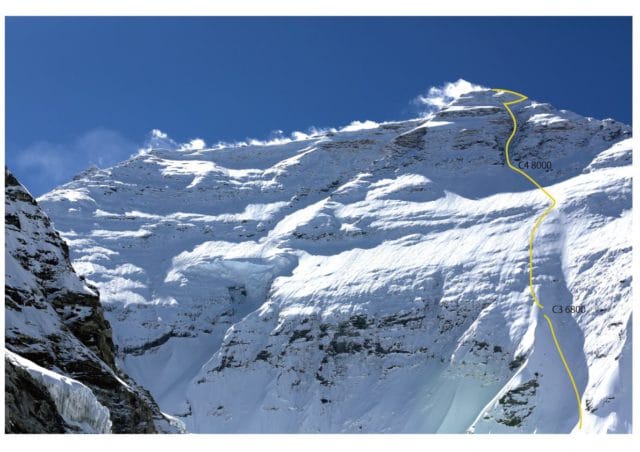
UPDATE: 13 OCt ’16: It appears Nobukazu Kuriki has ended his Everest attempt from Tibet via the Hornbein Couloir or the normal route. He posted on Facebook he spent 11 days at Camp1 (normal route) and also experienced waist deep snow on the North Face. Also high winds were buffeting Everest creating concern for safety and success. He was climbing alone and without supplemental oxygen. UPDATE: 7 Oct 2016: It seems that Nobukazu Kuriki has ended his Everest summit push somewhere between 6800m and 7400m on the North Face due to “condition of the snow and physical condition”. He left open another attempt but not likely. The exact translation from his Facebook post is: The radio entered from the chestnut castle < from the chestnut castle relay group >. There is a feeling which would like to advance, but judging from the condition of the snow and physical condition, it decided descent. Last night camp 3(the 6800m position) it started and overnight continued to climb, but you descend from the7400m position. It was expecting largely with attack starting in last night, there is no excuse inmany everyone. If in the future, weather it is possible, after doing again to arrange system, for the second time you think also attack. Many supports, thank you truly. ======== < About live broadcast > Because it becomes descent, live broadcast of this day became the discontinuance.There is no excuse truly in everyone who is enjoying. My congratulations on a wise decision by Kuriki-san as he was pushing every limit to get where he was. They posted this video of his Camp 3: Japanese climber, Nobukazu Kuriki, is on his sixth autumn (post-monsoon), no O’s, climbing alone, Everest attempt. He reported in today that he is on his way to the summit. He left yesterday and has established his Camp 3 at 6800 meters or 22,300 feet. He is climbing via the North Face and then the Hornbein Couloir – not the normal Northeast Ridge. Only a few weeks ago,Spanish climber, Kilian Jornet, never even started his attempt for a 3 day speed climb via the Norton or Hornbein Couloir due to a huge amount of snow on the North side of Everest this autumn. At age 33, Kurki is climbing from the Tibet side. You can follow him on Facebook, Twitter (EN), Twitter (JP) and his website. He always brings a large film crew along to document his experience, primarily for the Japanese market. They have been posting some excellent photos of his experience on his social media. Kuriki arrived at Base Camp around September 3 and has been acclimatizing ever since. He wanted to climb to the Lho La Pass and check out the route but the deep snow and avalanche danger stopped him as he posted on September 13: I was going to climb the Lho La Face to acclimatize to the altitude, but it seems that there has been an avalanche, so I have changed my route. From tomorrow, I’m going to check the condition and the points where avalanches may occur on the Great Couloir (Norton Couloir) and Hornbein Couloir, as I climb up from below. He made climbs via the normal route to near Advanced Base Camp on September 15 and posted: Today I was about to climb to an altitude of 7,000m, but I have a fever. I did not want force myself on, so I decided to go back. Arterial oxygen saturation (SpO2) is around 90%, and my body is getting acclimatized to the altitude. I think I can climb without oxygen. Kuriki’s team posted this amazing video on him somewhere on the North Face – beyond amazing!!! Kuriki on Everest His previous attempts have been met with drama and injury. He has lost nine fingers on Everest in 2012 during a thwarted attempt on the West Ridge of Everest. In 2015, he reached a bit above the South Col before deep snow forced him to stop. Climbing alone is his “style” of climbing. He has solo climbs of McKinley (2004), Aconcagua, Elbrus, Kilimanjaro all in 2005 and Carstensz Pyramid in 2006. Plus these 8000m climbs: Cho Oyu (2007), Manaslu (2008), and Dhaulagiri (2009). He attempted Annapurna last spring without a summit due to weather. Kuriki has a loyal following in Japan and raised over 20 million yen (USD $200, 000) on his crowdfunding site. You can read more about Kuriki at this link. Stats! While we are watching Kirki, I used the Himalayan Database to do a deep dive into autumn summits. In general, most people climb via the normal Southeast ridge in autumn but when climbed from Tibet, the North face, is the favored route. Here are some fun facts: autumn Summits by Route (287 total) Southwest Face – South Summit: 4 Southwest Face up – Southeast ridge/South Col down: 1 Southwest Face: 4 South Pillar – Southeast Ridge: 15 South Pillar up, Southeast Ridge – South Col down: 3 South Pillar: 2 SouthCol- Southeast Ridge: 228 North Col – Great Couloir: 2 North Col-North Ridge-N Face: 6 North Col – North Ridge: 5 North Col – North Face – Great Couloir: 1 North Col-North Face: 6 North Face Great Couloir: 1 North Col up, Hornbein down:4 Lho La – West Ridge from south: 3 East Face: 6 This is a good overview of the routes on Everest: autumn Summits by Age Oldest autumn Summit: Ramon Blanco Suarez – 60 Spain on October 7, 1993 via Southeast Ridge Youngest autumn Summit: Bertrand (Zebulon) Roche – 17 France on October 7, 1990 via Southeast Ridge autumn Summits By Date Earliest autumn Summit: September 8 Latest autumn Summit: October 30 As you can see October 7-9 represents 76 of the 287 summits or 26% so Kirki is climbing in the sweet spot. Everest Summtis by Season These are the stats by season, so you can appreciate the difficulty of what Kiriki is attempting. The last successful autumn summit was in 2010. The north side of Everest is cold and windy, even more so as winter approaches. Best of luck to Kuriki! Climb On! Alan Memories are Everything
Japanese Climber Evac’d off Everest after Abandoned West Ridge Attempt
Nobukazu Kuriki who was climbing Everest’s West Ridge alone, try no supplemental O’s, was evacuated from Camp 2 in the Western Cwm to a Kathmandu hospital with severe frostbite today. He experienced high winds, and extreme cold on his summit attempt while on the Ridge. Frostbite is one of the risk of climbing without supplemental oxygen at extreme altitude in harsh conditions. A Rare Attempt The 30 year-old Japanese was attempting something almost unheard of in modern times doing a solo climb, without supplemental oxygen of the West Ridge on Everest in the Fall. Any of those characteristics would be impressive; all of them are amazing beyond imagination. He has been diligent in keeping us informed through Facebook, Twitter (EN), Twitter (JP)and his website. Climbing alone is his “style” of climbing. He has quite the following in Japan. This was his fourth attempt on Everest with the last in the Fall of 2011. He has solo climbs of McKinley (2004), Aconcagua, Elbrus, Kilimanjaro all in 2005 and Carstensz Pyramid in 2006. Plus these 8000m climbs: Cho Oyu (2007), Manaslu (2008), and Dhaulagiri (2009). You can read more about Kuriki at this link. Only a few teams attempt Everest in the autumn season each year due to shortening, cold days and the quickly approaching winter snows. In addition to Kuriki, a Polish team was attempting Lhotse and a Korean team Everest using the traditional South Col route. Both have stopped their attempts due to high winds. Summit Push Stopped Kuriki had started his climb on September 12 arriving at Base Camp with a support team. He did the normal series of acclimatization rotations into the Western Cwm and noted favorable snow conditions and was optimistic he could achieve his dream. He was posting videos on YouTube showing his progress. He left Camp 2 in the Western Cwm on October 13 for the summit planning on using two additional camps. He left his Camp 3 at 7500m just below the Ridge proper on October 15. He had reached the base of the Hornbein Couloir when he called for help. Sherpas from his base camp were sent to meet him as he descended from the West Ridge. He had reported cold hands, could not move his fingers and had frostbite on his nose. On Wednesday, October 17, he reported strong winds on the West Ridge, a poor forecast and the end of his climb from his Facebook page, translation by Bing: Announcements from kuriki Office: from Everest’s West Ridge route that was moving toward a Summit, but unfortunately decided to climb down ( 9:15) 6:00 koroni. Wind from it several times body floating in a too strong wind and was so blown away, acting in more than 8000 m was determined to proceed further because becoming a level which causes disability or rolling sliding storm forecast, dangerous. On Friday, October 19, his condition was reported as serious with frostbite on his extremities, translation by Bing: Announcements from kuriki Office: Sorry, your concern and apologize to everyone. Temperatures below 20 degrees, minus average wind speed 25-rescue Sherpas since yesterday because with the finger makes frostbite climb at 30 m / s environment for a long time, and was not hydrated, going down the mountain on their own towards, 10/20 this time 9:30 still continues going down the mountain toward camp 2 (6400 m). And today, Sunday, October 21, they announced his rescue from Camp 2 back to Kathmabdu, translation by Bing: Kuriki Office from news: yesterday we descent to camp 2 (6400 m), become a finger with serious frostbite feet fingers and nose, soon returned home, ment needs are determined, headed to Kathmandu by helicopter from Camp 2 this morning and was admitted to hospital earlier. He was airlifted via a Fishtail Air helicopter from Camp 2 at the base of the Lhotse Face. The helicopters flown by Fishtail Air can land at C2 (21,500′) and evac people. It was done numerous times in the spring. The helicopter has actually placed it’s landing skids on the summit for 30 seconds (deemed a landing) in 2005. For more details, see my post about helicopter rescues on Everest. Frostbite can occur even with extra O’s. The O’s keep you warmer and helps prevent the body from shunting blood flow to fingers, toes and nose in order to save the core in extreme conditions. Solo Attempts As a side note on the “alone”, there is a fair amount of controversy about Kuriki’s claim of “solo” given he had Sherpa support at some level and used the ladders in the Icefall that were set by other teams or Sherpas. I prefer the term alone or unsupported above C1 instead of solo but that is what gets sponsors. The term “unaided” is also used. The first true “solo” was Reinhold Messner’s August 20, 1980 north side climb truly alone – no Sherpas, no teammates, no one else on the mountain, no ropes, no ladders, no Oxygen. It is virtually impossible to be “alone” on Everest these days. Even this year, with the two other teams on the South side, there were over 50 people. Author Jennifer Jordan notes that Alison Hargreaves became the second person to summit Everest unaided in 1995 – “although she had plenty of company on the North Ridge she went solo – no Sherpas, no teammates, no one else’s ropes or camps. and no oxygen. She even refused cups of tea from others on the Ridge with her.” Given the Korean and Polish teams on Everest/Lhotse this year, Kuriki was not “alone” at Camp 2 in the Western Cwm. Also his base camp team sent Sherpas up to the West Ridge to help him down. Everest West Ridge There are 19 named routes on Everest with 97% of the activity happening on the South Col (Southeast Ridge) or North Col (Northeast Ridge) routes. In recent years, there are 300 to 500 summits via those routes annually. The West Ridge of Everest is the highly visible
Climbing News: Everest Fall Push, Manaslu Summits and Deaths and more
The fall 2012 climbing season is winding down after a difficult season. Between high winds, heavy snow and avalanches; there were only a few summits on the world’s largest peaks and, sadly, many deaths. There is action on Everest again this Fall so the season is not quite over. Here goes the round up: Everest Fall 2012 Only a few teams attempt Everest in the fall due to shortening, cold days and the quickly approaching winter snows. But we have two teams up there right now, both on the south side. 30 year-old Japanese Nobukazu Kuriki is doing something almost unheard of in modern times. He is doing a solo climb, without supplemental oxygen of the West Ridge on Everest in the Fall. Any of those characteristics would be impressive; all of them are amazing beyond imagination. He has been diligent in keeping us informed through Facebook, Twitter, and his website. Today he is at Camp 2 fighting high winds planning to climb the wall of the West Shoulder of Everest and onto the West Ridge proper. From there he hopes to establish two more camps before the summit. He has been optimistic reporting the low snow we saw in the spring continues giving him hope he can make it. This is his fourth attempt on Everest with the last in the Fall of 2011. He has solo climbs of McKinley (2004), Aconcagua, Elbrus, Kilimanjaro all in 2005 and Carstensz Pyramid in 2006. Plus these 8000m climbs: Cho Oyu (2007), Manaslu (2008), and Dhaulagiri (2009). You can read more about Kuriki at this link. This is his latest video posted on YouTube: A Korean team (no link available) is also attempting Everest via the traditional South Col route and another effort is by the Polish Mountaineering community on Lhotse. By the way, the world oldest Everest summiter Min Bahadur Sherchan at 76 years 340 days, wants to return in the spring of 2013 at the age of 81! Makalu and Dhaulagiri Makalu at 27,825′ (8481m) is not nearly as popular as Everest, Cho Oyu or even Manaslu due to being more remote and a significantly more difficult climb. And this year proved that to be true with no summits on the world’s fifth highest mountain. One interesting if not downright strange, story came from well known journalists now climber, Billi Bierling climbing with a team lead by respected Swiss outfitter Kobler and Partner International. Billi reported that .. our five Sherpas ascended further to establish what they thought would be our camp 4. The problem was that none of our Sherpas had been to Makalu before and even though they had looked at pictures of the route, they completely missed the way. This is quite rare for a commercial operation. A few teams unsuccessfully attempted it this year, all stopped ultimately by high winds. Over on Dhaulagiri, there were similar results with a few teams halting the climbs due to unstable conditions. Manaslu Final Update Such a sad season on the world’s 8th highest peak. The death toll is now 12 from the September 23 avalanche. One more died in the hospital this week. The avalanche was caused by a large serac releasing above Camp 3 at 7,400m. This triggered a slab avalanche which hit Camp 3 directly and impacted Camp 2 with a severe wind blast. It appears that many of the 12 killed were in their tents, most sleeping, at Camp 3 around 4:45AM Sunday September 23, 2012 Nepal time. The avalanche debris was spread from 7,400m to 6,300m. Rescue efforts started immediately with teams climbing up from Camps 1 and 2. Russell Brice reports on his recent blog post that he became a defacto rescue co-coordinator and called Kathmandu for helicopter assistance. A B3 high altitude helicopter from Simrik Air arrived at 9:45 and began evacuation of the injured climbers. There were 18 total flights that day with 14 evacuations. 31 people were caught in the avalanche. 8 bodies were recovered and 3 are listed as missing and presumed dead. The severity of the avalanche was driven by heavy snow the previous week, some reports put the snow depth at 6 feet of fresh powder. Almost all the teams left feeling it was not a good year to climb Manaslu. But a few teams remained on the mountain after the avalanche and their efforts payed off with summits from Himex (20) and Altitude Junkies (15) and a couple others. One of the most impressive summits however was by Benedikt Böhm who climbed alone to the summit and skied back without supplemental O’s. EpicTv has a nice story on his achievement. My deepest condolences for the families of the victims, their teammates and friends. This short video is by Himalayan Ascent of the recuse and recovery efforts: Annapurna Update This week, another avalanche took the lives of two world-class climbers on the north face of Annapurna in Nepal. Uzbekistan climbers Iljas Tukhvatullin or Ivan Lobanov were hit by the avalanche between camps 1 and 2 around mid afternoon. Heavy snow had been reported over the previous week. Reports from the site, Russian Climb, speculated the cause of the avalanche was an earthquake given the “whole icy slope fell.” Annapurna at 26,545′ (8091m ) is known for deadly avalanches. Another team attempting the summit from Russia has now called their expedition as weather has worsened across the Himalaya. Canada’s Mt. Alberta: An Amazing Climb, photos and Video Joshua Lavigne and Jason Kruk , both Canadian climbers, took a new route direct up the North Face of Mt Alberta (3619m) in September. This is the video but visit the EpicTV site for some astonishing still shots. winter Season Climbs The next big climbs in the Himalayan include Ama Dablam. Around the rest of the world, teams are preparing for Mt. Vinson in Antarctica and Aconcagua in Argentina, Carstensz Pyramid in New Guinea and of course hundreds of others around the globe. Let’s hope those climbing Carstensz Pyramid have better luck than a New Zealand
Fall Himalayan Climbs: Everest and More
It is that time of year for climbing to resume on the Himalayan 8000m peaks. Fall brings attention to the ‘other’ 8000m mountains near Everest: Makalu, > Manaslu, Pumori and Ama Dablam in Nepal and Cho Oyu and Shishapangma in Tibet. And of course, Everest. Fall climbing in Nepal and Tibet is dramatically different than in the spring. The season starts soon after the summer monsoons let up leaving the area clean, clear and crisp. It is an absolutely beautiful season for trekkers and some climbers. But each day is shorter and slightly colder – just the opposite from the spring. Also storms can dump feet of snow late in the season as winter approaches. So teams must be focused on making steady progress. There is limited opportunity to wait out storms and often expeditions are suddenly halted by a big storm. While summits are commonplace on the other Hills, it is rare to see a summit on Everest in the Fall. The last one was in October 2006. Amongst the many weather issues already noted, the lack of other teams sometimes complicates the climbing. Often the Sherpas must do double duty as climbing Shepras and Icefall Doctors. And of course every foot of fixed line must be set by these same Sherpas. So any summit of Everest in these conditions is deserving of every mountaineer’s respect. This makes the attempt by Japanese climber Nobukazu Kuriki even more noteworthy. He intends on climbing solo without supplemental oxygen from the Nepal side. The 28 year-old attempted the same last year from the north side. It is not clear how he will navigate the Icefall without some assistance. The Everest commercial operators make Cho Oyu a priority. At 26,907 feet and the 6th tallest mountain, Cho Oyu has a good success rate in the Fall when the weather cooperates. It offers relatively easy access to base camp and the route is well known with little objective danger. That said, deaths occur on a regular basis. Manaslu, 26,758′, located in Nepal, has taken on increased focus over the past few years as getting into China has been difficult. However, it is known for heavy snowfall and unpredictable weather thus often limiting true summits. Shishapangma, 26,335′, located entirely within Tibet, is another difficult fall climb with harsh weather often slamming summits windows hard and fast. Hopefully, crossing the boarder into China will be easier. Last year, the Chinese closed the Tibetan borders from September 24th to October 8th due the 60th anniversary of the Chinese Republic. Ama Dablam, another popular fall climb is recently known for instability near the summit with parts of the “dablam’ collapsing in 2006 and 2008. However it seems to have recently stabilized and teams are back to climbing. As an alternative some teams climb nearby Pumori which is more stable but offers it’s own set of challenges with avalanches. Both mountains are deemed quite dangerous today by most seasoned climbers. Another interesting fall climb is to Lobuche, 20,075′, which is considered a trekking peak and often used for acclimatization for Everest climbs. This year, Erik Weihenmayer, is leading a team of 12 injured soldiers to Lobuche and nearby Kala Patar, 18,512′. From their site, Soldiers to the Summit: The goal of the Soldiers to the Summit Himalayan Expedition (SSHE) and World TEAM Sports is to demonstrate to everyone that great things can be achieved no matter how high the obstacles. Thus far here is a partial lineup of expeditions: Cho Oyu Adventure Consultants Alpine Ascents International (AAI) International Mountain Guides (IMG) RMI Summit Climb Manaslu Altitude Junkies Himalayan Experience (Himex) Everest North: Alberto Zerain – Hornbein Couloir (solo) South: Nobukazu Kuriki – Solo without O’s Eric Larsen Shishapangma Ice 8000 Pumori Peak Freaks Ama Dablam Alpine Ascents International (AAI) International Mountain Guides (IMG) Lobuche Soldiers to the Summit summer Climbing Wrap-up Of note, K2 was yet another difficult season with only one summit by Christian Stangl, and it is currently disputed. Team after team were turned back by another year of harsh weather and high-mountain conditions. It was a similar story for nearby Broad Peak and the Gasherbrums. Also in recent climbing news, controversy continues on who was the first woman to summit all 14 of the 8000m mountains. This according to the Telegraph: Oh Eun-Sun, 44, “probably failed” to reach the top of the world’s third highest mountain Kanchenjunga, according to the Korean Alpine Federation (KAF) on Thursday. The record should now pass to Spanish climber Edurne Pasaban, 37, who scaled the last of the 14 peaks over 8,000 meters barely three weeks after Miss Oh claimed to have completed the list. Best of luck to all the teams this year. Climb On! Alan Update: Christian Stangl has now admitted he did not summit K2 and the only picture he submitted as proof was from C3. You can read his new story at the German site ORF.