K2 Summer 2022: Weekend Update July 30, 2022 – A Summer of Summits
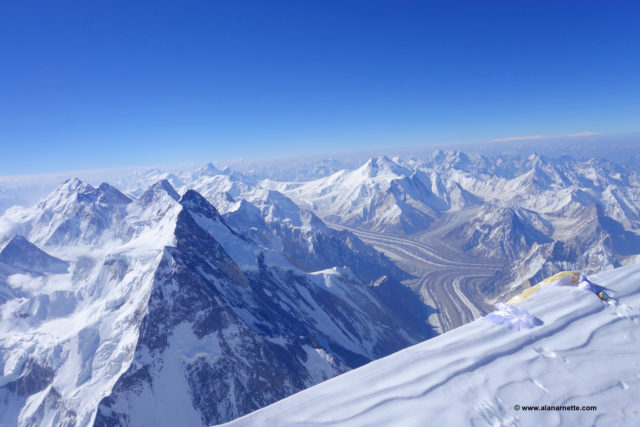
And the summits keep going with many firsts, records, and races to the top thanks to this summer’s, and for that fact, this spring’s, unusually stable weather across the Himalayas. It’s not uncommon for climbers to have three, four, or even five, or more 8000er summits this year. Let’s run a few down with more to come before it’s all over.
Big Picture
The season is winding down. I think the action is over on Nanga Parbat. The snow conditions were getting too dangerous a couple of weeks ago, and several highly skilled and experienced climbers abandoned their efforts. On Gasherbrum II, there are a few climbers, mostly the record seekers, still to make attempts, the same for Gasherbrum I.
Several K2 climbers are moving to Broad Peak to attempt their double. And on K2, you never know for sure, but I think it will be quiet until winter when someone will try. Well over 90% of the K2 summits occur in July. Still, some seep into mid-August, and there have been a couple in October, but that was decades ago when the weather was much different.
Note, expect the same for Everest – a winter, no O’s, perhaps with a “solo” label even though attached to a commercial team for logistics. Life has become interesting, and I’m not sure in a good way.
This year, 2022, the weather has been good overall. Occasionally, heavy snow storms have offered challenges to teams, but on the whole, most people will not claim they didn’t summit because of bad weather. As of July 30, I estimate 190 K2 summits and three deaths or 1.6%. I have reached out to Pakistani Officials for an official count.
K2 Summer 2022: Weekend Update July 24, 2022 – Summiting Like Never Before
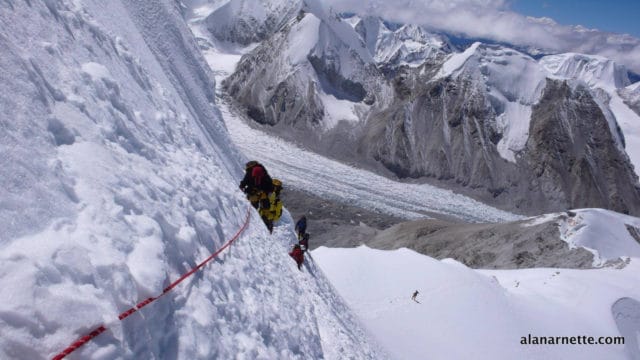
Well, the K2 climbers pulled it off. Congratulations to the 150++ who summited and especially to the Sherpas who fixed the lines to the summit. The weather cooperated, and there were limited problems, albeit with one death and one K2 climber is currently missing. We are approaching 200 K2 summits.
Big Picture Summits Continue, Missing K2 Climber
Several media outlets report that Canadian Richard Cartier, 61, is missing while descending from a rotation to lower Camp 4. He was last seen between C2 and C1 by teammates. A search is underway. They had mentioned using the Cesen route but were on the Abruzzi when he disappeared.
At least 10 more K2 summits brought the total ever closer to 200. Summit Karakorum reports that Abid Asad Sadpara, the nephew of the late Ali Sadpara, who died on K2 last year, made the top with no O’s. Also, Paul Etherdge, Peter ? and Muhammad Hussain Pakista. Makalu Extreme team reports summits from French alpinists Pascal Claude France and Christophe Jean France with Pasang Lama and Pasang Dorjee Sherpa.
This has been a great year across all the 8000ers for female climbers. Adding to the K2 list is Spanish (Andalusian) climber Lina Quesada. She is joined by these female summiteers this season: Andorian Stefi Troguet, Taiwanese Grace Tseng, Chinese He Jing, Pakistanis Naila Kiani and Samina Baig, plus Iranian Afsaneh Hesamifard and UAE’s Saeed Almemari. Also, American Sarah Stratton made the top.
K2 Summer 2022: Weekend Update July 16: K2 Summer 2022: Summit Push Drama
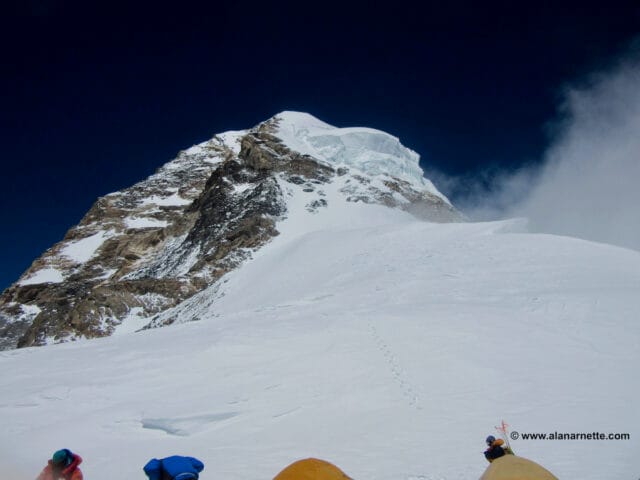
This has been a ‘lay-low’ week with storms hitting the higher elevations of Pakistan’s 8000ers. Yet, there were thwarted attempts. Many teams are finalizing preparations for their summit pushes beginning soon in what could be very short weather windows, but the predicted conflict with so many people has begun.
Big Picture – The Summit Rush
With this odd statement, “We are not ready for summit push but we will give our best as always.” teams are leaving base camp for their summit pushes at least a week, if not two, earlier than in previous seasons. The leaders must think the gamble is justified.
I’m estimating that around 125 people who had K2 permits are no longer going to the summit, and most have already given up. So that leaves 250-350 people left to attempt. I hear of serious disagreements among the teams led by egos pushing to go and some pushing to wait or just jostling for a slot that they feel is less crowded and gives their team a better chance.
As I said before, with so many people, it will take communication, cooperation, and comprise to avoid, or at least minimize, tragedy this season. Currently, it appears none of those three are in play.
K2 Summer 2022: Weekend Update July 10: Deaths, Rescues and Summits
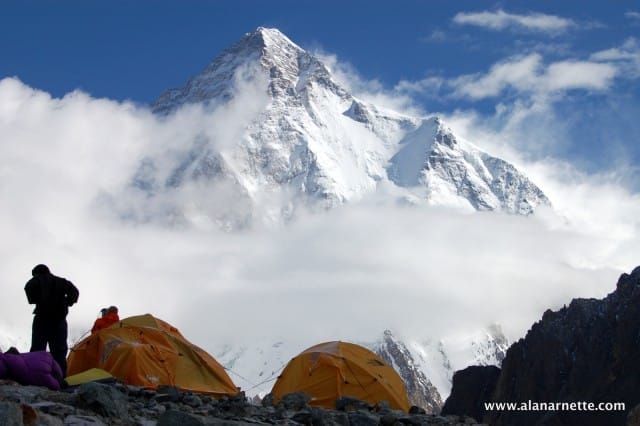
It’s been a dramatic week in the Pakistani mountains. We saw summits, climbers in trouble, summits on a couple of 8000ers, and tragically two deaths. The weather is currently keeping the K2 teams at base camp but look for a rush starting later this next week—all in all, a normal season thus far, despite the record number of climbers.
Big Picture – Will 2022 K2 be like Everest 2019?
As I’ve mentioned multiple times, Pakistan has taken a page out of Nepal’s tourism book and issued permits to anyone and everyone this season. Some reports say 1,400, others closer to 1,000, but there are at least twice the number of tourists in the Northern Terorities than ever before.
Among these drivers of these crowds is pent-up demand from COVID and aggressive marketing from five Nepali operators: 8K Expeditions, Elite Expeditions, Imaging Nepal, Pioneer Adventures, and Seven Summits Treks. Combined, these account for 253 people – clients and support of mostly Sherpas from Nepal. However, the western operators are also cashing in with Madison Mountaineering and Furtenbach Adventures, accounting for 54 spots on the mountains.
Now, is this too many people spread across five 8000-meter peaks? The answer is it depends. Taking Everest as an example, these days, we see 300, 500, or even 700 people climbing from the Nepal side each spring season. This year, 2022 (click to read my analysis), I estimate 325 clients supported by 500 Sherpas were on the Nepal side and 640 summited Everest with no serious crowding issues. These are huge mountains that can accommodate lots of people – spread out.
The problem occurs when there are only a few suitable weather days to summit, i.e., winds under 30 mph. In 2019 (click to read my analysis,) we saw a nightmare situation with only three good days for 600 people; thus, long lines from the South Summit to the Summit resulted in 660 summits and nine deaths. Note that in my judgment, four of the eleven were ‘crowd-related’ deaths and an additional seven with ‘low-cost’ operators.
So just looking at K2 because it is the steepest of Pakastani’s 8000ers with the smallest spots for tents at the traditional camps, will the estimated 250 to 350 climbers experience an Everest 2019 scenario, especially at the traditional crowded spots like House’s Chimney, and the Bottleneck? Well, if K2 behaves like it traditionally has with short weather windows between strong wind and snow storms, yes. But, if teams can coordinate summit pushes and tent space, things might go smoother than expected. I’ve been told teams are communicating well and sharing tents thus far. If this turns out to be true, look for many leaders to jump in front of the summit parade and claim it as their own.
On a side note, it appears communication at least using the 4G mobile network, is back up and running; no word on the mysterious satellite disruptions. Also, the overall weather this season has been significantly warmer or should I say milder than usual, making for some sloshy climbing conditions. Cleary climate change is having an impact on the world’s mountains. The last time I checked, snow does not like warm temperatures and it brings out the rocks!
K2 Summer 2022: Weekend Update July 3: Karakorum Summits

Several strong Sherpas from various Nepali operators fixed the ropes on Nanga Parbat over the past few days thus facilitating a handful of clients to reach the summit. In total, there were 18 summits consisting of six members supported by 12 Sherpas, a 1:2 ratio of support. Pakistan issued 100 (member with support) permits this season; thus, look for more activity on Nanga.
Big Picture
The 2022 summer season is moving along with few, if any, issues reported by the teams. Most are talking about getting the fixed ropes put in by their super-strong Sherpas to the low-medium altitude camps while on Nanga, we are using a few summits. A shortage of porters and general support due to the record number of permits issued have delayed some teams from reaching their base camps.
As usual in Pakistan, the weather is variable with great, then tough days. Nothing out of the ordinary. Most of the commercial teams are taking the usual trade routes. A few independent climbers are taking less-traveled routes, but overall, this summer, climbing in Pakistan looks a lot like climbing in Nepal. Not a huge surprise since most of the teams are led by large Nepali operators using their proven formula of high oxygen rates with strong Sherpa support.
As for summits on the most-watched K2, don’t expect them for another couple of weeks at the earliest. Most K2 summits occur between July 25 and August 1.
Everest 2022: Weekend Update May 15 – Summits, Summits, Summits in Great Weather
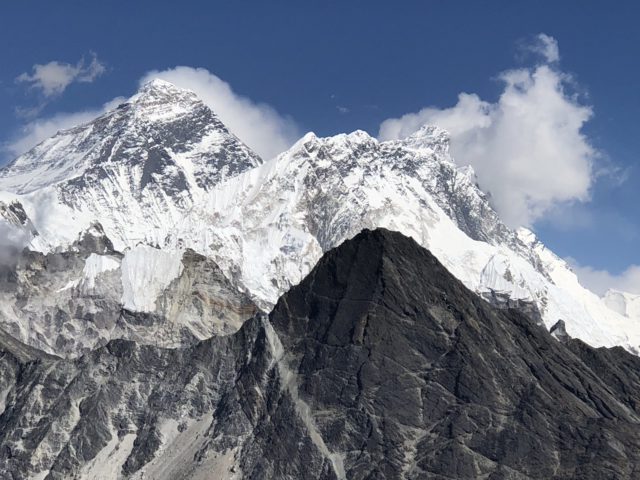
We saw hundreds of people summit Mt. Everest with almost unprecedented weather this past week. And from all indications, summits will continue into next week, albeit at a slower rate, with the exception of Tuesday, May 17th, when the winds will spike over 30 mph/50kph. However, at this rate, this season could be over soon.
No on-mountain deaths or rescues were reported, but we may still learn of difficulties. Overall, the weather was ideal, with low winds and temperatures around 0F/-20C.
Big Picture
We have what I’d consider a ‘normal’ season for once in a long, long time. Of course, it’s mostly due to the lingering impact of COVID – the Chinese closed its border, and India was hesitant to sponsor the droves of young climbers who have filled the slopes for the last several years. But the big deal is the missing Jet Stream resulting in this period of low summit winds, thus allowing team after team to thoughtfully plan their attack.
So how to sum up the week and season thus far – two words – low drama. Well, at least what we know of. Sadly, today’s social-media-driven mountaineering has turned into a public relations game where no one will admit they messed up, from clients to guides to anyone. Thus it’s hard to know if a helicopter flight was a rescue or a resupply of oxygen at a high camp.
We have seen many summits. I estimate 341 from the Nepal side made up of 140 members supported by 201 Sherpas, or high-altitude workers of other ethnicities. And on the Tibet side, 50. There have been many, many people who fought a good fight but came up short. Sometimes due to lack of preparation, others from illness, personality conflicts, logistics miscues, or just bad luck. It’s all part of climbing an 8000-meter peak. Most will try again.
There have been a plethora of ‘records.’ Many of these are from a person who is the first from their country to the summit, and then others have a personal story that they view as a record. We’ve also seen an unusual linking of multiple 8000-meter peaks.
Again well done, but we need to look deeper into style. By that, I mean what most veteran climbers call “fair play.” Use of oxygen starting at what camp? Level of support to break trail? Use of helicopters to shortcut treks to base camp. Did they reach the true summit or a false one? All of these are fair questions in my mind. And, to be clear, they don’t invalidate a genuine summit but only put the achievement into perspective, especially if the climber claims a ‘record.’ Many of these claims are solid, and the individual deserves the praise they receive back home.
I’ll try to recap all the records in my annual season summary without comment. 🙂 However, records are not in my lane, so I leave it to Guinness and the Himalayan Database to vet these claims. But congratulations to those who made X summits in Y days or were the first from your universe. I’m sure that 2023 will be a record year on Everest, especially when (if) China reopens its side.
So with all of this, teams are taking their time and spreading out their pushes so as to minimize but eliminate the ques in the traditional bottlenecks.
Everest 2013: Weekend Update May 12
We saw the first summits of the 2013 Everest season on Friday with the Sherpas fixing the line to the summit. The UK’s David Tait plus Himex Sherpa Lhakpa Nuru were close behind allowing David to nab his 5th summit. On their heels was David Liano, climbing with logistics from Asian Trekking, who summited at 8:05AM Saturday morning, May 11 with Sherpa Samden Bhote. They left the South Col at 11:15PM Friday night and were the only climbers to summit Saturday from the South. David is now in route to the North side and told me he is looking at his second summit bid on May 19th. Yesterday afternoon, the winds picked back up. Today, there are multiple teams staged at various camps on both sides waiting for the next window expected mid week. But a few are pushing it and going for the summit tonight or tomorrow. The Big Picture We are now in the last phase of climbing Everest, unless you include coming home. As almost everyone quotes Ed Viesturs to concerned friends and family as they leave for Everest: Reaching the summit is optional. Getting down is mandatory. The weather people are watching a tropical depression in the Bay of Bengal. It has already impacted weather at Base Camp with a few inches of new snow. The IMG team canceled their move to Camp 2 due to the conditions. Overall, these weather events cause the jet stream to move north and off the summit of Everest allowing for calmer winds and summit opportunities. However if the cyclone moves too far north it can bring rain, snow and winds of it’s own. Russell Brice, Himex, became famous on the series Everest Beyond the Limits for pouring over weather maps had this to say: As forecast by Meteotest, we are on the edge of a storm from the Bay of Bengal, so Saturday afternoon is punctuated by thunder, lightning and snow showers, but of course we are all safe and comfortable within the round walls of the White Pod. The large Indian team from Pune climbing with Giripremi made these comments: Indian Meteorological department predicted good weather for climbing Everest in next week. Recent cyclonic conditions in the Bay of Bengal have pushed the jet stream winds prevailing on the summit of the mountain towards north. This will lower the wind speeds on the summit making it favorable condition for attempting the mountain. Based on this forecast the team has planned the movement up the mountain. The Altitude Junkies and Adventure Peaks teams are at ABC on the north monitoring the winds and prepared to launch at any moment. Paul from the Adventure Peaks team had this to say: Well the winds continue to blow and the team are doing their to keep busy until our preparations are in place and weather is right for our summit attempt. Against the Odds? The team from Himalayan Ascents has been pushing the envelope all season being the first through the Icefall and to most of the Camps. So it is not a big surprise that today, Sunday, they are at the South Col. However, they seem to one of the only teams willing to bet against the weather. This is their last report from the Col: It’s just a matter of waiting a few more hours now. The Everest party of Warren, Jangbu, Margaret, Angkaji, Dendi, Peter, Mingma and Nima arrived into Camp 4 ~7925m at the South Col about 3.30pm. All team members are feeling strong and healthy. They will rest a few more hours, drink water and will try to stomach some food before moving for the summit push. The Everest group will depart around 8pm. There’s another independent group at Camp 4 going for the summit tonight as well. The Lhotse team are aiming to depart at 1am. The plan is to bring all climbers back to Camp 2 tomorrow 13th after the summit. This is weather dependent, which at the moment is not too bad. The winds are easing and the sky is clear. Go team!!! I wish them all the and hope for a safe journey. The Mental Game Climbers are getting their minds wrapped around the summit. Daniel Branham, with Berg Adventures said this as they look to summit between May 16-18th : I wanted to write a great dispatch today on the “why’s”. Why do this? Why risk life and limb? Why sacrifice time and treasure? Honestly, this is the subject of a book, not a blog. I know that there are as many answers as there are climbers, and most climbers probably have a multitude of reasons. I could tell you my reasons and maybe one day I will. They have changed over time, but I am at peace with them. I would invite you all to start climbing the mountains in your lives that are as real as the one we are on now. And if somebody asks you why are you striving and struggling against the norm, you will know the difficulty in answering this question. When asked the question, why climb Everest, George Mallory famously said “because it is there”. I think we climb because, WE ARE HERE, and it is just what we do. It is how we find our . I have been watching Dave Hahn, RMI, climb Everest for over a decade. He is consistently one of the last teams, if not person to summit almost every year. Once again, Dave puts his thoughts out there: Everything seems a little different now with the news that climbers made the top yesterday… And indeed, a few more went there today if the radio grapevine is correct. The mountain is not impossible. But we do hope those most recent summit climbers got down fast, since by late afternoon we’ve experienced a thunderstorm and a few inches of quick new snow. And that roar is back… The one that sounds like Niagara Falls as a ribbon of the jet
Everest 2013: Weekend Update May 5, Deaths and Fights
The mountain condition is not too bad this year, try the same cannot be said for the human condition. Sadly, ed this weekend’s update starts with the report of two deaths. DaRita Sherpa and a death on the north side at Advanced Base Camp. No further details are available on the north side fatality at this time but it is confirmed. This is the second death of a Sherpa this season, the first being Mingma Sherpa who slipped into crevasse in Western Cwm in early April. He was one of the Icefall Doctors. According to various reports including David Tait, this weekend’s incident occurred at Camp 3. Eric Simonson has confirmed the death of the IMG Sherpa: IMG has lost a member of our Sherpa family today. DaRita Sherpa from Phortse reportedly spent the night at Camp 3 without any problems. In the morning he was up, had breakfast, was fully dressed, boots on, preparing to descend back down to Camp 2 when he suddenly felt dizzy. He lay down in the tent and stopped breathing, and despite CPR efforts by his teammates, died. The HRA doctors at Base Camp think that this was probably either a sudden cardiac or cerebral event. His remains were evacuated by sked stretcher by the IMG Sherpa team to Camp 2, from where they were flown by helicopter to Base Camp. At Base Camp his father-in-law Dasona and brother-in-law Mingma Tsering got onboard the helicopter and flew with his remains to Phortse, where the family will do the puja for him. Da Rita was 37 years old and is survived by his wife and two children. He was an Everest summiter and veteran of many expeditions including three with IMG. The whole IMG Team is very sad today after the loss of our good friend and great teammate. Adventure Consultants commented on the death: Very sadly this morning a sherpa from another team passed away at camp 3 just before descending. We send our sincere condolences to the expedition and to his family. The rescue team did an exceptional job of lowering his body down the Lhotse face; safely and professionally. There were multiple incidents on the Lhotse Face this weekend requiring 3 helicopter rescues up to 22,000 feet. Major Rob Marshall, part of the US Air Force team posted a poignant voice update from Camp 2. They had just come down from Camp 3. My sincere condolences to the families, friends and teammates. The Big Picture The first week in May is traditionally the busiest on Everest as almost every climber is try to get their final acclimatization nights in above Base Camps. This year is no exception. In spite of a week with somewhat high winds, many, many climbers made successful climbs and spent the night at Camp 3 on the South and even to the North Col on the North side. Climbers are reporting the Ice fall continues to be in decent shape as does the Lhotse Face. There has been reasonably heavy snowfall that has prevented the loose rocks from falling onto climbers. The route to at least to the South Col, looks to be in normal conditions for Everest. Sherpas have taken coils of ropes and the anchor material all the way to the South Col in preparation for fixing the line to the summit as the weather allows. Sherpas are also working hard to ferry oxygen bottles and tents to the South Col and above the North Col in anticipation of the summit bids. Some teams are now focusing on May 18th as the first potential weather window for a summit attempt. Why Fight? This past week was one of the worst in history for Everest mountaineering not involving fatalities. Professional climbers were attacked and trusted Sherpas were put into the spotlight. After the incident, press releases were issued, interviews arranged and yet, there is no clear explanation of the root cause. The only thing everyone agrees on is that there is absolutely no excuse for violence amongst alpinist, zero. We have yet to hear directly from any of the Sherpas who were on the Lhotse Face that day or involved in the Fight at Camp 2. No substantive news has been released late this week and the climbers involved have left the area. I reached out to multiple contacts, including owners of guide companies, and everyone expressed shock at the incident. Most would like to move on. Those at Everest and Lhotse have strong feelings but for now are focused on climbing. I am positive we will hear much more once everyone gets home and update their websites, does interviews and writes books but I’m not sure the storyline will change. I will not go through what happened, the interviews and stories are out there including on my site. I have an updated list of key publications on the location page. If you interested in a slightly different perspective than the widely published versions, I suggest you read the account from Lakpa Sherpa owner of Himalayan Ascent. One question continues to emerge – what really caused the extreme violence at Camp 2? Most people understand that tempers can flare, and egos can get out of control, but what caused this incident to become so violent and what is the deeper meaning behind those feelings, if any. Many reports of the incident offered theories on this question. Even the European climbers themselves waded into this area saying it was inevitable. The view suggested is that the Sherpa people have been exploited by Westerners for years. They are used on Everest and other Himalayan mountains only for labor given their inherent ability to perform at altitude. Over the decades, as the Sherpa people gained more experience, skills in different aspects of mountaineering, language skills and business ambitions they developed a desire to keep some of the hard cash being sent to western companies. This scenario created a low boil of deep animosity between the Westerners and the Sherpa. The Sherpa people have
Everest 2013: Weekend Update April 28 – Updated
The last week of April revealed a few surprises on Everest with uncertain weather and difficulty in establishing a route up the Lhotse Face. The week started with heavy snow in the Western Cwm including a meter, three feet, near Camp 1. This stopped most teams from moving up or down but proved to be a temporary halt as strong Sherpas and ambitious climbers broke trail on Tuesday thus allowing movement to resume. Mid week saw a steady flow of climbers returning from Camps 1 and 2 to Everest Base Camp on the South. An equal number seemed to climb up to the same Camps thus creating a lot of traffic in the Khumbu Icefall. The Icefall is generally regarded as ‘easier’ this year with few long ladders and a straight forward route. RMI did report one collapse but it did not interfere with progress. Sunday brought a few moments for the teams. David Tait with Himex writes up in a dramatic fashion being hit by ice in the Icefall. He has a heavily brused calf but is OK overall and is back at Base Camp. The team leaders on the South gathered and agreed on a plan to fix the route above Camp 2. Over 15 Sherpas took on the task from nine different teams. The Sherpas made excellent progress to fix two lines, and up and a down rope, to the lower of the two Camp 3’s mid way up the Lhotse Face before running into a deep crevasse. It was reported that one Sherpa was hit by falling ice but his injury was not reported as serious. They took today, Sunday, off to rest. On the Tibet side of Everest, the majority of teams were at Advanced Base Camp and made a valiant effort to touch the North Col. But only a few strong Sherpas made that objective as strong winds and harsh cold continually beat most everyone back. Most everyone is back at the Chinese Base Camp. The Tibetans from the Lhasa Climbing School made good progress in setting the fixed line towards the summit and reached 8300 meters somewhere around Camp 3, well above the North Col and a testament of their strength. Update: Report issued by Moro of a fight Friday between Ueli Steck, Simone Moro and the Sherpa fixing rope on the Lhotse Face. Translation . It appears both sides became upset as they felt there was interference with one another during the rope fixing work. While it is serious if in fact blows were exchanged, I would not get too upset by this as it is easy for egos and tempers to get out of control in these compressed environments. A Sherpa was reported to have been hurt by “falling ice” on Friday but it is not clear this was related to this incident. However, it is now pretty clear that the Sherpas taking a “rest day” day is related to the incident. Hopefully everyone has calmed down and can get back to climbing. The Big Picture May 1st marks the halfway point for a spring Everest expedition. The Icefall is not longer maintained with ladders after June 1 due to warming temperatures and melting ice. Climbers may go a bit longer on the North until the monsoons begin stopping all activity. By this time in most seasons, many teams will have competed their rotations to at least Camp 2 and many already spent the preferred night at Camp 3 on the South. On the North, the same progress but having touched or slept at the North Col or higher. The weather drives the activity and looks good for the next few days at least. For 2013, most teams are close to their schedule. Look for climbers to continue their rotations this week with many spending the night at Camp 3 on the Lhotse Face and the North Col. The Oxygen Debate Probably the most often asked question of anyone who climbed Everest is “Did you summit?” A close second is “Did you use Oxygen.” To keep this discussion in context, supplemental oxygen has been used on Everest since the early expeditions in the 1920s, was used by Sir Edmond Hillary and Tenzing Norgay on the first summit and is used by well over 98% of climbers today. For many years, it was unclear if humans could survive above 8000m without some type of breathing assistance. Reinhold Messner and Peter Habeler quieted that discussion with their summit on May 8, 1978 sans Os. For 2013, there are several climbers attempting the summit without extra Os, for example Carlos Pauner, Ivan Vallejo, and professional climbers Ueli Steck, Simone Moro, Denis Urubko, and Alexey Bolotov. But almost every climber on a commercial expedition is using oxygen. Studies have shown it makes about a 1,000 meter difference in how the body feels. In other words at 29,000 feet, the body feels like it is at 26,000; still extreme altitude by any definition for the human body. Oxygen allows climbers to climb faster but the primary benefit is it keeps the body warm, especially fingers and toes thus reducing the risk of frostbite. The largest risk is that if a climber runs out or has a mechanical failure of the regulator or mask on the summit push, their body is not acclimatize to those altitudes and could easily suffer from cerebral or pulmonary edemas very quickly. Performance enhancing drugs have recently been in the news mostly around professional cycling. Some people consider the use of supplemental oxygen to be in this category. In a perfect world, climbing without any aid would be the most pure style. But this is not realistic for most climbers except the physically gifted who often are professional climbers. Of the roughly 4,000 summits around 142 people have made it without supplemental oxygen, according to sources including research. That consist of 35 Sherpas and 117 Western climbers. Of those, no Sherpa died but there were 10 deaths of the Westerners. The
Everest 2013: Weekend Update April 21
The third week of April is traditionally when Everest climbers get serious and this year was no exception. This weekend teams are at Camps 1 and 2 on the South and Advanced Base Camp on the North. The rope fixing is going well. I’m not sure where the term “fixing” came from but it simply means attaching a thin nylon rope to the mountain side. It is used to mark the route but more critically for climbers to attach themselves and stop a fall either on a steep hillside like the Lhotse Face or into a crevasse. The rope is sometimes called the safety line and is strung from the lower camps to the summit on both sides. This has been a quiet week with low drama, just what everyone likes. The early teams made rotations to the high camps while the later arriving teams settled into Base Camp, practiced some basic climbing techniques before heading higher. Still other teams just arrived as they are on different schedules or climbing Lhotse which takes less time than Everest. The word of the conditions on the upper mountain remained somewhat mixed. Some mention dry conditions others snow packed. On Saturday, a big snowstorm moved in halting some teams as they planned to go to Camp 2 but reversed direction while others stayed in Base Camp to wait out this storm. There were two events that captured everyone’s attention this week. An avalanche off Everest’s West Shoulder onto the Western Cwm and a shift in the Khumbu Icefall taking out several ladders. In both cases, there were no injures. Events like these are somewhat common each year, still dangerous, but not too much should be read from them for the overall conditions. The Big Picture An Everest climb is divided into thirds: trek to Base Camp, acclimatization rotations and summit push, and perhaps a fourth- the return home. We are now in the early part of the acclimatization rotations. As I mentioned earlier this week, most teams like to have their climbers acclimatized as much as possible by May 1 due to the uncertainty of the weather. I created the following chart from data on research showing the sweet spot for Everest summits is between May 13th and May 22nd with 70% of the summits historically occurring during this period. This is due to low winds and light snowfall on the summit as the jet stream moves away from Everest for a short time. We will hear a lot about the jet stream over the next month. The Sherpas will most likely have the lines fixed to the summit well before this period. In 2005 the first summits were the latest in 40 years occurring on May 21. But the following year, the Sherpas took the line to the summit on May 2; so anything can happen. Based on updates reports from the Ministry of Tourism, there are slightly fewer teams on Everest this year: 2013: South team numbers revised to 29 teams, 315 foreigners granted permits 2012: South had 30 teams, 335 foreigners granted permits 2013: North has 10 teams and about 100 foreigners granted permits Climber Updates and Competition The climbers are pretty active posting updates. David Liano, attempting to summit from both sides in a single season is leaving for his Camp 2 rotation tomorrow. Melissa Arnot is “complaining” that Base Camp is too comfortable 🙂 Her blog is quite a good read and well worth visiting as she attempts to summit Everest for the 5th time, a record for women. Everest Basecamp is absurdly comfortable though. Sometimes when I’m here I feel spoiled and embarrassed by all the comforts; I have my own big dining tent, I have a cook who makes me three meals a day, I have a thick pad to sleep on and a pillow in my tent. I have friends surrounding the camp, everywhere from two to twenty minutes away. I’m not alone here and basecamp has a very certain social buzz. Manoj Vora climbing with Mountain Trip posted this update late Saturday night Nepal time: We left as planned at 2:30 am to go to camp 1. Sherpas ahead of us reported very bad traveling conditions. So, after 4 1/2 hours of climbing in the icefall, we all returned to Basecamp. Total time on our feet 7 hours. There are some shake ups happening in our team. It is with great regret that I state that if my time between camps does not improve than for my own safety and survival I may choose to abort this climb and return home in one piece. I will keep you posted. Chris Jensen Burke has a nice post along with some excellent pictures of her rotation to Camp 2: Our team moved through the Icefall quite easily, with most of the people in the Icefall being Sherpas, they were generally faster than us so it was a nice ascent. Moving through the Icefall is very physical: it requires a good amount of agility as you are weaving through buckled seracs, ice, tip toeing across ice platforms, climbing up and down ladders, and walking across wobbly ladders. You are also bending down kazillion times over many hours to pick up / put down and clip into / out of safety ropes. All with a good sized pack on your back. Physically, I find going up the Icefall easier than the down part. And David Tait, post another vivid description as he made a swift carry all the way to Camp 2. Yesterday, for the first time in my climbing career I felt intimidated but the sheer malevolent, destructive potential of this gigantic ice cathedral through which I was walking. One tiny shift in its bearing would see me crushed to liquid in microseconds. I focused, tearing my eyes from the threatening deep blue and trudged on in concert with the dawn’s early light. The professional climbers attempting new routes got ahead of everyone, as