Everest/Lhotse 2016: I’m Returning to Nepal and to Climb Lhotse … again
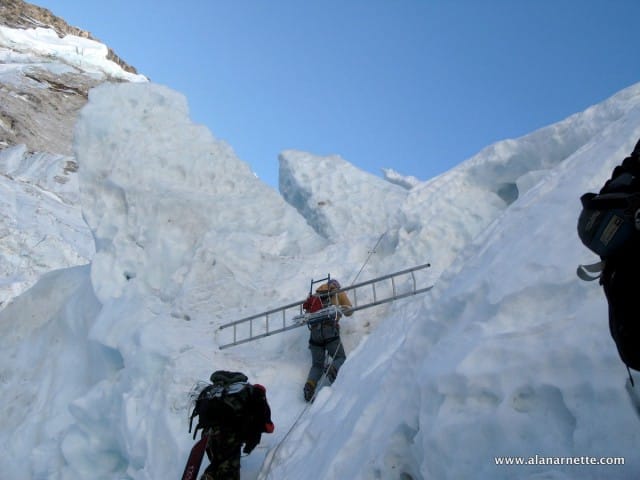
So many reasons to stop and only a few to keep going … – The devastating earthquake in Nepal on April 25, 2015 took 9, 000 lives and destroyed millions of homes plus created havoc in Nepal’s tourism industry. It would be easy to stop going to Nepal … – Only 1 of 244 compounds in 413 Alzheimer’s disease al trials was approved between 2002 and 2012. Researchers report that Alzheimer’s disease drug candidates have one of the highest failures rates of any disease area – 99.6%, compared with 81% for cancer. It would be easy to stop all research … – Of my attempts on 8000 meter mountains, I’ve only summited 3 out 9 times, 33%. It would be easy to stop climbing … So why keep trying with such dismal “results”? A “failure” is when you try something very hard, don’t accomplish your goal AND you don’t learn anything from it – Alan Arnette Return to Nepal At the end of March, I will return to Nepal, to meet up with my team from Phil Crampton’s Altitude Junkies. Then we’ll fly to Lukla to start the trek to Everest Base Camp where, once again, I will climb with Kami Sherpa. While everyone else attempts Everest, Kami and I will attempt the world’s fourth highest mountain, Lhotse at 27,940’/8516m. This will be my 12th trip to Nepal/Tibet since 1997. There are three reasons I’m returning to Nepal: Show my personal support for Nepal Tourism and the Sherpa community Continue my life’s purpose of being an Alzheimer’s Advocate Support my passion of climbing the world’s highest peaks A Personal Commitment My life was changed forever the day my mom, Ida her Alzheimer’s advancing, locked herself in her bedroom screaming in a voice I didn’t recognize and had never heard before for me to get out the house. She had no idea I was her 45 year son there to help. I made a personal commitment that day to do everything I could to make a difference in finding a cure for Alzheimer’s. I began to dedicate my mountain climbing to raising funds for research and awareness that AD has no cure, is always fatal, and is not a normal part of aging. Thus far, thanks to many of you, we have reached 50 million people and raised $275,000 for Alzheimer’s research. But there is so much more we can do together. Whether it’s research, caregiver support, al trials (80% of studies fail because too few people sign up) or education and awareness (60% of Americans believe Alzheimer’s is a normal part of aging and not a disease like cancer or diabetes); there much work to be done. Project 8000 With my summits of Everest, K2 and Manaslu, I am on an ambitious program to summit all of the fourteen 8000 meter mountains over the next five years. Through my climbs, I hope to reach 100 million people, and raising $5 million for research and make a difference in the fight against Alzheimer’s If I’m successful, I would become only the second American to summit all 14, following in the steps of Ed Viesturs (note: Ed did them all without supplemental oxygen and on private climbs, nothing like me at age 59). Also, I might be the oldest American to summit many of these peaks. Read more on Project 8000 including the schedule. Lhotse I feel like I have climbed Lhotse five times already, just not to the summit as it shares 80% of the same route used to summit Everest. I was there last year at Camp 2 when the earthquake hit Nepal halting most of the climbing across the Himalayas in 2015. I will be climbing with Altitude Junkies and Phil Crampton whom I summited Manaslu and Alpamayo with over the past few years. Also, I am thrilled beyond words to have Kami Sherpa (Ang Chhiring Sherpa – Pangboche) climb with me. I summited Everest in 2011 with Kami as well as K2 in 2014. Kami was injured while guiding on K2 in 2015 so he will not be carrying heavy loads but rather climb as a companion with me – my deep and since thanks to Phil for arranging this. I will climb with supplemental oxygen supplied by Summit Oxygen which I used on Manaslu, and K2. The Climb Lhotse is known as a “technical” climb meaning you need to use protection, climbing gear and full on hands and feet to gain the summit. The real crux of climbing Lhotse is the final 300 meters or last 1,000 feet. Once leaving the Camp 3 at 23,500 feet on the Lhotse Face, we will cross the Yellow Band and then turn right continuing straight up the Face instead of contouring across the Geneva Spur to the South Col as Kami and I did on my 2011 Everest summit climb. We will make camp at 25,750 feet or 7850 meters on the snow covered steep slopes of Lhotse. It is almost 2,200 feet to the summit on 50 to 60 degree slopes. Leaving early the next morning, we will climb about 400 feet eventually reaching the bottom of the Lhotse Couloir, a narrow, rock filled gully that leads to the summit that is only 9 feet wide in some spots. This is the most challenging part of a Lhotse climb and will require every mountaineering skill I have obtained on my previous 37 expeditions. I will stem off the rocks, scramble and full on rock climb the final sections. Lhotse’s summit is a small rock block that is often covered in snow making it dangerous. The return involves rappelling and arm rapping back to Camp 4 or Camp 2 where I will spend the night. The entire summit push will take 7 days. Thanks to Ellen Miller for the Lhotse photographs. Everest 2016 Coverage Many of you have gotten to know me through my annual coverage of the spring Everest season. Well, my plan is to report on all the Everest action but this time from Everest Base Camp and not from Colorado. The coverage will be slightly different in that I hope to
Everest 2016: A Changing Mountain – Part 3
Some people are questioning the wisdom of climbing Everest from Nepal. Is the North safer? Is this another change in climbing Everest that could result in a serious economic impact for Tibet, but more so for Nepal? The Nepal (south) side of Everest has seen a tragic series of events the past few years including Himex abandoning their entire expedition in 2012 fearing an avalanche onto the Khumbu Icefall. Then that precise scenario occurred in 2014 when that very serac released onto the Khumbu Icefall taking 16 Sherpa lives. Then when a few Sherpas lead a work stoppage, the entire season came to a early end that year. Last year, 2015, an earthquake triggered an avalanche that killed 18 in base camp on the south side. The Nepal Ministry of Tourism seems to use the press as a sounding board by floating new rules in search of public relations points that they are making Everest safer. But in fact, these press releases confuse and delay people from making informed decisions. With the terrain instability combined with the political instability in Nepal, will the long time commercial operators shift to the Tibet in search of a more stable environment? This post explores that option with the operators. To state my view up front, climbing from either side has its pros and cons and there are operators who can provide a safe experience at reasonable prices on both sides. Of course you can climb a different route than the ones discussed. Bottom line: research the issues, choose carefully and climb safely. China Closes the Border To start the discussion, China provides surprises almost every year. For example in 2008 when they effectively closed Everest to accommodate their Olympic torch summit. And then occasionally refusing permits to certain nationalities with no explanations. And finally closing their border fearing protests with little warning or means of appeal for expeditions who have spent tens, if not hundreds of thousands of dollars assuming a smooth and safe border crossing. There are already hints that China may be nervous in 2016 as teams will have to wait to cross the Nepal/Tibet border on their way to base camp. The Chinese announced in January that all foreigners must leave Tibet and no one can enter until March 30, 2016. Ostensibly they are fearing protests ahead of several politically sensitive anniversaries including the 2008 March uprising that rocked Tibet in the run up to Beijing Olympics. These delays are somewhat normal for China as it seems that each year there are surprises that delay or even cancel climbing. This is why long time operators like IMG, Himalayan Experience, Altitude Junkies and others long ago shifted their Everest operations to the, arguably, more stable Nepal side. But a few operators now prefer the north side and one has made it the center piece of their Everest strategy arguing the Northeast Ridge is a safer route by avoiding the Khumbu Icefall on the south. Other operators hedge their bets and offer climbs on both sides. A Discussion on North vs. South With this as the introduction, I asked a few operators their opinion of which side is safer and if they are considering switching. But before we get to their comments, let me provide the facts so you can make your own judgment about any potential spin in the following comments. The Himalayan Database, run by Elizabeth Hawley and Richard Salisbury, recorded from 1924 to today: The Nepalese side has 4,421 summits with 176 deaths or 3.98% The Tibet side has 2,580 summits with 106 deaths or 4.1% The spin will be in parsing these statistics into time frames to prove that the north, or south, is safer or that “hired” as the Himalayan Database calls anyone who does not pay a guide but supports members, are more often killed than members in recent years. Again, the facts are that from 1924 to today: 282 people (168 foreigners and 114 hired) have died on Everest Deaths climbing from Tibet: 83 foreigners and 23 hired Death climbing from Nepal: 85 foreigners and 91 hired Clearly the disastrous events of 2014 (17) and 2015 (22) have and must be factored into any climber’s risk assessment, but they should also be taken in context of the long term statistics. The North is Safer, Obviously! First up is Adrian Ballinger of Alpenglow Expeditions, perhaps the most vocal and strident north side advocate. Ballinger guided for Russel Brice’s Himex operation for years but left to grow his own company in 2012 and now exclusively operates on Everest’s north side eschewing all arguments that the south side is safe. Adrian offers a list price of $85,000 per climber to attempt the summit from the north in only six weeks. This includes pre-acclimatization via altitude tents, western guides and all the frills – and he runs a solid operation. He is there in 2016 but climbing personally with Cory Richards on a no O’s attempt. He has two members who are being guided by a western guide – all of whom are using supplemental oxygen. Ballinger sums up his opinion on the sides argument: I strongly believe that commercial guiding with hired workers on the South Side is unreasonable (and perhaps unethical) based on current mountain conditions combined with current commercial trip standards and current Nepali government rules. The icefall has repeatedly demonstrated its dangers, and we as guides and expedition leaders have demonstrated our inability to predict its random risk. 2014 was not a one-off accident that no one expected. Every competent guide and leader I knew had been waiting for that accident, or worse, to happen. As the requirements for what is carried through the icefall grows, the likelihood of icefall accidents involving workers like 2014 (or 2012, 2009, 2006, etc.) continue to grow. South is Best for Most People International Mountain Guides (IMG) used to run climbs from Tibet but now exclusively runs Nepal climbs. I asked Eric Simonson if he is considering a north side expedition given what has happened in Nepal recently: No. In our opinion, the Nepal climb is still the way to go for most people, and the sherpas want to get
Everest 2016: Who’s Climbing This Year?
Most Everest climbers are finishing their training, wrapping up last minute gear s and preparing their loved ones for that send-off at the airport. Only two weeks to go for many. It is always dangerous to note certain individuals climbing as, in my opinion, everyone making the sacrifices to attempt Everest are unique in their own ways and to be lauded for pursing a life dream. That said, this post will do a brief look at some of the more unique attempts for 2016 …. and I know I missed someone! The common theme for 2016 seems to be climbing without using supplemental oxygen. Of the 7001 summits, only 193 climbers summited without supplemental oxygen through August 2015, or about 2.7%. But more critically, of the 282 deaths, 102 died attempting to summit without using supplemental oxygen. North Professional skier Hilaree O’Neill will also be attempting a no-O’s summit from the north. She is active on Facebook. While her plans have not been fully disclosed, given she is with Adrian Ballinger, noted for his skiing passion, I assume skiing is involved!. They attempted to ski Makalu last autumn, but conditions stopped them. O’Neill has skied off the summit of many peaks including Cho Oyu, 26,907′. I can only speculate she will ski potentially off the summit to the Tibet side. Professional photographer and filmmaker, Cory Richards is part of the team. Update: Adrian contacted me to say that O’Neill had to cancel so it will be just he and Cory doing a no O’s summit attempt. To further clarify, there are two western members along with western guides on Adrien’s overall team climbing /guiding with supplemental oxygen. Adrien, the overall team leader, is climbing separately with Cory and not using O’s. Kilian Jornet has said he will attempt a speed climb of Everest from the north via the north face, Hornbein or Norton according to this interview. He has set some amazing records on the world’s big peaks including Denali in 11:48, Aconcagua in 12:49 and the Matterhorn in 2:52. Rupert Jones-Warner will attempt to climb both sides back to back. David Liano did this in 2013. Noel Hanna wanted to attempt a traverse but the Chinese haven’t issued a permit since 2007 when Phurba Tashi and David Tait traversed from north to south. They wanted to return making the first double, but stopped after the single. Hanna will attempt to climb four peaks in four weeks: Everest, Lhotse, Cho Oyu and Manaslu. Update: Noel’s wife contacted me to say she and Noel were joining 7 Summits Club to do a “normal” attempt with Os on the North side of Everest and the 4 Peaks Project is postponed to 2017. Other climbers attempting a no O’s summit include Alexander Barber and Mick Allen. South Richard Parks will be climbing with Jagged Globe and attempting to summit with no O’s plus take a few medical samples on the summit to study the effects of reduced oxygen on the brain and body. Caudwell Xtreme Everest did something similar in 2013. Jelle Veyt will be cycling from Kathmandu then attempting a no O’s summit. He has cycled all the way from his home in Belgium to summit many peaks in Europe. He attempted Everest in 2014 and 2015 but was stopped by the events. USMC SSgt. Charlie Linville and Tim Medvetz will attempt Everest as part of Medvetz’s Hero Project. Linville lost a leg in Iraq. Another climber trying without Os’ is Isaiah Janzen with Asian Trekking. Best of luck to all! Climb On! Alan Memories are Everything
Everest 2016: A Changing Mountain – Part 2
“How can I get on a team to climb Everest?” This is the second most asked question on my blog other than “How much does it cost to climb Everest?” The short answer on how to get on a team is money. Sadly, these days most anyone can join an Everest team if they have the cash. As for how much cash, a standard climb from Tibet (north side) should run around $32,000 and from Nepal (south side) $42,000. Nepal Climber Requirements In mid 2015, the Nepal Ministry of Tourism floated several new requirement for any person applying for an Everest permit: Climbers must be between 18 and 75 years of age Permits will only be given to those who can prove they have already scaled mountains that are higher than 6,500 meters (21,325 feet) Disabled or visually impaired people need someone to carry them. Only those who can go on their own will be given permission. You can read my full analysis at this link but as we approach the time when permits are being issued, it appears none of these requirements are being implemented. This is normal in Nepal as the thought of turning away business is unacceptable. In 2010, Tibet set age restrictions of under 18 and over 60 not allowed on a permit, but even that has exceptions as demonstrated by the oldest American to summit in 2014, Bill Burke at age 72. The reality is that if you can find a local climbing agency to submit your name on an individual or a group permit, most likely you will be approved. However, not all operators act this way. Western Commercial Guide Requirements Long time Everest guides have learned the hard way that experience matters and usually tries to qualify a potential member through a questionnaire and a phone interview. Many will prefer, if not insist, that a prospective Everest member climb with their company on a lower mountain such as Denali, Aconcagua and sometimes the 8000 meter mountains Cho Oyu or Manaslu. International Mountain Guide’s Eric Simonson believes his company is not taking unqualified climbers: “I think the average experience level of the IMG team has increased over the years. This may not be true for the Everest community as a whole, but IMG continues to find plenty of qualified customers.” And he goes on to sum up their philosophy this way: “It is not in anyone’s interest to take people to Everest on a program for which they are not qualified. It does IMG no good to get someone over there who blows up or has a big problem. An individual may need a higher level of guidance or support to be able to climb safely, but sometimes it just is not possible for them to make a reasonable attempt with their experience and fitness. I have no problem turning away members when we do not think they would be a good “fit” for our team. And sometimes, there are factors beyond experience that we take into consideration. Not all experience is equal. I have seen climbers who have been on relatively few climbs but who are able to take responsibility for their own safety and preparedness. Others may go on 10 expeditions and never really assume much control over their own destiny. People vary and it’s part of what makes this business so interesting to me.” Phil Crampton of Altitude Junkies believes there is a decrease in experienced climbers in Nepal and on Everest specifically: “I had the unfortunate experience of overhearing a conversation between a British female member of a well-known Nepal company and her Sherpa. She explained to the Sherpa that she had never worn crampons before, but the Sherpa reassured her that he would teach her how to use them on Lobuche before they attempted to summit Everest. This is what it has become I am afraid. I just had the experience of watching similar qualified people on Ama Dablam falling all over the place and luckily they were connected to the fixed ropes.” And Dawa Stephen Sherpa of Nepali operator Asian Trekking adds: “There is certainly a large number of inexperienced climbers on the mountain and I have also accepted a few inexperienced climbers on my expeditions, on the condition that they have a strong sporting background. However, I do not really see a drastic increase in inexperienced climbers in the last eight years that I have been leading expedition to Everest.” In looking at Everest 2016 climbers, an 18 year-old from India looking to summit is quoted in The Times of India: “I never heard of Mt Everest. I never saw glaciers. It was only when I went to Darjeeling for a training in glacier, I saw how glaciers are. I came to know from my NCC (National Cadet Corps) senior that Mt Everest is the world’s highest peak. Yes, I am going to climb the Mt Everest and it will take two months to climb Everest. The approximate date for flag-in at the summit of Mt. Everest is June 15.” The article goes on to say “Pooja will leave for Delhi on March 1, where all the ten cadets will be given physical training for one month. From there, they will head to Nepal on March 28. The Uttarakhand girl said that she was hopeful of climbing the peak on her first attempt.” This is not unusual these days. In my own observation and experience on the mountain as recent as 2015, I have spoken with many, mostly very young people, saying their only climbing experience is on 6000 meter peaks or perhaps a summit Kilimanjaro. They are usually with extremely low costs outfits paying as low as $18,000, including the $11,000 permit. Willie Benegas of Benegas Brothers Expeditions notes the inexperience on Everest thru the many rescues he and his brother, Damien, have participated in: “In 2010 during our summit push, I found a climber at the balcony, on all fours, asking me for his Sherpa. First I asked him the name of his expedition, then told him
Everest 2016: General Updates

We are now about a month out for climbers to arrive in Nepal to begin Everest 2016 so these are some general updates. Icefall The Icefall Doctors are planning to begin setting the route through the Khumbu Icefall on March 7. There is some concern about the stability of the Icefall after last year’s April 25th and May 12th earthquakes that damaged ladders and ropes along the route. However the route was established last autumn for Japanese climber Nobukazu Kuriki’s unsuccessful attempt and the Doctors reported no serious issues. Note, that the route is reset each season anyway as the ladders are removed around June 1 each year. As always, nothing is certain until they get onto the glacier and see for themselves what this year will hold. source Permits After a year of ‘study’, the Nepal government finally approved extending all climbing permits from 2015 for two years. This will enable a climber to save their permit fee, $11,000 for Everest for example, and transfer to another team if needed. It would have been better if they had approved it 6 months ago in order to spread out the 2015 climbers who want to return this year but waited for the decision to be made. Now 2017 might be extremely crowded. There were over 800 individual permits issued last year including 265 for Everest. But in any event, all good for the climbing industry. source Travel Warnings Lifted After the earthquakes, many governments around the world placed travel warning for their citizens traveling to Nepal. One by one most have been lifted and the United States, one of the last, did so on February 29th. The impact of this has been some climbers and trekkers have been unable to get travel insurance so this issue should be gone now. source Blockade Ended A bit of good news for the Nepali people and climbers/trekkers arriving next month. The blockade is over and there is no more fuel rationing. There have been long lines and limited fuel for taxies and buses not mention slowing down air travel. source Tibet Border Closed Similar to other years, China closes Tibet to visitors until March 30 fearing protests. This should have minimal impact on Everest climbers who usually arrive in early April. source Ms. Elizabeth Hawley Honored Finally, if you follow Himalayan climbing you know Ms. Hawley. She has been chronicling climbs in Nepal since 1963. The Nepal government honored her by naming a 6182m peak, Peak Hawley. Ms. Hawley responds as anyone who knows her would expect: “I think it’s a joke,” Ms Hawley told The Independent from Kathmandu. “They should not name mountains after people.” source Climb On! Alan Memories are Everything
Everest 2016: Interview with an Everest Weather Expert
As regular followers of Everest climbs know, the weather is the make/break factor for all expeditions. And the forecasts are critical for the safety of teams. While it may seem straightforward given the success rate we see in modern times, predicting the weather is far from a science as this interview with Michael Fagin shows. Michael provides weather services to many Everest expeditions as well as for other adventures around the globe from his company everestweather.com Everest teams invest a lot of money to receive expert forecast throughout the expedition. Many leaders are now weather experts in reading forecast maps and interpreting the data. However, it is the weather professionals who monitor the data from all around the world to feed these leaders the information possible. In the end, each team makes their own decision based on data, observations and their own experience and instincts. After all, a wrong decision can put lives at risks. Weather services is a major factor is selecting your team on an Everest climb. The 1996 disaster on Everest was mostly blamed on a surprise storm that moved up the mountain. I asked Michael about that a couple of years ago and he told us that although this storm was a surprise to the climbers that did not have access to forecast, a trained weather forecaster would have seen (from forecast maps) a big storm coming in several days prior to this tragedy. Q: The famous 1996 Everest storm that claimed 12 lives is said to have come up from the lower valley and rose onto Everest. Was there anyway to forecast that event? A: Several years ago I did look at some archived forecast maps for the day of the day storm on May 10, 1996, and forecast maps for several days before the storm. This was a typical strong storm pattern that can occur at Everest. There was a deep upper low pressure that was moving in from the north and west and this brought moderate precipitation and strong winds. Estimated winds of over 100 knots. If I’m not mistaken after this tragedy that the Imax team, who was at a lower camp, decided to hire the first weather forecast for Everest and I believe they used a European firm for the forecast Q: What has the 2015/2016 winter been like near Everest? A: Well not a lot of data at Everest but there is some data in the general area. One thing to keep in mind that from the months of December through March the region generally gets 24% total of its precipitation, thus most of it during the monsoon season (summer months). So far this winter most areas in the region have received much below normal precipitation . Q: We know that typhoons that develop in the Indian Ocean impact Everest significantly. What does the long term forecast suggest for April and May this year? A: Hard to get much of a handle on this but it is important to have a perspective on this. In terms of number of storms and depressions that form in the Bay of Bengal in April is only 1% of the total and May 11% of these storms form over these months. The greater frequency is in October 19% and November 25%. So normally there is a greater chance of getting a major storm in fall compared to the spring. Also normally the strongest storms form in the fall and when there is a La Nina (below normal sea surface temperatures in the equatorial region off the South America Coast). Right now we are in an El Nino (above normal temperature) Q: You have been forecasting mountain weather for years now, how much is science versus gut feel? A: I have been forecasting there since 2003 and I think the science and the forecast models have gotten much better especially in terms of when the jet stream moves in and out of the region. However the same cannot be said of the forecast models and prediction of precipitation. Models struggle not only for the Mt. Everest region but really on a worldwide basis in forecasting precipitation when it is convective in nature. Much of the times this is the type of precipitation (convection) we have in Mt. Everest. So my forecast is still 90% on science and I have say 10% of the time I need to question the forecast models as they tend to overstate the precipitation much of time the. So I do say “not a gut” feel but bringing my experience into the forecast. Also, if there is a storm that moves out of the Bay of Bengal it is typical of the models to understate the predication Q: Can you compare the weather on the Tibet side versus the Nepal side for us? I do not have much weather data on the Tibet side and all of this information is from data I have received from climbers. The higher camps (I believe camp 2 and 3) are exposed to stronger winds especially from the northwest. My understanding from climbers is many of the camps at on the Nepal side are somewhat more sheltered from the wind mainly if you at elevations below the Lhotse Wall. Also seems that the Nepal side has more snowfall Thanks Michael. I know we are all hoping for great weather this season. Climb On! Alan Memories are Everything
Everest 2016: A Changing Mountain – Part 1
The Everest 2016 season is now only six weeks away and it looks to be a critical year in terms of commercial guiding. This is part one of a multi-part series I will run looking at the changing commercial landscape on the world’s highest mountain. And why for some operators 2016 is their last year guiding Everest. There are many issues with Everest this year as I outlined in my Welcome to Everest 2016 post. Members are wary, the Nepal government is evasive with extending permits and high-end companies are taking their pricing to new levels. And of course all this is against the backdrop of fights, avalanches, earthquakes and deaths. With some teams running about half of 2015, some operators are struggling to find members and others are fed up with the uncertain government rules. However, most critically, the emerging competition from the Nepali operators have changed the guiding business model leaving some western companies unable to compete. Is this sour grapes or do the long time western operators have a valid point about the new competition? As I’ve previously noted, it appears that Everest has become a commodity similar to airlines and automobiles where the industry splits into high-end and low-end offerings. I reached out to several long time operators, both Western and Nepali for their views on how the competition is changing in part one of this series. Long time operator Phil Crampton of Altitude Junkies has operated on both the Tibet and Nepal sides since 2006. He has decided that 2016 will be the last time he guides Everest switching to other mountains in Nepal and around the world. Phil commented on the changing landscape: The whole Everest market is changing. In previous years it was serious high altitude climbers and alpinists heading to her slopes, it now seems as if anybody with money can go to Everest. I think it’s good that the mountain is now open to all climbers and not just nationally sponsored teams but I think there needs to be some rules set in place for the operators. The local Nepal operators have no western leaders so therefore they do not have to pay the $11,000 fee for each western guide on their expeditions. This means that they also do not have to pay the Icefall fee, fixed rope fee and other associated costs such as the Liaison Officer, rescue insurance, etc. Some of the Sherpas used on these expeditions already live in the Khumbu so they have no airfare to and from Lukla not to mention international airfare that the western guides have. I hear that the local Nepal companies also pay their staff very low wages compared to the established western companies. They hope that their members summit and that they give generous tips and summit bonus to the Sherpas, whereas it’s all included in the asking price on my trips. I think the bottom line these days is that everyone thinks Everest is easy and they look for the cheapest price, not expecting to have to pay extras at the conclusion of the expedition. Long time Nepali operator, Asian Trekking, sees similar challenges. Dawa Steven Sherpa gave me his perspective on why the Nepali operators are getting so much business: The simple answer is PRICE. Nepali operators are offering Everest expeditions at very cheap prices which cannot be matched by foreign companies, nor even responsible Nepali companies. And the problem for many climbers is that on paper, everything looks the same except for the price. It is only when they get on the mountain that they realise that “ you get what you pay for” or in this case “ you don’t get what you didn’t pay for!” Though my prices are relatively high, I am not worried about losing those members for whom price is the primary factor in decision making. These members often times end up regretting their decisions and come to me for their second attempt after seeing my operations on the mountain. And Willie Benegas of Benegas Brothers concurred. They will not be on Everest this year due to the price competition but will guide other mountains around the world. He summed it up: We have came with sad decision to not run a Everest trip this incoming season, and this bring a lot of sadness to us, We try hard to capture enough members to run a small trip but it was not possible, competitions is fearless!! Regardless we committed to either find another job for our Sherpas or pay them a small severance to help. Nepal needs work our people needs jobs! and added on the competition: Well, it’s simple – money! The specific company in this case was charging almost nothing, there was rumor about some of the members being charged as Nepali nationals and thus not requiring $15,000 permits.… Either way, when you are offering an Everest climb for $23,000, people will talk and information gets passed around amongst friends and climbers even before arrival at Base Camp. Hey, I going to climb Everest for $23,000, but the normal cost is $40,000 – $60,000. We are also seeing more and more mainstream media stating that Sherpas are the guides in Nepal and that western guides are not needed and they get paid too much, while the grunt-work is done by the Sherpa. The information missing here is that the largest percentage of deaths happen on (low budget) expeditions with mostly non-western guides. I am not saying all Sherpa Guides are not adequately qualified, far from it, top Sherpa guides are some of the UIAGM guides in the world, and incredible people, but there truly is a misconception when it comes to the lower budget s that all Sherpas are capable of professional guiding, when many simply lack the lengthy training involved to be a successful and safe guide. And Eric Simonson of International Mountain Guides sees a similar trend with respect to pricing: … it is pretty clear that lower pricing is a big driver. The Nepal companies conduct their programs at a lower price point for several reasons. They do not hire or pay Western leaders or guides,
Everest 2016: Expedition Communication Gear – Updated June 2018
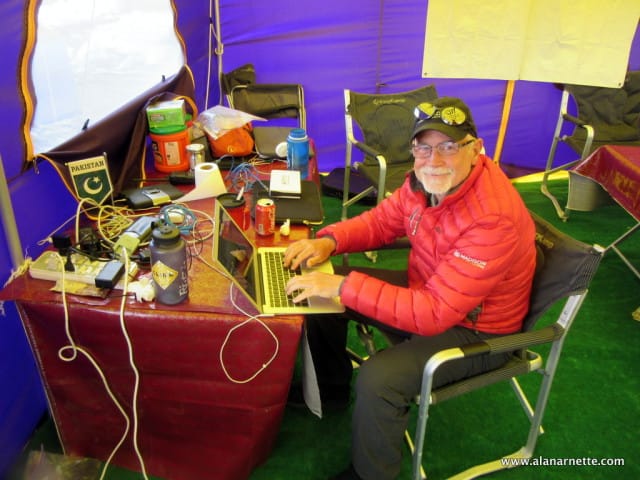
Updated June 2018 As the Everest 2016 season approaches, many climbers are researching how to stay in touch with loved ones back home. This post takes a brief look at the options. While staying in touch is mandatory and part of an expedition for me, some people want to get away from it all and escape the modern noise that comes with 24 by 7 communications. If that is your case, then take a sat phone for safety but don’t use it unless there is an emergency! Tell everyone that no news is good news and you will see them when you get home. And enjoy your time off the grid Call a Friend: Call a friend who passes it along or transcribes your conversation and posts on your Facebook page or blog Email an update to a friend who forwards it, posts on Facebook or cuts and pastes it to your blog Do it Yourself: Connect to Facebook, Twitter or Instagram via the Internet and directly post. Phone in a voicemail through a service that posts it directly to your blog Send an email that automatically posts to your WordPress Blog Write a post and upload it using the Internet along with pictures and/or videos directly to your blog There are many ways to do this communication but I will cover what I have been doing for over 15 years. I have learned a lot and stick with what works – for me. I do all the programming but I am not THAT technical. There are consultants who you can hire at $150 an hour to do the work for you. I started with “Call a Friend” (my wife managed the transcription much to her chagrin) but soon switched to a fully automated system. The minimum setup you need is a phone, either satellite or cell depending on where you go and what service is available. For more sophisticated and independent postings you need to add a computer of some type, a digital camera and an Internet connection. This will enable you to connect with software that is linked to a website which may include a Blog, WordPress for example. If this sounds confusing, it is and it is not. So let’s break it down. Websites The first decision to make is where do you want followers to follow you – Facebook, Twitter, your own Blog or a dedicated website – or a combination of all of these. Also, is this a one time event or something you want to build over time. For a one time expedition, using Facebook is easy but limited over what you can control and present. A dedicated Blog, WordPress or Blogger for example, gives you significant control over how you present your information plus you can add links and pages for more information, causes or other sites. A dedicated website is the best choice if you want full control over look and feel to build a long term destination for family and friends to follow your adventures for years to come. But all this comes with a bit more work. Don’t get overwhelmed with all these choices, it is actually much simpler than you think. COMMUNICATIONS This is the crux of your dispatch plan. You have two basic choices: Phones or satellite modems. Again, one step at a time. For phones, there are cell phones and/or satellite phones using networks from Iridium or Thuraya depending on where you are climbing. A combination of phones sometimes might be in order. Iridium vs Thuraya Satellite Phones I always suggest bringing a sat phone since cell service is not reliable in remote mountain areas even though it may be in the local mountain gateway city. I feel there are only two satellite systems to consider: Thuraya which is best for Asia, Africa and Europe and Iridium for North and South America, the oceans and the poles. Iridium phones are significantly more expensive than a comparable Thuraya handset. Thuraya and Iridium hotspots with bluetooth connections to a smartphone making your phone book and apps easily accessible. But this could be expensive since many social media apps like Facebook and Twitter stream data thus taking a long time and costing a lot of money just to see a picture of what your friend had for lunch! Thuraya is the best choice for data if you are climbing in their coverage area (which includes Everest) because once you lock onto a satellite you do not usually lose it whereas with Iridium you are switched between satellites as they move across your view and in my experience, you will lose the data connection during each switch most of the time, even though they tell you it will switch seamlessly. This lost connection limits your data uploads to a short few minutes preventing a dispatch with several images. If you lose your connection you must restart the upload process meaning lost time, money and sat time. The only time my Iridium connection was rock solid was on Kosciuszko’s summit where I had a 100% clear sky and unlimited visibility. Even in Antarctica, I could only connect for 4 minute periods before losing my data connection. To state the obvious, most mountainous areas rarely have unobstructed views of the sky, duh. Thuraya can be less expensive than Iridium on a per minute basis depending on location. For example calls to the US from Nepal or China cost US$0.90 using their NOVO SIM. The rate jumps to US1.85 from Pakistan. Iridium is a flat US$1.20 per minute from anywhere in the world. It might be less expensive over the long run to buy your satellite phone instead of renting it depending on how many trips you plan and how many minutes you will use. Usually renting a phone implies more expensive minutes but not always so shop around. Sat phones range from $800 to $1800 and rentals around $275 a month. Check eBAY for some good deals. Cell Phones Most guides bring an
Everest 2016: Welcome to Everest 2016 Coverage
Welcome to the kick-off for my Everest 2016 coverage! This will be my 14th season of all-things Everest: 9 times providing coverage, another 4 seasons of actually climbing on Everest and then last year attempting Lhotse when the earthquake hit Nepal. I did similar coverage for the 2004, 2005, 2006, 2007, 2009, 2010, 2012, 2013, 2014 and 2015 seasons. I summited Everest on May 21, 2011 and have attempted Everest three other times – 2002, 2003, 2008 and Lhotse in 2015. If you are one of my 1.5 million regular readers, hello again, if you are new, welcome! My goal is to provide insight and analysis of what is going on up there with no favorites or agendas. I use sources directly from the mountain, public information and my own experiences to write my posts. Usually I post once a day as the season gets started in early April and ramp up to almost hourly coverage during the intense summit pushes in mid to late May. I spend several hours a day to create these updates. You can sign up for (and cancel) notifications on the lower right sidebar or check the site frequently. Why do I do this? Well, one word: Alzheimer’s. I lost my mom, Ida, and two aunts to this disease and it changed my life forever. You can read more at this link. I hope that you enjoy my coverage and make a donation to any of my selected non-profit partners as a tangible thank you. I never benefit financially from your donations. Just click on this button that is always on the top right sidebar. Four Years of Death and Uncertainty Without a doubt, the last few seasons on Everest have been difficult, deadly, disappointing and surprising. The last time we had a “normal” season was in 2012 with a 551 combined summits from both sides and 10 deaths. Even then controversy emerged when Himex cancelled their expedition half way through the season after Russell Brice deemed the West Shoulder of Everest too unstable for his Sherpas and members to pass underneath. Also, record crowds in 2012 created insufferable lines above Camp 3 and at the Hillary Step fueling global discussion that Everest management was in need of serious changes. In 2013 an estimated 658 people summited in the spring, 539 on the south and 119 on the north with 8 confirmed deaths. That year we saw the inexcusable behavior of both Sherpas and professional climbers arguing and fighting about who had the right to climb on the Lhotse Face while the fixed ropes were being set for the commercial teams. Then the deadliest year ever on Everest occurred in 2014 when 19 Sherpas died either from a serac release off Everest’s West Shoulder or during other parts of the season. The season was effectively canceled when a small band of Sherpas influenced others to go on strike for improved working conditions and insurance coverage. There was only one non-Sherpa climber to summit from the South side. She used a helicopter to ferry herself and a team of Sherpas to Camp 2 because the Icefall Doctors had quit maintaining the route. Meanwhile it was business as usual on the North with about 125 summits. In spite of the chaos during the previous seasons, almost record permits were issued in the spring of 2015 – 358 individuals for Everest 114 for Lhotse and 56 for Nuptse. The season progressed well with the Icefall Doctors taking care to move the route through Khumbu Icefall a bit away from the West Shoulder’s objective dangers. But the world came crashing down, literally and figuratively when a magnitude 7.8 earthquake occurred on April 25, 2015 in north-central Nepal impacting close to 10 million people – one third of Nepal’s population. Over 9,000 people lost their lives. Today, almost one year later, the response to the communities and families hardest hit has been embarrassingly inadequate by the Nepal government. Reports say that little of the $4 billion in promised foreign aid has been delivered or used. As for climbing in 2015, for the first time since 1974, there were no summits on Everest by any route in any season. The earthquake created massive instability on both the Tibet and Nepal sides of the mountain creating concern that climbers would be in more dangerous conditions than normal. On the Nepal side, over 180 climbers had to be evacuated by helicopter from Camp 1 at 19,500’ in the Western Cwm when aftershocks made descending though the Khumbu Icefall too dangerous. While the Nepal government never officially closed Everest to climbing, it was practically shut off as the primary climbing route goes through the Khumbu Icefall and the Sherpas who managed the route stopped maintaining it given the danger. Also, almost every team made the independent decision to halt climbing due to the excessive risks. On the Tibet side, the Chinese government through the China Tibet Mountaineering Association (CTMA), made the decision to close all climbing throughout Tibet, including Everest, the day after the earthquake and through the remainder of 2015 due to potential aftershocks and excessive risks. I was at Camp 2, 21,500’, in the Western Cwm climbing Lhotse Peak when the earthquake hit. Our team doctor, Marisa Eve Girawong, was one of 18 killed at basecamp from an avalanche caused by the quake. Once we understood the magnitude of the devastation across Nepal, climbing was the last thing on our minds. We were in full support of our Sherpas and other support staff returning to their home villages to take care of their families. Please read my full 2015 season report for an inside look. 2016 Overview So what does 2016 look like? It could be the lowest number of climbers in years for several reasons. Certainly the publicity around the earthquakes have created concern that the infrastructure is not safe and climbing in avalanche prone areas is more dangerous than ever given the unsettled terrain. Many feel that climate change is causing the snow and ice features to shift on the world’s highest mountains creating more objective danger on the normal routes. Others feel that these events occur naturally and the deaths
How Much Does it Cost to Climb Mount Everest?
“How much does it cost to climb Mount Everest?” is one of the most common questions I get after a talk. The short answer is, a car, or at least $30,000 but most people pay about $45,000. This post is the 2016 update of the most common questions and expedition prices. The headline for 2016 is that the high-end went higher and the low-end went lower. The price range for a standard climb, i.e. non-custom, ranges from $30,000 to $85,000. This is driven by low cost Nepali operators getting a foothold in the market and the traditional western operators adding more services to differentiate their product. In other words, climbing Everest has become a mature market just like cars or airplane flights. How much you spend depends on the expedition style, level of support and which side of Everest you climb. A standard climb from Tibet (north side) should run around $32,000 and from Nepal (south side) $42,000. A climb with one or more western guides from the south side will cost at least $60,000. If you want to go with one of the low cost Nepali companies with no frills and perhaps some dangerous shortcuts, it will cost about $30,000 from either side. There are three ways to climb Everest: put together your own expedition, join a logistics only expedition or join a fully guided team. Everest 2016 Before talking about money, let’s acknowledge that the last two years have been deadly, devastating and disappointing for anyone involved with Everest. As I write this in late 2015, the rumors are that guides are seeing half their normal volume for spring 2016. This is not surprising with almost 40 deaths in 2014 and 2015. The season came to an early stop both years with Sherpa strikes and earthquakes. Everest, from either side, is no longer a reliable climb. Historically after a difficult year, Everest has seen record summits. But it appears climbers have had enough, not from the mountain and natural disasters but from the mismanagement of the mountain by the governments. The Nepal Ministry of Tourism, even under new leadership, continues to send mixed messages to the climbing community – uncertainty around extending permits, crazy talk about reducing insurance for Sherpas, propaganda about making Everest safer with age limitations and climbing experience requirements. And China closed all of Tibet to climbing for 2015 after the April earthquakes. The irony is that the Nepal needs tourism more than ever, but the government’s uneven handling of the new constitution inadvertently created a blockade of fuel, medicine and supplies that has discouraged tourism. They have failed to funnel billions of international aid to areas devastated by the earthquakes. And the Sherpas who are key to the Everest machine, are struggling to rebuild their homes, much less guide foreigners up a mountain. 2016 will be a milestone in the history of Everest climbing. I wish for a boring year with normal summits, few deaths and no drama. Where does my Money Go? There are four major components to any Everest climb regardless of climbing from Nepal or Tibet: travel, permits/insurance, supplies/gear and guides. The following discussion breaks down the expenses as if an individual wanted to climb without joining a team but almost no one does this as the numbers will show – it is just too expensive. Travel $500 – $7,000 The travel costs are entirely dependent on where you live and how you like to travel. It can range from a few hundred dollars to over $7,000 to fly to Nepal. Most people use Thai, Turkish, Qatar, or China Eastern to reach Nepal. Once in Kathmandu, you need to fly to Lukla or Lhasa to start the journey to base camp, so add in an additional few hundred dollars for this air fare. From Lukla in Nepal, its takes about a week to trek to base camp, so there is food and lodging along the way for you and your support team. This can total between $400 to $1,000 per person again depending on your style and how many beers you have. But not only do you have to get yourself to base camp but also all your gear – tents, food, oxygen, etc. Most people use porters and yaks costing at least $75 per day per load, so this usually totals several thousand dollars. Large operators will hire helicopters. On the Tibet side, you can save some money as you can drive all the way to base camp and this is included in your permit. PERSONAL TRAVEL $2,425 – $6,325 Airfare $1500 to $5000 depending on class and routing and excess baggage Transportation Kathmandu to Lukla $325 round trip per person Hotel and food in Kathmandu $300 to $700 depending on delays Nepal Visa $100 Immunizations $200 Getting to EBC $3,990 – $4,550 Yaks to and from Base Camp $150 per yak per day carrying 120lbs, (4 yaks for 4 days minimum or $2400) Porters to and from Base Camp $20 per porter per day carrying 60lbs (3 porters for 6 days minimum or $360) Tea Houses and food on trek to EBC $20 – $100/person /day – 7 days $140 – $700 Park Fee $100/team Permits and Insurance $7,000 – $17,500 The permit cost is fixed at $11,000 per climber from Nepal and $7,000 from Tibet. In Nepal, the permit fee simply gives permission to climb, whereas in Argentina for Aconcagua or Alaska for Denali, the $800 or $365 permit, respectively, also covers helicopter evacuation, maintaining high altitude ranger camps, hiring seasonal staff, providing mountaineering information, and keeping the mountain environment clean Nepal requires using a local company to organize your permit at a cost of $2,500 for the team, a refundable trash deposit of $4,000 for the team and a Liaison Officer . Welcome to the hidden costs no-one ever talks about! Nepal implemented in 2013 a new rule that requires every foreign climber in Nepal to hire a local Sherpa Guide. While not enforced for every operator, it adds a minimum of $4,000 to the absolute lowest cost. If you want to bring a Nepal Sherpa to climb