Broken Leg: I Don’t Want to be in the Rocks
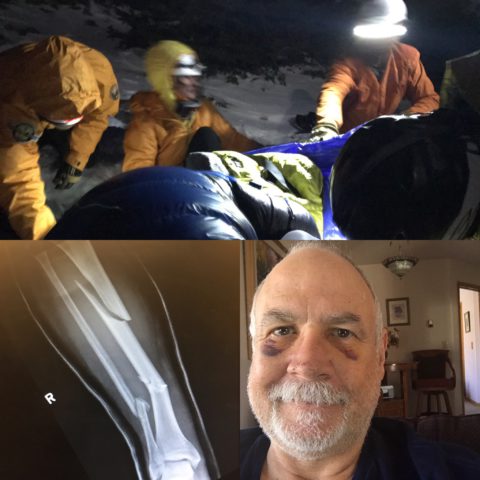
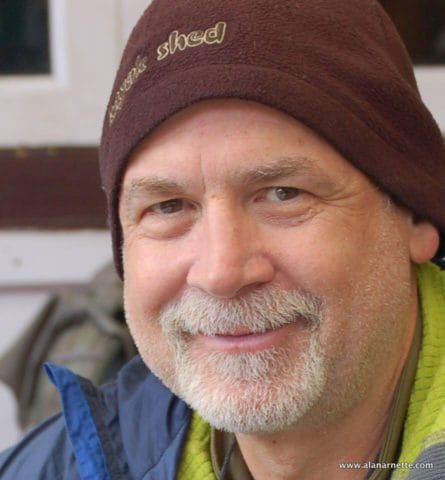
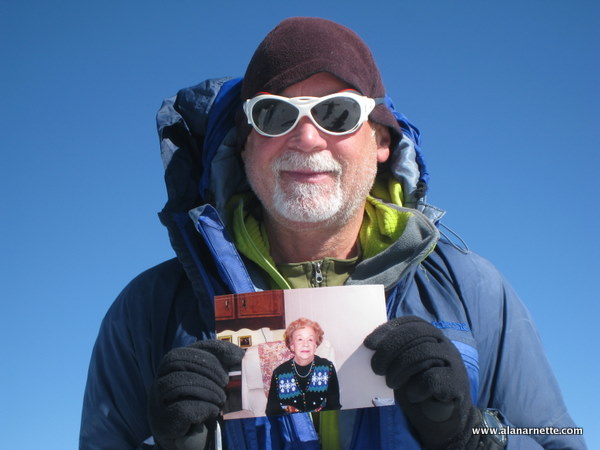
A quick story for those with busy lives. Two friends, Alan Arnette and Jim Davidson, were hiking along a path when the wind blew Alan over and he broke his leg. Jim called 911 and a bunch of people came and got Alan. Today Alan is home and is getting better. The End. While that may be what happened, there are a few more details I (Alan) can add. 🙂 The trail we were on was like a well worn shoe. We were training for something big, much bigger – 18,000 feet higher and on the other side of the world. With little warning a rogue wind gust blew me off my feet, into the air, twisting my helpless body along the way before violently depositing me on the sharp rocks of a talus field. The next ten hours became a case study in triage, rescue, communications and friendship. This post was written by Alan Arnette with edits and important additions of missing parts by Jim Davidson. Our hope is that this incident will provide lessons and inspiration to anyone caught in an unforeseen event that looks desperate in the moment. WARNING: This article contains graphic descriptions, images and videos that some readers may find disturbing I Don’t Want to be in the Rocks There for a Reason Friday morning, 10 February 2017 started off like many others during the last year for Jim Davidson and me. We set the alarm for an early wake up in order to meet at our usual spot. Watching the news that morning, long time friend and meteorologist, Chris Tomer, spoke of high winds in the mountains, not unusual for February in the Colorado Rocky Mountains but warmer than the normal temperatures. I checked my weather app for Estes Park and saw a high of 40 degrees with winds gusting to 40 mph. A familiar feeling came over me as I got dressed. Even with the warm temps, I pulled on my merino wool base layer, alpine mountaineering pants and a warm jacket. I often go to the mountains on days that some other people might consider unpleasant. I test gear, work on my mental toughness and practice skills that I may need on an 8000 meter peak. For example swapping out gloves for mittens and not having them fly away. This may sound silly but if it happens, frostbitten fingers are the result. Jim and I chatted nonstop during the one and half hour drive in my Jeep. We talked about his upcoming Everest climb, my Dhaulagiri climb, our training, gear and my work as an Alzheimer’s Advocate. The back seat of the Jeep looked like a yard-sale with stuff thrown everywhere. We had a bit of everything from snowshoes to down jackets, goggles, ski poles and mittens. I even had a pair of crampons in my pack. Based on hundreds of climbs over the years we knew we had to be prepared for any conditions in the Colorado High Country. Its a Bit Breezy Arriving at the empty trailhead, we got dressed. We pulled on our mountaineering boots and snowshoes then started trudging up the road to catch the trail that led into the pine forest. The wind was blowing hard, bending the tops of the densely packed pine trees. A few minutes into the hike, we paused to acknowledge that we needed to maintain a high awareness for beetle kill trees that might be knocked down by the wind. Several newly blown down trees were already blocking the popular trail. Snow covered the trail but it was in good shape, just what we wanted in order to work on our fitness that day. We expected to take around 2.5 hours to reach the summit and maybe half that to get down, seven miles round trip, a modest 2,475 foot gain. This was going to be a short day in the mountains as we had plans that night. We took pictures as we approached the tree line and prepared to leave the protection of the forest for the short half mile hike to the summit. With the wind gusting, I wanted to minimize our exposure by moving fast and suggested we leave our packs along with our snowshoes at tree line. Jim said he doesn’t like being separated from his pack and I agreed. Preparing for the Worst I put on my heavy 800 fill Feathered Friends jacket, something I never do in Colorado because this jacket is overkill for the typical conditions. However with the wind blowing I thought it would be a good test of all the zippers and seams since I would be take it with me to Dhaulagiri next month. Jim was doing similar testing on some of his Everest gear. My pack was loaded with my regular winter gear including Gortex bibs, another down jacket, a Gortex jacket, mittens, hand warmers, food and water. My cell phone was in my pants pocket for easy access. A few feet beyond tree line, we began to follow the well marked rocky trail towards the summit. The snow was now sparse, usual for this area of Twin Sisters. The wind, gusting then calm, seemed to come from a fireplace bellow, pulsing in and out in unusually strong waves. One gust caused us to pause and lower our profile by squatting down on the trail. In between gusts, it was calm and warm on this clear February day. When a second strong gust occurred, we came together to discuss strategy. “I’d give us a 10% chance of reaching the summit in these winds and a 70% chance that something will go wrong.” Jim said. I pulled my down hood over my head mostly to keep my sunglasses from flying off. “Yeah, I don’t like this.” I had turned back at the same place in similar conditions only a few weeks earlier. Mental Toughness I regularly talk about my three knock-down rule where I go to Longs Peak on a windy winter day before dawn. Dressed in my 8000 meter boots and
Happy Thanksgiving

Happy Thanksgiving to all my friends who are celebrating this American holiday. This year, 2016, is a bit special for some happy and sad reasons. Living in Colorado, late November sees bare trees and usually snow on the ground. But this year, the ground is as bare as the tree branches. It has been warm and dry. However, the mountains are finally getting snow and the ski resort are celebrating! It’s almost time for me to don the crampons and hit some vertical ice. I am thankful for all my friends – close and far away. Today is the first holiday for some who lost family members. They are thankful for all the wonderful memories of their shortened lives. Loss can bring focus to what is important in life. I am thankful for my 🙂 mountains I am deeply, deeply grateful for the opportunities I have had, the climbs I have not completed and the summits that allowed me to visit. While at peace to perhaps not climb an 8000 meter mountain again, I remain hopeful to climb a few more, perhaps with my climbing friends who continue to be an anchor in my life. But no matter, you can always find me on a Colorado 14er! Staying with climbing, I’m grateful to have developed a realtionship with legend Jeff Lowe. To have met Messner, House, Steck, Anker, Viesturs and others whom showed me what is possible and provide motivation to give it all I have, and to give back. I am thankful for my family. Today the newest member, Abby celebrates her first holiday with an amazing scoot across the floor. She appears to be a natural climber! I miss my Dad, James B Arnette, who passed away 10 years ago today. I am full of gratitude for having Diane in my life as she brings me much happiness and joy. Cory, who has shown me what life is all about in the most simple way. The circles of love that nurture this family is inspring. I am thankful for everyone committed to finding a cure for Alzheimer’s. This week a study found new dementia cases had dropped in the US by 25% due to healthier lifestyle, yet a promising drug to slow the disease in the mid stage failed dissapointing millions around the world hoping for a way to stop this disease. Close to 50 million familes are living with Alzheimer’s. Today caregivers all over the world are helping a loved one remember Thanksgivings past. You are not alone. I am thankful for laughing, crying, walking and sleeping. I am thankful for life. The world continues to be a scary place, but perhaps not as scary as centuries ago. This Thanksgiving, I remain optimistic that the gentler side of all human kind will emerge. That we will evolve to one another with love and respect. That we choose to express our differences with thoughtful words, resist violence, lashing out in anger and judging others thru narrow lenses. Peace to all. Gratitude for what we have. Happy Thanksgiving. Climb On! Alan Memories re Everything
A New US President
For my US Followers: Your choice of President not winning is not the end of the world even if it does not align with your values or beliefs. Similarly, your candidate winning does not endorse your judgment as infallible. I am old enough to remember when Reagan was elected and Democrats thought the lack of social programs would end the American Dream. The stock market rose 54%. I remember when Clinton was elected and Republicans feared regulations designed to protect the poor would hurt the economy. The stock market rose 150%. And when Obama was elected, some believed the American experiment was over. The stock market rose 78%. While the market may drop 300++ points on the news that Mr. Trump is the new President, it will recover. Clearly, the stock market does not represent all segments of America. Investments in finding a cure for Cancer, HIV/AIDS and Alzheimer’s are just as important as any financial measure. As are programs for those with special needs, the poor and the elderly. America takes care of its people, regardless of political party. I remain confident that the design of the American Experiment with three branches of Government designed to counter-balance radical ideas and destructive proposals – will continue to work. Congress controls the budget and declares war. The Supreme Court interprets the laws and the Executive Branch leads the military (under the control of Congress) and represents the country to the rest of the world. Yes, a President can act unilaterally but the negative impact is short, when taking the long-term view. The American Experiment corrects itself like a well designed sailboat in a storm. The next four years may see similar turbulence as the last eight, but in 2020, we will repeat the last few months – by design. The lesson for us voters? Pay attention. Learn from your personal declarations. Be humble. Don’t be resentful or fatalistic. Focus your speech to one of balance. Act as what you profess that in which you believe. Gloating and boasting is the ultimate in low class and provides evidence for those who believe less of the boaster. Be humble, be inclusive and take each step like you would like your neighbor to take. If you are concerned about social programs, now is the time to push for States Rights and support, perhaps move to the State that aligns with your beliefs. Maybe, this is the greatest threat from this election, the social agenda as managed by the Federal Government and Supreme Court appointees. The doctrine of States Rights, as advocated by the incoming administration, needs to be tested and now upheld. To be clear, in no way do I support or endorse the President-elect’s attitude towards Muslims, Latinos, the LGBTQ community, those with special needs, his clear disrespect of women, anyone coming to America (like millions over the past hundred years) seeking safety and the opportunity to provide for a better life for their children than they had. His use of falsehoods, vulgarities, insults and low-class behavior is well below what we expect from one another, much less the President of the United States. I hope those who voted for him do not endorse these attitudes and can take this moment to teach their children that his choices were poor. Even his wife, Melanija, said language such as his is unacceptable. At 70 years-old, he should know better. I sincerely hope he can learn from his mistakes. I could make similar comments about his opponent, but that is moot now. I sincerely hope that those who voted for Mr. Trump did so on the basis of policy and economy and not his professed social attitudes. This election was a choice between poor choices. For some it was a protest vote against the current government. But ironically, most people continue to re-elect their Senators and Congress persons without considering their impact on the laws and policies that impact them the most – areas where the President really has no influence. It is time for the American electorate to become informed and vote with a local, state, national and world view. I am an American. Congratulations Mr. Trump. You got what you wanted. This is not a reality show. I trust you that once you fully understand the seriousness as the President of the United States of America, that will you will mature to the role. Climb On! Alan Memories are Everything
7 Years after Ida’s Death

Today, I am climbing Mt. Ida, 12889′ in Colorado’s Rocky Mountain National Park. It is a perfect peak to honor my mom, Ida, who died from Alzheimer’s Disease (AD) on August 16 2009. Over 5.3 million have AD just in the U.S. alone, and an estimated 47 million worldwide. It is the sixth leading cause of all deaths in the United States, and the fifth leading cause of death in Americans aged 65 and older. Whereas other major causes of death have been on the decrease, deaths attributable to AD have been rising dramatically.8 Between 2000 and 2006, heart-disease deaths decreased nearly 12%, stroke deaths decreased 18%, and cancer-related deaths decreased 14%, whereas deaths attributable to AD increased 47%. Every 70 seconds, someone in America develops AD; by 2050, this time is expected to decrease to every 33 seconds.8 While we know more today, we still don’t know enough. It remains the only disease among the top 10 causes of death in America that cannot be prevented, cured or even slowed. My mom died not knowing she had two children, a loving husband and eight brothers and sisters. She died not knowing where she was born or that she was sick. She died not knowing it was her son who held her hand, hugged her tightly and gently kissed her on her cheek. She died too early and for the wrong reason. As I hike through an amazing wilderness area, my thoughts drift back in time … She’s Gone It was about 5:00 pm on a Sunday when my brother called me to say “She’s gone” … I know many of you have read my posts about Ida before, but this one is a bit different, please stay with me …. I took a moment and immediately went into Manager Mode. “OK, her burial policy is … I will be there on … We need to call … ” I failed to let the moment sink in as I had been preparing for this day since I escorted Ida out of her home of 50 years in September 2006. Worse day of OUR Lives I stood next my mother in her comfortable bedroom. “Do you want to get a few things?” I suggested. “Where are we going?” she asked with a look of fear in her eyes. “Dad is recovering after his hospital stay and he wants you to stay with him.” I said, stretching the line between fact and fiction. “Oh, is he sick?” And with that, I knew I was doing the right thing, even if it was the worse scenario I could ever imagine. Ida looked me in the eye and simply said “I don’t want to leave my home.” “I know, I know” I said under my breath as she put her forehead against my chest – trusting, childlike. It was all I could do not to collapse from my own emotions but I knew she would be safe and loved at the King’s Daughter’s and Son’s Home, close to her husband, large family of sisters, brothers and church friends. Unprepared As the next three years passed, I watched Ida, my mom, slowly slip into a land of living in the moment to not living at all. My brother was numb, as I was. Our father, Jim, had died three years earlier but his death at age 88 was not unexpected. Ida getting Alzheimer’s was totally unexpected. Personally, I was totally unprepared – as a son, as an adult, as a human. Totally unprepared to oversee her care. But the devastation of her mind was beyond understanding. Now seven years later, the impact of that experience is only beginning to appear. All I know is that I remain determined not to let her death be forgotten. Climbing the World to End Alzheimer’s The science around Dementia and Alzheimer’s Disease is complicated and difficult to understand. Most people choose not to try – until they have a loved one with the disease, or begin to show the signs of forgetfulness themselves. That’s when reality slaps you in the face – there is absolutely nothing you can do once Alzheimer’s develops in your brain – you are on a somewhat slow path to death. That was the harsh reality that I dealt with in late 2006. But there was something I could do – see that Ida was safe, loved and comfortable. And I could do something else; not let her death became another nameless statistic in the list of millions who have died from this disease. Thus my “Memories are Everything” climbs were born and since, 50 million people have followed my climbs and almost 1/3 of a million dollars raised for research. To be clear, this is not about my climbing, it’s about Alzheimer’s, but without my climbing, I wouldn’t have 2 million annual followers and a loyal team of connections thru social media. So it is an ‘and’, not an ‘or’. Climbing for Research Since Ida’s death, researchers have learned a lot about AD. for example, that the hallmark beta-amyloid plaques begins to form years, if not decades, before someone begins to shows signs of extreme forgetfulness. They have excluded many of the myths about the causes of AD, for example that Alzheimer’s is caused by aluminum, flu shots, silver fillings, or aspartame.1 Climbing for Education However even with all this information out there, nearly 60 percent of people worldwide incorrectly believe that Alzheimer’s Disease is a typical part of aging4 – it’s not – it is a disease just like Cancer or Heart Disease. In that same study, 40% believed AD was not fatal. So when I talk about education and awareness, these are the scary figures that push me up a mountain. What can be done to prevent getting Alzheimer’s? They have found a link between a possible role of lifestyle factors. For example a healthy diet, especially the Mediterranean Diet and the so called MIND diet can reduce the risks.2 Also exercise, being social, and doing things that challenge your mind might lower your risk.3 Again, at now age 60, I’m trying to model the very lifestyle I advocate.
Turning 60 – A Look Back

At 6:24 am July 27, 1956, Ida and James Arnette named their new son Alan. Now on July 27, 2016, 60 years later that same human is climbing Longs Peak, the highest mountain in Rocky Mountain National Park to fulfill his passion of climbing and his purpose of raising awareness and research funds for Alzheimer’s – which took his mother, Ida, and three aunts – Chris, Kay and Carolyn. Oh my, what a journey! At 20, I thought how old 60 would be. Now at 60, I think how young 20 was and how much I have learned. As I reflect on my youth, I have nothing but good lessons to glean – even from bad times. Today, 2016, we remiss about a simpler time but life is often what we make of it. Living in Memphis, my parents both worked to pay the mortgage on our home that was built in 1952. My brother was born a couple of years before me and our parents, Jim and Ida, focused their entire lives around a better life for us than they had. While this is often referred to as the ‘American Dream’, I have seen the same dreams from parents around the world. Jim and Ida worked hard. Neither had graduated high school. Both loved their families. And their sons. They shared their values, never shied away from righting a wrong and learned right along with my brother and me. Together we were a family. First Years: Values My first ten years were filled with playing baseball in the front yard, hide and seek as night came on, hot and humid Memphis summers, being bored to death in elementary school and trips to Western Kentucky to see my Grandmother. There we played in the hayloft, chased my cousins in the cemetery across the dirt road from her farmhouse and generally lived a life like a kid is supposed to have. I was a fun-loving, wild kid who was always getting into something. Mischievous might be the word, annoying another word perhaps! My mom never hesitated to bring me back in line. The fights I had with my brother were monumental! And when I look back at pictures of those years, I was always smiling. Maybe it was the love I felt, or perhaps the gift of living in that time, oblivious to the Vietnam War, segregation, women rights and world events. I remember having to get off the couch to change the TV channel and watching the early manned space shots – each liftoff an event. Looking back at that time, I learned basic values of kindness and gratitude for what my parents provided. Teenage Lessons – work, competition, and leadership My teenage years were a time of understanding the value of work. Ken, my brother, discovered chemistry and almost blew up the house as a teenager. I discovered Boy Scouts and was exposed to the outdoors that lead to my climbing passion today. I became a Scout Leader, my first lessons in motivating others to strive for and achieve their maximum human potential. As a teenager growing up in Memphis, I experienced racial integration first hand as students from Melrose High School were bussed to Overton High School, against their wishes. It was a turbulent experience where I, personally, came to understand and appreciate my fellow students. And it was a time of turmoil where others were forced to change and it felt like everyone fought against the very purpose of the action. I have a clear and complete memory of April 4, 1968, when Martin Luther King was assassinated just miles from where I lived. “Will they come for us?” I asked my parents as a scared 12-year-old. The trash collectors had been wearing the sign ”I Am A Man” to protest low wages and poor working conditions. I only understood their meaning a decade later. In the 1960s, Memphis had two newspapers. I began my business career at the age of 12 by delivering the afternoon paper, The Memphis Press-Scimitar. I clearly remember “throwing” papers in the deluge of hurricane Camille that dumped inches of rain hundreds of miles beyond the destruction of the Florida panhandle. A few years later my Boy Scout group would visit the devastation at Gulfport, Mississippi. It was a rare Class 5 storm but today we have many. I learned from delivering newspapers about fiscal responsibility and with a monthly $400 bill, how to do collect payments door to door, deal with deadbeats and stop delivery of those who didn’t pay. 97% of my customers were honest but the 3% tried to cheat me out of the $2.75 a month bill. I learned about marketing. Every Christmas I added a newsletter about their Paper Boy along with their bill. Most Christmas, I received over $500 in tips! But working hard paid off as I bought a brand new Pontiac Firebird when I turned 16. I switched to a morning newspaper route then a driving route so I could earn more money, faster. I was bringing in $600 a month and started paying taxes. In addition to discovering what money could, I also discovered the gentler gender. I fell deeply in love, got hurt, invented the three-date rule and enjoyed dates with dinner at Arby’s, movies at the Malco Theater, and Audubon Park late at night. I discovered the joy of competing when I ran track in High School – my event was what was called the 440 then. I learned how to push myself hard, not give up – even when I was far behind. I loved to win and learned from losing. To our parent’s genuine pleasure and pride, both of their sons graduated from college; Ken with a BS in Chemistry and me with a degree in Electrical Engineering. Ken was an outstanding student, graduating Manga Cum Lade and to go on to receive Ph.D.’s in Chemistry and Psychology. I started college as a pre-med student wanting to be a veterinarian but changed
A Father’s Day Memory – Climbing, Alzheimer’s and Regrets
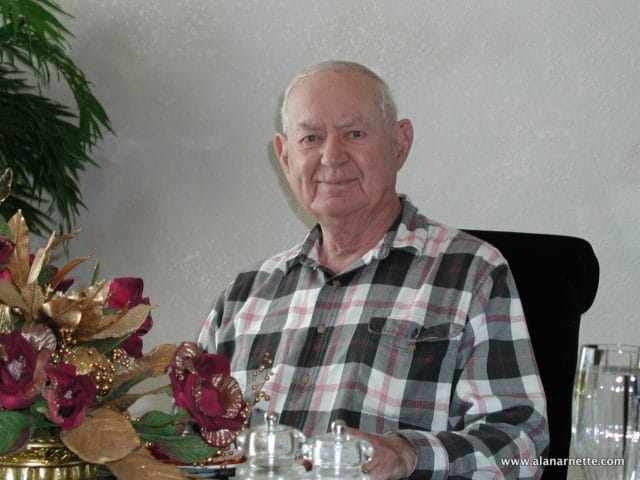
I walked over to my Dad, sitting in ‘his’ chair in the home where my brother and I were raised from the 1950s. Mom sat quietly in ‘her’ chair across the living room. Ken sat on the couch. I got on my knees to make direct eye contact with him. “Dad, you know Mom is sick and needs 24 hour care” I said gently knowing she was listening but not really understanding. We knew something was wrong with Mom but had no idea it was Alzheimer’s. Dad got the 1,000 yard stare and nodded his head, as tears welled up in his 80 something eyes. “I know, I know.” He said. “I’ll watch out for her. She is safe. Everything will be fine.” But the neighbors had told us an entirely different story – her wandering in the neighborhood, Dad getting upset with her and they were worried. “Yes, but you can move to an assisted living facility where you both can get the care you need. Or you can move in with us.” I added while touching his hand. Mom looked on with interest. The conversation ended that day with a promise from my Dad that he would look into it. However when I called a week later, nothing had been done and it was clear, he had no interest in leaving their home of 60 years. My brother and I were left with no options but to accept his decision and prepare for the worse. Hiding the Pain Usually I would go on to talk about my mom, Ida. But while watching a television show on HBO the other night, something extremely obvious and a bit embarrassing occurred to me about that time – my Dad was hurting as much as my mom. Of course I knew he was physically hurting. Approaching his middle 80s, his health was failing. He was consistently mis-managing his insulin, had hurt his back thus causing chronic pain and, well, he was just getting old. What I had not internalized was the emotional pain he was going thru watching his wife of 60 some-odd years slowly slipping away. I was focused on her, a common mistake but a mistake. Overtime I tried to talk to him about Mom and her condition. He always changed the subject. I regret today, not pushing him more. Farm Boy Joins the Army James B. Arnette was a proud man. Born on a farm in Eastern Tennessee in 1918, Jim joined the Army before he got drafted and was on D-Day +1. With only an 11th grade education, he went on to become the Administrator of a Memphis nursing home. They took care of people with incurable diseases. A difficult job today, even more so in the 1960’s, ’70 and on. He was there for 30 years, modeling for his two sons and wife, a love and care for people less fortunate. Family Was His Life Every Father’s Day for as long as I can remember, we would pack up the ’63 Chevrolet Impala to leave Memphis for a two week vacation – the beaches of Florida, the oil fields of Texas (Dad loved oil!), and then one time to Pikes Peak and on to Estes Park, Colorado where I saw Longs Peak for the first time. I don’t think I ever told Dad how much I appreciated his planting the ‘mountain seed’ in me that drives my passion today. But one day in September 2006, I got a call while on a business trip in Atlanta from my cousin. Dad was in a Memphis hospital, not unusual as he was there often. But this time was different, congestive heart failure. I was told he may not make it this time. I flew to Memphis and was shocked by how quickly Alzheimer’s had taken my mom. I walked in the door of our family home – a complete stranger to her – she let me in. I was stunned with the scene before me and about to unfold. Loose Ends At the hospital’s Intensive Care Unit, I entered Dad’s room, he looked old and frail, yet strong and alive. “This is quite a moving experience. Come in here with a little bitty thing like a low fever and you end up with heart trouble and kidney trouble but thank God they all improved some.” I filmed him while talking, wanting to capture a few words, perhaps his last. I shaved his uneven face that day, fed him his dinner and sat quietly with him. He started going thru the list of a dying man – how to pay the bills, what to do with the house, the car. Where he hid his will and valuables. He knew Mom was incapable of managing their affairs once he was gone. But mostly we were quiet. Mom sat on his bedside, smiling and pulling on his ear like a small child, unable to understand the seriousness of the situation. Dad just smiled back, holding her hand tightly. They pecked each other’s dry lips from time to time. Closure I knew Dad was going thru the memories of life, and he had many good ones. But the last few years had been difficult. He often lost his patience with his wife. He worried about money. He worried about her. And he never talked about it. A proud man who made a measurable difference in the world. A man who loved his family. Against all his wishes, and Ken’s and mine, Dad went on a ventilator and dialysis. Mom and I made one last visit. We entered his room to see him surrounded by machines and tubes – precisely what he never wanted but what his Doctors ordered. I had arranged for him to be taken off the machines and tubes so I could have one last ‘conversation’. “Dad, you know if you are taken off the machines, you will pass?” I said making direct eye contact. He looked me squarely in the eyes, squeezed my hand tightly, blinked and then gently nodded. We had closure.
The Climber’s Depression Abyss

Christine, 84 years young came up to me after a recent talk I gave on my K2 summit in 2014, both a success and an epic. “I don’t understand.” She said shaking her head in a bit of disapproval. I simply replied “I understand that you don’t understand.” With that, I expect only a handful of my readers to understand this post. You summit the mountain of your dreams. You did it in style with great friends or teammates. Everything was perfect. You come home excited, full of energy and then it hits … your emotions drop like a rock in a still pond. All ambition is gone. You mope around like you just lost your dog. At first you chalk it up to being tired, after all you trained for a year, pushed yourself to reach the summit, and back. You are tired. But something else is going on. You are depressed, not ally but you are really down. I understand. I’ve been there – a lot. Let’s look at three results of a climb: summit, no summit – your issues, no summit – out of your control Summit! You come home and friends, families, strangers, the family dog are thrilled to see you and heartfelt congratulations are offered, drinks are on the house. Just as you get ready to talk about your proud achievement, all the drama, how you dug deep, the personal life lessons you learned, your audience turns the table on you. “Great job. You must be so happy to get this one done. So, what’s next?” And so it begins. Of course you have pondered this question and have some ideas, but you want to take some time to reflect on the last climb before thinking about the next one. But this is not why you are feeling down, it goes much deeper. The last year has been all about your goal. You made sacrifices. So did your family. Your closest friends grew accustomed that the ‘climb’ was all you wanted to talk about. You denied it had become an obsession, but everyone else said it was. And now it was gone. You have a huge hole in your life. Instead of celebrating your success, you are drawn into the “no future goal abyss”. Trying to explain it is futile, no one understands except for a few fellow climbers, your friend, your partner. How long you remain in the hole is a big question. There are no ladders, no shortcuts out. It just takes time. No Summit – What Happened? This one is easier to understand. You ‘failed” (I don’t like that word used in association with climbing) and it’s your fault. You reached that point in the climb where you met yourself and you turned back. You know it. You know it deep down and it hurts. You thought you had trained, but you knew you can never ‘overtrain’. You thought you had studied the route, but you had never been there. You planned on being self-sufficient but you depended on others. You thought you had the right gear, but something went wrong. You thought … Rationalization is a wonderful thing. Coping mechanism at the , and worse. You struggle to explain to friends, family and the dog what happened. It’s difficult to simply say “It’s all on me.” But that’s the truth, and the truth hurts. But the dog is still thrilled to see you every time you reenter the room. And those friends who ask how did it go? Well the conversation starts with “Did you summit?” and you respond cautiously beginning with “No, but …” and go into a lengthy explanation of how the planets align, tectonic plates, vagaries of weather forecasting, bacterium versus viruses and …. When your audience regains consciousness they ask “Wow. So what’s next?” Back into the abyss. No Summit – It Wasn’t Me! Perhaps the easiest and the hardest of our three scenarios. You have a built in excuse but you still didn’t accomplish your goal. On the flight home, you go thru the five stages of climber’s denial: 1. Pissed off 2. Dejected 3. Heavy drinking 4. Sleep 5. Planning the next climb. Everyone understands but no one wants to hear the details. Once again, you find yourself alone in climber’s depression. Not summiting, or achieving your goal because someone else didn’t do their job is tough to accept. After all, their lack of ‘whatever’ was not your problem, but it became your’s. Not summiting because nature decided to do a random act of “whatever”, was never on your radar, but once it occurred, you had no choice but to accept Her wrath, hopefully with dignity … but some days that is harder than others. Your friends, knowing you didn’t summit, tread lightly upon the first meeting. “Tough break. You did your , but these things happen. Hang in there.” and then …. “So, what’s next?” Back into the abyss. So, What’s Next? If you have ever climbed, rock, ice, foothills or the big ones, you know how it feels. The elation of reaching your goal, the loneliness of not. After the climb is often the toughest phase. The land of “tweens”. The time of annoying questions. And the time to pick yourself up, get on with life and to tell your entire story, in vivd detail, to the family dog … Climb On! Alan Memories are Everything
I am proud to be called a Climber
On May 21, shop 2011 at 5:30am, I stood on the summit of Mt. Everest. I felt small, tiny, and insignificant as I watched the sun rise over the world’s tallest peaks. I felt grateful as I hugged a down covered Kami Sherpa (Ang Chhiring Sherpa – Pangboche). I felt sadness and inspiration as I dedicated the summit to my mom, Ida, and the millions of Alzheimer’s s and their caregivers around the world. Standing on the summit of Everest, provided fuel to my passion and purpose in life. Today, May 21, 2014, marks the three year anniversary of that summit. But it is a time of immense sadness in the Everest climbing community. This year we saw the deaths of 17 Sherpa on the Nepal side of the mountain. 16 died in the single worse tragedy as a piece of ice released from a serac on the West Shoulder almost immediately killing the Sherpa waiting for a ladder to be repaired in the Khumbu Icefall. Once again, Everest garnered the world’s attention for the wrong reason. Climbing mountains is dangerous, you can be killed. This is not a secret or a mystery or even an epiphany to anyone, non-climbers included, who struggle with why someone would climb and are generous with their harsh judgments and conclusions. Most climbers just let the rhetoric roll off their shoulders knowing you cannot convince someone who is not open to listening, steeled in their world of superiority. Death in the mountains cannot be defended or explained. Looking for logic is a pointless exercise. There is no logical explanation as to why these Sherpa died the way they did. Yes, there is a physical explanation but ask each of them why they were there, and you would get a variety of reasons but the common theme would be it was their job. The member climbers, or as the most judgmental of the critics like to call them – tourists, are quick to receive the blame for the deaths with hyperbolic statements like the Sherpas wouldn’t have died if the members hadn’t been there. I received an email from one of my blog readers calling me a murderer. I assume he was blaming me for all mountain deaths because I climb mountains. He wasn’t specific in his spew of hatred. While I understand his anger, his aim is misplaced. Climbing can be made safer, but the burden rests primarily on each individual. I have been on 35 major expeditions since I started at age 38, all with Sherpas for the climbs in Nepal and Tibet. My respect for their culture grew as did my own experience in climbing. I am proud that I summited Ama Dablam with Lhapka Sherpa, Manaslu with Pasang Ongcho Sherpa last year and Everest with Kami three years ago, but I’m more proud that I have new friends for life. I am proud to again be climbing with Kami, this time on K2. Our relationship is built on mutual respect. I climb mountains because I love the connection with nature, the spirit of adventure and the challenge of a difficult objective. My ethos is one of preparation, self sufficiency, respect for the mountain and appreciation for those who help me in my quests. I could not climb the mountains I do alone, unsupported or independent. This is my reality and one I say with pride. The support I receive enables me to aspire to greater goals than just a summit: to tell the world that Alzheimer’s must be stopped and caregiver support must improve. It is an means to an end, an environment of mutual dependency, of mutual gains. It is a relationship born of needs and desires. The member climbers of Everest 2014 struggle with a confluence of guilt and desire. They ask rhetorical questions of should they have been there in the first place, what was their role, should they go back to pursue their dream. The critics are quick with a quip, a piece of satire or an insensitive judgmental reply damming their ambitions to Hell or worse. Today, I mourn the deaths of the Sherpa. I mourn the deaths of all die in pursuit of making a better life for their families, those who work to survive. This dream has fueled ambition and risk since the beginning of human existence. It is life, and it is death. Death is a fact in the mountains. It is a voluntary endeavor. Those who choose to climb, accept the risk. I will continue to climb, accept the risk, accept the support I receive from those around me. We will climb together, benefiting in different ways for different purposes. I am proud to be called a climber. Climb On! Alan Memories are Everything
Dear Santa
Dear Santa, 2013 has been a tough year for many people, with the gifts often not being under the tree I‘d like to ask that you to deliver these presents this Christmas: For my Alzheimer’s community: – For those who are suffering with Alzheimer’s, a gift that brings them comfort for a single moment, every moment all year long – For caregivers, they need a gift that is just for them, no one else, that they can use everyday – For medical researchers, a gift of discovery that brings new energy to their mission And for the rest of us: – remind us that it is OK to cry, it is good to dream and to laugh – fill empty hearts with a sense of joy and optimism through supportive families, good friends, and a sense of purpose – Open closed minds to new possibilities through removing the blinders that constrain our thinking and limit our dreams – Help those who feel hopeless with a surprise gift that brings joyful anticipation – Bring those who are angry, the gift of forgiveness and peace – For all of us, patience and irrational hope to deal with the daily challenges of life – Help each of us to understand that we individually represent what we love and hate in this world. Help us to increase the love and reduce the hate starting within ourselves. – Finally Santa, that every memory created is a memory we will use one day to look back on and evaluate our life; so remind us to cherish each moment, value each relationship and never take anything, or anyone, for granted. Thank you Santa and Merry Christmas everyone. Climb On! Alan Memories are Everything P.S. Oh, and you can bring me a new 4-season single walled tent 🙂
A Evening with Jeff Lowe: Ice Climbing Legend
On December 17, hospital 2013, try I enjoyed an incredible evening attending a fund raising event at the American Alpine Club for Jeff Lowe’s movie, sick Metanoia. It was a who’s who of climbing with Jeff, himself, Conrad Anker, Jon Krakauer, George Lowe, Eric Weinheimer, Charley Mace, Lynn Hill, Tom Hornbein all speaking or in attendance. If you don’t know Jeff Lowe, he is credited for practically inventing ice climbing as we know it today and pioneered unbelievable new routes including on the Eiger. The list of his climbs are impressive as he set new ways of looking at climbing difficult ice including the first ascent of Colorado’s Bridalveil Falls, setting the standard for steep ice at the time. In 1979 he made the first solo ascent of a major new route in the Himalaya, the South Face of Ama Dablam. Jeff now has a form of ALS and is in a wheelchair but was at last night’s event bringing further inspiration to the packed house through his humor, wit and presence. While under hospice care he is working hard to raise enough money to see the movie come to life in 2014. Please consider a donation to take his movie from a dream to reality at http://jeffloweclimber.com/The-Movie.html Click this link to see the trailer. One of Jeff’s signature climb was a 9 day climb on the North face of the Eiger in Switzerland in 1991. During the fund raiser, Jon Krakuer, who filmed the climbed, talked us through a slide show the climb. As Jeff neared the summit, he had to abandon his pack when he couldn’t find any anchors at the end of his rope. He free soloed the last 50 feet to the summit ridge where he was picked up by a helicopter, just hours before a climb ending storm hit the North Face. In 2011, Josh Wharton retrieved Jeff Lowe’s pack from high on the North Face. This video clip shows Jeff opening the pack. The movie title, Metanoia, comes for the name of the Eiger route and means “change in one’s way of life resulting from penitence or spiritual conversion.” Overall this is a movie that will open the eyes and inspire anyone who climbs -ice, rock or alpine – today. As a climber this is a move that must be made. I fully endorse the effort and ask if you climb and have an appreciation for those who set the routes before us, please consider a donation today. Climb On! Alan Memories are Everything