The Christmas I lost my Mom
In 2001 we returned to Memphis to visit my parents over Christmas, something I had regularly done since leaving Memphis to start my career over three decades earlier. One of our annual traditions was going to the Christmas buffet at the famous Peabody Hotel in downtown Memphis. It was always special. We said hello to the ducks in the lobby fountain, enjoyed the huge, beautifully decorated Christmas tree and made our way up to the top floor ball room to pig out. It was grandiose as usual. Smart white table clothes covered round tables that surrounded the dance floor. There, the tables were filled with an endless selection of Eggs Benedict, smoked salmon, Belgian waffles, applewood smoked bacon, and prime rib. The service was impeccable. Ah, it was good to be home! We each got up, taking plate in hand, and started our search for our favorite dish. The following moment is locked in my memory forever. I noticed my mom walking around aimlessly. She was lost, not knowing where she was or who we were. As I went over to her, she seemed startled at my approach. “What do you want to eat?” I asked her gently. “Oh, you know, the usual.” was her noncommittal answer. My wife had commented earlier that morning that my mom was not changing clothes, putting on makeup or fixing her hair. Highly unusual given the importance she placed on how she looked in public. We asked if she was going to change clothes and she dismissed it quickly saying she looked fine. We helped her select a nice outfit. During the half hour drive to the hotel, she asked four times where we were going. We exchanged worried glances as the signs were there. Over Christmas and the following days it was clear my mom’s condition had worsened. But I didn’t know what I didn’t know. She had developed an odd pattern of repeating questions over the past several years when we spoke to her on the phone every Sunday. She told me the same story about her friends several times during the same conversation. She had lost interest in some of her favorite things, she seemed to have become more withdrawn, very usual for this social bee. She had trouble sleeping throughout the night. She no longer did her crossword puzzles. I spoke with neighbors who said they were worried about her wandering the street. Her church friends told me of similar experience with her memory loss. Her large clan of brothers, sisters, nieces and nephews in Memphis confirmed my observations. My mom was not growing old, she was sick. We talked to my dad privately. He said, yes he thought she had some issues but nothing out of the ordinary given her age. She was only in her mid 70s. My brother and I pushed him hard to get help, see their family doctor. I remember being on my knees, holding my dad’s 80 year-old hands as he sat in his favorite chair begging him to take action. He promised he would. Asking for help was difficult for this proud, independent man. Fueling the concern was that two of my mom’s sisters were already diagnosed with Alzheimer’s. In hindsight my mom had gone through the early and mid stages of dementia, probably Alzheimer’s, for as many as 10 years without us understanding what was really happening. It had sneaked up on us. One day, I’ll write about what I call the worst day of my life with my mom but not today. The next few years saw her condition decline, we did what we could. Her doctor confirmed, as he could, she had Alzheimer’s. My dad tried to keep her on Aricept but let the prescription lapse over and over. I don’t blame him, but now understand we could have done more. We represented the typical family today, spread across the country; established in cities with jobs, houses, families of our own. No luxury of snapping a finger to make things different. Maybe I should have. My mom died from Alzheimer’s on August 16, 2009. So as you make the pilgrimage across the country or town to see your aging relatives this Christmas, stay alert for any signs that something is amiss. If there is, take action, help. Learn the 10 warning signs. If you are looking make a difference in the world of Alzheimer, make a donation to a non-proift for research, awareness, education, public policy or caregiver support. Make a donation. If you are visiting someone with dementia this holiday, them just like you would anyone – that’s what they want. They didn’t ask for this condition but deep inside they are the same person they have always been. Learn holiday practices. The holiday are a special time, an opportunity to reflect, renew and enjoy. I wish the very for each of you. Climb On! Alan Memories are Everything [poll id=”3″]
The End of Innocence: 26 Dead in Connecticut
Standing at the curb, look annoyed by the canceled shuttle service from the hotel to LAX, I reminisced about the wonderful time we enjoyed at Disneyland the past few days. As I glanced at my iPhone to catch up on the news, I saw the headline “Shooting at Connecticut School”. Not again I thought and looked down the street for the bus. The journey home was uneventful – on-time flights, polite crowds, cramped coach seats – but as we learned more about the “shootings” the sadness sunk in. At Disneyland, we saw many kids. I often commented on the number of strollers. The new moms and dads taking their kids out for a spin. The easy laughs of children on Peter Pan, Dumbo, It’s a Small World or Alice in Wonderland. Yes we rode them, along with the kids. The horror of the killings sunk in as we got home. We silently watched the news, asking the same question asked around the world – “Why?” They should not be lost in the headlines: 6 adults, 12 girls and 8 boys. The children were either 6 or 7 years old. The teachers from 27 to 56 years old. I went to bed that night thinking of the parents and the unopened Christmas presents, the car seats no longer needed – the horrible aching that would never go away, the new normal in their life. The sister lost forever. I thought of guns and why we have them. The purpose of 2nd amendment when it was written in 1791 ? 220 years, 11 months, 29 days before this shooting. I read Twitter and Facebook and shared silently in the outrage of my social media friends. The ones who post pictures and videos of themselves shooting their guns for fun were silent. The teachers were livid. Everyone was sad. I watched the Sunday morning news programs and listened carefully to the gun control debate. The pro-gun Senators and Congressman choose not to participate. If a defense was to be made, it was the background checks worked, the killer was not allowed to a gun a few days earlier. He used his mom’s weapons. He was mentally ill – so guns are not to blame. Left out was that it seems he selected the automatic weapons from his mom’s gun collection, a Bushmaster M4 semi automatic weapon similar to the model used by soldiers in Iraq, not the deer hunting rifles. He is thought to have used ammunition designed to inflect as much damage as possible, not humane ammunition – an oxymoron at the least. It appears that he knew what he was doing. President Obama said what he needed to say. He shed a sincere tear thinking of his own 14 and 11 aged children. Then he said: As a country, we have been through this too many times. Whether it is an elementary school in Newtown, or a shopping mall in Oregon, or a temple in Wisconsin, or a movie theater in Aurora, or a street corner in Chicago, these neighborhoods are our neighborhoods and these children are our children. And we’re going to have to come together and take meaningful action to prevent more tragedies like this, regardless of the politics. Nice words. We are at an inflection point in the United States. Advanced countries have adopted more reasonable gun laws for decades. The U.S. has taken a simple concept of self protection and allowed it to be morphed into the absurd. Don’t let the details of the Sandy Hook killings distract from the main point – the United States must become civilized. I often talk about memories in the context of Alzheimer’s. If you have not experienced an older person not remembering their husband or wife or where they lived for years, think of the small child who will never have the chance to make those memories. I am sad. Alan
The Colorado High Park Fire – A Personal Perspective

The fear of anyone living in the mountains is fire. While there are many ways to protect your home from the onslaught of a raging wave of fire, click sometimes there is nothing you can do. This past weekend, the residents of Northern Colorado saw such a fire develop and it continues today, 4 days later. The High Park Fire has gained notoriety and priority due to the explosive size and location next to an area of 250,000 people. Started by a lightening strike deep in the Roosevelt Forest, it started as a smolder but soon grew to 2 acres, then 200 then 2000. It doubled in size every half day until now it is the 3rd largest fire in Colorado history at 43,333 acres (67 sq miles, 17,500 hectares). First Sighting On Sunday, June 9, my friend Jim Davidson and I were climbing Longs Peak (14,256′) in Rocky Mountain National Park when we saw smoke rising from the forest just north of us. It quickly grew and I called my wife from the summit to learn it had grown from 2 to 5000 acres within a few hours. I took the picture in the upper left and this video to capture that moment. Today, my city is covered in dense smoke making it difficult to breath and burning eyes – minor compared with what the firefighters are dealing with. Following the Fire To follow the progress of the fire, the website for the entire US covering incidents, InciWeb, is excellent. This is a very detailed map showing the fire area from ESRI. Fighting the Fire The response from local officials: fire, police, sheriff, forest service has been outstanding and now has been supplemented with help from federal firefighters aka Hotshots. As of Tuesday, June 12, there were more than 600 firefighters and almost 20 aircraft deployed on the fire. This gallery to give you a flavor of what we are seeing here in Colorado over the past few days. Personal Impact There has been one life lost, a 62 year-old woman who apparently was trapped in her cabin in spite of efforts to evacuate her. Hundreds have been evacuated from their homes and are now living in hotels, with friends or at shelters. Pets and livestock are being kept at shelters. I cannot imagine hearing a knock on the door and being told to leave immediately – zero time. But hopefully those who live in these areas are prepared with ‘Go Bags’. These fires are a fact of life out West but also occur in Florida to Michigan to California. The impact will scar the lands for decades but I am reminded of the Yellowstone fire in 1988. A couple of years later, I saw it for myself and was happy to see pine seedlings taking root and fields of wild flowers. Nature will recover. For now, society will take longer having lost recreational land, homes and sometimes family. I am grateful to the fire teams and other professionals for keeping our city safe. Thank you. Climb On! Alan Memories are Everything
A Week in the UK: Ben Nevis and ADI

What an exciting week! I summited the highest peak in Scotland, ask the UK’s Ben Nevis on Monday and spoke at the Alzheimer’s Disease International (ADI) annual conference in London on Thursday with a corporate speaking event in between. But more than that, I met some incredible people, shared some thoughts and learned even more about the world of climbing and Alzheimer’s. Ben Nevis Climb I have just posted a complete trip report along with an FAQ on my climb. It was everything I expected and more. It was just as beautiful as advertised, more difficult than anticipated and thankfully, the Scottish weather gave me the day they had in months to make the technical climb. ADI Conference Thanks to my friends at the Alzheimer’s Immunotherapy Program of Janssen AI and Pfizer, I was given the opportunity to present my 7 Summits Climb for Alzheimer’s as a case study in advocacy work. I was humbled by the generous reaction of my large audience at the conclusion. I also was honored to listen to presentations from many country representatives of their work to educate their public and raise awareness on Alzheimer’s. This included India, Taiwan, New Zealand, Australia and Switzerland. There is some wonderful work going on in all these places. And their crisis is identical to what we see in the US – from stigmas, to education, finance, caregiver support and the need for research. But the standout had to be the work by the Scottish team. A small group of individuals – all with various stages of dementia and Alzheimer’s gave a very moving representation on what I will call “life after “. They call themselves the Scottish Dementia Working Group and inspired everyone with their can-do attitude and energy to continue to live life and never give up. One of the lesson I took away from the conference was the importance of public policy in addressing the massive problem of Alzheimer’s. Many speakers gave presentations on how to work with government representatives to educate them and on how to influence public policy and funding. There are many successful case studies around the world. Finally , one promising comment was the prospective involvement of the World Health Organization in increasing the priority of work around Alzheimer’s. At this juncture in my work, I am full of hope and optimism. I will continue to tell my story and use my climbing to further education, raise awareness and ask for donations on behalf of my non-profit partners. I want to leave you with this touching video from Scotland’s Tommy Whitelaw. It is well worth the 3 minutes to watch: Thanks for following and as always Climb On! Alan Memories are Everything
Climbing UK’s Ben Nevis for Alzheimer’s
I am excited to continue to climb the world to end Alzheimer’s. Next up is the highest in the UK, Ben Nevis, on March 5, 2012. I will be in the UK speaking at the Alzheimer’s Disease International annual conference. I will tell the story of my mom, Ida, her struggles and my sense of helplessness at the time. However since her death in 2009, I have channeled those feelings into raising awareness that Alzheimer’s is a disease, just like cancer or diabetes but unlike many diseases, has no cure, no effective ment and no simple means of early . This all must change and it will come with more money invested in research, education and awareness. That is the message I will send from the highest peak in the UK. Alzheimer’s in the UK According to the Alzheimer’s Society of the UK, there are 750,000 people with dementia in the UK with numbers set to rise to one million by 2021. And similar to other countries around the world, the financial and emotional on caregivers are substantial. Alzheimer’s Disease International estimates 36 million people worldwide have dementia. As the population ages, that number will increase to 66 million by 2030 and to 115 million by 2050. Ben Nevis Known as simply Ben by the local, it is steeped in history and acclaimed as one the premier climbing spots in all the UK. It is located in the Scottish Highlands at the western end of the Grampian Mountains. The nearest town in Fort Williams and also Glasgow. The first summit was recorded in 1771 by a botanist, James Robertson. In 1883 an observatory was built on the summit and now is no longer in operation but the trail aka the Pony Track, remains popular and is used by thousands each year. The John Muir Trust bought massif and surrounding area in 2000. The second highest peak in the UK is Ben Macdui at 4,295’/1309m, northwest of Ben Nevis. Ben is climbed year round but is famous for difficult weather with clouds covering the summit nearly 80% of the time in winter and 50% in summer. It is said the summit is clear one out of every ten days. The average summit temperature is around freezing and it receives twice as much rainfall as nearby Fort Williams. There is snow year-round in the gullies. I will be climbing the classic Tower Ridge (pictured above), a 1800′ ridge line with significant exposure and several tricky parts. It is graded as a Scottish level iV, 3 meaning the route has steep ice with short vertical steps or long pitches up to 70º, or mixed routes requiring advanced techniques. I will be climbing with Ken Applegate of Abacus Mountain Guides Follow Along and Donate to Alzheimer’s OK, off I go again, so please follow along on this site and please consider a donation to the UK Alzheiemr’s Society or one of our other non-profit partners. Climb On! Alan Memories are Everything
Communicating from Everest – 2012 Update
I receive many questions on how I did my live dispatches for the 7 Summits so I put together this short tutorial for anyone wanting to communicate during an expedition from anywhere on our planet. While staying in touch is mandatory and part of an expedition for me, some people want to get away from it all and escape the modern noise that comes with 24 by 7 communications. If that is your case, then take a sat phone for safety but don’t use it unless there is an emergency! Tell everyone that no news is good news and you will see them when you get home. And enjoy your time off the grid For everyone else, online here are several basic ways to keeps friends and family informed while you are on an expedition. Call a Friend: Call a friend who passes it along or transcribes your conversation and posts on your Facebook page or blog Email an update to a friend who forwards it, posts on Facebook or cuts and pastes it to your blog Do it Yourself: Phone in a voicemail through a service that posts it directly to your blog Send an email that automatically posts to your WordPress Blog Write a post and upload it using the Internet along with pictures and/or videos directly to your blog There are many ways to do this communication but I will cover what I have been doing for over 10 years. I have learned a lot and stick with what works – for me. I do all the programming but I am not THAT technical. There are consultants who you can hire at $150 an hour to do the work for you. I started with “Call a Friend” (my wife managed the transcription much to her chagrin) but soon switched to a fully automated system. The minimum setup you need is a phone, either satellite or cell depending on where you go and what service is available. For more sophisticated and independent postings you need to add a computer of some type, a digital camera and an Internet connection. This will enable you to connect with software that is linked to a website which may include a Blog, WordPress for example. If this sounds confusing, it is and it is not. So let’s break it down. Websites The first decision to make is where do you want followers to follow you – Facebook, Twitter, your own Blog or a dedicated website – or a combination of all of these. Also, is this a one time event or something you want to build over time. For a one time expedition, using Facebook is easy but limited over what you can control and present. A dedicated Blog, WordPress or Blogger for example, gives you significant control over how you present your information plus you can add links and pages for more information, causes or other sites. A dedicated website is the choice if you want full control over look and feel to build a long term destination for family and friends to follow your adventures for years to come. But all this comes with a bit more work. If this is all too much, there is a one stop shop approach for dispatches coming up. Don’t get overwhelmed with all these choices, it is actually much simpler than you think. COMMUNICATIONS This is the crux of your dispatch plan. You have two basic choices: Phones or Bgans. Again, one step at a time. For phones, there are cell phones and/or satellite phones using networks from Iridium or Thuraya depending on where you are climbing. A combination of phones sometimes might be in order. Iridium vs Thuraya Satellite Phones I always suggest bringing a sat phone since cell service is not reliable in remote mountain areas even though it may be in the local mountain gateway city. I feel there are only two satellite systems to consider: Thuraya which is for Asia, Africa and Europe and Iridium for North and South America, the oceans and the poles. Thuraya is the choice for data if you are climbing in their coverage area (which includes Everest) because once you lock onto a satellite you do not usually lose it whereas with Iridium you are switched between satellites as they move across your view and in my experience, you will lose the data connection during each switch most of the time, even though they tell you it will switch seamlessly. This lost connection limits your data uploads to a short few minutes preventing a dispatch with several images. If you lose your connection you must restart the upload process meaning lost time, money and sat time. The only time my Iridium connection was rock solid was on Kosciouszko’s summit where I had a 100% clear sky and unlimited visibility. Even in Antarctica, I could only connect for 4 minute periods before losing my data connection. To state the obvious, most mountainous areas rarely have unobstructed views of the sky, duh. Thuraya can be less expensive than Iridium on a per minute basis by almost 50% depending on your location. For example calls to the US from Nepal cost US$0.90 a minute but from China or Pakistan it goes up to US$1.90 per minute using their new NOVO SIM. The NOVO SIM is new for Thuraya and now automatically changes rates based on your GPS location eliminating their prior ECO and Prepaid SIMS. If you in bulk, say 500, 1000 or 2500 minutes/units, you can gets 30% discount lowering the per minute costs to US$0.63 or USD$1.33. Iridium is a flat US$1.30 per minute from anywhere in the world. It might be less expensive over the long run to your satellite phone instead of renting it depending on how many trips you plan and how many minutes you will use. Usually renting a phone implies more expensive minutes but not always so shop around. Sat phones range from $800 to $1800 and rentals around
Words: 2011
In the last days of 2011, I wanted to write about my last 12 months of climbing mountains to raise awareness and research funds for Alzheimer’s, but I couldn’t find the words. The emotions and gratitude are immense. I could only come up with the following in hopes it expresses my feeling to everyone who made a donation, everyone who followed the journey and to everyone impacted by Alzheimer’s. And we are not finished. I climbed mountains in 2011. Not for summits but for a message. Words are what we have. What we use. A collection of letters struggling to express emotions, thoughts, memories. When the wind blew so hard, the snow blinded our eyes, we found a way. Words are what we have. A smile, a hug, a handshake. Unspoken when we cannot find them. Eventually, Alzheimer’s took my mom’s ability to speak. Words are what we have. She mumbles. A sound. Followed by a look. Where are the words? Reaching for my sat phone on the summit, it was time to send the message. Words are what we have. Breath. My heads spins. Thoughts, emotions of the day. Capture them all. In words. Comments from around the world made the difference. Words are what we have. I read what you wrote. I heard what you said. Your words go deep. Struggling to say, awkward and clumsy. Words to capture the experience. Impossible. Inadequate. A blink and a lifetime A year has passed. Thousands, millions, billions of words. Still, more remain. The journey continues. Memories live on. Closed eyes. Listen carefully. The words come alive. They are there. Always have been.
Thank you Steve Jobs
This may be the first time I have ever felt sad for a corporation because they lost one of their leaders. But this is different; it is personal. Steve Jobs passed away today, October 6, 2011. I feel like I lost a life long friend because I have. Steve and I started our relationship in 1979. You see we were about the same age, a year apart. He was building computers and I was ing them. OK, we were eons apart but I felt the connection. I bought an Apple II because … I was never sure but I knew I needed one. It was cool. It was the future. It had 64Kb of RAM, an external floppy disc drive and I had to a cheap black and white monitor separately. There were no programs, um I mean apps, and I had to write my own if I wanted to see anything. So using BASIC, I wrote my own version of Quicken. I was an Electrical Engineering student at the University of Memphis and word spread to the local newspaper, the Memphis Commercial Appeal. A reporter came to my house to interview me about this strange thing I had bought. I waxed on and on about it would change the world, the impact it would have on people. The reporter just looked at me. But you see, I believed. I believed in Steve and Woz. I went to work for HP and Apple became the enemy. Actually, Apple was ignored. With 1% marketshare, it was a non factor in the personal computer world so like billions of others, I became immersed in the Windows world. But I always read, watched and wanted Apple. Steve got my heart. He captured my imagination like no other company. 30 years later, I retired from HP and began to transform our home from a Windows shop to an Apple one. Not because Windows and PCs were bad, Apple was just better. Today we have 9 Apple products from iPads to iPhone to iMac to iEverything. Yup; hook, line and sinker. The cool aid tastes good. I once interviewed at Apple. I had returned from 5 years with HP in Europe and was trying to reintegrate into the US scene. Apple had a position back in Europe, where we loved to live and I applied. It was for a position two levels below Steve. It only took a few minutes to see that I would be personally directed by Steve even though I would not report to him. Every question I asked or point I raised was referred to Steve. It was clear who ran Apple to this applicant. I didn’t get the job but my admiration soared. A hands-on CEO who cared about everything … everything. Today, I write this on an Apple product. I read about Steve’s passing on an Apple product. Sitting here in Europe on my way to an Alzheimer’s conference, I see a lot of Apple products. Henry Ford changed the way people moved, Steve Jobs changed the world. I will miss you Steve but you were smart enough to make sure I won’t miss Apple.
Everest 2011: A letter from my Congressman and more
I was surprised to receive this personal letter today from my US Senator, try Mark Udall. I didn’t know a lot about his climbing experience but the personal nature of this note led me to find a kindred spirit with my Senator. While my attention was immediately directed to his climbing comment, it was his acknowledgement of the Alzheimer’s work that brought a smile. Senator Udall supported the National Alzheimer’s Project Act recently signed into law by President Obama. He worked for Colorado Outward Bound School as a course director and educator from 1975-85 and as the organization’s executive director from 1985-95. He summited the 28,169′ Kanchenjunga in 1990 and attempted Everest three times without a summit, including reaching 25,500 on the North Face. Also he was stuck near the summit of Denali for 10 days waiting out a fierce storm If the Udall name sounds familiar, politics runs in his family. His father, Morris “Mo” Udall, served in the U.S. House of Representatives for 30 years and ran for the Democratic nomination for President in 1976. His uncle, Stewart, was Secretary of the Interior under U.S. Presidents Kennedy and Johnson. In 2008, Mark’s cousin, Tom Udall, was elected as New Mexico’s Senator. Udall serves as the chairman of the United States Senate Energy and Natural Resources Subcommittee on National Parks. Thank you Senator! and Climb on! To get to know my Senator better, watch this crazy interview with comedian Stephen Colbert. He starts to discuss Everest at 3:16 at in the video. The Colbert Report Mon – Thurs 11:30pm / 10:30c Better Know a District – Colorado’s 2nd – Mark Udall www.colbertnation.com Colbert Report Full Episodes Political Humor & Satire Blog Video Archive
Gear Review: Patagonia R1 Hoody and MICROspikes
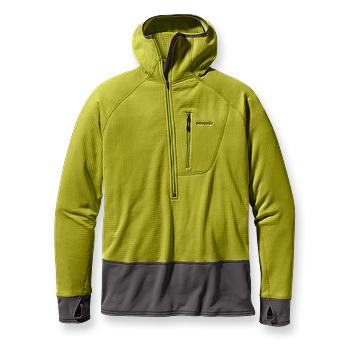
As I work my way through climbing the 7 Summits, stuff I am testing a few pieces of new gear both on the climbs and for training. First up is new to me, a mid layer for warmth – the Patagonia R1 Hoody. Patagonia has had variations of this style available for years but this new version is a strong winner. The other item are MICROspikes from Kahtoola. Developed by the grandson of the famous Gore family, here these are crampon replacements are designed for situations when the big guys are too much. I have been using them on my training climbs this winter and am very pleased. Gear Review: Patagonia R1 Hoody Gear Review: Kahootla MICROspikes Climb On! Alan