2024/25 Winter Himalaya Climbs Update 2: Jost Successful
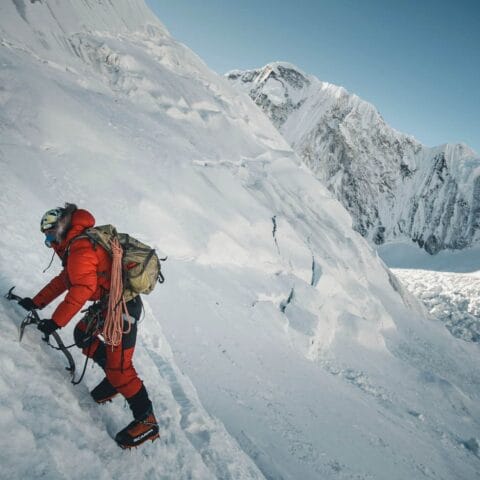
The winter season is underway for four of the 8000ers: Everest, Makalu, Manaslu and Annapurna. High winds are stalling two, and two are effectively over. One has met their their goal.
2024/25 Winter Himalaya Climbs Update 1
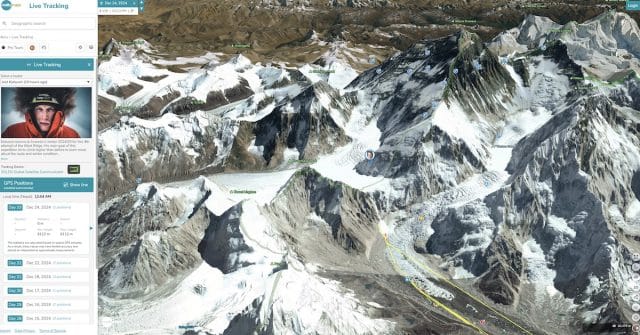
The winter season has begun for three of the 8000ers: Everest, Manaslu and Annapurna. Each is unique in style, and professional climbers are at the helm.
2024/25 Winter Himalaya Climbs: Everest, Manalsu, Annapurna
The winter season has begun for three of the 8000ers: Everest, Manaslu and Annapurna. Each is unique in style, and professional climbers are at the helm.
Comparing the Routes of Everest – 2025 edition
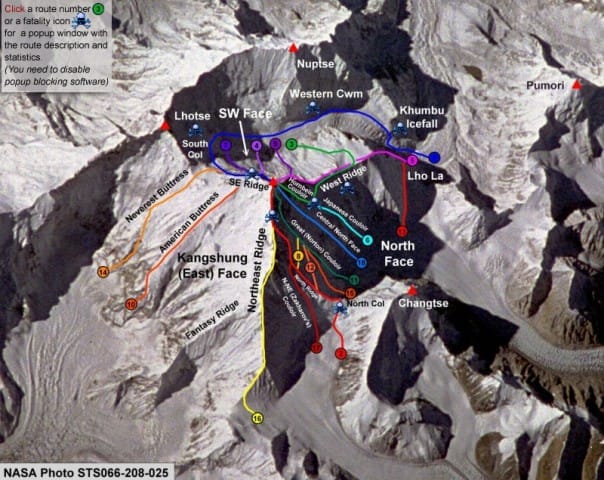
This another BIg Picture post before my annual coverage of Everest 2025. The season is still a few months away, and I’ll be posting several updates before the season officially begins in early April:
– Everest by the Numbers: 2025 Edition – A deep dive into Everest statistics as compiled by the Himalayan Database (posted December 16, 2024)
– Comparing the Routes of Everest: 2025 Edition – A detailed look at Everest’s commercial, standard and non-standard routes. (posted December 19, 2024)
– How Much Does it Cost to Climb Everest: 2025 Edition – My annual review of what it costs to climb Everest, solo, unsupported and guided.
– Everest 2025: Welcome to Everest 2025 Coverage – an introduction to the Everest 2025 Spring season.
2025 will be my 25th season of all things Everest: 19 times providing coverage, another four seasons of climbing on Everest, and two years attempting Lhotse.
This is an updated post of my annual “Comparing the Routes of Everest ” blog post. For 98% of all Everest climbers, the choice of routes is the Northeast (Tibet) and Southeast (Nepal) Ridges. For today’s commercial clients, all other routes are too dangerous, complicated, and not commercially guided. This post will examine the various routes and explore the most popular commercial through 2024.
Why do I do this? Well, one word: Alzheimer’s. I lost my mom, Ida, and four aunts to this disease, which changed my life forever. You can read more at this link. I hope you enjoy my coverage and donate to any of my selected non-profit partners or your preference as a tangible thank you. Of course, I never benefit financially from your donations. Just click on the button, which is always at the top right sidebar. #everest2025
Everest by the Numbers: 2025 Edition

Welcome to Everest 2025. The season is still a few months away, and I’ll be posting several Everest 2025 big-picture updates before the season officially begin in early April:
– Everest by the Numbers: 2025 Edition – A deep dive into Everest statistics as compiled by the Himalayan Database
– Comparing the Routes of Everest: 2025 Edition – A detailed look at Everest’s routes, commercial, standard and non-standard.
– How Much Does it Cost to Climb Everest: 2025 Edition – My annual review of what it costs to climb Everest, solo, unsupported and guided.
– Everest 2025: Welcome to Everest 2025 Coverage – an introduction to the Everest 2025 Spring season.
2025 will be my 25th season of all things Everest: 19 times providing coverage, another four seasons of climbing on Everest, and two years attempting Lhotse.
I’ve updated my annual “Everest by the Numbers” blog post. I looked at summit and death rates, the use of oxygen and its impact on summits and deaths, and disturbing trends like the increasing support for climb. I hope this is useful for everyone.
Why do I do this? Well, one word: Alzheimer’s. I lost my mom, Ida, and four aunts to this disease, which changed my life forever. You can read more at this link. I hope you enjoy my coverage and donate to any of my selected non-profit partners or your preference as a tangible thank you. Of course, I never benefit financially from your donations. Just click on this button, which is always at the top right sidebar. #everest2025
PSA: Looking for climbers who have attempted mountains above 6,000 meters
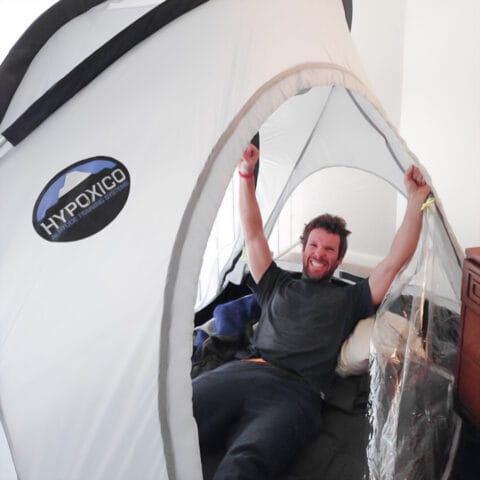
As a public service announcement, I’m sending this invitation to participate in research for climbers who have attempted mountains above 6,000 m.
Podcast Series: 7 Summits Episode 10–Everest with Adrian Ballinger & Mike Hamill Interview
Welcome to my limited series on climbing the Seven Summits. For eight weeks, I’ll drop a new episode discussing one of the 7 Summits in detail. Today is Episode 10, Everest with special guests Adrian Ballinger, founder of Alpenglow and Mike Hamill, founder of Climbing the Seven Summits. #7summits
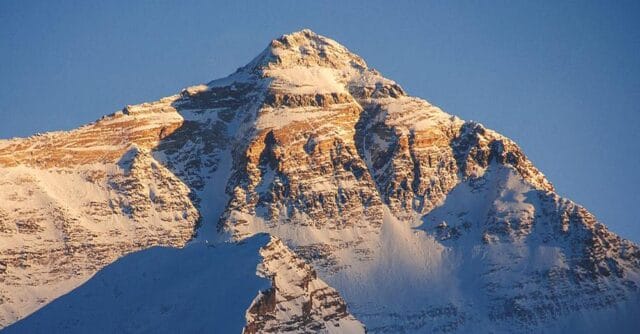
Mount Everest is the highest mountain in Asia and the world, at 29,031.69 feet or 8848.86 meters, making it the highest of the Seven Summits. With seemingly unlimited attraction, climbing Chomolungma has dramatically changed over the decades.
Stradling the border of China (Tibet) and Nepal, it grows by about 0.0063-0.021 inches or 0.16 to 0.53 millimeters annually due to the northward movement of the Indian tectonic plate and a “rebound” effect caused by merging rivers. Everest is so high that it juts into the jetstream, atmospheric winds that typically travel west to east at speeds ranging from 80 to 140 miles per hour but can accelerate up to 275 miles per hour.
Through January 2024, there have been 12,015 summits (5,907 members and 6,108 hired). In other words, more support climbers, primarily Sherpas, have summited than foreigners. Yet more foreigners, 200, have died on Everest than support climbers, 117.
It has become an economic powerhouse, attracting millions into the Nepal economy, an estimated 10% of GDP, through flights, hotels, taxis, restaurants, teahouses, yak herders and massive, dominating guiding enterprises. In 2024, 80% of the Everest summits were on Nepali-owned guide company teams, compared to 20% a decade earlier. However, with that dominance comes a downside: an all-time record 18 climbers died on Everest in 2022. Twenty-six people have died in the last two years climbing Everest; of that total, 23 were clients of Nepali operators. That’s 88% of the total for the two years.
In this last 7 Summits Podcast, I briefly overview the peak and then delve into several topics with guests Adrian Ballinger, founder of Alpenglow and Mike Hamill, founder of Climbing the Seven Summits.
All Episodes
Introduction
Mt. Kosciuszko, Australia – 7,310/2228m
Mt. Blanc, France/Italy – 15,771’/4807m
Vinson, Antarctica – 16,067/4897m
Carstensz Pyramid (Puncak Jaya), New Guinea – 16,023/4884m
Elbrus, Russia – 18,513/5642m
Kilimanjaro, Africa – 19,340/5896m
Denali, Alaska – 20,320/6194m
Aconcagua, Argentina – 22,902/6960m
Everest, Nepal/Tibet – 29,035/8850m
Podcast Series: 7 Summits Episode 9–Aconcagua with Garrett Madison & Ed Vesturs Interview

Welcome to my limited series on climbing the Seven Summits. For eight weeks, I’ll drop a new episode discussing one of the 7 Summits in detail. Today is Episode 9, Acocangua with special guests Garret Madison and Ed Viesturs.
Next week, I wrap up this series with an Everest episode and special guests Adrian Ballinger, founder of Alpenglow and Mike Hammill, founder of Climbing the Seven Summits. #7summits
Aconcagua is the highest peak in South America, at 22,902/6960m. It is an excellent warmup before climbing Everest, testing your fitness at altitude and thoroughly testing your gear in harsh conditions. It’s a cold peak and an excellent cultural experience.
Garrett Madison & Ed Vesturs Interview
I managed to nab these two legends to discuss Aconcagua and other mountaineering topics.
Ed guided Ryan, my 19-year-old Summit Coach client, who summited Everest in style this year, up Aconcagua as he prepared for his climb. Obviously, Ed is a wealth of mountaineering knowledge, so we discussed Acocangua, common climbing mistakes, and, of course, Everest, as well as finding Sandy Irvine’s foot in his boot this year.
Garrett is well known as the founder and owner of Madison Mountaineering. He will be on Everest for his hopefully 15th summit, tying Dave Hahn for the second-most summits by a non-Sherpaa. Kenton Cool has the title at 18. Garrett also recently summited Carystensz after a five-year break when the government closed the peak due to violence in the area. He gives us a quick update on that.
Episodes will drop each week:
September 15: Introduction
September 22: Mt. Kosciuszko, Australia – 7,310/2228m
September 29: Mt. Blanc, France/Italy – 15,771’/4807m
October 6: Vinson, Antarctica – 16,067/4897m
October 13: Carstensz Pyramid (Puncak Jaya), New Guinea – 16,023/4884m
October 20: Elbrus, Russia – 18,513/5642m
October 27: Kilimanjaro, Africa – 19,340/5896m
November 3: Denali, Alaska – 20,320/6194m
November 10: Aconcagua, Argentina – 22,902/6960m
November 17: Everest, Nepal/Tibet – 29,035/8850m
Podcast Series: 7 Summits Eposide 8–Denali with Dave Hahn Interview

Welcome to my limited series on climbing the Seven Summits. For eight weeks, I’ll drop a new episode discussing one of the 7 Summits in detail. Today is Episode 8, Denali with special guest Dahn Hahn who has summtied it 38 times. #7summits
Alaska’s Denali is the highest peak in North America at 20,310 feet (6,190 meters). It requires the strongest fitness level, Everest’s altitude notwithstanding, of the Seven Summits to climb. Yet it offers some of the most spectacular mountain scenery on the planet. It’s not a climb to be underestimated, but a rewarding experience if you can climb it.
Overview
Denali is located in central Alaska, 300 miles South of the Arctic Circle and 200 miles East of the Bearing Sea. Denali is the native American name for the mountain, but in 1896, Prospector William Dickey renamed the peak Mt. McKinley for Presidential nominee William McKinley of Ohio. Denali National Park and Preserve was established as Mount McKinley National Park on February 26, 1917. The surrounding area was named Denali National Park by the National Park Service in 1980. In 2015, the mountain’s name was officially renamed Denali.
The 20,310-foot south summit was first attempted in 1903, and the first summit was in 1913 by Hudson Stuck, Walter Harper, Harry Karstens, and Robert Tatum. Harper was a Native Alaskan.
Like many of the Seven Summits, Denali has gained in popularity, with well over 1,000 people attempting each year. The attempts peaked in 2005 at 1,340, and 2013 had the most summits with 775. 2023 was a difficult weather year with only a 30% summit rate. Through 2023, 49,818 climbers have attempted Denali, with 25,835 summiting, a 52% success rate.
Deaths occur almost yearly due to frostbite, weather, and poor preparedness. Nearly 100 have died, including 11 in 1992.
Dave Hahn Interview
I’ve known Dave for years, having run into him on Denali and Everest several times.
Dave is a world-class mountain guide. He has been a guide for Rainier Mountaineering Inc. (RMI) for nearly 40 years. His summits are impressive: 300+ on Rainier, 40 on Vinson, 38 summits of Denali out of 49 attempts, Cho Oyu and Aconcagua, plus others. He also loves to guide the Shackleton Crossing on South Georgia Island. Also, Dave had more Everest summits at 15 than any foreigner until Kenton Cool passed him with 18.
He is an accomplished climber and an impressive writer who provides some of the most insightful dispatches from any climb. I was lucky to catch him at home in Taos, where he has been a professional ski patroller at Taos Ski Valley since 1985.
I wanted to do a deep dive into climbing Denali and mine his experience for the nuances of climbing the “Great One.”
Episodes will drop each week:
September 15: Introduction
September 22: Mt. Kosciuszko, Australia – 7,310/2228m
September 29: Mt. Blanc, France/Italy – 15,771’/4807m
October 6: Vinson, Antarctica – 16,067/4897m
October 13: Carstensz Pyramid (Puncak Jaya), New Guinea – 16,023/4884m
October 20: Elbrus, Russia – 18,513/5642m
October 27: Kilimanjaro, Africa – 19,340/5896m
November 3: Denali, Alaska – 20,320/6194m
November 10: Aconcagua, Argentina – 22,902/6960m
November 17: Everest, Nepal/Tibet – 29,035/8850m
Podcast Series: 7 Summits Eposide 7–Kilimanjaro
Of all the Seven Summits, Kilimanjaro offers a two-for kind of “climb.” Well, to be accurate, it’s more of a trek to 20,000 feet and a safari for those wanting more Africa. The experiences are a cultural treat made special by everyone you meet in restaurants and hotels, not to mention the guides, porters and safari leaders. It is a must-do for anyone seeking adventure and global education. Overview Kili is among the world’s highest volcanoes at 19,340 feet / 5894 meters. The highest is Ojos del Salado, at 22,615 feet/ 6893 meters on the Argentina/Chile border. German Hans Meyer first summited Kili in 1889. The volcano has three peaks: Kibo, Shira and Mawenzi, with Kibo being the summit. Many climbers consider it a walk-up, but it still represents a deadly threat when climbers go too fast or ignore challenging weather. The local park officials maintain strict rules and require local guides to accompany each team. The climb takes four to seven days, with seven being the suggested minimum time, with eight or nine even better, to allow for proper acclimatization. Tent camping is the standard on all routes. Porters carry most of the group gear, so climbers usually just manage a small day pack, weighing 10 and 15 pounds. Of note, the Kilimanjaro Porters Assistance Project (KPAP) encourages climbers and visitors to support the Kili porters by donating clothes, but more importantly, it monitors operators regarding the fair treatment of all porters, including pay, health, insurance and gear. Kilimanjaro is the closest of the seven to the equator, so January, February and July through October will offer the best weather. March, April, and November are the rainy months. The second highest mountain in Africa is Mt. Kenya in Kenya, at 17,057’/5199m, 250 miles north of Kilimanjaro. Logistics and Difficulty Kili is a straightforward climb via the regular routes with no real objective danger except for cold summit weather. Porters carry everything for you, as the park regulations require, so all you have is a simple day pack with the bare essentials. The routes are very dry, and there is rarely snow at lower elevations but some snow on the summit. There is no crevasse danger like on Denali or Rainier, and it’s similar to a Colorado 14er (albeit higher) than Rainier or Denali. Most people find it manageable on a perfect weather day and regular routes. However, as with most extreme altitude climbs, Kilimanjaro can have brutal summit weather with temperatures at 0F. When the winds blow, the wind chills can be very dangerous. Climbers have died on Kilimanjaro. Also, remember that this is almost 6,000 meters or 20,000 feet, so AMS is always a risk, as is HAPE or HACE. It is estimated that 25,000 climb Kilimanjaro using the various routes each year. The summit rate is around 66%, with cold summit days and altitude issues being the primary reasons for not summiting. There is about one death each year, and is relatively safe; however, one climber was killed by lightning in early 2013 Kilimanjaro Moshi MarketMoshi Market Moshi Market Hiking on Kilimanjaro Hiking on Kilimanjaro The Baracco Wall on KIlimanjaro The Baracco Wall on KIlimanjaro Microclimates on KIlimanjaro Hiking on Kilimanjaro Camps on KIlimanjaro Porters on KIlimanjaro HIking on KIlimanjaro Alan on Kilimanjaro summit KIlimanjaro true summit Glaciers on Kilimanjaro Summit Crater Routes and Dangers While multiple routes exist on the mountain, several dominate. The climb is relatively tame compared to others, like Denali’s physicality, Carstensz’s technical climbing and Everest’s altitude. Five main routes meander through the jungle, crossing five microclimates to join the three final ascent routes to Kibo. Both the Machame and Lemosho routes offer a more leisurely-paced scenic climb. The Lemosho route is less crowded, while the Machame route has a more difficult beginning but joins into the same route as the Lemosho. The Marangu, aka Coco-cola route, is crowded since it follows a road part-way. It also offers a hut instead of sleeping in tents, but I’m not sure that’s advantageous given the conditions. The Northern Circuit is relatively new, and I think it’s a winner. It is a bit longer, which is good for acclimatization, but it is still very scenic and less crowded. “Climbing” My climb was more of a hike at a high altitude. I did the Machame route, which starts in the jungle at 10,000 feet / 3048 meters and goes through five microclimates to the summit. The trail was smooth primarily and well-worn. There was a bit of mud initially, so I appreciated having gators. Depending on your experience, the most “challenging” section was on the Baranco Wall, where we did some easy rock scrambling. Otherwise, the entire route to the summit and down was straightforward and similar to a Colorado 14er. Safari One of the all-time treats was going on an African safari. After our Kili climb, we took a short bush plane ride to the Serengeti. Landing on a grass strip, we were immediately greeted by a wild buffalo herd. I finally saw many animals I admired on television or in magazines. We went to the Ngorongoro Crater, the world’s largest – a previously collapsed volcano- and saw many more animals, including the rare Black Rhino, of which only 3,000 are in the wild. The safari guide was knowledgeable, explaining in detail what we saw and was happy to answer our questions. Serengeti Bush Plane Serengeti Black Rhino Serengeti Giraffe Serengeti Ostrich Serengeti Love Birds Serengeti Hyena Serengeti Sunset Serengeti Monkeys Serengeti Elephants Serengeti Crazy Bird Serengeti Lepoard Kill Serengeti Gazelle Serengeti Water Buffalos Serengeti Zebras Serengeti Baboon Summary Kilimanjaro is a fun cultural experience, but I enjoyed the safari more afterward. I would return for both the climb and the safari. If you want to cover all the Seven Summits angles, here is the list of nine climbs: Everest, Nepal – 29,035/8850m Aconcagua, Argentina – 22,902/6960m Denali, Alaska – 20,320/6194m Kilimanjaro, Africa – 19,340/5896m Elbrus, Russia – 18,513/5642m Vinson, Antarctica – 16,067/4897m Carstensz Pyramid