If I Could Sing or Dance …
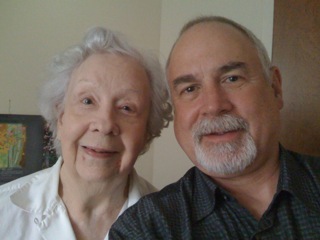
Many of you know of Memories are Everything: The 7 Summits where I want to raise $1M for Alzheimer’s’ research through awareness and fund raising events associated with climbing the 7 Summits; the highest mountain on each of the 7 continents. I announced the plan almost year ago so it is time for a proper update. First it is important to understand that this is about finding a cure for Alzheimer’s, not mountain climbing. You see, if I could sing or dance…
Partners supporting Alzheimer’s Research
You can now support Alzheimer’s research through purchasing products you might already . I am so pleased to announce that Body Results and Action Wipes will now donate a percentage of each noted to the Cure Alzheimer’s Fund. I have has teamed up with outdoor conditioning coaches Courtenay and Doug Schurman at Body Results, a Seattle-based company that focuses on wilderness sports conditioning. Also with Martha Van Inwegen of Life Elements with the Action Wipes product line for athletes. Cure Alzheimer’s Fund The Cure Alzheimer’s Fund use 100% of all donations to fund breakthrough research. None of your donation goes to overheard since the Fund is totally supported by three families who have first hand experience with Alzheimer’s. Please read more on their website and please make a donation today. Body Results WebTrainer provides a personalized exercise program including cardiovascular, strength, flexibility and sport specific training, a personalized training schedule and regular interactions with an Outdoor Conditioning Coach. Each program is overseen by one of the Outdoor Sports Conditioning Experts, Courtenay or Doug Schurman. There are three levels of service you can choose from depending on what fits your needs. Please read more on their website Action Wipes A company created in 2005 with the idea of developing cool, natural products for the entire family. Action Wipes are a full body sized wet wipe that are reusable and made with soothing natural ingredients that are safe for the whole family and the whole planet. Please read more on their website Please make a from these companies today and tell your fiends. I fully endorse their products. Climb On! Alan
Exercise Wards off Alzheimer's
You may wonder why I link mountain climbing with Alzheimer’s. My simple answer is that a healthy body = a healthy mind. You don’t have to climb Mt. Everest, view a short amount of daily exercise will do the trick. A new study from the famed Mayo Clinic proves the point: Those who said they did moderate exercise — such as swimming, brisk walking, yoga, aerobics or strength training — during midlife were 39% less likely to have mild cognitive impairment, while those who did moderate exercise later in life were 32% less likely to have the condition. The Mayo team said exercise may guard against mild cognitive impairment through production of nerve-protecting compounds, increased blood flow to the brain, improved development and survival of neurons, and decreased risk of heart and blood vessel diseases. The second study included 33 adults, average age 70, with mild cognitive impairment. Some were randomly assigned to do high-intensity aerobics for 45 to 60 minutes a day, four days a week. Others were put in a control group that had the same workout schedule, but did stretching exercises and kept their heart rate low. After six months, the s who did high-intensity aerobic exercise had improved cognitive function compared to those in the control group. The beneficial effects were more pronounced in women than in men, possibly because the body’s use of and production of insulin, glucose and the stress hormone cortisol differed in women and men. In other Alzheimer’s news, CBS featured Alzheimer’s on their January 12th Evening News broadcast. I found the online article very well written and here are two excellent excerpts: There is no cure for Alzheimer’s disease. Average lifespan is about eight years. The five Alzheimer’s drugs currently approved usually don’t help for long and only symptoms. There are medications that can help the anger, anxiety, and depression that often accompany the disease. But so far, no medication has been proven to slow the progression of Alzheimer’s. It’s clear we need to make curing Alzheimer’s disease a national priority and devote sufficient resources to head off what is obviously an impending disaster. Please make a donation to the Cure Alzheimer’s Fund where 100% of all your donation goes to research or the more general Alzheimer’s Association. Climb On! Alan
Mom – Is Everythng OK?
“I think something is wrong with Mom.” I said quietly to my wife. And with that Christmas observation in 2000, the future was cast. Recognizing the early signs of Alzheimer’s and dementia are crucial for taking care of parents, relatives and friends. And since we often only see them during the holidays, early November is a good time to review the signs. I lived across the country and sometimes across oceans from my parents as they aged thus missing some obvious signs. But during a Christmas visit in 2000, I noticed my mother not being herself. Once meticulous about her dress, taking care of the house and organizing events – she was blasé about all this – a dramatic change. During drives around town she would ask over and over “Now, where are we going?” Something she never had done in the past. She was our families’ memory keeper yet now couldn’t remember her brother’s and sister’s names. However, she was still herself. She laughed easily, made small talk, answered direct questions and carried on genuine conversations. When she got stuck, her husband – my dad – of over 50 years would quickly bail her out – and we noticed. The Alzheimer’s Association has ten warning signs everyone should be aware of during these important holiday visits. Have you noticed any of these warning signs? Please list any concerns you have and take this sheet with you to the doctor. Note: This list is for information only and not a substitute for a consultation with a qualified professional. 1. Memory changes that disrupt daily life. One of the most common signs of Alzheimer’s, especially in the early stages, is forgetting recently learned information. Others include forgetting important dates or events; asking for the same information over and over; relying on memory aides (e.g., reminder notes or electronic devices) or family members for things they used to handle on their own. What’s typical? Sometimes forgetting names or appointments, but remembering them later. 2. Challenges in planning or solving problems. Some people may experience changes in their ability to develop and follow a plan or work with numbers. They may have trouble following a familiar or keeping track of monthly bills. They may have difficulty concentrating and take much longer to do things than they did before. What’s typical? Making occasional errors when balancing a checkbook. 3. Difficulty completing familiar tasks at home, at work or at leisure. People with Alzheimer’s often find it hard to complete daily tasks. Sometimes, people may have trouble driving to a familiar location, managing a budget at work or remembering the rules of a favorite game. What’s typical? Occasionally needing help to use the settings on a microwave or to record a television show. 4. Confusion with time or place. People with Alzheimer’s can lose track of dates, seasons and the passage of time. They may have trouble understanding something if it is not happening immediately. Sometimes they may forget where they are or how they got there. What’s typical? Getting confused about the day of the week but figuring it out later. 5. Trouble understanding visual images and spatial relationships. For some people, having vision problems is a sign of Alzheimer’s. They may have difficulty reading, judging distance and determining color or contrast. In terms of perception, they may pass a mirror and think someone else is in the room. They may not recognize their own reflection. What’s typical? Vision changes related to cataracts. 6. New problems with words in speaking or writing. People with Alzheimer’s may have trouble following or joining a conversation. They may stop in the middle of a conversation and have no idea how to continue or they may repeat themselves. They may struggle with vocabulary, have problems finding the right word or call things by the wrong name (e.g., calling a “watch” a “hand-clock”). What’s typical? Sometimes having trouble finding the right word. 7. Misplacing things and losing the ability to retrace steps. A person with Alzheimer’s disease may put things in unusual places. They may lose things and be unable to go back over their steps to find them again. Sometimes, they may accuse others of stealing. This may occur more frequently over time. What’s typical? Misplacing things from time to time, such as a pair of glasses or the remote control. 8. Decreased or poor judgment. People with Alzheimer’s may experience changes in judgment or decision-making. For example, they may use poor judgment when dealing with money, giving large amounts to telemarketers. They may pay less attention to grooming or keeping themselves clean. What’s typical? Making a bad decision once in a while. 9. Withdrawal from work or social activities. A person with Alzheimer’s may start to remove themselves from hobbies, social activities, work projects or sports. They may have trouble keeping up with a favorite sports team or remembering how to complete a favorite hobby. They may also avoid being social because of the changes they have experienced. What’s typical? Sometimes feeling weary of work, family and social obligations. 10. Changes in mood and personality. The mood and personalities of people with Alzheimer’s can change. They can become confused, suspicious, depressed, fearful or anxious. They may be easily upset at home, at work, with friends or in places where they are out of their comfort zone. What’s typical? Developing very specific ways of doing things and becoming irritable when a routine is disrupted. If you have questions about any of these warning signs, the Alzheimer’s Association recommends consulting a physician. Early provides the opportunities for ment, support and future planning. For more information, go to www.alz.org/10signs or call 877-IS IT ALZ (877.474.8259). This is an official publication of the Alzheimer’s Association but may be distributed by unaffiliated organizations or individuals. Such distribution does not constitute an endorsement of these parties or their activities by the Alzheimer’s Association. Copyright 2009 Alzheimer’s Association. All rights reserved.
"My Name is Lisa" -a short video on Alzheimer's
This is an incredibly powerful short video. From the Alzheimer’s Association site about the video: “My Name is Lisa” is powerful fictional film that depicts a 13-year-old girl struggling with her mother’s Alzheimer’s disease. It won short film on YouTube in 2007, no drawing the attention of millions. We hope it changes the way you think about Alzheimer’s and those who are affected.
Random: NYC Marathon, Chinese Alz, Pumori
A wonderfully inspirational story- Meb Keflezighi wins the NY Marathon Tough season on Pumori-no summits from Peak Freak in spite of a leading great effort and the Hanesbrand test team . Success on Ama Dablam: IMG with no drama The Alzheimer’s Association site is now in Chinese, drugstore Korean and Vietnamese. Interesting analysis of Colorado’s recent huge snow storm, impact on climbing conditions in RMNP 6 Early avalanches in the Colorado high country Found in Antarctica: two cases MacKinlay’s Scotch Whisky from 1908 Ernest Shackleton’s South Pole team United Airline’s last 737 flight Diamox – The Altitude Wonder Drug? Maybe. Maybe not.
Progress in Alzheimer's Research
Some very encouraging news was recently announced that scientist identified new genes that are associated with late stage Alzheimer’s. While other researchers have identified over 70 genes thus far (see link), this helps the understanding of the disease and will help all researchers. This from the National Institute of Health: In the largest genome-wide association study (GWAS) reported to date involving Alzheimer’s disease, scientists have identified two new possible genetic risk factors for late-onset Alzheimer’s, the most common form of the disease. The study, which pooled DNA samples from a number of European and U.S. groups, not only associated variations in the sequence of the CLU and PICALM genes with increased risk, but also found another 13 gene variants that merit further investigation, according to findings presented in the September 6, 2009, online issue of Nature Genetics. Involving more than 16,000 DNA samples, one feature of this research was its use of publicly shared DNA samples and databases, including several supported by the National Institute on Aging (NIA) and other components of the National Institutes of Health. To date, only four genes have been definitively associated with Alzheimer’s disease. Three mutated genes — amyloid precursor protein (APP) and the presenilins (PS1 and PS2) — have been shown to cause the rare, early-onset familial form of the disease, which mostly occurs in middle age. Only one gene variant, apolipoprotein e4 or APO-e4, has been confirmed as a significant risk factor gene for the common form of late-onset Alzheimer’s, which typically strikes after age 65. GWAS studies look for genetic associations with a disease in the DNA on all of the chromosomes in a specific population of individuals. To date, such studies have been done on relatively small numbers of samples and have not been able to identify genetic variations of smaller effect. But now, GWAS studies in very large sample sets are able to identify these elusive genetic variations. “GWAS research is entering a new phase of discovery, with much larger sample sizes made available for analysis due to highly collaborative researchers and rapid DNA sample and data sharing,” said Marcelle Morrison-Bogorad, Ph.D., director of the NIA Division of Neuroscience. “Identifying gene variants like CLU and PICALM advances our understanding of the many genetic factors that may contribute to overall risk for this devastating neurological disorder and how these genes affect the development of Alzheimer’s. This knowledge may then lead to novel disease pathways that can be targeted to develop new ments.” You can read more at this link. While this news is encouraging, more research is still needed but hope for a world without Alzheimer’s grows. Climb On! Alan Please remember: Memories are Everything
Update on my Mom
Ida Arnette passed away from Alzheimer’s disease on August 16, 2009. She struggled for over 8 years and was under hospice care at the end. We celebrated her life with friends and family this past weekend.
While it was expected, it is both a time of deep sadness for us and relief for her. She had lost her identity and independence towards the end.
Memories are Everything: The 7 Summits to start with Aconcagua in 2010
I am pleased to announce new partners for Memories are Everything: The 7 Summits where we are raising $1M for Alzheimer’s care support and research in partnership with the Alzheimer’s Association. International Mountain Guides (IMG) will lead the climbs and Outside Online will report on the climbs thus increasing the awareness and opportunity for fund raising. The first climb will be on the highest mountain in South America, Aconcagua at 22, 841 feet or 6962 meters from January 31 to February 21, 2010. Please continue reading for the details or visit this link for complete details. Overview Today over 5.3 Americans and millions more worldwide, are living with Alzheimer’s disease. Alzheimer’s destroys brain cells, causing problems with memory, thinking and behavior severe enough to affect work, lifelong hobbies or social life. Alzheimer’s gets worse over time, and it is fatal. Today it is the seventh-leading cause of death in the United States. I know this personally because my mother, Ida, is in the final stages, and I have already lost two aunts to Alzheimer’s. But there is hope to find a cure through research and an opportunity help those who have it today and their families. That is why, with your help, we are raising $1M to advance Alzheimer’s care, support, research and awareness. We will climb the 7 Summits in 2010 and 2011 and conduct fund raising events before, during and after each expedition. Our partners are the Alzheimer’s Association and International Mountain Guides plus Outside Online who will be following the journey with updates sent directly from the climbs. You are invited to join on a climb or a trek, help with a fund raising event or make a donation today. Together we can make a world without Alzheimer’s. Fundraising Our goal is to raise $1 million dollars as people follow the climbs through Web sites as well as through the events hosted at major cities around the world during the climbs. When you join an expedition you will be invited to be part of an unprecedented effort to raise the $1M though your efforts with local fundraising events before and after their climb in conjunction with your local Alzheimer’s Association chapter. Also prior to each climb, I will conduct a local fundraising event that will be held in a city near the expedition’s departure point making this a true global event that you can join. International Mountain Guides International Mountain Guides directors Phil Ershler, George Dunn, Eric Simonson and Paul Baugher organize and lead climbing, trekking and mountaineering expeditions around the world, from the classic climbs of the Alps and Andes to the 8,000m peaks of the Himalayas. They are one of the most respected and active guiding companies in the world. Since 1986 they have conducted hundreds of expeditions to destinations around the globe. IMG was selected as one of the top 5 adventure tour operators by National Geographic Adventure Magazine in 2009. I climbed Cho Oyu with them and have known Eric Simonson for years. I choose IMG based on their long history of safely and successfully guiding climbers of all experience levels to the summit and back home safely. If we can fill each climb, we can ensure a special and unique experience that will maximize the fundraising efforts — so please tell your friends. The Climbs and Treks Each expedition will be professionally lead by an IMG Guide who has years of experience climbing these mountains. IMG has consistently and safely put climbers on the summits of all theses mountains including Aconcagua for over 20 years, Mt. Vinson in Antarctica since 1988, and of course they are a leading expedition company to Everest, year in, year out with over 200 summits since 1990. I know some of you may not be prepared for the rigors of high altitude mountaineering so please consider joining us on a trek such as to Everest Base Camp. Also look at the Kilimanjaro climb. It is not a technical climb but offers the challenges of a world-class expedition. The current schedule and estimated prices for the 7 Summits: * Aconcagua, Argentina – 22,841’/6962m • January 31- February 21, 2010; $3,900 * Elbrus, Russia – 18,481’/5633m • August, 2010; $4,600 * Kilimanjaro, Africa – 19,340’/5896m • July 11-25, 2010; $4,025 * Vinson, Antarctica – 16,067’/4897m • November 24-December 12, 2010; $33,200 * Everest, Nepal – 29,035’/8850m • April/May, 2011; $40,000 • Trek to Everest base camp; $4,000 * Denali, Alaska – 20,320’/6194m • July, 2011; $6,000 * Carstensz Pyramid, New Guinea – 16,023’/4884m • TBD 2011 * Mt. Kosciuszko, Australia – 7,310’/2228m • TBD 2011 You can read a brief overview of each mountain on my 7 Summits page or the IMG site. Please Make a Donation Today You do not have to wait for the climbs to make a donation. All donations go to the Alzheimer’s Association and none to my climbing so please make a donation today. Please Donate Today Join A Climb This is going to happen, and I want you to be part of it. I hope you can join at least one climb or tell your friends who may be looking at a climb to look into this opportunity. Contact Alan or IMG immediately to get a spot on these expeditions. Space is always limited so please do not delay. While climbing is the activity, fundraising is the goal. This is about the cause and not about the climb, however, the climb will help the cause and be a great adventure that I would love to share with you. Join a Climb Sponsorship Opportunities We are still ing corporate sponsors to join the project. Please have them contact Alan for the proposal package More Information Please visit any of these sites for more information on Memories are Everything: Alzheimer’s Association International Mountain Guides alanarnette.com Climb On! Alan
Update on Memories are Everything: The 7 Summits for Alzheimer’s
As summer moves on, I wanted to provide a brief update about Memories are Everything: The 7 Summits for Alzheimer’s. After working for almost a year to launch the journey, we are getting there but still have some significant milestones remaining. First the progress. New Partners The Alzheimer’s Association is fully engaged in the project and will be helping with the logistics of the US fund-raising events. Next, Outside Magazine Online will follow the climbs thus increasing the project’s visibility and the opportunity for raising awareness and donations. Also, we have an agreement with a major guiding company to manage the logistics of all 7 climbs. The details will be announced as soon as the final piece falls into place – which is securing the remaining financial sponsorship. Sponsorship I have personally contacted many, many companies this year and with the tough economy, you can understand the rejection. I am starting to feel like I am back in High School ::)) seriously; there is not a lot of extra money for philanthropy these days even though the largest expense will not occur for another 9-12 months. There are still a few pending opportunities; however if you know of any company that would be interested in being part of this, please contact me. The business case is solid and yields a positive ROI for the investment. However, as I have said from the start, this is about Alzheimer’s, not climbing and to do it right, it takes some funding. Join a Climb I want to get you thinking about becoming part of this by joining a climb. Kilimanjaro in mid 2010 is probably the climb most accessible to many people since it is non-technical and really a high walk to 19,339. Plus we go on a safari afterwards. So fun for the entire family! Denali in 2011 is another option. And I want to extend an invitation for all the climbs to qualified climbers including joining me on climbing Everest in 2011 or trekking to the base camp in Nepal. It would be excellent training to come along of some of the other climbs before Everest. We will also be looking for help with the fund-raising events outside of the US in Africa, Asia, Australia, Europe and South America. As always, contact me for details. So until we start climbing remember you can always make a donation to the Alzheimer’s Association in any amount. Also join or start your own team for a Memory Walk in your community. Details at www.alz.org Personal Update My mom continues to decline. She now has trouble feeding herself and other daily activities. She no longer recognizes or remembers anyone and she has significant trouble forming words and creating sentences. Her mind continues to be devastated by this disease. Not only is her memory now gone but almost all her identity. That said, I can still get her to laugh a little with a small joke and even over the phone, I can see her smile. So she will always be in there somewhere. I continue to climb my Colorado 14ers with 4 new summits this summer. I especially enjoyed the relatively simple walk-up San Luis Peak in central Colorado. The approach follows miles of beaver dams up and into a beautiful alpine basin – Colorado at the finest. Also nice was the class 3+ climb to Wilson Peak which was another fun climb with a bit of serious rock on the top. You read the trip reports on my site. So, we are making progress on raising $1M for Alzheimer’s but have a ways to go. As always, your continued support is sincerely appreciated. Climb On! Alan