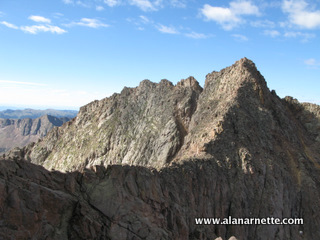
Welcome National Family Caregivers Assocation to The 7 Summits for Alzheimer’s
As devastating as Alzheimer’s is for individuals, it can have a startling impact on family members. Depression is often a common side effect of caring for a person with Alzheimer’s. So as part of our awareness and research efforts, I am thrilled to welcome the National Family Caregivers Association (NFCA) to The 7 Summits Climb for Alzheimer’s: Memories are Everything. From their website, the National Family Caregivers Association educates, supports, empowers and speaks up for the more than 65 million Americans who care for loved ones with a chronic illness or disability or the frailties of old age. NFCA reaches across the boundaries of diagnoses, relationships and life stages to help transform family caregivers’ lives by removing barriers to health and well being. The NFCA envisions an America in which family caregivers lead full and productive lives, free from depression, pain, isolation and financial distress. NFCA provides family caregivers support, education and a public voice. I am often asked if I have any advice for an Alzheimer’s caregiver. In addition to many clear suggestions such as becoming informed on the disease; I always suggest that caregivers must take care of themselves. After all, if their own health fails or they fall into depression; they will no longer be able to support their loved one. The NFCA has these 10 Tips for Family Caregivers: 1 Caregiving is a job and respite is your earned right. Reward yourself with respite breaks often. 2 Watch out for signs of depression, and don’t delay in getting professional help when you need it. 3 When people offer to help, accept the offer and suggest specific things that they can do. 4 Educate yourself about your loved one’s condition and how to communicate effectively with doctors. 5 There’s a difference between caring and doing. Be open to technologies and ideas that promote your loved one’s independence. 6 Trust your instincts. Most of the time they’ll lead you in the right direction. 7 Caregivers often do a lot of lifting, pushing, and pulling. Be good to your back. 8 Grieve for your losses, and then allow yourself to dream new dreams. 9 support from other caregivers. There is great strength in knowing you are not alone. 10 Stand up for your rights as a care- giver and a citizen. I am very pleased to join forces with the NFCA. “2011 marks the Year of the Caregiver, and as such, we are thrilled to join Alan in his efforts to raise awareness about Alzheimer’s and the burden it places on family caregivers,” said Suzanne Mintz, president and CEO of NFCA. “We applaud Alan for his commitment, perseverance and tireless advocating for the AD community.” You can order caregiver education materials from their store or join their Caregiver Community Action Network (CCAN); a unique and highly dedicated volunteer group of over 110 NFCA members in more than 40 states who regularly attend meetings, conferences, and conventions about family caregiving issues. They serve as presenters, speakers, panelists, and workshop directors. CCANers advocate on behalf of family caregivers, talk to local and regional media, and may even manage their own family caregiver web sites. Some CCANers are professional caregivers while others care full-time for their own loved ones. Thank you NFCA for joining our efforts along with the Cure Alzheimer’s Fund to raise research funds, awareness of Alzheimer’s and the needs of family caregivers. All donations to support the NFCA are appreciated and can be made at their site. Please note the 7 Summits Climb for Alzheimer’s in the drop down box. Climb On! Alan
8 to 80 – Making a Difference
I received an email this morning with this scan from a great friend. Her 10 year-old daughter, Ava, had heard me speak about Alzheimer’s. I remember Ava well. She listened carefully, asked a few questions and was thoroughly engaged and engaging. She talked to her parents and they filled in the gaps. She got it. So when it came time to make a presentation to her 5th grade class, Ava choose Alzheimer’s as her topic and my 7 Summits climbs to raise awareness and $1M for research. Each student took notes and gave it to the presenter as feedback. The kids got it as well. They learned that every 70 seconds someone is diagnosed with Alzheimer’s. That a person loses their memory as the disease progresses. And that it is devastating to individuals and families. But they would be shocked to understand the financial impact, what it really does to caregivers and families. But most importantly that there is no cure. That they took away a few shocking facts is a wonderful start to educate everyone on Alzheimer’s. It is very likely that one of Ava’s classmates has a relative with Alzheimer’s Disease. Researchers continue to make progress but there is a lot of work to do. Thus my work. It is a long road. Perhaps one of these students will become a researcher and work on ments or find the cure. I hope before then but with this kind of sharing, I am confident that the next generation will live in a world without Alzheimer’s. It doesn’t matter if you are 8 or 80, learning about Alzheimer’s is a good thing. You can look for the warning signs, make plans if necessary or be there to support friends or family going through the journey. So. Ava – thank you. Thank you for listening carefully. Thank you for sharing. Thank you for caring. You are making a difference. Climb On! Alan Memories are Everything
Climbing with Nuts and Bolts: Holiday Memories
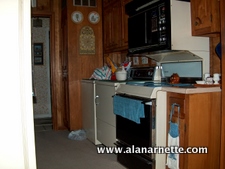
As this holiday season draws to an end, I am reminded of the new and old memories that comes with this time of year. Have you ever heard of “nuts and bolts”; also known as Party Mix? It was a holiday tradition as I grew up. It marked the official beginning of the holiday season when my mom would spend a Saturday afternoon cooking this incredible concoction. The was pretty simple: Corn Chex, Rice Chex, Cheerios, pretzels, butter and Worcestershire sauce. Oh did I say butter? And her special addition were several cups of pecan halves. I remember seeing the cereal boxes spread out on our tiny kitchen counter, a large baking pan smeared with, you guessed it, butter and feeling the warmth from the oven as it preheated. The sound of the Chex hitting the pan rippled throughout the kitchen and brought smiles to our anxious faces. But we knew we had to wait so it was back to the television to pass the time. It took about an hour and half at a slow bake for all the seasonings to become embedded into the cereal. The occasional stir was the signal the time was getting closer. A sharp ting from the timer was music to our ears as we rushed to the kitchen only to be told, “Now it has to cool.” What! This was torture 🙂 Back to the TV for another episode of Star Trek or perhaps half of football. Our attention was mixed as the smell gave away the future. We had one eye on the TV, our nose sniffing the air like bloodhounds and our ears pointed towards the kitchen like kitties on alert The next sound gave it all away, mom using the big spoon, pushed the precious from the pan into a tin cookie container. I swear she used the same ones for 20 years! But it didn’t matter and the race had begun. She handed one still warm tin to me or my brother and carefully hid the other. She knew she had to pace us throughout the season! Today I would cringe at the nutritional analysis but it didn’t matter to 11 year-olds – or even 30 year-olds later in life! Each of us had a strategy to eat the Nuts and Bolts. My brother went for the pecans, my dad liked the pretzels, I loved a Rice Chex smothered in almost burned Worcestershire sauce. And my mom, well she just stood back and smiled at the entire scene content to pick at whatever was left over. And so it went. With admonishments not spoil our dinner or that we just ate, we would dive in before dinner, after dinner and sometimes during dinner each night from just after Thanksgiving to as long as the stash held out. A few years ago during Christmas, I asked my mom if she remembered Nuts and Bolts. With her sense of humor still in tact she reached for a screw holding her hospital bed and asked me if this was what I meant? No, I replied with a laugh and went on to describe that wonderful holiday tradition where she would mix and cook and serve and hide and … You often hear about all the stress around the holidays but today I remember Nuts and Bolts, the good time, the lifelong memories. So what does this have to do with climbing? Nothing and everything. I am sure you climbers out there thought this article would be a discussion of cams, stoppers and pro! You know, what I would give for a bag of mom’s Nuts and Bolts as a snack on the summit! We could always make some ourselves but it would not be the same. 2010 was a good year. Lot’s of new memories of time with family, friends and a lot of climbs. I finished climbing the Colorado 14ers. It was the year we launched The 7 Summits Climb for Alzheimer’s: Memories are Everything. The first summit of the 7 with Mt. Vinson in Antarctica. The first series of donations all towards finding a cure for Alzheimer’s. And 2011 will be even better. The climbing will continue with the remaining 7 Summits, including Everest in April and May and Kilimanjaro in September – please consider joining this one! We are excited to have more extensive coverage of the campaign to reach more people. And we are hopeful that more progress will be made by researchers and support for caregivers. A major event will be the signing by President Obama of the National Alzheimer’s Project Act (NAPA). This act would require the department of Health and Human Services to create a strategic plan for the federal government’s role in fighting Alzheimer’s disease, form an advisory council, and coordinate research, care, institutional services, and home- and community-based programs. This will put Alzheimer’s on a similar path taken by the Government for AIDS and cancer. However, donations are still needed to fund research. Bill sponsor Senator Susan Collins in this New York Times article mentions: While the act itself does not authorize more money, one of the recommendations of the national plan “is likely to be for an increase in research money for Alzheimer’s,” said another co-sponsor of the bill, Senator Susan Collins, Republican of Maine. “We spend one penny on research for every dollar the federal government spends on care for s with Alzheimer’s,” she said. “That just doesn’t make sense. We really need to step up the investment.” There is still time for a 2010 donation. Also please tell your friends about our 7 Summits climb and follow along throughout 2011. My to all of you and your families. I hope your holiday memories last a lifetime. Climb On! Alan Memories are Everything
Behind the Scenes: 7 Summits Climb for Alzheimer’s
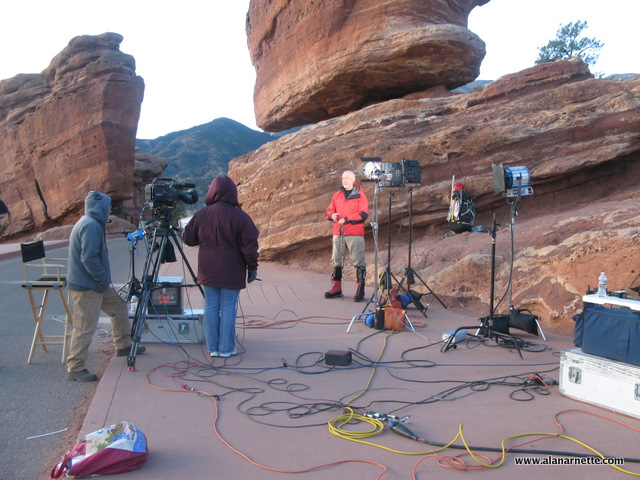
Wow, what a day November 9, cheap 2010 turned out to be. After dreaming and working on a plan to climb the 7 Summits and raise $1M for Alzheimer’s’Â the past few years, my dream was launched in ways I never envisioned – even in my wildest moments. First, I had always envisioned a global partner who would help me reach millions of people to spread a message of hope and urgency. Hope that one day there will be a cure for Alzheimer’s. Urgency for the families struggling with the disease; especially given that every 70 seconds a new case is diagnosed. Thus, I am grateful to The Alzheimer’s Immunotherapy Program (AIP) of Janssen Alzheimer Immunotherapy and Pfizer Inc. for funding my 7 Summits campaign. The launch was designed to introduce the campaign: The 7 Summits Climb for Alzheimer’s: Memories are Everything to the world. After months of planning, we all rendezvoused in Colorado springs and met at the Garden of the Gods at 4:00AM to reach the East Coast morning shows. The “set” looked like something out of Hollywood. Cameras and lights were set up on a rock bluff providing a perfect backdrop for the television interviews with Pikes Peak in the background. It was perfect, well except for the 30 mph wind gusts! After losing one expensive light and then a camera, the crew rushed to reset the scene a bit lower in an equally impressive yet protected area from the winds. As my earpiece (IFB) was being strung from my belt to my ear via my shirt, I watched the Floor Manager moving with purpose, the camera man adjusting the camera, the folks in the satellite truck making a quick last minute check; and then … “OK, were are on with Harrisburg in 5.” “3,2,1” “Alan Arnette, mountaineer and Alzheimer’s advocate is about to do something special. He is climbing the highest peak on each of the 7 continents, Hello Alan. Can you tell us why you are embarking on this adventure?” And it began. I was able to tell the story of my mom. Tell them that every 70 seconds a new case is diagnosed. That the cost of caring for a person with Alzheimer’s in a facility is equivalent to two new cars every year. I was able to tell them we need more research and we need it now but takes money. I was able … But what I was not able to do was to convey how my heart broke the day my own mother asked who I was or when she could not recognize herself in a picture. I couldn’t tell them the frustration, hurt, and confusion my mother felt – no one could. But somehow, I think these television and radio personalities got it. Many people get it because they are experiencing it. This disease is widespread and growing fast. 100 million worldwide by 2050 – not that far away and a huge number equal to one third of today’s U.S. population. Between interviews, which went in tight sequences: 10 at 3 minutes each; a 2 minute break between and the next 10; I looked around and thought that this was a moment; a moment in time that I will always remember. Memories is what it is all about, but also about life. We pushed hard for four hours. It was windy, cold and dark when we started but sunny, calm and warm as we finished. Hopefully a metaphor for research. I was pleased with the results. This is how WPMT Fox43 in Harrisburg PA covered me: Thank you. And on radio with Scott West of Daybreak USA: I think we reached over 3 million people that morning with the message of hope and urgency. A few points I came away based on the reaction from the launch doing a world-class launch takes professionals television and radio personalities can be your friend people will respond when they know the facts Please make a pledge today to donate for every foot I climb starting in two weeks Climb On! Alan Memories are Everything
The 7 Summits Climb for Alzheimer’s: Memories are Everything

Welcome to The 7 Summits Climb for Alzheimer’s: Memories are Everything. It is on! And it is, > simply put, to find a cure for Alzheimer’s and support families who are living with this disease. My first climb is in a few weeks to Antarctica. But before I go any further, let’s look back for a moment. Almost a year ago, I wrote these words: First it is important to understand that this is about finding a cure for Alzheimer’s, not mountain climbing. You see, if I could sing or dance or had some other skill that I thought would raise the money, I would use it. It certainly would be easier than climbing Mt. Everest! But I don’t. I climb mountains and can keep an audience entertained for a while. The Search I sought partners for over two years that would help me fund and publicize this campaign. What I wanted, needed, was a global partner who had the expertise to reach millions with a message of urgency and hope. In the end it was through connecting with a dear friend through Facebook who knew someone – who knew someone. And the rest is history. We have been working for the past six months to create a campaign that will emphasize the need for more research to find better ments and eventually a cure. We want to bring attention to the impossible task that families and caregivers face when their loved one is diagnosed with Alzheimer’s. On November 9th, we will do interviews with over 20 TV and radio stations across the US as well as newspapers and Internet articles to announce the campaign. Yes, it is on – big time! The Story And I will be sharing my personal story along the way. I lost my mom, Ida, to Alzheimer’s about a year ago. As my family and I went through the stages of the disease with her – watching her lose her short term memory, then long term memory, not being able to take care of herself, losing her identity and finally succumbing to the disease; it was horrifying. We were helpless knowing there was no cure. We could only keep her comfortable. But what is more tragic is that every 70 seconds another family starts that same devastating journey. The toll on the individual, families, caregivers and finances is beyond belief. Today, there are over 5 million people with Alzheimer’s in the U.S., 25 million worldwide and those numbers are projected to quadruple by 2050. My deepest hope is that future generations never experience what we did. That is why we are starting The 7 Summits Climb for Alzheimer’s: Memories are Everything campaign to raise awareness of Alzheimer’s and $1M for research. By setting this huge personal goal climbing all 7 Summits in a year, I hope to inspire people to follow me, visit our campaign website, and Facebook page thus learn about Alzheimer’s and make a donation to research. The Supporters For donations, I selected The Cure Alzheimer’s Fund (CAF), which is a non-profit that directs 100% of all donations to promising research and shares the results across all industries and organizations. All donations go to the CAF, none to me or my supporters – that is important. International Mountain Guides (IMG) will provide logistics for most of the climbs. Both Eric Simonson and Phil Eshler have been forever and supportive with me for way too long! The Alzheimer’s Immunotherapy Program (AIP) of Janssen Alzheimer Immunotherapy and Pfizer Inc. is funding my 7 Summits campaign. All money I raise will go directly to the Cure Alzheimer’s Fund™. With so many different approaches to finding a cure for Alzheimer’s underway, I will not be talking about specific drugs or ments. I will talk about my own experiences and Alzheimer’s Disease but within certain limitations in conjunction with the support of the AIP. The Climbs The 7 Summits represent the highest point on each of the seven continents. It has become a goal for climbers around the world yet only some 275 people have met the goal. Each of my expeditions will be professionally lead by an IMG Guide who has years of experience climbing these mountains. This will allow me to stay focused on the Alzheimer’s campaign of awareness and fund raising. Plus I know and trust these guys immensely to run a fun and safe climb. The 7 Summits Schedule: November 2010: Vinson, Antarctica – 16,067’/4897m January 2011: Aconcagua, Argentina – 22,841’/6962m April/May 2011: Everest, Nepal – 29,035’/8850m June 2011: Denali, Alaska – 20,320’/6194m August 2011: Elbrus, Russia – 18,481’/5633m September 2011: Kilimanjaro, Africa – 19,340’/5896m November 2011: Carstensz Pyramid, Indonesia (New Guinea) – 16,023’/4884m December 2011: Mt. Kosciuszko, Australia – 7,310’/2228m (extra credit climb as part of the original 7 Summits) The first climb is to the Vinson Massif in Antarctica. Dispatches posted on the campaign site, Facebook and my own site will begin soon after I arrive in Punta Arenas at the tip of South America and before I take the huge Russian Ilyushin 76 cargo plane to the ice fields only 600 miles from the South Pole. The expedition will take about three weeks and I will send dispatches with pictures and video during the climb. Those of you that know me, know I am no stranger to the big mountains. And with that knowledge and experience my preparation has surpassed anything in my past. I have trained hard, and will continue, for this journey. I made the summit of over 30 14,000′ mountains in Colorado and California, including Mt. Whitney just in 2010, many with a 40lb pack. And I have taken countless other training hikes and climbs in all types of weather. Also endless hours with weights and on my beloved (and despised) elliptical machine! And foremost, I have worked on my mental toughness. I am ready. Donate I hope throughout the campaign you will learn more about this disease and support research through your donations. An easy and
Women and Alzheimer’s
The spotlight on Alzheimer’s impact on women is being shown through a recently published report by Maria Shriver – The Shriver Report. I encourage you to visit the website for the details and to the report. This well done reports reveals that 66% of Alzheimer’s s and over 60% of Alzheimer’s caregivers are women. Taken from the website, ask these numbers are astounding: 10 million women either have Alzheimer’s or are caring for someone with it. Women constitute about two-thirds of those who suffer from Alzheimer’s and also about 60 percent of the caregivers for those who have it. A third of women caregivers are caring 24/7 for a person with Alzheimer’s. Nearly 40 percent say they had no choice in becoming a caregiver. The societal impact of Alzheimer’s disease—on government, families and business—totals about $300 billion per year. Almost two-thirds of all working caregivers report having to go to work late, leave early or take time off to provide care. Yet they get less support for elder care than they do for child care. So it’s not surprising that nearly half of all women caregivers report high emotional and physical stress. The site goes on to note: Last year, The Shriver Report: A Woman’s Nation Changes Everything revealed a major tipping point: Working women emerged as primary breadwinners for millions of households as their presence grew to comprise fully half of all workers. This new report makes it clear that women are in the midst of an even more far-reaching transformation in which they work, raise kids, care for the elderly, drive consumer decisions and may suffer emotional and physical stress because of it all. The impact of Alzheimer’s is stunning on a broader scale as well. The economic cost, as the report shows, is now about $300 billion a year and could triple in coming decades. As Maria Shriver points out, with 78 million baby boomers now moving into their later years, the cost of Alzheimer’s to American society is expected to be $20 trillion between now and 2050. And while annual per- costs of Alzheimer’s is $56,800, the lion’s share of these costs, 60 percent, is borne by families. ABC News is focusing on this report the week of October 18th on Good Morning America and the ABC Evening News. This is an interview Shriver did on ABC’s This Week Sunday, October 17th. The call to action based on this report is to make Alzheimer’s a national priority, fund research and raise awareness of the impact of women in Alzheimer’s. The report makes a compelling case: Based on the most recently available data, annual federal funding for cancer is about $6 billion, for cardiovascular disease about $4 billion and for HIV/AIDS about $3 billion. These are all important investments that should continue based on their high returns in lives saved.19 Not counting the one-time stimulus funds, total federal funding for Alzheimer research is just $469 million. Alzheimer’s must be a national priority. I’m encouraged by the White House Briefing on the Challenge of Alzheimer’s Disease in the United States in which I participated on World Alzheimer’s Day, Sept. 21, 2010. I believe it was a good step by this administration toward what we need: a real and sustained effort to change the course of Alzheimer’s. But today, our federal government—in fact, our country as a whole—is not prepared for the worsening Alzheimer disaster. We aren’t funding enough research to stop it. We don’t have a plan for handling the surging cost of care if it isn’t stopped. We don’t have enough residential care facilities for that inevitable point in the disease process when even the most dedicated caregivers can no longer handle the care at home. Do the math: Without even considering the human effects, Alzheimer’s disease will cost our nation $1 trillion a year when a baby born in 2010 turns 40.20 And, we’re spending less than $500 million a year to avoid those costs. Should we invest more now to stop it, or wait and let that little baby pay the costs 40 years later? The answer is clear. You can make a difference today through making a donation to support research where 100% of your donation goes to funding Alzheimer’s research at The Cure Alzheimer’s Fund. Or sign the petition sponsored by the Alzheimer’s Association for Congress to fund the National Alzheimer’s Project Act. Thank you, Alan
Another Reason to Climb
I climb for many reasons – exercise, being outdoors, challenge but there is another reason that hits close to home for me. According to a recent study published in Neurology and covered in the Consumer Reports Blog, it may stave of brain shrinkage which has been linked to memory problems as we age. From the report: For the study, 299 dementia-free seniors reported the number of blocks they walked in one week. The total number of blocks walked over a one-week period ranged from 0 to 300. The walkers were given brain scans nine years later to measure brain size, and then four years after that they were tested for signs of cognitive decline. Researchers found that those who walked at least 72 blocks, or roughly six miles, had greater gray matter volume than those who didn’t walk as much, and they cut their risk of developing memory problems in half. So next time you forget where you put the car keys, take a walk! Climb On! Alan
Finishing the 14ers; What’s Next?

For not being a goal, the satisfaction I feel for just completing climbing all 54 Colorado mountains over 14, 000′ is deep. As I posted last week, I went to southwest Colorado’s San Juan range to climb Windom Peak (14082?), Sunlight Peak (14059?), Mt. Eolus (14083?) and North Eolus (14039?). I was fortunate to have my regular partners, Patrick and Robert along and some new friends, Anne and Kevin plus John Little from Houston, Texas. There are new trip reports for all the climbs on my main site. Mt. Eolus and North Eolus Windom Peak Sunlight Peak The plan was to take the Durango & Silverton Narrow Gauge railroad to a wilderness drop-off point and backpack 6 miles into the Chicago Basin We would climb the Eolus Peaks on Sunday followed by Windom and Sunlight on Monday. Relaxing on Tuesday morning, we would then hike out to catch the train back to Durango. Well that was the plan. We successfully got Eolus per plan and I am especially proud of and for John who made it in style with this being only his second 14er after the class 2 Mt. Belford with me last year. We had excellent weather and thoroughly enjoyed the day as a group. The only hitch was when Patrick dislodged a large rock scraping him up and almost sending him down the mountain face. It was a close call. The next day, Monday, opened with low clouds, constant drizzle and occasional sleet. However, a subset set of the group went on to summit Windom Peak in almost zero visibility conditions. So for me, that left Sunlight as my last 14er out of the total 54. I wanted to summit on August 16, the one year anniversary of the passing of my mom, Ida, as a tribute to her and to finish my 14ers. Plus to launch my 7 Summits quest where I will be raising awareness and $1M in research money. However, the mountains had a slightly different plan. After Windom, Robert and I started up Sunlight but the conditions worsened. I continued solo to the summit ridge when the clouds thickened causing me to choose re over pushing a bad position. However, not to be stopped, I left camp at 4:00 AM on Tuesday to complete my 14ers. Alone on the summit, I took this picture. It will be a moment forever etched in my memory. I caught the train per schedule and enjoyed a celebration with John since everyone else had to leave to get back home. The satisfaction I feel is one of pushing through to the end to complete a goal. As I look back on my climbs, I can trace phases in my life – new friends, serious changes, great experiences, meaningful losses. The constant being the attraction to climb the mountain, to feel the summit, to accomplish the goal. Made all the better with friends. With the 14ers now completed, I will continue to climb them; it is part of who I am. Next week Robert and I will go to the Maroon Bells where Robert will break into the 50’s of his 14er quest. I plan to summit my local, Longs Peak another 5 times this year bringing that total to 25 as part of my ongoing training. And of course, to start climbing the 7 Summits in November with Antarctica’s Mt. Vinson and ending with Cartsensz Pyramid in late 2011. Yes, this includes Everest in April and May of 2011. My goal is to raise awareness and research money to find a cure for Alzheimer’s. I have lined up an impressive team of committed industry partners and it will be a major event for the almost one year. There will be opportunities to participate through joining a climb, making a donation or just following along. To plant a seed, consider making pledge for one or all the climbs based on how high I get on each climb. Your donation would go to Alzheimer’s non-profits and nothing to me or to fund the climbs. Here is how it would work:Â If you commit one penny for Denali as an example, you would donate $131 to Alzheimer’s research. It would only be $807 for all 8 climbs over 12 months, probably less than you spend on coffee at $2 a day. This is the schedule for a penny per foot climbed: Mountain Summit Start Gain $0.01 1 Elbrus 18,841 12,795 5,686 $57 2 Kilimanjaro 19,340 5,363 13,977 $140 3 Vinson 16,067 7,000 9,067 $91 4 Aconcagua 22,841 8,464 14,377 $144 5 Everest 29,035 9,400 19,635 $196 6 Denali 20,320 7,200 13,120 $131 7 Carstensz Pyramid 16,023 12,467 3,556 $36 8 Kosciusko 7,310 6,026 1,284 $13 Much more will be announced but if you have questions now, please contact me. Climb On! Alan
Long Shadows
My favorite time of day is when the sun slowly disappears below the western horizon. Long shadows appear behind the trees, the bushes, > houses – anything and everything. Holding the lessons of the day, these shadows reveal the personalities of their owners. Some tall and straight, others short and bent. They reflect what we see. I like these shadows, no matter the shape. The serenity, the depth, the complexity of their story. One year ago today, my mother, Ida, died after an 8 year battle with Alzheimer’s. She was a strong person with immense influence. Her shadow was indeed long. Her shadow held her most precious lessons of life. To see them, to understand them; all you had to do was look. She smiled easily. She laughed even easier. She always asked about you; said little about herself. She loved her family, her friends. She loved life. Even when she could not remember your name, or her own, she still showed interest in you. She reached out her hand with a gentle touch. She cared. She knew. Did she know what was happening to her? Probably; but she never let on. She never complained. We all cast a shadow. Each telling a different story. A unique story. A new shadow shaped each day built on past memories. Mom had long memories. Rich in stories, deep in lessons. Today, her shadow is easily seen and always felt. We miss you mom. We love you.
A Test for Alzheimer’s?
There is great excitement in the Alzheimer’s world that a new test can predict if a person will have the disease with 100% certainty. This according to a study published in the Archives of Neurology . Simply put, the study looked for indications of Alzheimer’s in spinal fluid taken from a group of 300 individuals all over 70 years of age. 114 had normal memories, online 200 had memory problems and 102 actually already had Alzheimer’s disease. It was blind study where individuals and researchers did not know the status of the subjects. The New York Times summarized the results: Nearly every person with Alzheimer’s had the characteristic spinal fluid protein levels. Nearly three quarters of people with mild cognitive impairment, a memory impediment that can precede Alzheimer’s, had Alzheimer’s-like spinal fluid proteins. And every one of those s with the proteins developed Alzheimer’s within five years. And about a third of people with normal memories had spinal fluid indicating Alzheimer’s. Researchers suspect that those people will develop memory problems. From CBS News The study, conducted by Dr. Geert De Meyer of Ghent University in Belgium, showed that the three biomarkers – known as CSFamyloid beta 1-42, total CSF tau protein and P-Tau181P – were present in more than 90 percent of s who went on to develop Alzheimer’s disease. “This is what everyone is looking for, the bull’s-eye of perfect predictive accuracy,” Dr. Steven DeKosky, dean of the University of Virginia medical school, who is not connected to the new research, told the New York Times about the spinal tap study. A lot of work has to be done before the spinal tap test is widely offered to s. “To date, cerebrospinal fluid analyses have not been a routine component of assessment and care for s with cognitive impairments and suspected Alzheimer’s disease in the United States,” Dr. A. Zara Herskovits, of Brigham and Women’s Hospital, and Dr. John H. Growdon, of Massachusetts General Hospital, wrote in an editorial that accompanied the study. “There is now ample evidence that these measurements have value; physicians need to formulate when and how to incorporate cerebrospinal fluid measurements into their practice.” With this good news comes a warning for more work to standardize tests and to set expectations that this is not a cure. From the New York Times Already, some doctors are using biomarkers, like spinal fluid tests that are commercially available, against the advice of researchers. Scientists are still working on standardizing the tests — making sure that, like a test for cholesterol or cancer, an Alzheimer’s biomarker test done in one lab will give the same results as one done elsewhere. The spinal fluid tests can show levels of amyloid and another Alzheimer’s protein, tau. But it is not yet known what levels of amyloid or tau in spinal fluid are abnormal. And measurements of amyloid and tau can vary as much as 30 percent from one research lab to another, said Dr. Marilyn Albert of Johns Hopkins University. “That’s why we are very concerned about these measurements being used in al settings at the current time.” The investigators said people worried about their memory should consider entering al trials studying the natural history of the disease and testing new drugs. It might be a decade or more before any drugs are found to work and approved for marketing. So there is not much people can do if they go to a private doctor, have a spinal fluid test and are told they might be in the early stages of Alzheimer’s. The test might not be valid, and no drugs now on the market can slow the disease. The Alzheimer’s Association recently established a website for individuals wanting to join a al trail called TrailMatch. On a personal note, what if this new test had been available the moment our family recognized my Mom had memory problems? Would we had chalked her occasional misstatement to normal aging, or to dementia or even guessed it was Alzheimer’s? Would we have put her through a spinal tap which can be difficult for many people? In perfect hindsight, my answer is yes. I am not sure how the rest of my family would have voted or what my Mom would have said. My rational is that if we knew her disease was so serious, we would have accelerated putting her on one of the few drugs that seem to symptoms. We would have pressed even harder (if possible) on our Dad to move into some type of assisted living. That said, we pushed so hard at the time that it put strains on the family. Would all this had made a difference? That I will never know but it would have been nice to have a choice. Remember: Memories are Everything. Alan