Everest 2018: Zos, Yaks, Porters and Helicopters

When planes, trains and automobiles are not available to move your stuff, you do what you have to, to move your stuff. And that’s what we are seeing right now from Kathmandu to Everest Base Camp. Pause for a moment and think about how much gear it takes to support a team, it can be overwhelming. Even a small team of a handful of climbers will have a couple of cooks, separate tents for dining, cooking and sleeping. Then the large teams add another few tents for storage and toilets. The high-end guides will have communications tent and even a “relaxation” tent. All of this is at base camp where you live, eat and sleep for the better part of six weeks. Speaking of food, it also must be stored somewhere and there has to be fuel for the stoves, and sometimes heaters. Then there are generators, solar panels and on and on. Oh and don’t forget a few thousand oxygen bottles. As you go higher, climbers share tents and often eat in the cooking tent. Then there are the fixed ropes with snow bars, pitons, carabiners, ladders and everything else you need to actually move up the Hill. Regardless, the problem remains of how to get that gear up there. So how does all the stuff get to base camp? On the Tibet side, it’s straightforward. Huge trucks haul it in on paved roads. However, it’s a different story on the Nepal side. Since Everest is within the Sagarmatha National Park where motorized vehicles are not allowed on the trails, everything is transported on the backs of people or animals or in a heavy duty helicopter. Lets first look at how the expeditions move their group gear to base camp and then how the personal gear is handled. AirYak It may seem obvious to just use a helicopter to ferry tons of tents, stoves, fuel, etc. from Kathmandu to the foot of the Khumbu Icefall, but they are expensive and risky. If one goes down with all your gear, your season might be lost. Usually a version of a Russian cargo helicopter flies gear to a relatively low landing strip close to Namche Bazaar, at Syangboche, at 12,410’/3782m. Any higher might be impossible given the heavy loads. From there, the gear is shifted to animals and people. Most expeditions use a combinations of animals – yaks and dzomos aka dzo. This last beast is a cross between a yak and a cow and can haul loads under 14,000 feet. They are smaller than yaks but not as happy! OK, so how do I know? Well all I know is that I get happy seeing a yak, so they must be happy as well. 🙂 All kidding aside, yaks are huge furry beast of burden that can seemingly go forever at glacial speed. They are colossal animals with a full-grown male weighing in at 1,400 pounds and standing 5.5 feet at the shoulders. Yaks have three times more red blood cells than regular cows thus can go higher than their cross-breed siblings. Also their long, thick hair insulates their bodies from winter temperatures that can plummet to -30C (-22F) or colder. Continuing with “more than you wanted to know about yaks”, they are most comfortable above 14,000 feet probably due to generations of genes nurtured on the high Steppes of Tibet where Nomads constantly moved them between summer and winter pastures at 14,000 to 16,000 feet high. They will forage for food as high as 20,000 feet in the summer but usually don’t go lower than 12,000 feet. Today, many yak owners in Nepal will not let them go lower than Namche fearing malaria, parasites or other diseases, often carried by cows, sheep and goats. They are treated very well by their owners due to their cash value from expeditions and then their meat at the end of life. Back to how they are used. Yaks can carry about 150 pounds/70 kilos and cost $40 per day to carry 120 pounds to Base Camp. Human Beast of Burden While seeing yaks often please trekkers, seeing a porter on the trails in Nepal often stuns first time visitors. They are young, perhaps even 12, and are almost always not of Sherpa ethnicity, more like Rai from the Southern part of Nepal. They can earn good money but the work is unbelievable physical. While a yak will carry about 10% of it’s body weight, a human porter may carry as much as 100% – yes they carry their own weight on their back. There have been multiple scientific studies on how they can carry such huge weight at extreme altitude day after day. The tricks seem to include good parents, walking very slowly and taking many breaks. They use a trump line to transfer some of the load from their legs to their skeletal system and finally, counterintuitive as it may seem, their small size seems to work to their advantage. This is the conclusion from one extremely well done study: Himalayan porter’s specialization: metabolic power, economy, efficiency and skill. In conclusion, the remarkable performance of Nepalese porters is determined by a more powerful ‘engine’ in a smaller body and by a lower cost of loaded walking. The long-lasting and specific training in hypoxia led to a surprisingly specialized adaptation of this ethnic group to the challenging environment. Owing to the experimental design, we can exclude that porters’ better economy of loaded walking on gradients is related to a better exchange between potential and kinetic energy of the body centre of mass. We suggest that the cost of balancing the loaded head–trunk segment is a promising candidate and deserves further investigations. For all this work, a porter can earn $20 per day carrying 60 lbs, but often they carry double (120 lbs) or even triple (180 pounds) to maximum their earnings and the trip. There are rules set forth on the Nepal side by the Nepal Ministry of Tourism, but as most rules in Nepal they
Everest 2018: When Will They Summit?
As teams are slowly making their way to their base camps, a common question asked every year is “When will they summit?” Of course, we never know for sure but looking at the historical data starting from 1953 to 2017, we can make a very good guess. The Himalayan Database is a treasure trove of data but it takes some work to find what you want. I spent a bit, actually a lot, time looking at how many people summited each day from both sides, all routes. And there were a few surprises. May Days! The spring season accounts for 96% of all summits on Everest while summer and winter are less than 1%. But the real action takes places on both sides during third week of May, every year. Specifically 80% of all Everest summits occur between the 15th and the 27th of May. Slicing even finer, May 21st is THE day when climbing from Tibet as is May 19th on the Nepal side. Other Days We know that Everest has been summited in all seasons, however you define “seasons” 🙂 Remember that climbing from the Nepal side effectively ends at the end of May when the Icefall Doctors stop maintaining the route through the Khumbu Icefall. As summer approaches, it gets hotter and the monsoon moves in with heavy rain and snow. It becomes too dangerous to be climbing as the Icefall becomes even more unstable. However, since there is no equivalent Khumbu Icefall on the Tibet side, climbers can continue climbing into June or until the monsoon hits that side. As a result we see summits as late as June 14 on the north side. Summer is miserable with heavy snow up high and sweltering monsoonal rain down low, as a result there are few summer summits, only 9 ever! There are a few days that seem to be significant in the Autumn. Around mid October there is a spike on the Nepal side and slightly earlier on the Tibet side. For the Visual Readers This chart shows all the days when all the Everest summits have occured. So as you can see, summits occur often on Everest but there are a few “auspicious” days. A few more trivia items for you: Everest has been summited on 86 different days of the year: 48 from Tibet and 74 from Nepal 29 May – first summit of Everest 17 February is the earliest, or latest, day that had a summit. 27 December is the latest, or earliest, day that had a summit There has never been a summit in January, March, July, or November. May 11 – 12 people died when a storm took them by surprise April 18 – 17 Sherpas were killed when a serac released onto the Icefall. April 25 – 19 people died at base camp when an earthquake caused an avalanche For those of you looking to set a record, here’s your chance – an Everest summit in January or July or…. 🙂 Climb On! Alan Memories are Everything
Everest 2018: Climbers Say Hello to Kathmandu
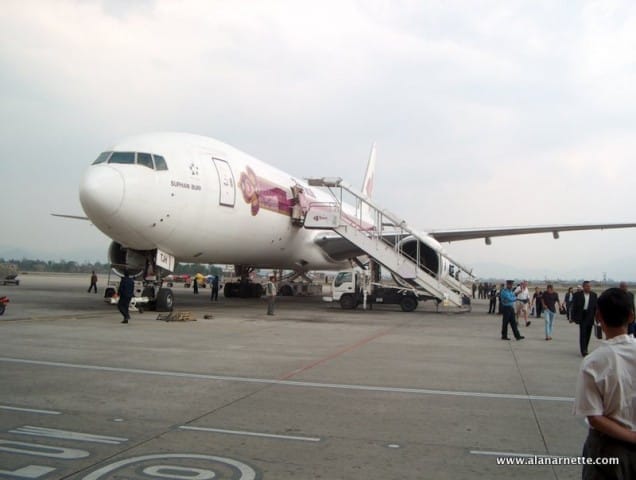
Right on time, climbers and trekkers from around the world are arriving in Kathmandu. Some have already flown to Lukla to begin their trek to Everest Base Camp. I say this every year – if you ever get the chance to trek in Nepal, or the Khumbu especially, jump on the chance. I promise you it will change your life. My first visit was in 1997 for a trek to Everest Base Camp (EBC) via the Goyko Lakes. I was captivated by the people of Nepal, the Sherpa culture, the villages, teahouses, monasteries, monks, yaks, the pizza 🙂 … well you see what I mean. I returned home with new sense of the world and how we might possibly could get along. Thankfully I have returned to Nepal 13 times since then. International Mount Guides, aka IMG, has checked in from Kathmandu with their usual large team. Between their Sherpa lead team and the Western guided team, I expect IMG to have over 30 members. They usually have the largest team but recently, Seven Summits Treks who has been aggressive with offering low cost climbs (as low as $20K compared to IMG’s $45K) has easily hosted over 60, or even 100 members in a single season. IMG will acclimatize on Lobuche East at 6,119 m (20,075 ft) to eliminate one rotation through the Icefall. They still have their members sleep at Camps 1, 2 and 3 with at least two rotations before going for the summit. Himalayan Experience aka Himex does something similar. Another variation on acclimatizing before climbs is shown by Tim Mosedale who takes his climbers on a three-week trek instead of arriving at EBC then going through the Icefall or using Lobuche. Still, Tim has his climbers do a couple of rotations. Guy Cotter of Adventure Consultants is guiding one private member who is said to be attempting Everest, Lhotse and Nuptse this season. While this has been done, it is quite rare. Kenton Cool was the last to get all three in a single season in 2013. The teams climbing from the Tibet side usually arrive in Kathmandu, or Lhasa, in early April. Since they drive to base camp, it is shorter but they still spend a few nights along the way for acclimatization. EverestER is already up and running. This valuable medical service is staffed by volunteers and offers medical services for foreigners for $100 for the season. All Sherpas, porters and locals are treated free of charge. They posted last week that they have already treated 50 patients and had one helicopter evacuation for HAPE. Expect Another Big Year and Deaths In 2017 there were 648 summits, 237 from Tibet and 411 from Nepal including 11 climbers who didn’t use supplemental oxygen. There were 6 deaths. I expect about the same number on both sides this year. Some climbers will be using their 2014 permits. Nepal extended those for five years to 2019 after a Sherpa strike closed that side of the mountain. But the 2015 permits that were extended for two years after the earthquake closed Everest have now expired. Expiring permits were one factor in the 2017 season with 166 people using permit extensions. If the weather holds, there could be over 200 summits from the Tibet side and over 400 from the Nepal side. Sadly I believe 6 to 8 people will die on Everest this spring, mostly on the Nepal side from inexperienced climbers climbing with unqualified guides. This has been the pattern the past few years. Also, I expect to see record frostbite and helicopter “rescues” since the helicopter services are now controlled by Nepali guide companies and they make a significant profit from the insurance coverage of climbers and trekkers. South or North for Safety? Of the 8,306 summits through 2017, only 265 climbers used a “non-standard” route in other words, not the South Col – Southeast Ridge or North Col – Northeast Ridge. There were 80 deaths on these routes. This is 28% of the total deaths and a death rate of 2.12. The remaining deaths break out for the Northeast Ridge (Tibet) as 71 or a death rate of .96 and for the Southeast Ridge (Nepal) as 137 – a death rate of 1.11. Clearly, this shows climbing from the south side is more dangerous than from the north. ROUTE DEATHS RATE % Non-Standard 80 2.12 28% South Col – Southeast Ridge 137 1.11 44% North Col – Northeast Ridge 71 0.96 25% 288 1.24 Here We Go! I have begun to create my annual team location table and tracking climber’s blogs (see sidebar). If you have a team not listed, please let me know and I will add them if I can track them. If you prefer not to be mentioned, please contact me. Anyone can sign up for (and cancel) notifications on the lower right sidebar or check the site frequently. Climb On! Alan Memories are Everything
Everest 2018: Interview with Ricky Munday, focused on the Summit

This interview with Ricky Munday is one of an ongoing series I do each season with Everest climbers. Not the famous, sponsored ones who get plenty of publicity but the regular people, who often have full time jobs, full time families and climb for the love of the climb. I welcome suggestions for anyone climbing in 2018 I should interview. Ricky is strong, determined and dedicated. Watching his twin uncles, Patrick at age 58 and Michael at 69 taken by cancer set Ricky on a path that would change his life. Through climbing, he has found a way to give back. He has climbed four of the seven summits, and attempted some of the world’s most iconic peaks, including Khan Tengri, Mont Blanc, Kilimanjaro, Mount Kenya, Matterhorn, Aconcagua, Elbrus and Damavand. In his home country, he has completed solo ascents of several Grade II winter routes in Scotland and Wales, a solo ascent of Mont Blanc and an unguided attempt on the Matterhorn. This guy dreams big. He talks bout the “Triple Seven Summits” See his blog for those plans! Everest has become a mission for Ricky, a serious rugby aficionado. Last year, he was stopped by poor conditions and a risky summit push that he and his teammates narrowly escaped. This year, he has taken lesson from his mountaineering and marathon running to attempt a safe and successful climb from the North side. Please meet Ricky: Q: As we covered in the intro, you turned back on you summit push during your 2017 attempt on Everest. Please walk us through your decision process in that moment. I climbed strongly up to 7,000m. On my second rotation we slept at the North Col without O2 and I could neither eat, nor sleep. My oxygen saturation in the morning was pretty low (52%). On the summit rotation I really struggled again to eat at the North Col, and felt very nauseous. Moving up to C2 the following day was tortuous – I felt completely drained of energy and my team-mates began to overtake me on the snow slope up to 7,600m. We were on O2 at 1L per minute, but I was able to take just a few steps before stopping doubled over to catch my breath. The fingers on my right hand were starting to get cold due to conduction from the ascender, despite wearing BD Guide gloves, wrist warmers and chemical hand warmers. I spoke briefly to the leader and we turned my flow rate up to 2L per minute. This had an immediate effect and I was able to reach the top of the snow slope and up the rocky ridge to our camp, which was the highest of all teams at 7,900m in a very exposed position. That evening, I was still unable to eat and I was worried about three things. I was deeply concerned about moving above 8,000m with such low energy levels and without being able to replenish them. I wanted to be certain that I could get myself down off the mountain and not put my life in someone else’s hands. I had struggled really badly to reach C2 and felt I would get worse as we moved higher. I was climbing without a personal Sherpa. Secondly, that I had used more oxygen than planned just to reach C2 (I had 5 bottles in total) and I had a nagging concern about what might happen higher up with O2. Finally, I was also concerned about the weather, as our window had forecast 40mph winds and when we reached camp the leader indicated the forecast had worsened and we would spend two nights at 7,900m. This combination of factors felt too risky. I made the difficult decision to descend the next morning – a decision I have not regretted for a single moment! Q: At what moment did you know you would return? I was hoping to return in 2019, but a change in my personal circumstances meant that an unexpected opportunity arose in late February. I had long planned a repeat trip to Ojos del Salado in February but the local agent cancelled. I found myself with free time and started looking for expedition options. Out of the blue, I heard that Adventure Peaks were running an Everest north trip with just one member, and this felt like a once-in-a-lifetime opportunity. A small team means a higher ratio of support and the ability to move swiftly to take advantage of small weather windows. Q: You are recently engaged. How does Camila feel about your return? It’s fair to say that she would rather I was spending time and money on wedding planing at this point! However, she respects my long-term objectives and understands that I feel compelled to follow my dreams. She was a superstar last year and really helped me engage with people on social media above BC as my satellite wifi hotspot only allowed me to send emails – I couldn’t post directly to social media and she ran my facebook account. Camila climbed Kili with me and we reached the summit on New Year’s day this year, and I popped the question – she tells me she has now officially retired from mountaineering, so it was a short but sweet career. Q: You competed the Marathon des Sables, a marathon in the Sahara Desert that some people call the toughest footrace on earth. How do you translate the lessons from that experience to your climbing? Completing that event changed my life forever. I had recently been made redundant from my Chartered Accountancy training program for failing my tax exam twice, and I entered it because I needed something really positive to focus on to help deal with some significant mental health challenges. I had previously allowed self-doubts or fear to hold me back from following my dreams. Running 150 miles across the Sahara seemed impossible – it was mid-rugby season so I was rugby training twice a week and playing on a Saturday, which left little space to complete long runs.
Everest 2018: Russian Luxury on the North

If you have followed Everest for years, then 7 Summits Club is a familiar name. Run by long-time Everest guide Alex Abramov, he has made his base camp on the Tibet side a place of fun and hospitality. His May Day parties are legendary. Well, now he has upped the luxury ante significantly. With 40 people, yes you read that right, 40! on his team, each member will get their own private two-room “cabanna”. There is an outer room suitable for private blogging, surfing or whatever and a bedroom, complete with an almost traditional bed. Note in the picture below, the bed even comes with a down duvet. By the way, the tents have heaters … and carpets … and, well you get the idea. This is Alex’s 16th year on Everest and he likes to point out that creature comforts are everything: Experience shows that the percentage of successful ascents in expeditions directly depends on the conditions in which the participants are placed, how comfortable is their rest, on the quality of food and service in general. Therefore, from year to year our base camp is becoming more and more comfortable, we come up with new types of affordable services, new forms of leisure, trying to improve communication and so on. This year, for the first time in the history of Everest base camps, the 7 Summits Club will provide members of our expedition with individual tents equipped with full beds, lighting and a separate room with a work desk. In addition, we will again improve our places of social pastime, we will have a full bar, sauna and massage salon… Remember that on the Tibet side, base camp is reached by truck, so no yaks or porters are needed carry all these luxuries. In years past, 7 Summits Club has had a pool table, ping pong table, a full bar and is the center of social life at camp. In another nod to luxury for the pampered climbers, Alex is using supplemental oxygen like never before. Every time a climber reaches a new altitude, they sleep on supplemental oxygen that night. This even includes Interim camp at 20300′ – 6187m. They did this technique in 2017, last year, and felt it made a huge different in their acclimatization program. But perhaps it was the local vodka that really made the difference! 7 Summits Club charges USD$64,900 that includes 1 Sherpa and 6 oxygen bottles and USD$79,900 for 2 Sherpas and 12 oxygen bottles. Of note, everyone gets “free access to e-mail, TV set, DVD, sauna in BC 5100m” and 2 T-Shirts. 🙂 Russell Brice used to have the reputation for the “best” camp at base camp as you can read in this 2012 article I did on it, but it looks like he will have to up his game to compete against his old friend! Climb On! Alan Memories are Everything
Everest 2018: Interview with IMG’s Greg Vernovage

This interview is one of an ongoing series I do each season with Everest climbers and guides. I welcome suggestions for anyone climbing in 2018 that I should interview. My last interview was with climber Patrick McKnight. This is with Greg Vernovage, International Mountain Guide‘s (IMG) Associate Program Director & Everest Expedition Leader. If you have been to Everest on the Nepal side since 2010, you most certainly felt Greg’s presence. He along with IMG’s Ang Jangbu Sherpa not only operate IMG’s Everest expeditions with precision, they also help coordinate all the activity on the mountain from rope fixing to rescues. They have helped 141 members summit Everest since 2010 and almost 500 members, Sherpas and guides from 1991. Greg began guiding in the Eastern Sierra 14 years ago. Most of his early guiding was on Mount Whitney and on the Palisades Glacier, just up the road from Big Pine. He joined IMG in 2006 when he met and worked with George Dunn on Mount Whitney. When IMG was awarded a concession on Mount Rainier, he moved to the Seattle area permanently. His first trip to the Himalaya was in 2007 with a small team for a first ascent in Tibet of a 6000-meter peak. Since then has summits of Everest Lhotse and Cho Oyu on his CV in addition to Denali, Vinson, Aconcagua, Ecuador, Bolivia, Mexico and more. Little known is that Greg played and coached collegiate volleyball and was a coach for two US Olympic volleyball teams, winning a Gold Medal in the 2000 Sydney Games. I first met Greg in 2011 and he was instrumental in helping me summit Everest that spring. He is a positive, pragmatic leader with a clear sense of purpose and makes safety the top priority. He has a degree from Pepperdine University in public relations and applied communications. Of no surprise, Greg met his future wife, JoLee McLean, in June 2013 while guiding a climb in Bolivia. They were married last August on the Isle of Mull in Scotland. This guy gets around! Now for the interview Q: The 2018 season is around the corner. I know you have made your CostCo run for food, snacks and surprises for the team. How long does it take to buy, sort, repackage and get all that food to Nepal? We have the food shopping and packing pretty dialed these days. We crank the food shopping, sorting and repacking out in about 3 days. It starts with putting together the strong boxes we use to ship the gear to Nepal/EBC. From there, we head to a few stores including Costco and load up on food. After all the shopping is done, it is time to get rid of the unnecessary cardboard and packaging. We pack the food into the strong boxes and weigh them so they make up a Yak load. Door to door, the food is in Jangbu’s hands in less than a week. Q: Out of curiosity, how many boxes of Swedish Fish do you buy? 🙂 🙂 Swedish Fish-The ultimate high altitude energy candy. Before your readers’ stomachs turn over with the thought of eating actual fish on the mountain, we should note that Swedish Fish are similar to gummy bears or gummy snacks. There is really no time in the mountains when Swedish Fish should not be eaten. One of the best times is when you have an oxygen mask on. That oxygen has a tendency to dry out your throat. If you throw a few Swedish Fish in your mouth, they can help keep your throat wet. To answer your question, I bring about 10lbs over for the Everest Expedition. Q: I assume the IMG teams are full this year? Yes, we have about the same sized Team as past years. It is a great Team again this year and they are ready to climb. The IMG Team will start heading to Kathmandu next week. I head over early next week as well. Q: IMG continues to offer, in my humble opinion, one of the best values for a safe attempt on Everest. Is there a secret you can share on how you balance cost with safety? Thank you for saying that. We work extremely hard on keeping the cost of the expedition as reasonable as possible for our climbers, without cutting corners. We have been organizing Everest Expeditions for over 35 years, so we’ve built a strong infrastructure, and have an extensive network of friends and partners in Nepal. Couple these things with the fact that we have the best Sherpa Team on the mountain, and you’ll start seeing why we are as successful as we are on Mt. Everest. We are also always looking for ways to make the program even better. Q: How do you address the growing public perception that the Nepal side is crowded and dangerous? There is no question that climbing Mount Everest is dangerous. Unfortunately, Mount Everest becomes even more dangerous when there are climbers and operators who put themselves and people in situations that they cannot get out of without a ton of help. Climbers, and guide services need to better understand the level of risk that they are comfortable with. The good news is that most of the operators on Mount Everest are doing a better job communicating with each other about when they are climbing. It is important that we continue to communicate. We are also working to continue flying the rope-fixing equipment to Camp 2. Flying the rope-fixing gear to Camp 2 lowers the amount of traffic in the Icefall. That is huge! It also helps if we can get the route fixed as early as possible so climbers who are ready, can summit during an earlier weather window. There is a lot of logistics that go into this planning and the weather has the ultimate say. Q: I know IMG once guided on the Tibet side, would IMG ever return to that side? We have been talking about running a small expedition to the North Side again and will absolutely consider going to the North when we find the right Team. Q: Any thoughts on the
Everest 2018: Interview with Patrick McKnight
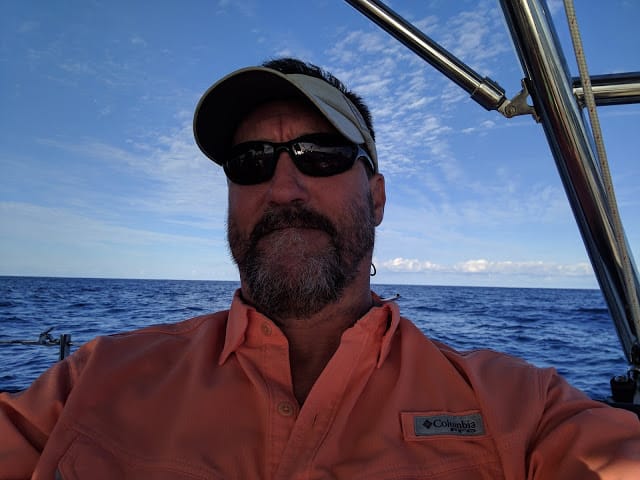
This interview with Patrick McKnight is one of an ongoing series I do each season with Everest climbers. Not the famous, sponsored ones who get plenty of publicity but the regular people, who often have full time jobs, full time families and climb for the love of the climb. I welcome suggestions for anyone climbing in 2018 I should interview. Sometimes our public profiles on social media tell more than we wanted. Patrick’s on Google+ reveals “Associate Professor at George Mason University. Sailor, skier, data analyst, climber, father, chef, wine drinker, mountaineer, swimmer, dreamer, builder, football fan, researcher, survivor. Words I live by….” So where to start with this man? First off, Patrick is a lover of detail. A quick visit to his blog shows graphs, tables, charts, oh my. His attention is detail is exactly what you want in a pilot or your doctor but in this case, as a climber, he will know when he leaves zone 3 or his hemoglobin level has spiked or … you get the point. His daily training log is, well, impressive. Everest has become a mission for Patrick. His first attempt in 2014 was cut short after an ice serac released onto the Khumbu Icefall killing 16 Sherpas. He returned the next year only to be stopped by the massive 7.8 earthquake. Now he is preparing to leave soon for his “last” attempt on Everest. Please meet Patrick: Q: As we covered in the intro, you trained hard and planned on Everest in 2014 and 2015 but conditions out of your control stopped you. So the obvious question. What brings you back? I wish I could provide you with a simple answer but the fact of the matter is that I simply don’t give up. Those past two expeditions had outcomes beyond my control. I’m just tenacious. My objective was to test my limits on Everest and I never got a chance to even try to climb. The financial hit I took from those two years left me reeling for two years. Now, after dusting myself off and preparing again to climb, I had the financial ability to give it a final go. Yes, that is not a typo. I have one more effort in me for this mountain. After this year, I intend to focus my attention on other objectives. Everest occupied my attention for 5 years – long enough to keep me interested but I cannot remain enthusiastic beyond these years. So, I have a mission – to climb and test myself. I hope to get the chance this time around and whatever the outcome I know I gave it my all in preparation. Q: As mentioned you were in 2014 when the ice serac release killed 16 Sherpas. Where were you when this happened and how did it impact you own personal feeling of using Sherpas for support? We were just walking into base camp when the serac slid into the icefall. Our initial focus was on the health, safety, and well-being of all climbers regardless of their nationality. I think the event really shook everyone. Over the subsequent days, we witnessed behaviors that deviated from a cohesive climbing community to a divisive and divided group without any clear voice or direction. We decided as a team to leave base camp and climb while the events unfolded. During that time away from base camp, I grew more empathetic toward the dire situation for most Sherpa. The Sherpa among our group wanted to climb but their lives and families were being threatened by a minority group and I really felt great sorrow with them. We all paid a dear price. How did these events influence my view of using Sherpa for support? I think it only strengthened my connection with them and my desire to help them as I would anyone else who shared my passions. It was a tough year for us all; I lost roughly one-third of my yearly wage after that fateful day. The Sherpa lost an equivalent. Not many people wanted to hear how the event affected westerners but we all suffered. I feel more connected with our Sherpa as a result and I would not hesitate to climb with them or support them however possible. Q: 2015, the earthquake again stopped all climbs and took 17 lives. Again, where were you and how did seeing so many lives lost over just two years impact your own view of objective dangers in climbing and your own mortality? In 2015, we arrived at Camp 1 and crawled into our tents to relax when the earthquake occurred. It was a surreal event. Just after the glacier moved, we scrambled out of our tents to brace ourselves for what seemed like a certain death by avalanche. The entire glacier rumbled and rattled like many of us have felt in the backcountry during avalanches. Unfortunately, the whiteout conditions and our position close to the SE ridge of Everest prevented us from seeing or hearing the true location of the slide. We were hit by two consecutive aerosol slides that could have easily swept us into a nearby crevasse – fortunately they did not. Afterwards, our focus was on getting to safer grounds and checking on our team. It was chaotic to say the least. I do not think that day nor the prior year had much of an effect on my views of mountaineering. Dangers exist in the backcountry and I accept them and prepare for them the best I can. An earthquake and serac fall are natural events that could neither be predicted nor prepared for in advance. I accept those risks. There are far more dangerous activities and I moderate my risk exposure through careful decision-making. I consider these calculated risks and ones I am prepared to accept. Q: Your training has been amazing as has your documentation of it on your site. What key lessons have you learned through this year as well as previous training periods that you think
Everest 2018: Mike Hamill Breaks out to Start his Own Company
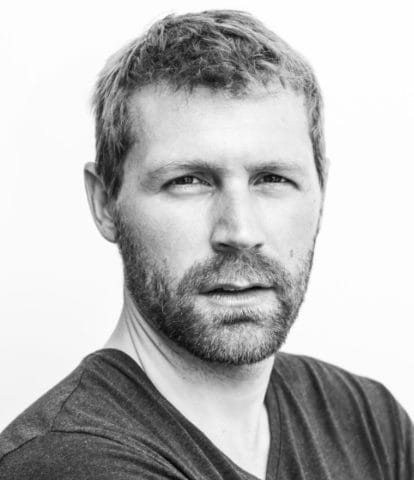
Starting any new business is expensive and the chance of success is low. Apply that to the mountain guiding industry and double the expenses and half the success rate. So why would Mike Hamill, already a very successful mountain guide, give up his current job and start his own company in a crowded field? Mike’s new company Climbing the Seven Summits (CTSS) has just begun. The website is fresh and Mike is gathering members for peaks from Orizaba in Mexico to Everest and Lhotse in Nepal this Spring. I caught up with him just before he left for New Zealand for an in-depth look at what it takes to start a guide company these days. Mike is well known in the guiding world having spent many years working his way up the International Mountain Guide (IMG) guide ladder. When he recently left, Mike was the lead guide for “private” or 1:1 commercial trips on Everest. A role that commanded well above average fees for both him and IMG. Those who have climbed with Mike have nothing but praise for this young man. Kent Stewart told me: I’ve had the pleasure of climbing with Mike on several expeditions over the past 12 years from Antarctica to Alaska to Russia to Everest. Not only is he one of the most respected mountain guides in the world, he is as fine a person as you will ever meet. There is no one I would rather have on my team should something go wrong on a big mountain. I was fortunate to be on Mike’s first Climbing the Seven Summits expedition last month on Orizaba and it was flawless. Mike’s professionalism and attention to detail will serve him well with his new company. I have been encouraging Mike to start his own company for years as I have no doubt he will be successful. And Louis Carstens who just signed up to attempt Lhotse this Spring with Mike adds: Mike guided me to the summits of Denali, Cho Oyu and Everest. I like his guiding style: he provides clear boundaries but enough freedom for individuality. I have seen him make tough decisions, at times perhaps an unpopular decision, but he makes good decisions. As a guide Mike provides me with flexibility given my own experience, climbing strengths and weaknesses. It is important for me that a guide must be flexible – I have found that with Mike on all my expeditions with him. He is well dialled into his members, understanding individual needs and catering for that as far as what is practically possible. Now, let’s talk to Mike: AA: Mike, where did your love of climbing start? MH: Climbing has long been in my blood. When I was 12 I heard a story of some fellow New Englanders who ran a gear shop to fund their mountaineering addiction, who managed to put together an Everest expedition. I remember being in awe of them climbing hard locally and challenging themselves on the tallest peaks on earth even though it seemed like a really obscure pursuit. For some reason it called to me and I knew early I wanted to be like them. My young life was probably most defined by competitive nordic ski racing. I think I was attracted to the sport for the endurance – the harder it was, the more I loved it. I saw the discomfort of training and racing as a way to progress and overcome barriers. Climbing is similar in many ways and the physicality of it has always attracted me. My love for climbing really matured in college, when I got involved in the St. Lawrence Outing Club and Outdoor Program and started rock and ice climbing. Outside of class I devoured all the climbing literature I could get my hands on. I know I spent too many hours perusing pages of books by Messner and Bonington instead of my text books (sorry Mom)! Climbing was like my 5th class in college. Reading about those escapades everything seemed so exotic. My yearning to experience those places for myself and be like those climbers; tough, brash, unconstrained by society, unconstrained by the rules, completely free, grew stronger and stronger. They were climbing only by the rules that they imposed upon themselves. They were courageous, bold and brave. Climbing is not like in a conventional sport where if you lose, you get a knock to the ego, and another game next weekend. In the mountain playground, the stakes are high and the consequences are dire. Before I knew it, I had signed up for a Semester in Alaska to climb and train for skiing, and started undertaking mountaineering courses with Carl Tobin. The Alaska range changed my perspective entirely. AA: You moved to the PNW and began guiding on Rainier. Does every American guide start there? 🙂 MH: Rainer is a well-known proving ground and a great starting point for both climbers and mountain guides. Why? It’s a big mountain environment at moderate altitude, in the lower 48 states, an hour and a half from a major metropolitan area. It’s very accessible and therefore a lot of people want to climb Rainier. Yes it’s a great place to get technical climbing experience but with so much memberele constantly flowing through, it’s also a school to learn good member care. Guiding certainly isn’t all the glory and glamour of lofty summits, it’s also motivating people when they’re tired, cold, frustrated. It’s the tedium of cooking and cleaning and spending hours melting snow into drinking water after a long days of extreme physical undertaking. It’s a constant mental challenge, yes you are leading people up the mountain but more so, you’re helping them navigate through some of their lives biggest successes and failures. I joke that my job is half mountain guide, half psychologist. It’s on the hill that you see people’s true colors; the good, the bad and the ugly. The huge flux of people on Rainier helps you learn to deal
Everest 2018: Welcome to Everest 2018 Coverage
Welcome to the kick-off for my Everest 2018 coverage! I have already posted a few articles on 2018 and am actively covering both the Everest and K2 winter attempts so let me officially welcome you. This will be my 17th season of all-things Everest: 11 times providing coverage, another 4 seasons of actually climbing on Everest and two years attempting Lhotse. I did similar coverage for the 2004, 2005, 2006, 2007, 2009, 2010, 2012, 2013, 2014, 2015, 2016 and 2017 seasons. I summited Everest on May 21, 2011, and have attempted Everest three other times – 2002, 2003, 2008 and Lhotse in 2015 and 2016. If you are one of my 3 million regular readers, hello again, if you are new, welcome! My goal is to provide insight and analysis of what is going on up there with no favorites or agendas. I use sources directly from the mountain, public information plus my own experiences to write my posts. Usually, I post once a day as the season gets started in early April and ramp up to almost hourly coverage during the intense summit pushes in mid to late May. I spend several hours a day to create these updates. You can sign up for (and cancel) notifications on the lower right sidebar or check the site frequently. Why do I do this? Well, one word: Alzheimer’s. I lost my mom, Ida, and four aunts to this disease and it changed my life forever. You can read more at this link. I hope that you enjoy my coverage and make a donation to any of my selected non-profit partners as a tangible thank you. I never benefit financially from your donations. Just click on this button that is always on the top right sidebar. 2018 Overview The interest in climbing Everest continues to increase with little impact from any bad publicity including deaths, risks or government policies. I anticipate another busy year on both sides with over 800 attempts and ten people attempting to summit without using supplemental oxygen. If the weather holds, there could be over 200 summits from the Chinese/Tibet (north) side and over 400 from the Nepal (south) side. Sadly I believe 6 to 8 people will die on Everest this spring, mostly on the Nepal side from inexperienced climbers climbing with unqualified guides. This has been the pattern the past few years. Also, I expect to see record frostbite and helicopter “rescues” since the helicopter services are now controlled by Nepali guide companies and they make a significant profit from the insurance coverage of climbers and trekkers. Speaking of supplemental oxygen, look for a few of the high-end guide companies to put members on 6 or even 8 liters per minute flow rates on the summit push. This trend is designed to increase the summit rates on so-called “rapid or speed” expeditions and members who want every advantage regardless of style issues. The normal flow rate is between 2 and 4 lpm. Also look for more climbers than ever from China and India. As I’ve detailed in the past, China requires all Chinese Nationals to have a summit of an 8000-meter peak before climbing Everest from China so many simply go to Nepal where there are no rules. As for the Indian climbers, it has become folklore that if you summit Everest you can leverage that into fame and fortune – a huge miscalculation by so many – but many Nepal/India guide companies have come forth to meet this market demand. As we enter the 2018 season, the Nepal government is making headlines by banning climbers with disabilities, specifically double amputees and blind climbers. There has already been an impact. Hari Buddha Magar, a former British Gurkha soldier who lost both legs in Afghanistan, postponed his Everest attempt a year hoping to persuade officials to allow him to climb. They also banned solo climbing and repeated previous demands that all foreign climbers must hire local guides. Amazingly they clarified that all support staff who summit would receive a summit certificate. All of these new rules apply to all mountains in Nepal, including Everest. Finally, in a blatantly political move, authorities increased life insurance for the phony job of Liaison Officers. I have written a lot about these decisions so in this post will come back to my bottom line: the Ministry of Tourism is only interested in money. The publicity they receive from headlines feeds their egos and does not contribute to climber safety. They continue to mismanage the world’s highest mountain like their own private bank. Eventually, climbers will have enough of this, stop supporting the government and move to the north side where the Chinese, while unpredictable, manage Everest with common sense and is safer. A few months ago I took a hard look at the safety record of both sides but this time factored in the deaths that have occurred on the non-standard routes. It changed my thinking completely. Of the 8,306 summits through 2017, only 265 climbers used a “non-standard” route in other words, not the South Col – Southeast Ridge or North Col – Northeast Ridge. There were 80 deaths on these routes – much higher than I thought there would be. This is 28% of the total deaths and a death rate of 2.12. The remaining deaths break out for the Northeast Ridge (Tibet) 71 or a death rate of .96 and for the Southeast Ridge (Nepal) 137 – a death rate of 1.11. Clearly, this shows climbing from the south side is more dangerous than from the north. ROUTE DEATHS RATE % Non-Standard 80 2.12 28% South Col – Southeast Ridge 137 1.11 44% North Col – Northeast Ridge 71 0.96 25% 288 1.24 Best of luck to all on any route this year. I hope the weather is a bit more stable than in 2017. Everest: Years of Turmoil, Records and Summit Celebrations Those who follow Everest closely never know what to expect each season. Some years, there is bad weather, then there are natural disasters like earthquakes and avalanches, other years the
Everest 2018: Another Everest Guide Leaves Nepal for China: Altitude Junkies
Phil Crampton’s Altitude Junkies has run Everest climbs from both Nepal and Tibet for 10 years and for 2018 he is making a radical change, returning to his roots. Phil began climbing Everest in 2001 thus is in a unique position to comment on the changing business of Everest plus the impact of recent crowds, government policies, and strategies used by other outfits to attract a wide range of climbers. Phil’s switch is the third guide company to leave Nepal for Tibet over the last several years. Is this the beginning of a movement indicating problems in Nepal or just a business decision? I’ve known Phil since 2008 when he was instrumental in helping me recover from botched logistics on an Everest North side climb. We went to the Southside that year but were waylaid by the Chinese antics related to the Olympic games. In 2013 I summited Manaslu with Phil and team, summited Alpamayo in Peru the next year plus was on his Everest team in 2016 for a Lhotse attempt. I interviewed Phil, who lives in Kathmandu, last year just before the 2017 season. He had decided not to run an Everest expedition for the first time in many years. Now for 2018, he is going back to Everest but switching sides after climbing from Nepal since 2009. His company, Altitude Junkies, has an incredibly loyal following. It is common for him to have 8 out of 9 repeat members on an expedition, almost all who have summited several 8000-meter mountains, including Everest with Phil. He is not a “guide” and takes it personally if you call him one. He expects his climbers to come prepared, be independent and ready to climb. No training at basecamp with his team, If you ask him to check your gear, he will scoff at you and suggest that you are on the wrong team! Phil is famous for his afternoon happy hours where attendance is mandatory, but drinking is not. I have spent many an hour in the dining tent visiting with the who’s who in climbing including Conrad Anker, Russell Brice, and others. His Sherpas are some of the best and loyal to a fault. He pays above-average wages, does not accept tips and keeps his promise that there will be zero surprises on his trips. Oh, and his prices are below average. He is asking in the low $40K range for his trip this year. So what is going on to bring Phil back, to climb from Tibet, not Nepal and what is his take on the overall Everest Inc. these days? Grab a beverage and enjoy. AA: In 2017, you took a break from Everest as we discussed in our last interview. You said the crowds combined with inexperienced members drove you away. With the North side now gaining momentum [link], are you concerned that the same thing will happen there? In 2017, a large Indian team of teenagers (Transcend) went and put 16 teenagers with 22 Sherpas on the summit. PC: 2017 was the first year in many I wasn’t actually climbing on Everest. We wanted a less crowded and more challenging 8,000-meter peak so we climbed Makalu instead. We had a great team of guys and girls and a beautiful peak, which presented new logistical challenges for me, which I enjoy. We had a total of 45 foreign climbers plus Sherpa on Makalu last spring. We had hoped to offer different 8,000-meter peaks in the future such as Makalu and Dhaulagiri but the draw of Everest stills commands most interest from prospective Himalayan climbers. The Sherpa that I work with year in year out enjoyed Makalu but they are now ready to get back to Everest, and I want my boys to be happy in their work. I personally think that the south side of Everest is at a point of no return in regards to crowds and inexperienced climbers on her flanks, and unfortunately I think it will only get worse. The new rule being introduced this spring that every foreign climber needs to be accompanied by a Sherpa guide will only add more people to the numbers on the mountain, but most reputable expedition companies already have a 1:1 Sherpa to climber ratio. The local Nepalese companies are now competing with each other, rather than with the foreign companies for members, undercutting each other with prices and therefore most of them are hiring inexperienced climbing Sherpa to take responsibility of inexperienced members. For those climbers whom know Everest well, it’s pretty much a known fact that members from Nepal’s neighbors are predominantly using the local companies services and getting themselves into trouble on the hill. The member base of the western expedition companies are still going to climb with a western guide and a company with a good track record, rather than going for the lowest cost. Transcend is an Indian company and they have figured out that there is a lot of business to be had with Indian climbers on Everest, so I expect them to have more Indian members in the future. I am not sure if the teenage team is going to be an annual event. Even back in the nineties and zeros, when there were large numbers of climbers on the north side, it never seemed to feel crowded, although it was somewhat a lawless mountain, in regards to theft of oxygen and some climbers generally behaving badly. The China Tibet Mountaineering Association pay close attention to what’s going on in Nepal and I do not think they will let the same happen to the north side. They have big plans to further promote their domestic Everest tourism with building a mountaineering center in Tingri. [link] They also do not keep releasing random press releases instigating new rules and regulations that ultimately tarnish the rationalization of the Nepal Government and the Ministry of Tourism and Civil Aviation. AA: Nepal recently announced new rules banning climbers with disabilities, solo climbs, increased insurance for Liaison