Virtual Everest 2020: It Takes a Village
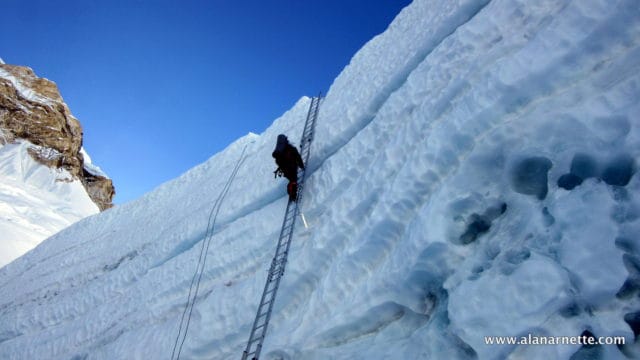
Is mountaineering an individual or a team sport? Can you really climb Everest, “solo?” Why are there 1,000 people at Nepal’s Everest Base Camp? Does it really take that many people when less than 300 foreigners summited? Our fictional team from Mount Everest Guides takes on these questions over dinner after a training day at base camp. Virtual Everest 2020 – Support the Climbing Sherpas is a joint project of Alan Arnette and several global guide companies. Our objective is to entertain Everest fans during the Coronavirus spring closure and raise money to help the Climbing Sherpas who were not working this spring. While there will be accurate historical references, this series is a work of fiction. Names, characters, and incidents either were products of my imagination or were used fictitiously. Any resemblance to actual events or locales or persons, living or dead, is entirely coincidental. Please join us by making a donation using the links below plus by adding your Everest experiences in the comment section. It Takes a Village The team spent the day practicing skills on a course set up by the Climbing Sherpas next to the camp. They had a fixed rope on a steep wall used for ascending and rappelling down. There were two ladders spanning a small crevasse where the team practiced crossing in their 8000-meter mountaineering boots and crampons. It was a productive day, where everyone learned something new or refreshed old skills. Snorer and Old Man walked side by side, back to camp. “Hell, I remember crossing my first ladder last year,” Old Man started. “I went so slow that the Sherpas started laughing at me. I deserved it and started laughing at myself. I was so afraid of falling. There were 15 crossings, most were only one or two ladders, but near the top of the Icefall, the Docs had lashed five ladders together so we mortals could get up a 30-foot ice cliff.” Anyway, after crossing all these a few times, I got used to it, and the fear went away.” Training for the Icefall Snorer picked it up, “I felt OK on the ladder practice today, but jugging up that rope on the little wall was tough. I did what Dawa told me do, you know, climb with my legs, not my arms, kick the front points in hard so they stick, don’t have a death grip on the jumar. But I felt like I was a baby elephant, on wobbly legs hanging on for dear life with my short trunk to the damn tiny line. What am I going do when it’s the real deal?” Back at camp, everyone retreated to the silence of their tents. Most took a nap, some slept hard as demonstrated by Snorer. “Base Camp is huge. I bet there’s a 1,000 people here. Why so many? I thought Nepal only issued about 300 permits this year.” Dutch asked the team over dinner. The two new members of the team, affectionally known as Buddies – that is Buddy and Bud – had met the rest of the team at base camp. They had not trekked in with everyone else but went on their own by way of Goyko Lakes and the Cho La Pass. The pair had climbed together a lot around the world on almost every continent. Back home they ran a climbing gym business together. “Well this is our first time to EBC but from what I know there are a bunch of reasons for all the people. First, we all have personal Climbing Sherpas, so that’s 10 more just for us. Then we have five people in the cook tent between the cook and the guys who haul water here every day. Then Guide told me we have an additional five Sherpas who do nothing but haul gear up to the high camps. You know, tents, stoves, oxygen kit. So if I’ve got my math correct, we have over 30 people just in our camp.” Guide chimed in, “That’s about right. For 2020, there are 32 teams here. Most, maybe 25, are about our size so that’s already up to 750. Then there are the massive teams with 50, 60 even 100 members along with their support so there’s another few hundred. I think we are over 1,000.” About that time, Chhongba, the base camp cook walked in to see if dinner was OK and if anyone needed anything else. They met him with a round of applause. He had been cooking for expeditions in pre and post-monsoon seasons for 15 years. His English was excellent. Listening to the conversation, he noted. “Don’t forget that every day, there are porters who bring in fresh vegetables, eggs and some meat from the lower villages. Often they stay the night. Also the yak drivers. Oh, and that guy who hauls our blue barrels with poop in it every few days.” The Buddies said in unison, “Holy shit! I’ll never complain about my job again!” Everyone laughed but also said a silent thank you to the Blue Barrell Man. One of the Buddies, coughed. He coughed hard. It was loud. Everyone paused, lookinga tim with concern. “I’m Ok, just a bit of a cough.” She spoke up, “What about Everest Hospital? They have a volunteer team of about five people who do medical stuff.” The Hospital provided medical services to climbers for a flat fee of $100 for the season. Often the guide companies would pay for all the climbers instead of hiring a doctor just for their team. However, the Hospital treated any Sherpa, porter or local Nepali at no charge. This was their 20th year of providing this service. Dawa came in hearing the laughter and conversation. “You are forgetting about another group that without, none of you, or us, would climb Everest from this side. The Icefall Doctors.” On the Nepal side, the Icefall Doctors were a team of eight dedicated Climbing Sherpas that installed aka “fix” the route from Everest Base Camp to Camp 2 in the Western Cwm
Virtual Everest 2020: Puja at Base Camp
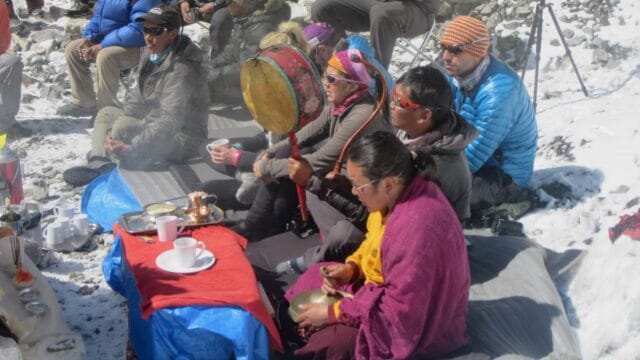
Before climbing begins, the Sherpas perform a puja ceremony. Usually, a Buddhist Lama treks in from a nearby monastery the night before. If at a big camp like Everest, he will perform several ceremonies during the same day. If the camp is too far away from a monastery, for example, on K2, then one of the Sherpas will perform it. Today, our fictional team will have their ceremony. Virtual Everest 2020 – Support the Climbing Sherpas is a joint project of Alan Arnette and several global guide companies. Our objective is to entertain Everest fans during the Coronavirus spring closure and raise money to help the Climbing Sherpas who were not working this spring. While there will be accurate historical references, this series is a work of fiction. Names, characters, and incidents either were products of my imagination or were used fictitiously. Any resemblance to actual events or locales or persons, living or dead, is entirely coincidental. Please join us by making a donation using the links below plus by adding your Everest experiences in the comment section. Puja at Base Camp “Tomorrow, we will have our Puja. Bring your harness, crampons, ice axes and anything sharp to the ceremony.” Guide announced over a dinner of lamb, rice and tomato soup. Old Man stood up. Everyone looked at him, not sure what to expect. “Last year, at our Puja, I was changed. I was skeptical of these types of ceremonies, here and back home, but seeing the seriousness the Climbing Sherpas took the Puja caused me to look at them differently. With even more respect, with more admiration. So, if you don’t want to participate, that’s OK. It’s really for the Sherpas, but they welcome us to join.” Breakfast came early as the cooks and Sherpas were anxious to start the ceremony. The Sherpas had spent the previous day collecting large, flattish stones to build the rock altar. It was back-breaking work, but they smiled and laughed as they worked. The stone Stupa is used primarily to hold the flag pole and to hold several revered pictures, including one of the Dali Lama. Blankets were laid out for the climbers to sit on during the long ceremony. Ceremonies mark life. Many come with the birth of a child, the union of a couple, or upon death. Today was a ceremony to climb a mountain, but as with all ceremonies, it meant much more to those involved. The Puja is a traditional ceremony lead by a Lama where the Mountain Gods are asked permission for the climbers to climb, forgiveness for the damage caused by the climbing and safety for all involved. All the Sherpas, climbers, cooks – anyone associated with the climb is invited to participate or observe. The morning was warm and bright, much different from the past few days. Over breakfast, the team smelled smoldering juniper boughs that enveloped the camp. As it came time for the beginning of the ceremony, the Sherpas moved with an air of excitement and purpose. The team moved to the highest point in the camp where a large rock altar was built. The couple left their tents and walked towards the altar. “Oh, I forgot my harness,” Boyfriend said. “Yeah, I forgot my ice axe, will you get it for me,” Girlfriend added. They were looking forward to the Puja, never having attended one. They had spent hours on the trek talking with Dawa. He explained some of his Buddhist beliefs and traditions. How he respected other people’s beliefs and never tried to change them, also never tried to convert someone to Buddhism. The couple agreed later that the time with Dawa opened their eyes to a different culture, and the way they practiced their life. “Got ’em.” Boyfriend said, catching up with his mate. The climbing harnesses were to be blessed for safety and the ice axes and crampons for forgiveness for the holes the climbers would put in the mountain snow and ice. Snorer and the two new climbers who had taken a different trek to EBC brought pictures of their families and placed them on the altar. They planned to leave them on the summit. The Lama sat to the far left of the altar. He sat on three blankets on the ground and had another wrapped around his legs. He was Mingma Dorge Sherpa, a Lama from Pangyboche, and had been conducting pujas for years. To his right sat several Sherpa, who assisted with the Puja. The Lama had a pair of small cymbals that he clanged throughout the ceremony as did a Sherpa with a small drum. The constant accompaniment of music perfectly matched the chanting. The Lama began the Puja by reading from 300-year-old Tibetan prayer books. The Sherpas joined in, all chanting in unison. The climbers sat in rows behind the Lama and Sherpas, while everyone else mingled around. The ceremony had a serious tone, but it was not terminally so. Camera shutters and video cams were in full action trying to capture the moment. Dutch sat quietly, his socked feet on top of his thighs, his hands placed in his lap. He closed his eyes and let the smell of the juniper and the sound of the chanting soak into his essence. He had never felt this way. All of his senses were alive, stimulated, and at the same time very much at peace. Sherpas walked the area serving everyone milk tea, a sweet concoction of sugar, milk, and tea. The Lama and his Sherpas drank milk tea and chang, a potent rice wine. The Lama, with help from the team cooks, prepared the food, including baking and creating food sculptures, the night before. Trays of cookies, breads and other sweets sat by the altar. The prayers went on for two hours. Once completed, the Sherpas jumped into action. Two took the eight-foot-long pine tree trunk, the puja pole, and lifted it atop the altar. They dropped it in a crack at the altar top. Prayer flags had already been attached to
Virtual Everest 2020: Settling into Base Camp
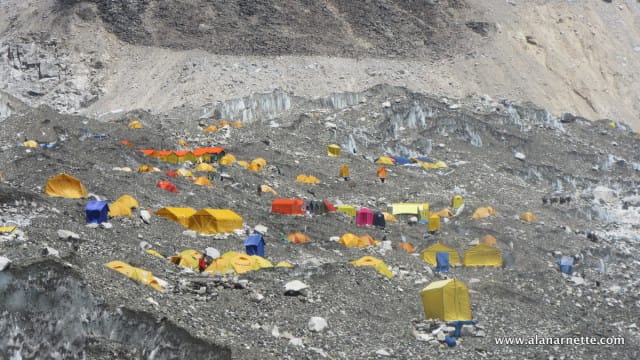
Arriving at Everest Base Camp, on either side, is exciting. In Tibet, it’s a bit calmer because you drive in. In Nepal, it’s the end of a week-long trek. Either way, it’s a sight not to be believed by our fictional climbers. A small city of over 1,000 people in Nepal, about half that or less in Tibet: the mostly yellow sleeping tents seem to go on forever. With so many large tents, it looks like the carnival has arrived. Then there are the high-end teams with huge domed tents, separate showers, and toilets for men and women, and it goes on and on. But arriving is a key moment for any climber, especially when you meet the Climbing Sherpa, who will be by your side for the next six weeks. Virtual Everest 2020 – Support the Climbing Sherpas is a joint project of Alan Arnette and several global guide companies. Our objective is to entertain Everest fans during the Coronavirus spring closure and raise money to help the Climbing Sherpas who were not working this spring. While there will be accurate historical references, this series is a work of fiction. Names, characters, and incidents either were products of my imagination or were used fictitiously. Any resemblance to actual events or locales or persons, living or dead, is entirely coincidental. Please join us by making a donation using the links below plus by adding your Everest experiences in the comment section. Welcome to Everest Base Camp The Mount Everest Guides team of climbers, trekkers, and a few Climbing Sherpas, had left Gorak Shep for the two-hour walk to Everest Base Camp. The trail followed the Khumbu Glacier as it trickled down from the Icefall and Western Cwm. The rocky lateral moraines, the sides pushed by centuries of flowing ice, towered a few hundred-feet in places over the dirt-covered ice. It was hard to understand that the ice was still moving. Navigating between the many yak trains ferrying gear to EBC along with hundreds of other climbers and trekkers, the scene felt chaotic, busy, not serene, and straightforward as some of the previous days. She felt her anxiety increase as a frenetic pace followed suit. “OK, everybody, listen up. It’s pretty crowded today. There are several large trekking teams on day trips to base camp, so let’s slow down, take our time and not let this get to us.” Guide told the group during a break. “We will end up at 17,500-feet, so tonight will be a tough nite, the highest sleep thus far. Remember to hydrate, hydrate, hydrate.” Her last few steps into EBC brought out a mixture of feelings. “Welcome.” She was surprised to have a personal greeting. It was Dawa, he had gone ahead to make sure camp was ready for their Charges. “Please let me introduce you to Mingma. He will be your personal Climbing Sherpa.” This was the first of many times She would look into Mingma’s bright eyes, see his contagious smile. There was a confidence She immediately recognized; no, She immediately felt. He took her hand in a firm handshake and repeated: “I am Mingma; I will be your personal Climbing Sherpa.” Dawa continued the introduction. “Mingma has summited Everest 17 times, and he has been on over 50 expeditions all around the world, not just Everest. He was on K2 in 2014. He is one of the most experienced Climbing Sherpa on Everest.” Mingma just stood tall and smiled. He asked her if this was her first time to Everest. “Yes. I hope I will do well. I have trained hard and been on other climbs.” She quickly offered him her resume. Mingma, continuing to smile, nodded, “You will do fine. We go bistari, bistari, slowly, slowly.” She asked about his family: He lived in Pangboche, with his wife. He had two children, both girls. They were in boarding school in Kathmandu. “Maybe I will have a son one day, but I don’t want him to be a guide. Maybe move to America or Australia and go to college.” In one sentence She felt a connection, a bond. “I have two girls, also both in school.” Mingma smiled broadly. EBC was huge and She was just seeing a small part. It had snowed last night so a dense fog and a white layer covered most of the camp. As She looked around, nine more Climbing Sherpas stood almost in line, similar to a military review. Each offered their hand and said their name. “Welcome to Base Camp. I am Nima. I am Dawa. I am Passang. I am” One by one everyone introduced themselves, each with a warm smile. She passed one tent filled with more of these unsung heroes of Everest, the cook staff. They crowded around the door curious to get a first impression of their members. She took their picture, much to their delight. “Namaste.” She offered with respect. She found herself standing in front of the large yellow tent. This would be a place they would eat their meals: breakfast at 8, lunch at noon and dinner at 6. It was also the town hall, the meeting place, the hangout. He showed her to her tent, a three-person yellow tent only for her. Each person had a personal tent at base camp. They would share tents higher on the mountain. Her tent was number three in a row of ten. She memorized the location, knowing She will be making midnight runs to the toilet. Both of her duffels had already been dropped off beside her tent. As Mingma left her to get settled into her tent, her mind raced. Her emotions ran the gamut. Her heart raced, her breathing picked up. Was it the altitude, realizing where She was? She crawled into the yellow tent. There was a small mattress already there, but as She pressed on it, her decision to bring her thick Exped air mattress was wise. She sat cross-legged, her head slightly brushing the roof.
Virtual Everest 2020: April 18, Honoring the Fallen
The Khumbu Icefall is known as a dangerous place. The 2,000-feet of giant ice blocks can move up to three feet a day. Massive seracs hanging off the walls of Everest’s West Shoulder and Nuptse can release at any time falling onto the Icefall. If there are people there, there is little chance of surviving. On April 19, 2014, this exact scenario occurred taking the lives of 16 Sherpas. For some guides, they choose not to guide on the Nepal side and only on the Tibetan. Virtual Everest 2020 – Support the Climbing Sherpas is a joint project of Alan Arnette and several global guide companies. Our objective is to entertain Everest fans during the Coronavirus spring closure and raise money to help the Climbing Sherpas who were not working this spring. While there will be accurate historical references, this series is a work of fiction. Names, characters, and incidents either were products of my imagination or were used fictitiously. Any resemblance to actual events or locales or persons, living or dead, is entirely coincidental. Please join us by making a donation using the links below plus by adding your Everest experiences in the comment section. “There will be no climbing today.” Dawa and Guide walked into the dining tent at Everest Base Camp. The entire team plus the trekkers were there. “On Friday, April 18, 2014, six years ago, at 6:30 am part of the ice serac that is on the West Shoulder of Everest released. There were Sherpas in the Icefall. A ladder had collapsed and the Icefall Doctors were headed there to replace it. The Sherpas, ferrying gear to Camp2, choose to stay there, most not wanting to return to base camp. With no warning, a deluge of car and house-sized ice blocks fell directly on top of them.” Dawa paused, remembering his brother who was there that day. Guide picked it up, “16 Sherpas lost their lives that Friday. Now each year on April 18, all activity pauses to honor our family and friends. While everyone seems stoic, focused on their jobs; there are tears just below the surface.” She lifted her head and glanced around the table. Everyone was silent, taking in what they just heard. “I’m so sorry Dawa about your brother.” She said softly. He nodded without looking up. Just as She felt at the Climbing Sherpa Memorial a couple of days ago, She struggled with a range of highly mixed emotions. Is it fair to ask the Climbing Sherpas to do the work they do? Are they paid enough to compensate for the risk? Who takes care of their families when an incident occurs. Should anyone be climbing these dangerous peaks anyway? The questions were not new, they have been asked since the days of Mallory and Irvine. And many of the answers remain unchanged. “Did anything change after 2014 for the Climbing Sherpas?” Snorer asked. Dawa tried to explain the complexities of the Nepali government, politics, ethnic issues, jealousy. He said the families of the 2014 tragedy received $5,000 from the Nepal Government, a huge sum of money in this impoverished nation but it created significant ill will towards the Climbing Sherpas from other ethnicities throughout Nepal. Also, life insurance was increased to $16,400. The Climbing Sherpas ended the 2014 season a few days after the tragedy. They created a list of demands for improved working conditions for the government, but almost none were approved. The list included: Increment of immediate relief announced for avalanche victims Provide Rs 10 million (US$103,590) each to families of the deceased Set up a memorial park in the name of the deceased in Kathmandu Cover all expenses for treatment of the injured Provide Rs 10 million (US$103,590) to critically hurt who cannot rejoin mountaineering activities Set up a mountaineering relief fund with 30 percent of royalty collected from issuing permits to different mountains (est $1M for 2014) Double the insurance amount to the mountaineering workers Provide additional chopper rescue to mountaineering support staff if insurance fails to cover the cost Provide perks and salaries, except summit bonus, through concerned agencies to Sherpas if they want to call off climbing this season Manage chopper to bring logistics and equipment from different camps if mountaineers decide to abandon climbing this season Don’t take action against SPCC icefall doctors if they refuse to fix ropes and ladders on the route this season Let the expedition members call off this season’s climbing if they wish so Dawa continued, “You see the real problem is that the Nepal government is always in transition. We have a new Minister of Tourism every couple of years, and that person does not honor the rules put in by the one before. So we start all over. Also, Climbing Sherpas are viewed as rich people. We are Buddhist, and most government officials are Hindu, so there is another difference that makes understanding difficult.” The loss in 2014 was unparalleled and reached deep into their culture. The elder Sherpa were devastated by the loss of life. Everyone knew someone who died in the Sherpa community. And then the earthquake occurred a year later in 2015, that took another 11 Sherpa lives, all at base camp, when the avalanche hit. Dawa added, “Yes, we Climbing Sherpas have a choice. We can choose not to climb, but there are not many options for most of us if we want to live in the Khumbu and other valleys.” Old Man was deep in thought as he listened to Dawa. He was on Everest last year and drew on his experience, “You know that serac is still up there, has been for decades, if not centuries. I understand there is a huge piece just hanging on by a thread. All the Autumn expeditions got scared last year and left. But it hasn’t fallen. Should we not risk going through the Icefall this year.” He was correct. He knew how slow he was last year and this year he felt slower. He
Virtual Everest 2020: The Trekker’s Summit
Kala Patar at 18,209-feet serves as the highest point most trekkers will ever reach. Everest Base Camp is about 17,500-feet. So when the team summits Kala Patar, many consider it their “Everest.” Our fictional team arrives at Everest Base Camp tomorrow. Virtual Everest 2020 – Support the Climbing Sherpas is a joint project of Alan Arnette and several global guide companies. Our objective is to entertain Everest fans during the Coronavirus spring closure and raise money to help the Climbing Sherpas who were not working this spring. While there will be accurate historical references, this series is a work of fiction. Names, characters, and incidents either were products of my imagination or were used fictitiously. Any resemblance to actual events or locales or persons, living or dead, is entirely coincidental. Please join us by making a donation using the links below plus by adding your Everest experiences in the comment section. The Trekker’s Summit The team left Lobuche early taking only a couple of hours to reach Gorak Shep, the last village before Everest Base Camp. The trekkers were excited, today, they would get their summit. For many trekkers to EBC, Kala Patar is their summit. Almost an inconsequential hill in the context of the Himalaya, it offers an amazing view of Everest, especially at dawn or sunset. It is 18,209-feet and offers an unobstructed view of Everest, perhaps the best from the Nepal side. “How hard will it be,” Trekker asked Dawa. “We will go slowly, slowly – bistari, bistari.” He replied lowering his hands, palms down. Trekker smiled at his fellow trekkers as they left their Lodge in Gorak Shep. They could see a big hill but not any sign of a true summit. They would need to gain 1,267-feet from the lodge to the summit. As a group, the climbers, trekkers, Guide and Dawa crossed a frozen lake and began the gradual hike up a barren hillside. They passed by a young man, holding the reins of a horse, ready to sell rides to the top for a reasonable 350 rupees! They were expecting a four hour round trip. Half an hour into the hike, Old Man spoke up, out of breath “It must be the altitude.” “Look,” Dutch said pointing to his right, “Everest!” They could just see the top of their ultimate objective peaking over the West Shoulder. Even though they saw Everest from Namache Hill, the Everest View Hotel, and on the trek leaving Namache, knowing that base camp was just two miles away and they would soon be in the Icefall, everything was different now. Suddenly the calm day turned windy. It was cold. “Glad we packed extra jackets.” She said, “Well it is the mountains after all!” Snorer chided her. The trail was hard-packed, dense with peat, void of grass. Rock and boulders decorated the landscape requiring a random boulder scramble that kept it interesting. It wound back and forth in a lazy switchback. They topped out on a false summit. The trekkers were strong, they led the hike. Without fanfare, a string of prayer flags appeared, always in the same order from left to right: blue, white, red, green, yellow. Blue represents the sky, white the air, red symbolizes fire, green is water, and yellow symbolizes earth. All five colors together signify balance. As they crested another rocky outcropping, they reached the summit, a summit covered with prayer flags spreading goodwill and positive energy on the winds. There were 50 or more people standing on the broad summit. All with huge smiles, cameras clicking, generous hugs. It was a clear day so the view of Everest was stunning. “Me and Everest.” Trekker declared with a huge smile as he had his picture taken by Loner. She gave him a huge hug. “Congratulations.” She said as he began to tear up. As they stood on the summit, the prayer flags fluttered so hard in the wind that they looked as though they might fly away. She moved to lean against a rock, steady herself against the winds. She wanted a good look, to take it in. Her survey revealed Everest. She could clearly see the South Summit, Nuptse, a bit of Lhotse. The Khumbu Icefall was in clear view as was Base Camp. As She looked back down the valley, Ama Dablam stood proud. Her head dropped as She pondered what She was seeing, what She was attempting. She thought of her husband, her kids. She looked at Everest as a climber, not as a trekker. Then for a moment, the winds calmed. Guide spoke to no one in particular, “I’ve been doing this trip for 10 years now, and it never gets old and is always a thrill. The view of Mount Everest does not get any better than from here, no wind, for now, and clear skies. Cannot be beaten. For me to look up at the summit and think of all the time and effort I have spent over the years on that beast, brings me so much emotion it is hard to put into words. But I can promise you this, the connection you make after you summit Everest is a bond that will last forever. I take pride in sharing what I have learned, what I’ve experienced. Mountains are harsh, unforgiving of mistakes, but also rewarding. Every trip I return home a better version of myself.” As the team returned to Gorak Shep, Dawa announced, “Good news, the Icefall Doctors have the route set to Camp 2 in the Cwm.” Climb On! Alan Memories are Everything Climbing Sherpa Support Who, how much, and how often you donate is a personal decision. Maybe you climbed with one of the guides, or plan to one day. Perhaps you have followed them for years and want to support their Climbing Sherpa team, or maybe you support by geography – Nepali, American, Austrian, British, New Zealand. It’s up to you and will be much appreciated. My sincere appreciation to those companies who accepted my
Virtual Everest 2020: Remembering
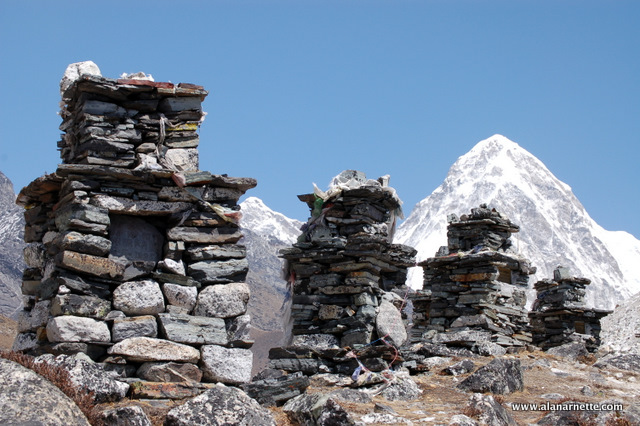
One of the most poignant moments on the trek to Everest Base Camp is at Duhgla Pass in an area known as Chukla Lare. More than 50 rock chortons stand silently honoring those who have lost their lives on Everest, mostly for the Climbing Sherpas. Virtual Everest 2020 – Support the Climbing Sherpas is a joint project of Alan Arnette and several global guide companies. Our objective is to entertain Everest fans during the Coronavirus spring closure and raise money to help the Climbing Sherpas who were not working this spring. While there will be accurate historical references, this series is a work of fiction. Names, characters, and incidents either were products of my imagination or were used fictitiously. Any resemblance to actual events or locales or persons, living or dead, is entirely coincidental. Please join us by making a donation using the links below plus by adding your Everest experiences in the comment section. Remembering The Mount Everest Guide’s team spent an active rest day at nearly 14,500 feet in the village of Dingboche with a walk to take in seldom seen sides of two famous peaks: Lhotse and Ama Dablam. Dutch and Loner especially wanted to see the South Face of Lhotse Peak. This impressive mountain wall has only been used three times for successful summit bids, the last in 1990. They walked by a memorial to three Polish climbers who died attempting it including the Polish Alpinist legend, Jerzy Kukuczka. For the past several years an amazing team of Koreans led by Hong Sung-Taek have given it their all but have come up a bit short of making the top. It is steep, full of hanging seracs and is avalanche-prone. Lhotse South Face The other peak they wanted to check-out was the North Ridge of Ama Dablam. By now the team had many pictures of the Southeast Ridge they saw while trekking out of Namche, but the other side is a totally different mountain. It is steep and full of cornices. It has only been successfully climbed 103 times with the last in 2007. This compared to the more popular Southeast Ridge which had been used for 4,327 summits. Recent attempts were stopped by the very last section that is full of loose soft snow. Ama Dablam North Ridge “Look at that ridgeline,” Dutch said. “I can see why no one has summited recently, It looks like soft ice cream.” The next day, the team left for Lobuche, taking the hill next to Dingboche, they hit their highpoint thus far on the trek at 16,500-feet before dropping back down all the way to one building village named Duhgla. They stopped for pastries and coffee before climbing almost 1,000-feet to the Pass. Taking a wide trail, almost like a road, up from Dughla, the team crested Dughla Pass at 16,000-feet onto an open area filled with rock chortons or memorials. The area is known as Chukla Lare. She paused, knowing the memorials were here from her research but was still shocked by the sheer number. She went over to one of the closest on her right. The name plaque read “Scott Fischer,” another “Passang Sona Sherpa.” She began to walk the line of stone memorials, trying to read each name. Most were Climbing Sherpa. She reflected on what it takes to climb Everest and the sacrifices these men and women show each year. But She had another mission. Before She left home, She received an email that read in part “can you see if his memorial is still there?” This email was from the 80-year-old Father of a fallen Everest climber. The rest of the team had moved on towards the next stop at Lobuche, but She stayed behind. Passang, one of the Climbing Sherpas stayed with her. The Father’s request was on her mind. Many of the monuments had new bronze nameplates. Most had worn away after years of wind and rain. Some were famous – Scott Fischer, Babu Chiri. Most were not familiar. Names long since forgotten by the climbing community. Names remembered daily by their families. She stopped at each one. How did they die? Weather, health, accident? It did not matter. There were climbers from many countries: Belarus, Japan, Austria, Canada, Nepal. Most were Sherpa. Most were young. Climbers following their passion. Chasing their dream. Doing a job. It did not matter. The setting was perfect – above the treeline – on the alpine tundra – views of mountains. They would have liked it. She said aloud, “I’m sorry Sir. I never found Greg’s memorial. But I am sure his memory lives on.” Climb On! Alan Memories are Everything Climbing Sherpa Support Who, how much, and how often you donate is a personal decision. Maybe you climbed with one of the guides, or plan to one day. Perhaps you have followed them for years and want to support their Sherpa team, or maybe you support by geography – Nepali, American, Austrian, British, New Zealand. It’s up to you and will be much appreciated. My sincere appreciation to those companies who accepted my invitation to join Virtual Everest 2020 – Support the Climbing Sherpas: Alpine Ascents International: Click to Donate to Alpine Ascents’ Climbing Sherpas Adventure Consultants: Click to Donate to Adventure Consultant’s Climbing Sherpas Alpenglow Expeditions: Click to Donate to Alpenglow Expedition’s Climbing Sherpas Climbing the Seven Summits: Click to Donate to CTTS’s Climbing Sherpas Furtenbach Adventures: Click to Donate to Furtenbach Adventure’s Climbing Sherpas International Mountain Guides: Click to Donate to IMG’s Climbing Sherpas Jagged Globe: Click to Donate to Jagged Globe’s Climbing Sherpas Madison Mountaineering: Click to Donate to Madison Mountaineering’s Climbing Sherpas Mountain Professionals: Click to Donate to Mountain Professional’s Climbing Sherpas For an overview of the Virtual Everest 2020 – Support the Climbing Sherpas, please visit this post. Previous Virtual Everest 2020 posts: Virtual Everest 2020 – Support the Climbing Sherpas Virtual Everest 2020: Leaving Home Virtual Everest 2020: Flying at the Summit of Everest Virtual Everest 2020: Weekend Video Update April 5 Virtual Everest 2020:
Virtual Everest 2020: Leaving the Trees
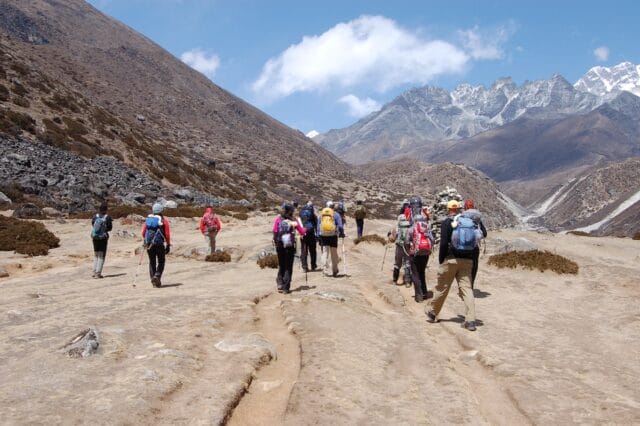
The fictional team is getting closer to Everest Base Camp. Now on their way from Deboche to Dingboche for two nights, then to Lobuche and Gorak Shep where the trekkers will get their “Everest,” the 18,514-foot peak, Kala Patar. They should be at Everest Base Camp at the end of this week. Virtual Everest 2020 – Support the Climbing Sherpas is a joint project of Alan Arnette and several global guide companies. Our objective is to entertain Everest fans during the Coronavirus spring closure and raise money to help the Sherpas who were not working this spring. While there will be accurate historical references, this series is a work of fiction. Names, characters, and incidents either were products of my imagination or were used fictitiously. Any resemblance to actual events or locales or persons, living or dead, is entirely coincidental. Please join us by making a donation using the links below plus by adding your Everest experiences in the comment section. Leaving the Trees Dutch stood still, staring at Ama Dablam as they got up early at the Riverdale Lodge in Deboche. “I would like to climb that one day.” He said to Snorer, Loner, and Old Man. “Me too,” said Loner. They all looked at him. He had only made two comments the entire time they had been together, both about mountains and climbing. “I understand it’s a combination of rock, ice and snow climbing, all at a moderate altitude.” Snorer added. They threw their day packs on their backs and left the Lodge in a single file line. It had snowed last night so the trees had a nice white coating that muffled any sounds. Crossing a bridge over a small stream, the team of climbers, trekkers, and Climbing Sherpas started to gain elevation. After a few hours, she noticed something, “Hey, where did the trees go?” She asked rhetorically. They had left treeline and now were following a narrow dirt path made by perhaps millions of steps over centuries. The Khumbu valley was believed to have been settled 350-years earlier by Tibetans. Along with Rowlang and Khanbalung valleys, it is considered a sacred place. Many of the Climbing Sherpas who support climbers live in these valleys. She told the group what she found on Wikipedia before she left home, “According to Sherpa’s oral history, four groups migrated from Tibet to Solukhumbu at different times, giving rise to the four fundamental Sherpa clans: Minyagpa, Thimmi, Sertawa, and Chawa. The four groups gradually split into the more than 20 different clans that exist today. At one point the Sherpas had their own State but slowly Nepal took them under government rule.” Dutch asked Dawa, “Why do the Sherpas risk their lives on Everest for us.?” Dawa stopped and looked over the barren terrain towards Dingboche, “Climbing is what Sherpas do. I will guide as long as I physically can in order to support my family. Guiding Everest is one of the most lucrative jobs in Nepal, next to being a Government official. But my parents, and my wife, are adamant that my brothers and I stop guiding on Everest. I want a better life for my children. Like my parents, I don’t want them to be a mountain guide. Maybe on lower mountains like Ama Dablam or Lobuche or trekking, but not on Everest. It’s too dangerous. They are in boarding school in Kathmandu now. I can only pay for it by guiding on Everest. But I want them to go to college and maybe be a doctor, an engineer or something else.” The entire group had stopped to listen to Dawa speak. “OK, let’s go.” He said as the group reformed their single-file line on the dirt trail. They tried to avoid stepping on the fragile tundra. Yaks passed them returning from base camp: The trail dropped down towards the Imja Khola river, one of the primary drainages from the Khumbu Icefall and Everest. They crossed a wooden bridge and started regaining elevation. Near the top of the final hill, she paused to look back. This was something she had learned on other climbs, sometimes you have to look behind you to appreciate where you have come from before you go on in order to live in the moment. She was stunned by what she saw, Thamserku 21,729-feet and Kangtega 22,251-feet. The trek in the Khumbu continued to surprise her. Every turn brought another view, every view another delight, every delight, another memory made. Climb On! Alan Memories are Everything Climbing Sherpa Support Who, how much, and how often you donate is a personal decision. Maybe you climbed with one of the guides, or plan to one day. Perhaps you have followed them for years and want to support their Climbing Sherpa team, or maybe you support by geography – Nepali, American, Austrian, British, New Zealand. It’s up to you and will be much appreciated. My sincere appreciation to those companies who accepted my invitation to join Virtual Everest 2020 – Support the Climbing Sherpas: Alpine Ascents International: Click to Donate to Alpine Ascents’ Sherpas Adventure Consultants: Click to Donate to Adventure Consultant’s Sherpas Alpenglow Expeditions: Click to Donate to Alpenglow Expedition’s Sherpas Climbing the Seven Summits: Click to Donate to CTTS’s Sherpas Furtenbach Adventures: Click to Donate to Furtenbach Adventure’s Sherpas International Mountain Guides: Click to Donate to IMG’s Sherpas Jagged Globe: Click to Donate to Jagged Globe’s Sherpas Madison Mountaineering: Click to Donate to Madison Mountaineering’s Sherpas Mountain Professionals: Click to Donate to Mountain Professional’s Sherpas For an overview of the Virtual Everest 2020 – Support the Climbing Sherpas, please visit this post. Previous Virtual Everest 2020 posts: Virtual Everest 2020 – Support the Climbing Sherpas Virtual Everest 2020: Leaving Home Virtual Everest 2020: Flying at the Summit of Everest Virtual Everest 2020: Weekend Video Update April 5 Virtual Everest 2020: Hello Kathmandu! Virtual Everest 2020: Kathmandu Virtual Everest 2020: Exploring Kathmandu Virtual Everest 2020: The First Team Dinner Virtual Everest 2020: Lukla Drama Virtual Everest 2020: The Trek Begins Virtual Everest
Virtual Everest 2020: Blessing in the Khumbu
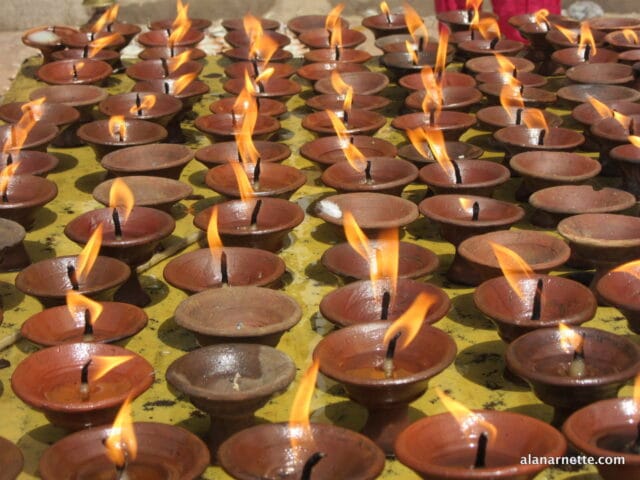
As our fictional climbers continue their sojourn towards Everest Base Camp, a few teams have arrived in Lhasa for their drive to Chinese Base Camp on the Tibetan side. Part of any Himalayan climb with Climbing Sherpas are the multiple blessings before the climbing begins. For some, these ceremonies are a mystery or even something to avoid, but for most, it is an important moment that connects the climbers with the Climbing Sherpas. Virtual Everest 2020 – Support the Climbing Sherpas is a joint project of Alan Arnette and several global guide companies. Our objective is to entertain Everest fans during the Coronavirus spring closure and raise money to help the Climbing Sherpas who were not working this spring. While there will be accurate historical references, this series is a work of fiction. Names, characters, and incidents either were products of my imagination or were used fictitiously. Any resemblance to actual events or locales or persons, living or dead, is entirely coincidental. Please join us by making a donation using the links below plus by adding your Everest experiences in the comment section. Trekking Back at the Panorama Lodge, the team talked openly about the day and seeing Everest. “It’s a big one.” Old Man began as a bowl of tomato soup started their meal. “When I looked at it today, I realized that C3 was pretty low. Hell, I barely got started before I turned back.” Hearing that gave pause to the other team members. C3 was around 23,000-feet, about the summit of Aconcagua – the highest most everyone had ever made. The Boyfriend focused on his soup. Snorer spoke up, “It was about there on Manaslu that I started feeling the altitude. But we should start to use O’s from C3 above. Right?” “Yes, but Os are not a substitute for acclimatization,” Guide chimed in. “You all must get to C3 without Os, spend the night and do it in style to get a chance for the summit push a few weeks later.” The table became quiet. They all knew there would be benchmarks, milestones, and rules, but to hear it now, sitting in Namche Bazzar over dinner, the reality hit home. The next day they stopped for apple pie at what is known as the “World’s Highest Bakery” in Khumjung. Then they toured Khumjung Secondary School, aka Hillary School funded in part by the Himalayan Trust. She marveled at the enthusiasm of the kids, how polite they were and full of life. She was going to tell her kids about this experience the next time they complained that the cable TV was out. One of the lasting memories they all agreed on was the constant view of Ama Dablam. While not the highest in Sagarmatha National Park, it had to be the most iconic. It seemed to loom over every valley and be in every photo. Most known for the visible snow bulb high on the mountain, the name means “Mother’s Necklace.” The long ridges on each side symbolize a mother’s (Ama) arms protecting her child, and the hanging glacier (Dablam) is similar to a double-pendant containing pictures of the gods, worn by Sherpa women. In any event, the 22,349-foot peak was probably the most photographed mountain thus far for the team. Up and Down Back to the Panorama Lodge for their last of three nights, She felt good, healthy, full of energy and life. This trip was just what She needed. The next day, they left for another milestone, visiting the Tengboche Monastery, and a blessing from a local Lama in the small Himalayan village of Pangboche. Leaving Namche felt like leaving home. She had come to peace with the modernization, understanding the prosperity it brought to the local people, especially the kids. She hoped that the bad parts of Western life wouldn’t rub off on these special people. The trail continued to be spectacular. Turning the corner just outside of Namche yet another view unveiled of Ama Dablam and the Dodi Kosi river cutting its way through the deep valley to her right. The trail was wide and smooth. They passed a stupa celebrating the 50th anniversary of the first summit of Everest. She paused, overlooking the deep river valley, with Ama protecting her child. She offered a prayer of gratitude. The trail meandered up and down a few rock obstacles but nothing serious as it passed through several Sherpa villages, each with a long table displaying souvenirs for sale, most locally hand-made. She fought the urge to buy one of everything. The trail began a distinct descent toward the river. It had snowed the previous night, so parts were muddy and slippery, but the yaks had no problems. At the bottom of the ravine, they stopped for lunch at the single building village of Phunki Tenga at 10,660-feet. She had her regular – fried rice and Sherpa tea. Knowing they had gone down about 2,000-feet, it was time to regain the elevation. The trail climbed through a dense forest. It was a welcome relief from the hot sun outside of Namche. A few monks in their crimson robes walked past, some going up, others down. The trail was surprisingly steep. “I forgot about this part.” Old Man moaned. “No wonder, I would too.” Dutch chimed in. Thinking there was no end to the ever upwards trail, without fanfare, a rock framed entry appeared. On the other side was a stunning flat grassy area, and the Tengboche Monastery stood to their left, yaks quietly grazing on the short grass. The Buddhist Monastery is the largest in the Khumbu. At one time, hundreds of monks called it home; now there are less than 60. It was built in 1916 but destroyed by an earthquake in 1934. It burned down from a short in the electrical wiring in 1989. Donations from around the world helped rebuild it. Tibetans hand-painted the murals inside and helped build the 50-foot high Buddha. Joining the Monks They arrived around 3:00 pm just
Virtual Everest 2020: Everest View
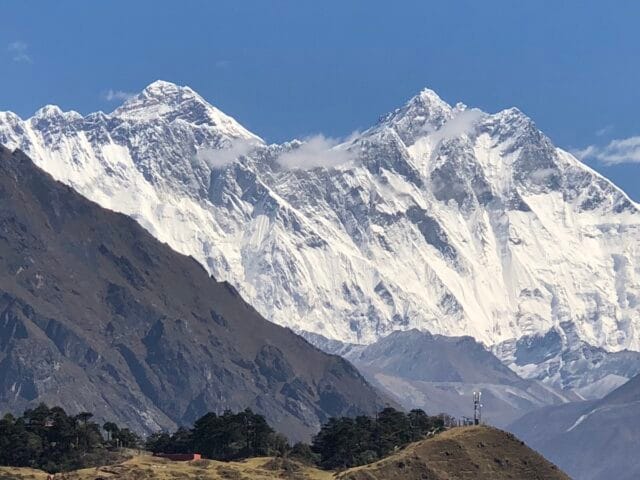
One of the highlights for both climbers and trekkers, even if this is your first or twenty-first visit to Namche is the hike to the Everest View Hotel and the unparalleled views of the Himalaya. Everest, Lhotse, Nuptse, Ama Dablam, and many other high peaks serve as the reward for the strenuous hike. The hotel first envisioned in the 1960s by Japanese Takashi Miyahara, it opened in 1971. Designed by Japanese architect, Yoshinobu Kumagaya, often Japanese tourists took helicopters directly from Kathmandu to the hotel. There was only one problem, sitting at 12,725-feet, many guests got altitude sickness, so supplemental oxygen was made available in each room. Today, it still attracts guests but is one of the most expensive hotels in the entire Khumbu. Virtual Everest 2020 – Support the Climbing Sherpas is a joint project of Alan Arnette and several global guide companies. Our objective is to entertain Everest fans during the Coronavirus spring closure and raise money to help the Climbing Sherpas who were not working this spring. While there will be accurate historical references, this series is a work of fiction. Names, characters, and incidents either were products of my imagination or were used fictitiously. Any resemblance to actual events or locales or persons, living or dead, is entirely coincidental. Please join us by making a donation using the links below plus by adding your Everest experiences in the comment section. Everest View Namche was not what She expected. Friends showed her pictures from a decade earlier of narrow dirt streets, simple stone buildings in the natural amphitheater that defined the village terrain. She found that but also, a disco, the Irish bar with endless loud music escaping between the stone walls. The multiple high-end coffee shops, complete with leather seating, power available for recharging phones and of course, WiFi – sometimes free other times for a small fee. Going into a climbing gear store, it was competitive with any shop She had back home. You could buy quality sleeping bags, jackets, technical climbing gear, anything you needed at good prices. They walked by a small store with two empty barber chairs. As She walked the streets with Dutch and the Couple, they were surprised to see a stone-lined waterway that drained rain and snowmelt away from the city into a fountain area that was seemingly modeled after the Trevi Fountain. The helipad was busy with flights from Kathmandu bypassing Lukla. But just when She was ready to decry the commercialization and western influence, a yak-train came meandering through the streets outside the Everest Bakery. Their bells clanging as they moved slowly, ignoring anything other than the yak in front. A lady managed them, to the extent a yak can be managed, with whistles, loud one-word shouts, and the occasional rock thrown the accuracy of a World-Series pitcher. Climbing stone steps, they left the small village center proper. A cacophony of sounds erupted behind them as they fought for oxygen on the steps. All of a sudden four school kids, all under ten, came running by them laughing and poking one another on their way to school at the top of the hill overlooking Namche. She smiled and thought of her own children. “Let’s grab a jacket and water and head up to the Everest View Hotel. It’s a short but steep walk. It’ll be good for our acclimatization, and we will be rewarded with some of the best views of Everest in Nepal.” Guide announced at breakfast. Back in her room, She put on her lightweight down jacket, thin liner gloves, and hiking boots. Reaching for her trekking poles, She thought of all the advice She received before leaving. So far, She was spot on with gear. The group left the Panorama Lodge perched about the main village but below the school. She was impressed with the lodge. Each room had its own bathroom and shower, rare in Namche. But She was surprised when a local representative appeared asking each member to pay $20 per night for the “tourist fee.” Namche it seemed had embraced local taxes, fees and was no longer a cheap place for tourists, but the $10 room was still there if you looked hard. They reached the top of the dirt path and began to walk on an even steeper trail that took them high above Namche. The views revealed themselves like a Broadway Play, each step was another reward and they knew the best was yet to come. The trail leveled onto an open area covered in thin brown grass, spring had not quite arrived. A few yaks grazed on the flat section. She heard the kids playing at the school. The Nepali military base next to the school hosted an occasion military helicopter that landed creating quite the buzz. They approached a large building. “Are we here?” Dutch asked. “Not yet, a bit further uphill, But get ready for a treat around the corner,” Dawa advised the group. As they made the left-hand turn around the building, there She was: Sagarmatha, Chomolungma, Zhumulangma, Mount Everest. She stopped. They all stopped, quietly letting their eyes trace the Khumbu Triple Crown: Everest, Lhotse, and Nuptse. Two of the fourteen highest mountains on the planet. The signature white plume flowed off the summit of Everest like a bride’s long wedding gown train. Mother Goddess of the Earth never looked more lovely. Loner spoke, “I have been dreaming of this since the sixth grade.” She went deep inside herself. This is her dream. To summit Everest would be meaningful in so many ways. To show her children that they can do anything they set their mind to accomplish. To validate the confidence her husband showed throughout the journey. To honor her mother. However, above all these, stood the one that was unique and personal to her. She set this goal years ago, and it was important to her above what it meant to anyone else. She knew from her other climbs that if She was not clear
Virtual Everest 2020: The Trek Begins
After successfully flying to Lukla, the Mount Everest Guides’ climbers and trekkers completed the first leg to Phakding for the night. Today our fictitious team will take on the infamous Namche Hill. Virtual Everest 2020 – Support the Climbing Sherpas is a joint project of Alan Arnette and several global guide companies. Our objective is to entertain Everest fans during the Coronavirus spring closure and raise money to help the Climbing Sherpas who were not working this spring. While there will be accurate historical references, this series is a work of fiction. Names, characters, and incidents either were products of my imagination or were used fictitiously. Any resemblance to actual events or locales or persons, living or dead, is entirely coincidental. Please join us by making a donation using the links below plus by adding your Everest experiences in the comment section. Trek to Namache and the “Hill” As the Twin Otter whined to a stop on the airport tarmac in Lukla, a large group of porters lined the chain-linked fence protecting the area. Dawa and a few other Climbing Sherpas took charge of distributing the duffle bags. She watched with admiration at the precision the Climbing Sherpas did their job. The eager group of porters took one, two, even three of the 60lb bags. Carefully strapped to their backs with a head strap, aka tumpline, providing most of the support, they left Lukla to meet the team at Phakding in a few hours. She watched one porter in Chinese-made canvas shoes grab her yellow North Face duffle. “I think my duffle is larger than the porter.” She told girlfriend with a mix of admiration and embarrassment as they walked to a teahouse for breakfast. Sitting between Loner and Dutch, She ate her breakfast of porridge, garnished with plenty of brown sugar, rice, eggs, and toast. Sherpa Tea had become her favorite drink. A concoction of tea, butter, and salt, slowly cooked, it tastes good and replaces the salt lost from sweating and provides fat in her diet. Leaning over to Dutch, She said: “I spent the last year avoiding too much fat and salt in my diet, and now it’s all I want!” Loner stared out the window, watching a fleet of helicopters continuously landing and taking off, never shutting down their rotors. The team of Guide, three trekkers, eight Everest climbers, and of course, Dawa left the teahouse in Lukla for their first overnight of the expedition away from Kathmandu. The trek to Phakdang, about 8km/5-miles away, was downhill, a rarity on this expedition. The trails were dirt, the surroundings; fir and pine trees and snow-covered mountains provided the curtains. A mix of white and grey clouds allowed a filtered sun to warm the day. Guide, having done this many times, dressed in shorts while everyone else was in long nylon trekking pants. He was cooler than everyone else, in many ways! She began to understand the attraction of trekking in the Khumbu as the dirt trail followed the Dhudi Kosi River on her left. Dawa told the group, “Sir Edmund Hillary helped move the trail from beside the river higher up on the hillside to keep it open during floods.” There were no paved roads, no cars, and only a few power/phone lines. They shared the trail with everyone and everything. It was a simple world filled with people living a simple lifestyle. About half an hour outside of Lukla, they passed a collection of huge chortons and Mani stones, with the mantra of Avalokiteshvara (Om mani padme hum) chiseled into the stone. Prayer flags adorned the structures. Looking high up to her right, She saw a small monastery perched on the hillside. What dedication and skill it took to build that. A train of Zos, the cross between a yak and a cow, was loaded with barrels or duffles on their way to the villages, or maybe even base camp. These days mules were replacing many of the Zos to carry loads. An occasional horse went by but only a couple as they don’t like this rarified air. Often they are used to transport sick trekkers. She let every sense take in the sights, sounds, and smell. It was intoxicating. In the distance, She heard hammering and voices. As She approached the noise, She saw a new house under construction. Stone walls formed the outside structure. Men with simple chisels and hammers created perfectly formed blocks that fit together as if molded from the world’s finest kiln. The men were speaking in quiet tones as they worked. Their work was not simple but rather highly skilled. Phakdang The team passed fields, where women, bent at the waist, tended potato crops, or perhaps it was buckwheat. Their lavender-colored dresses blew in the soft breeze. A cow tied to a stake in the ground grazed nearby. Two children played near the women. One more bridge crossed the raging brown-colored water of the Dhudi Kosi. They arrived at Phakding, their stop for the day. While downhill and only three hours, Old Man volunteered while glancing at Guide in his shorts, “That got my attention. I don’t remember it being so hot last year.” He found the room he shared with Loner and fell onto the small bed, going to sleep quickly, allegedly still fighting jet-lag. The rest of the team found their bags that the porters had dropped off an hour earlier. In their rooms, they sorted gear, for the hundredth time. They passed the time until dinner. It was a simple fare of Momos, steamed dumplings filled with veggies or meat. After dinner, She, the couple, and Guide played cards. The night went fast; She was still recovering from jet leg like Old Man. Getting up at 7, everyone felt a bit more human. A breakfast of fried egg, toast and coffee started the day. She was starting to see a pattern with the meals. She packed her sleeping bag into her duffle and took out another layer.