Virtual Everest 2020: Lukla Drama
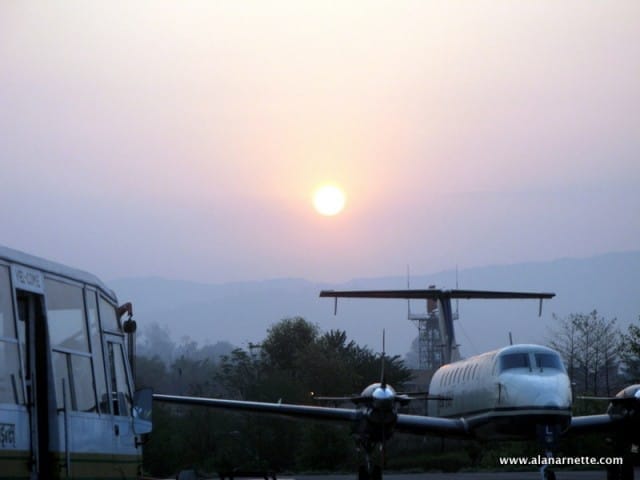
Our fictitious Everest climbers and trekkers are scheduled to fly to Lukla today. Known as one of the world’s most dangerous airports, it’s a time of high anxiety. There have been seven crashes since 2000 killing over 50 passengers and crew. However, to keep these tragedies in perspective, there are thousands of passengers safely flown each year between Lukla and Kathmandu. There are several challenges flying in and out of Lukla. First, there is only one runway that sits at the top of a 2,000-foot cliff and ends where a high mountain wall begins. There is no opportunity for a missed landing or equipment failure. There is no radar or electronic landing assistance so pilots are strictly on visual flight rules aka VFR which simply means they must talk among themselves during landing and taking-off and have limited assistance from any form of air traffic control. Second is the weather. Lukla sits at 9,400 feet surrounded by the low peaks of the Himalayan Mountain Range. The airport is often shrouded in low clouds, rain or snow shutting down visibility, and that’s an issue in a VFR environment! Third is the short runway. At the Tenzing-Hillary Airport, (the formal name) the runway is short, only 1,510-feet long and 66-feet wide (460m by 20 m) at a 12% slope. Compare this to Heathrow where a runway is 12,801-feet x 164-feet (3,902m x 50m ) It takes a special aircraft to land and takeoff on such a short area. Known as short-takeoff and landing or STOL planes, the fleet of Twin Otters, and Dorniers flown by Yeti Airlines, or Sita Air fly climbers and trekkers for about USD$140 one way. Virtual Everest 2020 – Support the Climbing Sherpas is a joint project of Alan Arnette and several global guide companies. Our objective is to entertain Everest fans during the Coronavirus spring closure and raise money to help the Climbing Sherpas who are not working this spring. While there will be accurate historical references, this series is a work of fiction. Names, characters, and incidents either are products of my imagination or are used fictitiously. Any resemblance to actual events or locales or persons, living or dead, is entirely coincidental. Please join us by making a donation using the links below plus by adding your Everest experiences in the comment section. The Journey Begins Her eyes were wide open as the clock clicked to 3:00 am. Nervous energy was working hard to prepare her for one of the milestones of any Everest expedition, the flight to Lukla. She thought about decades ago when climbers would make the trek from Kathmandu to Jiri and on to Lukla or maybe Namache, about a 100-mile walk taking over ten days. But today, climbers and trekkers use helicopters and fixed-wing specialized aircraft to get there. She had packed her duffles last night after another hour checking in with her kids and husband over Facetime. She really missed them. She lingered in the shower, enjoying the hot water, albeit at low pressure. But She was grateful knowing showers at base camp were a rare luxury. “Good-morning my Queen.” Dutch greeted her as She came down the stairs lugging one of her bags. “Let me help you with that.” He grabbed the bag and parked it next to the pile. It was amazing how much gear it took to climb mountains, and the real stash was already at base camp, carried by porters and yaks. The Climbing Sherpas had been at EBC for over two weeks preparing tent platforms, setting up the various tents, and making the camp as comfortable as possible for their members. They did so much work behind the scenes that was invisible to the members. Guide was prepared, looking like he just left a photoshoot. Not a hair out place, shaved, wrinkle-free shirt. “How does he do that?” Snorer whispered to the Old Man. “Hell if I know, I’m lucky I woke up this morning!” He grumbled back. They piled into two vans with their gear for the ride to the domestic terminal at the airport. Everyone was quiet, either nervous or still waking up. The roads were also quiet, only a few dogs rummaging through the garbage left on the streets. No cows this time. Dawa and a few others grabbed luggage carts, and everyone pitched in to transfer the bags to the check-in for Yeti Airlines. Each bag was weighed on a huge scale. The scale’s long-arm swung up and over with each bag. “27 kilos, that OK,” said a young man working fast. The schedule was critical because Lukla has poor weather, and flights are regularly turned back, even after they left Kathmandu when low visibility shuts down the airport. “OK, now we weigh each of you,” he called out to the group. “What, we have to get on the scale?” Snorer moaned. He was slightly embarrassed about his waistline. He stepped as lightly as possible on the metal platform, watching the arm swing hard and fast to the right. When it stopped, he quickly hopped off, hoping no one saw the number. Security consisted of a man in a military uniform going through the handbags, primarily looking for matches, lighters, and batteries. Once clear, they all assembled in the waiting room to start the time-honored ceremony of “Flight Watch.” The monitor showed “Kathmandu – Lukla YT145 7:25” They sat down. The couple appeared with a tray of small coffee cups. They had bought one for everyone. Nice touch, She thought. Taking advantage of the airport’s WiFi, everyone soon became immersed in texting, posting, or surfing. While they were counting on WiFi throughout the expedition, they knew better than to assume it would always be available. To no-one’s surprise, the monitor updated their flight status. Now it would leave at 8:00. The slow creep of delays had begun. “OK, everyone, let’s go. The plane will leave at 7:15!” Guide yelled to the group from the door. Exchanging glances of shock, they scrambled to finish their Sanka
Virtual Everest 2020: The First Team Dinner
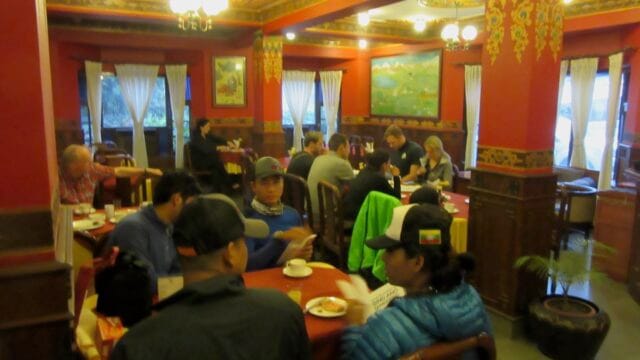
One of the most interesting times of an expedition is when the entire team meets for the first time. You don’t know what to expect, but you do expect a wide range of personalities. Will everyone get along? Who do you want to hang with and who do you want to avoid? Virtual Everest 2020 – Support the Climbing Sherpas is a joint project of Alan Arnette and several global guide companies. Our objective is to entertain Everest fans during the Coronavirus spring closure and raise money to help the Climbing Sherpas who are not working this spring. While there will be accurate historical references, this series is a work of fiction. Names, characters, and incidents either are products of my imagination or are used fictitiously. Any resemblance to actual events or locales or persons, living or dead, is entirely coincidental. Please join us by making a donation using the links below plus by adding your Everest experiences in the comment section. Meeting the Team “Be in the lobby at 6. We will walk to dinner.” Dawa said to the team as they headed back to their rooms after the day tour of Kathmandu. She felt good, invigorated by the experience of the day. She was happy to meet more of her teammates, anxious to meet the Western Guide. He had a reputation, and She was curious to meet him in person. Entering his room, 303, Dutch saw his roommate had arrived. Two duffle bags sat next to his bags on the floor, but it was the sound that caught his attention. The snore of all snores emitted from under the blanket in the bed next to Dutch’s. It was grinding, piercing, thundering, and a bit scary. Dutch stood at the end of the bed, staring. A full-grown man with one leg hanging off the bed, the other under the sheet, his arms stretched over his head, his bare chest heaving with each eruption. With a snort and honk, he jerked to life sitting straight up, eyes wide open staring at Dutch staring at him at the end of his bed. “Hello!” Dutch volunteered, trying to manage the moment. “Um, yes, hello mate.” Snorer said, trying to maintain a semblance of dignity. “Just get in?” Dutch began the conversation. “Yeah, flight was late, had to wait on bags and a ride. You know the drill. Been through this enough that you’d think I wouldn’t be surprised anymore. But this is Nepal, after all,” He said with a wide yawn that revealed multiple cavities filled with silver in his mouth. “Well, we meet downstairs at 6. I’m going to take a shower. Maybe the last I get for weeks.” Dutch said as he went into the bathroom. As he turned on the water, he heard the freight train resume its journey, or maybe it was a steam train. One by one, the team walked down the stairs and into the hotel lobby. Most were wearing hiking shoes, some sneakers, and others simple sandals. “Over here, everybody.” an authoritative voice announced. They gathered around a tall young man, perhaps 30. He was lean, almost gaunt, but his arms had muscles, not huge ones but defined. His waist was slim. One look said he was a climber. “From Mount Everest Guides, welcome everyone. With Dawa’s and the rest of the staff’s help, we will all be standing on the summit of the Big E on May 20, only six weeks from today. But for now, let’s go eat.” And with that, Guide moved towards the door. Walking down the street, She tracked down the young couple walking hand in hand. He was on the street side, remembering what his father had taught him about manners. The man always walks nearest the traffic. His girlfriend didn’t need protection. She looked strong and fit. The two women began to talk about home, family, training, and dreams. “My mother has always been a central figure in our family. She lives with us.” They walked down the narrow dirt streets of Thamel to the restaurant. It had an excellent reputation, and from now on, Mount Everest Guides was footing the bill, except for drinks. Inside the Roadhouse Cafe, they sat at three tables pulled together quickly by the staff. She counted the people—one Guide, three trekkers, eight Everest climbers, and of course, Dawa. “Hmm, two are missing.” She thought. “If you are wondering where the rest of the team are, they left a few days ago to trek to base camp by way of Goyko. They will meet us at EBC.” Guide offered to the group. She liked that he anticipated a question and volunteered an answer—good first impression. Dutch and Snorer sat next to Dawa and immediately drilling him with questions. “What’s the route look like in the Icefall this year? How many teams? Was there a lot of snow this winter? What do you think the conditions will be like?” Dawa patiently addressed each one as his pizza arrived. Guide was sandwiched between Loner and the Old Man, who looked very tired. “So let’s go around the table and hear a bit about everyone. Keep it short, plenty of time to get to know each other over the next six weeks.” How about you first?” Each one spoke for a few minutes, a few a bit longer. Snorer cleared his throat and began, “Well, this is my fourth trip to Nepal. Climbed Imja Tse in ’12 then Mera and Lobuje in ’15. Got Manaslu, you know it’s an 8000er. Anyway, got that in 2018. Would have gotten more but hard to get away from my practice. Anyway, love Nepal and those Climbing Sherpas. Can’t do it without ’em.” “OK, we’ll go next. You first?” The girlfriend began. We’ve been together for six years and have climbed everything together.” She began. He quickly interrupted, “She’s a stronger climber than me. She got Denali when I had to turn back at High Camp.” She jumped back
Virtual Everest 2020: Exploring Kathmandu
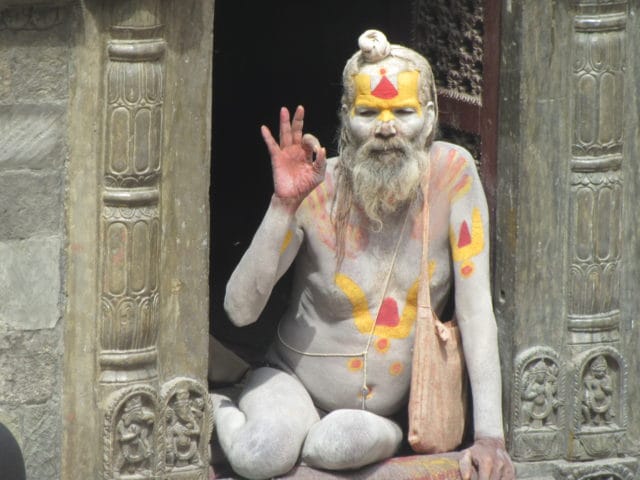
With all the Mount Everest Guide climbers in Kathmandu for their spring 2020 Everest attempt, the process of getting to know one another begins. But first a tour of Kathmandu. Virtual Everest 2020 – Support the Climbing Sherpas is a joint project of Alan Arnette and several global guide companies. Our objective is to entertain Everest fans during the Coronavirus spring closure and raise money to help the Climbing Sherpas who are not working this spring. While there will be accurate historical references, this series is a work of fiction. Names, characters, and incidents either are products of my imagination or are used fictitiously. Any resemblance to actual events or locales or persons, living or dead, is entirely coincidental. Please join us by making a donation using the links below plus by adding your Everest experiences in the comment section. Exploring Kathmandu She left her family on April 3, and now, April 7, She is beginning to get into the flow. Four members of the Mount Everest Guide team met for lunch before heading out to get sim cards for their phones and buy a few last-minute items. With the others arriving later that night, they had a simple dinner and went to bed early, trying to shake off the jetlag. He looked at the Caller ID on his iPhone, 9779808080345. A thirteen digit number must mean only one thing; She was calling from Nepal. “Hello?” he said with anticipation. “Hi, honey, it’s me.” She said with gratitude that the connection was working. “So good to hear your voice. We miss you. I miss you so much.” He said with a deep sense of reflection. “How are you? How’s Kathmandu? Have you seen a yak?” He asked, teasing her like he always does. With her iPhone now using an NCELL card, She could call home. It only cost about a US 2 cents per minute, so She talked to her husband and kids for over an hour and only cost $12. She hoped She could get service on the way to base camp but also planned to use the WiFi offered by EverestLink. “Can you put the kids on? She asked, missing them terribly. “Mom!” they said in unison. “What’s it like? Do they speak English? What’s the food like? Tell us, tell us everything.” The 12 and 14-year-old were overjoyed hearing their mother’s voice. “Mom, guess what? I did a speech today at school about you climbing Mt. Everest. Everyone was so impressed. But some said it was dangerous and people die. I told them what you told us about being careful, training hard and being with the best guides. I told them I wasn’t afraid; that I was proud of you.” As the 12-year-old spoke without breathing, tears well up in her eyes. “Thank you, honey. I’m proud of you also.” They hung up promising to talk again before She left Kathmandu, maybe a video chat next time. With her first-day checklist complete, She crawled into bed and went immediately to sleep. The alarm on her altitude watch went off at seven the next morning. She felt like She had just gone to sleep but was rested. After a quick shower, She ignored her hair, letting it air dry in the warm air of Kathmandu. Dressed in jeans and a Patagonia T-Shirt, She joined the group for breakfast. The hotel had a nice buffet with scrambled eggs, bacon of sorts, toast, and jam plus coffee and tea. It was simple but good. She loaded her plate but no too much. She didn’t see Dutch or the couple inside, so She went outside to the covered patio. There She found the group along with the new members. All, but one person, were engaged in “getting to know you” conversations. Of course, Dawa was right in the middle, flashing his Everest smile and laughing easily. There was a relaxed feeling to the group; the talk flowed smoothly, as did the laughs. She immediately had a good feeling but noted the loner. A large bus pulled up outside the hotel to take them on a tour of Kathmandu. A tour was often a standard part of an Everest climb and helped introduce the climbers to Nepal. Her group of seven climbers plus three trekkers along with the ever-present Dawa and a tour guide hopped on the bus. There were more than enough seats for everyone to spread out. The coach lumbered off to visit the usual sites: Boudhanath Stupa, Pashupatinath Temple, and Swayambhunath Warning: this post and video has graphic descriptions and images that may be disturbing to some people Their first stop was to the Pashupatinath Temple, where both Hindus and Buddhists take their dead for cremation ceremonies. Everything was out in public, and the families were accustomed to having tourists and locals watch the ceremonies complete with camera in hand. She learned that if it is the death of a mother, the youngest son leads the ceremony, if the father, then the oldest son takes charge. The total cost was between $40 to $60, a lot of money for many of these families. It is believed that those who die in Pashupatinath Temple are reborn as a human, regardless of any misconduct that could worsen their karma. The dead are usually cremated within 24 hours of death. The body is lovingly cleaned, sometimes painted before being wrapped in white cloth, and gently laid on a pyre of wood. The son then takes a flaming torch, circles the body many times before setting the structure aflame. The ceremony takes about three hours to complete, and the ashes are spread into the Bagmati River, which eventually joins the Ganges in India. She found the Sadhus, wandering ascetic yogis, fascinating. For a small donation, they pose for pictures in the temple area. The tour guide said they are trying to acquire liberation from the cycle of death and rebirth through meditation. She asked Dutch to take a picture of her with
Virtual Everest 2020: Kathmandu
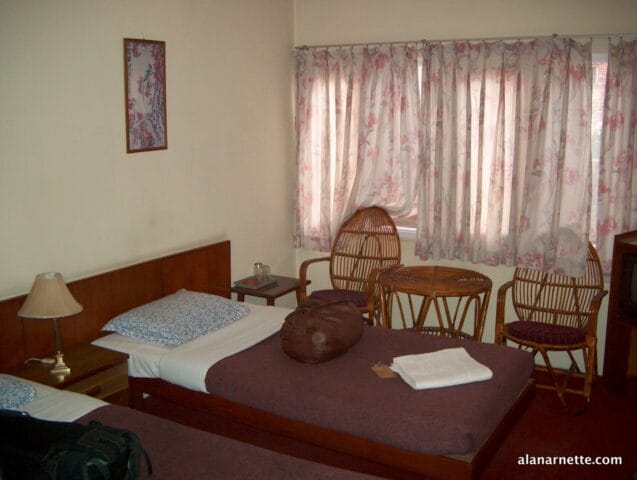
Our fictional climbers have arrived in Kathmandu for their spring 2020 Everest attempt. In the real world, conditions at Everest Base Camp on the Nepal side are pretty good. The temperature is 28F with an occasional snow shower. Virtual Everest 2020 – Support the Climbing Sherpas is a joint project of Alan Arnette and several global guide companies. Our objective is to entertain Everest fans during the Coronavirus spring closure and raise money to help the Climbing Sherpas who are not working this spring. While there will be accurate historical references, this series is a work of fiction. Names, characters, and incidents either are products of my imagination or are used fictitiously. Any resemblance to actual events or locales or persons, living or dead, is entirely coincidental. Please join us by making a donation using the links below plus by adding your Everest experiences in the comment section. Kathmandu Another Sherpa appeared along with several young men who grabbed their luggage carts, winding them around the airport parking lot towards a small van. The engine was running, and the air conditioner was blasting away. “Follow me to the car,” Dawa said to the group. This was the first time She had heard a Sherpa speak. His accent had a musical tone to it. She liked it. Dutch, boyfriend, and girlfriend followed her as the “boys” started to pack the bags into the tiny space in the back of the van. They piled into the two rows behind the driver, Dawa got in the passenger seat. Everyone was quiet, absorbed in the moment. Leaving the airport, they passed the concrete arch marking the entrance and turned right onto one of Kathmandu’s main roads, the Ring Road. Traffic was heavy, cars weaving in and out, but a mass of scooters occupied most of the pavement. Shops filled with colorful merchandise, food, language schools, tour agencies lined the streets. All of a sudden, the van moved to the right lane, dodging a huge cow, chewing on her cud. She turned her head to verify what She had just seen. Yes, a cow seemingly at peace, just sitting in the middle of a congested road chewing her cud. She looked at the girlfriend, and they both let out a giggle. Dutch was busy texting on his phone. The driver turned left onto a narrow dirt road. She couldn’t tell if the buildings were stores or homes. Many had tall walls blocking the view. A few minutes later, he turned back onto a paved road. “Shortcut,” Dawa said, glancing over his shoulder, revealing what they would come to call his Everest Smile. More twists and turns and then down another narrow road, past a money changer shop, the exchange rate written in chalk; “1 USD – 129.1 NR” along with 14 other currencies. The van eased up to the door of the Hotel Kathmandu. The hotel was off the main streets in a quieter part of Kathmandu well away from the often noisy and crowded tourist areas of Thamel. A man in a uniform greeted them “Welcome.” he said with a sincerity in his voice. “Please come in. We will take care of your luggage.” They moved as a small cloud into the hotel lobby. A walkway divided two sitting areas, both with comfortable couches and stuffed chairs surrounded by fresh plants. The check-in desk, a mahogany covered two-sided structure held another man dressed in a white shirt, black tie, and dark suit coat. He instantly smiled as Dawa approached him. “Namaste, and welcome back, Mr. Dawa.” The gentleman offered. “Namaste. This is the first of our Mount Everest Guide’s group to arrive. The rest later today.” She handed over her passport, unclear on the process. “Here are your keys, let’s meet for lunch at noon,” Dawa said as he handed out the keys. She had a single. The couple shared another and Dutch, still holding onto his climbing boots, would share a room with another team member once he arrived. The bags had all disappeared, carried up by a small army of hotel porters. She admired the Tibetan rugs on the floor, the painting of the Portola Palace in Lhasa hanging on the wall, and a portrait of the His Holiness the 14th Dalai Lama. Looking at her key as She started climbing the stairs, She was in room 404. Kathmandu is at 4,593-feet. She lived at 453 feet back home. After two flights, She noticed her heart beating faster, a bit out of breath. “Oh my, really?” She began to tease herself. Turning the corner on her floor, She noticed a poster hanging on the wall. Something about it captured her eye, the signatures at the bottom. Stopping in the middle of the hallway, She studied them carefully and then read out loud, “Rob Hall, Ed Viesturs, Oskar Kihlborg, Micke Reutersward, Carlos Carsolio” An avid aficionado of climbing history, She had the book, Hall & Ball: Kiwi Mountaineers from Mount Cook to Everest, the history of Adventure Consultant’s founders Rob Hall and Gary Ball. Pioneers of commercial mountain guiding, both died in the mountains. Ball died on K2 in 1992 and Hall on Everest in 1996. Of course, Viesturs was an American mountaineering legend becoming the first and still the only American to have summited all fourteen of the 8,000-meters peaks without using supplemental oxygen. Kihlborg and Reutersward were the first Sweeds to summit Everest back in 1990. And Carsolio set a Lhotse speed record in 1994 with a climb of 23 hours and 50 minutes from base camp to the summit. Opening the door to room 404, She found her two yellow duffle bags on the floor next to a small desk. Two twin size beds were neatly made up hugged the wall to her right. Simple curtains blocked the sunlight. She walked over and pulled back the curtains and sat on the bed. “Rob Hall, Ed Viesturs,” her voice trailed off. She thought about all the history, all the legends of climbers
Virtual Everest 2020: Hello Kathmandu!
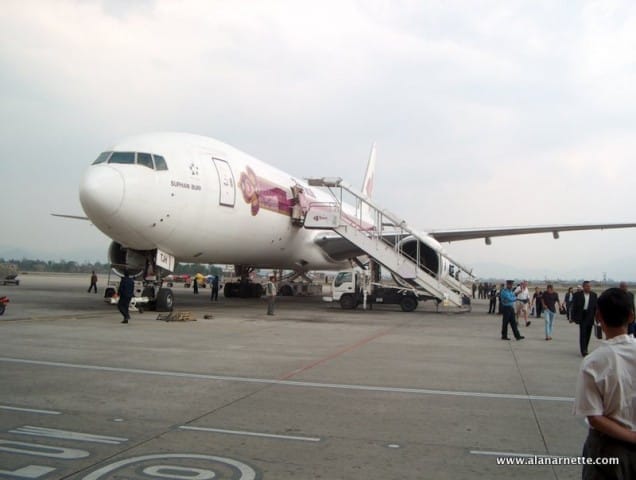
Arriving in Kathmandu for an Everest attempt is surreal, especially if it’s your first time there. You can be anxious about meeting your teammates, adjusting to a new culture that will be home for two months, the new food, and more. While this story is fictional, there are real people climbing Everest in 2020. A team of 25+ Chinese gained an exception from the Tibet Mountaineering Association (TMA) to climb from the Tibet side. China has closed all its mountains to foreigners. I assume the Chinese climbers were clear of COVID-19. I don’t expect any updates from them because similar to past years, Chinese teams do little public social media while climbing, and the TMA rarely responds to inquires. Chinese operator Yarla Shampo Trek is managing their expedition. Inexplicably, a group of British trekkers made it all the way to Everest Base Camp, unaware of world events. They were told they had to stay at EBC for three days for quarantine, and there was no flight from Lukla to Kathmandu. Eventually, they made it back to Kathmandu and the last update had them trying to get a flight home. In current news, the Nepal Tourism Board issued a statement that all foreigners stranded across the country who wanted to go home must be back to Kathmandu by April 3. After that, no in-country evacuations would be coordinated. In Kathmandu, it would be up to the local embassies to coordinate any repatriation. In this sense, several counties, including Australia, German, the UK, and the US, have charted flights for their citizens trapped in Nepal. A US chartered Qatar flight flew 302 Americans out on March 31, 2020. As my long-time readers know, I summited Everest, K2 and Island Peak plus made several other climbs with Kami Sherpa (Ang Chhiring Sherpa – Pangboche). His son Mingma told me over the weekend: Here in pangboche everyone all the villagers are working in the field growing potatoes, garlic, barleys, spinach etc as no expeditions this time, All men are helping in the field. We all villager did some puja yesterday to pray that the virus would abolish soon. Otherwise it is good here in pangboche till now Virtual Everest 2020 – Support the Climbing Sherpas is a joint project of Alan Arnette and several global guide companies. Our objective is to entertain Everest fans during the Coronavirus spring closure and raise money to help the Climbing Sherpas who are not working this spring. While there will be accurate historical references, this series is a work of fiction. Names, characters, and incidents either are products of my imagination or are used fictitiously. Any resemblance to actual events or locales or persons, living or dead, is entirely coincidental. Please join us by making a donation using the links below plus by adding your Everest experiences in the comment section. Hello Kathmandu The lumbering 777 bounced on the new Tribhuvan International Airport runway, brakes working hard to stop the 500,000-pound flying machine slowing from 172 mph. Peering out the small airplane windows, She saw the small brick airport terminal, multiple planes from around the world parked outside the terminal’s glass doors. As the flight crew opened the doors, the fuselage became engulfed in warm, moist air. A monkey was comfortably resting on top of the terminal. She was not in Kansas anymore! Kathmandu Airport Stepping onto the tarmac, She paused and glanced around. The ground crew was hurrying everyone to get on the bus for the 100-foot drive to the terminal. With a quarter of the plane on the bus, it took 30 seconds to drive to the terminal, where they shuffled off and began navigating the halls towards the Customs Room. Inside the large wood-paneled square room, a row of desks occupied the right side, the “Visa on Demand” booth directly in front, and several stand-up writing desks to the left to fill out forms. “Do you have a pen?” She heard over and over. She had registered for her visa on Nepal’s website, but She still had to give them her $125 for a 90-day visa. Sensing a herd mentality from the 348 fellow passengers, She went directly to the booth. It only took a few minutes and then over to the passport desk. She stood in a Disneyland-like winding line for her turn. She felt nervous. “Are you trekking?” A man with a strong Dutch accent standing behind her said casually as he stared at her trekking shoes. He had his boots slung over his shoulder trying to avoid excess luggage fee. His 70-liter pack, on his back, appeared full. She turned around to see a tall man, maybe 6-foot 6 inches with a head of blond curly hair that touched his shoulders. “No, I’m climbing.” She replied in a friendly tone. “Hey, Us too!” said a young man standing next to what appeared to be his girlfriend. “What are you climbing, Everest?” asked the girlfriend with a sly grin on her face. “Yes.” “I am also,” said the curly blond. “We are, too, said the boyfriend.” “Who with?” She asked in amazement, thinking what a small world it was. “Mount Everest Guides.” And with that, She met three of her teammates standing in line to get into Nepal. The emotionless Immigration Agent took her paperwork, her precise 2-inches by 2-inches black and white photo along with her fresh visa, and pushed them through the tray under the smudged glass that kept them apart. He pulled the documents onto his desk, flipped through her passport until he found a blank page. With overriding authority as if making a statement, he slammed the chrome rubber stamp with vigor onto her passport, declaring without words that She had followed all the rules and now could officially stay in Nepal for 90-days. He pushed the passport and a pile of other papers back through the slot, never making eye contact with her. This process would be the last semblance of rules She would witness in this mountain kingdom. As She walked by, he
Virtual Everest 2020: Weekend Video Update April 5

During this Virtual Everest 2020 – Support the Climbing Sherpas project, I’m adding a new aspect of my coverage, a video report on most Sundays. I will recap the week and preview what we can expect coming up. If you have a question or topic you want to be addressed, let me know. Virtual Everest 2020 – Support the Climbing Sherpas is a joint project of Alan Arnette and several global guide companies. Our objective is to entertain Everest fans during the Coronavirus spring closure and raise money to help the Climbing Sherpas who are not working this spring. While there will be accurate historical references, this series is a work of fiction. Names, characters, and incidents either are products of the author’s imagination or are used fictitiously. Any resemblance to actual events or locales or persons, living or dead, is entirely coincidental. Please join us by making a donation using the links below plus by adding your Everest experiences in the comment section. Video Update by Alan Climbing Sherpa Support Who, how much, and how often you donate is a personal decision. Maybe you climbed with one of the guides, or plan to one day. Perhaps you have followed them for years and want to support their Climbing Sherpa team, or maybe you support by geography – Nepali, American, Austrian, British, New Zealand. It’s up to you and will be much appreciated. My sincere appreciation to those companies who accepted my invitation to join Virtual Everest 2020 – Support the Climbing Sherpas: Alpine Ascents International: Click to Donate to Alpine Ascents’ Climbing Sherpas Adventure Consultants: Click to Donate to Adventure Consultant’s Climbing Sherpas Alpenglow Expeditions: Click to Donate to Alpenglow Expedition’s Climbing Sherpas Climbing the Seven Summits: Click to Donate to CTTS’s Climbing Sherpas Furtenbach Adventures: Click to Donate to Furtenbach Adventure’s Climbing Sherpas International Mountain Guides: Click to Donate to IMG’s Climbing Sherpas Jagged Globe: Click to Donate to Jagged Globe’s Climbing Sherpas Madison Mountaineering: Click to Donate to Madison Mountaineering’s Climbing Sherpas Mountain Professionals: Click to Donate to Mountain Professional’s Climbing Sherpas For an overview of the Virtual Everest 2020 – Support the Climbing Sherpas, please visit this post. Climb On! Alan Memories are Everything Previous Virtual Everest 2020 posts: Virtual Everest 2020 – Support the Climbing Sherpas Virtual Everest 2020: Leaving Home Virtual Everest 2020: Flying at the Summit of Everest
Virtual Everest 2020: Flying at the Summit of Everest
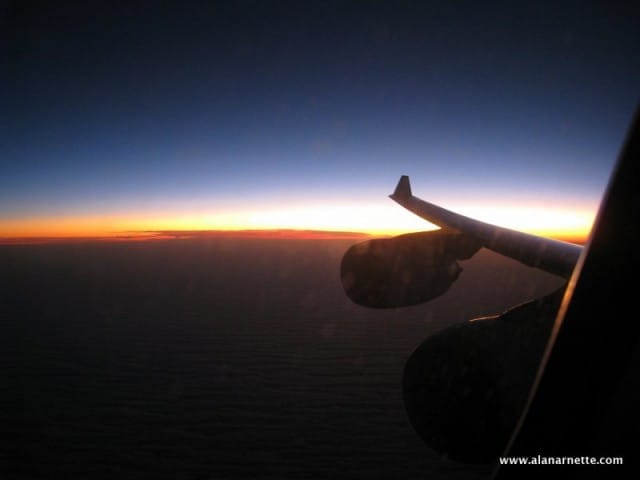
Our Everest 2020 climbers are on their way this early April. A few teams are already trekking the Khumbu to Everest Base Camp while those climbing from the Tibet side are on the road. Zhangmu, a 6-hour drive from Kathmandu, used to be the border crossing from Nepal into Tibet, but after the 2015 earthquake, the city was so badly damaged that the crossing was moved to Gyirong, about 50 miles to the west. However, many teams today fly to Lhasa and drive to Chinese Base Camp (CBC) on a nicely paved road. Thankfully the runway repairs at Kathmandu’s Tribhuvan airport are complete. Last year, climbers and trekkers were subjected to a 4-hour drive to the Manthali Airport in Ramechhap if they wanted to a fixed-wing flight to Lukla due to restrictions in Kat. Many teams this year will use helicopters. The Icefall Doctors arrived at Everest Base Camp (EBC) on March 18th and have been working hard to get in the route to Camp 2. This year there are eight Climbing Sherpas led by Ang Sarki Sherpa. Each year the goal is to get the route in before any expeditions arrive, thus allowing acclimatization rotation to begin as soon as possible. In reality, it usually takes longer, mainly due to changes in the Icefall, and the Docs must navigate the route from scratch. This year may be different because, during Alex Txikon‘s winter attempt that ended in late February, they put a route through the ‘Fall noting that it was mostly straight forward and fast. Hopefully, the Docs can leverage that work. Enabling climbers to go fast through the Icefall is critical for safety, even more so in 2020 due to the giant ice serac teetering above the Football Field, located about half-way between EBC and C1. Last Autumn, teams backed off their efforts, fearing it would release on top of them in a replay of the 2014 disaster that took 14 Climbing Sherpa’s lives in the Khumbu Icefall. This will be one of the most followed storylines for 2020. Virtual Everest 2020 – Support the Climbing Sherpas is a joint project of Alan Arnette and several global guide companies. Our objective is to entertain Everest fans during the Coronavirus spring closure and raise money to help the Climbing Sherpas who are not working this spring. While there will be accurate historical references, this series is a work of fiction. Names, characters, and incidents either are products of the author’s imagination or are used fictitiously. Any resemblance to actual events or locales or persons, living or dead, is entirely coincidental. Please join us by making a donation using the links below plus by adding your Everest experiences in the comment section. Flying at the Summit of Everest The flight over to Kathmandu is always a time of mixed emotions, and when you ask yourself many questions. Will I make my connections? Will I get upgraded? Will my bags make it? But probably the most important one is, Am I ready? Looking out the airplane window, all She saw were clouds: big, puffy white clouds and the occasional dark one harboring turbulence. As the plane crossed the line between day and night, She tried to close her eyes, but sleep was elusive. Even the upgrade to a Business Class seat was not helping. Something was on her mind. A year ago, She sent the deposit to the company Mount Everest Guides. It was a lot of money. The family had made significant sacrifices for her to go on this trip, no vacation for two years, put off the new car, again. She negotiated with her boss for two-months off. And then there was the work She put in. While She loved to go on big climbs, knowing that Everest was her dream, She took the advice of people who had done it and climbed some of the biggest in the world to gain experience. In 2015 She did Kilimanjaro, the next year was Aconcagua, and last year, 2019 was Denali. She wanted to climb Cho Oyu or Manaslu, but time and money prevented that. But was her work enough? She pondered her chances as She finally drifted off. 2019 was a tough year on Everest. Eleven people died, most termed “preventable deaths.” Low-cost operators, offering climbs for under $30,000, had attracted a new demographic of climbers. Many lacked experience at high altitude, and in some cases, basic climbing skills. With so many people on the mountain, it created a shortage of qualified “Climbing Sherpa Guides.” That combination contributed to an indefensible situation on May 22, 2019, between the Hillary Step and the summit on the Nepal side. She was committed not to be one of those climbers who held everyone up. If She got too tired, then She would step aside and let others pass. With a sharp twitch in her leg, She sprang back to consciousness. She had been asleep for two hours. The flight attendant came by with a lite lunch before landing in Istanbul. She was looking forward to this connection because of the legendary Turkish Air Business Class lounge at the airport. The layover was swift, only three hours. For the last leg to Kathmandu, her upgrade did not come through, so 5 hours and 20 minutes in coach. Given She would land at 3:40 am, She was going to sleep anyway. Half-way through the flight, She woke up and glanced at the in-flight map on the monitor in seatback. Rubbing her eyes, She was not quite sure what to make of what She was reading, “Altitude: 29,035-feet,” the summit of Everest. Climbing Sherpa Support Who, how much, and how often you donate is a personal decision. Maybe you climbed with one of the guides, or plan to one day. Perhaps you have followed them for years and want to support their Climbing Sherpa team, or maybe you support by geography – Nepali, American, Austrian, British, New Zealand. It’s up to you and will be much appreciated. My sincere
Virtual Everest 2020: Leaving Home
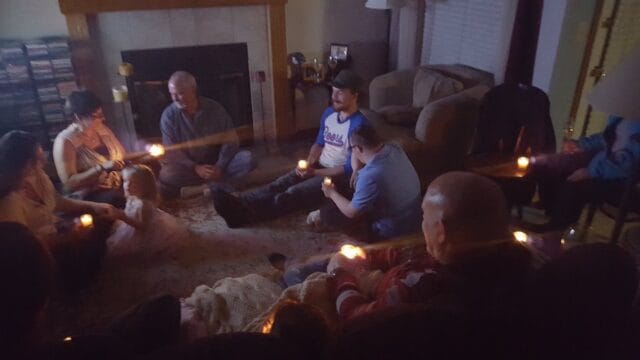
The end of March and beginning of April is an exciting time for Everest aspirants. Their duffle bags are packed, plane reservations confirmed, and training completed. All that’s left is to get to Kathmandu or Lhasa. Virtual Everest 2020 – Support the Climbing Sherpas is a joint project of Alan Arnette and several global guide companies. Our objective is to entertain Everest fans during the Coronavirus spring closure and raise money to help the Climbing Sherpas who are not working this spring. While there will be accurate historical references, this series is a work of fiction. Names, characters, and incidents either are products of the author’s imagination or are used fictitiously. Any resemblance to actual events or locales or persons, living or dead, is entirely coincidental. Please join us by making a donation using the links below plus by adding your Everest experiences in the comment section. Leaving Home The kids are in bed; the house is quiet; now is the time. “Honey, I want to talk to you,” She said in a soft voice. “Sure, let’s sit on the couch,” he responded, expecting a discussion about one of their children’s schoolwork. Holding his hand, She looked in his eyes and said, “I want to climb Everest.” He fought to hold onto his emotions. He knew of his wife’s love of mountains before they were married. She had climbed Rainier in her early twenties, Aconcagua in her thirties and then Denali. She was good. She was safe. She was a natural. But Everest, the highest? Everest, where people die every year? He fought to hold on. She squeezed his hand gently yet firmly. “You know I’ve always dreamed of this. The kids are in a good place. We are in a good place.” We have the money, and I have time off work …” He interrupted, “You have already talked to your boss?” he said defensively. “No, not yet, but I know I can get it. I wanted to talk to you first – before anyone else.” He relaxed. She smiled. That night they crawled into bed, a king-size bed – he flops around a lot. They had their usual hug and goodnight kiss before rolling on their sides, facing away from one another. As She laid with her eyes wide open, She felt him move closer. “Yes. Yes, I will support you in your dream.” She didn’t need his permission. She needed his support. The next year was a whirlwind. She trained like there was no tomorrow. He picked up the kids from school as She ran laps up the local hill. As he rolled over at 4 a.m. when the alarm went off, She went for her morning run. She gave him a loving peck as She came back from her workout with her trainer after work. He cooked the endless chicken breasts, fueling her for the next workout. He agreed, reluctantly, to remove their beloved wine collection to support her training. This was about them, not him, not her. Each night, they both went to sleep committed yet still uncertain about their bargain. That Christmas, around the table, She lifted a glass of wine, an exception, for a toast. She looked across the table at him. She looked at her children. She paused as She took a deep breath. “Kids, I want to tell you something.” The duffel bags took up most of the room in the minivan. He drove as She carried on the usual conversation with the kids. They had seen their mom leave before on many business trips. “OK, you guys behave while I’m gone. OK? I want you to be good for your dad. OK? I will call as much as I can but remember what I told you about satellite phones. Remember?” Tears welled up as She quickly looked away, avoiding eye contact. She squeezed her husband’s hand. He squeezed back. The night before, they talked – they talked like they had never have talked. The tears came and flowed freely. No pretense, no tough guy, no tough gal. Real people, real emotions. Brutal honesty. “Honey, if something happens…” He stopped her. “Nothing will happen. I am sure of that.” Yes, but if something does …” her voice trailed off. She was very thorough; She had signed all the forms, all the legal papers, every contingency was covered. Every base was covered … except for the unexpected. The hugs at the airport were long. The parking police came over but unexpectedly left as they witnessed the scene. Her children looked at her. “I love you, mom.” “I love you too, sweetie. Mommy will be home soon. You be good like we talked about. OK?” She broke the hugs, knowing that She could never really let go. With the kids back in the minivan, he looked deeply into his wife’s eyes, her soul, her essence; She looked back. The embrace was long, it was strong, it was full of love. Nothing was left unsaid. Climbing Sherpa Support Who, how much, and how often you donate is a personal decision. Maybe you climbed with one of the guides, or plan to one day. Perhaps you have followed them for years and want to support their Climbing Sherpa team, or maybe you support by geography – Nepali, American, Austrian, British, New Zealand. It’s up to you and will be much appreciated. My sincere appreciation to those companies who accepted my invitation to join Virtual Everest 2020 – Support the Climbing Sherpas: Alpine Ascents International: Click to Donate to Alpine Ascents’ Climbing Sherpas Adventure Consultants: Click to Donate to Adventure Consultant’s Climbing Sherpas Alpenglow Expeditions: Click to Donate to Alpenglow Expedition’s Climbing Sherpas Climbing the Seven Summits: Click to Donate to CTTS’s Climbing Sherpas Furtenbach Adventures: Click to Donate to Furtenbach Adventure’s Climbing Sherpas International Mountain Guides: Click to Donate to IMG’s Climbing Sherpas Jagged Globe: Click to Donate to Jagged Globe’s Climbing Sherpas Madison Mountaineering: Click to Donate to Madison Mountaineering’s Climbing Sherpas Mountain Professionals: Click to Donate
Everest 2020: China Closes Everest
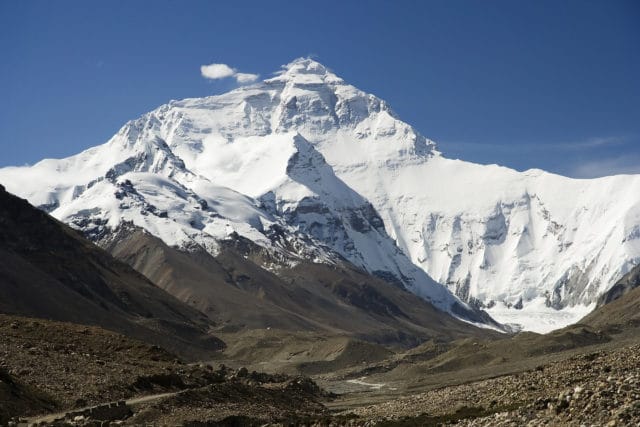
Follow Virtual Everest 2020 – Support the Climbing Sherpas starting April 2, 2020 According to operators running Everest expeditions on the China/Tibet side of Everest, they were notified today, March 11, 2020, that the China Tibet Mountaineering Association aka CTMA that all permits for the spring season are canceled due to the Coronavirus. Operators are reacting differently: Adrian Ballinger, founder of Alpenglow told me: China officially closed Everest for spring last night (I was notified via my CTMA contacts). I agree with the decision (my partners and Dr (Monica Pérez) were leaning towards canceling based on news of the past week) and think that once again China is demonstrating leadership in prioritizing safety on their side of the mountain. In a press release, Alpenglow addressed switching to the Nepal side: Switching the climbing route over to Nepal, that allows access to the southern side of the mountain, is also not an option for Alpenglow. “Nepal may follow China’s lead and shut down their season as well,” says Ballinger. “Even if they don’t, the threat of a Covid-19 outbreak and the underlying issues of ascending from the south side, including the lack of effective management, overcrowding, and an unpredictable icefall, make such an expedition unsafe in our eyes. It’s not a gamble we’re willing to take.” Lukas Furtenbach of Furtenbach Adventures, a large operator on the Tibet side told me he would move to the Nepal side. Nepal and Operators Spin a Different Story Thus far Nepal has not made any decision and the Prime Minister said last month, “‘Nepal is coronavirus free” even though the World Health Organization has put Nepal at “very high” risk of a Covid-19 outbreak. Amazingly Western operators are parroting their propaganda. SummitClimb sent an email to their clients promoting climbing in Nepal this season: The Nepal Government reports one case of Coronavirus. The person received treatment, has recovered, was retested and does not have the coronavirus now. Kathmandu airport staff are checking each traveler for fever, if any are found they are taken immediately to hospital. So far, no one has Corona virus covid-19. Most flights from China have been cancelled and all land borders with China are closed. India has a very low incidence of Corona Virus Covid-19 and India/Nepal border staff are checking each individual’s temperature upon entry. According to Nepali tourism reports, 169,500 Chinese visited Nepal in 2019, second only to India with 254,000. Of note, India closed its border with Myanmar. Also, Nepal put 71 Chinese in quarantine who returned to Nepal between March 4 and 6 from Chengdu and Beijing after celebrating the Chinese New Year. They were in were in Pokhara working at the new airport. Nepal Everest Impact IMG continues to plan: In Nepal, Ang Jangbu and Senior Guide, Phunuru Sherpa, sent word that a team of 14 Advanced Sherpa will meet Ang Pasang in Gorakshep on the 20th of March and begin building our camp site at Everest Base Camp on March 21st. Nepali officials added visa steps for travelers from eight countries experiencing the highest levels of the Coronavirus. The usual process for most visitors is to obtain a visa at the airport once they arrive. Now visitors from eight countries, China, Iran, Italy, Korea, and Japan plus France, Germany and Spain must get their visas in their home country before arriving in Nepal. Note, this does NOT stop visitors from coming to Nepal, only adds an additional step before leaving their home country. Also, by omission, it doesn’t impact any other countries. Meanwhile, Nepal media reports that the Icefall doctors are en route to base camp to begin fixing the route through the Khumbu Icefall. Also, the government asked that the teams fixing the rope put dual lines wherever possible to address crowds. This is interesting because the Sherpas and rope fixers know where to put extra lines and have had dual lines on the Lhotse Face and other places for years. This is another public relations spin by the government to address concerns in my view. I assume Nepal will not close its side prioritizing money over health. As I reported last week, officials told me they expect the number of climbers to be cut in half due to cancellations from Chinese, Japanese, and Korean climbers. I’ve been told directly from several western climbers that they will go to Everest in 2021, not 2020 due to virus concerns. Assuming Nepal does not act, we can expect the Nepal side to have fewer climbers than in 2019 but still crowded with perhaps 300 to 400 foreigners plus the same number of support climbers. This remains fluid and unknown. There were 876 total summits by all climbers and support on all routes in 2019. Climb On! Alan Memories are Everything
Everest 2020: A Month Go Checklist

Follow Virtual Everest 2020 – Support the Climbing Sherpas starting April 2, 2020 Early March is an awkward time for aspiring Everest climbers. It is too late to make serious advancements in physical training and too early to eat what you want, assuming you will lose weight during the climb. Making serious gear changes is not advised nor is changing guide services. But there is still work to do! Other than persistent rumors, and maybe a last-minute rule change from Nepal or China, Not much will happen for the next few weeks as climbers are en route. Once they arrive in their gateway city, they meet their teams, take care of a few details then begin the journey to their base camps. Climbing will start around 15 April on the Nepal side and a few days to a week later on the Tibet side. If I were going this year, this would be my last-minute checklist: Review gear list Buy snacks Buy ebooks or reading material Buy summit socks Keep training Do not gain a lot of weight. Go in at your ideal weight Do not get hurt or sick Get your flu shot Familiarize yourself with the Cornaovius precautions Leave nothing left unsaid For What It’s Worth I will be home this year covering the action from Colorado, but there with the climbers in spirit. These are a few other last-minute thoughts for our Everest climbers. Slow Down! Don’t get hurt! While it may be tempting to add extra weight to the bar when doing curls or push that long run the extra mile – don’t. You are at diminishing returns. Your body is about as good as it’s going to be. Twisting an ankle or pulling a muscle that takes six weeks to heal will sabotage your entire climb, plus undermine your confidence. Keep working out but move into maintenance mode where you tone, not build. Don’t be antisocial, but avoid those people with colds or the flu. Replace handshakes with fist bumps and let Purill be your friend! Do not go to Nepal already sick! This is especially critical with COVID19 lurking out there. You are what you Eat! Watch what you eat; again this is not the time to get sloppy. Watch your balance of carbs, proteins, and fat. When in doubt, avoid the carbs because healthy fats and protein build muscles. You will lose weight even on the trek in, let it happen naturally. Your diet will take a considerable shift as you eat the food of the Khumbu or Tibet – lots of carbs through rice, little meat. Ask your logistics provider to add as much protein as possible to their meal plans – eggs, almonds, chicken, oats, lean beef, tuna. Oh, and now is the time to knock off the booze. You should have already, but it adds empty calories that will not help you at 26,000 feet! Also, watch those beers on the trek in; one is enough with a meal, if any at all. After you summit, you can celebrate but not before. Celebrate! Speaking of reaching the summit, that is knowing you will summit 🙂 🙂 think ahead on how to honor your summit and time in Nepal. Many people bring family pictures or tokens that are meaningful to them. While not allowed and discouraged, many summiters leave something on the summit. This is a picture of a small singing bowl that reminds me of the monasteries, the bracelet from Bravelets is what I wear to honor my mom, Ida Arnette, who died from Alzheimer’s and the medallion is from Mountain Monkey Company and can be customized for your summit. Know What You Don’t Know A few years ago, I posted what I tongue-in-cheek called a “personal letter” to 2017 Everest climbers with the message – don’t go! The main point I was making was that in modern times, post-2000, lack of experience played a large role in the deaths of some climbers. As we saw in 2019 with 11 deaths, lack of experience with both members and “guides” played a large role as I described in the 2019 Season Wrap-Up post. But in the personal letter post, I went as far as to list some questions that were designed to make people think about what they thought they knew about climbing Everest. Shortly after that post, I received a comment asking for my view on the answers to those questions so here goes. Of course, these are my opinion as every question in this world has multiple answers these days. These were the questions for aspiring Everest climbers and my views. Q: What is the highest altitude you have ever reached? Alan’s view: I strongly believe that an Everest aspirant should have reached 8,000-meters before attempting Everest. You need to know how your body reacts at extreme altitude, and even then it’s not predictable. But the more experience you have, the fewer factors are left to chance. If you get a familiar sick feeling on the summit push or before, you know its time to turn back. But most operators don’t use this criterion and accept Denali and Aconcagua as their requirements. Others have no requirements and will gladly accept your money. Therin lies one of the major problems on 8,000-meter peaks today. Q: When do you use a tent parachute stake on Everest? (trick question!) Alan’s view: rarely if ever. A parachute stake is used in deep, soft snow, such as is usually found on Denali. Everest usually has hard-packed ice, so stakes are used. Q: What do you use to replace a lost jumar at the Balcony? Alan’s view: bring a spare, or you can rig a system using a tribloc and carabiners or the Wild Country Ropeman 2 Ascender. Practice at home on how to use these devices. Q: How long will a 4-liter cylinder of oxygen running at 2 liters per minute (lpm) or 4 lpm last? Alan’s view: Climbers usually run the flow at 2