2019/20 Winter Himalaya Climbs: Teams on the Move
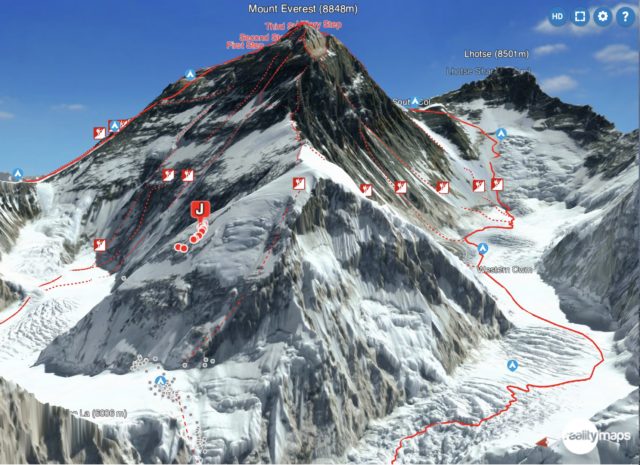
One is going for the summit and one is doing laps on Everest. We will know at the end of this week if Everest will see a winter summit this season. Everest Jost on West Ridge – Broke 7200m, Time running out German alpinist, Jost Kobuschh’s is back down to his Camp 1 at 6,100-meters/20,000-feet after establishing Camp 2 a couple of days ago at 6,760-meters according to his tracker. His high point for this expedition is 7,329-meters/23,750-feet. There have been high winds, so he may be satisfied to have touched the West Ridge and is returning base camp. He told reporters he will end his effort by February 29. In review, he is attempting a winter, solo Everest climb without supplemental oxygen and no Sherpa support. This exact style and the route have never been attempted or accomplished. You can track his location on this excellent map from 3D Reality Maps. Txikon and Tashi On Final Push Alex Txikon and team left base camp Tuesday for their final summit attempt targeting February 28 for the summit. They had planned to reach C2 but appear to have stopped at C1 around 6,000-meters/19,600-feet. Angela Benavides, Press Manager, sent out this release that read in part: Heavy snow falling and the need to remix some sections at the Khumbu Icefall have slowed down the team. Alex and the five nepalese climbers have stopped for the night in Camp 1. Otherwise they feeling good and ready to proceed to Camp 2 and, conditions permitting, further up, tomorrow. Seven Summits Treks CEO Tashi Lakpa Sherpa along with Pasang Nurbu Sherpa, Mingtemba Sherpa, and Halung Dorchi Sherpa have joined them on the summit push. Winter 2019/20 Everest – EBC – Stalled Jost Kobusch – at EBC Alex Txikon – at EBC K2 – Over, No Summit Mingma Gyalje Sherpa – Over Broad Peak – Over, No Summit Denis Urubko – Over Batura Sar – fighting Snow Ama Dablam – Multiple Winter Summits Gasherbrum I/II – Over, No Summit Simone Moro and Tamara Lunger – Over Climb On! Alan Memories are Everything
Nepal Supreme Court Allows Disabled Climbers
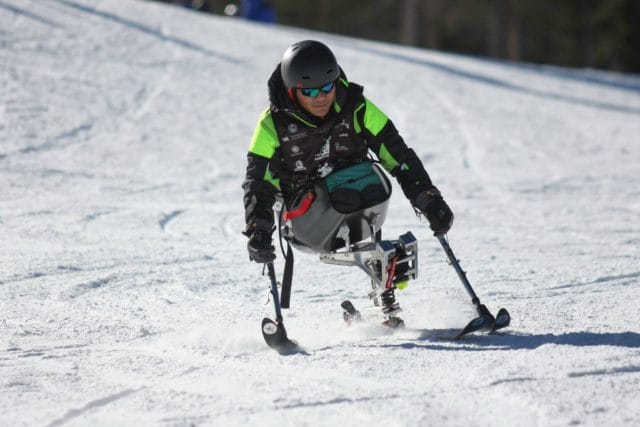
In a dramatic, and reasonable move, the Nepal Supreme Court has struck down a new rule by Nepal’s Ministry of Culture, Tourism and Civil Aviation to ban climbers with double amputations and blindness. The case was brought on behalf of double amputee Hari Budha Magar who is a former British Gurkha. Mager reacted on Facebook with “What a great news to hear when I wake up this morning. Now, we have summited a bureaucratic Mt. Everest. The justice has served! Thank you Supreme Court, you are our hope to get justice. This is true example of Nepalese judiciary system, keep it up! I hope Department of Tourism will implement this Supreme Court order. Let’s climb real Mt Everest together!” The 39 year-old who lives in Canterbury, Kent, UK, had postponed his 2018 attempt one year after the original announcement. Learn more about Hari at his website. This reversal is both a victory for disabled climbers and for Nepal. The legal process seemed to have worked in Nepal, something missing in recent years, plus the rights of humans, according to the UN, were upheld. The Ministry has made an annual joke around new rules for Everest with arm-waving designed to assure prospective climbers that it is safe to attempt Everest from the Nepal side. Let’s take a trip down memory lane at some of the best. Note that almost all have not been implemented or enforced: Ladder on the Hillary Step to reduce wait times and bottlenecks Dual ropes for up and down traffic Rescue team at Camp 2 to save climbers in trouble An Integrated Service Center at base camp to represent the government’s administration on the ground Liaison Officers actually be at base camp throughout the entire expedition Nepal military at base camp to keep peace among climbers Climbers required to announce beforehand if they planned to set any record Climbers required to bring down 8kg of trash during climb Helicopters barred to go to base camp except for medical evacuations Trekkers required to have location beacons Trekking guides required to have up to date weather forecasts Everest permit revenue shared with local villages The only announcement that was made and actually implemented was the increase of life insurance for Everest workers. It was raised to $15,000 against the wishes of other ethnicities across Nepal. To be fair, some changes have been helpful, albeit bit strange as to why they were necessary: Sirdars, mountain guides and high-altitude workers who accompany expeditions to the top of the climbing peaks, including Mt Everest, shall get summit certificates. Medical and life insurance for liaison officers, base camp workers, and climbing guides be increased. Lets hope that this court ruling will encourage the Ministry to be more thoughtful on their proposals and focus on real reform for Everest and not window dressing. Climb On! Alan Memories are Everything
ALL CLEAR: FeedMedic Alert for TheBlogOnAlanarnettecom
Your Source Feed, http://www.alanarnette.com/blog/feed/, is now working fine. Carry on! We will let you know if anything bad happens in the future.
PROBLEM: FeedMedic Alert for TheBlogOnAlanarnettecom
FeedBurner had trouble retrieving your Source Feed: http://www.alanarnette.com/blog/feed/
The error message is:
Error getting URL: 502 – Read timed out / server unresponsive at the requested source URL
Actions you can take:
Validate your Source Feed …
Oxygen on Everest – Reviewing the Options – Updated
Climbing Everest with supplemental oxygen has become standard for 97.1% of all climbers starting with Mallory and Irvine in 1924. As with all mountaineering technologies, oxygen systems have seen many changes but in 2013, there was perhaps a game changer that enabled several teams to enjoy record summit success. Climbers use supplemental oxygen to give them an edge while pushing to the summit of a mountain like Everest at 8850 meters. At that altitude, the available oxygen is 33% of that at sea level. It is like running up a staircase while holding your breath 2 out 3 steps. To summit Everest without using any supplemental oxygen anytime on the climb is rare, it is estimated less than 100 out of the over 6500 summits have been accomplished in this pure manner. Providing supplemental oxygen at 8000 meters in high winds and extreme temperatures is not simple. Valves freeze, masks deform in the wind, ice forms in tubes and many more problems prevent the delivery of the right amount of oxygen at the right time. Too much and there is waste of a precious gas, too little and a climber might die. The basic principle used by all systems is to transfer oxygen held in a metal cylinder usually carried in a backpack through a rubber tube to a mask covering the climber’s mouth and nose. An adjustable regulator attached to the top of the cylinder controls the oxygen flow to some type of reservoir where it is delivered as the climber inhales. A complicated valve prevents a climber’s exhale from going into the reservoir. The Early Designs In the early 1900s it was unknown if a human could live at extreme altitudes including climbing Everest. Serious efforts were made to design “breathing” systems but they were heavy, bulky and sometimes didn’t work. The original oxygen systems designed for climbing began with a device created by George Finch in 1922. Finch and his teammate Geoffrey Bruce reached an altitude on Everest of 27,250 ft (8175 m) setting a record using their open circuit system that weighed 33 pounds (15kg). One of the great debates on whether Mallory and Irvine summited in 1924 was around their oxygen system. Irvine was brought onto the expedition for, amongst other reasons, his expertise on these systems and modifications were made until they left for the summit. Oxygen on Everest’s First Summit In the 1950’s when the Swiss and British restarted attempts on Everest, the technology had advanced based on two World Wars. In 1953, almost thirty years after the first attempts, Sir Edmund Hillary and Tenzing Norgay reached the summit with a much improved and lighter (22 lb/10 kg) system. The Hornbein Mask In the 1960’s, more progress was made by Navy doctor and mountaineer Tom Hornbein who updated masks used by Navy pilots to be more efficient and easier to use. The appliance company, Maytag, produced a limited number of these masks for use in the 1963 America climb. One of the significant improvements was that the Hornbein mask had only one valve that prevented breathing back into the rubber bladder into which oxygen flowed from the tank so when the climber breathed, he took oxygen from the bladder, not directly from the tank. This made breathing easier and provided a steady supply of oxygen to the climber. The Hornbein mask design is still the basis for all masks used in mountaineering today. Poisk The Russian company, Poisk commercialized oxygen systems for climbers starting with an Everest expedition in 1982. Their mask was based on the Hornbein design. They manufactured small lightweight (7.7 lbs/3.5kg) gas cylinders made from titanium alloys covered in kevlar fibers holding another sealed container made of carbon fiber, fiberglass or organic fibers. In addition, they provided regulators that could be adjusted in 1/4 liter per minute increments up to 4 liters per minute. A climber could go for 6 hours with this system at 2 l/m. But this system was not perfect as I experienced on my first climb on Everest in 2002. In hindsight, I believe I climbed to the Balcony (27,200’/8250m) without supplemental oxygen due to the excessive leaking of the mask and perhaps some design issues.. The valve in the original mask design often allowed a climber’s exhale to enter the rubber reservoir preventing new oxygen from refilling the reservoir thus sending oxygen directly to the mask where it leaked out or was unused as the climber exhaled. This was often due to the valve freezing from the moisture in a climber’s breath. Poisk introduced a new line of masks to address these issues a couple of years ago. Some commercial operators took oxygen systems into their own hands. International Mountain Guides (IMG) began designing and contracting the manufacturing of their own cylinders in 1991 choosing a larger tank that would supply climbers with 10 hours of oxygen at 3 l/m. TopOut The Poisk system was the only game in town until the early 2000s when Ted Atkins introduce his TopOut mask. His approach was based on frustration with the Poisk mask. Atkins said the Poisk masks leaked, provided oxygen at a steady flow regardless of the needs of the climber, was uncomfortable and often froze in the harsh extreme of 8000 meter expeditions. Also, the Poisk mask continued to bring oxygen into the mask as the climber exhaled thus increasing the waste. The Topout mask aimed to solve those issue by using the equivalent of a plastic pop bottle as a reservoir. This allowed for a variable flow of oxygen as the climber’s efforts ranging from rest to extreme. Also, he designed an improved fitting mask based on 3M’s R-6311 respirator body. Once again, improvement is needed. On my descent from the summit of Everest in 2011, the tube going to my TopOut mask froze shutting off all oxygen to my mask. Of all places to occur, it was on the Hillary Step where I was exerting all my remaining strength to get down safely.
New Everest Rules Won’t Help
In an effort to “restore dignity” to Everest, the Nepal Ministry of Tourism announced a new set of rules effective for the 2014 season. While I applaud the intent and it is positive that Nepal is doing something to mange Everest, malady these rules fail to address the root cause of concern most climbers and observers have about the worlds highest mountain – crowds and environmental damage. Sadly, most of rules are window dressing. Conrad Anker is quoted as saying “The ministry is an expansive, dysfunctional bureaucracy,” Oddly, there has been no official press release from the Ministry that I have seen, only this one BBC article which has been widely reposted. So I remain skeptical that this is real. Perhaps it is a trail balloon to test reaction, or worse just a bad idea not fully endorsed by the key players. Purna Chandra Bhattarai outlined the rules to the BBC starting with the creation of an organization called the “Integrated Service Centre” or ISC. The new rules include: An ISC team at base camp will represent the government’s administration on the ground Integrated team members will now be expected to go above the base camp in case of emergencies Climbers would be required to announce beforehand if they planned to set any record. Barring rescue operations, helicopters will not be allowed to fly to nearby mountain slopes What is not changing are the permit fees, qualification to guide on Everest or qualification to climb Everest. Police State In 2008, Nepal effectively had a police state at Base Camp at the request of the Chinese. This was to stop protests regarding Tibet during the Chinese attempt to carry the 2008 Olympic torch to the summit – on the North side. Yes, the South side was shut down to all climbers until the Chinese accomplished their goal on the North. I was on the South in 2008 and it was, let me just say, uncomfortable. The Nepal military patrolled the camps with guns looking for satellite phones, and video cameras. They shut down access to the upper mountain with armed guards. It was everything mountaineering was not. While the news rules should not be that heavy, most still represent a step away from the spirit of climbing. New Rules At the risk of speculation, lets take a quick look at these new rules. Enforcers Having an enforcement team at EBC will only work if they have the knowledge of infractions (permits, trash, summit claims). So this may lead to “in-team spies” who report on the rule breakers. I cannot image a worse framework for mistrust amongst teammates, Sherpas, cooks and porters. There are processes already in place to verify permits (checkpoints), summits (Himalayan Database) and trash (permit deposits). Improvements should be made based on these existing rules, not creating new ones. Rescues The notion that this team of Government officials will coordinate rescues high on Everest is ambitious to put it politely. Most successful rescues require immediate reaction from those closest to the scene. They often give up their own oxygen or medicine to save a life. The notion that there is time for a committee to discuss a strategy, send up individuals who have the training, skills and strength to rescue someone seems ill conceived to me. I like Conrad Anker’s idea of a dedicated team of skilled professionals, probably Sherpas, stationed at Camp 2 prepared with the appropriate gear and medicine to assist anywhere on the mountain. Records One of the major objectives of the new rules seems to be to discourage claims of silly records. I actually support this idea but again, the rule in and of itself will not prevent anyone from going home and declaring to their local press about their achievement. This has been a long time problem in mountaineering with false claims of summits, etc. but recently Everest has attracted some very silly claims and needs to be stopped. This is why I seldom comment on any record including speed, contrived first, without oxygen or absurd ones such as naked, standing on one foot or their head or sleeping. I cannot verify them nor have any interest in doing so. The way to address the claims is not to. Helicopters Finally on helicopters. One of my favorites quotes from 2013 was “Everest Base Camp was like camping at an airport.” Without a doubt, the entire helicopter scene is out of control. The new rules talk about “vibrations disrupting the mountain”. I don’t know about that but I do think wealthy climbers using helicopters to ferry back and forth before, during and after their climb is a total farce with respect to the spirit of climbing. The six day trek in is part of the experience and critical to the acclimatization process. The trek out is two or three days and a chance to reflect on the experience. If it was a week or month trek out, then maybe a little help would be appropriate but a few days …? In 2013, professional climbers flew all the way to Camp 2, thus avoiding the “hassle” of the Khumbu Icefall. Others claimed records but flew off the mountain from high camps. Then there were those who took a sabbatical during their climb down valley or even to Kathmandu to stay in 5 star hotels before their summit attempt. Come on, man! Where does this stop? Clearly the use of high altitude helicopters to save someone’s life is 100% appropriate but to recover a body? I don’t think so. Nor do I think Sherpas should risk their lives bringing a body down. Bodies should be respectfully moved off route but left on the mountain. But that is clearly my own opinion. While the new rules did not mention putting a ladder on the Hillary Step, once again, I think this is a bad idea. You can read more here. Alternatives So what new rules are needed? Climbers must have previous experience above 7000m to be on
Bodies on Everest
My wife and I signed the “body disposal form” and sat quietly for a moment. That was in 1998 prior to my first 8000 meter climb, drugstore Cho Oyu. We were offered three choices: leave on mountain, return to Kathmandu or return home. We choose to leave my body on the mountain if I died. Obviously I did not but I did help bury a teammate that year on Cho Oyu. Around 225 climbers have died on Everest since 1953 with about 3,700 individuals standing on the summit. The vast majority of the dead are still there. This article will explore where and why plus try to debunk the myths that are fed by sensational reporting. The Press The storied organization, The Smithsonian, posted an article on their November 28, 2012 blog with the title “There Are Over 200 Bodies on Mount Everest, And They’re Used as Landmarks” Other news organization latched onto the story adding more comments that falsely reinforced an image of climbers casually walking over dead bodies on their selfish pursuit of an Everest summit. They also included a picture of a dead climber. Honestly I expected more from the Smithsonian. While I understand a provocative headline will bring readers (and advertisers), there is a responsibility to portray a difficult situation with respect and sensitivity. Taste aside, here are the facts for bodies on Everest as of spring 2012 per my own personal observations on the south and trusted first hand reports from the north. Visibility and Respect For reasons I will get into, the north side (Tibet) has more bodies than on the south (Nepal). A total of about 7 bodies are visible on the northeast ridge starting below Mushroom Rock (28,047′), then several at the notorious 1st, 2nd and 3rd Steps and finally on the long snow traverse just below the summit. Most are off the route, some behind rocks or in small caves but a few are quite visible and leaving a lasting impact on anyone passing by. As one north side climber told me from his 2009 summit, he saw a “very graphic body on snow slope after 3rd step”. On the south, it is quite possible to climb the entire route and not see any bodies from previous years. However, one and perhaps another from 2012 are visible just above the South Col but below the Balcony. There are other bodies between the South Summit and the summit that have been given a respectful burial in the rock alcoves out of sight of most climbers. While one climber is often cited as a”landmark” on the north, most are passed by with silence and respect. I was told by a south side summitier that he was asked if he took a photo of a body and would he sell it if he did. He said no and no. Others lack this simple respect. Recovery and Risk As to the question of why bodies remain on Everest, it is a matter of logistical difficulty and further risk. It can take five or even ten or more very strong, acclimatized Sherpas to move a body lower from the extreme altitudes above 8000 meters. The work is slow and dangerous exposing the rescuers to altitude, weather and potential falls. And it is expensive costing over USD$30,000 for a full repatriation. If several years have passed, the body has most likely frozen into the landscape preventing any form of recovery. Using helicopters to transport bodies has only recently become practical. FishTail Air helicopters regularly carried injured climbers and even d ones from Camp 2 at 21,500′ on the south the past few years. But a body above that altitude must be moved by human power to a lower position. There are no helicopters available on the north due to the Chinese prohibiting the use of helicopters for any reason thus any body must be moved by human power to ABC then by yak to base camp at 17,000′ and then moved by a vehicle. Often friends or guides will return the following year after a death to provide a respectful “burial” of the dead by moving them off route or down a steep hill side. Some are moved into a crevasse or covered with rock or snow if available. However, with climate change, these burials are proving to be temporary as wind and melting snow reveal the bodies years or decades later. Finally, often deaths occur during the harshest of conditions where everyone is fighting for their lives preventing any form of immediate rescue. On occasion, climbers have been known to be literally blown off the upper mountain flanks or ridges never to be found. Controversy In 2010, an effort was made by one Nepali guiding company to remove bodies from the south side at the request of the local Sherpa and Lama community. They considered leaving the dead on Everest disrespectful to the Mountain Gods. Two bodies were removed but the families intervened on others requesting they stay where they died per the climber’s wishes. A plan to spread Sir Edmund Hillary’s ashes on the summit in 2010 was halted when both the Nepal government and local Lama’s interceded stopping the plan saying that Everest is holy and should not be used for publicity. Cause of Death I wanted to examine the true statistics behind Everest deaths in the past decade and looked to research for some facts. Based on his tables and my updates, the north side fatality rate is higher than the south with falls, altitude issues and exhaustion noted as the primary reasons. However the spread narrowed in 2012 with the deaths of 9 south side climbers. This is the summary from 2001 to 2012: Reason North Ridge Route South Col Route Other Routes Fall 8 5 1 Altitude 9 6 1 Exhaustion 9 1 1 Unknown 7 2 1 Avalanche 1 3 2 Crevasse 0 4 0 Exposure 4 0 0 Heart/Stroke 1 4 0 39 25 6 That the
Everest Deserves Respect
Over four days in May 2012, around 250 Westerners and 270 Sherpas and Tibetans support climbers summited Mt. Everest. For many, attaining highest point on Earth was the culmination of endless training, personal sacrifices and hard work to achieve a meaningful and fulfilling lifelong dream. Yet it is common within the greater climbing community to bash Everest climbers, for using ladders in the Khumbu ice fall, for relying on bottled oxygen up higher, for having Sherpas carry their gear, fix their ropes and establish their camps. For the critics on the sidelines, Everest has become a joke. I am disturbed by what I feel is a trend to vilify Everest and its climbers, and by the vast amount of misleading information that fuels the fire of controversy. Fact is, Everest is hard. Damn hard. Strong, experienced climbers have dropped dead from the effort or exposure. Pushing above 8,000 meters is like venturing into space. The slightest miscalculation or misstep will kill you. Few climbs in the world are as unforgiving. Everest is a worthy mental and physical challenge and it deserves respect. Anyone who says otherwise has either not climbed it, lacks the courage to reveal their own struggles during the climb, or lacks the objectivity to honestly take pride in their achievement. LOVE IT OR HATE IT Climbers find many faults with Everest, but to disparage climbing it because the ascent or scene doesn’t conform to a certain idea of what mountain climbing should be is simply not right. The climbing community is often its own worst enemy, suffering from “friendly fire” that ranges from bolt wars on crags, to Everest. Our casual criticisms hurt everyone. It does not help that even some of the biggest names on Everest cast the mountain and its climbers in a negative light. Simone Moro, one of the world’s leading alpinists and mountaineers, and who abandoned his Everest attempt without supplemental oxygen this year due to overcrowded conditions, described the scene as similar to an “amusement park,” and said that he was “astonished” to see climbers “who don’t know how use a jumar ” It is true that there are some ill-prepared participants who should not be on Everest, but you can find people who don’t know how to properly use their jumars on El Cap. The average Everest climber in recent years may not be as inexperienced as you have been led to believe. Many have been on Denali or Aconcagua or climbed on other 8000-meter peaks such as Cho Oyu. The guides do not accept inexperienced climbers, but there are those who do, and these are the ones who make headlines. This year, for instance, the Nepalese outfitter Thamserku accepted the 46 year-old Turkish New Yorker Aydin Irmak. Despite Everest being his first-ever climb, and despite initially being refused a permit — he threatened to burn himself alive if he was denied –Irmak summited, although he faltered on the descent and had to be rescued below the summit. Perhaps referring in part to Irmak, Ralf Duimovits, the 16th person to climb all 14 8,000-meter peaks, and who took the now ubiquitous photo of the long line on Everest this season, said “it takes no skill to do what most of the tourists to Everest do. The growing trend in the last 10 years has been to use oxygen almost from base camp onwards, whereas for decades it was only considered to be normal to use it from 8,000 meters onwards. Now they drink it like it was water.” The fact is almost every climber starts using a low flow of supplemental oxygen as they leave Camp III at 7,172 meters for their summit push, and nowhere near basecamp. Critical comments can be constructive, but ones that are inaccurate and sensationalized for the media do nothing to instill a sense of pride or accomplishment in our sport and make it harder for everyone to move forward. If Everest is ridiculous, why do we see famous names on the permit lists? Why do the most reliable operators fill their expeditions each year with qualified climbers? The press, in particular, seems to relish painting a distorted view of Everest. After the May 18 and 19 weekend this year that saw four westerner deaths, CNN asked if Everest was “a morgue” and wrote that the deaths were due to a “deadly traffic jam.” The media loves publishing photos of long lines of climbers and reports of delays at the Hillary Step. They decry the hordes of “rich” climbers and jump on quotes from notables such as Conrad Anker, who climbed Everest without supplemental oxygen this year and said that climbers break out into two groups, the “hardcore climber that saves up,” and “the trophy hunter, someone that … has done well in business and has the money, has $70,000 to get a ride up Mount Everest, and they want the trophy on the wall.” Unfortunately, people tend to ignore the first category of climbers. Certainly, climbing Everest takes a lot of money, but as Anker noted, not all Everest climbers are wealthy and plenty have made life-changing sacrifices for the opportunity to climb. In my expeditions with over 40 climbers I have only seen a few I would describe as rich. Most have been hard-working people who made climbing Everest a priority. One of my teammates took out a second loan on her house to finance her climb; today she says she has no regrets. You would be hard pressed to find another climb or discipline that brings out such passion and commitment. BEHIND THE 2012 CROWDS The iconic image from 2012 was of a long queue of climbers on the Lhotse Face. What was missed was that about half of those climbers were Sherpas, not Westerners, and most were not summit bound: They returned to lower camps after ferrying loads to the higher camps. Some commercial operators such as International Mountain Guides and Himalayan Experience have twice as many Sherpas as members, a
Japanese Climber Evac’d off Everest after Abandoned West Ridge Attempt
Nobukazu Kuriki who was climbing Everest’s West Ridge alone, try no supplemental O’s, was evacuated from Camp 2 in the Western Cwm to a Kathmandu hospital with severe frostbite today. He experienced high winds, and extreme cold on his summit attempt while on the Ridge. Frostbite is one of the risk of climbing without supplemental oxygen at extreme altitude in harsh conditions. A Rare Attempt The 30 year-old Japanese was attempting something almost unheard of in modern times doing a solo climb, without supplemental oxygen of the West Ridge on Everest in the Fall. Any of those characteristics would be impressive; all of them are amazing beyond imagination. He has been diligent in keeping us informed through Facebook, Twitter (EN), Twitter (JP)and his website. Climbing alone is his “style” of climbing. He has quite the following in Japan. This was his fourth attempt on Everest with the last in the Fall of 2011. He has solo climbs of McKinley (2004), Aconcagua, Elbrus, Kilimanjaro all in 2005 and Carstensz Pyramid in 2006. Plus these 8000m climbs: Cho Oyu (2007), Manaslu (2008), and Dhaulagiri (2009). You can read more about Kuriki at this link. Only a few teams attempt Everest in the autumn season each year due to shortening, cold days and the quickly approaching winter snows. In addition to Kuriki, a Polish team was attempting Lhotse and a Korean team Everest using the traditional South Col route. Both have stopped their attempts due to high winds. Summit Push Stopped Kuriki had started his climb on September 12 arriving at Base Camp with a support team. He did the normal series of acclimatization rotations into the Western Cwm and noted favorable snow conditions and was optimistic he could achieve his dream. He was posting videos on YouTube showing his progress. He left Camp 2 in the Western Cwm on October 13 for the summit planning on using two additional camps. He left his Camp 3 at 7500m just below the Ridge proper on October 15. He had reached the base of the Hornbein Couloir when he called for help. Sherpas from his base camp were sent to meet him as he descended from the West Ridge. He had reported cold hands, could not move his fingers and had frostbite on his nose. On Wednesday, October 17, he reported strong winds on the West Ridge, a poor forecast and the end of his climb from his Facebook page, translation by Bing: Announcements from kuriki Office: from Everest’s West Ridge route that was moving toward a Summit, but unfortunately decided to climb down ( 9:15) 6:00 koroni. Wind from it several times body floating in a too strong wind and was so blown away, acting in more than 8000 m was determined to proceed further because becoming a level which causes disability or rolling sliding storm forecast, dangerous. On Friday, October 19, his condition was reported as serious with frostbite on his extremities, translation by Bing: Announcements from kuriki Office: Sorry, your concern and apologize to everyone. Temperatures below 20 degrees, minus average wind speed 25-rescue Sherpas since yesterday because with the finger makes frostbite climb at 30 m / s environment for a long time, and was not hydrated, going down the mountain on their own towards, 10/20 this time 9:30 still continues going down the mountain toward camp 2 (6400 m). And today, Sunday, October 21, they announced his rescue from Camp 2 back to Kathmabdu, translation by Bing: Kuriki Office from news: yesterday we descent to camp 2 (6400 m), become a finger with serious frostbite feet fingers and nose, soon returned home, ment needs are determined, headed to Kathmandu by helicopter from Camp 2 this morning and was admitted to hospital earlier. He was airlifted via a Fishtail Air helicopter from Camp 2 at the base of the Lhotse Face. The helicopters flown by Fishtail Air can land at C2 (21,500′) and evac people. It was done numerous times in the spring. The helicopter has actually placed it’s landing skids on the summit for 30 seconds (deemed a landing) in 2005. For more details, see my post about helicopter rescues on Everest. Frostbite can occur even with extra O’s. The O’s keep you warmer and helps prevent the body from shunting blood flow to fingers, toes and nose in order to save the core in extreme conditions. Solo Attempts As a side note on the “alone”, there is a fair amount of controversy about Kuriki’s claim of “solo” given he had Sherpa support at some level and used the ladders in the Icefall that were set by other teams or Sherpas. I prefer the term alone or unsupported above C1 instead of solo but that is what gets sponsors. The term “unaided” is also used. The first true “solo” was Reinhold Messner’s August 20, 1980 north side climb truly alone – no Sherpas, no teammates, no one else on the mountain, no ropes, no ladders, no Oxygen. It is virtually impossible to be “alone” on Everest these days. Even this year, with the two other teams on the South side, there were over 50 people. Author Jennifer Jordan notes that Alison Hargreaves became the second person to summit Everest unaided in 1995 – “although she had plenty of company on the North Ridge she went solo – no Sherpas, no teammates, no one else’s ropes or camps. and no oxygen. She even refused cups of tea from others on the Ridge with her.” Given the Korean and Polish teams on Everest/Lhotse this year, Kuriki was not “alone” at Camp 2 in the Western Cwm. Also his base camp team sent Sherpas up to the West Ridge to help him down. Everest West Ridge There are 19 named routes on Everest with 97% of the activity happening on the South Col (Southeast Ridge) or North Col (Northeast Ridge) routes. In recent years, there are 300 to 500 summits via those routes annually. The West Ridge of Everest is the highly visible
What is Wrong with Everest
An opinion piece … Everest is not for the inexperienced, the novice or someone looking for a walk-up. There, I stated the obvious, or did I? OK, so much for the drama! But as the 2013 season gets closer, I have noticed a few disturbing trends. You would think that after 10 deaths on Everest this spring, the operators would be hypersensitive to qualifying members, setting expectations and focusing on improving safety. Most of the deaths had nothing to do with crowds but everything to do with personal responsibility and inexperienced guides. Setting High Expectations I recently read Alpenglow‘s promotion for their spring 2013 Everest expedition. I was quite surprised as their owner, Adrian Ballinger, has been a prominent Everest and Himalayan guide for years so I assume his marketing has just gotten carried away. However, his promotion gives me pause. He prefaced his promotion for the $85,000 expedition with “our key differences from the other companies working in Nepal, including teams you have perhaps climbed with in the past” then listed many differences with no mention of difficulty, dangers or risks: “Pre-acclimatization” by using oxygen tents in the comfort of your home before you arrive “remove the discomfort and potential trip-ending health issues of a slow traditional acclimatization through the Khumbu Valley” with helicopter services almost all the way in and out of base camp avoid the backbreaking work of carrying a pack, we carry everything for you meaning “you never climb with more than a daypack” avoid the “substandard” local food with imported food avoid missing surfing the internet, “unlimited wifi internet use in BC” In the end “All of this together allows you to take less time away from work or home (only 50 days to climb Mt. Everest or Lhotse), and climb more safely and comfortably.” Good Lord, is this Everest or Rainier? Actually with these features, Rainier could be harder. Being an experienced operator, I’m sure Alpineglow will vet the members but his promotion sets all the wrong expectations. I have been a vocal supporter, advocate and defender of Everest climbers. I recently took the “risk” of writing an article for the October 2012 edition of Rock and Ice, notorious for rock hounds, not alpine lovers, called “In Defense of Everest” (soon to be reposted here). But now, even I have seen my limit with this promotion. Sadly, he will probably get a few members willing to pay the ridiculous price thinking they can their way to the top. This is what is wrong with Everest. Everest is not a walk-up. There are no shortcuts. You have to put the work in before you arrive. It is hard and people die. Base Camp is not a 5 star hotel. If you come expecting a walk-up, most likely you will take advantage of that helicopter ride out, and not in a good way. Setting a Low Price Some of those who die on Everest are often seduced by low price. One case study is David Sharp who paid $6200 for part of a shared north side permit and minimal base camp services. He died alone high on the mountain in 2006. Another more recent case in point is the 2012 death of Canadian Shriya Shah-Klorfine who climbed with Utmost Adventure Trekking. This is a tragic event and again, I want to express my condolences to her family. However it does serve as a learning aid. CBCNews has throughly investigated her death, and produced a documentary and this article revealing disturbing actions by both the guide and the climber. Utmost promotes on their site a 2013 price of $39,270. Not a low price but lacking critical elements others offer at the same price including: High Tents above Base Camp. High altitude food and fuel above Base Camp. Oxygen & Mask and regulator (will be provided as per request). Garbage deposit. These can easily add many thousands to the overall price but also leave the member wanting in serious areas such as adequate oxygen. This is what is wrong with Everest. As a reference, you can sign on with International Mountain Guides (IMG) for $40,000 which includes generous oxygen to get you to and from the summit, all base camp and high camps food, tents and gear plus a Sherpa who probably has summited at least five times if not, most likely, more than ten. Hearing what you want to hear But more disturbing is once again the lack of transparency on dangers. According to the CBC article, the owner of Utmost Adventure Trekking, Ganesh Thakuri, assigned two inexperienced guides for the novice climber, Shriya Shah-Klorfine. This after their most senior guide refused to take her higher than base camp. She died on the descent from the summit after she ran out of oxygen a direct result of climbing too slow and not being turned back by her guides. She even skipped the almost mandatory Camp 3 rotation for standard acclimatization. After climbing for 19 hours (normal is no more than 12 max) from the South Col to near the summit, Thakuri is quoted as telling her: “Even if we say you cannot go, you have to go down, strongly. She says like no, I spent money and my goal is to reach to summit. And anyhow I will go. So in this case, we cannot do anything. She refused to turn around, and Thakuri gave her one last bottle of oxygen and let her keep climbing.” Summit fever is real. I personally know how hard this decision can be given that I have turned myself back three times only 1,800 feet from the summit of Everest. Each time was for different reasons but one overrode all else, the desire to come home safely with or without a summit. Even with this disaster, Utmost continues to undersell Everest on their website with this information (my emphasis): Safety is paramount during the course of an expedition, and Utmost Adventure prides itself on its unrivalled safety records. Reaching the summit