A Voice in Washington for Alzheimer’s

“My mother also died from Alzheimer’s; a fellow climber told me several years ago as we hiked up a Colorado 14er. She continued, hospital “I used to raise money, here try to support research and a change in policy. I had a hope for a cure, but I gave up.” We walked quietly along as I let that sink in. In some ways that was a defining moment for me as my own mom entered the final stages of Alzheimer’s. My mission became to give a voice to those who had given up, to speak for those who cannot speak up. I climbed a different kind of Hill last week; Capitol Hill. I spent several days in Washington DC meeting with Congress in their offices. I wanted to thank them for their support of existing Alzheimer’s legislation and encourage them to keep pushing in spite of a difficult Washington environment. With this phase of my 7 Summits Climb for Alzheimer’s: Memories are Everything project ending, I had their attention, now it was time for them to hear my voice – directly.  For them to hear in person from someone on the front lines.  I wanted to express my own views, use my own voice, like I do on this blog. And I want to ask you to help as well. As I told them my story, I asked what could I do to help them – their answer was a bit surprising to me and consistent: tell anyone you speak to, to contact their Congressperson with their story and support for Alzheimer’s legislation. They told me hearing directly from their constituents makes a huge difference. Use these websites to locate your Congressperson and this for your Senator.  Use their contact form to be heard that now is the time to support Alzheimer’s legation. Tell them your story, make yourself heard. Using my climbing as a metaphor, Congress needs to find the one reason to keep going and not the 1000 to turn around. In fact there are 5.4 million reasons in the US alone not counting three times that much when you include family caregivers. Yes, over 20 million people impacted by Alzheimer’s in the United States alone devastating finances, families and individuals. My Visits I met with the offices of: Senator Mark Udall (D – Colorado) Senator Susan M. Collins (R – Maine) Senator Mark Warner (D-Virginia) Congressman Ed Markey (D-Massachusetts) Congressman Chris Smith (R-New Jersey) I was very impressed with their knowledge and commitment in Alzheimer’s. I left with hope. There are currently several dementia and Alzheimer’s related bills before Congress: National Alzheimer’s Project Act (NAPA) The act established a National Alzheimer’s Project within the Department of Health and Human Services, to coordinate the country’s approach to research, ment and caregiving. This is a similar approached currently used for cancer and aids. Senator Collins and Congressman Smith and Congressman Markey were co-sponsors on the Bill and it received unanimous approval from both sides of Congress, a rare occurrence. As guidance for NAPA, a report was generated by the Alzheimer’s Association based on input from 40,000 people attending input sessions across the US. I attended the one in Colorado. The very comprehensive report listed the need to increase awareness as the first priority and increasing funding for research as number two. Download the NAPA report here. Another report, LEADS, resulted from work convened by USAgainstAlzheimer’s  and Alzheimer’s Foundation of America and consisted of four workgroups — one each in the areas of research, al care, long-term care support and services, and drug discovery and development. In their report, they noted 5 critical areas: research, care centers, healthcare training, incentives for new therapies and a dedicated HHS fund for investments from small business developing new ments and therapies. I was inspired reading in this report that the $10 billion invested in basic research in HIV/AIDS between 1985 and 1995 saved $1.4 trillion in healthcare costs. This is a case study for an effective approach saving misery for millions plus trillions of dollars. Download the LEAD report here. The HOPE Act H.R.1386 – Health Outcomes, Planning, and Education for Alzheimer’s Act. This Act would amend title XVIII of the Social Security Act to provide for Medicare coverage of comprehensive Alzheimer’s disease and related dementia and services in order to improve care and outcomes for Americans living with Alzheimer’s disease and related dementias by improving detection, , and care planning. There are many Senators and Congressmen co-sponsoring the HOPE Act. See if yours is on this list and email them to vote yes. If yours is not, email them to ask them to join The Alzheimer’s Break-thru Act Representatives Smith and Markey continuing their leadership for Alzheimer’s introduced the Alzheimer’s Breakthrough Act (H.R.1897) in the U.S. House of Representatives. The legislation calls to strengthen and increase the federal commitment to Alzheimer’s research at the National Institutes of Health (NIH), the nation’s largest funder of biomedical research. An Avalanche Gaining Speed Congress can move slow but I am encouraged by the level of attention Alzheimer’s is receiving. The human toll is astounding but in terms of numbers, the financial avalanche is coming fast and will bankrupt our social programs unless we act decisively today. According to the Alzheimer’s Break-thru Act, In fiscal year 2010, the Federal Government spent $450 million on Alzheimer’s disease research. For every $100 the Federal Government spent on Alzheimer’s disease research in fiscal year 2010, Medicare and Medicaid spent more than $28,000 for care for people with Alzheimer’s disease. We have it upside down. The Alzheimer’s Association is very present on Capital Hill and has a good overview of the bills before Congress on their site. Hitting the Airwaves While in Washington, I also had the opportunity to send our message of hope, need and urgency to millions of radio and TV audiences. They asked about the 7 Summits climbs but also used my interview because November is National Alzheimer’s Awareness month. We conducted 23 interviews on Friday

World Alzheimer’s Day from Kilimanjaro

As I leave our climb of Kilimanjaro, I wanted to send this special message today, World Alzheimer’s Day, September 21st. November is national Alzheimer’s month for an urgent reason: Alzheimer’s is growing faster than we are making progress on a cure. When I first started the 7 Summits Climb for Alzheimer’s in December 2010, every 70 seconds a new case was diagnosed in the United States; today it is every 69 seconds. The cost of caring for an individual in a facility has also grown dramatically from the $5,000 a month required for my mother a few years ago to $9000 a month according to one case. My summit of the highest peak in Antarctica was dedicated to those with early onset Alzheimer’s. And for those caring for their loved one at home? It is now documented that over half the caregivers suffer from lack of sleep, guilt and increased depression. I dedicated my summit of the highest peak in South America to family caregivers. But it is not hopeless. Major advances have been made in understanding Alzheimer’s. The Alzheimer’s Genome Project has identified four genes that are associated with the disease and that will help researchers on their quest to finding root causes. And multiple al trials are underway all towards finding methods of reliable early detection, improved ments and a cure. Researchers received the dedication from the summit of Mt. Elbrus in Russia. Recently President Obama signed into law the National Alzheimer’s Project Act (NAPA). This act would require the department of Health and Human Services to create a strategic plan for the federal government’s role in fighting Alzheimer’s disease, form an advisory council, and coordinate research, care, institutional services, and home- and community-based programs. This will put Alzheimer’s on a similar path taken by the Government for AIDS and cancer. As important as research is, increased awareness and understanding of Alzheimer’s is of equal importance. Knowing the signs that a person is showing early signs can help make the transition easier for everyone involved. The Alzheimer’s Association notes these difference between Alzheimer’s and typical age-related changes: Signs of Alzheimer’s  Typical age-related changes   Poor judgment and decision making  Making a bad decision once in a while  Inability to manage a budget  Missing a monthly payment Losing track of the date or the season  Forgetting which day it is and remembering later  Difficulty having a conversation  Sometimes forgetting which word to use  Misplacing things and being unable to retrace steps to find them   Losing things from time to time   And of course, once the symptoms appear learning to interact with an Alzheimer’s individual is paramount. But the bottom line is that love, attention to details and a caring environment goes a long way to making their journey as peaceful as possible. As I have now climbed 6 of the 7 Summits on six different continents, I have been amazed at how widespread this disease has become. I dedicated my summit of Mt. Everest to my mom and to all the mom’s around the world with Alzheimer’s. The impact on women is startling. One each climb, from Argentina to Russia; I have had multiple conversations with teammates, guides and local people about Alzheimer’s and the impact on their love ones. They all tell a similar story – that they did not see it coming in their loved one, the costs devastated family finances, they felt guilty and helpless to provide help. We have now sent our message of need, hope and urgency from the top of world and the top of the continents. This week it was from the roof of Africa, Mt. Kilimanjaro, dedicated to the dad’s with Alzheimer’s. I have been gratified with the response from our followers and the media. The donations will help fund critical research projects, caregiver support and overall education and awareness through our three nonprofit benefactors. Through the support of the Alzheimer’s Immunotherapy Program of Pfizer Inc. and Janssen AI on the 7 Summits Campaign all funds I have and will continue to raise go directly to three organizations I selected: the Alzheimer’s Association, the Cure Alzheimer’s Fund™ and the National Family Caregivers Association (NFCA). I hope you will donate to one them today. I climb to honor my mother, the 5.3 million individuals with Alzheimer’s in the US and the over 35 million worldwide. I will continue to climb and raise money and awareness. This disease is unfair, unpredictable and needs to be stopped. And with your help, it will be. You can read more about the 7 Summits Climb for Alzheimer’s: Memories are Everything at www.climb4AD.com Climb On! Alan Memories are Everything  

2 Year Anniversary of Ida Arnette’s Passing from Alzheimer’s

It was on August 16, 2009 that my mom Ida Arnette, try died from Alzheimer’s disease. Two years ago. In that time, my life has changed in ways I could never imagine but more importantly, I have been able to pursue my life work’s of spreading hope, need and urgency about this dreadful disease to millions around the world. For regular readers of this Blog and those who are following my 7 Summits Climb for Alzheimer’s: Memories are Everything quest, these figures are familiar: There is no cure Every 70 seconds a new case is diagnosed in the US Over 5 million individuals have Alzheimer in the US Over 25 million have it worldwide Today’s ments only address symptoms and not any underlying cause Early detection is still somewhat unreliable and controversial Spending on research from the US Government is less than $0.01 for every $1 spent on care Family caregivers have higher rates of depression than the general public It costs well over $5,000 a month to care for an individual in a facility often destroying a lifetime of savings So this is why I do what I do. And: Anyone can get Alzheimer’s regardless of diet or lifestyle It can strike at any age I often think of what would my mom say about all this. You see, I was never 100% sure she fully understood what was happening to her. I had many direct conversations with her and she would just smile and soon we would drift to another subject. This was before her Alzheimer’ had taken over completely. Maybe it was just how she dealt with it, I don’t know. But I do know that if we don’t find a cure what my family went through, and what my mother went through; will be repeated over and over and over. This is just unacceptable in the 21st century. Please take time to learn more about Alzheimer’s. Learn the warning signs, talk to your family if you see any of them. These resources are excellent: The Cure Alzheimer’s Fund National Family Caregivers Association Alzheimer’s Association National Institute of Aging Alliance for Aging Research Alzheimer’s Disease International Alzheimer’s Foundation of America Family Caregiver Alliance National Alliance for Caregiving Two Alzheimer’s Blogs helping to educate the world as well are: The Alzheimer’s Reading Room Alzheimer’s Speaks I am grateful for the opportunity to raise Alzheimer’s awareness and research funds through my climbing. It is rare to be able to combine a passion with a purpose. So mom, we will continue to work hard to honor your life and the unfair way it ended. I will continue to climb to the highest peaks of the world and send our message. Climb On! Alan Memories are Everything

Everest 2011: A letter from my Congressman and more

I was surprised to receive this personal letter today from my US Senator, try Mark Udall. I didn’t know a lot about his climbing experience but the personal nature of this note led me to find a kindred spirit with my Senator. While my attention was immediately directed to his climbing comment, it was his acknowledgement of the Alzheimer’s work that brought a smile. Senator Udall supported the National Alzheimer’s Project Act recently signed into law by President Obama. He worked for Colorado Outward Bound School as a course director and educator from 1975-85 and as the organization’s executive director from 1985-95. He summited the 28,169′ Kanchenjunga in 1990 and attempted Everest three times without a summit, including reaching 25,500 on the North Face. Also he was stuck near the summit of Denali for 10 days waiting out a fierce storm If the Udall name sounds familiar, politics runs in his family. His father, Morris “Mo” Udall, served in the U.S. House of Representatives for 30 years and ran for the Democratic nomination for President in 1976. His uncle, Stewart, was Secretary of the Interior under U.S. Presidents Kennedy and Johnson. In 2008, Mark’s cousin, Tom Udall, was elected as New Mexico’s Senator. Udall serves as the chairman of the United States Senate Energy and Natural Resources Subcommittee on National Parks. Thank you Senator! and Climb on! To get to know my Senator better, watch this crazy interview with comedian Stephen Colbert. He starts to discuss Everest at 3:16 at in the video. The Colbert Report Mon – Thurs 11:30pm / 10:30c Better Know a District – Colorado’s 2nd – Mark Udall www.colbertnation.com Colbert Report Full Episodes Political Humor & Satire Blog Video Archive

Why I am Climbing Everest

Regular readers of my site know the answer to this. However, look as I finalize my preparations to climb Everest in less than two weeks, I created this brief video that explains my motivation and plans. I will do everything I can to reach the summit of Everest, ambulance but of greater importance is to raise awareness of the growing epidemic of Alzheimer’s and the urgent need for increased funding for research. The Alzheimer’s Association just released a report showing the dramatic increase in Alzheimer’s and thus the urgency for a cure: Every 69 seconds someone in the United States develops Alzheimer’s More than 60 percent of family caregivers report high levels of stress because of the prolonged duration of caregiving and 33 percent report symptoms of depression. Alzheimer’s disease is the most common type of dementia. One in eight older Americans has Alzheimer’s disease. Alzheimer’s disease is the fifth leading cause of death for those 65 and older. Nearly 15 million Americans provide unpaid Alzheimer’s care for a person with Alzheimer’s disease or another dementia. The projected cost of Alzheimer’s disease care by 2050 — $1.1 Trillion These are not just cold facts, they represent real people -like my mom … You can donate to research at The Cure Alzheimer’s Fund where 100% of your donation goes to fund promising research. Please read more at their site. Family caregivers receive eduction and support though the National Family Caregivers Association. The impact on caregivers is astounding and debilitating sometimes destroying families, finances and the caregiver themselves. Climb On! Alan

On Belay for Alzheimer’s

You are a climber. Your love of mountaineering whether that small hill beside your house or K2 occupies a large part of your life. So why should you care about Alzheimer’s. In one word: Memories. I want to make the case, briefly, why you should make a donation to one of the Alzheimer’s nonprofits participating in The 7 Summits Climb for Alzheimer’s: Memories are Everything. As I prepared for my 2008 climb of Everest, Ida, my mom, was in the advanced stages of Alzheimer’s Disease. I had told her of my plans and in character she asked why I wanted to do something so silly. Even in her advanced state, she had a grasp on reality! Every conversation thereafter started with “So, how was your climb? You’re back!” I gently remind her I would not leave for another few weeks. “Yes, of course.” She would reply with that smile and simple laugh. Standing at 27,500′ on Everest, I thought of my mom. The view was magnificent – a memory forever etched in my mind. Or was it? Each of us climbers have had that moment when we just stand still and get that 1000 mile stare. We are in awe of our surroundings, proud of our effort, appreciative of the opportunity. Alzheimer’s steals memories and takes lives. There is no cure, no reliable means of early detection and the ments only delay the inevitable. Yet there is hope with research and the need to help family caregivers. As a climber you can help with a small donation. One U.S. penny a foot every time I take a step higher on one of the 7 Summits. That is what I ask. For Everest that equals $196.35. My first step from Lukla at 9,400′ all the way to the top of the world at 29,035′; I will climb 19,635 feet to be precise. I started with one word and want to end with two – “On belay?” You can donate to research at The Cure Alzheimer’s Fund where 100% of your donation goes to fund promising research. Please read more at their site. Family caregivers receive eduction and support though the National Family Caregivers Association. The impact on caregivers is astounding and debilitating sometimes destroying families, finances and the caregiver themselves. Climb On! Alan

A Blogger’s View of Alzheimer’s

I had a wonderful opportunity today to speak with three of the leading Bloggers on Alzheimer’s. We explored our common goals around Alzheimer’s Disease – education, supporting family caregivers and finding a cure Each of these individuals are personally impacted by AD and write passionately about their own experiences plus provide a valuable service with information, links and articles posted throughout the web. The Bloggers were: ·         Alzheimer’s Reading Room ·         Alzheimer’s Speaks Blog ·         WEGO Health I encourage you to add their sites to your daily “must read” bookmarks and also subscribe to them. Through their help we will reach millions more during The 7 Summits Climb for Alzheimer’s: Memories are Everything. They have already posted information about my climbs. In fact the Alzheimer’s Reading Room has been helping since last November! Thanks Bob. I must tell you that today’s call gives me so much energy that even as I write this post while on my daily elliptical torture machine ( I am now on hour 2), the pace picked up. There is so much discouraging news these days, about Alzheimer’s and more, that the good news is often lost. Progress is being made in research Hope is alive Caregivers smile each day with their loved one’s As I enter the final few weeks before leaving for Everest, I am full of optimism, gratitude and memories. And as always, your personal support is needed to meet the $1M goal. Please make a donation today to one of these causes: The Cure Alzheimer’s Fund and/or The National Family Caregivers Association. 100% to Alzheimer’s, zero to me. Climb On! Alan

Climbing for Research

Sometimes as I am on a difficult climb, doctor I think about Alzheimer’s research. OK, I know this is not what you were expecting me to say. But hang in there for a moment. Climbing mountains requires vision, training and perseverance. At times, a single mindedness to accomplish what you set forth. As I am fond of saying, there are a thousand reasons to quit and only one to continue on the high slopes of Everest. Trained as an Electrical Engineer but with a career in technology management, I have never been an Alzheimer’s researcher. I have, however, seen engineers work a problem so diligently that the only word I can use to describe them is dedication. And in the end they solved the problem. Alzheimer’s is such a problem. And the researchers are the solution. Similar to so many, I learned about Alzheimer’s after it was too late. Along with my family, I watched my mom go through the tragic journey. I felt helpless knowing there was no cure, no way to comfort her. All I had was a smile, a gentle hug and endless love. What scares me more than an avalanche on a mountain is the fact that every 70 seconds another family starts that same tragic journey. We cannot stop an avalanche but we can do something for future Alzheimer’s families. My heart goes out to the family caregivers – they are the silent victims of this disease. They make sacrifices that pass often unnoticed. Their endless supply of love and compassion are tested often but pass with a silent appreciation by their loved one. Standing on the high slopes, I think about Alzheimer’s research. What they are doing day in, day out – in the lab, working on trails, evaluating results. What they do often goes unnoticed, sometimes unappreciated – a quiet battle in a long war. Research is the key. We must find the why’s; the key’s to unlock this mystery. And every step is a victory. Every conclusion whether it affirms the belief or disproves the theory is meaningful. This is what they do. What we must do is to support them. Climb On! Alan

Making Alzheimer’s real through film and song

Sometimes Alzheimer’s feels like a mystery to anyone who has never see it in person. You hear about people who have lost their memories, or their identities but to experience it in person is both educational and frightening. There are a few brave individuals who are currently sharing their own personal experiences through various websites and you can see my own experience with my mom on this site. However, ambulance film makers are able to use their talents to bring this experience home to anyone through the miracle of actors in a sensitive, provocative and impact manner. These videos are designed to educate not to prescribe. This is an incredibly powerful short video. From the Alzheimer’s Association site about the video: “My Name is Lisa” is powerful fictional film that depicts a 13-year-old girl struggling with her mother’s Alzheimer’s disease. It won short film on YouTube in 2007, drawing the attention of millions. We hope it changes the way you think about Alzheimer’s and those who are affected. A new video just produced out of the UK is equally powerful and shows the impact on a couple who have been married forever. She visits her husband every day but he never knows until … This is the preview. And finally, a wonderful country song that captures it all. Raymond by Brett Eldredge:: Raymond – Brett Eldredge – Brett Eldredge Videos Thank you to all these talented artists for helping spread the word on this disease. Climb On! Alan

Flat Stanley and Dreams

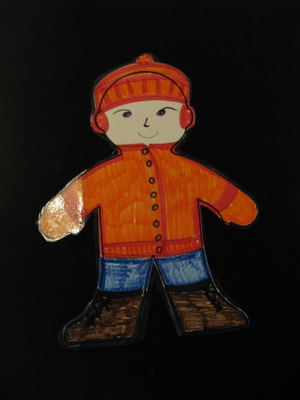
The email from Ms. Hoy of Westchester Elementary School in Florida read: My class is a second grade class who is studying basic geography with the help of a character known as Flat Stanley. They colored Flat Stanley’s and sent him to places around the country but we do a virtual Stanley around the internet. Would you consider taking a Flat Stanley on your trip to Everest? He’s just paper. I knew of Mr. Stanley but did a quick search to make sure he was not a life-sized paper piece or weighed more than my oxygen bottles or something else. Here is what I learned. Flat Stanley has his own website and quite a upbringing. from his site: In 1995, Dale Hubert, a Grade 3 teacher in London, Ontario, Canada, began the Flat Stanley Project. He invited other teachers to take part by hosting flat visitors and to encourage their students to write their own Flat Stanley journals. Jeff Brown, the author of the Flat Stanley book, was delighted with the Flat Stanley Project as it renewed interest in the book which resulted in a sequel almost 40 years after the original. Jeff Brown stayed with Dale when he visited Wilfrid Jury Public School in London, Ontario as a guest author and hosted Dale and his family for a wonderful two week holiday in Connecticut. Dale and Jeff remained good friends until Jeff’s death in 2003. So a new part of the adventure is born. In addition to receiving Flat Stanley in the mail today, I received 19 handwritten letters from Gabrielle Ayah Ian Nicole Johann Ashlee Aleezah Joshua Jamie Mason Jacob Dustin Ethan Dylan Keanna Nageline Joey Jaheim Alley Each letter wished me good luck, asked me not to get sick and take care of Flat Stanley. I will do my on all counts! It is funny where inspiration arises. Each of these students were inspired by the Flat Stanley project and now are excited to watch his climb of the world’s highest mountain. For me, I am inspired by the courage of everyone impacted by Alzheimer’s – the individuals, their caregivers, researchers desperately trying to find a cure … Climb On! Alan