Everest 2018: Weekend Update April 21

For some Everest climbers, they left home a month ago, others are leaving today. But for all, they’re dreaming of summits in a just a few weeks. The season continues smoothly with little issues and good progress on both sides. The weather remains good. Ropes are being set on the Nepal side, soon on the Tibetan side and climbers are moving on their first rotation on both sides. The Big Picture About this time each year, climbers on both sides begin to move up the mountain to acclimatize their bodies for the summit push in about three weeks. On the Nepal side, the current focus is to get to Camp 2 around 21,000’/6400m and on the Tibet side it is to get to Advanced Base Camp then a night at the North Col at 23,000’/7,000m. Meanwhile the rope fixers are working hard to set the route as high and as fast as they can knowing that the sooner it gets in, the sooner some teams will push hard to be first to summit while other are content to wait. All of this is good as it reduces the potential for crowds. One of the main reason the 2012 season was chaotic was that poor weather and late ropes narrowed the summit days from the normal 6 to 16 with an average of 11 since 2001, to 4 or 5 causing teams after team to be forced to go along with the crowd. Thus far it has been normal weather, clear morning with cloud and light snow in the afternoons. The nights are cold hovering around 15F/-10C. But it seems about time for a front to move in so they could be hit with a few weather days soon – all normal for late April on Everest. First Time Times The first time to a new camp is always a milestone. For some people it’s the moment they realize they didn’t train hard enough, are not willing to take the risks inherent with climbing or something just doesn’t feel right and they end their dream. For others, they push hard, arrived knackered and wonder how they will ever make higher but they go on. Then there are those who cruise arriving happy, winded and tired but not exhausted. They are the ones that are are both lucky and to be praised for their preparation. Regardless of which profile our climber has, the key is to have a positive experience where new memories are made each moment. These are the approximate elevations and times between camps on the Tibet side: Base Camp: 17,000′ – 5,182m Interim Camp: 20,300′ – 6,187m – 5 to 6 hours Advanced base camp: 21,300′ – 6,492m 4 – 6 hours North Col or C1: 23,000′ – 7,000m – 4 to 7 hours These are the approximate elevations and times between camps on the Nepal side: Base Camp: 17,500’/5,334m C1: 19,500’/5,943m – 3-6 hours, 1.62 miles C2: 21,000’/6,400m – 2-3 hours, 1.74 miles Preventable Frostbite EverestER, the all volunteer medical organization at EBC, said they have already treated 89 patients, with the usual problems of diarrhea and coughs. However they go on to comment on frostbite and gave a shoutout to Fujufilm for their support: But what isn’t typical is 4 cases of frostbite already. It’s typically colder at the beginning of the season as we move from winter into monsoon season, but climbers are not at the higher camps yet so what we think we are seeing is preventable cold injury. Several of the patients were wearing boots that didn’t fit properly (any footwear, socks included, that restricts blood flow can create a dangerous situation in cold temperatures and we saw some examples of it this week.) Our docs are alerting base camp managers and leaders to make sure their climbers are aware of the variables that make cold injury more likely – to try to prevent more cases. And our #Sonosite ultrasound saved the day by helping to diagnose a heart problem in a patient and get them down to definitive care.(Thanks Fujifilm SonoSite for the loan) It’s odd to see frostbite this early and while climbers are still low on the Hill. Normally it occurs during the summit push when temps fall below 0F/-18C and winds gust over 30mph/48kph. I find this disturbing because it indicates a lack of experience by both guides and members. When you go to Everest your boots, gloves, head gear and layers should be totally dialed in. This is why the best guides will require experience on peaks like Denali, Lenin, Aconcagua or better yet Cho Oyu or Manaslu where the member has already been exposed to harsh conditions. Early Illness I’ve already highlighted a few people who are sick, some even leaving their expeditions for home already. This is, sadly, not all that uncommon. A lot of people need a few days to adjust to new food and get stomach issues. Another common malady is the dreaded Khumbu Cough caused by bronchial irritation and inflammation secondary to the cold dry air that can easily move into more serious problems. Occasionally a person will break a rib from coughing so violently. The common way to try and avoid the cough is to use a Buff constantly to warm air before it enters the lungs and keep hard candy in your mouth such as Fisherman’s Friend® throat lozenges. Brian Palmer posts his current experience plus says “My health is more important than a summit.” Well, I made it to camp 1 where I started coughing up blood and developed a full on throat infection. I stumbled my way back through the icefall this morning and am back at base camp. I am going to helicopter downtown Kathmandu tomorrow and try to recover there. If I can recover I will fly back up to join my team for rotation 2,if I don’t recover…well, I’ve already had a pretty epic experience. Matt Moniz is also down at the moment with stomach issues: Hey Everyone! Trying to
Everest 2018: A Normal Day

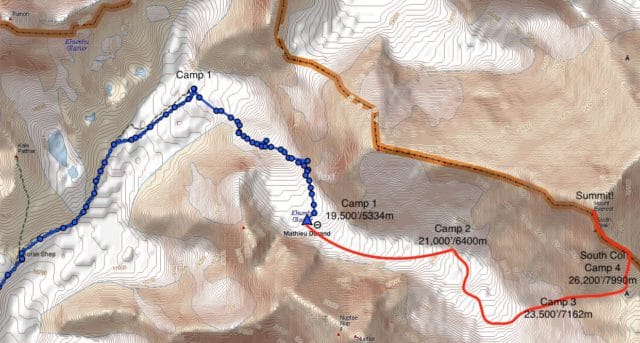
All is well on both sides of Everest as we enter the weekend. The China Tibet Mountaineering Association announced that 150 foreigners have been given permits on the Tibet side. This compares to 336 foreign permits issued on the Nepal side according to the Nepal Ministry of Tourism. This is slightly down from last year. Fear of Flying Things are pretty normal at Everest but back in Kathmandu, a plane skidded off the runway at 10:30 pm on Thursday, shutting the airport down. This is the only international (and domestic) airport in Kathmandu so the early morning flights to Lhasa for teams climbing out of Tibet, and to Lukla for those climbing from Nepal were delayed. The airport reopened at 11:30 am Thursday after being closed for 12 hours. Lukla has the reputation for being the “world’s most dangerous airport” (see this excellent short video on Lukla with comments from pilots) but Kathmandu is quickly gaining a harsh reputation for crashes. This is the second incident in about five weeks. On 12 March, 49 people were killed when a privately owned Bangladeshi carrier, US-Bangla Airlines, flying from Dhaka, Bangladesh approached the runway from the wrong direction, crashed and burst into flames. While Lukla makes many “most dangerous lists, Paro Airport in Bhutan is ranked number one, only eight pilots are qualified to land there, on this list as well as LaGuardia Airport in New York City makes the top ten list. Icefall Excellence Another glowing report on the condition of the Khumbu Icefall. This time by Ben Jones, leader of Alpine Ascents. It’s great to see a clean, safe route for a change. This should make for a swift trip by Everest standards. However, teams will still climb in the early morning to avoid the heating impact on the towering seracs and hanging seracs off Nuptse and Everest’s West Shoulder. Objective dangers always exist in this section, always. Ben said: Icefall inspection and gear carry today by our guide team to Camp 1 today and it’s in the best shape I’ve ever seen in in the last 8 seasons! Our Sherpa team was also carrying loads to Camp 2 today as they have been for many days. Thanks to the Icefall doctors for making a great, safe route to Camp 1. I was skeptical at first with the media reports but it’s true, it is in phenomenal shape! I counted 9 ladders to camp 1 and most of them pretty easy to cross. We will be heading up on our first rotation in a couple days! Speaking of the Icefall since it gets so much attention, Canadian Mathieu Durand reached Camp 1. Very pleased for him as he got sick last year and had to abandon his expedition but he worked hard to get back. His Garmin MapShare shows his path through Icefall. It hugs more to the climber’s right as in previous years then shoots left finally arriving near the center at the top of the Icefall. I added a red line marking the rest of the approximate route to the summit. Asian Trekking, with three large teams on Everest plus other 8000ers this season, posted a few pictures of the Icefall Doctors installing ladders near the top around 19,000’/5791m. This ladder setup is pretty standard each season as the Icefall begins it 2,000’/609m drop over one mile/1.6km. Base Camp Comfort Climbing the Seven Summits‘ Mike Hamill reports their team did well on Lobuche East. Like several other teams, this hike is becoming commonly used as an acclimatization rotation to 20,000’/6096m eliminating one trip through the Icefall. Mike went on to comment on their base camp. The reason I highlight this is to compare how a “standard” base camp is outfitted compared to “luxury” models I’ve been reporting on from 7 Summits Club, Furtenbach and Seven Summits Treks VVIP setup: We are now all settled into Everest Base Camp having arrived yesterday afternoon after a hearty 5 hour hike. I think everyone is happy to be settling into our home away from home. We are eagerly awaiting the arrival of our final Lhotse climber who is just a few days behind coming up the valley. We’ve made sure camp is comfortable this year, with plenty of attention to detail in our CTSS set up. We have a carpeted, heated, custom made dining tent with a separate washroom so everyone can wash their hands before coming inside, a full catering kitchen (literally we have 3 stainless steel kitchen benches, a 3gas burner stove, sinks, and a full oven! Fresh bread everyday!) The kitchen is staffed by chefs who have been trained at 5 star restaurants and who have been fuelling us with the best meals we’ve had since we’ve been in Nepal. Lunch today was burgers on freshly baked buns with potato salad and fresh steamed broccoli! The state of the art Communications Tent is set up, with a brand new radio base station to keep in touch with our teams as they move up the mountain, a carpeted Hang Out Tent with blow up couches perfect for movie nights on the projector. Each member has their own tent with a full mattress and pillow, insulation flooring and as many hot showers as they want! Not to mention a western style WC with a washroom to keep everything hygienic. So if they report home that they’re roughing it, you can give them a little grief! The reality is CTSS’s version is very similar to what long time outfits provide, including Adventure Consultants, Himex, Alpine Ascents, Jagged Globe and the rest. This has become the base level of service these days on Everest for the mid to high price teams. In 2011, I did a deep dive with Russell Brice about his then legendary base camp amenities. It was a lot of fun and informational. You see it at this link. Today, most top companies have matched many of his features. Missing In Action? Some people are wondering if Russell Brice is on Everest this
Everest 2018: First Climbers into the Western Cwm
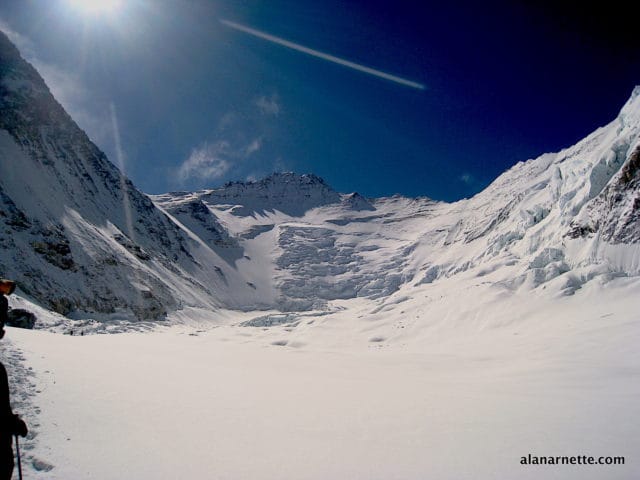
Right on schedule, the first members are in the Western Cwm. The Sherpas have already been making trips there to establish the camps. While it is short in distance, the altitude makes it long in time. These are the distances and usual times from Everest Base Camp on the Nepal (south) side for a foreigner first time up. Sherpas times will be the lower of the range. Base Camp: 17,500’/5,334m C1: 19,500’/5,943m – 3-6 hours, 1.62 miles C2: 21,000’/6,400m – 2-3 hours, 1.74 miles More and more leaders are commenting on the quality of the route through the Khumbu Icefall this year. Tim Mosedale said “… the route is perhaps the best and safest I’ve seen so a big shout to the Icefall Doctors for creating a safe passage. Thanks guys.” Frying at Camp 1 David Hamilton, leader of the Jagged Globe team posted that they were the first team to arrive at Camp 1 this season, followed soon by one of the several IMG teams. He said “Team in Camp 1. Left BC at 0100 on a very cold starlit night. Very good conditions through the Icefall. Only 7 ladders. Many Sherpas on the route. Arrived at Camp 1 at 0700 to become the first group of the season to occupy. One other team arrived a few hours later. Hot and sunny afternoon.“ When most people think of climbing Mount Everest, they envision deadly cold temperatures, windchills below zero, frostbite, and everything else that comes with climbing mountains. But oddly enough, it’s not the cold but the heat that gets most people in the Western Cwm. The word cwm is a Welsh word for cirque or glaciated valley, which is a horseshoe type of mountain topology. This valley is surrounded by Everest’s West shoulder to the North, Lhotse to the East and Nuptse to the South. It is the gatekeeper for the traditional route to the South Col. It’s has a nickname, Valley of Silence because when the wind stops, it is early quiet. It is 2.5 miles long, carved out by the Khumbu Glacier which starts at the base of Lhotse Peak. The stay at Camp 1 will be miserable. This week we will read many reports of climbers experiencing the incredible extremes in the Cwm. They are not exaggerating when they say it can go from 100F to below freezing in a matter of minutes. The sun reflects off the surrounding ice and snow laden slopes. When a cloud layer masks the hyper bright sun light, the true nature of climbing at 20,000′ becomes apparent. However, it is not only the heat but also the lack of wind that makes this section miserable. With a few thousand feet of solid rock walls surrounding the Cwm on three sides, there is almost no wind at the ground level. So as you walk in layers of clothing designed for snow, wind and cold protection – in the heat of the day – and the sun comes out … well, let’s just say I hope you remembered your sunscreen. This is what it’s like: The climbers arrive at 8:00 am just as the sun begins to hit the tents. They are tired, questioning their resolve as they crawl into their tents. They spread out their personal gear along with their -20F down sleeping bag and lie down. Within minutes, they are sweating, horribly hot, like in a sauna but no humidity except for the sweat now forming off their nose. They shift to reduce the body surface area against the down bag. They roll again. OMG, this is horrible! Who said it would be like a summer day in Atlanta but this at 20,000 feet in the Western Cwm? You look over at your tent mate, he is just as miserable and that makes you feel better. All of a sudden a Sherpa appears at the door. “Hot tea?” The tents at Camp 1 are perched on the Khumbu Glacier but close to where the Icefall begins. A bit further up the Cwm a series of crevasses begins, some you can down climb into and cross and then climb out, other requires ladders. IMG keeps mentioning this year of an “Ice cliff” suggesting one of the dips is pretty steep. We will look at Camp 2 in a couple of days. No Acclimatization? Mingma G Sherpa of Imagine Climb made a surprising post regarding his Lhotse team: We, Lhotse team plan to continue for summit push if everything goes as we planned. Our Lhotse team consist of professional climbers so we don’t need that much acclimatization as other climbers. We may fix the route to Summit by 30 April. And from tomorrow onwards, we won’t have wifi and cell phone signal but information will be updated on www.facebook.com/climbermingma. Mingma is certainly a strong climber. He made multiple attempts on 8000ers last year summiting Dhaulagiri, Makalu, Nanga Pabart, K2 and finished with an uncertain summit of Broad Peak. He is planning on returning to secure that summit for his record. You can read my interview with him we did on how his team was the only one to summit K2 last year. Chillin in Tibet Over on the north side, everyone seems to be spending time adjusting to their new homes and the altitude. Courtney Reardon with the Furtenbach Adventures team gave this update: Hanging out around #Everest2018 base camp at 17,000 feet. We do day hikes to acclimatize, get in our sleeping bags from about 8pm to 8am reading and listening to music/audio books in our individual tents. And engage in the all important so called “active rest” . Breakfast, lunch, tea time, and dinner are all highlights because of our wonderfully skilled kitchen staff. The dining tent and chill out tent have small heaters that keep us chatting away long after meals have ended. Occasionally, we enjoy even a heated shower. The gentleman on my team have experimented with the gondola sauna and swear by it. Even the two restrooms are clean, comfortable,
Everest 2018: Interview with Matt Moniz – Extraordinary Youth
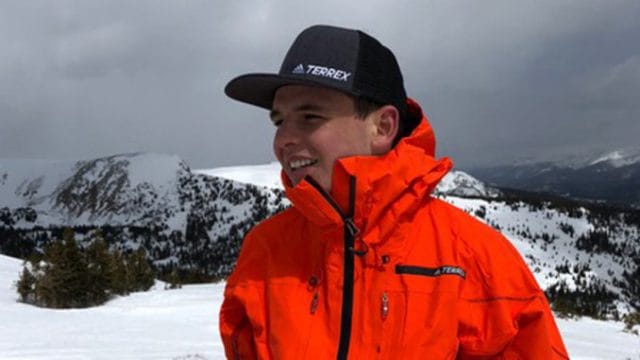
This interview with Matt Moniz is one of an ongoing series I do each season with Everest climbers. Not the famous, sponsored ones who get plenty of publicity but the regular people, who often have full-time jobs, full time families and climb for the love of the climb. Most climbers are already at base camp so this may be the last interview for 2018 but I welcome suggestions for anyone I should interview. I met Matt and his family years ago here in Colorado. I knew the moment that I shook his hand that he was “different” 🙂 Polite, mature, sharp, intelligent all at age 12 ! I first came upon Matt when he and his father, Mike, were just about to set a record for summiting the 50 Highpoints in the US, the highest point in each of the 50 states, in the shortest time. They got all 50 in just 43 days. His dad drove. I asked Matt why a 7th grader wanted to do this in our interview. He said it was to help his friend Ian Hess, 9, who suffers from pulmonary arterial hypertension. “I’m looking to raise awareness of the rare disease that afflicts my friend, pulmonary arterial hypertension (PAH) and to encourage other kids like me to get off the couch and into the outdoors.” Matt’s love of mountaineering started like mine with a trip to Everest Base Camp. Of course I was 41 and Matt was 9, but the attraction was the same. He went on to summit Elbrus, Kilimanjaro (youngest at the time at age 10 along with his twin sister Kaylee), Aconcagua, Whitney, Rainer, climbs in Bolivia and, wait for it, his first 8000ers: Cho Oyu and Makalu just days apart in 2014. If you are wondering if he still takes school seriously, oh yeah. With a 4+ GPA in high school he is now at Dartmouth College in Hanover, New Hampshire, US. Matt’s success has not gone unnoticed. He was a Mountain Hardwear’s first Youth Athlete and named a 2010 Adventurer of the Year by National Geographic Magazine and now is a member of the Adidas Outdoor’s team. Today he is frequently recognized by both adventure and civic organizations for his accomplishments and his fund raising. But back to those 8000ers, In 2014 Matt’s father cooked up a plan to climb Cho Oyu, Everest, and Lhotse, in less than 15 days including a first-ever ski descent of the Lhotse Couloir (see this interview with Mike). The earthquake that year brought all that to a fast halt but they did get Cho. Matt, along with professional mountain guide and legend Willie Benegas went on to summit Makalu with a small team of Sherpas. Matt became the 14th American and youngest climber to summit Makalu at age 16. So, what’s he up to this year on Everest and Lhotse? Well, skiing is certainly in the cards and summiting along with Willie, who has 12 summits of Everest plus a long list of impressive climbs around the world. Willie and his twin brother, Damien, won an award in 2003 for pioneering “The Crystal Snake” route on Nuptse, a new route up the North Face rated at 5.9 M4 WI5. Remember Matt’s Kili’s summit with his twin sister Kaylee and Willie’s twin Damien? Part of the reason Matt and Willie are on Everest is to be part of the continuation of the NASA research project studying twins conducted by the Mason Lab at Cornell Weill Medical. The study’s objective is to study how twins genomically adapt to one of the most extreme terrestrial places on the planet. Their twins – Damian Benegas and Kaylee Moniz — will also be part of the Everest Twins Multi-omics Study tool, being control subjects of the study. Mike is certainly proud of his son saying “Hard to have imagined back then this little guy next to me would someday be 20 and on his 5th Himalayan expedition to climb his 3rd and 4th 8000-meter peaks. Good luck Matt!” Enough of the intro, let’s hear from Matt: AA: First off, how is school going? MM: I love my classes, professors and classmates, and time has been flying by, maybe a bit too fast! It’s hard to believe that I’m already well into my sophomore year at Dartmouth College, studying international security and global health. Aside from being an excellent undergraduate school, the wonderful thing about Dartmouth is that it is truly a great school for adventurers. You can find world class climbers, skiers, kayakers and pretty much any outdoor sport you’re interested in as a student. Besides mountaineering, I’m active in the Ledyard Canoe Club which brings together a great community of young people pursuing white water kayaking. Also, I’m a member of the Dartmouth Ski Patrol which does an amazing job at training students as fully certified ski patrollers to work at the Dartmouth Ski Way. AA: How are you training for these climbs? MM: Great question, Alan. As you know firsthand, the training starts years in advance. Closing in on this expedition, I spent time during the holiday break running many backcountry ski laps in the Colorado mountains. I also slipped out for some training in Utah with Willie. It becomes more complicated, at school, especially at Dartmouth where we have quarters, so it’s an intense ten-week term. My schedule was packed the past few terms with classes and ski patrol, but I did find time to escape for some ski mountaineering in Tuckerman’s Ravine. For sure, the snow is not what I am used to in Colorado, but New Hampshire’s Mount Washington can produce some of the fiercest alpine tempests and for the unprepared, Washington can be an entirely unforgiving peak. This makes the Presidential Range an ideal training ground for the demands of Himalayan climbing, a perfect backyard for me. I’d also skin up Dartmouth Ski Way while I was on shift for ski patrol. Balancing school work and training has been one of the most difficult parts of preparing for this upcoming expedition. In March I finished up winter term,
Everest 2018: A Big Year – Again

Looks like another big year on Everest, but not a record. Teams continue to arrive at the base camps but are also beginning to climb. Progress is swift on the Nepal side and about to take off on the Tibetan side. Nepal – Into the Icefall! EBC is buzzing with activity. Guides are running their members through skills review. There is a training course set up just aside of camp that many teams will share. It usually includes some steep snow slopes, a couple of ladders (horizontal and vertical) and a rappel station. As I mentioned in an earlier post, this training is not designed to replace experience but rather to give the guides a feeling of everyone’s skills and to give the members a feel for doing these tasks at 17,500′. Adventure Consultants reports on their course and day: The guides and a small Sherpa team went over to fix a ropes course in the glacier in front of our camp. That area is perfectly flat, like frozen lakes in between pinnacles of steep ice. We made a steep ladder transitioning to two steep ropes upon which members had to climb with a mechanical ascender in one hand and using their crampons points, both their ten points and their two front points. After that there was a rappel / abseil down to two ladders across a pretend crevasse then lots of arm-wrapping traversing and a final double rope steep climb – traverse – abseil! Several members practiced this several times, even with their high altitude mittens (which are big and clumpy) clipping and unclipping their carabiners and ascenders. IMG reports their Camp 2 around 21,500′ is now established with cook, dining and sleeping tents. The first wave of their climbers will leave any day now. A lot of UK people are following Kenton Cool who is guiding Ben Fogle and Olympian cyclist Victoria Pendleton for an Everest attempt. They are still trekking but will arrive at EBC soon. You can read here how they plan to “conquer” Everest. Nepal 2018 Permits The Nepal Ministry of Tourism gave an update on the permit numbers: 2018 there are 649 permits for 22 different peaks throughout Nepal 336 for Everest including 20 Nepalis Lhotse has 88, many of these are doubles – Everest/Lhotse of which some will not make it. Over 1,000 Sherpas, who do not need or pay for permits In 2017, 729 permits were issued for 21 different mountains, so climbing down a bit. Other Peaks 192 climbers as follows: Kanchenjunga – 42 Makalu – 27 Dhaulagiri I – 26 Nuptse – 11 Manaslu – 8 Annapurna I – 1 (Korean Climber Hongbin Kim) Speaking of the “other” peaks, many of the expeditions have arrived at their respective base camps and should start climbing soon. Tibet – A Beehive of Activity Base Camp is in and now some teams have already established the Intermediate Camp and Advanced Base Camp. The rope fixers will be fixing the route to the North Col in a few days. Soon teams will move to ABC and use that as their base for a week to ten days making at least one rotation to the North Col before returning to CBC. Ricky Munday with Adventure Peaks is already having health problems with a restless night. But in some ways that to be expected as you adjust to altitude. He gives this update on the schedule: “Our short-term schedule is Sherpas moving up on 21st to establish ABC, team will stay at ABC but walk up to 6,000m and leave on 23rd, arriving ABC on 24th. We’ll then rest for a couple of days before touching the north Col (7,010m) and descending to BC. That will complete our first rotation.” He also described some of his issues: I slept intermittently through the night, but with frequent stomach cramps. Thankfully, I woke feeling OK – we ate breakfast at 9am Chinese time when the sun had not yet hit camp, so we were fully layered up. Today, we hiked for a couple of hours up a hill behind base camp to a high point of 5,355m. At that altitude, there is about 50% of available oxygen compared to sea level. This morning my oxygen saturation was 87%, which indicates that my body is working hard to get oxygen to my muscles and vital organs. It does this by increasing my respiration (breathing) rate – one side effect of this is that I breathed out a lot more water vapour and have to drink much more than normal to compensate. I felt good on the hike up, and I’m looking forward to hiking a bit higher tomorrow. My stomach remains problematic and I’m taking some meds to deal with it. Kari Kobler gave me another update on that side along with a few nice photos. Like every spring it takes a little time until the train of international Everest mountaineers gets moving. Around April 10 several Sherpa Teams and the expedition-leaders Dawa Sherpa of Transcend Adventures and Kari Kobler of Kobler & Partner came up from Tingri into the pretty lonely Basecamp on the Northside of Everest. In the meantime life came into the tent city at 5.200 m. The old north-side teams of Himalaya Expedition, Transcend Adventures , 7Summits and Kobler&Partner have been organizing Everest climbs from Tibet side for a decade and continue their good relationship also in 2018. They work together where necessary and help each other. The teams that have already arrived: Himalaya Expedition led by Somduck, the local legend on northside, were the first to arrive. Their Sherpas are going to start fixing above ABC up to North Col tomorrow. 7 Summits led by Alex Abramow from Russia: His Sherpas have built up Basecamp, Intermediate Camp and ABC. The team will arrive around April 23 from Kathmandu. Himalaya Vision led by Dendi Sherpa and veteran Kari Kobler hosts this year the teams of Kobler&Partner with the mountain guides Hiroyuki Kuraoka, Nukita Muneo and Andreas Neuschmid and the Alpenglow team of Adrian Ballinger. Their
Everest 2018: April 18, A Day to Remember
On April 18, 2014, at 6:35 am, a small section of an ice serac released onto the Khumbu Icefall. 16 Sherpas were killed in a moment as tons of ice fell, leaving the mountain workers with few options and nowhere to hide. Today, four years later 2018, there is no climbing on Mt. Everest. No Sherpas, no foreigners – everyone is in solemn unity remembering where they were that day, and who they lost. “The tears are right below the surface.” Russell Brice, Himex, told me a few years ago while standing on the trail that defines main street of Everest Base Camp. Brice’s words and emotions could have come from any Everest operator – foreign or Nepali. Lapka Rita Sherpa said today: We had great puja ceremony yesterday and our entire teams felt blessed. Today April 18th is Memorial Day of 16 sherpa’s hero’s lost theirs life during the 2014 tragic avalanche on khumbu icefall. This day is extremely difficult and super painful for me and many of my fellow climbers friends and their family. The entire Everest base camp remain silent not involving any climbing activities to remembering those heroes, sending our thoughts and prayers. Om mani Padme hung, Om mani padme hung, Om mani padme hung. May those heroes Rest In Peace. Many lost long time employees, friends and in many cases, family. There is no chasm between the operators or agencies about this day. They speak in quiet tones about great climbers, young and old, Sherpa Guides. They talk about their base camp doctors or the cameraman trying to record what makes Everest so special. Avalanches know no profession, no nationality. They are random and often fatal. Brice and others – western and Nepali – are back this year. When asked why, he simply says “It’s the right thing to do.” The cynical will bring into the conversation how much Sherpas are paid, the profit margins and the tired old line about Sherpa exploitation by western operators. If you ask the Sherpas, they will acknowledge the danger and the income that comes from guiding. They are pleased that about 350 foreigners are climbing Everest in 2018. All foreign climbers are with a team that includes climbing Sherpas, cooks and countless porters. They stayed in Kathmandu hotels and ate in Kathmandu restaurants. As they trekked towards base camp they stayed in teahouses, ate their meals there. Their gear was transported from Kathmandu to the Khumbu on Nepali owned airlines. Local porters carried them further up valley. Yes, the $11,000 Everest permit fee goes to the government and the western and Nepali companies earn a profit however a large part of the revenue, both direct and indirect that a climber pays, goes right back into Nepal. This is why Brice, and other operators are back. They know that what they do goes beyond helping members stand on a summit. Today’s remembrance is not a justification for climbing. It is not a marketing ploy to attract more climbers or sympathy. It is not an opportunity for another “adventure” magazine to sell advertising based on reciting decades old myths that are no longer valid. However, to be clear, not much has changed for the mountain workers other than increased life insurance. But the fault lies not with Western Operators as is often cited – in fact they have supported their staffs in levels high above the non-enforced laws. The fault lies with the Nepali Ministry of Tourism which has had multiple Ministers over the last several years. The lack of stability in the government creates a random series of rules and no enforcement on the mountain. A fractured government and a diverse ethnic population prevents further progress for the Sherpa people, and others who work in mountains. The Sherpa people are viewed as already having a lucrative lifestyle and incomes by the rest of Nepal. These views generate jealousy and stalls further advances in safety and wages by the Ministry of Tourism. But these facts are ignored while the complexities are real. A solution is not simple. Yes, climbers can stop climbing Everest, but what would that accomplish and who would suffer the most? Last year when I was in Kathmandu, I met with Kami Sherpa’s son. I summited Everest and K2 with Kami and stood side by side in the Western Cwm during the 2015 earthquake. Kami’s son, Mingma, is an impressive young man. He is now 23 and graduated with an Electrical Engineering degree in Kathmandu. He will work for a hydroelectric company. Mingma said he wanted to be a mountain guide like his Grandfather, father and second oldest brother but Kami wouldn’t let him. He said he liked the idea of adventure. Interestingly, his mountain guide brother makes fun of Mingma for going to school and not earning as much money as he does guiding. His two sisters also go to school in Kathmandu. One wants to be a doctor, the other just graduated with a degree in Hospitality Management. By the way, Mingma’s English is perfect. He was born in the stone house where Kami and Lhapka live today, like all his brothers and sisters. He went to grades 1-5 in Pangboche then to the Hillary school in Kumjung to grade 7. When Kami sent him to boarding school in Kathmandu, they dropped him back to grade 5 because his English was so poor. He went on to graduate high school and now graduated from the university. The pressure is huge for them to stay in the Khumbu and make a few quick dollars guiding for 2-4 months a year but Kami wanted a better life for his younger children – and he is seeing that come true. Mingma’s tuition is about US$2,000 a year, his sisters about $600 each. Most Sherpas employed by western guide companies will make about $5,000 guiding this spring, the low-end Nepali guide companies will pay their staff half or less for the same work. This is the quiet secret members never understand when getting a “deal” with their
Everest 2018: Into the Icefall

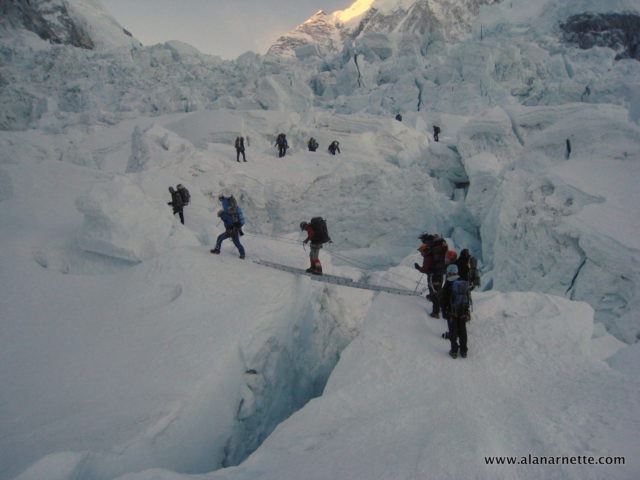
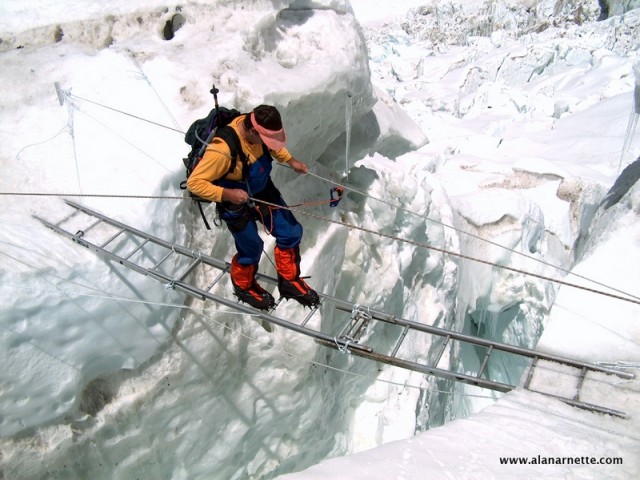
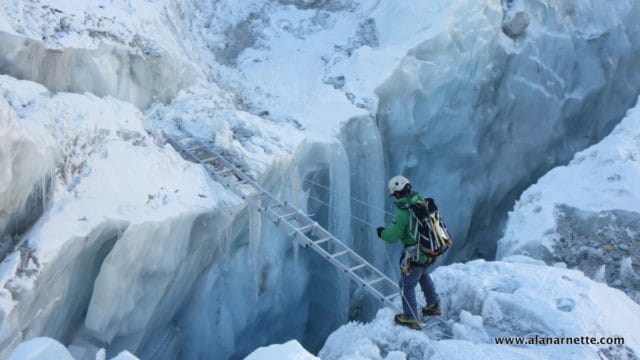
The #Everest2018 season continues in an orderly manner. Teams are at base camps on both sides adjusting to their new homes, and the thinner air. The first teams have entered the Icefall on the Nepal side. Soon the Tibet side teams will make the move to Intermediate and then Advanced Base Camp. Training at Base Camp It may seem strange to conduct training at Base Camp, and in many ways it is however better safe than run the risk of an accident. While most, with exceptions, Everest climbers have traveled on fixed ropes (Denali), used crampons (Rainer, Mont Blanc), used an ice axe (Vinson), many have not worn their 8000 meter boots, with crampons, and walked across a ladder over a 200 foot crevasse. So rather than experiencing it the first time at 18,500 feet in the Khumbu Icefall, now is the time to get all their systems dialed in. Another area to focus on is their harness. Again, many have worn a harness for rock or ice climbing but few had the semi-complicated setup of a jumar, and a carabiner that both need to be the precise length to support a fall and recovery. None of this is very complex but likewise the techniques should be second nature to each person. Ladders One of the famous features of climbing Everest are the ladders used to cross crevasses. In the Khumbu Icefall, there are usually between 20 and 30 crevasses, but for 2018 there are only three in the Icefall proper and a few more in the Western Cwm – very rare! There might be a couple at the base of the Lhotse Face. One the north side, there are several near crampon point as climbers ascend to the North Col. Most Nepal side climbers will make at least four round trips through the Icefall. The ladders are not always straight across a crevasse, in fact almost never. They can go down, straight up, be positioned at an angle, anything but horizontal. There can be dual ladders in high traffic areas. Sometimes an up ladder and a down ladder. Approaching the ladder, you pause for an inspection. How many ladders are lashed together? Not too bad if only one, but three, four or more, it sinks in the middle, it bounces. Watching a Sherpa crossing ahead, you see the wobble – left, right, up, down. It is 3D. The safety lines are in place so you look at the anchors, the place where they are secured to the ground, or more accurately, the snow or ice. The thin nylon line is tied in a squirrelly knot through a hole in a piece of bent aluminum – a picket. That’s all? Looking across the crevasse you see the rope tied to an ice screw, but in the hot sunlight the hole has melted out and the ice screw bobs freely. Knowing you have little choice, you approach the ladder as one would approach a live chicken. Carefully, slowly, you move your feet towards the edge. Bending over, you grab the right hand safety line, then with your other hand you press the locking mechanism of your carabiner inwards and clip onto the line. Your ‘biner is tied to your harness with a short piece of nylon webbing. Repeating this procedure, you are now hooked on both safety lines. Your life is now in the hands of the makers of nylon. Your crampon’s front points jut out from your boot as you focus your eyes on the first rung. The question is whether to put the mid part of your sole on the rung or to gingerly put your front points on one rung and the back of your boot on the trailing rung. The latter runs the risk of being caught when you lean forward, forcing the rung tightly against your crampons. Only a Cirque du Soleil move would allow you to free yourself. Seeing the Sherpas make this move gives you confidence so you move forward. The right boot settles on the ladder, then your left foot moves quickly in place. You hold onto the ropes with a grip so tight that if you fell, your shoulder would dislocate before your grip would release. Your hands are slightly behind you to pull the line taught. All of a sudden, the line goes tight from both sides. Teammates have squatted at both ends of the ladder to pull the rope tight making it more of a rail. You appreciate this and return the favor at the next crossing. One step is followed by the next and then a third. Your eyes focused on the ladder, your boot, your knee – anything other than the seemingly bottomless pit below you. In the middle of the span, you realize you have not taken a breath. At 18,000 feet, this is a big mistake. You pause and take a big breath. Looking up, you see Sherpas, strangers and a black dog looking at you, wondering. You wonder as well. A few more steps, your foot reaches the snow covered ground. You take another deep breath. Unclipping, you stand up straight, you had been slouching the entire time. Your mother would be unhappy. Looking around you feel good. The dog leaves you behind! Climb On! Alan Memories are Everything
Everest 2018: Base Camp Progress and Pujas
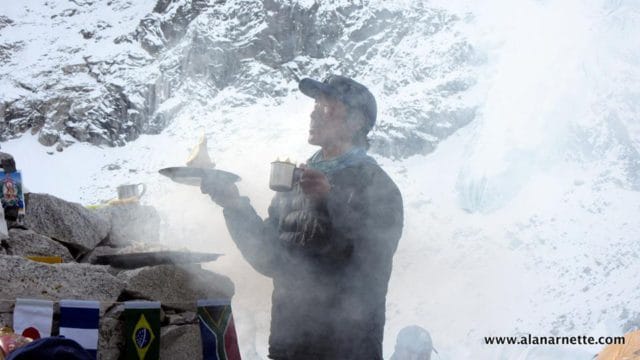
The base camps are coming together on both sides as the teams continue to arrive. Climbers are doing some skills review while the Sherpas build the high camps. A few teams have already entered the Khumbu Icefall. It looks like members will begin to climb to Camp 1 in a couple of days. So far, so good. Chinese Base Camp (CBC) On the Tibet side, base camp is usually called the Chinese Base Camp aka CBC. It is tightly run by a member of the Chinese Mountaineering Association, or the Chinese Tibet Mountaineering Association, CMA/CTMA respectively. There is a person who serves as judge and jury on all matters living at CBC. Kari Kobler sent me a message today describing progress on the North side: Who is the base camp? These are the four organizations for many years prefer the north side of Mt. Everest. That means: Himalaya Expedition, the local agency in Lhasa. Then Seven Summits from Russia. The great Indian Agency, headed by Arun Trek. Alpenglow, with the head of Adrian Bellinger from America, he has been working this year closely with Kobler & Partner together. Then one of the oldest agencies on the north side of Mt. Everest: Kobler & Partner, led by Andreas Neuschmid and Kari Kobler. Dawa from Arun Trek and Kari Kobler are the first expedition leader on site and inspect the construction of the base camp, and the intermediate camp and ABC. In a few days we will reach the Northcol and set up. Also Summit Climb, Seven Summits Treks and Furtenbach Adventures have arrived with a few more in route. See their locations here. Lots of good progress on that side. On the North this year is the youngest Australian to summit Mt Everest at age 19 in 2016 from the Nepal side, Alyssa Azar going for the summit from the North. Everest Base Camp (EBC) On the Nepal side, base camp is usually called Everest Base Camp aka EBC. It is loosely run by a representative of the Nepal Ministry, Gyanendra Shrestha, and each team has a liaison officer, who rarely shows up but that is supposed to change this year. The first members went into the Icefall from multiple teams today. Jagged Globe gave this update: Everest Base Camp was shrouded in low cloud and mist at 03.00 when the team set off for their second practice climb in the Khumbu Icefall. A few hours later they had climbed into clearer weather as dawn broke over the mountains. The target height of 5,850m was reached by 07.00 and the team were back in Base Camp enjoying breakfast by 09.30. Climbing conditions in the lower section of the icefall are excellent at the present time. Much of the surface underfoot is snow rather than hard ice. The route avoids most of the larger crevasses and this reduces the numbers of ladders needed to a minimum. The team are hoping that similar conditions exist for the final section up to Camp 1 and they are hoping to complete this section of the climb on the morning of 18 April. Staying Connected Daniel Wallace gave us an update on WiFi at EBC. She says it’s up and pretty fast unlike NCELL, the cell phone service that has 3/4G but with spotty service at EBC. As always, sat phones are most reliable, but expensive. Thuraya is the service of choice for most Everest climbers. EverestLink provides the WiFi service and has a number of antennas all around camp to service the 1,000 some odd devices. It is then connected through a series of microwave links to a backbone carrier, which used to be located in India, not sure today. Daniel added “Our camp has its own WiFi mast but sadly went down last night. Have to walk over to the next door camp to get signal. Hopefully this and other tweaks will sort themselves out before we get back from Loboche East. There is an option to buy a months wifi for $220. If I can I will and will then be able to bore you with photos. ????” Mingma G Sherpa shared this picture of his team heads down on their phones! The Chinese double-amputee climber Xia Bo-Yu is on their team. Puja Before any climber, or Sherpa, begins climbing, they must have a Puja. This is mandatory for the Sherpa and something they take extremely seriously. While westerners are invited to participate, and almost everyone does, if they choose not to, it’s not a big deal. But it is a special part of any Himalayan climb and, for me, something never to be missed. The puja is a traditional ceremony lead by a Lama where the mountain Gods are asked permission for the climbers to climb and forgiveness for the damage caused by the climbing and for the safety of everyone involved. All the Sherpas, climbers, cooks – anyone associated with the climb participates. Many teams arrange multiple blessings: one in Kathmandu, and other during the trek in and the most important one at Base Camp which is also called a Puja. The ceremony is always somewhat similar starting with the building of a large rock chorten that holds pictures of the Dali Lama and small models of the mountains made in barley paste. Inside a Puja This was from my 2011 Everest summit climb: The Lama was seated to the far left of the alter sitting on a blanket with another wrapped around his legs. He was Mingma Dorge Sherpa, a Lama from Pangyboche and has been conducting pujas for years. This was at least the third time I had seen him. To his right sat six Sherpa who assisted with the puja. They all chanted in unison reading century old prayers from Tibetan prayer books. Climbers sat in rows behind the Lama and Sherpas and everyone else mingled around. Serious but not terminally so, camera shutters and video cams were in full action trying to capture the moment. Sherpas poured milk tea, a
Everest 2018: Active Rest at Base Camp
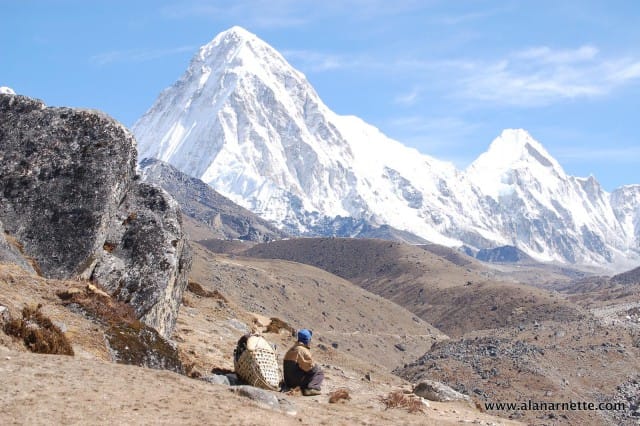
We begin week three with climbers adjusting to life at base camp. As a reminder that Nepal is one of the most susceptible countries on earth for earthquakes, a minor 3.2 magnitude earthquake was felt in Kathmandu on Saturday night. Active Rest A key to being successful on Everest is to stay active – even on rest days. It’s often labeled with the oxymoron “active rest day.” While it’s tempting to lie in the tent, on a comfy pad, perhaps an interesting book on the Kindle or listening to music, it’s much better to have a good breakfast, brush your teeth and get out there. One of the most popular activities on the Nepal side it to take a few hours to hike to one of the lower camps on nearby Pumori. The activity keeps your blood circulating and aids in the production of red blood cells plus the other chemical changes associated with the acclimatization process. Alpine Ascent‘s leader, Ben Jones made this comment “Pumori Basecamp. We gained about 600ft or so on our first group hike after arriving to Basecamp on the 10th.” Pumori is rarely climbed as there is significant avalanche danger on the upper slopes, however this past winter Alex Txikon, Ali Sadpara, Pemba Bhote Sherpa and Nuri Sherpa summited the 23,419’/7138m mountain which is equivalent to Camp 3 on the Lhotse Face. Most Everest climbers go to Pumori base camp, Camp 1 and occasionally Camp 2 where you are rewarded with spectacular views of both the Southeast Ridge and Northeast Ridges of Everest along with the entire Western Cwm, Lhotse and Nuptse. It’s a bit long but an excellent investment for conditioning and photography. This is one of dozens of pictures I took in 2015 from C2. Tingri While the members aka members take daily hikes and adjust to base camp life, Sherpas are now busy ferrying gear to the lower camps in the cwm. Most south side teams are following the same process. This update from Satori: Update on our spring Himalaya teams. On the Tibet side our Everest North Side team and Cho Oyu team have reached Tingri and went on a 3 hour acclimation hike with this great view of Cho Oyu in the distance. On the Nepal side, the Everest South and Lhotse teams are at Everest Base Camp, will spend today getting settled in and then begin some acclimation work and rotations. The Sherpa team is busy putting in the higher camps Over on the north side, a couple of teams are now at base camp but most are still underway. This update from Seven Summits Treks’ Arnold Coster and a picture of “beautiful” Tingri, “Wandering in Tingri. Today is a rest/acclimatisation day.” Tingri is a sad tiny town about 40 miles from Everest at 14,107’/4,300m. Almost any trip to climb an 8000 meter peak in Tibet finds it way through Tingri. Similar to saying about flying Delta Airlines in the US – all routes go through Atlanta! I remember going there in 1998 on my way to Cho Oyu. We crossed from Nepal into Tibet through the border town of Zhangmu, then spent additional acclimatization nights at Nyalam and Tingri accompanied by short hikes to the local peaks. The villages were a step back in time. The buildings were made of mud and stone. The economy was primarily based on trading and agriculture. Electricity was as rare as was the telephone service. However in Tingri, the poorest of the three villages, China had a military base set up complete with trucks and satellite dishes. The only 2 miles of paved road for hundreds of miles served as an airplane landing strip back then. Luxury Race The Furtenbach Adventures team has arrived at base camp on the Tibet side. Their guide, Rupert Hauer, posted this nice shot of base camp with Everest looking behind. Without a doubt, you get the best views of Everest from the north side as it is unobstructed unlike on the Nepal side where is is difficult to get a clear view other than from high on Pumori or Kala Patar for example. In the race to provide the most luxury on the north side, it seems to be a battle between 7 Summits Club and their two-room cabana tent for each member and Furtenbach Adventures and their world-highest sauna. Yes, they actually shipped a sauna to base camp. Remember, trucks haul anything in so there is no limit to what outfitters can provide, except for the fine line from the sublime to the ridiculous! Video courtesy of Michale Lutz. Climb On! Alan Memories are Everything
Everest 2018: Weekend Update April 15

Mid April is always a milestone for the spring Everest climbers. One by one they are arriving at base camp on both sides of the mountain. It looks like the first member rotations will start in about a week on the Nepal side, perhaps earlier. The Sherpas are already making carries into the Western Cwm. Base Camp is quickly coming together on the Tibet side. The weather seems to have calmed a bit with less rain than 10 days ago but still weather is weather. As Brian Palmer said on his Facebook feed, “My home for the next 4-6 weeks. Not too bad for living at 18,000 feet. Roasting during the day and freezing at night.” He is with Madison Mountaineering. To see everyone’s progress, check out the location table which I update a few times a day with headlines. Friendly Faces I like this picture from Adventure Consultants of the team in their dining tent. Note the full plates and happy faces. Ang Dorge Sherpa is at the first table with his AC cap on. He was with me on my first attempt of Everest in 2002 and it was his brother, Kami Sherpa whom I summited with in 2011 and also on K2. Construction Crew Another photo I like from this week was from EverestER, the non-profit organization that provides health care for locals and foreigners at base camp. This image captures what it takes to build base camp on the Nepal side. Remember that base camp sits on the Khumbu Glacier and is literally rock and ice. It takes a huge amount of work with picks and shovels to clear enough space to pitch the tents. They posted “We’ve seen 21 patients already and are geared up for the season as climbers continue to arrive and basecamp springs into a small city.” We Need More Ladders! IMG is doing a great job of posting interesting updates including this one about the Icefall and the Western Cwm: 35 Sherpa also set out from Everest Base Camp early this morning and made it into Camp 2. The Icefall continues to be in good condition and the Sherpa Team reports that above Camp 1 it is an “interesting route”. Just above Camp 1 they crossed the 2X3 section ladders and then further up the Western Cwm, there is an area we are calling the ice cliff. This is a steep section that we will need to work through as a team, as the route gets fine-tuned. Mingma G Sherpa of Imagine Climb gave an update on the crevasses in the Western Cwm: Route to Camp 2 is completed. Earlier it was expected to put 9 ladders joints to cross a big crevasse but Icefall doctors used 3 joint ladders and 2 joints ladders to cross two different crevasses. Over time the Western Cwm is becoming more difficult to navigate. I fell in a crevasse outside of C1 in 2002. Thanks to my teammates and walking roped up (not to a fixed line) they pulled my sorry butt out of the crack. In talking to Russell Brice a couple of years ago, he feels that at some point the Cwm will become too dangerous to cross and everyone will either have to use helicopters to reach Camp 2 or abandon the route all together. In any event, it’s clear that the route is changing. Everest Dreams While the media and others want to make Everest climbers out to be egotistical and in it for selfish pursuit, for most it’s a lifetime dream. Michel Lutz, climbing from the Tibet side with Furtenbach Adventures, posted last month along with a photo of his gear at home, “3/4/18: Finally my Everest adventure is about to start. Following my childhood dream – being on top of the world’s highest mountain. The last 2 years have been filled with so many training struggles and sacrifices – happy to finally stand at the starting line.” Today he posted this picture of him at Chinese Base Camp with Everest towering behind him “14/4/18: What an incredible feeling to be finally here. A mixture of tears of joy and pure fear of what’s coming up. We arrived at the north basecamp (5200m) and will stay here for some days before our first acclimatisation climb to 7000m next week.” This is what Everest is all about. And then there is the story from 50 year-old Lynette Trott aka Trotty with Adventure Consultants. Her climb is over and she never made it to base camp. She tells us in her blog that while at a teahouse “I was in and out many times, back and forth to my room, checking if my duffle had arrived, to the toilet. But my last trip to the loo brought disaster. I returned through the door, turned to close it but it was latched open, turned back to continue into the room and my next conscious thought was laying on my back in a black cave…. and Pain….excruciating pain.” With a severely injured knee, her trip was over and she is dealing with the reality: “I had to rebuild my life at 30, I just have to do it again at 50. Difference is, this time, I know I can do it…….But right now that doesn’t make it any less scary or empty………I will get back up and pull myself out of this hole….Oh right I did that bit already ” Take a look at her blog where she describes this ordeal in more detail. It’s impressive and inspiring. Unfortunately I’ve known several people who had their expedition end with a freak accident or illness. One was bitten by a dog in Tingri and had to be treated for rabies. Another broke his ankle while doing a simple hike outside of Namche Bazar – he tripped on a rock. I can be philosophical here and say “such is life” but there is a real loss in these cases. When you have a dream and