For those who follow Everest closely, the arrival of the official summit numbers is always a milestone. The Himalayan Database (HDB) updated the latest summit statistics on December 1, 2021. I’ve been digging into the stats the last few days and found some interesting trends and trivia. This post is an excellent complement to my recent post on “How Much Does it Cost to Climb Mt. Everest-2022 edition“.
COVID, COVID, COVID
The COVID-19 pandemic took a significant toll on the world and tourism in particular. With the lockdowns and travel restrictions, mountaineering almost completely halted. Both Nepal and China closed Everest in 2020; however, China allowed a small team of around 30 nationals to climb from their side. In 2021, China closed it completely while Nepal pretended nothing was happening and issued a record number of permits to foreigners. More on this later.

The Himalayan Database
The HDB, which is now a free download from their site, contains the climbing records for almost all Nepal and Tibetan Himalayan peaks from 1905 to the present day. Billi Bierling and Richard Salisbury gather and maintain the stats along with a small team of devotees in Nepal.
The legendary Ms. Elizabeth Hawley passed away in 2018 at age 94. See this fantastic video interview of her. Also, an interview I did with Richard.
A few words on terminology before we get into this. The HDB uses the term ‘hired’ for anyone paid to support an expedition. So ‘hired’ includes Sherpas, Tibetans, porters, and guides. In addition, several ethnicities support the Everest ecosystem, including Tamang, Magars, Rai, and others. And on the north, there are Chinese and Tibetan workers. Some articles refer to these as Mountain Workers or High Altitude Workers.
The term “member” is usually paying to climb. Also known as westerners or foreigners. I use the word members and foreigners and westerners interchangeably with members, acknowledging that climbers from S. Korea, for example, do not consider themselves “westerners.”
Preparing for Everest is More than Training

If you dream of climbing mountains but are not sure how to start or reach your next level from a Colorado 14er to Rainier, Everest, or even K2, we can help. Summit Coach is a consulting service that helps aspiring climbers throughout the world achieve their goals through a personalized set of consulting services based on Alan Arnette’s 27 years of high altitude mountain experience and 30 years as a business executive. Please see our prices and services on the Summit Coach website.
The Big Picture
Depending on COVID and if China opens Everest and travel to Nepal is not restricted (big IFs!!) I expect 2022 to be a record year on Everest, with price increases across the board.
The headlines for 2022 include that Everest summits are growing, death rates are reducing, and climbing from Tibet is getting more popular and expensive. As I summarized in “How Much Does it Cost to Climb Mt. Everest-2022 edition“ with this bottom line: Look for Everest to become more crowded in Nepal, less crowded in Tibet, but much more expensive. We can expect six to ten deaths annually on Everest with records crowds, almost all on the Nepal side.
- 6,098 different people have summited Everest for a total of 10,656 summits
- 305 people have died attempting Everest on all routes
| NEPAL | TIBET | TOTAL | ||
| Members | 3,383 | 1,968 | 5,351 | 50% |
| Hired | 3,640 | 1,665 | 5,305 | 50% |
| TOTAL Summits | 7,023 | 3,633 | 10,656 | |
| 66% | 34% | |||
| Member Deaths | 100 | 86 | 199 | 61% |
| Hired Deaths | 95 | 24 | 110 | 39% |
| TOTAL Deaths | 195 | 110 | 305 | |
| 63% | 37% | |||
| Death Rate | 1.16 | 1.09 | 1.13 |
Note that two events on the Nepal side represented 33% of the total hired deaths. There were 17 deaths in 2014 when a serac released onto the Khumbu Icefall and 14 more in 2015 when an earthquake created an avalanche that hit Everest Base Camp.
2021 Recap – The COVID Year
The spring 2021season on Everest was perhaps the most complicated in history. With COVID out of control in India and then to Nepal, it didn’t take long for it to reach Everest Base Camp despite the government’s adamant denials and cover-ups. Unfortunately, some guides also participated in this scandal who feared punishment for spreading “bad news,” a tarnished reputation for not taking care, or simple greed to ensure future business – we’ll never know.
China closed Tibet to all foreigners but allowed one national team to climb, but they canceled a few weeks later, citing fear of getting COVID from the Nepal side climbers on the summit – laughable.
The Nepal government issued a record of 408 permits to foreigners, but only an estimated 190 members summited, 46%, compared to 76% in 2019. An estimated 150 people were evacuated from Everest Base Camp with COVID symptoms. An astounding 282 Sherpa summited, continuing the trend of Sherpa dwarfing foreigners for Everest summits. Two members and two Sherpa died this spring, on the low-end of the usual death count on Everest of six to ten.
I expect 2022 to be a record year on Everest, with price increases across the board. Unfortunately, there was little learned from the 2021 season.
For more, please see my Everest 2021 Season Summary
By the Numbers
Nepal: More Summits, Fewer Deaths
Everest’s popularity continues throughout political, natural, and self-manufactured disasters. Each year there is a disaster, the following year sees more climbers. Since 1953, there have been 10,656 summits of Everest through December 2021, on all routes by 6,098 different people.
Climbing from the Nepal side is the most popular side and has a higher death total and death rate. The Nepalese side has seen 7,023 summits with 195 deaths through December 2021 or 2.9%, a rate of 1.16. For those not using supplemental oxygen, 119 died, or 61% of the total deaths on the Nepal side.
The Tibet side has seen 3,633 summits with 110 deaths through December 2021 or 3.0%, a rate of 1.09. For those not using supplemental oxygen, 48 died, or 44% of the total deaths on the Tibet side. Tibet side climbers tend to be more experienced, thus accounting for fewer deaths.
Note that the death rates are for all hired and members, including those at base camp, not just those who summited.
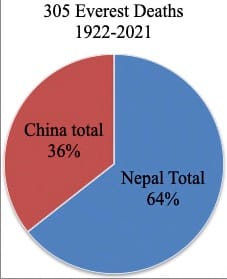
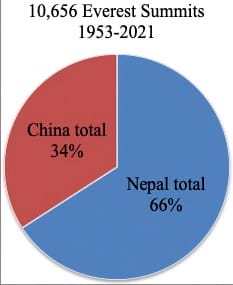
The last time Everest saw no summits on either side was in 1974.
Tibet or Nepal Side?
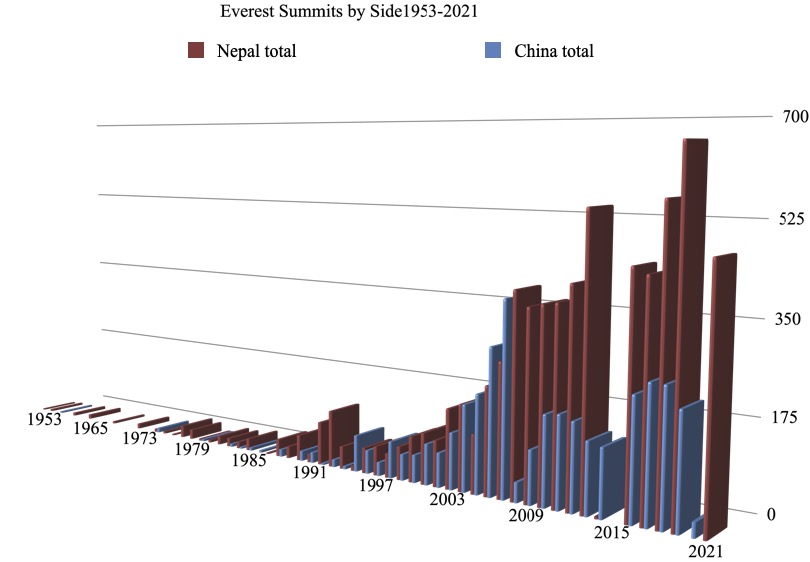
Before 2008, Tibet gained on Nepal for the number of climbers. In 2000, Nepal had 62% of the total climbing traffic compared to Tibet’s 32%. However, by 2007, the gap closed with Nepal at 60% and Tibet, 40%. Then came 2008, when the Chinese effectively closed Everest to take the Olympic torch to the summit. This event caused many in the climbing community not to risk their money with a Chinese permit, and they switched back to Nepal. Russell Brice was a mainstay on the north from 1994 to 2007, putting 219 people on the summit, including 53 in 2007. But he switched to the south after the 2008 closure on the north, contributing to the stall on that side. Brice sold his company, Himalayan Experience, a few years ago. The comeback for Tibet has been slow but steady and may never reach the pre-2008 days due to China putting a member cap of 300 per season while Nepal continues to have no limit.
Natural Disasters and Rising Fees
The avalanche and ensuing Sherpa strike of 2014 sent people back to the Chinese side. It now appears the earthquake of 2015 had little impact on climbing from either side as it was viewed as a natural disaster not unique to one side or the other even though Everest 2015 was closed by both the Chinese and the Nepal Governments.
One wildcard that may impact the growth on the Chinese side is the permit fee are now the same as on the Nepal side, $11,000. So it appears the days of climbing Everest for a few thousand dollars is over.
One event that may change climbing from the Tibet side is the Chinese constructing a massive “Mountaineering Center” near Everest Base Camp. That could turn Everest climbing from the north into the Disneyland of mountains, thus discouraging people from climbing from that side. Time will tell.
Death Rate Increasing
Overall, 305 people, 186 members, and 119 hired (Sherpas) have died on Everest from 1921 to 2021. An average of four people have been killed each year since the first attempt in 1921. From 2011 to 2021, deaths increased to an average of 6.5 annually. The 31 Sherpa deaths in 2014 from the serac release onto the Icefall and the 2015 earthquake drove up the average death rate. Both events were on the Nepal side of the mountain.
Digging a bit deeper into each period, the death rates from 1953 to 1999, more members died than hired due to pioneering new routes and the Sherpas being used primarily for load carrying. One hundred fifty-seven people lost their lives in that period, breaking out by 97 members and 60 Sherpas.
When commercialization grew in the early 2000s, the death rate drastically declined. Fewer new routes climbed, and most of the traffic took place on the Southeast or Northeast Ridges led by Western Guide companies like Adventure Consultants, Jagged Globe, or International Moutain Guides. As a result, the death rate dropped to 0.66, and dramatically fewer Sherpas died, 9 of the 54 total deaths. The reduction in fatalities was primarily due to better gear, weather forecasting, and more people climbing with highly-experienced commercial operations.
This good news of fewer deaths came to a halt over the last ten years as the total number of people climbing Everest took off. The number of people above Base Camp almost doubled in the past 20 years, 17,398 (8,504 members with 8894 support) compared to the previous 80 years. From 1921 to 1999, 9,406 (5,143 members with 4,263 support) people went above BC.
In the last decade of climbing, the overall death rate increased to 0.86. Two large-scale events took 31 of the 40 Sherpas deaths in this period, while 44 members died. The primary reason for member deaths was the draw of low-cost climbs attracting inexperienced clients supported by inexperienced guides. A case in point was in 2019, as I described in my season recap, Everest 2019: Season Summary The Year Everest Broke, eight of the 11 deaths were climbing with low-cost operators.
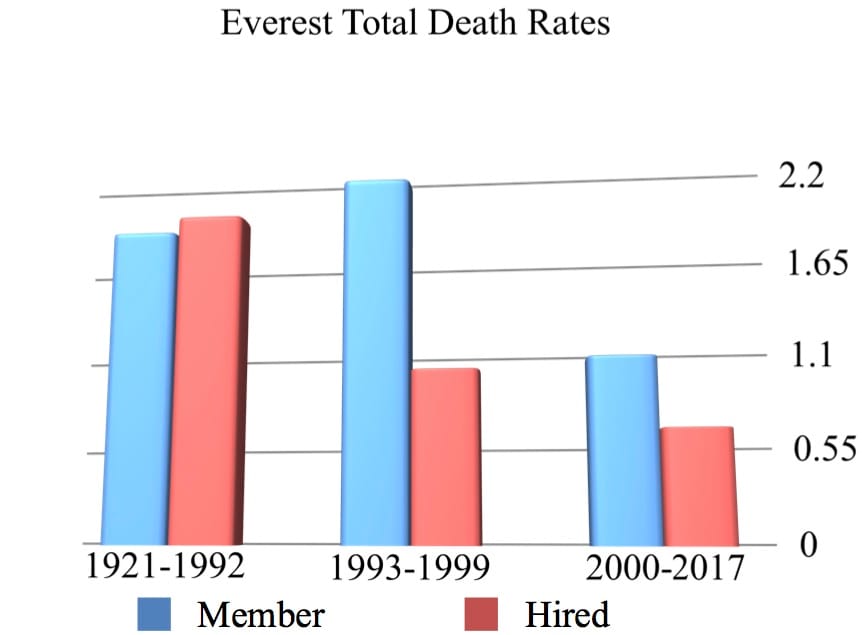
While the Nepal side’s safety reputation eroded after the tragic 2014 and 2015 deaths, the Tibet side has also had multiple deaths. In 2004 and 2006, six and eight people died respectively. The last year with no deaths on the Tibet side was 2016 and on the Nepal side was 2010. 1981 was last time Everest saw no deaths on either side.
Of the 8000 meter peaks, Everest has the highest absolute number of deaths at 305 but ranks near the bottom with a death rate of 0.9. Annapurna is the most deadly 8000er, with one death for about every four summits (72:365) or a 3.10 death rate. Cho Oyu is the safest, with 4,038 summits and 52 deaths or a death rate of 0.40, with Manaslu next at 0.82.
Note that the HDB calculates the death rate by taking the number of people above base camp who died, not just those who summited.
Standard vs. Non-Standard Routes
An interesting bit of trivia is that of the 10,656 summits, only 254 (191 members and 63 hired) took a “non-standard” route, not the Southeast Ridge or Northeast Ridge. There were 81 (51 members and 30 hired) deaths on these climbs – 27% of the total deaths, which explains partly why the standard routes are most popular with commercial operators – lower risks. The countries with the most summits on the non-standard routes are Nepal (67), Japan (26), the USA (27), S. Korea (23), USSR (23), and Russia (16)
As this chart shows, using the standard routes accounts for 73% of the deaths, with the Southeast Ridge dominating all deaths at 150 or 49%. This number is heavily driven by the 2014 ice serac release off the West Shoulder of Everest onto the Khumbu Icefall taking 17 lives, and when 14 people were killed at Basecamp in 2015 after a 7.8 magnitude earthquake caused an avalanche off the Pumori-Lintgren ridgeline. Whether these were one-time events or ongoing concerns, have yet to be determined. Therefore, climbers must make their own decision as to the safer standard route.
Here is the summary update with 2021 statistics:
|
Reason |
Northeast Ridge |
Southeast Ridge |
Other Routes |
total |
|
Avalanche |
7 |
39 |
31 |
77 |
|
Fall |
19 |
27 |
25 |
67 |
|
AMS |
14 |
18 |
3 |
35 |
|
Exposure/Frostbite |
10 |
6 |
10 |
26 |
|
Illness (non-AMS) |
5 |
15 |
3 |
23 |
|
Exhaustion |
12 |
15 |
1 |
28 |
|
Icefall Collapse |
0 |
13 |
3 |
16 |
|
Crevasse |
0 |
10 |
0 |
10 |
|
Disappearance |
4 |
2 |
3 |
9 |
|
other/unknown |
3 |
2 |
2 |
7 |
|
Falling Rock/Ice |
0 |
3 |
0 |
3 |
|
Total |
74 |
150 |
81 |
305 |
|
% of Total |
24% |
49% |
27% |
The last time a new route was successfully completed on the peak was by a Korean team on the Southwest Face in 2009. And in 2019, Cory Richards and Esteban “Topo” Mena, made a valiant attempt up a 6,551-foot direct line in a couloir, a narrow rock gully, on the Northeast face of Everest that joins a high ridge and continues to a steep face and onto the summit. The route began just above Advanced Base Camp at 21,325 feet on the Tibet side of Everest. Eventually, they were forced to turn back at around 7,600 meters, due to “conditions we encountered coupled with our chosen tactics compounded by exertion,” after spending 40 hours on the wall with one open bivy.
Oxygen and Summits and Deaths
It is rare to summit Everest without using supplemental oxygen; only 216 people ever have. Digging deep into the data reveals that of the 305 deaths, 167 were not using O’s when they perished, but this is a bit misleading because many of the deaths, 121 to be precise, were doing route preparation, primarily by Sherpas. Most would not have used Os because they were low on the mountain. A case in point was the 2014 ice serac release and 2015 earthquake that killed 31 people in all, and they were below Camp 1 and not using oxygen.
Looking at climbing in modern times, i.e., from 1990 to 2021, we can see that 133 members (not Sherpas) summited without supplemental oxygen, and 39 died, or 30%. This rate compares with the 5,132 members who summited with Os, and 133 died or 2.5%
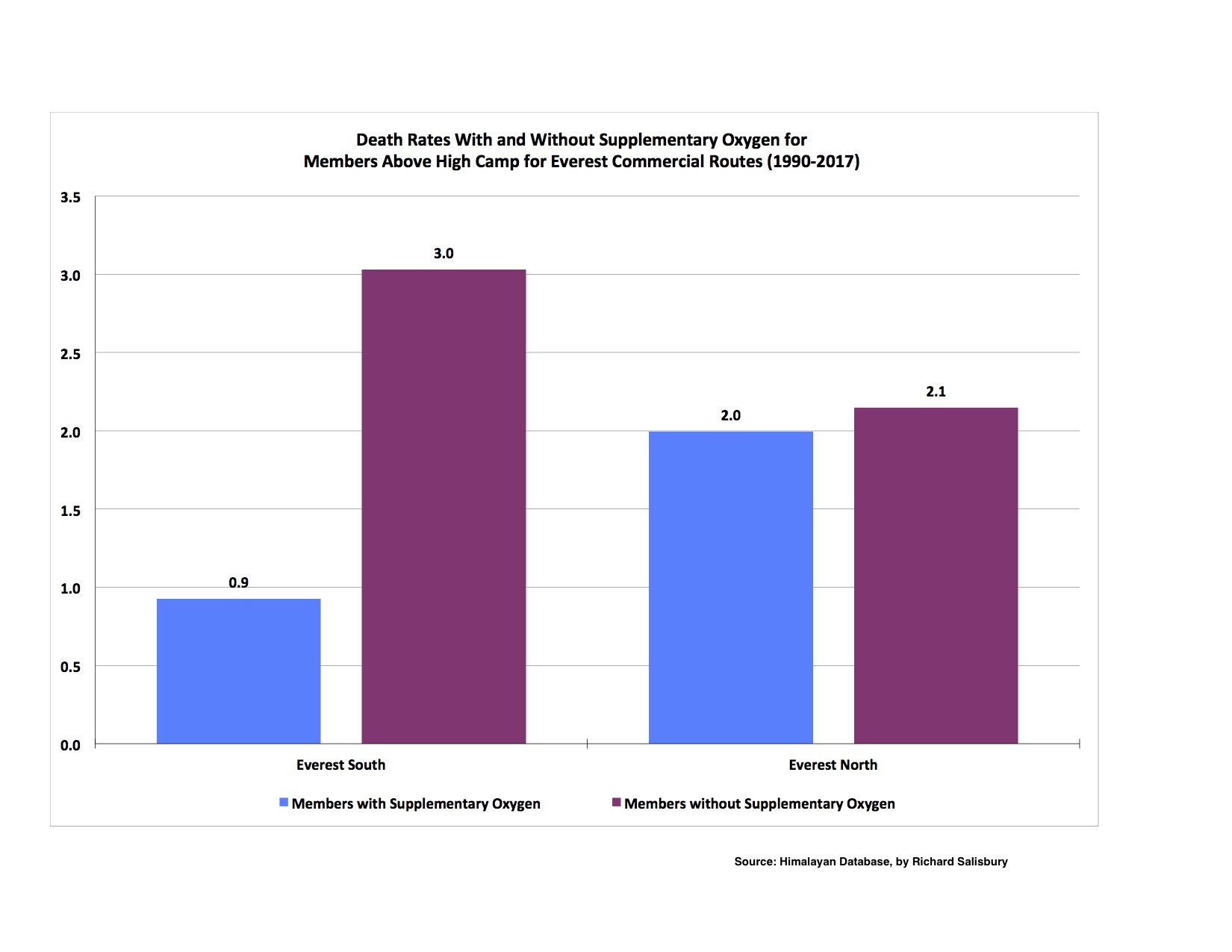
Back in 2018, I reached out to the HDB’s Richard Salisbury to help analyze the impact of supplemental oxygen both in terms of summits and deaths. He ran a few reports for success rates with and without supplemental oxygen for members above base camp on the standard commercial routes. The results were what we would expect – those climbing on O’s had fewer deaths and better summit results. This chart shows that climbers who use supplemental oxygen have almost twice the summit success as those who shun O’s.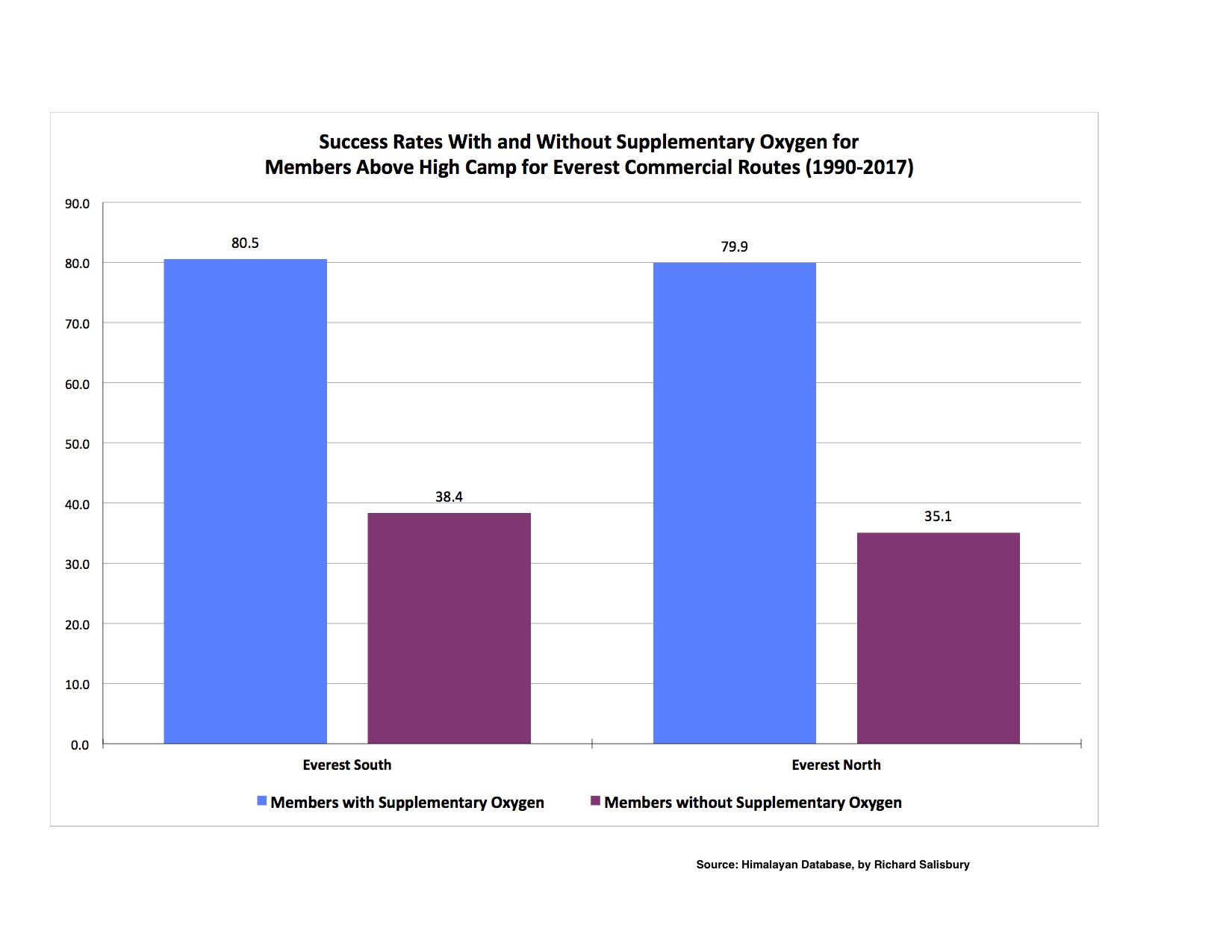 This chart shows that climbers who do not use supplemental oxygen have almost twice the death rate than those who shun O’s, but the numbers are pretty low, with only 11 total members dying on their summit bid.
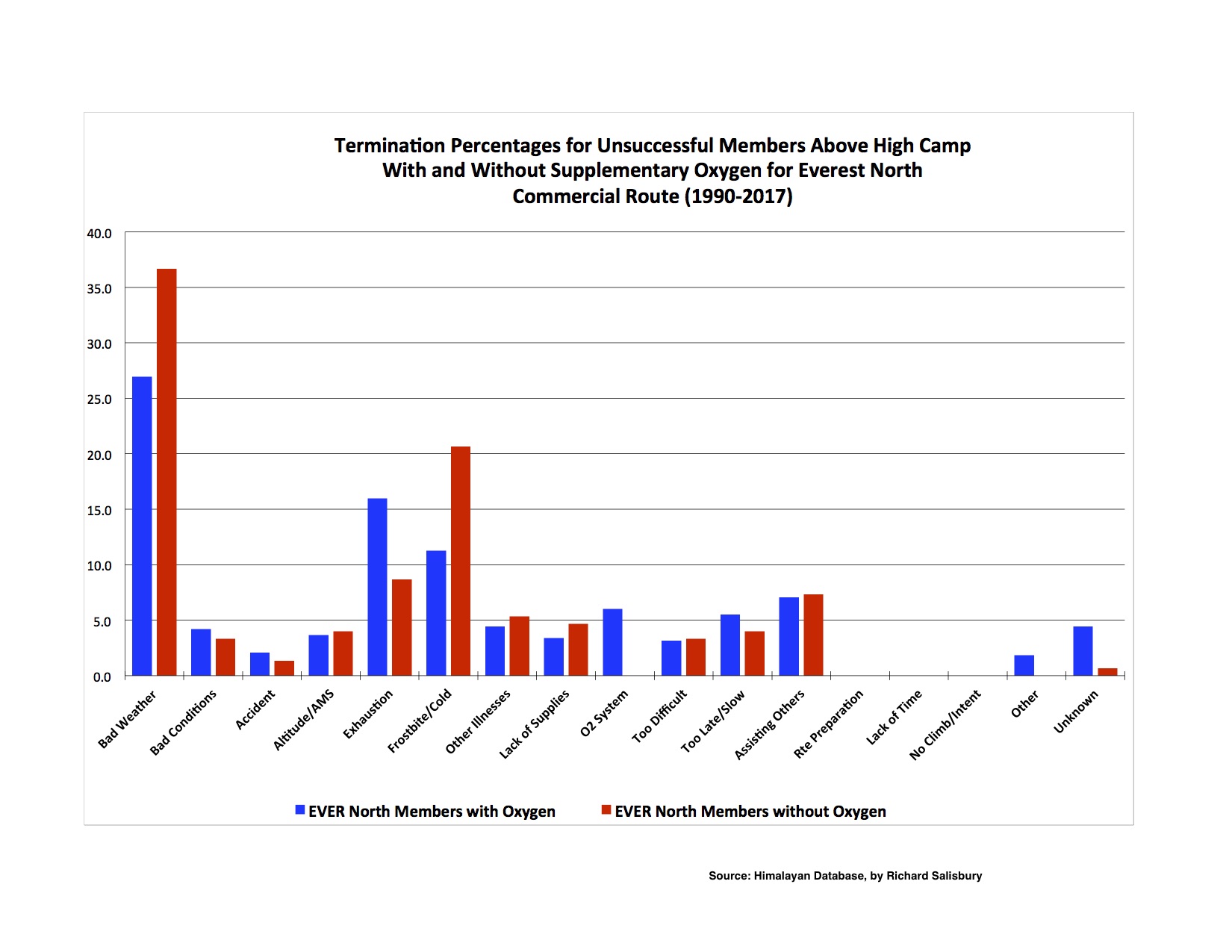
 Looking at the north side and why climbers turn back on their summit bid above High Camp, bad weather is the primary reason for both those who use and don’t use O’s. But for those who don’t use O’s, frostbite and cold rank as the second-highest reason while those who are using Os claim exhaustion as the second most common reason to turn back.
The primary benefit of using supplemental oxygen is warmth. When exposed to extreme cold, the body will divert blood flow to the brain and organs and sacrifice extremities. Os is a safety net for hands and feet.
Bad weather is the primary reason climbers turn back on their summit bid above High Camp on the north side. But for those who didn’t use O’s, frostbite and cold rank as the second-highest reasons, while those using Os claimed exhaustion as the second most common reason to turn back.
The north side of Everest is notoriously colder and windier than the south. These conditions may explain why more climbers not using O’s turned back – a sign of wanting to live! Interestingly, 2017 was an exception with just the opposite characteristics on the south side when high winds pummeled climbers stopping several no O’s attempts.
 Looking at the south side and why climbers turn back on their summit bid above High Camp, lousy weather again is the primary reason for both those who use and don’t use O’s. But for the who don’t use O’s, frostbite and cold, along with exhaustion, rank as the second-highest reason to turn back.

Using supplemental oxygen is always controversial, bringing up ethics and style. I know for some people this is a red hot subject. However, in 2022, most operators will provide 2,3 4 even 8 liters per minute to their clients at some points during the expedition. One operator is even offering a climb to Camp 2, no summit, with supplemental oxygen and a personal Sherpa!
Sherpa Support and Summits … and Kilimanjaro
Over the last 15 years, Everest has seen explosive growth in the number of Sherpas summiting. Commercial operators used to have a ratio of 1 Sherpa to 5 members, but today 2 Sherpas for each member is common. This increase in support is needed due to more inexperienced members, offloading more gear to Sherpas, higher oxygen flow rate, thus more bottles required, and high-end guides who market that there will always be a Sherpa climbing by your side.
In 1992, when commercialization began on the south side, 22 Sherpa and 65 members summited or a ratio of 0.34 members to hired. In 2010 it was 196 Sherpas and 175 members who summited or 1.12. Looking at the Tibet side, it is even more dramatic. In 2000 the ratio was 17:38 or 0.45 hired to members compared to 106:110 or 1.04, in 2019 (last full year on the Tibet side). In 2021 on the Nepal side, it was a whopping 1.42. In other words, for every member who summited, 1.5 Sherpas did as well. To be fair, over 150 members left Everest due to COVID and their Sherpas staying to bag the peak to pad their CV.
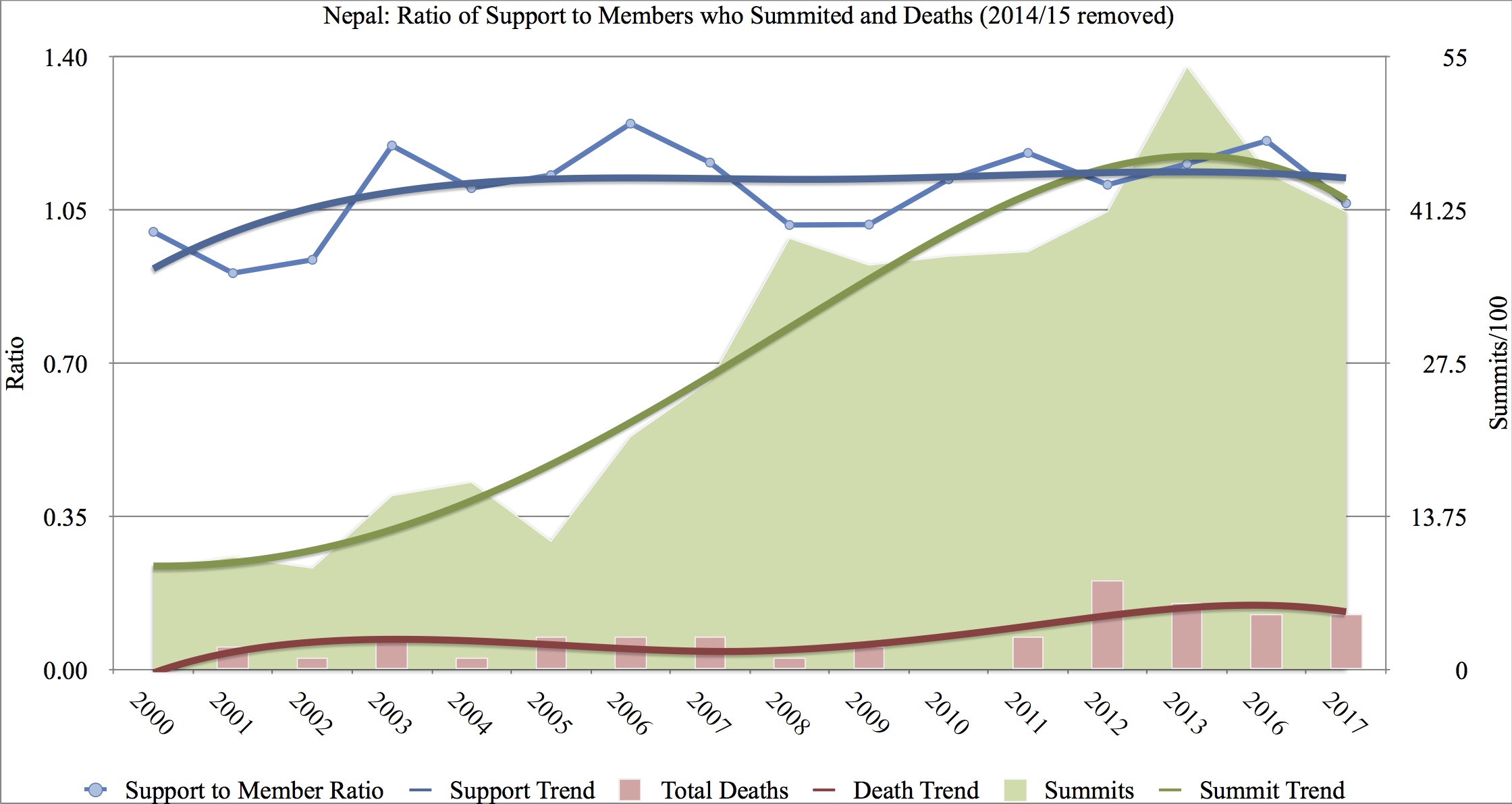
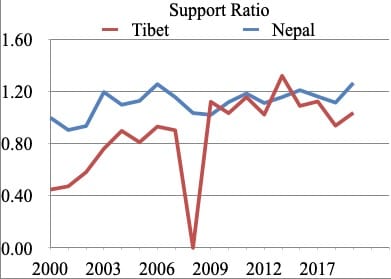
The dip in the chart for Tibet was when China closed the mountain for the Olympics.
Everest – An Insatiable Allure
As the previous discussion shows, the number of summits increased since 1992 when Adventure Consultants’ Rob Hall and Gary Ball guided four paying members to the summit, the beginning of widespread commercialization. David Breashears guided Dick Bass in 1985, gets credit for starting the entire industry of commercializing Everest.

Interest in mountaineering rose steadily after the 1996 disaster when 15 people died. The drop-off in summits in 2008 was when the Chinese closed the north side for the Beijing Olympics and effectively stalled momentum on that side. Two more years caused significant disruptions of climbing the peak when in 2014 a Sherpa strike closed the Nepal side and in 2015 with the earthquake stopped all summits on both sides. And of course COVID has disrupted climbing the last two years. But it is good to understand that after each of those ‘bad’ years, the following year results in record summits. So it seems that bad news only increases the allure of climbing Everest, like bugs to bright light.
Everest Trivia
In the trivia department, the Himalayan Database shows
- 1 true solo ascent Messner, 1980 North
- 35 traverses
- 22 ski/snowboard descents
- 13 Parapente (paragliding) descents
- 15 disputed ascents
- 14 unrecognized ascents
Fun Facts
I have a section on my main website called Everest for KiDs. It is based on my 2002 attempt at Everest where I did not summit and is used today in schools around the world to teach students about goal setting, geography, and Everest. Part of that section contains these fun facts:
Everest Facts for KiDs
Geography
- Everest is 29,031.69-feet or 8848.86-meters high
- The summit is the border of Nepal to the south and China or Tibet on the north
- It is over 60 million years old
- Everest was formed by the movement of the Indian tectonic plate pushing up and against the Asian plate
- Everest grows by about a quarter of an inch (0.25″) every year
- It consists of different types of shale, limestone, and marble
- The rocky summit is covered with deep snow all year long
Weather
- The Jet Stream sits on top of Everest almost all year long
- The wind can blow over 200 mph
- The temperature can be -80F (-62C)
- In mid-May each year, the jet stream moves north causing the winds the calm and temperatures to warm enough for people to try to summit. This is called the ‘summit window’. There is a similar period each fall in November.
- It can also be very hot with temperatures over 100F (38C)in the Western Cwm, an area climbers go through to reach the summit.
History
- Like all mountains around the world, the local indigenous people were the first to see it
- Everest is called Chomolungma (Jomolangma) by the Tibetan people. It means mother goddess of the universe
- Everest was named Sagarmatha by the Nepal Government. It means goddess of the sky
- It was first identified for the western world by a British survey team led by Sir George Everest in 1841
- Everest was first named Peak 15 and measured at 29,002 feet in 1856
- In 1865, it was named Mount Everest, after Sir George Everest
- In 1955, the height was adjusted to 29,028 fee
- China used 29,015 feet
- In 2020, using GPS technology, using a joint measurement by Nepal and China the summit was measured at 29,031.69 feet (8,848.86 m)
Summits
Early Attempts and Summits
- The first attempt was in 1921 by a British expedition from the north (Tibet) side
- The first summit was on May 29, 1953, by Sir Edmund Hillary from New Zealand and Tenzing Norgay, a Sherpa from Nepal. They climbed from the south side on a British expedition led by Colonel John Hunt.
- The first north side summit was on May 25, 1960, by Nawang Gombu (Tibetan) and Chinese climbers Chu Yin-Hau and Wang Fu-zhou
- The youngest person to summit was American Jordan Romero, age 13 years 11 months, on May 23, 2010, from the north side.
- The oldest person to summit was Japanese Miura Yiuchiro, age 80 on May 23, 2013
- The first climbers to summit Everest without bottled oxygen were Italian Reinhold Messner with Peter Habler in 1978
- Reinhold Messner is the only person to have truly summited Everest solo and without supplemental oxygen. He did it in 1980 from the Tibet side via the Great Couloir
Male Summits
- The youngest male to summit was American Jordan Romero, age 13 years 10 months, on May 23, 2010, from the north side.
- The oldest male to summit was Japanese Miura Yiuchiro, age 80 on May 23, 2013
- Kami Rita (Topke) Sherpa (Thami) holds the record for most summits (male or female) with 24, the most recent one in 2019.
- Pasang Dawa Sherpa of Pangboche has summited 23 times with the last on May 23, 2019.
- Apa Sherpa (Thami Og), Phurba Tashi Sherpa (Khumjung) are next with 21 summits each. Both are now retired.
- American Dave Hahn and Briton Kenton Cool have the most non-Sherpa summits with 15, the most recent in 2021
Female Summits
- The first woman to summit Everest was Junko Tabei of Japan in 1975
- The oldest woman to summit was Japanese Tamae Watanabe, age 73, in 2012 from the north
- The youngest woman to summit was Indian Malavath Poorna, 13 years 11 months on May 25, 2014, from the north side
- 750 women have summited through June 2021
- Nepali, Lakpa Sherpani holds the women’s summit record with eight (1 South, 7 north)
Summit Statistics
- There have been 10,656 summits of Everest through December 2021, on all routes by 6,098 different people.
- 1,410 people, including 990 Sherpa, have summited multiple times
- The Nepal side is more popular with 7,023 summits compared to 3,633 summits from the Tibet side
- 216 climbers summited without supplemental oxygen through December 2021, about 2.0%
- 35 climbers have traversed from one side to the other.
- 640 climbers have summited from both Nepal and Tibet
- 135 climbers have summited more than once in a single season, including 67 who summited within seven days of their first summit that season.
Death Statistics
- 305 people (186 westerners and 119 Sherpas) have died on Everest from 1924 to December 2021 or 2.9%.
- Of the deaths, 167 died attempting to summit without using supplemental oxygen.
- Of the 306 deaths, 113 died on the descent from their summit bid or 37%
- The Nepalese side has seen 7,023 summits with 195 deaths through December 2021 or 2.9%, a rate of 1.16. 119, or 61% of the deaths, died not using Os.
- The Tibet side has seen 3,633 summits with 110 deaths through December 2021 or 3.0%, a rate of 1.09. 48 died not using Os.
- Most bodies all are still on the mountain but China has removed many bodies from sight.
- The top causes of death on both sides were from avalanche (77), fall (71), altitude sickness (36), and exposure (26).
- About 62% of all expeditions put at least one member on the summit.
- From 1923 to 1999: 170 people died on Everest with 1,169 summits or 14.5%. But the deaths drastically declined from 2000 to 2021 with 9,571 summits and 135 deaths or 1.4%.
- However, three years skewed the deaths rates with 17 in 2014, 14 in 2015, and 11 in 2019.
- The reduction in deaths is primarily due to better gear, weather forecasting, and more people climbing with commercial operations.
Climbing
- There are 18 different climbing routes on Everest
- It takes 40 days to climb Mt. Everest in order for the body to adjust to the high altitude
- There is 66% less oxygen in each breath on the summit of Everest than at sea level
- Thin nylon ropes are used to keep climbers from falling.
- Climbers wear spikes on their boots called crampons
- They also use ice axes to help stop a fall
- Thick, puffy suits filled with goose feathers keep climbers warm
- Most climbers eat a lot of rice and noodles for food
- Almost all climbers use bottled oxygen because it is so high. It helps keep the climbers warm.
- Climbers start using bottled oxygen at 26,000 feet but it only makes a 3,000-foot difference in how they feel so at 27,000 feet, they feel like they are at 24,000 feet
- You have to be 16 or older to climb from the Nepal side and between 18 and 60 on the Chinese side.
- The average expedition takes about 39 days.
Sherpas
- Sherpa is the name of a people. They mostly live in eastern Nepal. They migrated from Tibet over the last several hundred years
- Sherpa is also used as a last name
- Usually, their first name is the day of the week they were born.
- Nyima – Sunday
- Dawa – Monday
- Mingma – Tuesday
- Lhakpa – Wednesday
- Phurba – Thursday
- Pasang – Friday
- Pemba – Saturday
- Sherpas are hired by climbers to guide, carry tents, and cooking food to the high camps
- Sherpas climb Everest as a job to support their families
- Sherpas can get sick from the altitude like anyone but are stronger at altitude than foreigners.
- Sherpas feel it is disrespectful to stand literally on the tippy top since that is where Miyolangsangma, the Tibetan Goddess of Mountains, lives.
Trivia
- Babu Chiri Sherpa spent the night on the summit in 1999
- Kami Rita (Topke) Sherpa (Thami) holds the record for most summits (male or female) with 26, the most recent one in 2021
- Over 33,000 feet of fixed rope is used each year to set the South Col route
- You have to be at least 16 to climb Everest from the south side and 18 from the north
- Climbers burn over 10,000 calories each day, double that on the summit climb
- Climbers will lose 10 to 20 lbs during the expedition
Climb On!
Alan
Memories are Everything
Preparing for Everest is More than Training
If you dream of climbing mountains but are not sure how to start or reach your next level from a Colorado 14er to Rainier, Everest, or even K2, we can help. Summit Coach is a consulting service that helps aspiring climbers throughout the world achieve their goals through a personalized set of consulting services based on Alan Arnette’s 27 years of high altitude mountain experience and 30 years as a business executive. Please see our prices and services on the Summit Coach website.
Everest Pictures and Video
© all images owned and copyrighted by Alan Arnette unless noted
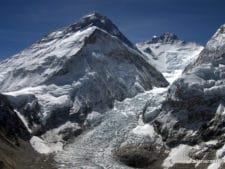
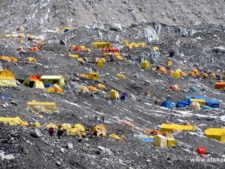
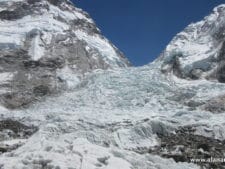
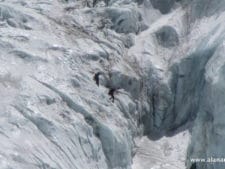
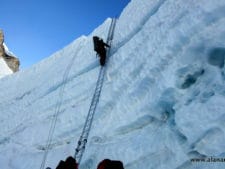
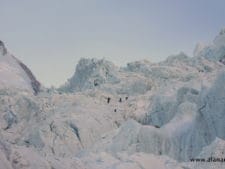
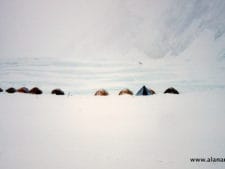
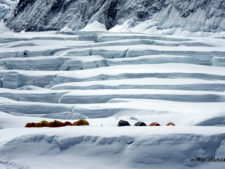
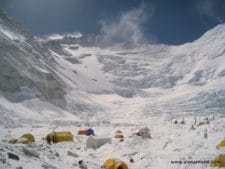
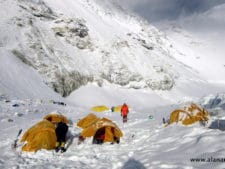
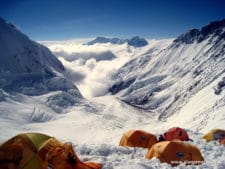
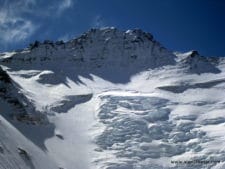
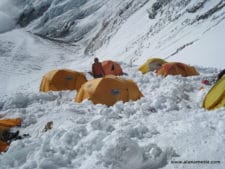
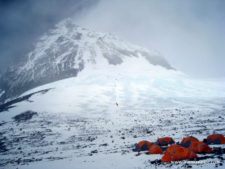
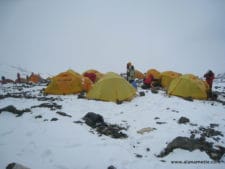
A tour of Everest Base Camp 2016
Really such a great article. You know death rate is also increasing in Pakistan K2 Winter summit